producer profile
30.05.2019
Altura Producer Profile
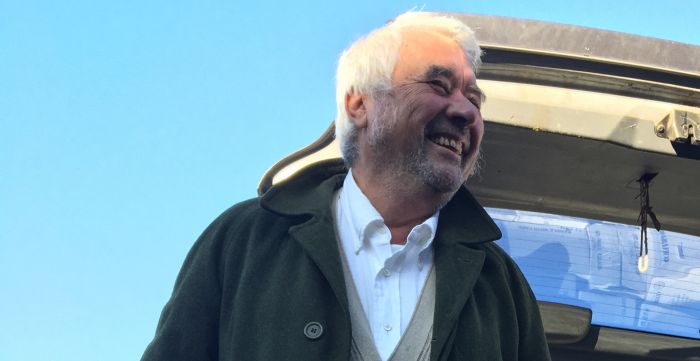
<p>The Altura project is an homage to the island of <glossary title="491">Giglio</glossary> and how it tranformed Francesco Carfagna's life. For those unfamiliar with <span class="zalup"><span> <glossary title="491">Giglio</glossary><span>,</span></span></span> it's a small island 10 miles off the coast of <glossary title="1055">Tuscany</glossary> and only accessible by water ferry. The island is small, mostly mountaneous and 90% covered in vegetation. While it densly populated in the summer, fewer than 600 people live there year round. Francesco Carfagna is one of them.</p>
<p>Originally from Rome, Francesco would vacation to <glossary title="491">Giglio</glossary> as a child. As a young man he worked as a professor and moonlit as a street performer. In 1985, sick of the rat-race of the city, he decided to quit and move to the island, the place he'd fallen in love with in his youth. While there he fell in love all over again: once more with <glossary title="491">Giglio</glossary> and then with a young woman vacationing there (his wife Gabriella). </p>
<p>In 1987, Francesco opened a restaurant called Arcobaleno in Castello, the main town of the island. There he served what he referred to as "Vini Vivi" ("Alive Wines"). He ran it full time with Gabriella until 1999, when they found some abandoned vines and <glossary title="1022">terraces</glossary> and set out to refinish the dry walls and rehabilitate the <glossary title="740">old vines</glossary> and planting new ones on a high, <glossary title="502">granitic</glossary> cliff directly above the <span class="zalup"><span><glossary title="1057">Tyrrhenian</glossary><span>.</span></span></span> </p>
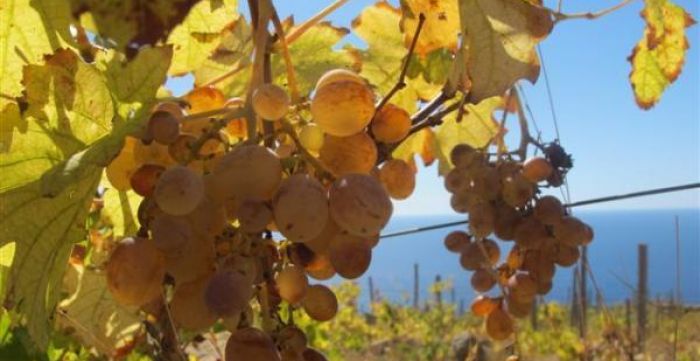
<p>With a posse of friends and family, Francesco decided the time had come to bring back <span class="zalup"><span><glossary title="106">Ansonaco</glossary><span>,</span></span></span> the <glossary title="1139">native grape</glossary> that at one time covered this island. It's a variety of golden color with grapes of ovoidal shape. In Francesco and his daughter Irene's hands, it makes rich white wines bursting with the sea's umami. </p>
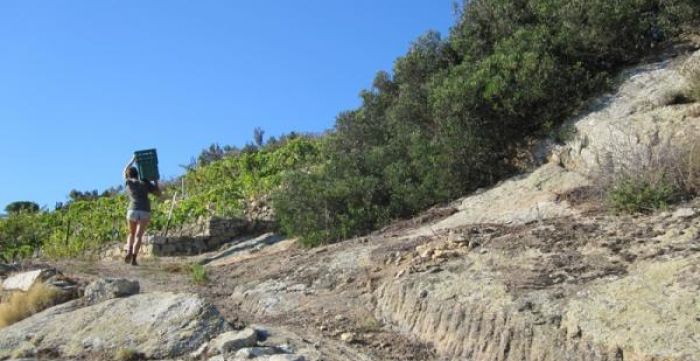
<p>All of this work was and is done by hand, as the vines are in no way <span class="zalup"><span><glossary title="645">mechanizable</glossary><span>.</span></span></span> You can only access them with a 4x4 vehicle, and even that is considered very risky. All 3.5 <glossary title="523">hectares</glossary> are planted in <glossary title="86">albarello</glossary> and <span class="zalup"><span><glossary title="518">guyot</glossary><span>,</span></span></span> mainly in <span class="zalup"><span><glossary title="106">Ansonaco</glossary><span>,</span></span></span> though Francesco also planted some <glossary term="Selection Massale" title="941">massale selections</glossary> of red from old vines on the island. After ten years of hard work restoring the <glossary title="1022">terraces</glossary> and experimenting in the <glossary title="254">cellar,</glossary> the first Altura wine was released in 2009. Over the years, the Carfagnas were able to acquire two additional <span class="zalup"><span><glossary term="Parcel" title="760">parcels</glossary><span>,</span></span></span> both much older at around 70 years old.</p>
<p>The vineyard work is without <glossary title="526">herbicides</glossary> or <glossary title="543">insecticides</glossary> and low <glossary title="328">treatments</glossary> of <glossary title="993">sulfur</glossary> and <span class="zalup"><span><glossary title="333">copper</glossary><span>.</span></span></span> The <glossary title="1129">yields</glossary> are about 40 <span class="zalup"><span><glossary title="528">hl/ha</glossary><span>.</span></span></span> As the last stretch to the vineyard in not accessible by car, cases of grapes must be walked back uphill to the truck. <glossary title="1104">Vinification</glossary> starts in the ramshackle basement of the ancient grain mill the Carfagnas converted into an apartment (no we didn't make that up). A small amount of <glossary title="993">sulfur</glossary> is usually added on the grapes once they've been brought back to the <span class="zalup"><span><glossary title="254">cellar</glossary><span>,</span></span></span> though some years none will be added. With the execption of the <span class="zalup"><span><glossary term="Rosé/Rosato" title="871">rosato</glossary><span>,</span></span></span> the wines see long <glossary title="610">macerations</glossary> before being <glossary title="843">racked</glossary> off the <glossary title="515">gross lees</glossary> and then into <glossary title="986">stainless steel </glossary><glossary title="1140">vats</glossary> for <glossary title="441">fermentation</glossary> and finally <glossary title="142">barrels</glossary> for <span class="zalup"><span><glossary title="74">aging</glossary><span>.</span></span></span> No <glossary title="447">filtration</glossary> or <span class="zalup"><span><glossary title="449">fining</glossary><span>,</span></span></span> just <span class="zalup"><span><glossary title="843">racking</glossary><span>.</span></span></span></p>
Article

interview
22.05.2019
An Interview with Francesco Carfagna from 2011
<p><em>This interview with Francesco Carfagna took place in his vineyards in November, 2011.</em></p>
<p><strong>Tell us about the history of Altura.</strong><br />
<br />
We took over the vineyards -which represents about 3,5 <span class="zalup"><span><glossary title="523">hectares</glossary><span>-</span></span></span> in 1999 from an old man who'd abandoned the property. Through the 80's and 90's, abandonment of <glossary title="78">agriculture</glossary> on the island had been the norm. Everyone thought we were crazy to spend money on setting the vines back up again! It was certainly a very difficult and expensive process…<br />
<br />
But I believed in <glossary title="491">Giglio</glossary> wine, which was not quite dead, but almost. And so we began to do the opposite of what everyone else was doing, which was to restart cultivating our land. I'm proud to say that other vineyards have since been restored; <glossary title="491">Giglio</glossary> wine is again drinkable and flowing across the world! <br />
<br />
In past centuries, <glossary title="491">Giglio</glossary> was famous for its wines. The entire island used to be completely covered in vineyards, though it's hard to believe when you look around and all you see is this "jungle"! The dream is to see the island completely covered in vineyards again, but I think it will take at least 500 years!<br />
<br />
<strong>Can you tell me about the indigenous grapes you work with?</strong><br />
<br />
There are many grapes grown on <span class="zalup"><span><glossary title="491">Giglio</glossary><span>,</span></span></span> but the main grape is <span class="zalup"><span><glossary title="106">Ansonico</glossary><span>.</span></span></span> It is a gold, oval grape, and it used to be widespread all over the island because it has many good characteristics. For instance, the skin is strong, and this means that it travels very well. Entire ships worth used to be brought to Rome and all over Italy to be sold, because <glossary title="106">Ansonico</glossary> is as good for making wine as it is on the table. <br />
<br />
The reason <glossary title="106">Ansonico</glossary> ultimately became so prominent is because it permitted families to live off their land. Up until very recently, most people born on Mediterranean islands made a living off <span class="zalup"><span><glossary title="78">agriculture</glossary><span>.</span></span></span> Now it is tourism. <br />
<br />
<strong>What was your personal journey into wine? </strong><br />
<br />
There are two big roots, one that links me to wine and the other to the island.<br />
<br />
My father had always made wine, and I always went with him to help. So I've been making and drinking wine since I was very young. It was always something I wanted to do and I told myself "I will make wine before I die!". <br />
<br />
As far as the island, I was born in Rome and I came to <glossary term="Giglio" title="491">Giglio</glossary> for the first time when I was nine for the holidays. I instantly fell in love. Altura is simply the combination of these two loves; I had always felt drawn to move here, and because I knew of <glossary term="Giglio" title="491">Giglio's</glossary> rich past and tradition in winemaking, I put the two together!<br />
<br />
<strong>You've been a supporter of what you refer to as "<em>Alive Wine</em>" since the late 1980's through your restaurant Arcobalena. Most people would now refer to these as "natural wines". Having been around these for so long, how do you feel about the current context of natural wine in Italy and beyond? </strong><br />
<br />
I think that wine is by itself natural if you don't poison it. That's what I learned from my father, who only used grapes. He taught me that making wine is simply helping along a natural process. <br />
<br />
When we began 12 years ago, there was still no talk of <span class="zalup"><span><glossary title="708">natural wine</glossary><span>.</span></span></span> And now, even poison is natural! But we've always been focused on making a quality product, and it seems strange to me that people who work with such similar ideas, with such a clearness of mind and heart, would fight amongst themselves by saying: "<em>He's less natural than me</em>", or "<em>I'm more natural than you!</em>" or "<em>I'm more natural than both of you combined!</em>".<br />
<br />
I think we all share the same heart and passion, but people are getting too caught up in their discussion of "true" or "natural" wines. So I prefer to say "<em>Alive Wine</em>". Because that's what it is! A wine must have its own strength, must follow its own path. <br />
<br />
<strong>What's the work like in the vines?</strong><br />
<br />
Everything is done by hand. If you've seen the land, you know there is no alternative. We let the grass grow most of the year, cutting it only once (we don't clear the remains). We use very limited powdered <glossary title="993">sulfur</glossary> treatments (about three a year), because otherwise we'd have some serious issues with <span class="zalup"><span><glossary title="737">oidium</glossary><span>.</span></span></span> Believe me I've tried without it, and I didn't pick up one grape. I would love to find a way not to use it, but so far have been unsuccessful. <br />
<br />
The soil is of course vibrant and healthy, full of the bacteria and insects that inhabit it. And we focus on very low <glossary title="1129">yields</glossary> (30 <glossary term="hl/ha" title="528">hl/h</glossary>). Rabbits and goats freely roam the vineyards, which is nice except that they are always eating the grapes! They are contributing to the low <span class="zalup"><span><glossary title="1129">yields</glossary><span>!</span></span></span> <br />
<br />
<strong>And in the cellar<span class="zalup"><span><span>?</span></span></span> </strong><br />
<br />
I do add very small quantities of <glossary title="993">sulfur</glossary> during <glossary title="1104">vinification</glossary> (in bottle is comes out to about 25 mg per liter). This has been a hang up for some people, who have adamantly told me that I should not do this. Again, just like in the vines, I have tried… A big part of the last 12 years has been experimentation, and honestly I do think that the wine comes out quite good without any added <glossary title="993">sulfur</glossary> during <span class="zalup"><span><glossary title="1104">vinification</glossary><span>.</span></span></span> But with a very small quantity, I personally find it more pleasant than without it. <br />
<br />
<strong>Last question. What do you like to drink?</strong></p>
<p>All good wine!</p>
<p> </p>
Article

producer visit
14.06.2019
This visit to Altura took place in November, 2011
<p><strong><em>This visit at Altura took place in November, 2011.</em></strong></p>
<p><strong><em>Words by Jules Dressner, photos by Alex Finberg.</em></strong></p>
<p>The only way to get to the island of <glossary term="Giglio" title="491">Giglio</glossary> is by ferry, and Altura owner Francesco Carfagna had warned us that the <glossary term="Tyrrhenian Sea" title="1057">Tyrrhenian</glossary> Sea would be rough on our way over. He wasn't kidding: the boat was going up and down like a huge seesaw the entire trip and I got very, very sea sick. Kevin and Josefa were totally fine, and don't quote me on this since my head was in a garbage can 75% of the ride over, but they seemed slightly amused by my misfortune. You might remember me getting car sick for the first time in my life on the way to Massa Vecchia, so Kevin called my nausea "<em>two for one day.</em>" Later Alex would go on to say: <br />
<br />
"<em>Today really took it out of you. Literally!</em>" <br />
<br />
Finally, we got to <span class="zalup"><span><glossary term="Giglio" title="491">Giglio</glossary><span>!</span></span></span> Once a military stronghold for the Roman Empire, today the island's economy relies principally on seasonal tourism. It's incredibly packed during the summer, but only 600 people live there year round. A big part of what Francesco -who is the ONLY person making and <glossary term="Bottling" title="185">bottling</glossary> <glossary term="Giglio" title="491">Giglio</glossary> wine independently- is trying to do with Altura is: <br />
<br />
"<em>To take strong action against environmental and social decay by preserving an outstanding wine heritage. This means joining together to foster pride in the island's inhabitants, to create a future that is lively and well lived, not an inhuman shell dried up by a tourist village economy.</em>"<br />
<br />
Francesco cares about <span class="zalup"><span><glossary term="Giglio" title="491">Giglio</glossary><span>:</span></span></span> originally from Rome, he would vacation here with his father and fell in love with the island when he was 8. As a young man, he became a high school teacher in his hometown, but quickly grew to hate it. In 1985, he decided to quit (and in the process lose his pension) to move to the island. Without a lira to his name, he found ways to manage and eventually opened Arcobalena, a small restaurant and wine bar, in 1987.<br />
<br />
He then met and fell in love with a young woman named Gabriella, who came for a summer vacation and never left. They ran the restaurant together until 1999, when an opportunity to buy an old house with abandoned vineyards on the south side of the island presented itself.<br />
<br />
"<em>When I showed up to the appointment, the owner said: 'Let me show you the house.' I told him I wanted to see the vineyards! He was shocked, and told me I was the first person who'd ever asked him that! It wasn't too hard to seal the deal...</em>"<br />
<br />
Francesco, who jokingly refers to himself as a "<em>fat old man.</em>", is now 60 and a staple in <span class="zalup"><span><glossary term="Giglio" title="491">Giglio</glossary><span>.</span></span></span> He's got a happy-go-lucky personality a lively sense of humor. He's also a talented singer and musician: every year to celebrate <span class="zalup"><span><glossary term="Harvest" title="521">harvest</glossary><span>,</span></span></span> his family (all of whome play instruments) perform a concert at the foot of their vines. He lives in Castello, the island's main town. <br />
<br />
At 550 meters elevation, it's <glossary term="Giglio" title="491">Giglio</glossary>'s main (non beach) attraction because of the incredible remains of its castle town.<br />
<br />
<img src="http://louisdressner.com/uploads/images/article/2019_Jun_14//f1/b8/f1b8162c98f8f97151ed378b2c48c53e.jpg" /><br />
<br />
The town is still inhabited, and Arcobalena is located in the center of it. <br />
<br />
<img src="http://louisdressner.com/uploads/images/article/2019_Jun_14//3c/10/3c1018ee20c1c663e092ca104d19b58e.jpg" /></p>
<p>Walking through the narrow alleys and up the winding, twisting staircases, I couldn't help but feel that I'd been here before. A past life perhaps?<br />
<br />
Then it hit me! I'd never been here before but I'd seen it in film! This castle town could be non other than the setting for one of the climactic final scenes of the 1985 classic <a href="http://www.imdb.com/title/tt0089243/">Gymkata</a>.</p>
<p><iframe allowfullscreen="" frameborder="0" height="360" src="//www.youtube.com/embed/9Mkl9rtttog" width="640"></iframe></p>
<p>For those of you unfamiliar with the plot of Gymkata, please brush up on the film's surprisingly detailed <a href="http://en.wikipedia.org/wiki/Gymkata">wikipedia page</a>. The final test of "<em>The Game</em>" is to go through the "<em>Village of the Crazies</em>", where after a valiant gymnastics-infused martial arts display against the villagers, John Cabot is finally surrounded. Fortunately, there just so happens to be a rock in the middle of the village that looks and functions exactly like a <a href="http://en.wikipedia.org/wiki/Pommel_horse">Pommel Horse</a>, which Johnny uses to his advantage by pommel-horse-karate-kicking his enemies into submission before escaping. </p>
<p><iframe allowfullscreen="" frameborder="0" height="360" src="//www.youtube.com/embed/eDc5jnrBD1A" width="640"></iframe><br />
<br />
Though I'd convinced myself otherwise, it turns out that Gymkata was actually shot in Yugoslavia. Oops.<br />
<br />
Francesco had brought us here for an <glossary term="Aperitif" title="112">aperitif</glossary> at Arcobalena. This year was his first time attending <glossary term="Vini di Vigniaoli" title="1101">Vini di Vigniaoli</glossary> and this led to the subject of the <glossary term="Natural WIne" title="708">natural wine</glossary> movement in Italy. Francesco isn't comfortable with the term, preferring to use "<em>Alive Wine.</em>" He isn't jumping on the bandwagon either; to prove it he pointed to the original 1987 Arcobalena sign:<br />
<br />
<img src="http://louisdressner.com/uploads/images/article/2019_Jun_14//38/2e/382e418081acc3f943b2fdb3c57140ed.jpg" /><br />
<br />
For those too lazy to use Google Translate, the sign says: "<em>Alive Wine and Kitchen</em>".<br />
<br />
After the <span class="zalup"><span><glossary term="Aperitif" title="112">aperitif</glossary><span>,</span></span></span> we were off out Francesco's <span class="zalup"><span><glossary term="Cellar" title="254">cellar</glossary><span>.</span></span></span> <br />
<br />
<img src="http://louisdressner.com/uploads/images/article/2019_Jun_14//f7/ff/f7ff22c56d188b83c128c3aca41cb347.jpg" /><br />
<br />
The <glossary term="Cellar" title="254">cellar</glossary> is located directly below where Francesco's living quarters, an old grain mill he reconverted with his wife Gabriella. You can see it all the way to the right of the picture below.<br />
<br />
<img src="http://louisdressner.com/uploads/images/article/2019_Jun_14//19/fe/19fe74e3a2ec8bbec2e28fa1bbb0db36.jpg" /><br />
<br />
It was at this point that I declared: <br />
<br />
<em>"This shit is crazy." </em><br />
<br />
It suddenly hit me that I was about to taste wine made in a <glossary term="Cellar" title="254">cellar</glossary> under a grain mill from grapes <glossary term="Indigenous" title="1139">indigenous</glossary> to a tiny island off the coast of <span class="zalup"><span><glossary term="Tuscany" title="1055">Tuscany</glossary><span>.</span></span></span> It's a shame that wines like Altura's are too often overlooked by the unadventurous; as I was about to discover, the wines are as unique as the island itself.<br />
<br />
In the cellar, Francesco let us taste the 2010 white and red, the latter still in <glossary term="Barrel" title="142">barrel</glossary> and quite delicious: fresh, mineral, bright fruit, lively acidity and serious drinkability. <br />
<br />
<img src="http://louisdressner.com/uploads/images/article/2019_Jun_14//f9/c3/f9c315fc264114c46251d48f2b9a9eaf.jpg" /><br />
<br />
The 2011's were also very promising, although the <glossary term="Fermentation" title="441">fermentations</glossary> are very slow this year, particularly for the red. <br />
<br />
The unexpected treat of the tasting was Arcobalena's house wine, a <glossary term="Sangiovese" title="911">Sangiovese</glossary> Francesco makes himself. This stuff is the definition of <span class="zalup"><span><glossary term="Glou-Glou" title="495">glou-glou</glossary><span>,</span></span></span> and as official <em>Taste Maker for Current and Future Markets</em> (T.M.C.F.M), I pleaded for him to <glossary term="Bottling" title="185">bottle</glossary> it for us! Francesco told us we weren't the first to ask, but unfortunately the low quantity and extra manual labor (the family bottles and <glossary term="Backlabel" title="133">labels</glossary> everything themselves) wouldn't make it worthwhile. For now...<br />
<br />
Francesco closed up shop and we were off to Arcobalena for dinner.<br />
<br />
<img src="http://louisdressner.com/uploads/images/article/2019_Jun_14//55/e6/55e647aba89d53546df77645e2326670.jpg" /></p>
<p>Francesco's son Mattia is the chef there, and his specialty are his cured anchovies. He's developed quite a reputation for them in Italy, and is hoping to expand his production so he can sell them to restaurants across the country. I sincerely hope so: in a very quotable moment, Josefa said: <br />
<br />
"<em>These are the anchovies that converted me to liking anchovies.</em>"<br />
<br />
And at our <a href="http://louisdressner.com/producers/montesecondo/">Montesecondo</a> visit, Silvio said: <br />
<br />
"<em>Man, those are some of the best anchovies I've ever had in my life!</em>" <br />
<br />
Silvio LOVES anchovies, and apparently gets antisocial when good ones are around because he can't focus on anything else. <br />
<br />
It was a great meal full of fresh fish and complimented by an Altura <glossary term="Vertical" title="1085">vertical</glossary> of the last three<span class="zalup"><span> <glossary term="Vintage" title="1109">vintages</glossary><span>.</span></span></span> Alex Finberg went as far as saying that Altura is the best anchovy wine he's ever had and that it was his favorite pairing of the trip so far. <br />
<br />
<em>"They actually make each other taste better." </em><br />
<br />
We left well fed and ready to visit the vines in the morning.<br />
<br />
When we woke up, it was official: though it had rained a little bit the day before, our good weather streak was over. The village was gray, windy and rainy, but Alex and I still wanted to explore the castle town a little bit. </p>
<p><img src="http://louisdressner.com/uploads/images/article/2019_Jun_14//9e/8c/9e8c2f16ed9c598835d3512a2371a9e3.jpg" /><br />
<br />
<img src="http://louisdressner.com/uploads/images/article/2019_Jun_14//84/9a/849a3264c3a7b5658e78a27a8911c68f.jpg" /><br />
<br />
<img src="http://louisdressner.com/uploads/images/article/2019_Jun_14//8b/15/8b15ce8622f10fba813d5267c7ab0bdb.jpg" /><br />
<br />
Francesco then picked us up and it was off to the vines. <br />
<br />
<img src="http://louisdressner.com/uploads/images/article/2019_Jun_14//ad/4f/ad4f4055a96fbc7c68aa6c9d6fa77e1b.jpg" /><br />
<br />
Before I go any further, I really need to stress that no pictures can aptly do this site justice. You just have to be there to understand how special it is: the <span class="zalup"><span><glossary term="Terrace" title="1022">terraces</glossary><span>,</span></span></span> the water channels, the view of sea... It's just something else. <br />
<br />
Isolated on the south side of the island, the only way to access the vines is to take a small dirt road that can only be navigated with four wheel drive. The rain and wind was picking up but Alex was still able to get some great shots.<br />
<br />
<img src="http://louisdressner.com/uploads/images/article/2019_Jun_14//b9/02/b902a8fd85664850fbe428cd81bb2d98.jpg" /><br />
<br />
When the Carfagnas took over the 4 <glossary term="Hectare" title="523">hectares</glossary> of vines, they were abandoned. This was great for the purity of the soil, but also meant a ton of work. The family rooted and ripped out all the weeds, and rebuilt thousands of meters of dry stone walls, as well as water channels.</p>
<p><img src="http://louisdressner.com/uploads/images/article/2019_Jun_14//64/4e/644e4857c6ddd59e2773e80e97b356df.jpg" /><br />
<img src="http://louisdressner.com/uploads/images/article/2019_Jun_14//3e/02/3e02c26671de4776f11d54353910606d.jpg" /></p>
<p>The oldest vines are 60 to 70 years and <span class="zalup"><span><glossary term="Franc de Pied" title="464">franc de pied</glossary><span>,</span></span></span> but since the land was abandoned, only a handful are still producing fruit today. Francesco <glossary term="Grafting" title="500">re-grafted</glossary><span class="zalup"><span><span class="zalup"><span><span>,</span></span></span></span></span> and planted young vines 10 years ago on American <span class="zalup"><span><glossary term="Rootstock" title="869">rootstock</glossary><span>.</span></span></span> Everything is <span class="zalup"><span><glossary term="Selection Massale" title="941">selection massale</glossary><span>.</span></span></span> They also began training the vines, some in <glossary term="Guyot" title="518">guyot</glossary> but mostly in <glossary term="Gobelet" title="497">alberello</glossary><span class="zalup"><span><span>.</span></span></span> The soil is <span class="zalup"><span><glossary term="Granite" title="502">granite</glossary><span>.</span></span></span> <br />
<br />
There is no choice but to do everything by hand (not that Francesco would do it any other way), and the harvesters have to carry the grapes from the bottom to the top of the hill before loading them onto a four wheel drive truck. <br />
<br />
Our ferry back to the mainland was at 10:30, so we hurried back to the Port. I made sure to buy some motion sickness medicine.<br />
<br />
<img src="http://louisdressner.com/uploads/images/article/2019_Jun_14//ff/9e/ff9ec9c0413ca8f283e57b49f8880f1e.jpg" /><br />
<br />
But when we got there, we were informed that the sea was even rougher than on arrival!<br />
<br />
<img src="http://louisdressner.com/uploads/images/article/2019_Jun_14//f9/e1/f9e1a41c5d3d01b7418e342bad003746.jpg" /><br />
<br />
We were told that if the conditions are like this in the morning, they most likely won't get any better later in the day. We were <strong>marooned</strong>! <br />
<br />
Francesco fell in love with the word and ended up using it at least 50 times during the rest of the day. He was also delighted because now we had no choice than to have lunch at the lighthouse. He pulled out the big guns with this local fish.<br />
<br />
<img src="http://louisdressner.com/uploads/images/article/2019_Jun_14//91/a1/91a164ebfe18948d5f2d00ce5e1f3f68.jpg" /><br />
<br />
The <glossary term="Aperitif" title="112">aperitif</glossary> consisted of <a href="http://louisdressner.com/producers/Boulard/">Francis Boulard </a>and <a href="http://louisdressner.datamantic.com/add/main_blog">Coste Piane</a>, and marked the beginning of a four hour lunch. <br />
<br />
Around one hour and 34 minutes into lunch, Francesco's buddy Pietro swung by for a glass.<br />
<br />
<img src="http://louisdressner.com/uploads/images/article/2019_Jun_14//1c/d1/1cd1920870bc0c8d021192218d2a7502.jpg" /></p>
<p>Pietro is an important guy on the island and you have him to thank if you've ever drank a bottle of Altura anywhere other than <span class="zalup"><span><glossary term="Giglio" title="491">Giglio</glossary><span>:</span></span></span> he's the guy that ships all exports and imports to and from the island. <br />
<br />
Gabriella also showed me this AWESOME ad she'd just received in the mail for graphically designed stainless steel tanks.<br />
<br />
<img src="http://louisdressner.com/uploads/images/article/2019_Jun_14//ed/9c/ed9c53cf94b3537b5f3c4bafae3a59ff.jpg" /><br />
<br />
Looking good, Marilyn! <br />
<br />
Two hours after lunch we returned to Arcobalena for dinner. We somehow managed to eat all five courses, although Kevin and Josefa had half portions of everything. <br />
<br />
The plan was to grab the 6:30am ferry because at this time the sea is at its calmest. Kevin tried to gracefully bow out from the table, but we weren't allowed to leave before Francesco could sing us a little tune on the piano. The instrument was out of tune but it didn't really matter, since he stole the show with his singing.That guy can wail!<br />
<br />
All of a sudden one of his friends got on the drums, then some other guy was playing guitar and they had a full band going! Francesco kept impressing us with his serious tuneage, and Gabriella broke out into an interpretive dance. It was a great way to be cast off, and after many thanks we finally got back to our rooms for a little shut eye.<br />
<br />
We woke up to a cold, windy morning, but nothing as bad as the eve. We gathered our stuff, drove to the port and I took a Dimenidrinato. We pulled up to the ferry, and the woman at the ticket booth to tell us the last thing we wanted to hear: the sea was still too rough! We'd have to wait and see if we could take the 9:30. <br />
<br />
After three hours semi-passed out in the car, I woke up to a mob of people storming the ticket booth! The ferry was leaving, and people wanted out. After all, there was a two day back-up of people trying to leave! Kevin fended off an angry German family and made sure we got our tickets. A rainbow lit the sky and we were on our way!<br />
<br />
<img src="http://louisdressner.com/uploads/images/article/2019_Jun_14//10/5c/105cffd21ca7e6df67d6cf2bcfb39e1f.jpg" /></p>
Article

interview
22.05.2019
Francesco Carfagna on the history of Altura, and on his introduction to Giglio and winemaking. (video)
<p><iframe allowfullscreen="" frameborder="0" height="360" src="//www.youtube.com/embed/TS5TMkIaQpE" width="640"></iframe></p>
<p><iframe allowfullscreen="" frameborder="0" height="360" src="//www.youtube.com/embed/Fcxmy7jFh68" width="640"></iframe></p>
Article

harvest report
05.11.2024
2024 Harvest Report from Francesco Carfagna
<p>Sorry for the delay, I finally succeeded in sending you our small<br />
report. Many photos and a few words: This 2024 has been a bellissima annata!<br />
because we finally had the blessed rain... A wonderful blessed rainy<br />
2023-2024 autumn/winter/spring as we never saw for more than TEN! years!<br />
So all the plants were smiling and vines too..</p>
<p>You see the wonderful grapes in the photos, and you'll taste the wonderful 2024 soon!!</p>
<p><img src="https://louisdressner.com/uploads/images/article//1035/d2/fb/d2fb471e6468934468ca9815a003703c.jpg" /><img src="https://louisdressner.com/uploads/images/article//1035/f5/18/f51810e964897863cd001ac6fc1e3714.jpg" /><img src="https://louisdressner.com/uploads/images/article//1035/e5/67/e567cd64179af51631e822a197504ba5.jpg" /><img src="https://louisdressner.com/uploads/images/article//1035/fc/48/fc48e01b9f486059ebc6abb535400d1b.jpg" /><img src="https://louisdressner.com/uploads/images/article//1035/70/36/7036d97bbf86119b9198068ac3b970d4.jpg" /><img src="https://louisdressner.com/uploads/images/article//1035/89/e6/89e618606d31ff01e3139772a7b88e3e.jpg" /><img src="https://louisdressner.com/uploads/images/article//1035/8e/00/8e0043076e5bb9a82089ec3f64dd6bc4.jpg" /><img src="https://louisdressner.com/uploads/images/article//1035/d4/25/d425887110aeca91ebed383da6edee54.jpg" /><img src="https://louisdressner.com/uploads/images/article//1035/a8/dc/a8dc93c6bce8e99d8afa16bc71090a24.jpg" /><img src="https://louisdressner.com/uploads/images/article//1035/83/a1/83a129540bb9b0b1c1ca685064a8190f.jpg" /><img src="https://louisdressner.com/uploads/images/article//1035/ce/db/cedb25692115d0544b0c1a171437eaac.jpg" /><img src="https://louisdressner.com/uploads/images/article//1035/c9/b1/c9b1aff998b56659f1c94314bf7fd12a.jpg" /><img src="https://louisdressner.com/uploads/images/article//1035/9d/b5/9db510370f201e9d3b9d3c1533fa8b35.jpg" /><img src="https://louisdressner.com/uploads/images/article//1035/db/ee/dbeedf19deffda4c1a6a48ad6f5229a2.jpg" /></p>
Article

harvest report
24.09.2018
2018 Harvest Photos from Altura
<p><img src="http://louisdressner.com/uploads/images/article/2019_Sep_16//01/80/0180379473c64266200f7ecfccf6d4e5.jpg" /></p>
<p><img src="http://louisdressner.com/uploads/images/article/2019_Sep_16//20/72/2072509335f4a4e9746bdc5c77825147.jpg" /></p>
<p><img src="http://louisdressner.com/uploads/images/article/2019_Sep_16//2a/87/2a8736000dc9ba5231e89d857c458ec1.jpg" /></p>
<p><img src="http://louisdressner.com/uploads/images/article/2019_Sep_16//ef/1c/ef1c08df9e0d08b84b540fd18341b805.jpg" /></p>
<p><img src="http://louisdressner.com/uploads/images/article/2019_Sep_16//34/fc/34fc3d35ec8a7ea49258f923a994e494.jpg" /></p>
<p><img src="http://louisdressner.com/uploads/images/article/2019_Sep_16//d5/03/d5031158b2689f110b3550a7174aada9.jpg" /></p>
<p><img src="http://louisdressner.com/uploads/images/article/2019_Sep_16//14/4e/144e2a8f39b31e5b4b378cae997f97a9.jpg" /></p>
<p><img src="http://louisdressner.com/uploads/images/article/2019_Sep_16//23/7a/237a1b466856c11abab4553564b6edaf.jpg" /></p>
<p> </p>
Article
harvest report
04.08.2015
2015 Harvest Photos from Altura
<p><img src="http://louisdressner.com/uploads/images/article/2019_Sep_20//32/8d/328dfcefbf97e2444041af9792e996bd.jpg" /></p>
<p><img src="http://louisdressner.com/uploads/images/article/2019_Sep_20//b1/b3/b1b397c69d1e0a424002af0215e66f39.jpg" /></p>
<p><img src="http://louisdressner.com/uploads/images/article/2019_Sep_20//19/e2/19e2d3f55c5165b89fae49416a3b8bcb.jpg" /></p>
<p><img src="http://louisdressner.com/uploads/images/article/2019_Sep_20//ef/97/ef97535106a666ff78c76727742ab4a2.jpg" /></p>
<p><img src="http://louisdressner.com/uploads/images/article/2019_Sep_20//b1/e4/b1e462c6fbeb700da1c6458c729b163a.jpg" /></p>
<p><img src="http://louisdressner.com/uploads/images/article/2019_Sep_20//ce/69/ce6904e54b8b1942f0af368e3c9fe94e.jpg" /></p>
<p><img src="http://louisdressner.com/uploads/images/article/2019_Sep_20//ae/b8/aeb87a57ad0db038db5c68db46a92937.jpg" /></p>
<p><img src="http://louisdressner.com/uploads/images/article/2019_Sep_20//e8/a7/e8a7e0eba6b28bcda8f89cf0aba46fc4.jpg" /></p>
<p> </p>
Article

harvest report
08.11.2013
2013 Harvest Report by Francesco Carfagna
<p><u><strong>October 8th, 2013:</strong></u></p>
<p>The <glossary term="Harvest" title="521">harvest</glossary> here is about a month late. We finished picking the <glossary title="106">Ansonaco</glossary> five days ago, and it's still "singing" in the <span class="zalup"><span><glossary term="Cellar" title="254">cellar</glossary><span>.</span></span></span>.....FFRRRR..... In a few days we will pick the reds, then finish with <em>"</em>Chiaretto<em>"</em>.<br />
<br />
After almost thrre years of dryness, we had rain in winter and spring, but not a drop since the end of May. This has led to everything being a month late, but we've had perfect, wonderful ripening. Here are some pictures.</p>
<p><img src="http://louisdressner.com/uploads/images/article/2019_Sep_20//b3/d1/b3d1d50a1927d97efce479548df9e52f.jpg" /></p>
<p><img src="http://louisdressner.com/uploads/images/article/2019_Sep_20//80/4a/804adcd530750947fa64ddb0a9fa4cda.jpg" /></p>
<p><img src="http://louisdressner.com/uploads/images/article/2019_Sep_20//10/e7/10e7e01b9709a3fa9bcfa898e1af4e73.jpg" /></p>
<p><img src="http://louisdressner.com/uploads/images/article/2019_Sep_20//30/5f/305ff51023bea9a57cde6cd784efa4e7.jpg" /></p>
<p><img src="http://louisdressner.com/uploads/images/article/2019_Sep_20//ee/ac/eeacf05dd9173aef316709c07d6f3985.jpg" /></p>
<p><img src="http://louisdressner.com/uploads/images/article/2019_Sep_20//34/fa/34fa8ea34d1d32cc21afb5381ec0a1b9.jpg" /></p>
<p><img src="http://louisdressner.com/uploads/images/article/2019_Sep_20//14/11/1411ab54cf73b291b089263be06f2e00.jpg" /></p>
<p> </p>
Article
harvest report
14.08.2012
2012 Harvest Report by Francesco Carfagna
<p><u><strong>October 23rd, 2012:</strong></u></p>
<p>We are happy enough with 2012, even though it wasn't the easiest <span class="zalup"><span><glossary term="Vintage" title="1109">vintage</glossary><span>.</span></span></span> It was very difficult deciding when to <glossary title="521">harvest</glossary> but in the the end it seems everything worked out. The wine is wonderful, albeit in lesser quantity.<br />
<br />
It was a very, very dry year, so less quantity but excellent quality, maybe the best since we began 13 years ago. The white was <glossary term="Harvest" title="521">harvested</glossary> between August 29th and Sept 1st, and the <glossary title="441">fermentation</glossary> is well on its way, the opposite of 2011 which bubbled slowly and slowly to completion.<br />
<br />
We ended the red <glossary term="Harvest" title="521">harvest</glossary> around Oct 7th and just yesterday closed the barrel with the skins at the end of <span class="zalup"><span><glossary title="441">fermentation</glossary><span>.</span></span></span> The <em>"</em>Chiaretto<em>"</em> is still loudly singing, full of the dance of a very alive <span class="zalup"><span><glossary title="441">fermentation</glossary><span>.</span></span></span> Blu blu blu blu: nice song.</p>
Article

harvest report
20.09.2011
2011 Harvest Report from Francesco Carfagna
<p>We picked the grapes between the 24th and the end of August. Very hot summer and advanced ripening. Although here on the island we and the plants are used to dryness and big sun (The Tropic of <span class="zalup"><span><glossary term="Tuscany" title="1055">Tuscany</glossary><span>!</span></span></span>), this year we were afraid for the <span class="zalup"><span><glossary term="Harvest" title="521">harvest</glossary><span>,</span></span></span> not having had even a drop of rain since February to the end of July!<br />
<br />
Rain around us on the mainland and not even a drop here.<br />
<br />
For good luck we had a wonderful gentle and proper 30 hours of rain between the 26th and 27th of July, which entered deep into the soil. Then again big sun and hot, so that the grapes run to the ripening being glad and healthy....<br />
<br />
Good year. A bit less quantity, probably a bit higher alcohol (around 14%) and always the best quality the grapes can express.<br />
<br />
The wine is now (20th Sept) slowly ending its <glossary title="441">fermentation</glossary> and still "singing" in the <span class="zalup"><span><glossary title="254">cellar</glossary><span>.</span></span></span> Very good smell and flavor, always trembling in our heart, we and the wine, as every year for this magical process!<br />
<br />
So let's hope that, as every year, this year will be the best of the last six thousand years!!!</p>
Article