producer profile
31.05.2019
Elodie Balme Producer Profile
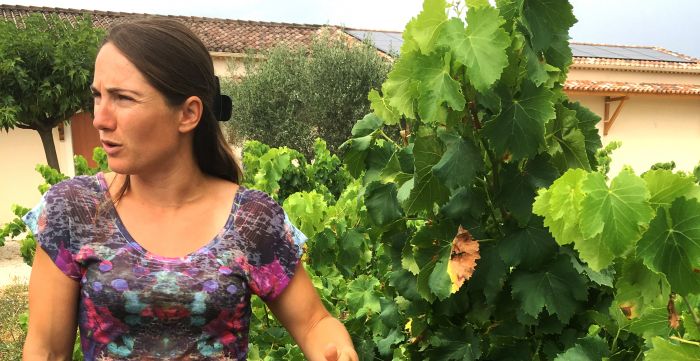
<p>Elodie Balme's beginnings in wine started with sales. But it didn't last very long, and at 19 she quit her job to study <glossary title="1103">viticulture</glossary> and <span class="zalup"><span><glossary title="422">oenology</glossary><span>.</span></span></span> As part of her curriculum, she was placed part-time with <a href="http://louisdressner.com/producers/Richaud/">Marcel Richaud</a>, one of the pioneers of <glossary title="160">biodynamics</glossary> in the Southern <span class="zalup"><span><glossary title="372">Rhône</glossary><span>.</span></span></span> The two quickly became friends, with Marcel's approach to <glossary title="1103">viticulture</glossary> and winemaking deeply resonating with Elodie. With her new mentor's encouragement, she founded Domaine Elodie Balme at just 23 years old.</p>
<p>Produced with four <glossary term="Hectare" title="523">hectares</glossary> of vines belonging to her father Bernard, 2006 was Elodie's first <span class="zalup"><span><glossary title="1109">vintage</glossary></span></span>. Bernard has been a <glossary title="1103">viticulturist</glossary> his whole life: starting with approximately four inherited <span class="zalup"><span><glossary title="523">hectares</glossary><span>,</span></span></span> he progressively acquired new <glossary title="760">parcels</glossary> over time (funded by a parallel <glossary title="773">pépiniériste</glossary> gig), for a total of 28 <span class="zalup"><span> <glossary term="Hectare" title="523">hectares</glossary><span>,</span></span></span> though the surface has since been reduced to 25. Bernard and Elodie work the entirety of the land together as partners, and for years Elodie kept grapes for herself with the rest going to the <span class="zalup"><span><glossary term="Cave Cooperative" title="252">cave cooperative</glossary><span>. </span></span></span><span class="zalup"><span><span>She currently <glossary term="Vinification" title="1104">vinifies</glossary> the equivalent of 17 <glossary term="Hectare" title="523">hectares</glossary> but plans to produce all 25 <glossary term="Hectare" title="523">hectares</glossary> by the 2023 <span class="zalup"><span> <glossary term="Vintage" title="1109">vintage</glossary><span>.</span></span></span> </span></span></span><br />
<br />
Bernard had always worked <glossary title="331">conventionally</glossary> in the vineyard, but much has changed with Elodie's involvement. Over time, she eliminated <glossary title="1142">pesticides</glossary> and <glossary title="526">herbicides</glossary> in the vast majority of the land she <span class="zalup"><span><glossary title="1104">vinifies </glossary></span></span>and incorporated <glossary title="746">organic</glossary> <span class="zalup"><span><glossary title="442">fertilizers</glossary><span>.</span></span></span> Some of her harder to work parcels were still being worked <glossary term="Chemicals" title="279">chemically</glossary> with one <glossary title="526">herbicide</glossary> and <glossary title="1142">pesticide</glossary> <glossary title="328">treatment</glossary> a year, but even this has stopped, with the <glossary term="Estate" title="427">estate</glossary> slated be <glossary term="Organic Certification" title="260">certified</glossary> <glossary term="Organic" title="746">organic </glossary>by 2024. <br />
<br />
In the <span class="zalup"><span><glossary title="254">cellar</glossary><span>,</span></span></span> a <glossary title="792">pied de cuve</glossary> starts the <span class="zalup"><span><glossary title="976">spontaneous fermentation</glossary><span>.</span></span></span> The wines are then <glossary title="1104">vinified</glossary> and <glossary term="Aging" title="74">aged</glossary> in <span class="zalup"><span><glossary title="325">concrete</glossary><span>.</span></span></span> No <glossary title="993">sulfur</glossary> is added during the <glossary title="441">fermentation</glossary> and <glossary title="74">aging</glossary> of the wine, but Elodie adds a small dose after <glossary title="1146">blending</glossary> tanks, as well as a tiny dose at <glossary title="185">bottling</glossary> if necessary.</p>
Article
interview
22.05.2019
An Interview with Elodie Balme from 2012
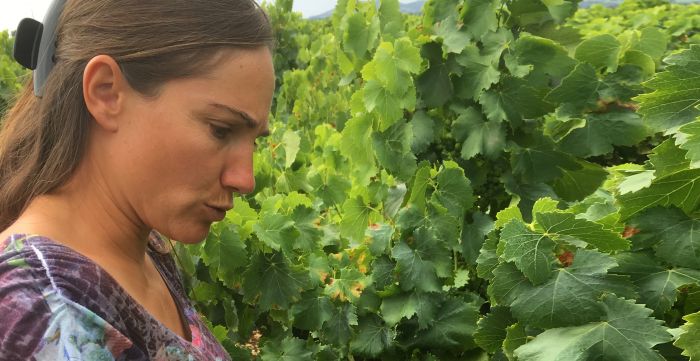
<p><em>This interview with Elodie Balme took place in her Côtes du Rhône vines in July, 2012</em></p>
<p><strong>Tell us about the estate.</strong><br />
<br />
I started making my own wine in 2006, using part of my father's land. The entire <glossary title="521">harvest</glossary> used to go to the <glossary title="252">cave cooperative</glossary>; I made my first <glossary title="1109">vintage</glossary> using four of my fathers' 28 <glossary term="Hectare" title="523">hectares</glossary><span class="zalup"><span>.</span></span> Today, I work 14 of them, with the rest still going to the <span class="zalup"><span><glossary title="252">cave</glossary><span>.</span></span></span> My father and I do all the vineyard work together. Prior to my involvement, he had always worked <glossary title="331">conventionally</glossary> in the vineyards. I had other ideas, so little by little we are shifting the <glossary title="1103">viticulture</glossary> to more natural practices. It's definitely not a complete 180, but every year it's getting better. <br />
<br />
The majority of the grapes we work with are <span class="zalup"><span><glossary title="508">Grenache</glossary><span>,</span></span></span> about 70% of the total plantings. 20% is <glossary title="1001">Syrah</glossary> and the rest is <span class="zalup"><span><glossary title="237">Carignan</glossary><span>.</span></span></span> Recently, I planted a tiny amount of <span class="zalup"><span><glossary title="692">Mourvèdre</glossary><span>.</span></span></span> We are on three <span class="zalup"><span><glossary title="322">communes</glossary><span>:</span></span></span> <span class="zalup"><span><glossary title="209">Buisson</glossary><span>,</span></span></span> where we are right now, <glossary title="845">Rasteau</glossary> and <span class="zalup"><span><glossary title="864">Roaix</glossary><span>.</span></span></span> We have all types of soils: white <span class="zalup"><span><glossary title="301">clay</glossary><span>,</span></span></span> red <span class="zalup"><span><glossary title="632">marl</glossary><span>,</span></span></span> <glossary title="909">sands</glossary>… This permits me to <glossary title="1104">vinify</glossary> <glossary title="760">parcel</glossary> by <glossary title="760">parcel</glossary> and get interesting results when I <glossary title="168">blend</glossary> them together. <br />
<br />
<strong>How do you and your father share the work?</strong><br />
<br />
Everyone does everything. We do however have different priorities: even though I spend 80% of my time in the vines, a big part my work is working in the <span class="zalup"><span><glossary title="254">cellar</glossary><span>,</span></span></span> which I do alone. My father isn't involved in any <glossary title="254">cellar</glossary> work and doesn't want to be. This isn't a bad thing, since it both gives us our little moments of independence. He's a real <span class="zalup"><span><glossary title="1103">viticulturist</glossary><span>,</span></span></span> and loves being on the field. He's extremely skillful with tractor and <glossary title="645">mechanical</glossary> work. <br />
<br />
<strong>I know you started working in the vines very young. Tell us about your path.</strong><br />
<br />
I've never done anything else. I started thinking about wine when I was 14-15. I knew I would work with wine in some capacity, but wasn't sure how. And to be honest, when you're a young woman it's not something anybody really encourages you to do. I started with commerce classes and got a job selling wine. I quickly realized that <glossary title="1089">vigneron</glossary> work interested me way more than a sales job. So I took classes in <glossary title="1103">viticulture</glossary> and <span class="zalup"><span><glossary title="422">oenology</glossary><span>,</span></span></span> splitting my time between classes and working at <a href="http://louisdressner.com/producers/Richaud/">Marcel Richaud</a>'s for three years. Marcel really pushed me to become an independent <span class="zalup"><span><glossary title="1089">vigneronne</glossary><span>:</span></span></span> he told me there was always room for you when you're motivated to work well. I followed his advice, and made my first <glossary title="1109">vintage</glossary> when I was 23.<br />
<br />
<strong>Did you ever consider starting an estate elsewhere?</strong><br />
<br />
No. Everyone told me: <em>"If you're going to settle here, you're not going to be able to go anywhere. So if you want to work elsewhere, do it now!"</em> But I didn't want to leave my father alone for too long. I wanted to show him that I was here to help right now, and willing to eventually take over. In this rural environment, the only way to prove yourself is to work. I don't think I could have permitted myself to spend a year or two somewhere else. But at the same time, I never wanted to. I wanted to start right away! It could have been interesting to start somewhere else, but getting to know my own land has been very rewarding.<br />
<br />
<strong>You mentioned earlier that you are slowly shifting viticultural practices. How have things changed since 2006, and what are the long term plans and goals? </strong><br />
<br />
It's definitely the big question! Since I took over in 2006, I've eliminated <glossary title="526">herbicides</glossary> in the 14 <glossary title="523">hectares</glossary> I work with. We use <glossary title="746">organic</glossary> <span class="zalup"><span><glossary title="442">fertilizers</glossary><span>,</span></span></span> and only use <glossary title="328">contact treatments</glossary> of <glossary title="333">copper</glossary> and <glossary title="993">sulfur</glossary> (for the last two years, my father has only been using <glossary title="1002">contact products</glossary> on all 28<glossary title="523">ha</glossary>). Unfortunately, some very difficult to work <glossary title="760">parcels</glossary> that I <glossary title="1104">vinify</glossary> are still being treated <span class="zalup"><span><glossary title="331">conventionally</glossary><span>.</span></span></span> My father is more experienced and active in the tractor work, and feels that they are just too much work to <span class="zalup"><span><glossary title="332">convert</glossary><span>.</span></span></span> This has been a point of contention between the two of us, but like I said, every year we push things a little further. <br />
<br />
The goal is to learn how to work naturally in the vineyard so we can do it right. I don't want to <glossary term="Conversion" title="332">convert</glossary> to <glossary title="746">organics</glossary> just to say I'm <span class="zalup"><span> <glossary title="260">certified</glossary><span>.</span></span></span> And I don't want my father to start working <glossary title="746">organically</glossary> unless he himself is convinced it's worth it. Personally, I am sure we can do it. We can make this change, but don't forget that we still have 28 <glossary title="523">hectares</glossary> of vines to tend. Everything that goes to the <glossary title="252">cave</glossary> is still being <glossary title="526">de-grassed chemically</glossary> in the spring. <br />
<br />
<strong>Speaking of the size of the estate<span class="zalup"><span><span>,</span></span></span> how do you plan to proceed with the grapes that go to the cave<span class="zalup"><span><span>?</span></span></span></strong><br />
<br />
Working <glossary title="746">organically</glossary> and selling 28<glossary title="523">ha </glossary>worth of wine is going to be very difficult if I take everything over by myself. So the question becomes, what do we do with the remaining 1<span class="zalup"><span>4<glossary title="523">ha</glossary><span>?</span></span></span> In three or four years, we will have to decide if we renew our contract with the <span class="zalup"><span><glossary title="252">cave</glossary><span>.</span></span></span> In the mean time, one possibility is to sell some of the land, but it's not always that easy. Another long term investment would involve going back to doing <span class="zalup"><span><glossary title="554">Jachère</glossary><span>.</span></span></span> A lot of our vines are degenerating because the soil is tired from vines constantly being ripped and replanted. By letting the soils regenerate for 7-10 years, you really do them a lot of good. <br />
<br />
If we do a bit of both, I think we could significantly reduce the amount of vines we'd need to work. I still hope to re-acquire three or four more <glossary title="523">hectares</glossary> into the <span class="zalup"><span><glossary title="427">estate</glossary><span>,</span></span></span> and for the rest we'll find a solution. <br />
<br />
<strong>What's the work in the cellar like?</strong><br />
<br />
It's inspired by what I learned with Marcel Richaud. When I started tasting more wines made this way, it became clear that I could do nothing else but a natural <glossary title="1104">vinification</glossary>; it gives the wine a reason of being, a vibrant energy. A life! <br />
<br />
I am not not an extremist of <glossary term="Sans Souffre" title="913">sans souffre</glossary> winemaking. I add some when I <glossary title="168">blend</glossary> the wines and a little at <span class="zalup"><span><glossary title="185">bottling</glossary><span>.</span></span></span> However, the wines are <glossary title="441">fermented</glossary> and aged without any added <span class="zalup"><span><glossary title="993">sulfur</glossary><span>.</span></span></span> I minimally <glossary title="433">extract</glossary> as to best express the fruit and to add finesse to the wines. We have a lot of <span class="zalup"><span><glossary title="508">Grenache</glossary><span>,</span></span></span> and could easily be making heavier, more alcoholic wines, but I'm really going for finesse and elegance. <br />
<br />
<strong>What do you like to drink?</strong><br />
<br />
What do I like to drink? A lot of stuff! From the <glossary title="602">Loire</glossary> I like <a href="http://louisdressner.com/producers/Morantin/">Noëlla Morantin</a>'s whites and <glossary title="908">Sancerre</glossary> from Riffault. In the <span class="zalup"><span><glossary title="579">Languedoc</glossary><span>,</span></span></span> I really like <a href="http://louisdressner.com/producers/pelletier/">Yannick Pelletier</a>… I don't know, a lot of stuff! Oh and <span class="zalup"><span><glossary title="267">Champagne</glossary><span>!</span></span></span></p>
Article
producer visit
24.07.2019
This visit with Elodie Balme took place in June, 2012
<p><strong><em>This visit with Elodie Balme took place in June, 2012.</em></strong></p>
<p><img src="http://louisdressner.com/uploads/images/article/2019_Aug_23//78/63/7863081f2a7b949a3bf7a62c67c6c17b.png" /></p>
<p><strong><em>Words by Jules Dressner, photos by Maya Pedersen.</em></strong></p>
<p>Elodie Balme is a go-getter. She's one of those personalities that just exudes positive energy, and in this day and age it's impressive to see someone so young and enthusiastic about anything, let alone <span class="zalup"><span><glossary term="Agriculture" title="78">agriculture</glossary><span>!</span></span></span> It's also very refreshing that she isn't afraid to admit that she is still very new at this, and that everyday is a learning experience. <br />
<br />
We arrived around dinner time, where we ate some delicious cheese and tomato tart thing and drank Plageoles <span class="zalup"><span><glossary term="Mauzac" title="642">Mauzac</glossary><span>.</span></span></span> Well, everyone except Elodie, who is four months pregnant! While eating, we started talking about Elodie's work dynamic with her father Bernard, a recurrent theme that would come up throughout the visit (more on that later).<br />
<br />
The next morning, it was time to taste the 2011's and check out the <span class="zalup"><span><glossary title="254">cellar</glossary><span>.</span></span></span> Almost everything is <glossary title="1104">vinified</glossary> and <glossary title="74">aged</glossary> in <span class="zalup"><span><glossary title="325">concrete</glossary><span>.</span></span></span> </p>
<p><img src="http://louisdressner.com/uploads/images/article/2019_Jul_24//17/ee/17ee7693a13d42f308e0db781e5e849c.jpg" /></p>
<p>There's also some <glossary term="Fiberglass" title="445">fiberglass</glossary><glossary term="Fiberglass" title="445"> </glossary><glossary term="Vat/Tank" title="1140">tanks</glossary> to <glossary title="168">blend</glossary> the wines. </p>
<p><img src="http://louisdressner.com/uploads/images/article/2019_Jul_24//39/1a/391a0d43bf32bf8f0ef6fa5258d5a8c1.jpg" /></p>
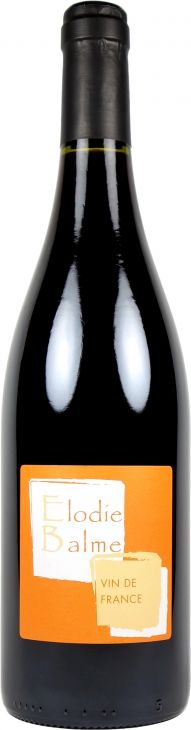
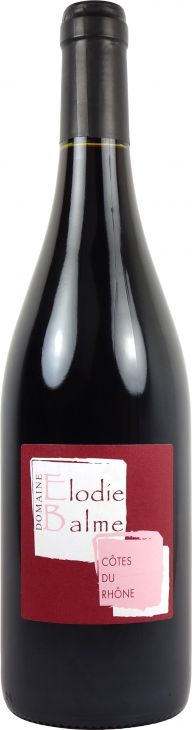
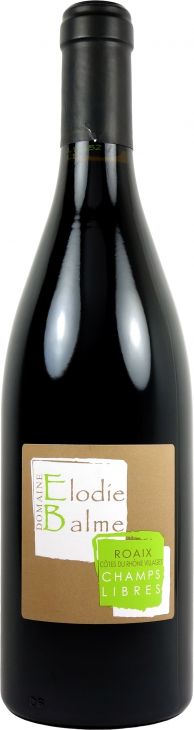
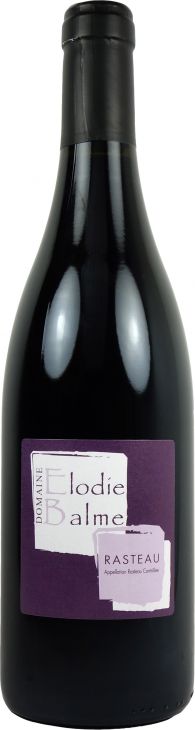
<p>Elodie also has a few <span class="zalup"><span><glossary title="142">barrels</glossary><span>,</span></span></span> mostly for experiments. The 2011's where showing well: the <glossary title="372">Côtes du Rhône</glossary> and <glossary title="864">Roaix</glossary> had just been <span class="zalup"><span><glossary term="Bottling" title="185">bottled</glossary><span>,</span></span></span> and we tasted <glossary term="Tank Sample" title="1008">tank samples</glossary> of the <span class="zalup"><span><glossary title="845">Rasteau</glossary><span>,</span></span></span> which should have been <glossary term="Bottling" title="185">bottled</glossary> by now. Elodie really goes for elegance and finesse in the wines, which are fresh and fruity, but with enough weigh to add <span class="zalup"><span><glossary term="Structure" title="990">structure</glossary><span>.</span></span></span> One new thing was a <glossary title="1092">Vin De France</glossary> made from <span class="zalup"><span><glossary title="650">Merlot</glossary><span>,</span></span></span> <glossary title="508">Grenache</glossary> and <glossary title="237">Carignan</glossary> on <glossary title="909">sandy</glossary> soils. Elodie's dad basically planted the atypical <glossary title="650">Merlot</glossary> in front of their house so that no one would build a house in front of theirs: <br />
<br />
<em>"He thought it might be something original for me..."</em><br />
<br />
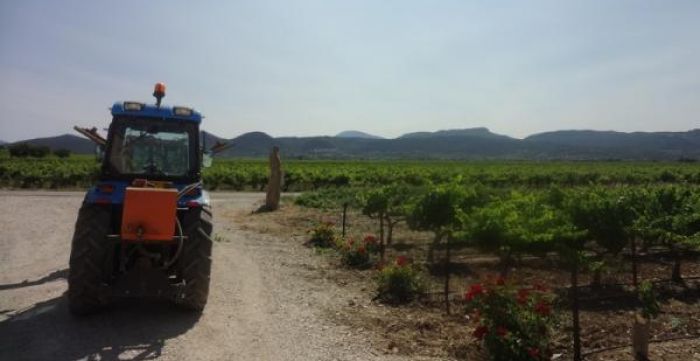
In the evening, we returned to go check out the vines. The first <glossary term="Parcel" title="760">parcel</glossary> we visited is a <glossary title="305">clos</glossary> called Le Plateau.</p>
<p><img src="http://louisdressner.com/uploads/images/article/2019_Jul_24//50/12/5012973a1926ecd24b979c09ffd49458.jpg" /></p>
<p><img src="http://louisdressner.com/uploads/images/article/2019_Jul_24//b8/c5/b8c5ef19470946bb415c5dff8a1ae87a.jpg" /></p>
<p><img src="http://louisdressner.com/uploads/images/article/2019_Jul_24//97/8c/978c94e974433388843714494558d8a3.jpg" /></p>
<p><img src="http://louisdressner.com/uploads/images/article/2019_Jul_24//6e/50/6e5076f2f6a810c83dd62b677de656fb.jpg" /></p>
<p>This <glossary title="760">parcel</glossary> was the one Bernard started with. Elodie's grandfather actually de-forested the entire four <glossary title="523">hectares</glossary> to plant vines! Being there, it was crazy to think this <glossary title="760">parcel</glossary> of <glossary term="Old Vines" title="740">80 year old vines</glossary> could ever have been anything else. For these vines they put a <glossary title="1044">treillissage</glossary> in the middle because the infamous <glossary term="Mistral" title="667">Mistral</glossary> wind causes them to break. Most of the grapes go into the <glossary term="Roaix" title="864">Roaix</glossary> <span class="zalup"><span><glossary title="363">cuvée</glossary><span>.</span></span></span> <br />
<br />
As we left Le Plateau, Elodie pointed out "saffre", the compacted <glossary term="Sand" title="909">sands</glossary> that constitute the majority of her <glossary title="991">sub-soils,</glossary> as well as some of her <span class="zalup"><span><glossary title="1032">top soils</glossary><span>.</span></span></span></p>
<p><img src="http://louisdressner.com/uploads/images/article/2019_Jul_24//8f/e0/8fe0444f519523c49f99e770cb63c5eb.jpg" /><br />
<br />
Saffre retains water, so the soil remains cooler than if it was just <span class="zalup"><span><glossary title="909">sand</glossary><span>.</span></span></span> It's quite compact, but breaks into the exact same kind of <glossary title="909">sand</glossary> you find at the beach.</p>
<p><img src="http://louisdressner.com/uploads/images/article/2019_Jul_24//fe/91/fe918dc1431c755e8f26569c77d9ebfb.jpg" /><br />
<br />
Next up, we visited Les Champs Libres, a five <glossary title="523">hectare</glossary> <glossary title="305">clos</glossary> of 55 year old vines and Samuel, a <glossary title="760">parcel</glossary> of 80% <glossary title="508">Grenache</glossary> and 20% <glossary title="237">Carignan</glossary> with vines over 80 years old. </p>
<p><img src="http://louisdressner.com/uploads/images/article/2019_Jul_24//90/76/90763ef4c3091798b6d9acce07de9698.jpg" /></p>
<p><img src="http://louisdressner.com/uploads/images/article/2019_Jul_24//06/59/0659babf4cde692b2292c13cbe845d2b.jpg" /></p>
<p><img src="http://louisdressner.com/uploads/images/article/2019_Jul_24//b2/40/b24092e655de35b8818a8aefaa1432ab.jpg" /></p>
<p><img src="http://louisdressner.com/uploads/images/article/2019_Jul_24//97/74/977411f5fb32c74f5501bfe961600097.jpg" /><br />
<br />
These are two of the many <glossary title="760">parcels</glossary> Elodie works <span class="zalup"><span><glossary title="746">organically</glossary><span>,</span></span></span> and goes mostly in the <span class="zalup"><span><glossary title="372">Côtes du Rhône</glossary><span>,</span></span></span> with a little bit in the <span class="zalup"><span><glossary title="864">Roaix</glossary><span>.</span></span></span> Every year, more and more <glossary title="760">parcels</glossary> are being <span class="zalup"><span><glossary term="Conversion" title="332">converted</glossary><span>,</span></span></span> but Elodie is partners with her father, and they work the 28 <glossary title="523">hectares</glossary> of vines together. And while the two get along well, share all responsibilities in the vines and are indispensable to each other, <glossary title="1103">viticulture</glossary> has been a serious point of contention.<br />
<br />
Many things have changed since Elodie released her first wines in 2006, which hasn't always been easy for father/daughter team. Making and selling wine independently was never a problem for Bernard, since he has absolutely no desire to partake in <glossary title="254">cellar</glossary> work. If anything, he's proud that his daughter is pulling it off, and has no qualms with <glossary title="976">spontaneous fermentations</glossary> and minimal <glossary title="254">cellar</glossary> <glossary title="545">intervention</glossary> (he says it makes the wines taste good). But when it comes to <span class="zalup"><span><glossary title="1103">viticulture</glossary><span>,</span></span></span> the two see things differently: Elodie's time with Marcel Richaud deeply influenced her approach to <span class="zalup"><span><glossary title="1103">viticulture</glossary><span>,</span></span></span> but this approach is contradictory to what Bernard has been doing since his early teens (he's in his early 50's now). <br />
<br />
And while there have been significant changes made in the <glossary term="Viticulture" title="1103">viticultural</glossary> practices (no <glossary title="1142">pesticides</glossary>/<glossary title="526">herbicides</glossary> on the vines Elodie makes wine with, <glossary title="746">organic</glossary> <span class="zalup"><span><glossary title="442">fertilizers</glossary><span>,</span></span></span> <glossary title="333">copper</glossary> and <glossary title="993">sulfur</glossary> <glossary term="Contact Treatment" title="328">contact treatments</glossary> on all 28<glossary title="523">h</glossary>), Bernard is still not totally convinced on working<span class="zalup"><span> <glossary title="746">organically</glossary><span>,</span></span></span> especially if the land remains at 28 <span class="zalup"><span><glossary title="523">hectares</glossary><span>.</span></span></span> Though he has always been <em>"soft"</em> with his <glossary term="Chemicals" title="279">chemical</glossary> use compared to a lot of his heavier handed neighbors, he still refuses to take them out of the picture completely. Still, switching to <glossary term="Contact Treatment" title="328">contact</glossary> <glossary title="333">copper</glossary> and <glossary title="993">sulfur</glossary> treatments is a big decision, and Elodie sees this as a huge step forward for the <span class="zalup"><span><glossary term="Estate" title="427">estate</glossary><span>.</span></span></span> It also makes her feel like her father understands and respects what she is doing.<br />
<br />
<em>"Things really have changed. Even in "his" vines, he's reduced the </em><glossary term="Chemicals" title="279"><em>chemical</em></glossary><em> products considerably. For example now he only does one </em><glossary title="1142"><em>pesticide</em></glossary><em> treatment a year, as late as possible to last through the summer." </em><br />
<br />
One thing the two definitely agree on: a lot their soils are suffering from over-exploitation. The plan for currently empty <glossary title="760">parcels</glossary> and those they will soon rip out is simple: back to the <glossary title="554">jachère</glossary> technique. After ripping out the vines, you plant cereals one year, then something else, then something else… By doing this for around eight years, the soil gets to rest and purify itself. <br />
<br />
<em>"People used to plant with the goal of having vines for 60-70 years minimum. Now, as soon as they start getting less productive (usually around the 30 year mark), you rip them right out and replant. Things back then were less about quantities and productivity."</em><br />
<br />
That night, we had dinner with Elodie and her boyfriend Jérome at this great place in <span class="zalup"><span><glossary title="845">Rasteau</glossary><span>.</span></span></span> Marcel Richaud came up.<br />
<br />
<em>"I have him to thank for everything. He really encouraged me to start my own <span class="zalup"><span><glossary title="427"><em>estate</em></glossary><span>,</span></span></span> introduced me to all his customers, got me press..."</em><br />
<br />
Clearly Marcel really likes Elodie since he decided to be her mentor. But there's actually a cool story behind it! When he was just getting started, Marcel was 19, the same age Elodie was when she was placed to work for him part-time. His father had also sold his grapes to the <glossary title="252">cooperative</glossary> his whole life, and in his day it made you a good living; when Marcel decided he wanted to be independent, everyone told him he was crazy. He was shunned from his family (Marcel elaborates on the whole story in his <a href="http://louisdressner.com/producers/Richaud/">interview</a>), and since no one wanted to help him, he actually produced his first <glossary title="1109">vintage</glossary> in a <glossary title="254">cellar</glossary> with no roof! Incredibly discouraged, his first <glossary title="1109">vintage</glossary> was almost his last. <br />
<br />
On the verge of giving up, a chance encounter with a monsieur Charavin (a famous <glossary title="1089">vigneron</glossary> from the area), would change everything. Seeing this 20 year old kid try to be a <glossary title="1089">vigneron</glossary> really clicked with him, and he told Marcel he could use a part of his <glossary title="254">cellar</glossary> to make wine and show him how to properly <glossary title="1104">vinify</glossary> until he was more settled. This man who took him under his wing, who taught him everything he knew and gave Marcel the chance to suceed, this M. Charavin was none other than...Elodie's grandfather! Remembering what he'd done for him, he felt he had to do the same for Elodie. <br />
<br />
That's some full circle shit right there!</p>
Article

harvest report
02.12.2024
2024 Harvest Report from Elodie Balme
<p>2024 is a very promising vintage! </p>
<p>After a rainy spring which brought plenty of challenges, the reserves of water helped us get through a rather dry summer. That said, the summer heat was not as extreme as it has been in the past few years. The grapes' maturities therefore were optimal, save for some of the younger vines on sandier soils where the grapes are more fragile. </p>
<p>Some big rains right before harvest (100mm) helped release some of the stress the vines were feeling and gave us the chance to follow maturities to a latter stage than we have become accustomed to. We began picking on September 11th under nice, cool conditions. It's not normal to harvest wearing a beanie around here! </p>
<p>In the cellar, it was a pure joy to vinify fresh, perfect grapes! The final result are wines with good acidity and more notably low PH for the region. The wines will be balanced and qualitative. </p>
Article
harvest report
27.12.2022
2022 Harvest Report from Elodie Balme
<p>Here is my little <glossary term="Harvest" title="521">harvest</glossary> report for the 2022 <span class="zalup"><span><glossary term="Vintage" title="1109">vintage</glossary><span>.</span></span></span> Even though it's always hard to know the results at this stage of things!</p>
<p>I would describe the summer as: extremely dry! It will certainly have marked the year: extreme heat and a lack of water, no rain from Spring until August 15th! We did get 17mm that helped out on August 17th, though it could not save the vines suffering most. </p>
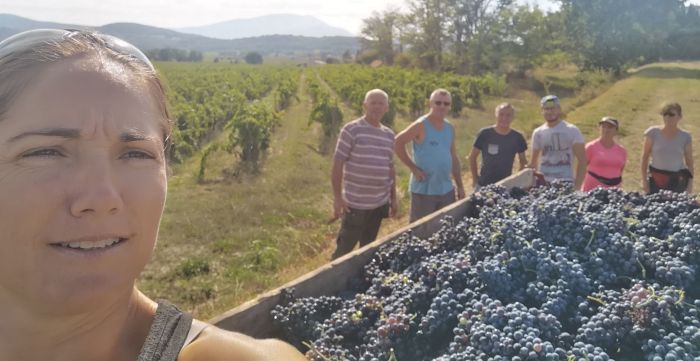
<p>We picked our first grapes on August 11th in an attempt to save the youngest vines under the most stress. Once those were done, we waited until August 27th for the real start of the <span class="zalup"><span><glossary term="Harvest" title="521">harvest</glossary><span>.</span></span></span> For the <glossary term="Terroir" title="1026">terroirs</glossary> less affected by <glossary term="Drought" title="1167">drought</glossary> (the <glossary term="Coteau" title="345">coteaux</glossary> with clay <glossary term="Exposition" title="430">exposed</glossary> North), the <glossary term="Cluster/Bunch" title="1138">bunches</glossary> were small but plentiful. We were very happy with the results there. </p>
<p>Early September was marked by intense storms. This slowed down the <glossary term="Harvest" title="521">harvest</glossary> but also brought a bit more juice into the berries... It also resulted in the longest harvest in the <glossary term="Estate" title="427">estate</glossary>'s history, in total four long, hard weeks.</p>
<p>In the end we had good quantity, with only a few <glossary term="Parcel" title="760">parcels</glossary> suffering extremely. This was honestly a surprise and a relief! Nature nonetheless remains conciliatory! The juices are full of fruit and nice material, high alcohol of course but well integrated. </p>
<p>We are rather satisfied with this <glossary term="Vintage" title="1109">vintage</glossary> and all its twists and turns!</p>
<p><img src="https://louisdressner.com/uploads/images/article//964/e3/96/e396089543be144e1904f0f66a15431b.jpg" /><img src="https://louisdressner.com/uploads/images/article//964/97/af/97af53b189294613bf30df66ca236691.jpg" /></p>
Article
harvest report
10.12.2021
2021 Harvest Report from Elodie Balme
<p><em><strong>October 12th, 2021.</strong></em></p>
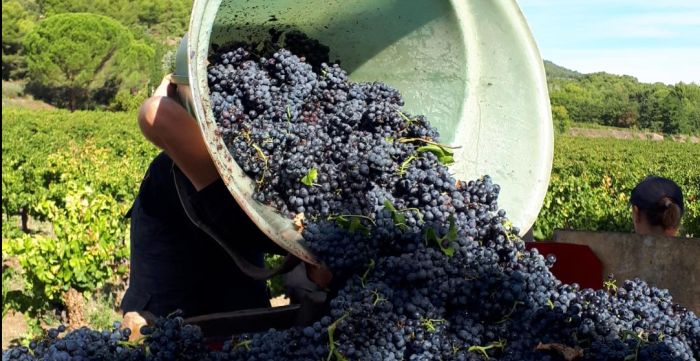
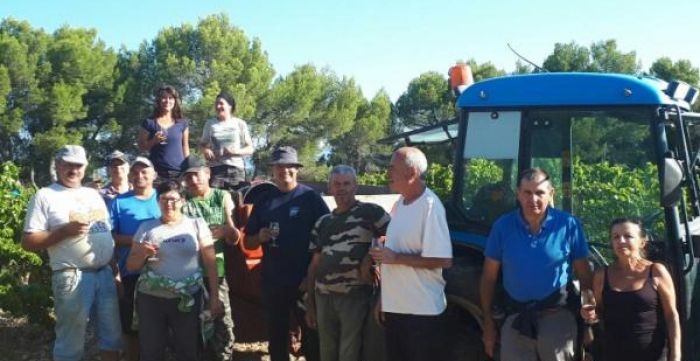
<p>Our <glossary term="Harvest" title="521">harvest</glossary> ended today. It was indeed a very complicated <span class="zalup"><span> <glossary term="Vintage" title="1109">vintage</glossary><span>.</span></span></span> While <span class="zalup"><span> <glossary term="Hand Harvesting" title="520">hand harvesting</glossary><span>,</span></span></span> we had to bring trolleys into the vines as a heavy period of rain coincided with picking and meant we couldn't get tractors into the vines. You can see it in the pictures, this is extremely rare for our region. </p>
<p>Qualitatively we don't know much but it won't be the <glossary term="Vintage" title="1109">vintage</glossary> of the century... Pretty light bodied...<img src="https://louisdressner.com/uploads/images/article//912/cf/32/cf3233f4bd255e1598c72adaf5a18288.jpg" /><img src="https://louisdressner.com/uploads/images/article//912/00/b6/00b6d625cb92fb212d9b63754ee777f4.jpg" /></p>
Article
harvest report
09.10.2018
2018 Harvest Report from Elodie Balme
<p>For us, the 2018 <glossary term="Vintage" title="1109">vintage</glossary> was marked by two different impressions. On one hand, it was extremely rainy and that meant a lot of <glossary term="Mildew" title="1137">mildew</glossary> pressure. This also meant working the soils was very complicated and that our windows for <glossary term="Contact Treatment" title="328">treatment</glossary> were very short!<br />
<br />
On the other hand, we had an exceptional September and October. And despite the <glossary term="Mildew" title="1137">mildew</glossary> issues, the dryness permitted our <glossary term="Parcel" title="760">parcels</glossary> to reach optimal <span class="zalup"><span><glossary term="Maturation" title="639">maturities</glossary><span>.</span></span></span> The wines will be more complex than 2017 and not excessive in <glossary term="Concentration" title="324">concentration</glossary> or alcohol. I'm very happy with the final results.<br />
<br />
That's my brief impression of this complex <glossary term="Vintage" title="1109">vintage</glossary> (as it always tends to be ;))</p>
Article