producer profile
01.07.2019
Mas des Chimères Producer Profile
<p>For over 20 years, Guilhem Dardé meticulously tended his family vineyards and brought his grapes to the local <glossary title="252">coop</glossary> to be <glossary title="168">blended</glossary> with the overproduction of his neighbors. Finally, he bought winemaking equipment, scandalized the village and struck out on his own. With the 1993 <span class="zalup"><span><glossary title="1109">vintage</glossary><span>,</span></span></span> he tasted his own wine for the first time.</p>
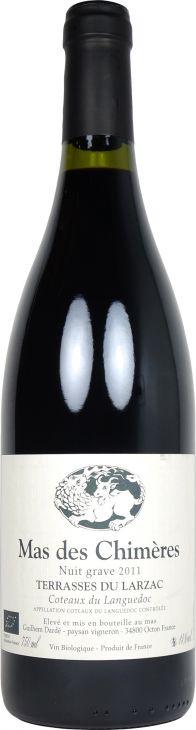
<p>A self-described <em><span class="zalup"><span><glossary title="769">paysan</glossary><span>-</span></span></span><glossary title="1089">vigneron</glossary></em>, Dardé approaches <glossary title="1104">vinification</glossary> with enthusiasm. His<strong> "</strong>Nuit Grave<strong>"</strong> is a <glossary title="168">blend</glossary> of about 70% <span class="zalup"><span> <glossary title="1001">Syrah</glossary><span>,</span></span></span> 20% <glossary title="508">Grenache</glossary> and 5% each <glossary title="1188">Cinsault</glossary> and <glossary title="692">Mourvèdre</glossary>; the proportions vary according to the <span class="zalup"><span><glossary title="1109">vintage</glossary><span>.</span></span></span> This wine is dark purple, with a ripe <glossary title="">nose</glossary> of cloves, cinnamon and coffee, is spicy and concentrated on the <span class="zalup"><span><glossary title="756">palate</glossary><span>.</span></span></span> The considerable amount of <glossary title="1010">tannin</glossary> is balanced by rich, soft matter and the finish is long, with notes of licorice, coffee and kirsch. This wine is <glossary title="74">aged</glossary> in <glossary title="144">barriques</glossary> and <glossary title="185">bottled</glossary> <glossary title="449">unfined</glossary> and <span class="zalup"><span><glossary title="447">unfiltered</glossary><span>.</span></span></span> The abundance of pigments and solid matter results in a noticeable <glossary title="939">sediment</glossary> in the bottle.<br />
<br />
Traditional methods are used in the vineyards: <span class="zalup"><span><glossary title="810">plowing</glossary><span>,</span></span></span> only <glossary title="333">copper</glossary> and <glossary title="993">sulfur</glossary> <span class="zalup"><span><glossary title="328">treatments</glossary><span>,</span></span></span> and <span class="zalup"><span><glossary title="520">manual harvesting</glossary><span>.</span></span></span> In this remote corner of the <glossary title="347">Coteaux-du-Languedoc</glossary> <span class="zalup"><span><glossary title="113">appellation</glossary><span>,</span></span></span> vines grow on strips of <glossary title="301">clay</glossary>/<glossary title="933">schist</glossary>/<glossary title="502">granite</glossary> soils forming <glossary title="1022">terraces</glossary> on the arid, strikingly red slopes (which indicates decomposed <glossary title="145">basaltic</glossary> <span class="zalup"><span><glossary title="961">slate</glossary><span>,</span></span></span> colored by <glossary title="547">iron</glossary>). Poor soil and dry harsh weather conditions ensure low <glossary title="1129">yields</glossary> and high <span class="zalup"><span><glossary title="324">concentration</glossary><span>.</span></span></span></p>
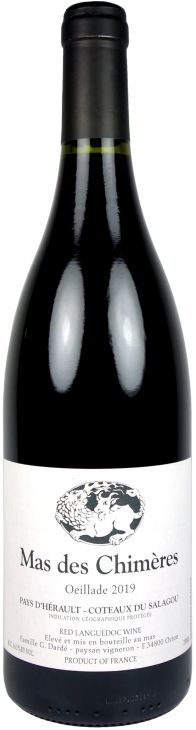
<p>Dardé makes a series of other wines, but small quantities and success mean that very little reaches America. Among those, "L’Oeillade", made from <span class="zalup"><span><glossary title="1188">Cinsault</glossary><span>,</span></span></span> is light and fruity, perfect for a summer wine; "L’Hérétique", a blend of <glossary title="650">Merlot</glossary> and <span class="zalup"><span><glossary title="217">Cabernet</glossary><span>,</span></span></span> is a big, powerful, <glossary title="1010">tannic</glossary> wine; "L’Ephémère", made with <span class="zalup"><span><glossary title="237">Carignan</glossary><span>,</span></span></span> <span class="zalup"><span><glossary title="508">Grenache</glossary><span>,</span></span></span> <glossary title="217">Cabernet</glossary> and <span class="zalup"><span><glossary title="692">Mourvèdre</glossary><span>,</span></span></span> is ripe, light and round;<strong> "</strong>Cuvée Marie & Joseph" (named after Dardé’s parents), from <glossary title="237">Carignan</glossary> and <span class="zalup"><span><glossary title="508">Grenache</glossary><span>,</span></span></span> is big and spicy. The name of the <glossary title="427">estate</glossary> means <em>House of Chimeras</em>, and aptly describes the amount of faith, dreaming and daring it took Dardé to change his life and become a winemaker.<br />
<br />
Finding great winemakers like Dardé makes this a fun business!</p>
Article
interview
01.07.2019
An Interview with Guilhem Dardé from 2012
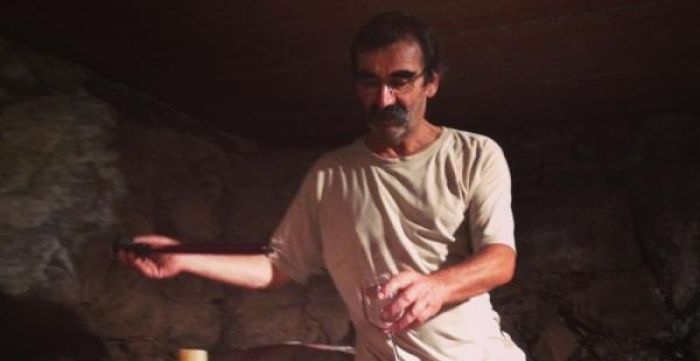
<p><em>This interview with Guilhem Dardé took place at L'Herbe Rouge in February 2012.</em></p>
<p><strong>Tell us about Mas des Chimères. </strong><br />
<br />
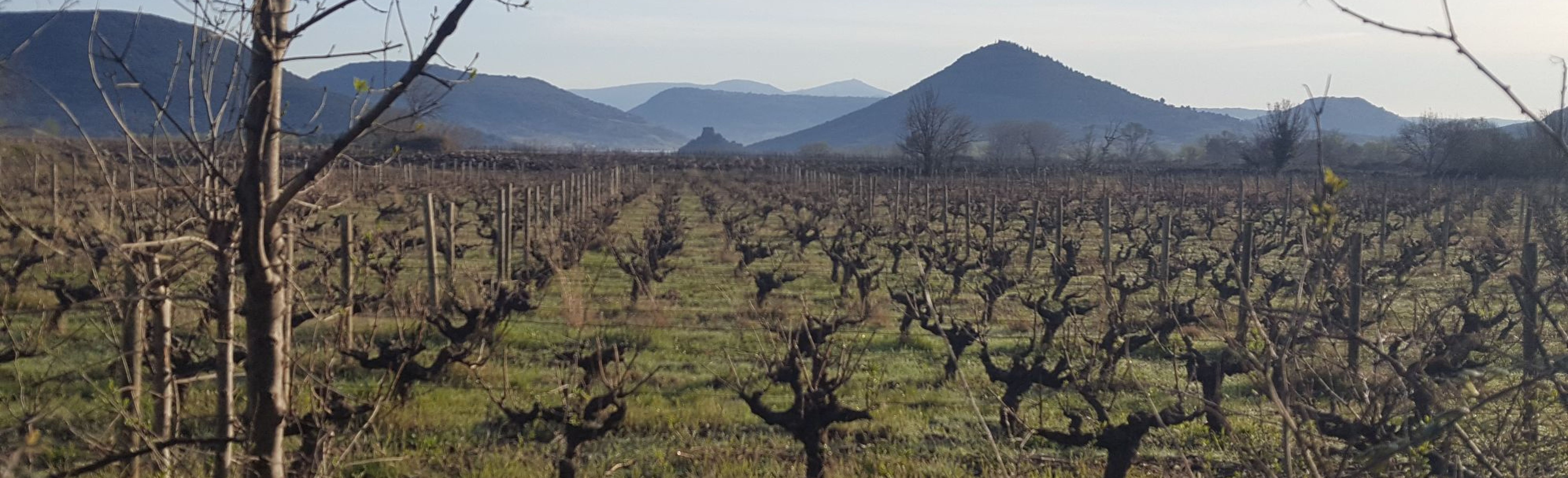
We're located in <span class="zalup"><span><glossary title="733">Octon</glossary><span>,</span></span></span> a small village bordering the <span class="zalup"><span><glossary title="901">Salagou lake</glossary><span>.</span></span></span> It's about 50 km from the <span class="zalup"><span><glossary title="1194">Mediterranean</glossary><span>,</span></span></span> and we work with some very old soils. They're composed of compacted <span class="zalup"><span><glossary title="301">clay</glossary><span>,</span></span></span> and have a deep red color because of how rich they are in <span class="zalup"><span><glossary title="547">iron</glossary><span>.</span></span></span> These soils are 250 million years old, dating back to when the first vertebrae were coming out of the water! It's from here that our <glossary title="1093">Vin de Pays</glossary> du <glossary title="901">Salagou</glossary> is made. Higher up, we are on a <glossary title="145">basaltic</glossary> <glossary title="809">plateaux</glossary> that resulted from volcanic activity. This is where all the <glossary title="108">A.O.C</glossary> <glossary title="1365">Terrasses du Larzac</glossary><em> </em>comes come from. We're a family <glossary title="427">estate</glossary> started by my grandfather. When I was a kid it was in <span class="zalup"><span><glossary title="815">polyculture</glossary><span>:</span></span></span> we had vines but it was a very poor area so most people lived self sufficiently from their land.<br />
<br />
<strong>Did your grandfather or father ever bottle independently?</strong><br />
<br />
It was very limited in my grandfather's days, mostly for friends and family. By the time my father had taken over, the farm became a <glossary title="671">monoculture</glossary> of vines. Then the <glossary title="252">cave cooperative</glossary> opened in 1943. My father joined it a year later and from then on we didn't make any wine at all. It was my decision to leave in 1993, the first year I <glossary title="1104">vinified</glossary> and <glossary title="185">bottled</glossary> everything independently. <br />
<br />
<strong>What led to that decision? </strong><br />
<br />
As with any important decision, a number of factors. I was 40 years old. I'd been working with the <glossary title="252">cave</glossary> for 20 years and I began reevaluating myself and my work. At the <span class="zalup"><span> <glossary title="252">cave</glossary><span>,</span></span></span> everyone was always talking about quality, but their words didn't match their actions! It was a time when I'd begun focusing on new <glossary title="1071">varietals</glossary> and smaller <span class="zalup"><span><glossary title="1129">yields</glossary><span>,</span></span></span> and I was having a hard time selling them because the <glossary title="252">cave</glossary> wanted them to be cheaper! It got so bad that I actually starting selling my grapes at local markets. I also sold some fruits from our farm, and it helped me makes ends meet...<br />
<br />
But I also wanted to see things through with my work in the vines: when you work with a<strong> <glossary title="252">cooperative</glossary></strong>, you give them the grapes and they make the wine however they see fit. I wanted to know what my soils were truly capable of. It's funny because the grapes they paid me the most for at the <glossary title="252">cave</glossary> ended up being the grapes I like the least! <br />
<br />
<strong>What's the work in the vines like?</strong><br />
<br />
Four of us work full time both in the vines and <glossary title="254">cellar</glossary> (I work with my wife, daughter and one employee). During <glossary title="834">pruning</glossary> season, we have two seasonal guys who help out. Everything is done by hand: our soils are particular and very hard to work because of all the <span class="zalup"><span><glossary title="145">basalt</glossary><span>.</span></span></span> These are some very hard <glossary title="1117">volcanic</glossary> rocks, so no <glossary title="645">mechanical</glossary> work can be done; in fact it's restricted You need some serious equipment, because otherwise you'll always be bending and breaking it. I have to repair my stuff all the time! But the potential of these soils is incredible. <br />
<br />
We're in a part of the <glossary title="579">Languedoc</glossary> that is very isolated, so we're not sharing space in an intensive <span class="zalup"><span><glossary title="671">monoculture</glossary><span>.</span></span></span> The vines coexist with the rest of nature, so we don't feel the pressure of <glossary title="474">fungal illness</glossary> as much as some other regions. This is also because it's very dry here: there is no maritime climate whatsoever. So we don't really have any problems with <span class="zalup"><span><glossary title="1137">mildew</glossary><span>,</span></span></span> and we don't have bug issues so no <span class="zalup"><span><glossary title="543">insecticides</glossary><span>.</span></span></span> <glossary title="737">Oidium</glossary> is still a concern, so we stay vigilant. <br />
<br />
<strong>Are you certified organic?</strong><br />
<br />
We've been working <glossary title="746">organically</glossary> since the beginning but only got the <glossary title="260">certification</glossary> in 2008. <glossary title="260">Certification</glossary> wasn't really a concern for us because we've always made a point to meet the people we sell our wine to: they come visit the vines and the <span class="zalup"><span><glossary title="254">cellar</glossary><span>,</span></span></span> taste the wine, see how we do everything… Because they could see it with their own eyes, they didn't need the <glossary title="66">A.B</glossary> on the <span class="zalup"><span><glossary title="573">label</glossary><span>.</span></span></span> In the last three years though, I've gotten an increased demand from our importers, most notably in Germany and Belgium, asking if we could add it because it makes the wine easier to sell. So as of 2011, I've added the <glossary title="66">a.b</glossary> <glossary title="260">certification</glossary> on the <span class="zalup"><span><glossary title="573">label</glossary><span>.</span></span></span> <br />
<br />
<strong>What about the cellar?</strong><br />
<br />
We work with very little additives, and only use a little bit of <glossary title="993">S02</glossary> at <span class="zalup"><span><glossary title="185">bottling</glossary><span>.</span></span></span> Everything is made with <span class="zalup"><span><glossary title="538">native yeasts</glossary><span>.</span></span></span> <br />
<br />
<strong>What's your take on "natural wine"?</strong><br />
<br />
There's one thing I really don't appreciate, and that's when people position their wines by comparing them to others. I don't like this attitude of opposition, and in my opinion, an "<glossary title="746">organic</glossary> wine" or a "<glossary title="708">natural wine</glossary>" isn't what should matter. The most important thing is for the wine be good. It's a bit of a paradox in France right now, because there is actually a set of rules to follow in <glossary title="746">organic </glossary><span class="zalup"><span><glossary title="78">agriculture</glossary><span>.</span></span></span> Ideally it means that everything that goes into the vines and the wine should be healthy for the environment and for your health. This seems like common sense, but it's people like us that need to pay an association to confirm and validate our work!<br />
<br />
Another big issue is <span class="zalup"><span><glossary title="993">sulfur</glossary><span>.</span></span></span> This last <span class="zalup"><span><glossary title="1109">vintage</glossary><span>,</span></span></span> my daughter and I experimented, and it's the first <glossary title="1109">vintage</glossary> I've ever made some wine with no added <span class="zalup"><span><glossary title="993">sulfur</glossary><span>.</span></span></span> However, I used <glossary title="321">preselected yeasts</glossary> for the <span class="zalup"><span><glossary title="441">fermentation</glossary><span>,</span></span></span> which led me to conclude that to make <glossary title="993">sulfur</glossary> free wine, you need <glossary title="441">fermentation</glossary> to happen quickly and to start immediately. But since I feel that <glossary title="538">indigenous yeasts</glossary> are the true revealer of <span class="zalup"><span> <glossary title="1026">terroir</glossary><span>,</span></span></span> I want to keep using them. So the mentality now is that if everything goes great I won't add any <span class="zalup"><span><glossary title="993">sulfur</glossary><span>,</span></span></span> but if a problem occurs, there's no way I'm not going to use any and let my entire <glossary title="521">harvest</glossary> go to the distillery. <br />
<br />
<strong>What do you like to drink?</strong><br />
<br />
Like I said before, everything that's good! I love the wines of the <span class="zalup"><span><glossary title="602">Loire</glossary><span>.</span></span></span> What I have a hard time with are really <glossary title="731">oaky</glossary> wines and really heavy wines. They might seem impressive at a tasting, but then you never end up drinking them. What really matters is if you want to drink more. My main criteria for liking a wine is if the bottle is empty on the table.</p>
Article
producer visit
07.08.2019
This visit to Mas des Chimères took place in July, 2012
<p><strong><em>This visit to Mas des Chimères took place in July, 2012</em></strong></p>
<p><strong><em>Words and photos by Jules Dressner.</em></strong></p>
<p>Visiting the Dardé in <glossary title="733">Octon</glossary> is always a pleasure. We've been working with them since Guilhem's first independently <glossary title="185">bottled</glossary> <glossary title="1109">vintage</glossary> in 1993, and over the years they have become great friends. This summer we were able to catch up on life, do an extensive tour of the vineyards and taste upcoming releases from 2010 and 2011. <br />
<br />
After freshening up and unloading our bags, we walked to the center of <glossary title="733">Octon</glossary> to try some recently bottled wines in the official Mas des Chimères caveau.</p>
<p><img src="http://louisdressner.com/uploads/images/article/2019_Aug_07//3b/95/3b952ed55eb7df9c0472f4ca1ca9aee5.jpg" /></p>
<p>Because of a strong tourist presence year round, on premises sales are a huge part of the Dardé's business. Guilhem really likes selling wine this way: tasting and explaining each <glossary title="363">cuvée</glossary> directly to the consumer, seeing their immediate reactions and knowing they are walking out happy is a very rewarding process for him. <br />
<br />
After finishing up with a particularly chatty couple, Guilhem locked the doors and we began tasting. </p>
<p><img src="http://louisdressner.com/uploads/images/article/2019_Aug_07//7b/fa/7bfa35b8544c58751819602f3de9aaba.jpg" /></p>
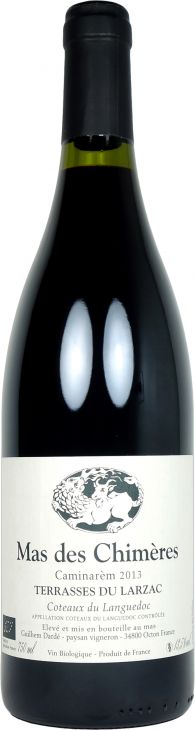
<p>2010 is a lighter, less austere <glossary title="1109">vintage</glossary> than 2009, and the 2011 "Oeillade" we tasted was playful and fruity. The 2010 "Caminarèm" had a beautiful <span class="zalup"><span><glossary title="723">nose</glossary><span>,</span></span></span> nice fruit and my tasting note says it was "<em>really cool</em>". The 10 <glossary title="1071">varietal</glossary> white wine has great <span class="zalup"><span><glossary title="71">acidity</glossary><span>,</span></span></span> and a <glossary title="1392">late harvest</glossary> <glossary title="699">Muscat Petits Grains </glossary>(don't ask for some, they barely make any) was a nice suprise.<br />
<br />
As with most wines from the south of France, it's not uncommon to find <glossary title="67">alcohol percentages</glossary> reaching 15%, particularly with the reds. The secret is making sure that this alcohol is balanced with <span class="zalup"><span><glossary title="71">acidity</glossary><span>,</span></span></span> fruit and <glossary title="990">structure</glossary> as to not overpower the wine. Or as Guilhem puts it:<br />
<br />
<em>"Having fresh wines at 14,5 is not an art, it's a mystery!"</em> <br />
<br />
Mystery or not, the wines are indeed quite fresh. But unlike some of his neighbors who might be using winemaking techniques like <glossary title="236">carbonic maceration</glossary> to lighten the <glossary title="1010">tannic</glossary> <glossary title="990">structure</glossary> and alcohol, Guilhem's goal is simply to produce wines that reflect his <span class="zalup"><span><glossary title="1026">terroir</glossary><span>:</span></span></span><br />
<br />
<em>"We're evolving a little bit but I'm still trying to stay </em><glossary title="579"><em>Languedoc</em></glossary><em>. I want to drink my wines in 10-15 years."</em><br />
<br />
We also talked about the great joys of working with the unknown:<br />
<br />
<em>"I think it's great how little we know about how our soils work. The best part of working </em><glossary title="746"><em>organically</em></glossary><em> is that it forces you to be attentive."</em><br />
<br />
Lunch consisted of cheese pizzas, an ongoing joke on Guilhem's part. You see, as a kid I was a very picky eater, and on our first visit I refused to eat anything Palma had prepared. In such, they were forced to go grab me a pizza. In the last 20 years, I don't think I HAVEN'T eaten a cheese pizza on a visit to <span class="zalup"><span><glossary title="733">Octon</glossary><span>.</span></span></span> Anyway, after a DELICIOUS lunch, it was time for a long walk through the vines. </p>
<p><img src="http://louisdressner.com/uploads/images/article/2019_Aug_07//dc/4a/dc4a8e6698c384799024551f8d27e258.jpg" /></p>
<p>The landscape around the Salagou is defined by intensely red <glossary title="909">sand</glossary> and <glossary title="301">clay</glossary> (from all the <glossary title="547">iron</glossary> and oxide in them).</p>
<p><img src="http://louisdressner.com/uploads/images/article/2019_Aug_07//b2/77/b2778d46b07872e26fdef3cc3cd489b4.jpg" /></p>
<p><img src="http://louisdressner.com/uploads/images/article/2019_Aug_07//76/0b/760b3723230e9640a42f1e574fdc53de.jpg" /></p>
<p>The first site we saw were <glossary title="1188">Cinsault</glossary> vines. In this <span class="zalup"><span><glossary title="760">parcel</glossary><span>,</span></span></span> Guilhem has progressively been replanting in <glossary title="941">selection massale</glossary> with picks from the last three years. </p>
<p><img src="http://louisdressner.com/uploads/images/article/2019_Aug_07//47/87/47876fb7d9cff627fe3ceece26cea39e.jpg" /></p>
<p><img src="http://louisdressner.com/uploads/images/article/2019_Aug_07//50/4b/504bc7dd07e3eab4ab1fc91453eaadda.jpg" /></p>
<p><img src="http://louisdressner.com/uploads/images/article/2019_Aug_07//b4/5e/b45ea704b65b74e665787f24103daca0.jpg" /></p>
<p>Guilhem pointed out problems he's having with these wild grasses growing between vines. </p>
<p><img src="http://louisdressner.com/uploads/images/article/2019_Aug_07//2d/0c/2d0c37f1e85c1a65a824d3cf300ebe7e.jpg" /></p>
<p>If you don't take care of these the competition becomes too much, and they are a pain in the ass.<br />
<br />
Next were some <glossary title="237">Carignan</glossary> vines which are rented. </p>
<p><img src="http://louisdressner.com/uploads/images/article/2019_Aug_07//42/16/4216ad1ddc1a1d4b61863da8e678e66d.jpg" /></p>
<p>Though they are in rows, this <glossary title="760">parcel</glossary> was originally <glossary title="1039">trained</glossary> in <span class="zalup"><span><glossary title="497">gobelet</glossary><span>.</span></span></span> Unfortunately, the guy who was renting them prior cut the arms of the vines off to get in there with his tractor. Even then, the work was too hard for him so he gave them up.<br />
<br />
<em>"He worked these vines just long enough to mess them up!"</em><br />
<br />
We continued our stroll over to some <glossary title="508">Grenache</glossary> plantings.</p>
<p><img src="http://louisdressner.com/uploads/images/article/2019_Aug_07//58/0b/580b663f83121fdb5cfe366064d9f282.jpg" /></p>
<p>Guilhem is completely discouraged by this particular area because he is surrounded by neighbors who are <a href="http://www.youtube.com/watch?v=UC9ldJ5AOa4" target="_blank">going ham</a> with excessive <glossary title="279">chemical</glossary> use. Here is a picture from a neighboring vine:</p>
<p><img src="http://louisdressner.com/uploads/images/article/2019_Aug_07//74/c2/74c21a19755cbde249fef05e65f06d4e.jpg" /></p>
<p>And another from a new planting: </p>
<p><img src="http://louisdressner.com/uploads/images/article/2019_Aug_07//b4/0b/b40b9f667036cf1efdc41873c192a3f1.jpg" /></p>
<p><em>"I might sell it one day; I'm sick of being surrounded by chemists."</em><br />
<br />
Besides the lack of even a single blade of grass, you might have also noticed the <glossary title="549">irrigation</glossary> tubes in both above pictures. While Guilhem has never <span class="zalup"><span><glossary title="549">irrigated</glossary><span>,</span></span></span> it is now the norm in the area. This surprised me since I hadn't noticed <glossary title="">irrigation</glossary> systems once in the <span class="zalup"><span><glossary title="880">Roussillon</glossary><span>,</span></span></span> but Guilhem explained that the vineyard's proximity to the <glossary title="901">Salagou lake</glossary> means that most <glossary title="1089">vignerons</glossary> are goin' ham with abusing all that available water. Many even <glossary title="549">irrigate</glossary> the day before <span class="zalup"><span><glossary title="521">harvest</glossary><span>!</span></span></span> <br />
<br />
<em>"And if they had access to water like this in the </em><glossary title="880"><em>Roussillon</em></glossary><em>, they'd be doing it too!"</em><br />
<br />
The final <glossary title="760">parcel</glossary> we checked out were some <glossary title="">Terret</glossary> vines that had been worked <glossary title="279">chemically</glossary> for years. </p>
<p><img src="http://louisdressner.com/uploads/images/article/2019_Aug_07//d5/d8/d5d885208ede12f7f6f9d3cdf9b22f0d.jpg" /></p>
<p>In the three years Guilhem's been <glossary title="332">converting</glossary> them, this is the first time he's actually seen grass grow here. <br />
<br />
After our long walk, we had a beer in <glossary title="733">Octon's</glossary> center square. Zaggy was very tired from it all. </p>
<p><img src="http://louisdressner.com/uploads/images/article/2019_Aug_07//17/2e/172e43f2eda6f690207c631592d93654.jpg" /></p>
<p>Later that night over dinner (no cheese pizzas!), the conversation was going strong. In a particularly quotable (and somewhat paraphrased) moment, Guilhem said something like:<br />
<br />
<em>"My son was four and had never been sick. His first year in elementary school, he was ill all the time. He was exposed to all types of germs and bacteria that he was never exposed to before. And if you're not full of antibiotics, you learn to adapt, to survive. Paul's been fine since. It's the same for the vines!"</em></p>
Article
harvest report
28.08.2011
2011 Harvest Report from Mas des Chimères
<p><u><strong>August 28, 2011</strong></u></p>
<p>We began the <glossary title="521">harvest</glossary> on August 16th and so far we've picked the <span class="zalup"><span><glossary title="271">Chardonnay</glossary><span>,</span></span></span> <span class="zalup"><span><glossary title="698">Muscat</glossary><span>,</span></span></span> <glossary title="509">Grenache Blanc</glossary> and <span class="zalup"><span><glossary title="1001">Syrah</glossary><span>.</span></span></span> This is a first for us and have never <glossary title="521">harvested</glossary> any of these so early! The grapes are very beautiful so far let's hope it lasts...<br />
<br />
It's been very hot and there is no announced rain so everything is looking good.</p>
Article
harvest report
03.10.2002
2002 Harvest Report from Mas des Chimères
<p><u><strong>Joe Dressner via Guilhem Dardé:</strong></u></p>
<p>Just got off the phone with Guilhelm Dardé, <span class="zalup"><span><glossary title="1089">vigneron</glossary><span>-</span></span></span><glossary title="769">paysan</glossary> from the Mas des Chimères.<br />
<br />
Vineyards were not touched by the rain. They could still use some more sun though. They are starting their <glossary title="650">Merlot</glossary> on Thursday and then will attack the other vineyards as they ripen.<br />
<br />
The best areas in the <span class="zalup"><span><glossary title="345">Coteaux</glossary><span>-</span></span></span>du<span class="zalup"><span><span>-</span><glossary title="579">Languedoc</glossary> </span></span>were not touched, according to Dardé.</p>
Article