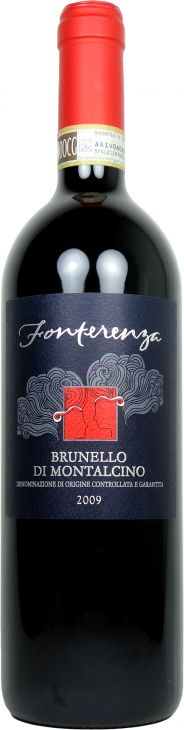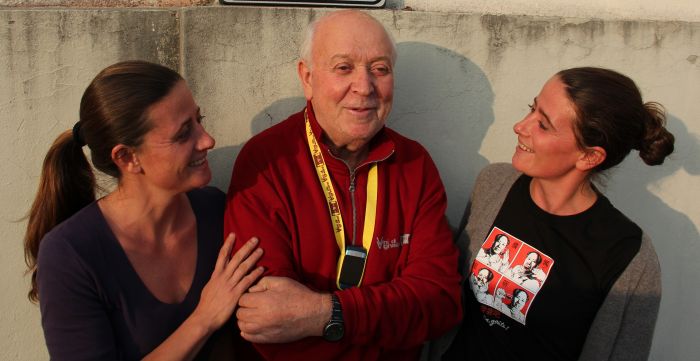
producer profile
05.06.2019
Fonterenza Producer Profile
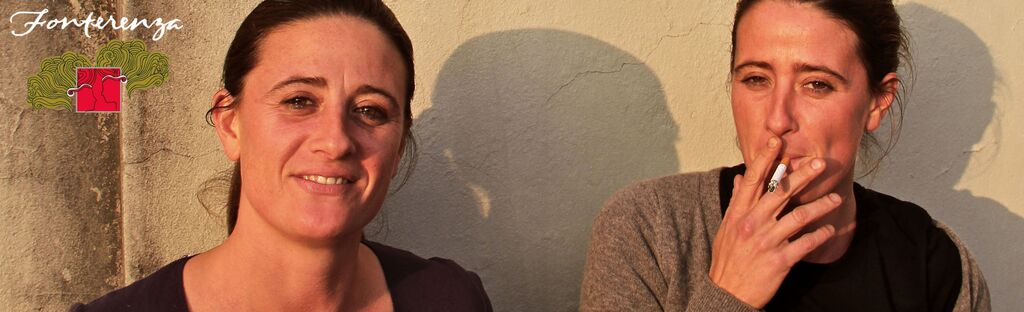
<p>Founded by twin sisters Margherita and Francesca Padovani in 1997, Fonterenza is a <glossary title="160">biodynamically</glossary> farmed <glossary title="427">estate</glossary> spread over the <glossary title="322">commune</glossary> of <span class="zalup"><span><glossary title="679">Montalcino</glossary><span>.</span></span></span> Though the twins grew up in <span class="zalup"><span><glossary title="660">Milan</glossary><span>,</span></span></span> the farm where they currently reside has been in the family since the 1970's. <span class="zalup"><span><glossary title="1103">Viticulture</glossary><span>,</span></span></span> however, does not run in the Padovani family; in fact, there were no vines whatsoever on the property until Margherita planted the first <glossary title="1133">plots</glossary> in 1999.</p>
<p>Francesca quickly joined her sister on the project, and subsequent plantings took place in 2002 and 2005 over four <glossary title="523">hectares</glossary> of vines, with 3.5 <glossary title="523">hectares</glossary> planted in <glossary title="911">Sangiovese</glossary> and the rest in <glossary title="217">Cabernet Sauvignon</glossary> (<glossary title="500">regrafted</glossary> to <glossary title="911">Sangiovese </glossary>in 2012). From the beginning, Margherita and Francesca agreed not to use <glossary title="279">chemicals</glossary> in their vineyard practices, which quickly led to an interest in <glossary title="160">biodynamic </glossary><glossary title="1103">viticulture</glossary> and, a few years later, <glossary title="664">minimal intervention</glossary> winemaking. </p>
<p>The estate now consists of three <glossary title="1133">plots</glossary> totaling 4.2 <span class="zalup"><span><glossary title="523">hectares</glossary><span>:</span></span></span> Vigna del Bosco (2<glossary title="523">h</glossary>), Vigna della Strada (1.7<glossary title="523">h</glossary>) and Vigna Alberello (0.5<glossary title="523">h</glossary>). The first two were planted in 1999 and the third in 2005. While all the vineyards are gorgeous, Vigna del Bosco is particularly stunning; one must walk or drive down a long beautiful path to arrive to a hill completely surrounded by woods. </p>
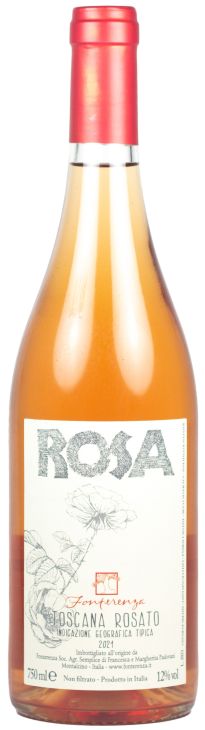
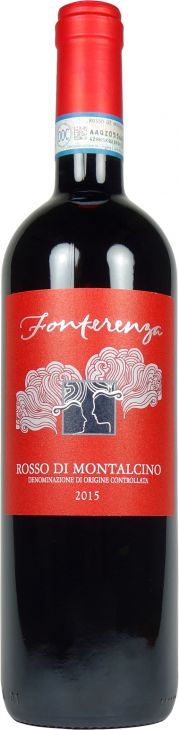
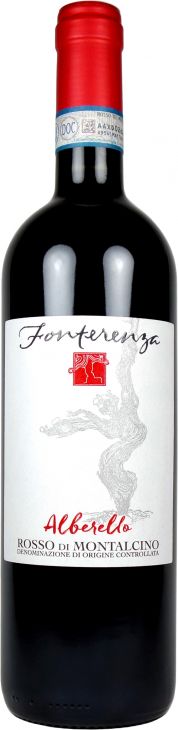
<p>Four wines are produced from the <span class="zalup"><span><glossary title="427">estate</glossary><span>.</span></span></span> A <glossary title="871">rosé</glossary> is made from the most vigorous vines of the three vineyards. The <glossary term="Rosso di Montalcino" title="1292">Rosso di Montalcino</glossary> is sourced from Vigna del Bosco and Vigna del Strada. The newer "Alberello Rosso" comes from Vigna Alberello and distinguishes itself with soil and <glossary title="430">exposition</glossary> variations along with being trained in <glossary title="497">gobelet</glossary> versus <span class="zalup"><span><glossary title="518">guyot</glossary><span>,</span></span></span> resulting in much lower <glossary title="1129">yields</glossary><glossary title="1129"> </glossary>and higher <span class="zalup"><span><glossary title="324">concentration</glossary><span>.</span></span></span> Finally, the <glossary title="427">estate</glossary>'s <glossary title="201">Brunello</glossary><em> </em>comes exclusively from Vigna del Bosco, a site the sisters consider of exceptional quality akin to a <span class="zalup"><span><glossary title="1152">cru</glossary><span>.</span></span></span> </p>
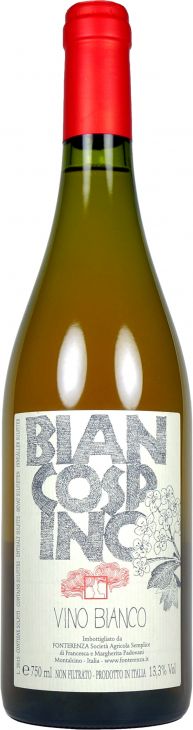
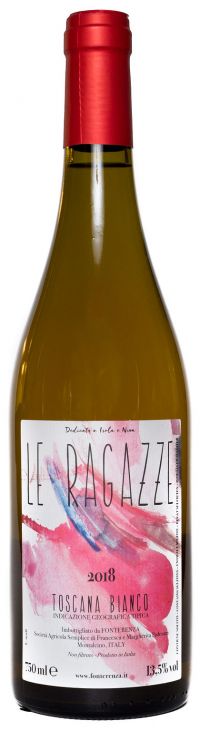
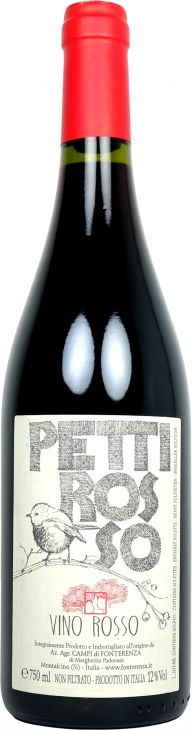
<p>For years the sisters have been buying fruit from the nearby Mount Amiata, an up-and-coming <glossary term="Terroir" title="1026">terroir</glossary> producing crystaline, fresh wines one doesn't always expect or find in Tuscany. Past wines have included a <glossary title="745">skin contact white </glossary>named "Biancospino", made from <span class="zalup"><span><glossary title="623">Malvasia</glossary><span>,</span></span></span> <glossary title="1043">Trebbiano</glossary> and <span class="zalup"><span><glossary title="829">Procanico</glossary><span>,</span></span></span> another <glossary title="610">macerated</glossary> white called "Le Ragazze" that came into production in 2018 and part of their fruit for "Pettirosso", a wine "inspired by our friendship with French <glossary title="1089">vignerons</glossary> and their culture of thirst-quenching wines, conceived to satisfy the needs of everyday drinking and convivial sharing." In 2022, Francesca was able to purchase a <glossary term="Hectare" title="523">hectare</glossary> on Amiata of vines planted in 1920 on <glossary term="galestro" title="1471">galestro</glossary> soils. Trained in <glossary term="Gobelet" title="497">alberello</glossary> and <glossary term="Co-plantation" title="309">co-planted</glossary> in red and white, sadly most vines had to be ripped up to make way for new plantations. It's a truly great plot with amazing potential.</p>
<p>Margherita and Francesca's constant and steady evolution have made Fonterenza one of the most exciting <glossary title="427">estates</glossary> for us to follow in the past few years. Every <glossary title="1109">vintage</glossary> just keeps getting better and better.</p>
Article
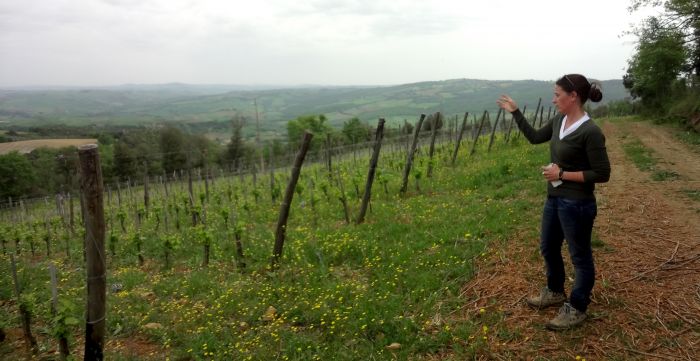
interview
05.06.2019
An Interview with Francesca Padovani from 2011
<p><em>This interview with Francesca Padovani took place on the streets of Chicago in April 2011.</em></p>
<p><strong>Tell us about Fonterenza.</strong><br />
<br />
Fonterenza is a rather young <glossary title="427">estate</glossary> that my twin sister Margherita and I started in 1997. My parents have owned the farm we currently live on since the 1970's; a piece of land my mother had purchased over the years eventually became our vineyards. We moved from <glossary title="660">Milan</glossary> to <glossary title="1055">Tuscany</glossary> in 1997, planted the first vines in 1999, then again in 2002 and the last bit was planted in 2005. Our land comprises of four <glossary title="523">hectares</glossary> of vines (3.5 <glossary title="911">Sangiovese</glossary> and .5 of <glossary title="217">Cabernet Sauvignon</glossary>), as well as seven <glossary title="523">hectares</glossary> of olive groves. <br />
<br />
In the early years we had to build the <glossary title="427">estate</glossary> from the ground up and plant all the vines so the work was split equally. But at this point Margherita's responsibilities are in the vines and I am responsible for sales. We do everything in the <glossary title="254">cellar</glossary> together. <br />
<br />
We currently make five <span class="zalup"><span><glossary title="363">cuvées</glossary><span>:</span></span></span> a <glossary title="911">Sangiovese</glossary> <glossary title="871">rosé</glossary> which we've been making for five years now, a younger <glossary title="911">Sangiovese</glossary> from <glossary title="201">Brunello</glossary> classified grapes (<glossary title="1292">Rosso di Montalcino</glossary>) and a <glossary title="217">Cabernet Sauvignon</glossary> <glossary title="363">cuvée</glossary> that are both <glossary title="74">aged</glossary> 20 months in <glossary title="142">barrel</glossary> and eight months in bottle before release, as well as a <glossary title="201">Brunello</glossary> that we release after five years.<br />
<br />
I've wanted to make a white wine for a long time and we recently discovered a very old <glossary title="760">parcel</glossary> of <glossary title="1043">Trebianno</glossary> and <glossary title="623">Malvasia</glossary> not too far from our home that we <glossary title="1104">vinified</glossary> last year for the first time. We only made three <glossary title="144">barriques</glossary> and don't know if we'll be able to sell the wine in the future but I hope so.<br />
<br />
<strong>What made you want to start the estate?</strong><br />
<br />
Our farm is located in <span class="zalup"><span><glossary title="679">Montalcino</glossary><span>,</span></span></span> which is very well located and also quite known for quality wine. Margherita had moved there before me and was working at other <glossary title="427">estates</glossary> to support herself. She has a green thumb and is a true lover of nature so the idea was originally hers. Everything happened very organically; we weren't exactly sure of what we were doing at the beginning but step by step, things started taking shape. It's still very much a work in progress.<br />
<br />
<strong>What's the work in the vines like?</strong><br />
<br />
We approach every <glossary title="1109">vintage</glossary> differently based on it's characteristics. <br />
<br />
From the beginning we decided we didn't want to work with <glossary title="1142">pesticides</glossary> or <span class="zalup"><span><glossary title="279">chemicals</glossary><span>.</span></span></span> We're <glossary title="260">certified organic</glossary> and have been incorporating elements of <glossary title="160">biodynamic</glossary> agriculture in the vinyards over the last three years. <br />
<br />
<strong>What about in the cellar?</strong><br />
<br />
Because we grow grapes naturally, our goal in the <glossary title="">cellar</glossary> is simply to transform natural fruit into honest wine; what I mean by that is a wine that is closely linked to the <span class="zalup"><span><glossary title="1109">vintage</glossary><span>,</span></span></span> the <glossary title="1026">terroir</glossary> and to us.<br />
<br />
Like in the vineyards, we don't have a systematic approach to the winemaking, but we tend to like long <glossary title="610">macerations</glossary> and <glossary title="142">barrel</glossary> <glossary title="74">aging</glossary> for the <glossary title="911">Sangiovese</glossary> because we feel our wines truly benefit from time in the cellar. We use mostly 20 <glossary title="524">hectoliter</glossary> <glossary title="962">Slavonian</glossary> <span class="zalup"><span><glossary title="142">barrels</glossary><span>.</span></span></span> <br />
<br />
<strong>How do you feel about your DOC?</strong><br />
<br />
We are currently the only <glossary title="113">appellation</glossary> in Italy requiring that the wine be bottled with 100% of a single <span class="zalup"><span><glossary title="1071">varietal</glossary><span>,</span></span></span> in our case <span class="zalup"><span><glossary title="911">Sangiovese</glossary><span>.</span></span></span> People with power are trying to change the rules so they can <glossary title="168">blend</glossary> other <glossary title="1071">varietals</glossary> into their wines. <br />
<br />
We are fighting against this because a <glossary title="1156">DOC</glossary> should be linked to tradition and should guarantee you are getting a product that is unique to where it was produced and that can't be found elsewhere.<br />
<br />
<strong>What's your take on the whole "natural wine" debate?</strong><br />
<br />
I believe in <glossary title="708">natural wine</glossary> because I believe this is going to make a better wine. I personally refer to myself as a <glossary title="708">natural wine</glossary> producer. I don't like to say "<glossary title="746">organic</glossary>" or "<glossary title="160">biodynamic</glossary>" because I find these terms are often misleading. At least when I say I make <span class="zalup"><span><glossary title="708">natural wine</glossary><span>,</span></span></span> people more or less have a grasp of what I mean by that. I know it's difficult to define because many <glossary title="708">natural wine</glossary> producers work very differently, but there is definitely a synergy and a like-mindedness that can be tasted in these wines. <br />
<br />
<strong>What do you like to drink?</strong><br />
<br />
Everyday I try different wines. I meet a lot of producers and get to exchange bottles so I'm always discovering something new.<br />
<br />
I'm a big fan of <glossary title="602">Loire</glossary> wines: for me there is a real charm in all the different <glossary title="1071">varietals</glossary> available and numerous expressions of <span class="zalup"><span><glossary title="1026">terroir</glossary><span>.</span></span></span></p>
Article
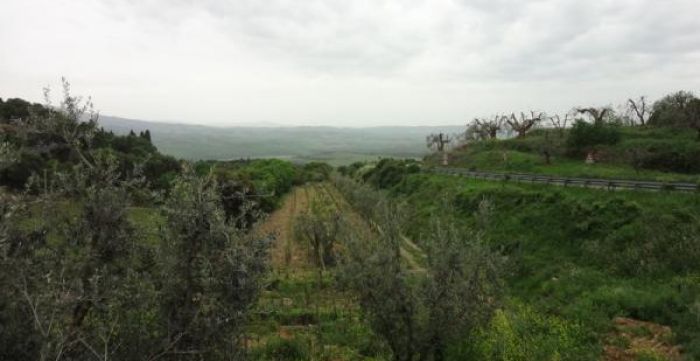
producer visit
25.07.2019
This visit to Campi di Fonterenza took place in April, 2013
<p><strong><em>This visit to Campi di Fonterenza took place in April, 2013.</em></strong></p>
<p><strong><em>Words by Jules Dressner, photos by Maya Pedersen.</em></strong></p>
<p>Twin sisters Francesca and Marguerita Padovani's wines keep getting better and better, so it was very exciting to finally visit what Kevin Mckenna once described as <em>"incredible </em><glossary title="1026"><em>terroir</em></glossary><em>"</em>. </p>
<p><img src="http://louisdressner.com/uploads/images/article/2019_Jul_25//3c/24/3c24fbe0f15db0528058249442cc18bd.jpg" /></p>
<p>The sisters' main vineyard is in the outskirts of <glossary title="679">Montalcino</glossary>; it consists of almost four <glossary title="523">hectares</glossary> of land and produces the <glossary title="1292">Rosso di Montalcino</glossary><em><glossary title="679">.</glossary></em><br />
<br />
The youngest vines were planted in 2005 in <span class="zalup"><span><glossary title="497">alberello</glossary><span>.</span></span></span> </p>
<p><img src="http://louisdressner.com/uploads/images/article/2019_Jul_25//bf/78/bf78480c0d138b91989a102adc21e974.jpg" /></p>
<p><img src="http://louisdressner.com/uploads/images/article/2019_Jul_25//06/a3/06a352db9f7155d3337a3fc920620156.jpg" /></p>
<p><img src="http://louisdressner.com/uploads/images/article/2019_Jul_25//b5/3a/b53a60a3afe39e596bb28bca7bb363fa.jpg" /></p>
<p>As you can see from the photos above, this area has a heavy presence of <span class="zalup"><span><glossary title="933">schist</glossary><span>,</span></span></span> and as a result:<br />
<br />
<em>"This is the area that suffers the most from dryness."</em><br />
<br />
In the <glossary title="740">oldest vines</glossary> (a little further), the <glossary title="301">clay</glossary> gets a lot heavier. </p>
<p><img src="http://louisdressner.com/uploads/images/article/2019_Jul_25//6b/17/6b17b8c4e141305aa8d8b0e751fe9939.jpg" /></p>
<p><img src="http://louisdressner.com/uploads/images/article/2019_Jul_25//5c/2b/5c2bee89ca3a0f81d9fd723c6a224bdb.jpg" /></p>
<p><img src="http://louisdressner.com/uploads/images/article/2019_Jul_25//14/6e/146ed9286e3c4e8770efe1f669cc2890.jpg" /></p>
<p><img src="http://louisdressner.com/uploads/images/article/2019_Jul_25//59/f1/59f14e5561c715c6e770fe935d176167.jpg" /></p>
<p>These were planted in 1999. Part of the vineyard have the <glossary title="277">Châteauneuf</glossary> like <span class="zalup"><span><glossary title="477">galets</glossary><span>,</span></span></span> which are locally referred to as <em><glossary title="477">galestro</glossary></em>. One bit is a mix of <glossary title="477">galestro</glossary> and <span class="zalup"><span><glossary title="301">clay</glossary><span>.</span></span></span> </p>
<p><img src="http://louisdressner.com/uploads/images/article/2019_Jul_25//b4/52/b4521e167e6a9f01faa9509052603599.jpg" /><br />
<br />
The lesson, my friends, is that within these four <strong><glossary title="523">hectares</glossary></strong>, there are four distinct soil compositions. Throw in the fact that the entire vineyard is <glossary title="430">exposed</glossary> full south/southwest at 420 meters <glossary title="419">elevation</glossary> and what do you get? <br />
<br />
<strong>SOME PRETTY INCREDIBLE TERROIR!</strong><br />
<br />
Francesca also filled us in on some big news: all of the <glossary title="217">Cabernet Sauvignon</glossary> has been re<span class="zalup"><span><span>-</span><glossary title="500">grafted</glossary> </span></span>with <glossary title="941">massale</glossary> <span class="zalup"><span><glossary title="911">Sangiovese</glossary><span>!</span></span></span> </p>
<p><img src="http://louisdressner.com/uploads/images/article/2019_Jul_25//a4/02/a4029bcc871e731ce89dc55dd10f7b68.jpg" /></p>
<p><img src="http://louisdressner.com/uploads/images/article/2019_Jul_25//14/d1/14d160aab4f263778792377614808bed.jpg" /></p>
<p>The other main vineyard site is a short walk away.</p>
<p><img src="http://louisdressner.com/uploads/images/article/2019_Jul_25//25/59/255902aea03d7ad72b36f7f9ff4994c7.jpg" /></p>
<p><img src="http://louisdressner.com/uploads/images/article/2019_Jul_25//7c/ea/7cea5420c5b4fa8405cc6e7dcb53089d.jpg" /></p>
<p><img src="http://louisdressner.com/uploads/images/article/2019_Jul_25//de/e7/dee79bb5c42123147824fcd6be85b6b3.jpg" /></p>
<p><img src="http://louisdressner.com/uploads/images/article/2019_Jul_25//fd/d2/fdd24cae8ae61d0c5cff6c922a7d5699.jpg" /><br />
<br />
This 1.6 <glossary title="523">hectare</glossary> <glossary title="1133">plot</glossary> of land produces the <span class="zalup"><span><glossary title="201">Brunello</glossary><span>,</span></span></span> As you can see from the pictures, the vines are completely surrounded by woods, with absolutely no neighbors. <br />
<br />
<em>"It's such a pleasure working here. You are all alone."</em><br />
<br />
Someone made a "working naked" joke. It was pretty funny.<br />
<br />
After our time in the vines, we drove back to the Fonterenza house and <glossary title="254">cellar</glossary> to taste. </p>
<p><img src="http://louisdressner.com/uploads/images/article/2019_Jul_25//2d/75/2d7557093e58d98aa7df95b56b5d0e9c.jpg" /></p>
<p><img src="http://louisdressner.com/uploads/images/article/2019_Jul_25//8e/16/8e16ad672b6574547cef689042770f83.jpg" /></p>
<p><img src="http://louisdressner.com/uploads/images/article/2019_Jul_25//e4/11/e4111a17b72e62607a77c86101460f56.jpg" /></p>
<p>We started with this year's second bottling of "Pettirosso". 2/3 of the fruit for this wine are sourced from the first vineyard we visited, as well as a 0.7 <glossary title="523">hectare</glossary> <glossary title="760">parcel</glossary> that they rent. <glossary title="610">Skin contact</glossary> is very short and everything is done in <span class="zalup"><span><glossary title="986">stainless steel</glossary><span>.</span></span></span> <glossary title="1129">Yields</glossary> average at 35 to 40 <strong><glossary title="528">hl/ha</glossary></strong>. It was everything I've come to love about this easy drinker. <br />
<br />
The "Biancospino" white was showing really well. It's a blend of <span class="zalup"><span><glossary title="623">Malvasia</glossary><span>,</span></span></span> <glossary title="1043">Trebbiano</glossary> and <span class="zalup"><span><glossary title="829">Procanico</glossary><span>,</span></span></span> the latter being an <glossary title="1139">indigenous</glossary> grape that Francesca describes as "a more <glossary term="Tannin" title="1010">tannic</glossary> <glossary term="Trebbiano/Ugni Blanc" title="1043">Trebbiano</glossary>". The wine <glossary title="610">macerated</glossary> two weeks on the skins. We also tried the 2011 <glossary title="1292">Rosso di Montalcino</glossary> and <glossary title="201">Brunello</glossary> as well as the 2009 <span class="zalup"><span><glossary title="201">Brunello</glossary><span>,</span></span></span> which was fantastic.</p>
Article

harvest report
24.12.2025
2025 Harvest Report from Francesca Padovani
<p><strong>FONTERENZA 2025 SEASON REPORT</strong>:</p>
<p><br />
After a mild winter, budbreak took place in ideal conditions. A spring marked by frequent rainfall required careful canopy management to keep the vines healthy and well balanced. Summer brought high temperatures from mid-June onwards. The water reserves built up in spring, together with the altitude and good air flow in the vineyards, helped reduce heat stress. On July 7th, a severe hailstorm hit Vigna del Bosco in Montalcino, causing significant damage to fruit and vegetation.</p>
<p>Some late summer rainfall and a wide temperature swing from late August, close to harvest time, gave the 2025 vintage a fresh and overall elegant character.</p>
<p><strong>Harvest in Montalcino | September 29–30:</strong></p>
<p><br />
The July hailstorm had a severe impact on our Montalcino vineyard, slowing down and complicating the final stages of ripening. For this reason, we decided not to carry out the usual early pre-selection harvest normally dedicated to Rosa and Pettirosso. Thanks to a strict selection in the vineyard, we were still able to produce well-defined Rosso and Brunello, true to our style and recognizable for their depth and energy. The wines show a lighter structure, ripe tannins despite moderate alcohol levels, and generous acidity. These elements give us confidence in their potential, as they now age in large oak casks.</p>
<p><br />
<strong>Harvest on Mount Amiata | Cinigiano, Vigna dei Ciliegi – September 8th and 15th:</strong></p>
<p><br />
The 2025 vintage marked the first true production year of our new Vigna dei Ciliegi in Cinigiano, at the foot of Mount Amiata. The vineyard covers 1.4 hectares, planted by us between 2020 and 2022 on clay-limestone soils, at 450 meters asl and a north-facing exposure. It hosts eighteen white grape varieties from different areas of the Mediterranean basin. Our first white wines coming<br />
entirely from home-grown grapes!</p>
<p><br />
On September 8th, we harvested a small selection of Trebbiano and the grapes dedicated to our Bianco delle Ragazze: Vermentino, Grechetto, Malvasia Toscana, Malvasia di Candia, Malvasia Aromatica di Parma, Malvasia di Sitges, Xarello and Macabeu. On September 15th, we harvested the Trebbiano grapes for Biancospino, followed by Parellada, white and grey Cariñana, and<br />
Ansonica. Each batch was vinified separately, combining direct pressing with different maceration approaches, including whole-cluster semi-carbonic maceration. The wines share a fresh, vibrant profile, with different textures and structures depending on the blends and winemaking choices. Aging will continue in concrete and in both large and small oak vessels, according to the character of each lot.</p>
<p><br />
<strong>Harvest on Mount Amiata | Montegiovi, Vigna Matta and Vigna Minucci -September 12th: </strong></p>
<p><br />
Restoration work continues in the two century-old, small plots of Montegiovi, on the western side of Mount Amiata. These old mixed plantings of red and white varieties gave us perfectly balanced grapes. Fermentation in a single open vat immediately delivered an expressive and fragrant fruit profile. The wine has a light, agile structure with spicy tannins and is now aging in a 500-liter used oak tonneau.</p>
<p><br />
<strong>Olive harvest | October 13th–17th:</strong></p>
<p>After several years of work to recover from the damage caused by the fire that affected our olive grove in Cinigiano, our olive trees are finally back to full production. The harvest was abundant and carried out quickly, allowing us to extract our oil only from the freshest fruits. Our extra virgin olive oil Silverio, with notes of ripe fruit, fresh herbs and artichoke, is once again available in 0.5 liter bottles and 3 and 5 liter bag-in-box formats.</p>
<p><img src="https://louisdressner.com/uploads/images/article//1097/0a/97/0a97d8ac7f8cde6b6ee4dcb5afce6973.jpg" /><img src="https://louisdressner.com/uploads/images/article//1097/97/3b/973bc027a825b74c2c25c150564f78ac.jpg" /><img src="https://louisdressner.com/uploads/images/article//1097/fb/88/fb88d47cf525c32021c4857ae2b49b1b.jpg" /><img src="https://louisdressner.com/uploads/images/article//1097/74/59/74594b498c991a1e46f5219c85e9e81c.jpg" /><img src="https://louisdressner.com/uploads/images/article//1097/20/eb/20eb87ffcf7b16ede3a79bbac998187f.jpg" /><img src="https://louisdressner.com/uploads/images/article//1097/99/17/9917899bd05aa90a48108d8bca8a2b1d.jpg" /></p>
Article
harvest report
05.08.2014
2014 Harvest Report by Francesca Padovani
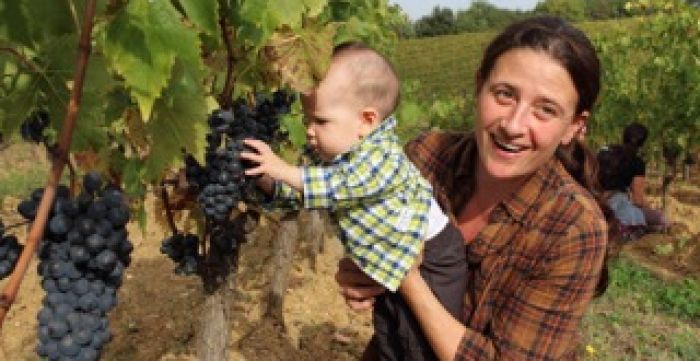
<p>Here in <glossary title="679">Montalcino</glossary> we experienced a very mild winter without snow or <span class="zalup"><span><glossary title="1135">frost</glossary><span>.</span></span></span> As a result the vines <glossary title="1166">budded</glossary> early which caused us some concern for a late <span class="zalup"><span><glossary title="1135">frost</glossary><span>.</span></span></span> As it turned out the <glossary title="1135">frost</glossary> never came but the rain did.<br />
<br />
Throughout the summer months we had light rain interspersed with the occasional downpour. Sunny, hot days were in very short supply. We spent twice as much time in the vineyard tending to the grapes than we normally would have. The wet weather and sporadic warmth brought the risk of <glossary title="1137">mold</glossary> so we spent a lot more time and energy with the vines. It was a blessing in disguise, giving us the opportunity to nurture each and every vine in the same way that we did when we planted 15 years ago.<br />
<br />
We <glossary title="521">harvested</glossary> in a series of stages. Instead of having a <glossary title="507">green harvest</glossary> in July and August (where the immature grapes are removed from the vines) we normally begin <glossary title="521">harvesting</glossary> in early September for our <glossary title="871">rosato</glossary> and "Pettirosso". This year we began the 15th of September, allowing the remaining grapes additional time to ripen. We finally <glossary title="521">harvested</glossary> the grapes we’ll use for our 2014 <glossary title="201">Brunello</glossary> in mid-October.<br />
<br />
Given the mild, wet summer year we’ve decided to produce more <glossary title="871">rosato</glossary> and "Pettirosso" than usual and slightly less<strong> <glossary title="1292">Rosso di Montalcino</glossary></strong> and <span class="zalup"><span><glossary title="201">Brunello</glossary><span>,</span></span></span> reserving the last of the <glossary title="521">harvest</glossary> for these two signature <glossary title="679">Montalcino</glossary> wines.<br />
<br />
<glossary title="87">Natural fermentation</glossary> began quickly this year and finished quickly as well.<br />
<br />
Earlier this year we welcomed two new additions to our family. Margherita married John McNamara of Berkeley CA and gave birth to their first child, Isola Rose McNamara in the spring. To celebrate, we decided to produce a 100% <glossary title="1043">Trebbiano</glossary> white wine from 50 year old vines in honor of little Isola Rose.<br />
<br />
We’re looking forward to the winter and helping our wines develop. Every year has something unique to offer. The challenge for us as wine producers is to identify that uniqueness and allow it to come to life in the <span class="zalup"><span><glossary title="1109">vintage</glossary><span>.</span></span></span> 2014 looks to be a very promising year in many ways.</p>
Article
harvest report
20.09.2012
2012 Harvest Report from Francesca Padovani
<p>October 18th, 2012:</p>
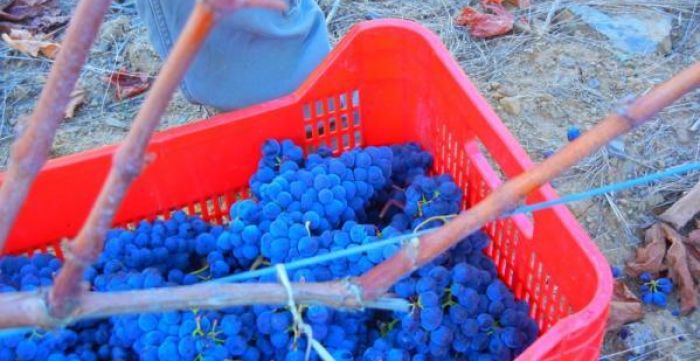
<p>The <glossary title="521">harvest</glossary> this year was my first without my sister Margherita, which was emotional and strange at the same time. But the fruit this <glossary title="521">harvest</glossary> is the fruit of not only a year, but also the history of her work of 13 years. We dedicate this <glossary title="521">harvest</glossary> to her and to my little niece, Lulu, daughter of my brother, Gianmaria, born the 8th of March this year!<br />
<br />
2012 is a year characterized in <glossary title="1055">Tuscany</glossary> -and especially in <span class="zalup"><span><glossary title="679">Montalcino</glossary><span>-</span></span></span> by <span class="zalup"><span><glossary title="1167">drought</glossary><span>.</span></span></span> The dog days were here from June until the first week of September. The first rains were at the beginning of September and were fundamental for the quality of the fruit and the vitality of the vineyards. Thanks to the position of the vineyard and its cool <span class="zalup"><span><glossary title="430">exposition</glossary><span>,</span></span></span> the vines were in good shape to greet September with a good <glossary title="1129">yield</glossary> of beautiful, nice grapes. The part of the vineyard in <glossary title="497">alberello</glossary> that grows on <glossary title="477">galestro</glossary> (rounded, <glossary title="93">alluvial</glossary> stones) suffered most from lack of water: the rest of the vineyards were fine. Last week we did a pre-selection of all the vineyards to make our <glossary title="871">rosé</glossary> wine. The sugars are plentiful, without compromising the balance of the wine (also the <glossary title="783">PH</glossary> levels are excellent!) The <glossary title="783">PH</glossary> hovers around 3 and the total <glossary title="">acidity</glossary> is 8.5. We have to <glossary title="521">harvest</glossary> the rest of the vineyards to make the <glossary title="874">Rosso</glossary> and <glossary title="201">Brunello di Montalcino</glossary> and then over to Amiata for the grapes for Biancospina and Pettirosso. The <glossary title="87">fermentations</glossary> are going slowly but for now they're going well. In the <glossary title="254">cellar</glossary> already is the <glossary title="871">Rosa</glossary> and the <glossary title="146">base wine</glossary> for the Pettirosso.</p>
Article
harvest report
11.10.2011
2011 Harvest Pictures from Fonterenza
<p><img src="http://louisdressner.com/uploads/images/article/2019_Sep_25//41/d0/41d054ee63e64d9aa8473c32115d2ea4.jpg" /></p>
<p><img src="http://louisdressner.com/uploads/images/article/2019_Sep_25//1d/7d/1d7d819410365333fc0c1801ca52d42e.jpg" /></p>
<p><img src="http://louisdressner.com/uploads/images/article/2019_Sep_25//87/5d/875d0fb5b0a99455489d869f545760e2.jpg" /></p>
<p><img src="http://louisdressner.com/uploads/images/article/2019_Sep_25//aa/0f/aa0f144046947e41b0cac3fc4f841d9e.jpg" /></p>
<p><img src="http://louisdressner.com/uploads/images/article/2019_Sep_25//2e/e5/2ee561d1c3c4e97a32fe09da143b717c.jpg" /></p>
<p><img src="http://louisdressner.com/uploads/images/article/2019_Sep_25//96/0c/960c3e10f6900364424f5baadcaf3185.jpg" /></p>
<p><img src="http://louisdressner.com/uploads/images/article/2019_Sep_25//6f/9b/6f9b480a258695dc514399222dd8883f.jpg" /></p>
<p> </p>
Article