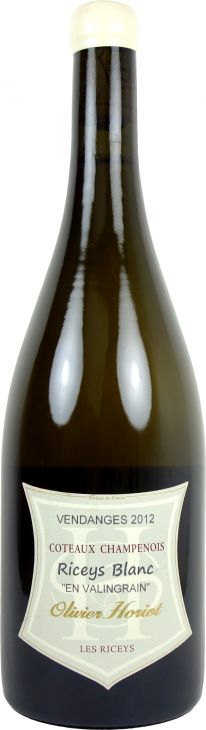
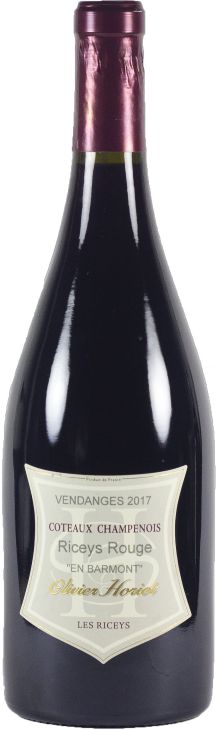
<p>In the southern-most part of the <glossary title="267">Champagne</glossary> region, the <glossary title="371">Côte des Bar</glossary> in the <glossary title="125">Aube</glossary> department, there is the town of <span class="zalup"><span><glossary title="592">Les Riceys</glossary><span>,</span></span></span> where the slopes are blessed with the <glossary title="1398">portlandian</glossary> formation of <glossary title="565">Kimmeridgian</glossary> <span class="zalup"><span><glossary title="266">chalk</glossary><span>,</span></span></span> that same great stuff that is the foundation of the finest <glossary title="262">Chablis</glossary> and <span class="zalup"><span><glossary title="908">Sancerre</glossary><span>.</span></span></span> Except here the idea was to plant <glossary title="805">Pinot Noir</glossary> on these <glossary title="266">chalky</glossary> slopes, do a long <span class="zalup"><span> <glossary title="610">maceration</glossary><span>,</span></span></span> often using <span class="zalup"><span><glossary title="1124">whole bunches</glossary><span>,</span></span></span> and then <glossary title="74">age</glossary> it a few years (at least three) before release -- not exactly your average deck wine.</p>
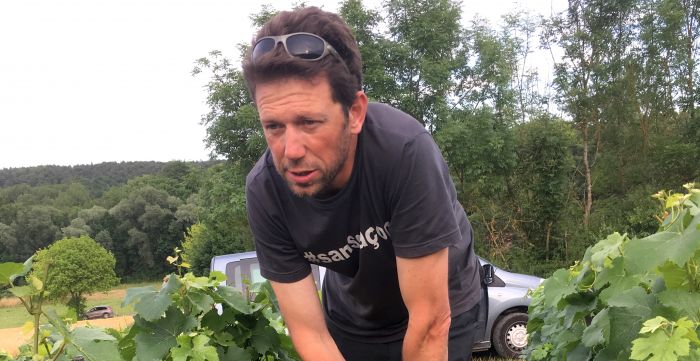
<p>Olivier Horiot took over the <glossary title="427">estate</glossary> of his father Serge in 1999; though it bears his name due to inheritance, his wife Marie is essential to day to day operations and runs the <span class="zalup"><span><glossary title="254">cellar</glossary><span>.</span></span></span> Together they work seven hectares of vines and immediately started using <glossary title="746">organic</glossary> and <glossary title="160">biodynamic</glossary> practices. While the entirety of the land is worked in this fashion, Olivier and Marie have chosen to only <glossary title="1104">vinify</glossary> the equivalent of two <glossary title="523">hectares</glossary>' worth for their own production:</p>
<p><em>"The rest is sold to the </em><glossary title="252"><em>cave coopérative</em></glossary><em> and to </em><glossary title="729"><em>négociants</em></glossary><em>. We jokingly call it the "Champagne Equilibrium", and don't plan on entirely modifying this system, at least for now. This balance gives us the opportunity to have more fun with the stuff we </em><glossary title="1104"><em>vinify</em></glossary><em> independently, to craft them more to our taste.</em>"</p>
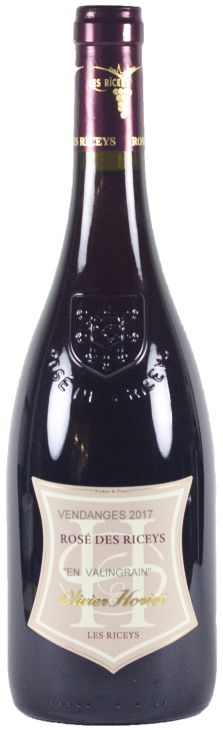
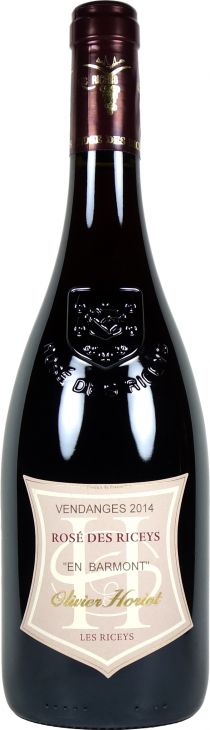
<p>From the beginning, the Horiot have championed highlighting specific <glossary title="760">parcels</glossary> in the effort of being more <span class="zalup"><span><glossary title="1026">terroir</glossary><span>-</span></span></span>focused. In order to make their <span class="zalup"><span><glossary title="876">Rosé des Riceys</glossary><span>,</span></span></span> they do a very strict selection of grapes from two separate sites - en Valingrain and en<em> </em>Barmont - <glossary title="1104">vinifying</glossary> them separately. In the ever dwindling amount of producers making this traditional <glossary title="871">rosé</glossary> (it requires lower <glossary title="1129">yield</glossary> management and is much less profitable than <glossary title="267">Champagne</glossary>) they are the only ones making <glossary title="959">single vineyard expressions</glossary> to highlight <span class="zalup"><span><glossary title="1026">terroir</glossary><span>.</span></span></span></p>
<p>The <glossary title="871">rosés</glossary> start with about 10% of the grapes <glossary title="458">foot-trodden</glossary> at the bottom of the <span class="zalup"><span><glossary title="365">cuve</glossary><span>,</span></span></span> then <glossary title="1124">whole bunches</glossary> are added. <glossary title="610">Macerations</glossary> usually last 5-6 days, with <glossary title="850">pumping over</glossary> twice a day. After the wine is <glossary title="843">racked</glossary> into older <span class="zalup"><span><glossary title="142">barrels</glossary><span>,</span></span></span> it remains there for a few years before being <glossary title="185">bottled</glossary> without <glossary title="449">fining</glossary> or <span class="zalup"><span><glossary title="447">filtration</glossary><span>.</span></span></span> <br />
<br />
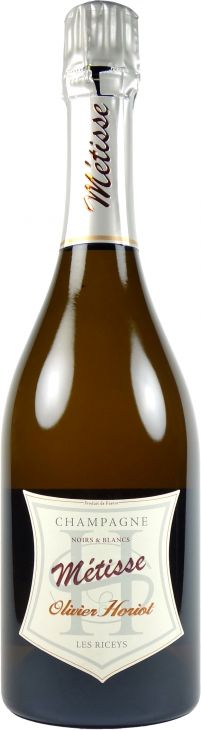
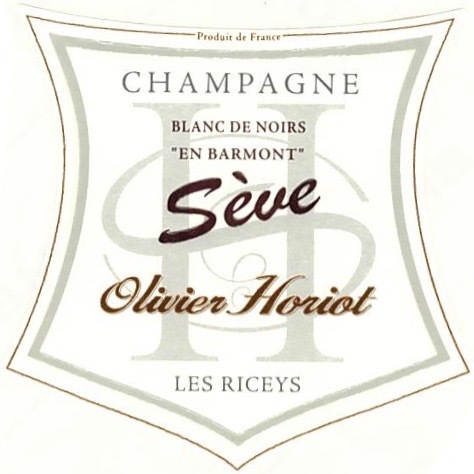
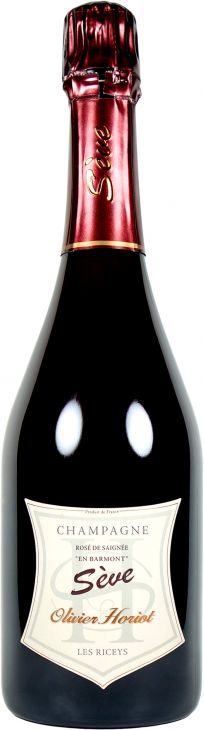
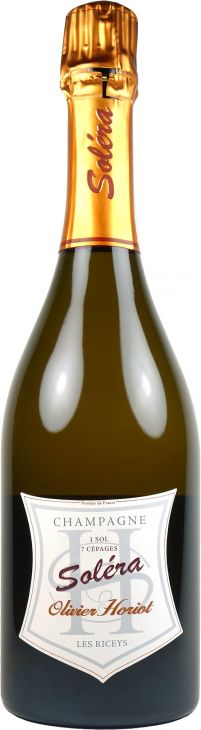
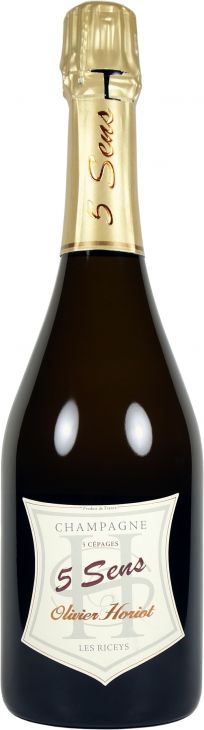
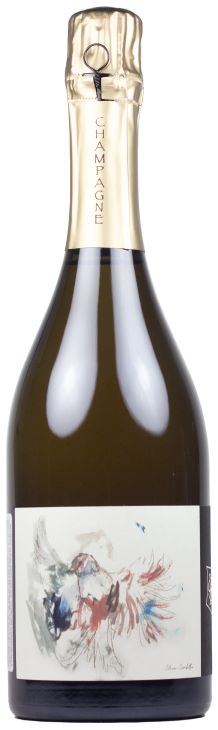
The Horiot also produce many <span class="zalup"><span><glossary title="267">Champagnes</glossary><span>:</span></span></span> a <glossary title="166">Blanc de Noir</glossary> from the en Barmont site named "Sève" (both is white and rosé), two <glossary title="168">blends</glossary> of multiple <span class="zalup"><span><glossary title="760">parcels</glossary><span>,</span></span></span> "Métisse" and "5 Sens", a multi-<span class="zalup"><span> <span class="zalup"><span><glossary title="1071">varietal</glossary><span>,</span></span></span></span></span> multi<span class="zalup"><span><span>-</span><glossary title="1109">vintage</glossary> </span></span>wine called "Solera" as well as a quirky, unexpected <glossary title="267">Champagne</glossary> produced with the <glossary title="115">Arbane</glossary> grape, aptly named<strong> "</strong>Arbane<strong>"</strong>. They have increasingly been producing all their <glossary title="267">Champagnes</glossary> in <span class="zalup"><span><glossary title="203">Brut Nature</glossary><span>,</span></span></span> though <glossary title="432">Extra Brut</glossary> <glossary title="185">bottlings</glossary> (never above 2g <glossary title="403">dosage</glossary>) still exist based on the unique circumstances of each release. A microscopic amount of <glossary title="268">Coteaux Champenois</glossary> red and white are also <glossary title="185">bottled</glossary> each <span class="zalup"><span><glossary title="1109">vintage</glossary><span>.</span></span></span> </p>
<p><em>This interview with Olivier Horiot took place at </em><glossary title="568"><em>L'Herbe Rouge</em></glossary><em> in February, 2013.</em></p>
<p><strong>Tell us about the Domaine Olivier Horiot.</strong><br />
<br />
Vines have been in the Horiot family since the 1600's. I come from the side of the family that were inn-keepers, but my grandfather replanted vines post<span class="zalup"><span><span>-</span> <span class="zalup"><span><glossary title="788">phylloxerra</glossary><span>,</span></span></span></span></span> so you could say I am the third generation to subsist from <span class="zalup"><span><glossary title="1103">viticulture</glossary><span>.</span></span></span> My father and grandfather always worked with the <span class="zalup"><span><glossary title="252">cave coopérative</glossary><span>,</span></span></span> and we still sell a part of our production to them. I decided I wanted to independently <glossary title="1104">vinify</glossary> my own wines upon joining my father in 1999. <br />
<br />
We produced the first <glossary title="427">estate</glossary> wine in 2000. We own seven <span class="zalup"><span><glossary title="523">hectares</glossary><span>,</span></span></span> but <glossary title="1104">vinify</glossary> the equivalent of two <span class="zalup"><span><glossary title="523">hectares</glossary><span>.</span></span></span> The rest is sold to the <glossary title="252">cave coopérative</glossary> and to <span class="zalup"><span><glossary title="729">négociants</glossary><span>.</span></span></span> We jokingly call it the "<glossary title="267">Champagne</glossary> Equilibrium", and don't plan on entirely modifying this system, at least for now. This balance gives us the opportunity to have more fun with the stuff we <glossary title="1104">vinify</glossary> independently, to craft them more to our taste. <br />
<br />
<strong>What inspired you to started making your own wines?</strong><br />
<br />
An anecdote that has always stuck with me was during my time in USA, <glossary title="1104">vinifying</glossary> in the state of Washington. Where I worked, <span class="zalup"><span><glossary title="217">Cabernet Sauvignon</glossary><span>,</span></span></span> <span class="zalup"><span><glossary title="650">Merlot</glossary><span>,</span></span></span> <glossary title="858">Riesling</glossary> and <glossary title="271">Chardonnay</glossary> were all planted together in the same vineyard! It struck me as odd that they thought they could produce quality wine this way, but I later realized that they were simply trying to figure out what grape was best suited for this <span class="zalup"><span><glossary title="1026">terroir</glossary><span>.</span></span></span> <br />
<br />
When I came home, I had a revelation. My family's land already had established grapes grown on established <span class="zalup"><span><glossary title="1026">terroir</glossary><span>.</span></span></span> I also realized that with just one grape (<glossary title="805">Pinot Noir</glossary>), you could produce many different styles of wine and still have them be reflective of a place. I hadn't originally planned to come back or even to <glossary title="1104">vinify</glossary> my family's vines, but from that moment on I knew I wanted to make <glossary title="876">Rosé des Riceys</glossary> and <span class="zalup"><span><glossary title="268">Coteaux Champenois</glossary><span>.</span></span></span> <br />
<br />
Everyone makes <span class="zalup"><span><glossary title="267">Champagne</glossary><span>,</span></span></span> but we are only 15 who continue to make <span class="zalup"><span><glossary title="876">Rosé des Riceys</glossary><span>.</span></span></span> It felt like a worthwhile tradition to continue. And that was the idea from the beginning. In fact, the first four years I only made <glossary title="871">rosé</glossary> and <span class="zalup"><span><glossary title="268">Coteaux Champenois</glossary><span>.</span></span></span> Our first sparkling wine was produced in 2004. <br />
<br />
Most regions of France don't have this versatility. The magic of <glossary title="592">Les Riceys</glossary> is that with <span class="zalup"><span><glossary title="805">Pinot Noir</glossary><span>,</span></span></span> you can make quality <span class="zalup"><span><glossary title="871">rosé</glossary><span>,</span></span></span> still red, <glossary title="166">Blanc de Noirs</glossary> <glossary title="267">Champagne</glossary> and <glossary title="871">rosé</glossary> <span class="zalup"><span><glossary title="267">Champagne</glossary><span>.</span></span></span> This makes it a truly unique place. <br />
<br />
<strong>Can you elaborate on Les Riceys and its history?</strong><br />
<br />
You should probably get some historians on the case, but I'll tell you what I know! Historically, still red wine was produced in <glossary title="267">Champagne</glossary> well before bubbles. The region of <glossary title="267">Champagne</glossary> used to be extremely densely planted; vines were 40 centimeters from each other. There was no way to get a horse in there, and all the work had to be done by hand. These reputably were amongst the best red wines of France in medieval times. </p>
<p><glossary title="592">The Riceys</glossary> <glossary title="108">AOC</glossary> was created in 1945. But prior to this, an insatiable group of growers had always produced <glossary title="871">rosé</glossary> because it was THE local wine. Today, we are between 15 and 20 for a total production of 70 000 bottles a year. It's tiny! And in years like 2001 or 2007, no one made any because the quality wasn't there. So instead, everyone made bubbles. We are definitely lucky to have the luxury of this option!<br />
<br />
<strong>Is there a big difference between making bubbles instead of still wine? </strong><br />
<br />
Making bubbles is easier. Your grapes don't need as much <span class="zalup"><span><glossary title="639">maturity</glossary><span>,</span></span></span> so it's a lot less risky as far as potential rot. You can also work with higher <glossary title="1129">yielding</glossary> vines than if you were to produce a quality still wine. <br />
<br />
A great <glossary title="871">rosé</glossary> is complicated to make, and requires low <span class="zalup"><span><glossary title="1129">yielding</glossary><span>,</span></span></span> older vines. You are working on a four, five day <span class="zalup"><span><glossary title="610">maceration</glossary><span>,</span></span></span> sometimes filling the <glossary title="1140">tank</glossary> in the middle of the night and watching over them in a way I've never seen anywhere else. Even if we don't all work the same way in the vines, there is true passion behind everyone's desire to make this wine. <br />
<br />
<strong>What's the work like in the vines?</strong><br />
<br />
We work <glossary title="160">biodynamically</glossary> (not <glossary title="260">certified</glossary>), and are the only ones in our region to do so. Prior to my taking over in 2000, by father still used <span class="zalup"><span><glossary title="526">herbicides</glossary><span>.</span></span></span> I progressively started working the soils to eliminate this practice, starting with the vines that I wanted to <glossary title="1104">vinify</glossary> myself. Then we slowly started doing the same for the <glossary title="729">négoce</glossary> vines. After that, we realized it was stupid to only do part of the <glossary title="427">estate</glossary> this way, and <glossary title="332">converted</glossary> everything. <br />
<br />
So the <glossary title="876">Rosé de Riceys</glossary> vines have been worked <glossary title="160">biodynamically</glossary> since 2002, with the others following in 2004, 2005 and 2006. And yes, that means that what I deliver to the <glossary title="252">cave</glossary> is grown <span class="zalup"><span><glossary title="160">biodynamically</glossary><span>.</span></span></span> They do not pay me more for this, and that's fine since I do this for peace of mind and not profit.<br />
<br />
But I'm optimistic that we can change ideas in the long term, and hopefully get the ball rolling. We don't want to be the people yelling: <em>"We work in </em><glossary title="160"><em>biodynamics</em></glossary><em>, you guys are evil and doing it wrong!"</em>. Instead, we'd rather lead by example and valorize quality. A lot of growers who work really well sell to the <span class="zalup"><span><glossary title="252">coop</glossary><span>,</span></span></span> and the wines don't necessarily reflect the quality of the grapes. <br />
<br />
<strong>And in the cellar? </strong><br />
<br />
We want to valorize wines of <span class="zalup"><span><glossary title="1026">terroir</glossary><span>,</span></span></span> so the first step was really focusing on the vines. The <glossary title="254">cellar</glossary> was a logical extension: first we decided to <glossary title="1104">vinify</glossary> <glossary title="760">parcels</glossary> separately, then we decided to <glossary title="441">ferment</glossary> the wines off of their <span class="zalup"><span><glossary title="538">native yeasts</glossary><span>.</span></span></span><br />
<br />
<strong>For only two hectares, you produce a lot of different wines. Could you describe them to us?</strong><br />
<br />
If someone analyzed this purely from a commercial standpoint, they'd probably say: <em>"</em>You guys are crazy!<em>"</em> But those who overanalyze never end up taking action, and we decided to do this off of feeling. In 2000, we produced <glossary title="876">Rosé de Riceys</glossary> and <glossary title="268">Coteaux Champenois</glossary> from the en Valingrain site, because we knew that quality wines had historically been produced here. As far as the en Barmont site, no one was producing still wines from here, but I had a good feeling that these <glossary title="301">clay</glossary> soils would produce something of quality. Still wine hadn't been produced solely from this site in over a 100 years. <br />
<br />
Originally -like any good <span class="zalup"><span><glossary title="269">Champenois</glossary><span>-</span></span></span> we were planning on <glossary title="168">blending</glossary> both sites together. But they both ended up being so good and different that we <glossary title="185">bottled</glossary> them separately. It was the beginning of our "complications"! If we had had just one <span class="zalup"><span> <glossary title="871">rosé</glossary><span>,</span></span></span> it would have been a lot easier to sell. But this instinctive decision led us to realize that en Barmont was more suited for reds and Valingrain's <glossary title="632">marl</glossary> lends itself better to <glossary title="871">rosé</glossary> or whites.<br />
<br />
We then took took this same approach with the bubbles. We release four sparkling <span class="zalup"><span><glossary title="363">cuvées</glossary><span>,</span></span></span> but in the <glossary title="254">cellar</glossary> <glossary title="1104">vinify</glossary> our eight <glossary title="1026">terroirs</glossary> separately before <span class="zalup"><span><glossary title="168">blending</glossary><span>.</span></span></span> "Métisse" and "5 Sens" are <span class="zalup"><span><glossary title="168">blends</glossary><span>,</span></span></span> but "Sève Blanc" is all from en Barmont. It's a learning process: by doing this we also realized what we did and didn't want to sell grapes from this <glossary title="760">parcel</glossary> to the <span class="zalup"><span><glossary title="729">négoce</glossary><span>.</span></span></span> <br />
<br />
As far as the white <span class="zalup"><span><glossary title="268">Coteaux Champenois</glossary><span>,</span></span></span> we have <glossary title="271">Chardonnay</glossary> and <glossary title="801">Pinot Blanc</glossary> in the hills we use to make the <span class="zalup"><span><glossary title="871">rosés</glossary><span>.</span></span></span> Initially, we'd go <glossary title="521">harvest</glossary> these later to produce bubbles, but we soon realized that it was a shame just <glossary title="168">blending</glossary> it into a <span class="zalup"><span><glossary title="267">Champagne</glossary><span>.</span></span></span> So there's only 500 bottles of it, but it's still worthwhile for us to do. <br />
<br />
<strong>How do you choose what will go to the cave cooperative, négociants and your own wines?</strong><br />
<br />
Some <span class="zalup"><span><glossary title="1026">terroirs</glossary><span>,</span></span></span> for example en Barmont, are always going to be used to make <glossary title="871">rosé</glossary> and the "Sève". Some <glossary title="1026">terroirs</glossary> are simply a question of <span class="zalup"><span><glossary title="1109">vintage</glossary><span>.</span></span></span> In a hot year, we will keep the grapes from cooler, higher points of the hill. Vines go from 160 to 320 meters here, so it gives you a lot of wiggle room; between a side area facing East and a hill facing full South, the <glossary title="639">maturities</glossary> and freshness vary greatly. So in a year like 2009, we were still able to produce something fresh making these type of decisions. <br />
<br />
<strong>You have a majority of Pinot Noir, but you grow a lot of other grapes, correct?</strong><br />
<br />
We have the typical <glossary title="267">Champagne</glossary> grapes here, but we also have varieties that are typical of the <span class="zalup"><span><glossary title="125">Aube</glossary><span>.</span></span></span> <glossary title="115">Arbane</glossary> has been here for a long time, and is believed to be <glossary title="490">Gewürztraminer</glossary> and <glossary title="922">Savagnin's</glossary> distant cousin. <glossary title="801">Pinot Blanc</glossary> is also an <glossary title="125">Aube</glossary> grape, and was also planted in <glossary title="262">Chablis</glossary> before <span class="zalup"><span><glossary title="788">phylloxera</glossary><span>.</span></span></span> We recently planted some <glossary title="780">Petit Meslier</glossary> and <span class="zalup"><span><glossary title="803">Pinot Gris</glossary><span>,</span></span></span> and though they are still very young, I hope to produce something interesting with these. <br />
<br />
<strong>How do you feel about the Riceys AOC?</strong><br />
<br />
We are very lucky in <glossary title="267">Champagne</glossary> because of the flexibility we are accorded. We'd probably get in trouble if we made <span class="zalup"><span><glossary title="">pétillant naturel</glossary><span>,</span></span></span> but otherwise we're in the clear. <br />
<br />
<strong>How do you feel about the term "natural wine"?</strong><br />
<br />
I never claim to make <glossary title="160">biodynamic</glossary> wine, nor have I ever claimed to make <span class="zalup"><span><glossary title="708">natural wine</glossary><span>.</span></span></span> This was something I never really thought about until realizing that all my importers (USA, Sweden, Denmark, Germany, Italy) specialize in this style of wine, and that a lot of the shows I go to have people who claim to be <glossary title="708">natural wine </glossary>makers. So I guess that lumps me in. I do in fact work without <glossary title="279">chemicals</glossary> in the vines, use <glossary title="538">native yeasts</glossary> and very little <span class="zalup"><span><glossary title="993">sulfur</glossary><span>.</span></span></span> But for me this is just making wine.<br />
<br />
But I'm not blind to what is happening either. I know that certain people will seek my wines out because they deem them "<glossary title="708">natural</glossary>", whether I claimed it or not. We have customers who want to drink our wines because they come from <glossary title="160">biodynamic</glossary> vineyards. But it's our house philosophy to never bring this up unless asked: we want people to come to the wines because they are good. If they stay because the wines are <glossary title="160">biodynamic</glossary> or <span class="zalup"><span><glossary title="708">natural</glossary><span>,</span></span></span> then great. <br />
<br />
I will also point out that while <glossary title="708">natural wines</glossary> are very popular right now, in the long term I hope this will change people's perception of wine. Winemakers and consumers now have the opportunity to think twice about <span class="zalup"><span><glossary title="321">cultured yeasts</glossary><span>,</span></span></span> <glossary title="270">chaptalisation</glossary> (we're very bad with this in <span class="zalup"><span><glossary title="267">Champagne</glossary><span>!</span></span></span>) and the process that goes into making a wine. <br />
<br />
<strong>What do you like to drink?</strong><br />
<br />
Everything! I could go for a <glossary title="1196">Loirette</glossary> right now though!</p>
producer visit14.08.2019
A Visit with Olivier Horiot
This visit with Olivier Horiot took place in July 2013
<p><strong><em>This visit with Olivier Horiot took place in July 2013.</em></strong></p>
<p><strong><em>Words and photos by Jules Dressner.</em></strong></p>
<p>Though we've been working with Olivier Horiot for a few years now, it wasn't until our fairly recent interview at <glossary title="568">L'Herbe Rouge</glossary> last February (see above) that we began to truly realize how funny, clever and talented the guy is. Watch this video to understand his epicness: </p>
<p><iframe allowfullscreen="" frameborder="0" height="360" src="//www.youtube.com/embed/oETvStHQozs" width="640"></iframe><br />
<br />
I laugh out loud every time I watch this. The contrast between epic war movie music and Olivier's mellow demeanor undoubtedly makes it a postmodern work of juxtapositional art. Historians will look back upon this fondly.<br />
<br />
We began the visit by driving to <em>Les Escharere</em> and <em>en</em> <em>Valigrain</em>, two neighboring <span class="zalup"><span><glossary title="760">parcels</glossary><span>.</span></span></span> </p>
<p><iframe allowfullscreen="" frameborder="0" height="360" src="//www.youtube.com/embed/qjrw2bAvPxc" width="640"></iframe><br />
<br />
As you can hear from the audio, it was a very windy day. <em>Escharere</em> is the first <glossary title="760">parcel</glossary> you see, followed by <em>Valingrain</em>.<br />
<br />
Upon arrival, Olivier started chatting up his neighbors about everyone's big worry in 2013: <span class="zalup"><span><glossary title="1136">hail</glossary><span>.</span></span></span> His colleagues were checking for any damage from a recent storm, and had luckily been spared. It's <glossary title="1136">hailed</glossary> three times on this grouping of <glossary title="760">parcels</glossary> this year. Due to late <span class="zalup"><span><glossary title="1179">flowering</glossary><span>,</span></span></span> the damage hasn't been too bad. <br />
<br />
<em>"It sounds strange, but we're getting used to bad weather."</em><br />
<br />
Here are some pics of recent <glossary title="1136">hail</glossary> damage from <em>Escharere</em>'s <span class="zalup"><span><glossary title="271">Chardonnay</glossary><span>.</span></span></span></p>
<p><img src="http://louisdressner.com/uploads/images/article/2019_Aug_14//a9/a9/a9a961372c91a3d83b46b025dbe0b5fe.jpg" /></p>
<p><img src="http://louisdressner.com/uploads/images/article/2019_Aug_14//ec/39/ec39cff01ef7350cafdb6b7131108569.jpg" /></p>
<p><em>Escharere</em> is planted with <glossary title="805">Pinot Noir</glossary> and a bit of <glossary title="271">Chardonnay</glossary> on <span class="zalup"><span><glossary title="632">marl</glossary><span>.</span></span></span> </p>
<p><img src="http://louisdressner.com/uploads/images/article/2019_Aug_14//0c/41/0c4196679fa52532bff44bcd664d33ac.jpg" /></p>
<p><img src="http://louisdressner.com/uploads/images/article/2019_Aug_14//73/1c/731cb9a6f910b7b627cfa35546dd36be.jpg" /></p>
<p><img src="http://louisdressner.com/uploads/images/article/2019_Aug_14//70/0c/700c012881b0159cadd3acf1f4ef4519.jpg" /></p>
<p><em>"The </em><glossary title="632"><em>marl</em></glossary><em> gives a roundness to the juice you don't get in other areas."</em><br />
<br />
The best grapes from this <glossary title="760">parcel</glossary> are <glossary title="168">blended</glossary> into "Métisse", and the rest are sold to a VERY FAMOUS <glossary title="267">Champagne</glossary> house that will remain anonymous. <br />
<br />
Just below, the 30 year old Valingrain vines feature a more southern <glossary title="430">exposition</glossary> and a steeper <span class="zalup"><span><glossary title="345">coteau</glossary><span>.</span></span></span></p>
<p><img src="http://louisdressner.com/uploads/images/article/2019_Aug_14//40/62/406233e7c2109db18c5bdbdbd1368cf6.jpg" /></p>
<p><img src="http://louisdressner.com/uploads/images/article/2019_Aug_14//2c/e4/2ce4c08448be6d39d78e74ae38012f41.jpg" /></p>
<p><img src="http://louisdressner.com/uploads/images/article/2019_Aug_14//76/b3/76b3a143c8f0fc5765b08c4df2621cbc.jpg" /></p>
<p><em>"The soils here are always drained due to good </em><glossary title="430"><em>exposition</em></glossary><em>, so the vines are always balanced."</em><br />
<br />
This is especially important since <glossary title="592">Les Riceys</glossary> is one of the rare parts of <glossary title="267">Champagne</glossary> with a continental climate, leading to very cold winters and scorchingly hot summers.<br />
<br />
Along with <span class="zalup"><span><glossary title="805">Pinot Noir</glossary><span>,</span></span></span> a small amount of <glossary title="271">Chardonnay</glossary> and <glossary title="801">Pinot Blanc</glossary> is co-planted in these soils. During <span class="zalup"><span><glossary title="521">harvest</glossary><span>,</span></span></span> Olivier's team perform two to three <span class="zalup"><span><glossary title="1144">passes</glossary><span>:</span></span></span> one for the Valingrain<em> </em><span class="zalup"><span><glossary title="267">Champagne</glossary><span>,</span></span></span> one for <glossary title="876">Rosé de Riceys</glossary> and a last one for the <span class="zalup"><span><glossary title="268">Coteaux Champenois</glossary><span>.</span></span></span><br />
<br />
Olivier works all his soils with a tractor, letting grass grow every other row. His soil is fluffy and soft, while most of his neighbors' are rock hard. He's also very vigilant in keeping <glossary title="1129">yields</glossary> low, keeping only six to eight <glossary title="1138">bunches</glossary> per <span class="zalup"><span><glossary title="232">cane</glossary><span>.</span></span></span> <br />
<br />
"50<glossary title="524">hl</glossary> yields are the maximum if you want to produce a quality <span class="zalup"><span><glossary title="871">rosé</glossary><span>.</span></span></span> The soil is very fertile here, so it's easy to have really high <span class="zalup"><span><glossary title="1129">yields</glossary><span>.</span></span></span>"<br />
<br />
We then set off to Olivier's second major site, <em>en Barmont</em>.</p>
<p><img src="http://louisdressner.com/uploads/images/article/2019_Aug_14//6f/a1/6fa1ddacdd05516fb68066cef93d0923.jpg" /></p>
<p><img src="http://louisdressner.com/uploads/images/article/2019_Aug_14//9f/a3/9fa30fecab9d669afe274e8e1ba8ac27.jpg" /></p>
<p><img src="http://louisdressner.com/uploads/images/article/2019_Aug_14//ff/e7/ffe786adb96851bf2c5dfd6013333f56.jpg" /></p>
<p><img src="http://louisdressner.com/uploads/images/article/2019_Aug_14//67/e5/67e50b4d6e066b4ab7e7cbe4ba37b428.jpg" /></p>
<p><img src="http://louisdressner.com/uploads/images/article/2019_Aug_14//c8/ab/c8ab9a6eff1224b91b9b0b4056bf60c7.jpg" /></p>
<p>A little bit of <glossary title="1136">hail</glossary> here, but no damage. <br />
<br />
<em>"It still really stresses the vines."</em><br />
<br />
While admiring the view, Olivier filled us in on some of his region's particularities. With 866 <glossary title="523">hectares</glossary> planted in vines, <glossary title="592">Les Riceys</glossary> is not only the the biggest <glossary title="1103">viticultural</glossary> village in <span class="zalup"><span><glossary title="267">Champagne</glossary><span>,</span></span></span> but in all of France! It's also the southernmost <glossary title="113">appellation</glossary> of <span class="zalup"><span><glossary title="267">Champagne</glossary><span>,</span></span></span> smack dab on the border of <span class="zalup"><span><glossary title="212">Burgundy</glossary><span>.</span></span></span> In fact, the border actually splits the village of <glossary title="592">Les Riceys</glossary> in half! <br />
<br />
Olivier lives in the <glossary title="267">Champagne</glossary> part.<br />
<br />
After hanging in<em> en Barmont</em>, we drove to a new <glossary title="760">parcel</glossary> on a 45% incline. </p>
<p><img src="http://louisdressner.com/uploads/images/article/2019_Aug_14//ab/33/ab33b6f98309dff6b09228cbe4fd6e92.jpg" /></p>
<p><img src="http://louisdressner.com/uploads/images/article/2019_Aug_14//d9/80/d980951a05d598cd9239938813467653.jpg" /></p>
<p><img src="http://louisdressner.com/uploads/images/article/2019_Aug_14//10/8c/108c6e3e341e0a1639895fcaf75a10c9.jpg" /></p>
<p><img src="http://louisdressner.com/uploads/images/article/2019_Aug_14//b2/32/b232f7321b4ba85db4c3988ba09e427d.jpg" /><br />
<glossary title="592"></glossary></p>
<p><glossary title="592">Les Riceys</glossary> has a large amount of this style of stone house pictured below. </p>
<p><img src="http://louisdressner.com/uploads/images/article/2019_Aug_14//b3/de/b3de18b5e28213f081b52e60afc02cf7.jpg" /></p>
<p><img src="http://louisdressner.com/uploads/images/article/2019_Aug_14//05/4d/054d5d02c8469efa7bb637b6a8f289fb.jpg" /></p>
<p><img src="http://louisdressner.com/uploads/images/article/2019_Aug_14//a6/d9/a6d96d731526aedf316ff14ad8557eee.jpg" /></p>
<p><img src="http://louisdressner.com/uploads/images/article/2019_Aug_14//9a/d6/9ad6b3058552f809302aea1170ecf9a8.jpg" /></p>
<p>These are very typical in the South of France (especially the <glossary title="372">Rhône</glossary>) and all but absent in other <glossary title="1103">viticultural</glossary> regions of France. No one really knows why they are so prevalent here. <br />
<br />
The final <glossary title="760">parcel</glossary> we visited is called <em>Les Prémalins</em>.</p>
<p><br />
<img src="http://louisdressner.com/uploads/images/article/2019_Aug_14//f3/8f/f38fae0b9f37e875d97692617ff90034.jpg" /></p>
<p><img src="http://louisdressner.com/uploads/images/article/2019_Aug_14//51/80/518004723861a831e9cf12bada53ea91.jpg" /></p>
<p><img src="http://louisdressner.com/uploads/images/article/2019_Aug_14//0f/2a/0f2aa85dd8bf2524329ee49cda495705.jpg" /></p>
<p>This is where Olivier has planted the ancient grapes of <span class="zalup"><span><glossary title="267">Champagne</glossary><span>:</span></span></span> <span class="zalup"><span><glossary title="115">Arbane</glossary><span>,</span></span></span> <span class="zalup"><span><glossary title="804">Pinot Meunier</glossary><span>,</span></span></span> <span class="zalup"><span><glossary title="780">Petit Meulier</glossary><span>,</span></span></span> <glossary title="803">Pinot Gris</glossary> and <span class="zalup"><span><glossary title="801">Pinot Blanc</glossary><span>.</span></span></span> He's also experimenting with all types of <glossary title="1039">training systems</glossary> to see what happens.<br />
<br />
After a much appreciated tour of the vines, we visited the Horiot's recently renovated <span class="zalup"><span><glossary title="254">cellar</glossary><span>.</span></span></span> The ground floor serves as a <glossary title="827">pressing</glossary> room.</p>
<p><img src="http://louisdressner.com/uploads/images/article/2019_Aug_14//8d/bb/8dbb29b7ebf7f06ac04c6c1f16c28ca4.jpg" /></p>
<p><img src="http://louisdressner.com/uploads/images/article/2019_Aug_14//65/31/6531fdf39387a1697beb59af3f340af0.jpg" /></p>
<p><img src="http://louisdressner.com/uploads/images/article/2019_Aug_14//ac/c8/acc8908fe61a748f2b7e537069a78c3b.jpg" /></p>
<p><img src="http://louisdressner.com/uploads/images/article/2019_Aug_14//33/68/3368250461f046bf6936410c1456ac31.jpg" /><br />
<br />
The <glossary title="1165">gravity</glossary> <glossary title="827">press</glossary> is a new addition, as well as the <glossary title="325">concrete</glossary> <span class="zalup"><span><glossary title="1140">tanks</glossary><span>,</span></span></span> which permits Olivier to not use <span class="zalup"><span><glossary title="1018">temperature control</glossary><span>.</span></span></span> <br />
<br />
While we were checking the ground floor out, Olivier's son popped in and showed us his bad-ass Horiot T-shirt!</p>
<p><img src="http://louisdressner.com/uploads/images/article/2019_Aug_14//09/53/0953ff798a4c2d37a9c6eae6cd02f8e5.jpg" /><br />
<br />
I also spotted this inspiring manuscript.</p>
<p><img src="http://louisdressner.com/uploads/images/article/2019_Aug_14//be/61/be6138da08155aa74ed1abbc2ad22b64.jpg" /><br />
<br />
Titled <strong>"<glossary title="521">Harvest</glossary> 2012: Advice for <glossary title="1104">Vinification</glossary>"</strong> it contained many nuggets of wisdom: which <glossary title="1128">yeasts</glossary> to use, how much <glossary title="993">sulfur</glossary> to add (and when!), what to do if you have rotten grapes in the mix... It was all in there!<br />
<br />
While the ground level already existed, the Horiot's dug out a completely new underground <span class="zalup"><span><glossary title="254">cellar</glossary><span>.</span></span></span> </p>
<p><img src="http://louisdressner.com/uploads/images/article/2019_Aug_14//34/1d/341d32a02c39e40df6f1890c529fadce.jpg" /></p>
<p><img src="http://louisdressner.com/uploads/images/article/2019_Aug_14//31/65/31656e9d9eaa328f67696a6e6c8823bb.jpg" /></p>
<p><img src="http://louisdressner.com/uploads/images/article/2019_Aug_14//e8/5c/e85c99f9d7a849090d9e659a930e0cd6.jpg" /></p>
<p><img src="http://louisdressner.com/uploads/images/article/2019_Aug_14//6a/ab/6aabae8353eeda87564c42cde4b292bc.jpg" /></p>
<p><img src="http://louisdressner.com/uploads/images/article/2019_Aug_14//3b/ab/3babb4ed69be4bcb70464a01d481b333.jpg" /><br />
<br />
We tried a few things from <span class="zalup"><span><glossary title="142">barrel</glossary><span>,</span></span></span> including still <glossary title="271">Chardonnay</glossary> from <em>Escharere </em>destined to make <span class="zalup"><span><glossary title="267">Champagne</glossary><span>,</span></span></span> as well as <glossary title="801">Pinot Blanc</glossary> and <glossary title="115">Arbane</glossary> from <em>en Barmont</em>. Olivier only has 303 plants of <span class="zalup"><span><glossary title="115">Arbane</glossary><span>,</span></span></span> and these tend to produce only one <glossary title="142">barrel</glossary> a year. We also got to try the <glossary title="801">Pinot Blanc</glossary> and <glossary title="271">Chardonnay</glossary> from Valigrain that make the <glossary title="268">Coteaux Champenois</glossary> <glossary title="">Blanc</glossary> and some <glossary title="871">rosé</glossary> still in its <glossary title="236">carbonic</glossary> state. Olivier used to <glossary title="308">co-ferment</glossary> his wines, but now <glossary title="1104">vinifies</glossary> everything separately. <br />
<br />
After visiting the <span class="zalup"><span><glossary title="254">cellar</glossary><span>,</span></span></span> we set off to the local hang run by Olivier's sister.</p>
<p><img src="http://louisdressner.com/uploads/images/article/2019_Aug_14//4b/a3/4ba3cc00cd3ddc6b6d5f7219bf4cc95a.jpg" /></p>
<p><img src="http://louisdressner.com/uploads/images/article/2019_Aug_14//40/4a/404a8e2ced5aaa8b373b866c8311710b.jpg" /><br />
<br />
We got to taste another shade of <glossary title="267">Champagne's</glossary> bubbly side: Belgian beer!</p>
<p><img src="http://louisdressner.com/uploads/images/article/2019_Aug_14//7d/bd/7dbd67b3964032042a6cada74b34600f.jpg" /><br />
<br />
We also ate lunch and talked about all types of interesting things. Did you know that <glossary title="592">Les Riceys </glossary>is the only region in the world where you can make five radically different wines from the same <glossary title="760">parcel</glossary> and have all of them pass as <span class="zalup"><span><glossary title="108">AOC</glossary><span>?</span></span></span> Count em': <span class="zalup"><span><glossary title="876">Rosé des Riceys</glossary><span>,</span></span></span> <glossary title="166">Blanc de Noir Champagne,</glossary> <glossary title="267">Champagne</glossary> <span class="zalup"><span><glossary title="871">Rosé</glossary><span>,</span></span></span> <span class="zalup"><span> <glossary title="268">Coteaux Champenois</glossary><span>,</span></span></span> <glossary title="268">Coteaux Champenois</glossary> <span class="zalup"><span><glossary title="">Blanc</glossary><span>.</span></span></span> Boom!<br />
<br />
Did you also know that you are legally allowed to use <span class="zalup"><span><glossary title="115">Arbane</glossary><span>,</span></span></span> <span class="zalup"><span><glossary title="780">Petit Meulier</glossary><span>,</span></span></span> <glossary title="801">Pinot Blanc</glossary> and <glossary title="803">Pinot Gris</glossary> to make <glossary title="108">AOC</glossary> <span class="zalup"><span><glossary title="267">Champagne</glossary><span>?</span></span></span> And that out of today's 15 000 active <glossary title="267">Champagne</glossary> producers, only 18 use grapes other than <span class="zalup"><span><glossary title="805">Pinot Noir</glossary><span>,</span></span></span> <glossary title="271">Chardonnay</glossary> and <span class="zalup"><span><glossary title="804">Pinot Meunier</glossary><span>?</span></span></span> <br />
<br />
Or that only 17 producers still make <span class="zalup"><span><glossary title="876">Rosé des Riceys</glossary><span>?</span></span></span><br />
<br />
Or that the Horiots have 100 <glossary title="523">hectares</glossary> of fields in their family's property, and are in the process of getting cows for milk, meat, <glossary title="442">fertilizers</glossary> and <glossary title="160">biodynamic</glossary> preparations?<br />
<br />
So many factoids!<br />
<br />
We ended our visit with great conversation about <span class="zalup"><span><glossary title="236">carbonic maceration</glossary><span>.</span></span></span> It boiled down to <glossary title="236">carbonic maceration</glossary> potentially hiding or "killing" <glossary title="1026">terroir</glossary> when a wine is young, but that it shows itself if you let it <span class="zalup"><span><glossary title="74">age</glossary><span>.</span></span></span> The <glossary title="876">Rosé des Riceys</glossary> is the perfect example: <br />
<br />
<em>"The thing with these </em><glossary title="913"><em>sans souffre</em></glossary><em> </em><glossary title="236"><em>carbonic</em></glossary><em> wines is that people are </em><glossary title="185"><em>bottling</em></glossary><em> them very young, at their most unstable state. You need to </em><glossary title="74"><em>age</em></glossary><em> these. Our </em><glossary title="871"><em>rosé</em></glossary><em> barely has any </em><glossary title="993"><em>sulfur</em></glossary><em>, and the more they </em><glossary title="74"><em>age</em></glossary><em>, the less they need it."</em></p>
harvest report11.10.2017
An Incredible Collection of Pictures From Olivier Horiot's 2017 Harvest!
<p><a href="https://www.flickr.com/photos/159441518@N08/37121450696/in/album-72157686333433850/">Click here to view the beautiful collection of photos from Olivier Horiot's 2017 harvest.</a></p>
<p>In the southern-most part of the <glossary title="267">Champagne</glossary> region, the <glossary title="371">Côte des Bar</glossary> in the <glossary title="125">Aube</glossary> department, there is the town of <span class="zalup"><span><glossary title="592">Les Riceys</glossary><span>,</span></span></span> where the slopes are blessed with the <glossary title="1398">portlandian</glossary> formation of <glossary title="565">Kimmeridgian</glossary> <span class="zalup"><span><glossary title="266">chalk</glossary><span>,</span></span></span> that same great stuff that is the foundation of the finest <glossary title="262">Chablis</glossary> and <span class="zalup"><span><glossary title="908">Sancerre</glossary><span>.</span></span></span> Except here the idea was to plant <glossary title="805">Pinot Noir</glossary> on these <glossary title="266">chalky</glossary> slopes, do a long <span class="zalup"><span> <glossary title="610">maceration</glossary><span>,</span></span></span> often using <span class="zalup"><span><glossary title="1124">whole bunches</glossary><span>,</span></span></span> and then <glossary title="74">age</glossary> it a few years (at least three) before release -- not exactly your average deck wine.</p>
<p>Olivier Horiot took over the <glossary title="427">estate</glossary> of his father Serge in 1999; though it bears his name due to inheritance, his wife Marie is essential to day to day operations and runs the <span class="zalup"><span><glossary title="254">cellar</glossary><span>.</span></span></span> Together they work seven hectares of vines and immediately started using <glossary title="746">organic</glossary> and <glossary title="160">biodynamic</glossary> practices. While the entirety of the land is worked in this fashion, Olivier and Marie have chosen to only <glossary title="1104">vinify</glossary> the equivalent of two <glossary title="523">hectares</glossary>' worth for their own production:</p>
<p><em>"The rest is sold to the </em><glossary title="252"><em>cave coopérative</em></glossary><em> and to </em><glossary title="729"><em>négociants</em></glossary><em>. We jokingly call it the "Champagne Equilibrium", and don't plan on entirely modifying this system, at least for now. This balance gives us the opportunity to have more fun with the stuff we </em><glossary title="1104"><em>vinify</em></glossary><em> independently, to craft them more to our taste.</em>"</p>
<p>From the beginning, the Horiot have championed highlighting specific <glossary title="760">parcels</glossary> in the effort of being more <span class="zalup"><span><glossary title="1026">terroir</glossary><span>-</span></span></span>focused. In order to make their <span class="zalup"><span><glossary title="876">Rosé des Riceys</glossary><span>,</span></span></span> they do a very strict selection of grapes from two separate sites - en Valingrain and en<em> </em>Barmont - <glossary title="1104">vinifying</glossary> them separately. In the ever dwindling amount of producers making this traditional <glossary title="871">rosé</glossary> (it requires lower <glossary title="1129">yield</glossary> management and is much less profitable than <glossary title="267">Champagne</glossary>) they are the only ones making <glossary title="959">single vineyard expressions</glossary> to highlight <span class="zalup"><span><glossary title="1026">terroir</glossary><span>.</span></span></span></p>
<p>The <glossary title="871">rosés</glossary> start with about 10% of the grapes <glossary title="458">foot-trodden</glossary> at the bottom of the <span class="zalup"><span><glossary title="365">cuve</glossary><span>,</span></span></span> then <glossary title="1124">whole bunches</glossary> are added. <glossary title="610">Macerations</glossary> usually last 5-6 days, with <glossary title="850">pumping over</glossary> twice a day. After the wine is <glossary title="843">racked</glossary> into older <span class="zalup"><span><glossary title="142">barrels</glossary><span>,</span></span></span> it remains there for a few years before being <glossary title="185">bottled</glossary> without <glossary title="449">fining</glossary> or <span class="zalup"><span><glossary title="447">filtration</glossary><span>.</span></span></span> <br />
<br />
The Horiot also produce many <span class="zalup"><span><glossary title="267">Champagnes</glossary><span>:</span></span></span> a <glossary title="166">Blanc de Noir</glossary> from the en Barmont site named "Sève" (both is white and rosé), two <glossary title="168">blends</glossary> of multiple <span class="zalup"><span><glossary title="760">parcels</glossary><span>,</span></span></span> "Métisse" and "5 Sens", a multi-<span class="zalup"><span> <span class="zalup"><span><glossary title="1071">varietal</glossary><span>,</span></span></span></span></span> multi<span class="zalup"><span><span>-</span><glossary title="1109">vintage</glossary> </span></span>wine called "Solera" as well as a quirky, unexpected <glossary title="267">Champagne</glossary> produced with the <glossary title="115">Arbane</glossary> grape, aptly named<strong> "</strong>Arbane<strong>"</strong>. They have increasingly been producing all their <glossary title="267">Champagnes</glossary> in <span class="zalup"><span><glossary title="203">Brut Nature</glossary><span>,</span></span></span> though <glossary title="432">Extra Brut</glossary> <glossary title="185">bottlings</glossary> (never above 2g <glossary title="403">dosage</glossary>) still exist based on the unique circumstances of each release. A microscopic amount of <glossary title="268">Coteaux Champenois</glossary> red and white are also <glossary title="185">bottled</glossary> each <span class="zalup"><span><glossary title="1109">vintage</glossary><span>.</span></span></span> </p>
<p><em>This interview with Olivier Horiot took place at </em><glossary title="568"><em>L'Herbe Rouge</em></glossary><em> in February, 2013.</em></p>
<p><strong>Tell us about the Domaine Olivier Horiot.</strong><br />
<br />
Vines have been in the Horiot family since the 1600's. I come from the side of the family that were inn-keepers, but my grandfather replanted vines post<span class="zalup"><span><span>-</span> <span class="zalup"><span><glossary title="788">phylloxerra</glossary><span>,</span></span></span></span></span> so you could say I am the third generation to subsist from <span class="zalup"><span><glossary title="1103">viticulture</glossary><span>.</span></span></span> My father and grandfather always worked with the <span class="zalup"><span><glossary title="252">cave coopérative</glossary><span>,</span></span></span> and we still sell a part of our production to them. I decided I wanted to independently <glossary title="1104">vinify</glossary> my own wines upon joining my father in 1999. <br />
<br />
We produced the first <glossary title="427">estate</glossary> wine in 2000. We own seven <span class="zalup"><span><glossary title="523">hectares</glossary><span>,</span></span></span> but <glossary title="1104">vinify</glossary> the equivalent of two <span class="zalup"><span><glossary title="523">hectares</glossary><span>.</span></span></span> The rest is sold to the <glossary title="252">cave coopérative</glossary> and to <span class="zalup"><span><glossary title="729">négociants</glossary><span>.</span></span></span> We jokingly call it the "<glossary title="267">Champagne</glossary> Equilibrium", and don't plan on entirely modifying this system, at least for now. This balance gives us the opportunity to have more fun with the stuff we <glossary title="1104">vinify</glossary> independently, to craft them more to our taste. <br />
<br />
<strong>What inspired you to started making your own wines?</strong><br />
<br />
An anecdote that has always stuck with me was during my time in USA, <glossary title="1104">vinifying</glossary> in the state of Washington. Where I worked, <span class="zalup"><span><glossary title="217">Cabernet Sauvignon</glossary><span>,</span></span></span> <span class="zalup"><span><glossary title="650">Merlot</glossary><span>,</span></span></span> <glossary title="858">Riesling</glossary> and <glossary title="271">Chardonnay</glossary> were all planted together in the same vineyard! It struck me as odd that they thought they could produce quality wine this way, but I later realized that they were simply trying to figure out what grape was best suited for this <span class="zalup"><span><glossary title="1026">terroir</glossary><span>.</span></span></span> <br />
<br />
When I came home, I had a revelation. My family's land already had established grapes grown on established <span class="zalup"><span><glossary title="1026">terroir</glossary><span>.</span></span></span> I also realized that with just one grape (<glossary title="805">Pinot Noir</glossary>), you could produce many different styles of wine and still have them be reflective of a place. I hadn't originally planned to come back or even to <glossary title="1104">vinify</glossary> my family's vines, but from that moment on I knew I wanted to make <glossary title="876">Rosé des Riceys</glossary> and <span class="zalup"><span><glossary title="268">Coteaux Champenois</glossary><span>.</span></span></span> <br />
<br />
Everyone makes <span class="zalup"><span><glossary title="267">Champagne</glossary><span>,</span></span></span> but we are only 15 who continue to make <span class="zalup"><span><glossary title="876">Rosé des Riceys</glossary><span>.</span></span></span> It felt like a worthwhile tradition to continue. And that was the idea from the beginning. In fact, the first four years I only made <glossary title="871">rosé</glossary> and <span class="zalup"><span><glossary title="268">Coteaux Champenois</glossary><span>.</span></span></span> Our first sparkling wine was produced in 2004. <br />
<br />
Most regions of France don't have this versatility. The magic of <glossary title="592">Les Riceys</glossary> is that with <span class="zalup"><span><glossary title="805">Pinot Noir</glossary><span>,</span></span></span> you can make quality <span class="zalup"><span><glossary title="871">rosé</glossary><span>,</span></span></span> still red, <glossary title="166">Blanc de Noirs</glossary> <glossary title="267">Champagne</glossary> and <glossary title="871">rosé</glossary> <span class="zalup"><span><glossary title="267">Champagne</glossary><span>.</span></span></span> This makes it a truly unique place. <br />
<br />
<strong>Can you elaborate on Les Riceys and its history?</strong><br />
<br />
You should probably get some historians on the case, but I'll tell you what I know! Historically, still red wine was produced in <glossary title="267">Champagne</glossary> well before bubbles. The region of <glossary title="267">Champagne</glossary> used to be extremely densely planted; vines were 40 centimeters from each other. There was no way to get a horse in there, and all the work had to be done by hand. These reputably were amongst the best red wines of France in medieval times. </p>
<p><glossary title="592">The Riceys</glossary> <glossary title="108">AOC</glossary> was created in 1945. But prior to this, an insatiable group of growers had always produced <glossary title="871">rosé</glossary> because it was THE local wine. Today, we are between 15 and 20 for a total production of 70 000 bottles a year. It's tiny! And in years like 2001 or 2007, no one made any because the quality wasn't there. So instead, everyone made bubbles. We are definitely lucky to have the luxury of this option!<br />
<br />
<strong>Is there a big difference between making bubbles instead of still wine? </strong><br />
<br />
Making bubbles is easier. Your grapes don't need as much <span class="zalup"><span><glossary title="639">maturity</glossary><span>,</span></span></span> so it's a lot less risky as far as potential rot. You can also work with higher <glossary title="1129">yielding</glossary> vines than if you were to produce a quality still wine. <br />
<br />
A great <glossary title="871">rosé</glossary> is complicated to make, and requires low <span class="zalup"><span><glossary title="1129">yielding</glossary><span>,</span></span></span> older vines. You are working on a four, five day <span class="zalup"><span><glossary title="610">maceration</glossary><span>,</span></span></span> sometimes filling the <glossary title="1140">tank</glossary> in the middle of the night and watching over them in a way I've never seen anywhere else. Even if we don't all work the same way in the vines, there is true passion behind everyone's desire to make this wine. <br />
<br />
<strong>What's the work like in the vines?</strong><br />
<br />
We work <glossary title="160">biodynamically</glossary> (not <glossary title="260">certified</glossary>), and are the only ones in our region to do so. Prior to my taking over in 2000, by father still used <span class="zalup"><span><glossary title="526">herbicides</glossary><span>.</span></span></span> I progressively started working the soils to eliminate this practice, starting with the vines that I wanted to <glossary title="1104">vinify</glossary> myself. Then we slowly started doing the same for the <glossary title="729">négoce</glossary> vines. After that, we realized it was stupid to only do part of the <glossary title="427">estate</glossary> this way, and <glossary title="332">converted</glossary> everything. <br />
<br />
So the <glossary title="876">Rosé de Riceys</glossary> vines have been worked <glossary title="160">biodynamically</glossary> since 2002, with the others following in 2004, 2005 and 2006. And yes, that means that what I deliver to the <glossary title="252">cave</glossary> is grown <span class="zalup"><span><glossary title="160">biodynamically</glossary><span>.</span></span></span> They do not pay me more for this, and that's fine since I do this for peace of mind and not profit.<br />
<br />
But I'm optimistic that we can change ideas in the long term, and hopefully get the ball rolling. We don't want to be the people yelling: <em>"We work in </em><glossary title="160"><em>biodynamics</em></glossary><em>, you guys are evil and doing it wrong!"</em>. Instead, we'd rather lead by example and valorize quality. A lot of growers who work really well sell to the <span class="zalup"><span><glossary title="252">coop</glossary><span>,</span></span></span> and the wines don't necessarily reflect the quality of the grapes. <br />
<br />
<strong>And in the cellar? </strong><br />
<br />
We want to valorize wines of <span class="zalup"><span><glossary title="1026">terroir</glossary><span>,</span></span></span> so the first step was really focusing on the vines. The <glossary title="254">cellar</glossary> was a logical extension: first we decided to <glossary title="1104">vinify</glossary> <glossary title="760">parcels</glossary> separately, then we decided to <glossary title="441">ferment</glossary> the wines off of their <span class="zalup"><span><glossary title="538">native yeasts</glossary><span>.</span></span></span><br />
<br />
<strong>For only two hectares, you produce a lot of different wines. Could you describe them to us?</strong><br />
<br />
If someone analyzed this purely from a commercial standpoint, they'd probably say: <em>"</em>You guys are crazy!<em>"</em> But those who overanalyze never end up taking action, and we decided to do this off of feeling. In 2000, we produced <glossary title="876">Rosé de Riceys</glossary> and <glossary title="268">Coteaux Champenois</glossary> from the en Valingrain site, because we knew that quality wines had historically been produced here. As far as the en Barmont site, no one was producing still wines from here, but I had a good feeling that these <glossary title="301">clay</glossary> soils would produce something of quality. Still wine hadn't been produced solely from this site in over a 100 years. <br />
<br />
Originally -like any good <span class="zalup"><span><glossary title="269">Champenois</glossary><span>-</span></span></span> we were planning on <glossary title="168">blending</glossary> both sites together. But they both ended up being so good and different that we <glossary title="185">bottled</glossary> them separately. It was the beginning of our "complications"! If we had had just one <span class="zalup"><span> <glossary title="871">rosé</glossary><span>,</span></span></span> it would have been a lot easier to sell. But this instinctive decision led us to realize that en Barmont was more suited for reds and Valingrain's <glossary title="632">marl</glossary> lends itself better to <glossary title="871">rosé</glossary> or whites.<br />
<br />
We then took took this same approach with the bubbles. We release four sparkling <span class="zalup"><span><glossary title="363">cuvées</glossary><span>,</span></span></span> but in the <glossary title="254">cellar</glossary> <glossary title="1104">vinify</glossary> our eight <glossary title="1026">terroirs</glossary> separately before <span class="zalup"><span><glossary title="168">blending</glossary><span>.</span></span></span> "Métisse" and "5 Sens" are <span class="zalup"><span><glossary title="168">blends</glossary><span>,</span></span></span> but "Sève Blanc" is all from en Barmont. It's a learning process: by doing this we also realized what we did and didn't want to sell grapes from this <glossary title="760">parcel</glossary> to the <span class="zalup"><span><glossary title="729">négoce</glossary><span>.</span></span></span> <br />
<br />
As far as the white <span class="zalup"><span><glossary title="268">Coteaux Champenois</glossary><span>,</span></span></span> we have <glossary title="271">Chardonnay</glossary> and <glossary title="801">Pinot Blanc</glossary> in the hills we use to make the <span class="zalup"><span><glossary title="871">rosés</glossary><span>.</span></span></span> Initially, we'd go <glossary title="521">harvest</glossary> these later to produce bubbles, but we soon realized that it was a shame just <glossary title="168">blending</glossary> it into a <span class="zalup"><span><glossary title="267">Champagne</glossary><span>.</span></span></span> So there's only 500 bottles of it, but it's still worthwhile for us to do. <br />
<br />
<strong>How do you choose what will go to the cave cooperative, négociants and your own wines?</strong><br />
<br />
Some <span class="zalup"><span><glossary title="1026">terroirs</glossary><span>,</span></span></span> for example en Barmont, are always going to be used to make <glossary title="871">rosé</glossary> and the "Sève". Some <glossary title="1026">terroirs</glossary> are simply a question of <span class="zalup"><span><glossary title="1109">vintage</glossary><span>.</span></span></span> In a hot year, we will keep the grapes from cooler, higher points of the hill. Vines go from 160 to 320 meters here, so it gives you a lot of wiggle room; between a side area facing East and a hill facing full South, the <glossary title="639">maturities</glossary> and freshness vary greatly. So in a year like 2009, we were still able to produce something fresh making these type of decisions. <br />
<br />
<strong>You have a majority of Pinot Noir, but you grow a lot of other grapes, correct?</strong><br />
<br />
We have the typical <glossary title="267">Champagne</glossary> grapes here, but we also have varieties that are typical of the <span class="zalup"><span><glossary title="125">Aube</glossary><span>.</span></span></span> <glossary title="115">Arbane</glossary> has been here for a long time, and is believed to be <glossary title="490">Gewürztraminer</glossary> and <glossary title="922">Savagnin's</glossary> distant cousin. <glossary title="801">Pinot Blanc</glossary> is also an <glossary title="125">Aube</glossary> grape, and was also planted in <glossary title="262">Chablis</glossary> before <span class="zalup"><span><glossary title="788">phylloxera</glossary><span>.</span></span></span> We recently planted some <glossary title="780">Petit Meslier</glossary> and <span class="zalup"><span><glossary title="803">Pinot Gris</glossary><span>,</span></span></span> and though they are still very young, I hope to produce something interesting with these. <br />
<br />
<strong>How do you feel about the Riceys AOC?</strong><br />
<br />
We are very lucky in <glossary title="267">Champagne</glossary> because of the flexibility we are accorded. We'd probably get in trouble if we made <span class="zalup"><span><glossary title="">pétillant naturel</glossary><span>,</span></span></span> but otherwise we're in the clear. <br />
<br />
<strong>How do you feel about the term "natural wine"?</strong><br />
<br />
I never claim to make <glossary title="160">biodynamic</glossary> wine, nor have I ever claimed to make <span class="zalup"><span><glossary title="708">natural wine</glossary><span>.</span></span></span> This was something I never really thought about until realizing that all my importers (USA, Sweden, Denmark, Germany, Italy) specialize in this style of wine, and that a lot of the shows I go to have people who claim to be <glossary title="708">natural wine </glossary>makers. So I guess that lumps me in. I do in fact work without <glossary title="279">chemicals</glossary> in the vines, use <glossary title="538">native yeasts</glossary> and very little <span class="zalup"><span><glossary title="993">sulfur</glossary><span>.</span></span></span> But for me this is just making wine.<br />
<br />
But I'm not blind to what is happening either. I know that certain people will seek my wines out because they deem them "<glossary title="708">natural</glossary>", whether I claimed it or not. We have customers who want to drink our wines because they come from <glossary title="160">biodynamic</glossary> vineyards. But it's our house philosophy to never bring this up unless asked: we want people to come to the wines because they are good. If they stay because the wines are <glossary title="160">biodynamic</glossary> or <span class="zalup"><span><glossary title="708">natural</glossary><span>,</span></span></span> then great. <br />
<br />
I will also point out that while <glossary title="708">natural wines</glossary> are very popular right now, in the long term I hope this will change people's perception of wine. Winemakers and consumers now have the opportunity to think twice about <span class="zalup"><span><glossary title="321">cultured yeasts</glossary><span>,</span></span></span> <glossary title="270">chaptalisation</glossary> (we're very bad with this in <span class="zalup"><span><glossary title="267">Champagne</glossary><span>!</span></span></span>) and the process that goes into making a wine. <br />
<br />
<strong>What do you like to drink?</strong><br />
<br />
Everything! I could go for a <glossary title="1196">Loirette</glossary> right now though!</p>
Article
producer visit14.08.2019
This visit with Olivier Horiot took place in July 2013
<p><strong><em>This visit with Olivier Horiot took place in July 2013.</em></strong></p>
<p><strong><em>Words and photos by Jules Dressner.</em></strong></p>
<p>Though we've been working with Olivier Horiot for a few years now, it wasn't until our fairly recent interview at <glossary title="568">L'Herbe Rouge</glossary> last February (see above) that we began to truly realize how funny, clever and talented the guy is. Watch this video to understand his epicness: </p>
<p><iframe allowfullscreen="" frameborder="0" height="360" src="//www.youtube.com/embed/oETvStHQozs" width="640"></iframe><br />
<br />
I laugh out loud every time I watch this. The contrast between epic war movie music and Olivier's mellow demeanor undoubtedly makes it a postmodern work of juxtapositional art. Historians will look back upon this fondly.<br />
<br />
We began the visit by driving to <em>Les Escharere</em> and <em>en</em> <em>Valigrain</em>, two neighboring <span class="zalup"><span><glossary title="760">parcels</glossary><span>.</span></span></span> </p>
<p><iframe allowfullscreen="" frameborder="0" height="360" src="//www.youtube.com/embed/qjrw2bAvPxc" width="640"></iframe><br />
<br />
As you can hear from the audio, it was a very windy day. <em>Escharere</em> is the first <glossary title="760">parcel</glossary> you see, followed by <em>Valingrain</em>.<br />
<br />
Upon arrival, Olivier started chatting up his neighbors about everyone's big worry in 2013: <span class="zalup"><span><glossary title="1136">hail</glossary><span>.</span></span></span> His colleagues were checking for any damage from a recent storm, and had luckily been spared. It's <glossary title="1136">hailed</glossary> three times on this grouping of <glossary title="760">parcels</glossary> this year. Due to late <span class="zalup"><span><glossary title="1179">flowering</glossary><span>,</span></span></span> the damage hasn't been too bad. <br />
<br />
<em>"It sounds strange, but we're getting used to bad weather."</em><br />
<br />
Here are some pics of recent <glossary title="1136">hail</glossary> damage from <em>Escharere</em>'s <span class="zalup"><span><glossary title="271">Chardonnay</glossary><span>.</span></span></span></p>
<p><img src="http://louisdressner.com/uploads/images/article/2019_Aug_14//a9/a9/a9a961372c91a3d83b46b025dbe0b5fe.jpg" /></p>
<p><img src="http://louisdressner.com/uploads/images/article/2019_Aug_14//ec/39/ec39cff01ef7350cafdb6b7131108569.jpg" /></p>
<p><em>Escharere</em> is planted with <glossary title="805">Pinot Noir</glossary> and a bit of <glossary title="271">Chardonnay</glossary> on <span class="zalup"><span><glossary title="632">marl</glossary><span>.</span></span></span> </p>
<p><img src="http://louisdressner.com/uploads/images/article/2019_Aug_14//0c/41/0c4196679fa52532bff44bcd664d33ac.jpg" /></p>
<p><img src="http://louisdressner.com/uploads/images/article/2019_Aug_14//73/1c/731cb9a6f910b7b627cfa35546dd36be.jpg" /></p>
<p><img src="http://louisdressner.com/uploads/images/article/2019_Aug_14//70/0c/700c012881b0159cadd3acf1f4ef4519.jpg" /></p>
<p><em>"The </em><glossary title="632"><em>marl</em></glossary><em> gives a roundness to the juice you don't get in other areas."</em><br />
<br />
The best grapes from this <glossary title="760">parcel</glossary> are <glossary title="168">blended</glossary> into "Métisse", and the rest are sold to a VERY FAMOUS <glossary title="267">Champagne</glossary> house that will remain anonymous. <br />
<br />
Just below, the 30 year old Valingrain vines feature a more southern <glossary title="430">exposition</glossary> and a steeper <span class="zalup"><span><glossary title="345">coteau</glossary><span>.</span></span></span></p>
<p><img src="http://louisdressner.com/uploads/images/article/2019_Aug_14//40/62/406233e7c2109db18c5bdbdbd1368cf6.jpg" /></p>
<p><img src="http://louisdressner.com/uploads/images/article/2019_Aug_14//2c/e4/2ce4c08448be6d39d78e74ae38012f41.jpg" /></p>
<p><img src="http://louisdressner.com/uploads/images/article/2019_Aug_14//76/b3/76b3a143c8f0fc5765b08c4df2621cbc.jpg" /></p>
<p><em>"The soils here are always drained due to good </em><glossary title="430"><em>exposition</em></glossary><em>, so the vines are always balanced."</em><br />
<br />
This is especially important since <glossary title="592">Les Riceys</glossary> is one of the rare parts of <glossary title="267">Champagne</glossary> with a continental climate, leading to very cold winters and scorchingly hot summers.<br />
<br />
Along with <span class="zalup"><span><glossary title="805">Pinot Noir</glossary><span>,</span></span></span> a small amount of <glossary title="271">Chardonnay</glossary> and <glossary title="801">Pinot Blanc</glossary> is co-planted in these soils. During <span class="zalup"><span><glossary title="521">harvest</glossary><span>,</span></span></span> Olivier's team perform two to three <span class="zalup"><span><glossary title="1144">passes</glossary><span>:</span></span></span> one for the Valingrain<em> </em><span class="zalup"><span><glossary title="267">Champagne</glossary><span>,</span></span></span> one for <glossary title="876">Rosé de Riceys</glossary> and a last one for the <span class="zalup"><span><glossary title="268">Coteaux Champenois</glossary><span>.</span></span></span><br />
<br />
Olivier works all his soils with a tractor, letting grass grow every other row. His soil is fluffy and soft, while most of his neighbors' are rock hard. He's also very vigilant in keeping <glossary title="1129">yields</glossary> low, keeping only six to eight <glossary title="1138">bunches</glossary> per <span class="zalup"><span><glossary title="232">cane</glossary><span>.</span></span></span> <br />
<br />
"50<glossary title="524">hl</glossary> yields are the maximum if you want to produce a quality <span class="zalup"><span><glossary title="871">rosé</glossary><span>.</span></span></span> The soil is very fertile here, so it's easy to have really high <span class="zalup"><span><glossary title="1129">yields</glossary><span>.</span></span></span>"<br />
<br />
We then set off to Olivier's second major site, <em>en Barmont</em>.</p>
<p><img src="http://louisdressner.com/uploads/images/article/2019_Aug_14//6f/a1/6fa1ddacdd05516fb68066cef93d0923.jpg" /></p>
<p><img src="http://louisdressner.com/uploads/images/article/2019_Aug_14//9f/a3/9fa30fecab9d669afe274e8e1ba8ac27.jpg" /></p>
<p><img src="http://louisdressner.com/uploads/images/article/2019_Aug_14//ff/e7/ffe786adb96851bf2c5dfd6013333f56.jpg" /></p>
<p><img src="http://louisdressner.com/uploads/images/article/2019_Aug_14//67/e5/67e50b4d6e066b4ab7e7cbe4ba37b428.jpg" /></p>
<p><img src="http://louisdressner.com/uploads/images/article/2019_Aug_14//c8/ab/c8ab9a6eff1224b91b9b0b4056bf60c7.jpg" /></p>
<p>A little bit of <glossary title="1136">hail</glossary> here, but no damage. <br />
<br />
<em>"It still really stresses the vines."</em><br />
<br />
While admiring the view, Olivier filled us in on some of his region's particularities. With 866 <glossary title="523">hectares</glossary> planted in vines, <glossary title="592">Les Riceys</glossary> is not only the the biggest <glossary title="1103">viticultural</glossary> village in <span class="zalup"><span><glossary title="267">Champagne</glossary><span>,</span></span></span> but in all of France! It's also the southernmost <glossary title="113">appellation</glossary> of <span class="zalup"><span><glossary title="267">Champagne</glossary><span>,</span></span></span> smack dab on the border of <span class="zalup"><span><glossary title="212">Burgundy</glossary><span>.</span></span></span> In fact, the border actually splits the village of <glossary title="592">Les Riceys</glossary> in half! <br />
<br />
Olivier lives in the <glossary title="267">Champagne</glossary> part.<br />
<br />
After hanging in<em> en Barmont</em>, we drove to a new <glossary title="760">parcel</glossary> on a 45% incline. </p>
<p><img src="http://louisdressner.com/uploads/images/article/2019_Aug_14//ab/33/ab33b6f98309dff6b09228cbe4fd6e92.jpg" /></p>
<p><img src="http://louisdressner.com/uploads/images/article/2019_Aug_14//d9/80/d980951a05d598cd9239938813467653.jpg" /></p>
<p><img src="http://louisdressner.com/uploads/images/article/2019_Aug_14//10/8c/108c6e3e341e0a1639895fcaf75a10c9.jpg" /></p>
<p><img src="http://louisdressner.com/uploads/images/article/2019_Aug_14//b2/32/b232f7321b4ba85db4c3988ba09e427d.jpg" /><br />
<glossary title="592"></glossary></p>
<p><glossary title="592">Les Riceys</glossary> has a large amount of this style of stone house pictured below. </p>
<p><img src="http://louisdressner.com/uploads/images/article/2019_Aug_14//b3/de/b3de18b5e28213f081b52e60afc02cf7.jpg" /></p>
<p><img src="http://louisdressner.com/uploads/images/article/2019_Aug_14//05/4d/054d5d02c8469efa7bb637b6a8f289fb.jpg" /></p>
<p><img src="http://louisdressner.com/uploads/images/article/2019_Aug_14//a6/d9/a6d96d731526aedf316ff14ad8557eee.jpg" /></p>
<p><img src="http://louisdressner.com/uploads/images/article/2019_Aug_14//9a/d6/9ad6b3058552f809302aea1170ecf9a8.jpg" /></p>
<p>These are very typical in the South of France (especially the <glossary title="372">Rhône</glossary>) and all but absent in other <glossary title="1103">viticultural</glossary> regions of France. No one really knows why they are so prevalent here. <br />
<br />
The final <glossary title="760">parcel</glossary> we visited is called <em>Les Prémalins</em>.</p>
<p><br />
<img src="http://louisdressner.com/uploads/images/article/2019_Aug_14//f3/8f/f38fae0b9f37e875d97692617ff90034.jpg" /></p>
<p><img src="http://louisdressner.com/uploads/images/article/2019_Aug_14//51/80/518004723861a831e9cf12bada53ea91.jpg" /></p>
<p><img src="http://louisdressner.com/uploads/images/article/2019_Aug_14//0f/2a/0f2aa85dd8bf2524329ee49cda495705.jpg" /></p>
<p>This is where Olivier has planted the ancient grapes of <span class="zalup"><span><glossary title="267">Champagne</glossary><span>:</span></span></span> <span class="zalup"><span><glossary title="115">Arbane</glossary><span>,</span></span></span> <span class="zalup"><span><glossary title="804">Pinot Meunier</glossary><span>,</span></span></span> <span class="zalup"><span><glossary title="780">Petit Meulier</glossary><span>,</span></span></span> <glossary title="803">Pinot Gris</glossary> and <span class="zalup"><span><glossary title="801">Pinot Blanc</glossary><span>.</span></span></span> He's also experimenting with all types of <glossary title="1039">training systems</glossary> to see what happens.<br />
<br />
After a much appreciated tour of the vines, we visited the Horiot's recently renovated <span class="zalup"><span><glossary title="254">cellar</glossary><span>.</span></span></span> The ground floor serves as a <glossary title="827">pressing</glossary> room.</p>
<p><img src="http://louisdressner.com/uploads/images/article/2019_Aug_14//8d/bb/8dbb29b7ebf7f06ac04c6c1f16c28ca4.jpg" /></p>
<p><img src="http://louisdressner.com/uploads/images/article/2019_Aug_14//65/31/6531fdf39387a1697beb59af3f340af0.jpg" /></p>
<p><img src="http://louisdressner.com/uploads/images/article/2019_Aug_14//ac/c8/acc8908fe61a748f2b7e537069a78c3b.jpg" /></p>
<p><img src="http://louisdressner.com/uploads/images/article/2019_Aug_14//33/68/3368250461f046bf6936410c1456ac31.jpg" /><br />
<br />
The <glossary title="1165">gravity</glossary> <glossary title="827">press</glossary> is a new addition, as well as the <glossary title="325">concrete</glossary> <span class="zalup"><span><glossary title="1140">tanks</glossary><span>,</span></span></span> which permits Olivier to not use <span class="zalup"><span><glossary title="1018">temperature control</glossary><span>.</span></span></span> <br />
<br />
While we were checking the ground floor out, Olivier's son popped in and showed us his bad-ass Horiot T-shirt!</p>
<p><img src="http://louisdressner.com/uploads/images/article/2019_Aug_14//09/53/0953ff798a4c2d37a9c6eae6cd02f8e5.jpg" /><br />
<br />
I also spotted this inspiring manuscript.</p>
<p><img src="http://louisdressner.com/uploads/images/article/2019_Aug_14//be/61/be6138da08155aa74ed1abbc2ad22b64.jpg" /><br />
<br />
Titled <strong>"<glossary title="521">Harvest</glossary> 2012: Advice for <glossary title="1104">Vinification</glossary>"</strong> it contained many nuggets of wisdom: which <glossary title="1128">yeasts</glossary> to use, how much <glossary title="993">sulfur</glossary> to add (and when!), what to do if you have rotten grapes in the mix... It was all in there!<br />
<br />
While the ground level already existed, the Horiot's dug out a completely new underground <span class="zalup"><span><glossary title="254">cellar</glossary><span>.</span></span></span> </p>
<p><img src="http://louisdressner.com/uploads/images/article/2019_Aug_14//34/1d/341d32a02c39e40df6f1890c529fadce.jpg" /></p>
<p><img src="http://louisdressner.com/uploads/images/article/2019_Aug_14//31/65/31656e9d9eaa328f67696a6e6c8823bb.jpg" /></p>
<p><img src="http://louisdressner.com/uploads/images/article/2019_Aug_14//e8/5c/e85c99f9d7a849090d9e659a930e0cd6.jpg" /></p>
<p><img src="http://louisdressner.com/uploads/images/article/2019_Aug_14//6a/ab/6aabae8353eeda87564c42cde4b292bc.jpg" /></p>
<p><img src="http://louisdressner.com/uploads/images/article/2019_Aug_14//3b/ab/3babb4ed69be4bcb70464a01d481b333.jpg" /><br />
<br />
We tried a few things from <span class="zalup"><span><glossary title="142">barrel</glossary><span>,</span></span></span> including still <glossary title="271">Chardonnay</glossary> from <em>Escharere </em>destined to make <span class="zalup"><span><glossary title="267">Champagne</glossary><span>,</span></span></span> as well as <glossary title="801">Pinot Blanc</glossary> and <glossary title="115">Arbane</glossary> from <em>en Barmont</em>. Olivier only has 303 plants of <span class="zalup"><span><glossary title="115">Arbane</glossary><span>,</span></span></span> and these tend to produce only one <glossary title="142">barrel</glossary> a year. We also got to try the <glossary title="801">Pinot Blanc</glossary> and <glossary title="271">Chardonnay</glossary> from Valigrain that make the <glossary title="268">Coteaux Champenois</glossary> <glossary title="">Blanc</glossary> and some <glossary title="871">rosé</glossary> still in its <glossary title="236">carbonic</glossary> state. Olivier used to <glossary title="308">co-ferment</glossary> his wines, but now <glossary title="1104">vinifies</glossary> everything separately. <br />
<br />
After visiting the <span class="zalup"><span><glossary title="254">cellar</glossary><span>,</span></span></span> we set off to the local hang run by Olivier's sister.</p>
<p><img src="http://louisdressner.com/uploads/images/article/2019_Aug_14//4b/a3/4ba3cc00cd3ddc6b6d5f7219bf4cc95a.jpg" /></p>
<p><img src="http://louisdressner.com/uploads/images/article/2019_Aug_14//40/4a/404a8e2ced5aaa8b373b866c8311710b.jpg" /><br />
<br />
We got to taste another shade of <glossary title="267">Champagne's</glossary> bubbly side: Belgian beer!</p>
<p><img src="http://louisdressner.com/uploads/images/article/2019_Aug_14//7d/bd/7dbd67b3964032042a6cada74b34600f.jpg" /><br />
<br />
We also ate lunch and talked about all types of interesting things. Did you know that <glossary title="592">Les Riceys </glossary>is the only region in the world where you can make five radically different wines from the same <glossary title="760">parcel</glossary> and have all of them pass as <span class="zalup"><span><glossary title="108">AOC</glossary><span>?</span></span></span> Count em': <span class="zalup"><span><glossary title="876">Rosé des Riceys</glossary><span>,</span></span></span> <glossary title="166">Blanc de Noir Champagne,</glossary> <glossary title="267">Champagne</glossary> <span class="zalup"><span><glossary title="871">Rosé</glossary><span>,</span></span></span> <span class="zalup"><span> <glossary title="268">Coteaux Champenois</glossary><span>,</span></span></span> <glossary title="268">Coteaux Champenois</glossary> <span class="zalup"><span><glossary title="">Blanc</glossary><span>.</span></span></span> Boom!<br />
<br />
Did you also know that you are legally allowed to use <span class="zalup"><span><glossary title="115">Arbane</glossary><span>,</span></span></span> <span class="zalup"><span><glossary title="780">Petit Meulier</glossary><span>,</span></span></span> <glossary title="801">Pinot Blanc</glossary> and <glossary title="803">Pinot Gris</glossary> to make <glossary title="108">AOC</glossary> <span class="zalup"><span><glossary title="267">Champagne</glossary><span>?</span></span></span> And that out of today's 15 000 active <glossary title="267">Champagne</glossary> producers, only 18 use grapes other than <span class="zalup"><span><glossary title="805">Pinot Noir</glossary><span>,</span></span></span> <glossary title="271">Chardonnay</glossary> and <span class="zalup"><span><glossary title="804">Pinot Meunier</glossary><span>?</span></span></span> <br />
<br />
Or that only 17 producers still make <span class="zalup"><span><glossary title="876">Rosé des Riceys</glossary><span>?</span></span></span><br />
<br />
Or that the Horiots have 100 <glossary title="523">hectares</glossary> of fields in their family's property, and are in the process of getting cows for milk, meat, <glossary title="442">fertilizers</glossary> and <glossary title="160">biodynamic</glossary> preparations?<br />
<br />
So many factoids!<br />
<br />
We ended our visit with great conversation about <span class="zalup"><span><glossary title="236">carbonic maceration</glossary><span>.</span></span></span> It boiled down to <glossary title="236">carbonic maceration</glossary> potentially hiding or "killing" <glossary title="1026">terroir</glossary> when a wine is young, but that it shows itself if you let it <span class="zalup"><span><glossary title="74">age</glossary><span>.</span></span></span> The <glossary title="876">Rosé des Riceys</glossary> is the perfect example: <br />
<br />
<em>"The thing with these </em><glossary title="913"><em>sans souffre</em></glossary><em> </em><glossary title="236"><em>carbonic</em></glossary><em> wines is that people are </em><glossary title="185"><em>bottling</em></glossary><em> them very young, at their most unstable state. You need to </em><glossary title="74"><em>age</em></glossary><em> these. Our </em><glossary title="871"><em>rosé</em></glossary><em> barely has any </em><glossary title="993"><em>sulfur</em></glossary><em>, and the more they </em><glossary title="74"><em>age</em></glossary><em>, the less they need it."</em></p>
<p><a href="https://www.flickr.com/photos/159441518@N08/37121450696/in/album-72157686333433850/">Click here to view the beautiful collection of photos from Olivier Horiot's 2017 harvest.</a></p>