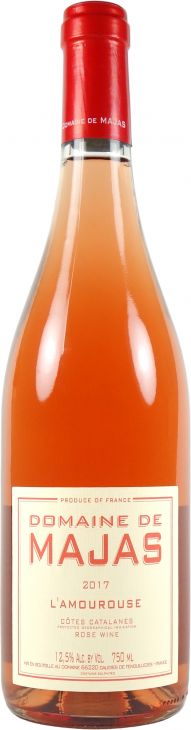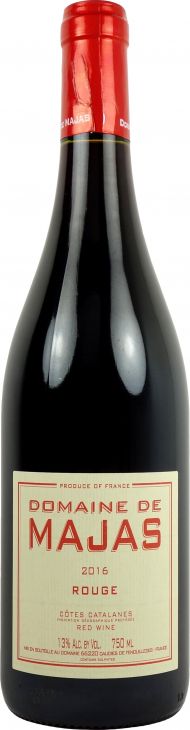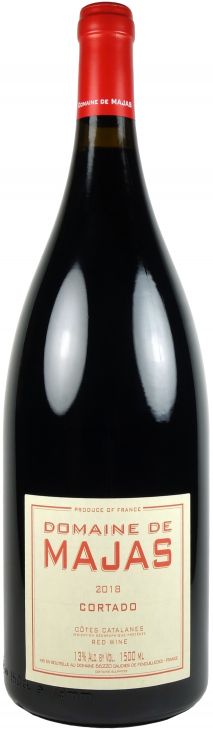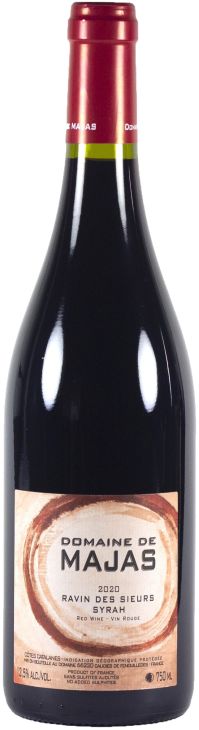
producer profile
14.06.2019
Domaine de Majas Producer Profile
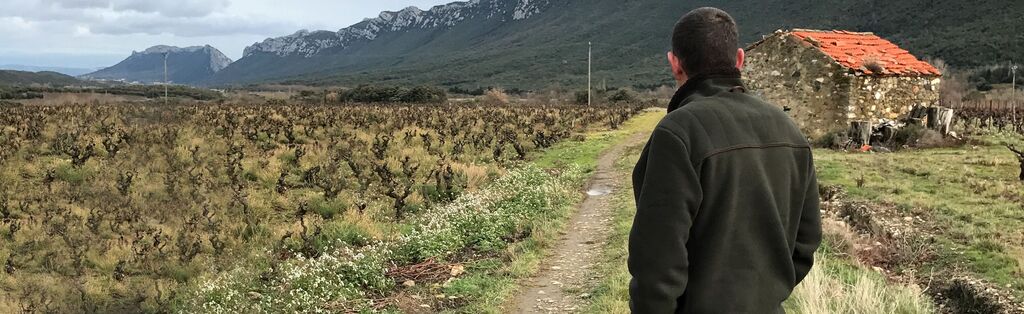
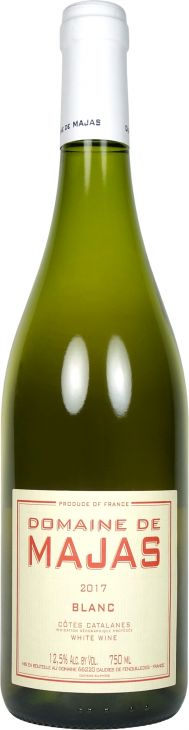
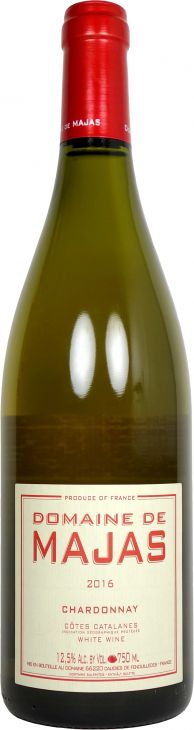
<p>Alain Carrère founded Domaine de Majas with his wife Agnès in 1992. Today, the <glossary title="427">estate</glossary> represents 30 <span class="zalup"><span> <glossary title="523">hectares</glossary><span>,</span></span></span> all in the <glossary title="322">commune</glossary> of <span class="zalup"><span><glossary title="250">Caudiès-de-Fenouillèdes</glossary><span>.</span></span></span> The vineyards principally consist of <glossary title="237">Carignan</glossary> grown on <glossary title="1026">terroirs</glossary> of <span class="zalup"><span><glossary title="933">schist</glossary><span>,</span></span></span> <glossary title="1117">volcanic</glossary> stone and mountainous <span class="zalup"><span> <glossary title="596">limestone</glossary><span>.</span></span></span> <span class="zalup"><span><glossary title="650">Merlot</glossary><span>,</span></span></span> <span class="zalup"><span><glossary title="217">Cabernet Sauvignon</glossary><span>,</span></span></span> <span class="zalup"><span><glossary title="216">Cabernet Franc</glossary><span>,</span></span></span> <span class="zalup"><span><glossary title="508">Grenache</glossary><span>,</span></span></span> <span class="zalup"><span><glossary title="1001">Syrah</glossary><span>,</span></span></span> <span class="zalup"><span><glossary title="280">Chenanson</glossary><span>,</span></span></span> <span class="zalup"><span><glossary title="609">Macabeu</glossary><span>,</span></span></span> <glossary title="1081">Rolle</glossary> and <glossary title="271">Chardonnay</glossary> are also planted.</p>
<p>To this day, the vast majority of <glossary title="376">Côtes du Roussillon</glossary> <glossary title="108">AOC</glossary> is being mass produced by <span class="zalup"><span><glossary title="252">cave cooperatives</glossary><span>.</span></span></span> By the early 1990's, the <glossary title="252"><strong>co-op</strong></glossary>'s way of doing business made living solely off of <glossary title="1103">viticulture</glossary> next to impossible, resulting in approximately 3/4 of the region's vines getting ripped out by their owners. As a way to "start fresh", those who continued growing grapes (like Alain's father) were then pressured by the <glossary title="252">caves</glossary> -hoping to capitalize on the increasing demand for "<glossary title="178">Bordeaux</glossary> style" wines- to widely replant <span class="zalup"><span><glossary title="650">Merlot</glossary><span>,</span></span></span> <glossary title="217">Cabernet Sauvignon</glossary> and <span class="zalup"><span><glossary title="216">Cabernet Franc</glossary><span>.</span></span></span> While this strategy worked in the short term, it eventually backfired and furthered the <glossary title="108">AOC's</glossary> bad reputation. <br />
<br />
By the time Alain took over the the <glossary title="427">estate</glossary> in the early 90's, he knew that selling his family's grapes to the <glossary title="252">cave</glossary> was no longer an option. He started a small, independent <glossary title="427">estate</glossary> (just two <glossary title="523">hectares</glossary>), but very quickly inherited over 20 <glossary title="523">hectares</glossary> of his father's vines. With a lot more wine to sell all of a sudden, it became increasingly difficult distributing locally. <br />
<br />
After struggling to sell his entire stock for many years, a deal too good to be true came his way: a major french supermarket chain offered to buy the entirety of his production as an exclusive for their wine section. A contract was signed, and strict guidelines were set: the <glossary title="871">rosé</glossary> had to taste like this, the white like that... <br />
<br />
<em>"There was no reflection of </em><glossary title="1026"><em>terroir</em></glossary><em>, the wines had zero personality. They were okay, but could have been coming from anywhere."</em><br />
<br />
Even worst, the bulk prices offered by the supermarket weren't paying the bills; in fact, the Carrère were actually losing money every year! Facing bankruptcy, Alain had to find a solution. <glossary title="332">Converting</glossary> to <glossary title="746">organics</glossary> briefly crossed his mind, but with no outside guidance or pre-existing market, he did not dare attempt it. But as fate would have it, a chance encounter with Tom Lubbe of <a href="http://louisdressner.com/producers/Matassa/">Domaine Matassa</a> would change everything. <br />
<br />
After tasting the wines, Tom told Alain he would be willing to help them rebuild the <glossary title="427">estate</glossary> from the ground up. The two verbally agreed on a partnership, and with Tom's guidance they immediately started converting all 30 <glossary title="523">hectares</glossary> to <glossary title="746">organic</glossary> <span class="zalup"><span><glossary title="1103">viticulture</glossary><span>,</span></span></span> as well as eliminating all <span class="zalup"><span><glossary title="321">commercial yeasts</glossary><span>,</span></span></span> additives and excessive <glossary title="993">sulfur</glossary> in the <span class="zalup"><span><glossary title="254">cellar</glossary><span>.</span></span></span> Tom also showed Alain the importance of highlighting different <span class="zalup"><span><glossary title="1026">terroirs</glossary><span>,</span></span></span> a lesson that has produced great results. Alain, completely reinvigorated, is grateful to have had this second chance. The wines being produced today are fresh, elegant and and a real bargain for the quality.</p>
Article
interview
14.06.2019
An Interview with Alain Carrère from 2012
<p><em>This interview with Alain Carrère took place in his </em><glossary title="254"><em>cellar</em></glossary><em> in July, 2012.</em></p>
<p><strong>Tell us about Domaine de Majas.</strong><br />
<br />
I created<font color="#7b143e"><strong> Domaine</strong></font> de Majas in 1992. We started with two <span class="zalup"><span><glossary title="523">hectares</glossary><span>,</span></span></span> and today -through various purchases but also by reacquiring my parent's land- we find ourselves working 30 <span class="zalup"><span><glossary title="523">hectares</glossary><span>.</span></span></span> My wife Agnès and I run everything with the help of a part-time employee. Before I started working my father's vines, the grapes all went to the <span class="zalup"><span><glossary term="Cave Cooperative" title="252">cave cooperative</glossary><span>.</span></span></span> I had no desire to continue in this path, preferring to see the whole process through. I wanted to master everything. <br />
<br />
<strong>You grow a lot of different grapes, right? </strong><br />
<br />
For whites, we grow <span class="zalup"><span><glossary title="609">Macabeu</glossary><span>,</span></span></span> <glossary title="1081">Rolle (Vermentino)</glossary> and <span class="zalup"><span><glossary title="271">Chardonnay</glossary><span>.</span></span></span> For red, we have a majority of <span class="zalup"><span><glossary title="237">Carignan</glossary><span>,</span></span></span> produced from vines between 30 and 120 years old. But we also have <span class="zalup"><span><glossary title="650">Merlot</glossary><span>,</span></span></span> <span class="zalup"><span><glossary title="216">Cabernet Franc</glossary><span>,</span></span></span> <span class="zalup"><span><glossary title="217">Cabernet Sauvignon</glossary><span>,</span></span></span> <span class="zalup"><span><glossary title="508">Grenache</glossary><span>,</span></span></span> <glossary title="1001">Syrah</glossary> and a tiny bit of <span class="zalup"><span><glossary title="280">Chenanson</glossary><span>.</span></span></span><br />
<br />
Many of these grapes are not part of the region's <glossary title="1103">viticultural</glossary> history. About 20 years ago, everything was being replanted with <glossary title="178">Bordeaux</glossary> varieties. It's what was popular at the time, and because my family always worked on a large scale distribution, the mindset was to supply the increasing demand for "<glossary title="178">Bordeaux</glossary> Style" wines. Today, almost no one makes 100% <glossary title="217">Cabernet Sauvignon</glossary> anymore. Everything is <span class="zalup"><span><glossary title="168">blended</glossary><span>.</span></span></span><br />
<br />
<strong>Speaking to you earlier, it sounds like your whole area is caught in an ongoing<font color="#7b143e"> viticultural</font> crisis... How has this affected you personally?</strong><br />
<br />
Up until the early 90's, the vast majority of the wine coming from our area was mass produced by <span class="zalup"><span><glossary title="252">cave cooperatives</glossary><span>.</span></span></span> Profit margins for the <glossary title="1103">viticulturists</glossary> were always low, but back then you could manage by bringing in very high <span class="zalup"><span><glossary title="1129">yields</glossary><span>.</span></span></span> But the fees kept getting higher and higher, to the point where you weren't making enough money: if you sold a <glossary title="524">hectoliter</glossary> for 40 euros, there would be 25 euros in fees. 15 Euros per <glossary title="524">hectoliter</glossary> is just unlivable; as a result, a huge amount of vines were ripped out. About 3/4 of our <glossary title="1103">viticultural</glossary> potential. Gone! And now, it's almost like we are <a href="http://en.wikipedia.org/wiki/Asterix" target="_blank">Astérix's village</a>, the only ones resisting! We are down to three independent <glossary title="1089">vignerons</glossary> working 100 <span class="zalup"><span><glossary title="523">hectares</glossary><span>.</span></span></span><br />
<br />
<strong>Can we talk about your experience with a famous French supermarket?</strong> <br />
<br />
Yes we can talk about it! When I was just getting started, we focused on selling our wines locally. But as quantities grew, we decided to sell to supermarkets. We did this for four, five years, and every year, we were losing more and more money! It's basically an organized racket. <br />
<br />
So of course, we started looking for a solution to dig ourselves out of this hole. That solution came around one bright day with the arrival of Tom Lubbe. He was interested in helping us, and we were interested in restarting from the ground up...<br />
<br />
<strong>How did you meet Tom?</strong><br />
<br />
By coincidence. He had an employee at the time who was from our village. We knew the kid well, and one day we started talking about our interest in <glossary title="746">organic</glossary> <span class="zalup"><span><glossary title="1103">viticulture</glossary><span>,</span></span></span> the fear to move forward, etc… So he talked to Tom, who came a first time to taste. After trying the wines, he immediately had ideas on how to could work together. That very first day, we made an oral agreement to be partners, and the next day we we began the conversion to <glossary title="746">organic</glossary> <span class="zalup"><span><glossary title="1103">viticulture</glossary><span>.</span></span></span> <br />
<br />
<strong>Prior to meeting Tom, had you already thought about making changes in your<font color="#7b143e"> viticultural</font> work?</strong> <br />
<br />
Working <glossary title="746">organically</glossary> had always been in the back of our minds, but with 30 <glossary title="523">hectares</glossary> and no outside guidance, we didn't have the courage to give it a shot. Meeting Tom was the push we needed: he encouraged us to do it, and we decided to make it a reality. <br />
<br />
<strong>Can we talk about the<font color="#7b143e"> conversion</font> and what's going on today? Tom said he's never seen better results! </strong><br />
<br />
It's important to note that while we definitely weren't working <span class="zalup"><span><glossary title="746">organically</glossary><span>,</span></span></span> we'd always limited <glossary title="1142">pesticides</glossary> to a minimum, and were already working the soil. So the change came, but it wasn't a complete 180. New techniques have been implemented, like letting grass grow for six months through the winter to let the soil rest. <br />
<br />
The soil needed to restructure itself, but honestly we are lucky to be in a low rain region, where working <glossary title="746">organically</glossary> is relatively easy. But things have changed, and one great example regards some of my very <span class="zalup"><span><glossary term="Old Vines" title="740">old vines</glossary><span>,</span></span></span> vines that had been worked <glossary term="Conventional Farming" title="331">conventionally</glossary> for generations (25 years of <glossary title="526">herbicides</glossary>). They were barely alive; it almost felt like they were on life support. Since we've <glossary term="Conversion" title="332">converted</glossary> to <span class="zalup"><span><glossary title="746">organics</glossary><span>,</span></span></span> it's like they've been freed! They are vibrant and productive again. <br />
<br />
<strong>Why label your wines IGP des <font color="#7b143e">Côtes Catalanes </font>instead of AOC Côtes du Roussillon? </strong><br />
<br />
You are right that we make a <glossary title="1093">Vin de Pays</glossary> even though our land is within the <span class="zalup"><span><glossary title="108">AOC</glossary><span>.</span></span></span> It's a choice we made because working under the <glossary title="108">AOC</glossary> meant producing imposed <glossary title="168">blends</glossary> with imposed <span class="zalup"><span><glossary title="1071">varietals</glossary><span>.</span></span></span> We had a different vision, and by <glossary title="383">declassifying</glossary> the wines, we can blend the way we want to. <br />
<br />
<strong>What has changed in the<font color="#7b143e"> cellar</font>? </strong><br />
<br />
In the <span class="zalup"><span><glossary title="254">cellar</glossary><span>,</span></span></span> Tom showed us how to rethink everything, and we make wine almost exactly the way he taught us to. From the very start, Tom said: <em>"If we're going to do this, we're going to do this 100%. No </em><glossary title="1128"><em>yeasts</em></glossary><em>, no manipulations and no excessive </em><glossary title="993"><em>sulfur</em></glossary><em>."</em><br />
<br />
It's completely changed the wines. When we worked with the supermarket, we had strict directives: the <glossary title="871">rosé</glossary> had to taste like candy, so we had a <glossary title="1128">yeast</glossary> for that. We had a <glossary title="271">Chardonnay</glossary> <glossary title="1128">yeast</glossary> to extract that lemon citrus taste, etc... There was no reflection of <span class="zalup"><span><glossary title="1026">terroir</glossary><span>,</span></span></span> the wines had zero personality. They were okay, but could have been coming from anywhere.<br />
<br />
<glossary title="441">Fermenting</glossary> with <glossary title="538">indigenous yeasts</glossary> gave our wines a soul they never had before. They now have their OWN characteristics, and don't resemble any wine you'd find in a supermarket. It's also made us understand the merits of making<font color="#7b143e"><strong> </strong></font><glossary term="Single Vineyard Bottling" title="959">parcel specific</glossary> <span class="zalup"><span><glossary title="363">cuvées</glossary><span>,</span></span></span> like the "Col de Ségas". The fact that we can make such a quality wine exclusively from the grapes of this very, very old <span class="zalup"><span><glossary title="760">parcel</glossary><span>,</span></span></span> this brings me huge satisfaction and pride, because these were my great grandparents' vines! <br />
<br />
<strong>What do you like to drink?</strong> <br />
<br />
I like wines that talk to me, that want to tell me a story. Wines with character that are easy to drink. It's nice when you can taste a <glossary title="1089">vigneron's</glossary> hard work. Oh, and not too much <span class="zalup"><span><glossary title="1126">wood</glossary><span>!</span></span></span></p>
Article
producer visit
24.07.2019
This visit at Domaine de Majas took place in July, 2012
<p><strong><em>This visit at Domaine de Majas took place in July, 2012.</em></strong></p>
<p><strong><em>Words by Jules Dressner, photos by Maya Pedersen.</em></strong></p>
<p>The three and half hour drive from Dominique Hauvette's to the incredibly named <glossary title="250">Caudiès-de-Fenouillèdes</glossary> was beautiful. Long stretches of roads swerving through the <span class="zalup"><span><glossary term="Pyrenees Mountains" title="1195">Pyrenees</glossary><span>,</span></span></span> the sun setting in the distance, casting its orange-red glow on the mountain rock... It made me feel like a good old fashioned city slicker.<br />
<iframe allowfullscreen="" frameborder="0" height="360" src="//www.youtube.com/embed/jxjXTpEnMV0" width="640"></iframe><br />
<br />
Well not really, but it was quite breathtaking. <br />
<br />
Once in the village, we checked into our chambre d'hôte. It's run by a Dutch couple, and the guy's name was Jan (pronounced Yan). On top of managing the chambre d'hôte, his main gig involves organizing Harley Davidson tours of the region. Tom Lubbe would later go on to say that he looked like a character from the movie Labyrinth, although I'm pretty sure (because of Jan's long, whitish-blond hair) he meant David Bowie. </p>
<p><img src="http://louisdressner.com/uploads/images/article/2019_Jul_24//79/f4/79f4b2262dcfcd56aca9c8ae65f9e99d.jpeg" /></p>
<p>We arrived around 10pm, and were worried nothing would be open to eat. Fortunately, the <glossary title="880">Roussillon</glossary> functions on pseudo-Spanish time, so people were just starting to have dinner. We ate pizzas at the local bar/cafe, which was playing 90's rock videos the whole time. Maya "Mayhem" Pedersen and I were very amused hearing the Smashing Pumpkins' Bullet with Butterfly Wings:</p>
<p><iframe allowfullscreen="" frameborder="0" height="360" src="//www.youtube.com/embed/8-r-V0uK4u0" width="640"></iframe></p>
<p>I always thought that song was called Rat in a Cage. Bullet With Butterfly Wings? What kind of a stupid, pretentious name is that? P.S: Next time you bump into me, ask me to tell you my friend's story about meeting Billy Corgan and him being a huge asshole.<br />
<br />
We then rocked out to the infinitely better <em>Stupid Girl</em> by Garbage. </p>
<p><iframe allowfullscreen="" frameborder="0" height="360" src="//www.youtube.com/embed/2GhPUAVgHZc" width="640"></iframe><br />
<br />
Returning to our rooms, Maya discovered that there was no soap in the bathrooms. Thinking they had forgotten, I asked Jan if he could bring me some the next morning. What follows is a paraphrased re-telling of the conversation.<br />
<br />
-Hey, you forgot to give us soap in the bathrooms.<br />
<br />
-Soap? What do you mean? You didn't bring any?<br />
<br />
-No. <br />
<br />
-But everyone brings their own soap to a chambre d'hôte.<br />
<br />
-I've never stayed anywhere I had to pay for where I wasn't provided at least a little bar of soap.<br />
<br />
-Normally, people bring their own soap.<br />
<br />
-Can you get me some or not?<br />
<br />
- Um, okay, wait a second...<br />
<br />
He then went to his house and brought back some liquid hand soap. Not the best shower I've ever taken... Anyway, fast forward to breakfast, where weird and inappropriately loud electronic-ambient-nordic-chant-Enya-ripoff music was playing, and Jan decided to show us a picture DVD of him on various Harley Davidson tours. The whole experience was completely surreal.<br />
<br />
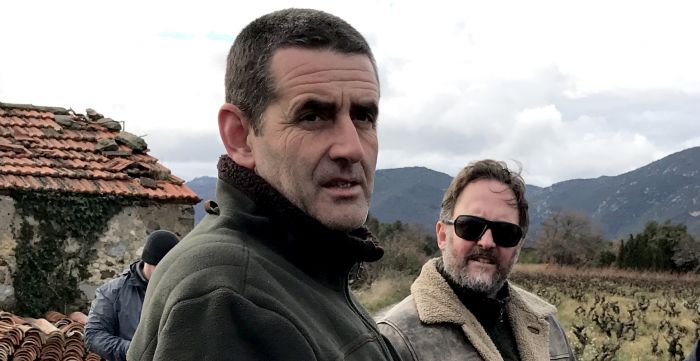
After breakfast, <a href="http://louisdressner.com/producers/Matassa/" target="_blank">Tom Lubbe</a> came to pick us up and it was time to finally meet Agnės and Alain Carrėre! After importing their last three <span class="zalup"><span><glossary title="1109">vintages</glossary><span>,</span></span></span> it was about time! Alain is a very tall, dark skinned man of Spanish origin, born and raised in <span class="zalup"><span><glossary title="250">Caudiès</glossary><span>.</span></span></span> Agnès is originally from Paris, and unfortunately we barely got to see her since her sister -who she only sees twice a year- was visiting. They both are very kind, grateful people, which is humbling considering all the tough times the <glossary title="427">estate</glossary> has been through. <br />
<br />
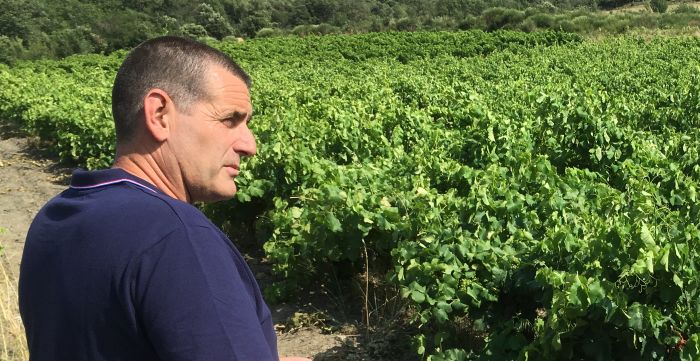
The first <glossary title="760">parcel</glossary> we visited consists mostly of <glossary title="237">Carignan</glossary> on <span class="zalup"><span><glossary title="933">schist</glossary><span>.</span></span></span> </p>
<p><img src="http://louisdressner.com/uploads/images/article/2019_Jul_24//6b/bb/6bbb70ccc4c724cbecac65e89da32306.jpg" /></p>
<p><img src="http://louisdressner.com/uploads/images/article/2019_Jul_24//11/e2/11e263d505c192d6f434228ad0fb9d6d.jpg" /></p>
<p><img src="http://louisdressner.com/uploads/images/article/2019_Jul_24//ae/53/ae530af8a0a99b1b81655a790e2ed40f.jpg" /></p>
<p><img src="http://louisdressner.com/uploads/images/article/2019_Jul_24//2a/ef/2aef992b314f69bc3533e5ab23868d59.jpg" /></p>
<p><img src="http://louisdressner.com/uploads/images/article/2019_Jul_24//d6/85/d6851d0ba3f87d64b3787d4376c6aa3e.jpg" /></p>
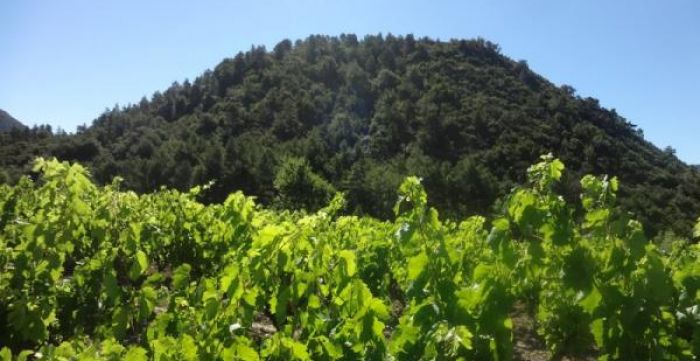
<p><glossary title="250">Caudiès-de-Fenouillèdes</glossary> (man I love that name) is the limit of grape growing in this part of the <span class="zalup"><span><glossary title="880">Roussillon</glossary><span>.</span></span></span> After that, you have to travel 50km to <span class="zalup"><span><glossary title="597">Limoux</glossary><span>.</span></span></span> It's also the only vineyard site in the <glossary title="880">Roussillon</glossary> classed as "mountainous." The highest site at Majas is the<font color="#7b143e"><strong> "</strong></font>Clos Ségas". At 420m <span class="zalup"><span><glossary term="Elevation" title="419">elevation</glossary><span>,</span></span></span> it produces a <glossary term="Field Blend" title="446">field blend</glossary> that's <em>"always a surprise"</em>. The vines are spread over five <glossary title="523">hectares</glossary> and were planted by Alain's great-grandparents. They are between 120 and 130 years old!</p>
<p><img src="http://louisdressner.com/uploads/images/article/2019_Jul_24//28/b3/28b3712cba6f0c65a08e746399a71afb.jpg" /></p>
<p>Looking around, I spotted a lot of abandoned vineyard sites on nearby slopes and hills. But here and there, you notice little patches of vines, and Alain says these have all been replanted in the last 15 years:<br />
<br />
<em>"Vines used to be on the hills, but people ripped them out to replant in the plains. Now they're back in the hills again!" </em><br />
<br />
Next up, a five <glossary title="523">hectare</glossary> <glossary title="760">parcel</glossary> of 80-90 year old vines. Many grapes are grown in this area, mostly of <span class="zalup"><span><glossary title="237">Carignan</glossary><span>,</span></span></span> <glossary title="508">Grenache</glossary> and <span class="zalup"><span><glossary title="1001">Syrah</glossary><span>.</span></span></span> </p>
<p><img src="http://louisdressner.com/uploads/images/article/2019_Jul_24//f9/4b/f94b8da5d0e5947aeba0d425ebfd228b.jpg" /></p>
<p><img src="http://louisdressner.com/uploads/images/article/2019_Jul_24//6f/40/6f40a0f62cfdae1becdc1d5363cb3653.jpg" /></p>
<p><img src="http://louisdressner.com/uploads/images/article/2019_Jul_24//3f/8b/3f8b3e668261fcdfdd3029f8def02aa4.jpg" /></p>
<p><img src="http://louisdressner.com/uploads/images/article/2019_Jul_24//04/ae/04ae2bd9b26c206cb8a3fe9f4f0014d0.jpg" /><br />
<br />
Alain has no problems with his neighbors: either the vines are in isolated <span class="zalup"><span><glossary title="305">clos</glossary><span>,</span></span></span> or -seeing how well Alain's vines were doing- they started working <glossary title="746">organically</glossary> themselves.<br />
<br />
<em>"It's incredible how much it's changed local </em><glossary title="1103"><em>viticulture</em></glossary><em> in just a few years."</em> pointed out Tom. Since Alain started working <span class="zalup"><span><glossary title="746">organically</glossary><span>,</span></span></span> over 70 neighboring <glossary title="523">hectares</glossary> have been <span class="zalup"><span><glossary term="Conversion" title="332">converted</glossary><span>!</span></span></span><br />
<br />
After our visit of the vines, it was <glossary title="254">cellar</glossary> time. The highlight is this half-circle of large <glossary title="325">concrete</glossary> <glossary title="1140">tanks</glossary> in the far corner.</p>
<p><img src="http://louisdressner.com/uploads/images/article/2019_Jul_24//e3/9a/e39ab5ef90c2133815a4fd640b644adb.jpg" /></p>
<p><img src="http://louisdressner.com/uploads/images/article/2019_Jul_24//f0/f4/f0f46f5f76f4cfa9465d1ab6ea9c0ee1.jpg" /></p>
<p><em>"The last owner basically gave me the </em><glossary title="254"><em>cellar</em></glossary><em>. Wine hadn't been made here since 1953."</em><br />
<br />
We then tasted the 2011's out in the sun. The 11 "Grappe Entiere" -a 100% <glossary title="1081">Rolle</glossary> cuvée that stays on the skins for a month- really stood out, as did the "Rouge" 2011 and the "Clos Ségas" 2010 (2011 is being bottled soon). The "Ravin des Sieurs" <glossary title="1001">Syrah</glossary> was also quite pleasant. These wines are all extremely affordable and currently available stateside. Conveniently, the tasting ended right around...LUNCH TIME!<br />
<br />
Over a bottle of Majas <span class="zalup"><span><glossary title="871">rosé</glossary><span>,</span></span></span> Alain and Tom continued talking about the region's ongoing struggle. In a very quotable moment, Tom exclaimed:<br />
<br />
-<em>"It's not </em><glossary title="78"><em>agriculture</em></glossary><em>, it's agribusiness. </em><glossary title="78"><em>Agriculture</em></glossary><em> is the first word in the latin language, it's something sustainable we can pass from generation to generation. This is not what we have anymore."</em><br />
<br />
-"<em>Only three of us made wine independently in the village. Now we are two, and he's also (unsuccessfully) trying to sell his </em><glossary title="427"><em>estate</em></glossary><em>. It looks like I'm going to be the only independent here…</em>" <br />
<br />
<em>"A </em><glossary title="672"><em>monopole</em></glossary><em>!"</em> chimed Tom positively. They were making light of the situation, but it was obvious that Alain feels a bit like the odd man out, wishing there was more camaraderie in the village. Still, he is grateful to have turned things around and still be here. <br />
<br />
<em>"If we hadn't met Tom, we would probably have called it quits as well. Working </em><glossary title="746"><em>organically</em></glossary><em> saved the vines. It saved us."</em></p>
Article
harvest report
30.08.2009
2009 Harvest Report from Tom Lubbe
<p><u><strong>August 30th, 2009:</strong></u></p>
<p>Our harvest is going to start around Sept. 3rd with our <glossary title="1133">plots</glossary> of <span class="zalup"><span><glossary title="271">Chardonnay</glossary><span>,</span></span></span> and we should finish around Oct. 6th for the last <span class="zalup"><span><glossary title="237">Carignans</glossary><span>.</span></span></span><br />
<br />
This year, the spring was quite wet, and the presence of <glossary title="1137">mildew</glossary> was important. But despite the humidity, <glossary title="1179">flowering</glossary> went well and rather quickly.<br />
<br />
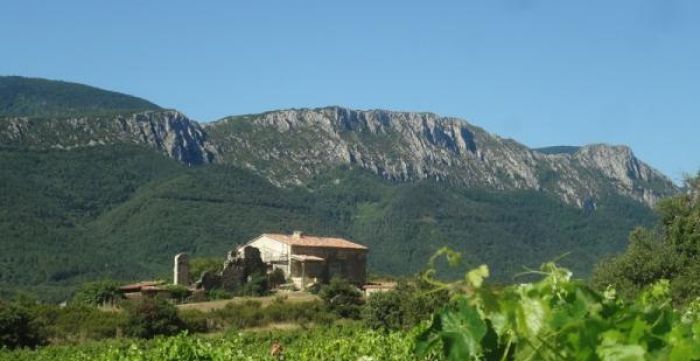
At the end of June, the weather took a turn for the better, with hot days (82.4 to 84.2) and cool nights (57.2 to 59): this is typical of our location, with a climate both mediterranean and continental, at an altitude of 350 m. (1,148 feet), with the <glossary term="Pyrenees Mountains" title="1195">Pyrenees mountains</glossary> surrounding our valley of the <glossary title="439">Fenouillèdes</glossary> with peaks up to 1200 m. (3,937 feet).<br />
<br />
August was particularly hot and dry (100.4F day, 68F night), and ripeness came quickly.<br />
<br />
For our <span class="zalup"><span><glossary title="427">estate</glossary><span>,</span></span></span> <glossary title="1129">yields</glossary> are going to be about 20% less than in 2008, but the greater <glossary term="Concentration" title="324">concentration</glossary> promises a good <span class="zalup"><span><glossary title="1109">vintage</glossary><span>.</span></span></span></p>
Article