producer profile
30.05.2019
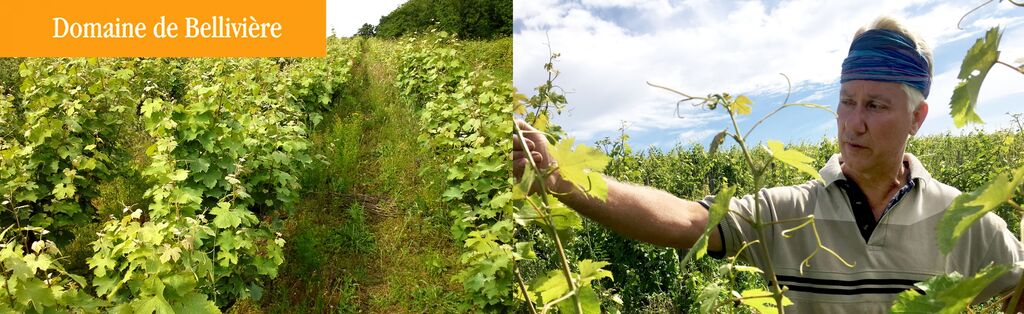
Domaine de Bellivière Producer Profile
<p>The <glossary title="108">AOC</glossary> <glossary title="556">Jasnières</glossary> and <glossary title="348">Coteaux-du-Loir</glossary> were, until very recently, languishing; the vines had been all but wiped-out by the intense <glossary title="1135">frost</glossary> of 1956, and only a handful of tenacious owners held on to their vines, usually keeping the wine they made for their personal consumption while making a living thanks to other <glossary term="Agriculture" title="78">agricultural</glossary> revenues.</p>
<p>Located about 30 miles north of the city of <span class="zalup"><span><glossary title="1038">Tours</glossary><span>,</span></span></span> these small <glossary title="108">AOC's</glossary> (37 and 48 <glossary title="523">hectares</glossary> respectively) are isolated at the edges of three provinces: <span class="zalup"><span><glossary title="620">Maine</glossary><span>,</span></span></span> <glossary term="Anjou" title="105">Anjou</glossary> and <span class="zalup"><span><glossary title="1036">Touraine</glossary><span>.</span></span></span> They are also the most northern <glossary term="Viticulture" title="1103">viticultural</glossary> areas in the west of France (in the east, only<span class="zalup"><span> <glossary title="262">Chablis</glossary><span>,</span></span></span> <glossary title="267">Champagne</glossary> and <glossary title="95">Alsace</glossary> are further north). Fortunately, the river Loir replicates some of the <glossary title="656">micro-climactic</glossary> conditions of its big sister, the <glossary title="603">Loire</glossary> (watch your French: <em>le Loir</em>, along with <em>la</em> <em>Sarthe</em> and <em>la</em> <em>Mayenne</em>, form <em>le</em> <span class="zalup"><span><glossary term="Maine" title="620"><em>Maine</em></glossary><span>,</span></span></span> a tributary of <em>la</em> <glossary title="603"><em>Loire</em></glossary> which it joins in <glossary title="104">Angers</glossary>).<br />
<br />
In the 1970's, the winemaker Joël Gigou pionneered a renewal of <glossary title="556">Jasnières</glossary> and <glossary title="348">Coteaux-du-Loir</glossary> as <glossary title="1103">viticultural</glossary> areas. Eric Nicolas, a city kid without any roots in either the region or in <span class="zalup"><span><glossary title="78">agriculture</glossary><span>,</span></span></span> developed a passion for vines and wines, and after studying <span class="zalup"><span><glossary title="422">oenology</glossary><span>,</span></span></span> he looked to the <glossary term="Loire Valley" title="602">Loire</glossary> to acquire vineyards, mainly because he had met several passionate winemakers there.<br />
<br />
Eric and his wife Christine found a property with some vines, but mostly grazing fields, trees and grains. They nurtured the existing <glossary term="Old Vines" title="740">old vines</glossary> and did a lot of planting, to get to their current 14 <span class="zalup"><span><glossary term="Hectare" title="523">hectares</glossary><span>,</span></span></span> scattered over 65 <glossary title="760">parcels</glossary> within six villages (sounds more like <glossary title="">Burgundy</glossary> or <glossary title="267">Champagne</glossary> than a tiny, obscure <span class="zalup"><span><glossary title="113">appellation</glossary><span>!</span></span></span>) They use <glossary title="941">sélection massale</glossary> rather than <span class="zalup"><span><glossary title="304">clones</glossary><span>,</span></span></span> and plant at a density of 9,300 vines per <span class="zalup"><span><glossary title="523">hectare</glossary><span>.</span></span></span> They also planted an experimental <glossary title="1133">plot</glossary> where the density is 40,000 vines per <span class="zalup"><span><glossary title="523">hectare</glossary><span>,</span></span></span> to observe the development of the root system and the influence of <glossary title="1026">terroir</glossary> on <glossary title="181">botrytized</glossary> grapes (one grape per vine). Though <glossary title="746">organic</glossary> from the start, the Nicolas came to be firm believers in <glossary title="160">biodynamic</glossary> <glossary title="1103">viticulture</glossary> and have been <glossary title="260">certified</glossary> since 2011. <br />
<br />
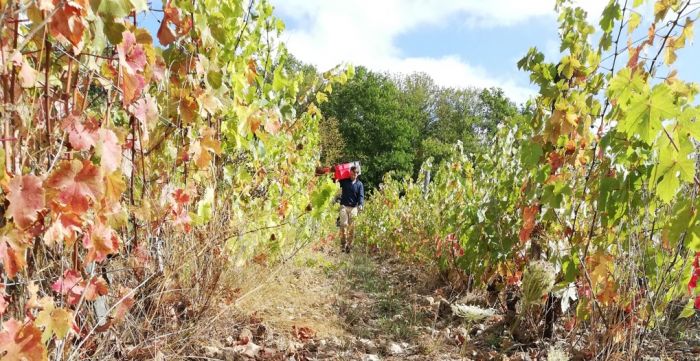
<glossary title="281">Chenin Blanc</glossary> represents the vast majority of the Bellivière production. Grapes are diligently <span class="zalup"><span><glossary title="520">picked by hand</glossary><span>,</span></span></span> some years in <glossary title="1144">passes</glossary> if the <glossary title="1109">vintage</glossary> is suitable for <span class="zalup"><span><glossary title="181">botrytis</glossary><span>.</span></span></span> In the <span class="zalup"><span><glossary title="254">cellar</glossary><span>,</span></span></span> each <glossary title="760">parcel</glossary> is <glossary title="1104">vinified</glossary> individually in <glossary title="142">barrels</glossary> of various shapes and sizes, permitting Eric and his son Clément to make judicious <glossary title="1146">blending</glossary> choices each <span class="zalup"><span><glossary title="1109">vintage</glossary><span>.</span></span></span> <glossary title="441">Fermentations</glossary> are always done with <span class="zalup"><span><glossary title="538">native yeasts</glossary><span>,</span></span></span> and often they will not finish all of the grapes' sugars. Eric has chosen to embrace this reality, letting "nature decide" how <glossary title="405">dry</glossary> each <glossary title="363">cuvée</glossary> will be each year. Occasionally the wines can be <span class="zalup"><span><glossary title="386">demi-sec</glossary><span>,</span></span></span> but more often they are <span class="zalup"><span><glossary title="736">off-dry</glossary><span>,</span></span></span> with perceptible sugars that integrate seamlessly and add complexity. <br />
<br />
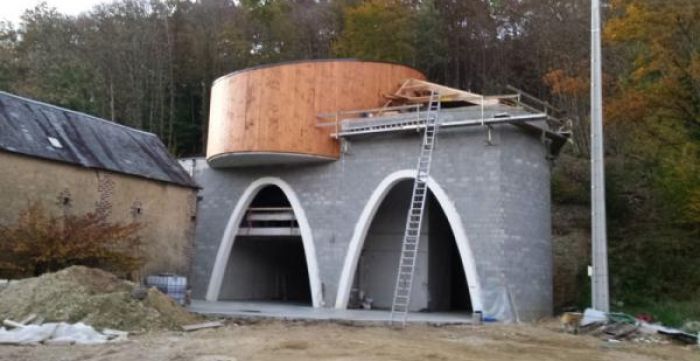
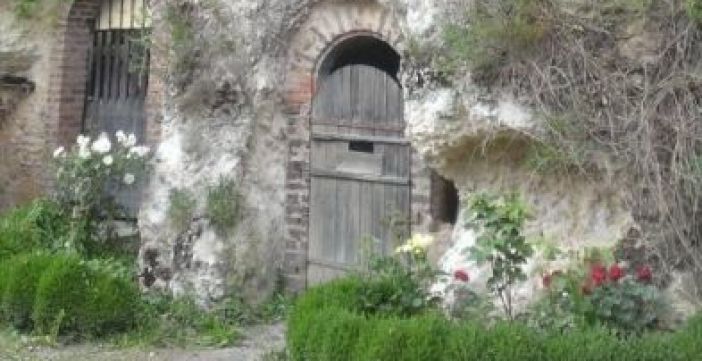
For years, the <glossary title="142">barrels</glossary> lived in the four little <glossary title="254">cellars</glossary> carved out of the <glossary title="1053">tuffeau limestone</glossary> mountain behind the house. In 2015, an impressive and modern winemaking facility was built out. Futuristic in aesthetic and forward thinking in design, its three floor layout permits immaculate precision for <span class="zalup"><span><glossary title="1165">working by gravity</glossary><span>.</span></span></span> The grapes are <glossary title="827">pressed</glossary> on the second floor and <glossary title="843">racked</glossary> by <glossary title="1165">gravity</glossary> to two floors (one subterranean) to <glossary title="142">barrels</glossary> for <glossary title="87">fermentation</glossary> and long <span class="zalup"><span><glossary title="418">élevages</glossary><span>.</span></span></span><br />
<br />
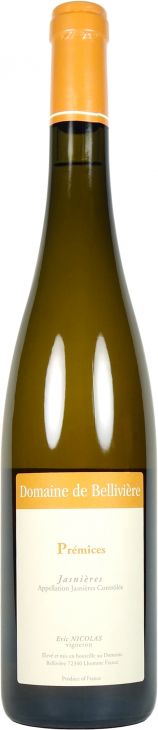
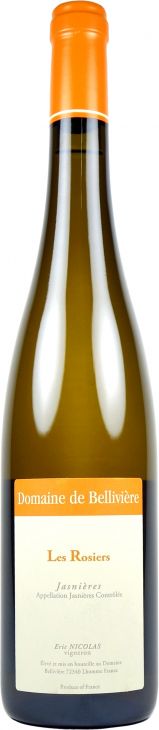
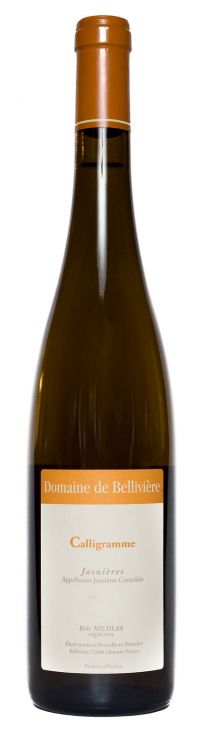
In <span class="zalup"><span><glossary title="556">Jasnières</glossary><span>,</span></span></span> only white wine from <glossary title="281">Chenin Blanc</glossary> is produced. "Prémices" is a <glossary title="142">barrel</glossary> selection of the most fruit forward wines and <glossary title="441">fermented</glossary> in old <span class="zalup"><span><glossary title="142">barrels</glossary><span>.</span></span></span> "Les Rosiers" is the "middle" <glossary title="363">cuvée</glossary> with vines anywhere under 50 years old, <glossary title="441">fermented</glossary> in old <glossary title="142">barrels</glossary> and about 1/4 <span class="zalup"><span><glossary title="717">new oak</glossary><span>.</span></span></span> "Calligrame" is the <glossary title="740">old vine</glossary> selection (50+ years old) and <glossary title="1104">vinified</glossary> with a small proportion of <span class="zalup"><span><glossary title="717">new oak</glossary><span>.</span></span></span> <br />
<br />
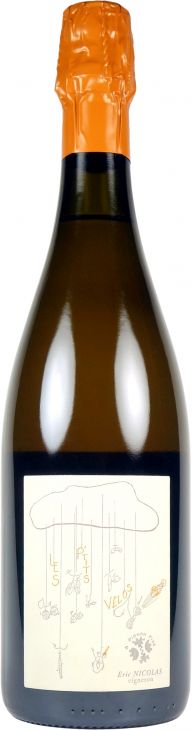
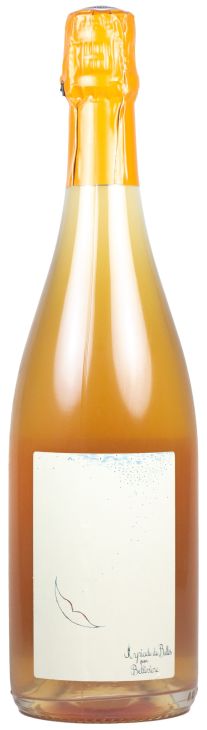
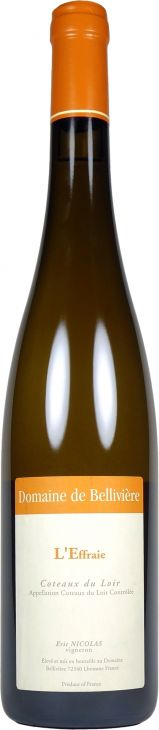
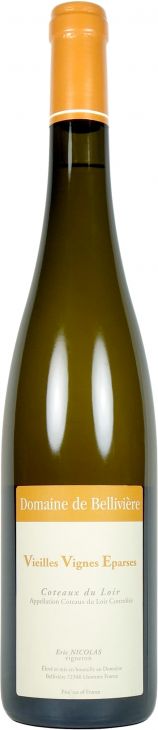
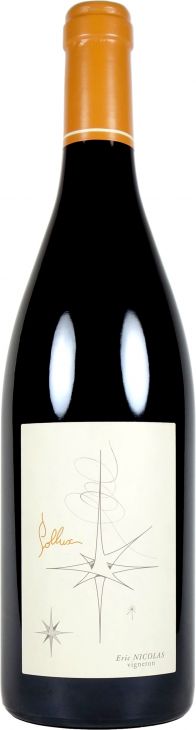
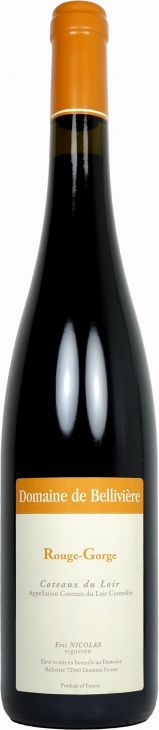
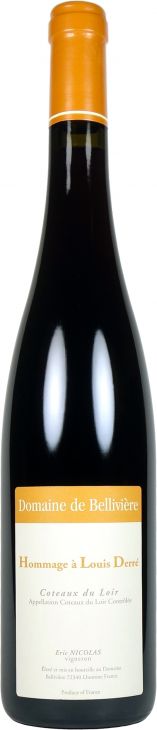
In <span class="zalup"><span><glossary title="348">Coteaux-du-Loir</glossary><span>,</span></span></span> the white <glossary title="363">cuvées</glossary> are "L'Effraie"<em> </em>("The Owl") and "Vieilles Vignes Éparses"<em> </em>("Scattered <glossary term="Old Vines" title="740">Old Vines</glossary>") and made in the same spirit as "Les Rosiers" and "Calligrame". The <glossary title="1139">indigenous</glossary> and almost instinct <glossary term="Pineau d'Aunis" title="799">Pineau d'Aunis</glossary> is the only red grape permitted in in the <span class="zalup"><span><glossary title="113">appellation</glossary><span>,</span></span></span> and from it the Nicolas produce the highly sought after "Rouge-Gorge". In exceptional years, a <glossary title="799">Pineau d'Aunis</glossary> will be produced from a scattering of 100+ year old vines called "Hommage à Louis Derré". In addition to the <glossary title="113">appellation</glossary> wines, some offbeat <glossary title="1092">Vin de France</glossary> are produced, including a sparkling <glossary title="281">Chenin Blanc </glossary> called "Les P'tits Vélos" and a <glossary title="478">Gamay</glossary> called "Pollux". <br />
<br />
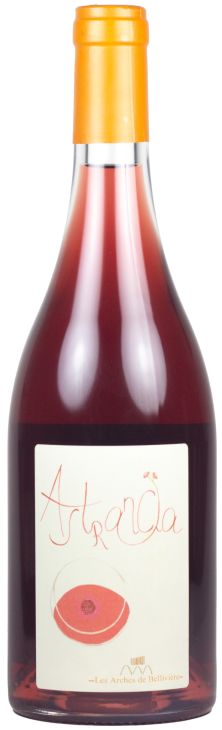
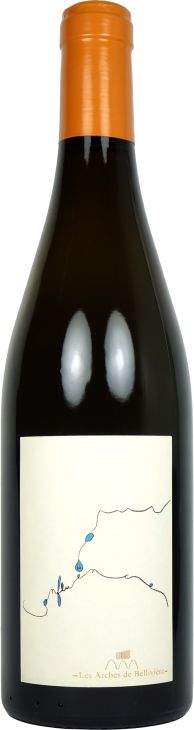
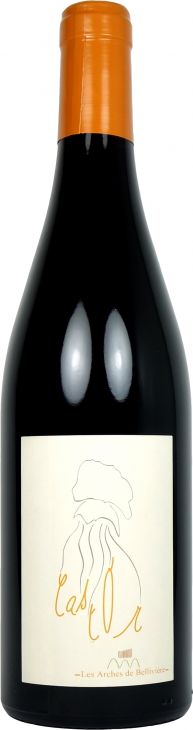
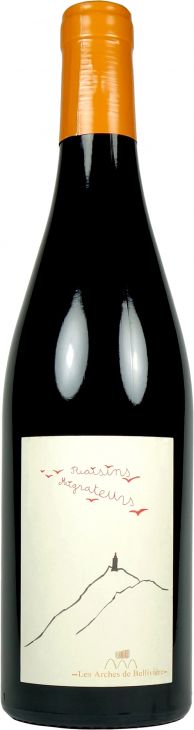
In 2017, following the arrival of Eric and Christine's son Clément to the business and a series of very difficult bouts with <span class="zalup"><span><glossary title="1135">frost</glossary><span>,</span></span></span> the Nicolas family started a <glossary title="729">négociant</glossary> label called Les Arches de Bellivière. Sourcing from <glossary title="">biodynamic</glossary> vineyards in the <glossary title="602">Loire</glossary> and beyond, they have so far produced three wines from the sub-label: a <glossary title="281">Chenin</glossary> from <glossary title="105">Anjou</glossary> called "Confluence", a <glossary title="216">Cabernet Franc </glossary> from <glossary title="105">Anjou</glossary> called "Castor" and a <glossary title="237">Carignan</glossary>/<glossary title="508">Grenache</glossary> blend from the Southern <glossary title="372">Rhône</glossary> called "Raisins Migrateurs"<em> </em>("Migrating Grapes").</p>
Article

interview
22.05.2019
An Interview with Eric Nicholas from 2012
<p><em>This interview with Eric Nicholas took place at the </em><glossary term="Salon des Vins de la Loire" title="904"><em>Salon des Vins de Loire</em></glossary><em> in February, 2012.</em></p>
<p><strong>Tell us about Bellivière.</strong></p>
<p>Bellivière is an <glossary title="427">estate</glossary> we founded in 1995. It started with 3.5 <glossary title="523">hectares</glossary> of vines in <span class="zalup"><span><glossary title="348">Coteaux-du-Loir</glossary><span>,</span></span></span> and little by little we acquired more, including the <glossary title="760">parcels</glossary> in <span class="zalup"><span><glossary title="556">Jasnières</glossary><span>.</span></span></span> These two <glossary title="113">appellations</glossary> are in the <span class="zalup"><span><glossary term="Sarthe River" title="918">Sartre</glossary><span>,</span></span></span> which is 40 km North of <span class="zalup"><span><glossary title="1038">Tours</glossary><span>.</span></span></span> In the 17 years of our existence, we've accumulated 14 <glossary title="523">hectares</glossary> of vines, spread over the two <glossary title="108">AOC's</glossary> (about 50/50%). Some vines we planted ourselves, some we rent and others we've purchased. Everything is white and <glossary title="281">Chenin Blanc</glossary> in <span class="zalup"><span><glossary title="556">Jasnières</glossary><span>.</span></span></span> It's also <glossary title="281">Chenin</glossary> for whites in <span class="zalup"><span><glossary title="348">Coteaux-du-Loir</glossary><span>,</span></span></span> but we also grow a red grape there called <span class="zalup"><span><glossary title="799">Pineau d'Aunis</glossary><span>.</span></span></span> <br />
<br />
<strong>What was your personal path to becoming a vigneron<span class="zalup"><span><span>?</span></span></span></strong><br />
<br />
I have no family that did this before me. It's a passion that came from finding joy at the dinner table, first with family and then with friends that cooked really well. They made me discover all types of delicious wines, as well as some great <span class="zalup"><span><glossary title="755">pairings</glossary><span>.</span></span></span> I began reading a lot about wine, and my wife Christine proposed I seek out a program to study <span class="zalup"><span><glossary title="422">oenology</glossary><span>.</span></span></span> I found one in <glossary title="675">Montpellier</glossary> that lasted two years, and after a five year stint working in the petroleum industry, I decided I wanted to work with nature. <br />
<br />
<strong>Why did you choose to start your estate in Coteaux-du Loir?</strong><br />
<br />
First and foremost, it was a choice of <span class="zalup"><span><glossary title="1026">terroir</glossary><span>.</span></span></span> But it also brought me closer to my <glossary title="791">Picardy</glossary> origins, since I'm originally from there. I discovered <glossary title="348">Coteaux-du-Loir</glossary> wines through a friend of mine from Sartre. We met during my studies in <span class="zalup"><span><glossary title="675">Montpellier</glossary><span>,</span></span></span> and originally we had envisioned being partners. <br />
<br />
<strong>You are known for "letting nature decide" how dry or sweet your wines are each vintage, without indicating anything on the label. Why?</strong><br />
<br />
<glossary title="281">Chenin Blanc</glossary> can go many different directions: you can make bubbles, <glossary title="405">dry wine</glossary> or <span class="zalup"><span><glossary title="389">dessert wine</glossary><span>,</span></span></span> and traditionally the final product was a result of the <glossary title="1109">vintage's</glossary> natural circumstances. So if we have a very humid <glossary title="1109">vintage</glossary> that promotes <span class="zalup"><span><glossary title="721">noble rot</glossary><span>,</span></span></span> we're going to orient the wines towards more <span class="zalup"><span><glossary title="853">residual sugar</glossary><span>.</span></span></span> This is done by multiple <glossary title="1144">passes</glossary> during harvest, followed by sorting and organizing the grapes in the <span class="zalup"><span><glossary title="254">cellar</glossary><span>.</span></span></span> The wines usually end up more or less <span class="zalup"><span><glossary title="405">dry</glossary><span>,</span></span></span> and we have had some fun experimenting with bubbles. This might not be in accordance to the <span class="zalup"><span><glossary title="108">AOC</glossary><span>,</span></span></span> but we really try to let the grapes guide us in our decisions. <br />
<br />
<span class="zalup"><span><glossary title="799">Pineau d'Aunis</glossary><span>,</span></span></span> which is actually a cousin of <span class="zalup"><span><glossary title="281">Chenin</glossary><span>,</span></span></span> is just as capable of producing a wide variety of wines. <br />
<br />
<strong>The white wines often have RS though...</strong><br />
<br />
This is because we are in a region where you can really let the grapes ripen fully. If it wasn't for this particular <span class="zalup"><span><glossary title="656">micro-climate</glossary><span>,</span></span></span> I doubt these <glossary title="108">AOC's</glossary> would even exist! <br />
<br />
So yes, there is a <glossary title="736">sweeter</glossary> side to the <glossary title="405">dry</glossary> wines. These are of course natural sugars, as we always let the wine reach its full <span class="zalup"><span><glossary title="87">alcoholic fermentation</glossary><span>.</span></span></span> It's really about the choices we make in the vineyard, and waiting for that window of <span class="zalup"><span><glossary title="639">optimal maturity</glossary><span>.</span></span></span> We're more focused on making something precise and pure than <glossary title="405">dry</glossary> or <span class="zalup"><span><glossary title="736">sweet</glossary><span>.</span></span></span><br />
<br />
<strong>What's the work in the vines like?</strong><br />
<br />
For me, the real work of a <glossary title="1089">vigneron</glossary> is in the vines. We are very meticulous with how we work the soil, and always have been. We decided very early that we wanted to <glossary term="Conversion" title="332">convert</glossary> to <glossary title="746">organic<font color="#000000"><span style="font-weight: 400;"> </span></font></glossary><span class="zalup"><span><glossary title="1103">viticulture</glossary><span>,</span></span></span> but it wasn't until 2004 that we felt we had a expert grasp on the <glossary term="Contact Treatment" title="328">treatments</glossary> and felt comfortable asking for <span class="zalup"><span> <glossary title="260">certification</glossary><span>.</span></span></span> We've always been <span class="zalup"><span><glossary title="746">organic</glossary><span>,</span></span></span> since a big part of our philosophy is not to hide or alter the grapes' qualities. The less we treat, the purer the grapes. <br />
<br />
All this led to an even sharper focus when we decided to <glossary title="332">convert</glossary> to <glossary title="160">biodynamics</glossary> in 2008. This is obviously just the beginning: even though I've already noticed some positive changes, I know the effects will be long term. This is especially true for the vines we've re-acquired, because they've gone through many generations of <span class="zalup"><span><glossary title="539">chemical work</glossary><span>.</span></span></span> <br />
<br />
<strong>What about in the cellar?</strong><br />
<br />
The <glossary title="254">cellar</glossary> is also a natural process. We only use <span class="zalup"><span><glossary title="538">native yeasts</glossary><span>,</span></span></span> as we don't want to cut the wine's umbilical cord: all the effort in the vines needs to be come through in the <span class="zalup"><span><glossary title="1104">vinification</glossary><span>.</span></span></span> There is zero <glossary title="1018">temperature control</glossary> at any time, because we work in <glossary title="1053">tuffeau </glossary><glossary title="254">cellars</glossary> that offer a natural and traditional setting for wine making. <glossary title="441">Fermentations</glossary> are different in length every year, which in turn contributes to the personality of each <span class="zalup"><span><glossary title="1109">vintage</glossary><span>.</span></span></span><br />
<br />
We've always worked with a little bit of <span class="zalup"><span><glossary term="Sulfites" title="993">sulfur</glossary><span>,</span></span></span> and it's the only product we use to prevent <span class="zalup"><span><glossary title="754">oxidation</glossary><span>,</span></span></span> which could alter aromas we hope to conserve in the wine. We add <glossary term="Sulfites" title="993">sulfur</glossary> at <span class="zalup"><span><glossary title="827">pressing</glossary><span>,</span></span></span> when the juice makes first contact with the air. After that, everything takes its natural course, and then we add minimal doses at <glossary title="185">bottling</glossary> to stabilize and <glossary term="Aging" title="74">age</glossary> the wine. Every year, serious thought and effort is put into figuring out how to use the least amount possible. <br />
<br />
<strong>Can we talk about "natural wine"?</strong><br />
<br />
Some people would tell me that I am not a "<glossary title="708">natural wine</glossary>" producer because I use <span class="zalup"><span><glossary term="Sulfites" title="993">sulfur</glossary><span>.</span></span></span> This is the only argument anyone could have against our wines being natural. But we stand by our choice to use it. <br />
<br />
This doesn't mean that I'm against <glossary term="Sulfites" title="993">sulfur</glossary> free winemaking, but don't envision doing it myself one day. I have nothing to critique, because I feel there is room for every type of wine. People appreciate specific things, but also many different types of things. I'm more focused on the work in the vines and the quality of the grapes, because that work is much more complex. <br />
<br />
Obtaining juice that is very resistant to <glossary title="754">oxidation</glossary> and where the wine can age is the key to working without <span class="zalup"><span><glossary term="Sulfites" title="993">sulfur</glossary><span>.</span></span></span> Wines here can last 10 plus years, but you need that quality juice. So if I'm going to work without <span class="zalup"><span><glossary term="Sulfites" title="993">sulfur</glossary><span>,</span></span></span> it won't be a <glossary term="Cellar" title="254">cellar</glossary> decision. It will result from perfecting our work in the vines. When I reach this point, and if the wines bring me as much pleasure as they do now, then we'll see! <br />
<br />
People need to realize that everything starts from the vines. Nature guides everything. My job as a <glossary title="1089">vigneron</glossary> is to be aware of this so I can adapt to conditions as they come along.<br />
<br />
<strong>How do you feel about AOC's and your wines in relation to this system?</strong><br />
<br />
The <glossary title="108">AOC</glossary> system needed to exist, and it had to evolve. Now whether that's been a good or bad thing, it's evident that there has been a disconnect with the original point of the <span class="zalup"><span><glossary title="108">AOC</glossary><span>,</span></span></span> which is simply to highlight a wine's origins. All the political stuff bores me to tears, but I do have to say that somewhere in those politics, people started forgetting about <span class="zalup"><span><glossary title="1026">terroir</glossary><span>.</span></span></span> When you start encouraging <glossary title="252">cave cooperative</glossary> work and you neglect the vines, that link to a region's tradition is lost. A grape variety doesn't just randomly get planted on any <span class="zalup"><span><glossary title="1026">terroir</glossary><span>.</span></span></span> For me, the only way to express your <glossary title="108">AOC</glossary> is through good <span class="zalup"><span><glossary title="1103">viticulture</glossary><span>.</span></span></span> <br />
<br />
<strong>What do you like to drink?</strong><br />
<br />
It's always hard for me to talk about a wine I particularly like, because so often those moments are defined by particular circumstances. You might like a wine because you met someone you appreciated that night. Often there is an emotional connection with the wine itself, but the context always plays a part. One of the reasons I love making wine is that I get to meet new people all the time. Whether it's our customers or other <span class="zalup"><span><glossary title="1089">vignerons</glossary><span>,</span></span></span> it's always incredibly motivating.</p>
Article

harvest report
25.12.2025
2025 Harvest Report from Clément Nicolas
<p>The 2025 vintage began just like 2024 ended: under water!</p>
<p>The rain only stopped as April approached: by that point we'd lost count of the number of floods during the previous autumn and winter. The soils were therefore well-stocked, with water reserves were replenished. The winter was then marked by cold temperatures, which allowed our vines to rest properly. We even had snow, which provided good nourishment for the soil.</p>
<p>Spring arrived very gently. Nature awakened softly and the vines began to bud after the last frosts. Despite favorable spring conditions for bud development, we quickly observed that the number of grape clusters was low: the humid and cool conditions of the 2024 vintage led to poor flowering. Fortunately, the vines developed steadily under very favorable weather conditions. The rest of the year was marked by low rainfall and low pressure from disease: two treatments and one dusting were sufficient to ensure good development of our vines and a beautiful flowering.</p>
<p>The summer unfolded much in the same way. A heatwave at the end of June is worth noting, but we did not experience any drought or excessive rainfall. Under these conditions (low yields and a sunny vintage), the harvest was expected to be early, suggesting that grape picking would begin in early September. The drop in temperatures and sunshine at the end of August, as well as a few showers in early September, delayed the harvest by a few days.</p>
<p>We began the harvest on September 8, 2025, with a team of 50 people to pick the grapes under the best conditions and at optimal ripeness. The harvest was of very high quality, with excellent structure, rich in sugars and acidity (we had never seen such high acidity before!) The harvest was quick due to the low yields, and the excellent quality meant we didn't waste any time!</p>
<p>Fermentations started well in the cellars for the whites, and the maceration of the red wines was closely monitored to extract a fine and silky structure. The aging process will refine this beautiful acidity and harmonize the final wines.</p>
<p><img src="https://louisdressner.com/uploads/images/article//1096/d7/c1/d7c1f6b4fbc05729b5c179b64cdc8864.jpg" /><img src="https://louisdressner.com/uploads/images/article//1096/c3/8d/c38df8f39fe864420257e0f9db26e285.jpg" /><img src="https://louisdressner.com/uploads/images/article//1096/da/67/da67e1b81a0d1dfc94f6fb0734c5c25d.jpg" /><img src="https://louisdressner.com/uploads/images/article//1096/26/b6/26b69f48ad44bd822d4d59b428bd21b4.jpg" /><img src="https://louisdressner.com/uploads/images/article//1096/6a/79/6a791819a26ef1595637023dc834f5e4.jpg" /><img src="https://louisdressner.com/uploads/images/article//1096/3e/8a/3e8aad456e3f4b661830eb563a2e8734.jpg" /></p>
Article

harvest report
03.12.2024
2024 Harvest Report from Laure-Anne Nicolas
<p>2024 in a nutshell: a rainy and complicated year!</p>
<p>After a mild and rainy winter, we had a cool and rainy spring, a sunless and heatless summer, and, finally, a rainy autumn. The result? A very wet year!</p>
<p>After the 2021 vintage (remember that vintage we hoped to experience only once in our careers?), we didn't think we'd experience a more catastrophic one. Well, that makes two! 2024 proved to be even more complicated. It was less generous from the start, with a small number of bunches emerging from the vines. We can suppose that after two very good harvests (2022 and 2023), the vines also needed to rest and rebuild their reserves.</p>
<p>This was followed at the beginning of the summer by coulure and mildew, which further reduced the number of bunches... The treatment campaign was intense, with the highest number of treatments the Domaine had ever seen. The soil work was complicated, but we persevered to bring the resistant bunches to fruition.</p>
<p>By September, we were ready to welcome the grapes in the cellar. But it was delayed once again due to rain. We waited to achieve oenological maturity, that is, the right balance between phenological maturity (the stage at which the vine has completed its growth cycle) and grapes' maturity (the stage at which the sugar and acidity levels correspond to the desired wine types). Once this was achieved, we launched our harvest on October 7th with a team of 45 pickers.</p>
<p>During the harvest, torrential rains (more than 50mm in one day!) forced us to stop picking for two days, calling into question our entire strategy. We chose to trust our vines: we observed them and tasted the grapes to make the right decision. A few days of calm allowed us to finish harvesting in a dry environment. Only eight days of picking, spread over two weeks, were enough pick everything. Fermentation was able to begin smoothly.</p>
<p>Despite the unpredictable weather, this harvest resisted to rot very well. A fine body and elegant acidity promise us sleek wines of great purity. However, this small crop allows us to produce only the Domaine's classic range. Currently, the wines have already completed a large part of their fermentation and have entered a "winterization" phase. They will gently resume their activity in the spring. </p>
<p>We look forward to sharing all this with you!</p>
Article
producer visit
24.12.2021
This visit to Domaine de Bellivière took place in July, 2021
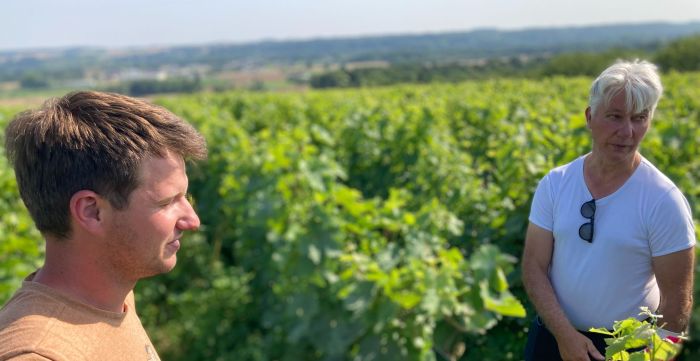
<p>Man it had been a long time since we'd visited Bellivière! After catching up with Christine and Eric, Clément and his wife Laure-Anne pulled up and we headed directly to one of the four <glossary term="Tuffeau" title="1053">tuffeau</glossary> <glossary term="Cellar" title="254">cellars</glossary> to taste the <glossary term="Bottling" title="185">un-bottled</glossary> 2020's. </p>
<p><em>"It feels good to have all four </em><glossary term="Cellar" title="254"><em>cellars</em></glossary><em> full this </em><glossary term="Vintage" title="1109"><em>vintage</em></glossary><em>!"</em></p>
<p><img src="https://louisdressner.com/uploads/images/article//932/e4/5e/e45e77d38439f3e212ad8de191723ef0.jpg" /></p>
<p>We started by tasting many <glossary term="Barrel" title="142">barrels</glossary> destined for "Les Rosiers" 2020. The Nicolas were hoping the <glossary term="Vintage" title="1109">vintage</glossary> will be <glossary term="Dry/Sec" title="405">dry</glossary> and by the time of this writing, the wines will have been <glossary term="Bottling" title="185">bottled</glossary> in November 2021. Because they had such a plentiful <glossary term="Harvest" title="521">harvest</glossary> in 2020, "Premices" will come from <glossary term="Parcel" title="760">parcels</glossary> that would have usually been reserved for "Les Rosiers". And many <glossary term="Parcel" title="760">parcels</glossary> intended for the <glossary term="Old Vines" title="740">old vine</glossary> "Calligramme" will end end up in "Les Rosiers".</p>
<p>At this point nothing had been <glossary term="Blending" title="1146">blended</glossary> and we were tasting single <glossary term="Parcel" title="760">parcel</glossary> expresssions.</p>
<p><img src="https://louisdressner.com/uploads/images/article//932/94/7e/947e4d25de34a9a944f93cc4624c08f3.jpg" /></p>
<p>If you're wondering what happened to Eric's hand, he sprained it while defending himself from a ninja attack.</p>
<p><img src="https://louisdressner.com/uploads/images/article//932/37/19/3719d0a6821ce97b99b5f9b1312e3f22.jpg" /></p>
<p>Fun fact: for the <span class="zalup"><span><glossary term="Chenin Blanc" title="281">Chenin Blanc</glossary><span>,</span></span></span> the Nicolas do a seven hour <span class="zalup"><span> <glossary term="Pressing" title="827">press</glossary><span>.</span></span></span></p>
<p>We kept tasting through various <glossary term="Barrel" title="142">barrels</glossary> of "Effraie" and "V.V Éparses". Trying the whites from <glossary term="Barrel" title="142">barrel</glossary> at Bellivière is always a little tricky, since each varies greatly in <span class="zalup"><span><glossary term="Minerality" title="662">minerality</glossary><span>,</span></span></span> <glossary term="Acidity" title="71">acidity</glossary> and oftentimes sugars. It's an interesting exercise, but ultimately Eric and Clément's <glossary term="Blending" title="1146">blending</glossary> choices will make for a totally different expression in bottle. We did however try one <span class="zalup"><span><glossary term="Single Vineyard Bottling" title="959">single vineyard expression</glossary><span>,</span></span></span> the "Vigne en Foule" <glossary term="Plot" title="1133">plot</glossary> we would later vist. It was already <glossary term="Dry/Sec" title="405">dry</glossary> and very good.</p>
<p>Here's a picture of the Nicolas' dog I took for my mom.</p>
<p><img src="https://louisdressner.com/uploads/images/article//932/8e/8f/8e8f7f7e12d1146dfc8726539b7372d5.jpg" /></p>
<p>From the <glossary term="Tuffeau" title="1053">tuffeau</glossary> <span class="zalup"><span><glossary term="Cellar" title="254">cellars</glossary><span>,</span></span></span> we headed to the new <glossary term="Cellar" title="254">cellar</glossary> to taste the reds.</p>
<p><img src="https://louisdressner.com/uploads/images/article//932/69/8d/698d38657f9647a5faa53fb9d18e386e.jpg" /></p>
<p>We started with a new <glossary term="Vessel" title="1160">vessel</glossary> for Bellivière, a <glossary term="Concrete Egg" title="1284">concrete egg</glossary> you can see in the background of the above shot. 2/3rds of the wine was <glossary term="Maceration" title="610">macerated</glossary> <span class="zalup"><span><glossary term="Whole-Cluster" title="1124">whole-cluster</glossary><span>.</span></span></span> We also tried some Hommage à Louis Derré from <glossary term="Barrel" title="142">barrel</glossary> before delving into some of the <glossary term="Négociant" title="729">négociant</glossary> wines, specifically "Raisins Migrateurs" 2020 and 2019 as well as the new <glossary term="Vintage" title="1109">vintage</glossary> of "Castor".</p>
<p><img src="https://louisdressner.com/uploads/images/article//932/72/8d/728d274471f527c15c7c6aaed6c5da69.jpg" /></p>
<p>Despite the afternoon sun high in the sky, after tasting we set off to see some vines. Our first stop was the "vigne en foule", an experiment started in 2001:</p>
<p><img src="https://louisdressner.com/uploads/images/article//932/5b/ec/5bec7d5f6a5a286f70a2904dca54f962.jpg" /></p>
<p><img src="https://louisdressner.com/uploads/images/article//932/eb/82/eb823ac8d666776e7e672c914989c6ff.jpg" /><img src="https://louisdressner.com/uploads/images/article//932/dd/a7/dda77494a0c6ca2f2392814e52091cfb.jpg" /></p>
<p>"The vignes en foule (“crowded vines”) were planted in 2001 at a density of 40,000 vines of <glossary term="Chenin Blanc" title="281">Chenin</glossary> per <span class="zalup"><span><glossary term="Hectare" title="523">hectare</glossary><span>.</span></span></span> It was an experiment on a small area. At this density, with 50 cm x 50 cm between each plant, everything is done by hand and we cannot <span class="zalup"><span><glossary term="Mechanization" title="645">mechanize</glossary><span>.</span></span></span> The term “en foule” means without <span class="zalup"><span><glossary term="Training System" title="1039">vine training</glossary><span>.</span></span></span> Mark Angeli had had an experiment like this and he ended up tearing the plants out to be able to <span class="zalup"><span><glossary term="Mechanization" title="645">mechanize</glossary><span>.</span></span></span></p>
<p>Since planting, we have never really been able to <glossary term="Harvest" title="521">harvest</glossary> because we couldn't manage it properly. But since Clément joined us, we have undertaken a lot of work on it, in particular the training of the <glossary term="Parcel" title="760">parcel</glossary> into a <span class="zalup"><span><glossary term="Pergola" title="774">pergola</glossary><span>.</span></span></span> We have also covered the ground with mulch to minimize grass regrowth.</p>
<p>So this year (2020), for the first time, we were able to <glossary term="Harvest" title="521">harvest</glossary> it properly. The pickers were delighted because they had the impression of entering a "forest" of vines and the picking was within reach without having to bend down.</p>
<p>The aim of this experiment is to see the impact of competition from the vines on the rooting and therefore the result on the wine."</p>
<p>This vineyard has also led to some interesting discoveries Nicolas have started applying to other <span class="zalup"><span><glossary term="Parcel" title="760">parcels</glossary><span>.</span></span></span> On one <span class="zalup"><span><glossary term="Plot" title="1133">plot</glossary><span>,</span></span></span> they are planting with more density now to create shade for the other vineyards to avoid <font color="#7b143e"><b><glossary term="Grillure" title="1462">grillure</glossary></b></font><span class="zalup"><span><span>.</span></span></span> On another, they are letting the vines have less density, which will permit them to grow higher and free-er. The goal is to adapt and ultimately do less to the plant, but also expose them to less trauma during the growing season. With over 65 <glossary term="Parcel" title="760">parcels</glossary> at their disposal, the Nicolas are exceptionally suited for this type of experimentation. </p>
<p><img src="https://louisdressner.com/uploads/images/article//932/af/8c/af8cf0cbb3f3d7896ca8f45095946bda.jpg" /></p>
<p>From the vines, we headed back to the house to taste currently <glossary term="Bottling" title="185">bottled</glossary> wines before dinner. </p>
<p><img src="https://louisdressner.com/uploads/images/article//932/7c/ce/7ccefbe800abda44d2f8752d64748ae9.jpg" /><img src="https://louisdressner.com/uploads/images/article//932/c1/29/c129b07c9e471c1fd85966b1d8cc62e4.jpg" /><img src="https://louisdressner.com/uploads/images/article//932/32/6a/326a02b8b631d6c529610e14d98b56c6.jpg" /><img src="https://louisdressner.com/uploads/images/article//932/9c/c1/9cc1ef04b6991fea2c227275a1734747.jpg" /></p>
<p>After tasting, we took advantage of the nice weather to barbecue outside (it had and continued to be a very rainy summer). Over a delicious meal of sausages and a few back <glossary term="Vintage" title="1109">vintages</glossary> from the mid-to-late aughts, Eric's optimism resonated:</p>
<p><em>"I believe we can fight against </em><glossary term="Frost" title="1135"><em>frost</em></glossary><em> using natural methods. But it's a risk and a long term investment. We are currently in our third year of converting the vines."</em></p>
<p>Clément, who is now fully at the helm of the estate's <span class="zalup"><span><glossary term="Viticulture" title="1103">viticulture</glossary><span>,</span></span></span> agreed. </p>
<p>By this point in our <glossary term="Loire Valley" title="602">Loire</glossary> trip, we'd experienced quite a bit of doom and gloom in the vines, so it was good to hear the Nicolas motivated and actively working towards facing the major challenges of climate change. They weren't the first to bring it up, but their particular drive was a turning point of the trip for me. I am still worried for northern French <glossary term="Viticulture" title="1103">viticulture</glossary>; the 2010's have made it abundantly clear that for it to have a future, adapted and perhaps drastic measures have to be taken immediately.</p>
<p>To be continued... </p>
<p><img src="https://louisdressner.com/uploads/images/article//932/c8/a1/c8a157181097f3ad25f057f54a7dcdad.jpg" /></p>
Article
producer visit
17.07.2019
This visit to Domaine de Bellivière took place in July, 2013
<p><em><strong>This visit to Domaine de Bellivière took place in July, 2013.</strong></em></p>
<p><em><strong>Words by Jules Dressner, photos by John Kafarski and Jules Dressner.</strong></em></p>
<p>Eric and Christine Nicholas live on a side road in the tiny village of <span class="zalup"><span><glossary title="593">Lhomme</glossary><span>.</span></span></span> When we arrived, Eric was busy spraying a <glossary title="160">biodynamic</glossary> <glossary term="Contact Treatment" title="328">treatment</glossary> on some <span class="zalup"><span><glossary title="799">Pineau d'Aunis</glossary><span>,</span></span></span> so Christine decided to give us a tour of some other vineyards before heading over to see him. <br />
<br />
The Nicholas' 14 <glossary title="523">hectares</glossary> are spread over A LOT of <glossary title="760">parcels</glossary> throughout the <glossary title="556">Jasnières</glossary> and <glossary title="348">Coteaux du Loir</glossary> <span class="zalup"><span><glossary title="108">AOC's</glossary><span>.</span></span></span> The first we visited was a 70 year old <glossary title="281">Chenin Blanc</glossary> vineyard that goes into "Calligramme". <br />
<br />
<img src="http://louisdressner.com/uploads/images/article/2019_Jul_17//5a/e4/5ae45f892cad6ce21bcb85d43bcab11b.jpg" /><br />
<img src="http://louisdressner.com/uploads/images/article/2019_Jul_17//ac/fe/acfec2a07fe04b5d7d225f9ed3498ad0.jpg" /><img src="http://louisdressner.com/uploads/images/article/2019_Jul_17//d2/02/d20200313e29d2b91230bfe6389ab9d9.jpg" /><br />
<br />
The soils are composed of a mixture of <glossary title="301">clays</glossary> with <glossary title="455">flint</glossary> on <span class="zalup"><span><glossary term="Tuffeau" title="1053">tuffeau</glossary><span>.</span></span></span> </p>
<p><img src="http://louisdressner.com/uploads/images/article/2019_Jul_17//75/32/75323c800117a0874a53d594d7dd35d4.jpg" /><br />
<br />
A little further up, Eric recently purchased 14 beautiful rows of 100+ year old <span class="zalup"><span><glossary title="799">Pineau d'Aunis</glossary><span>.</span></span></span></p>
<p><img src="http://louisdressner.com/uploads/images/article/2019_Jul_17//bf/5d/bf5d6794cf10b6b86f41de0bb5fd0607.jpg" /></p>
<p><img src="http://louisdressner.com/uploads/images/article/2019_Jul_17//8b/9f/8b9fcb6e6d298ec183bbeb6022f9acef.jpg" /></p>
<p><img src="http://louisdressner.com/uploads/images/article/2019_Jul_17//15/a9/15a95477bc141b9e63a98d07dd15c9a3.jpg" /><br />
<br />
These grapes go into to "Hommage a Louis Derré", a wine dedicated to the deceased <glossary title="1089">vigneron</glossary> who mentored Eric in his beginnings. As you can see from the photos, these are <glossary title="1039">trained</glossary> with no <span class="zalup"><span><glossary title="757">palissage</glossary><span>.</span></span></span> Christine pointed out that these old guys are still very productive. Prior to their reacquisition, they were being worked <span class="zalup"><span><glossary title="279">chemically</glossary><span>.</span></span></span> <br />
<br />
From there, we drove over to meet up with Eric, who was right in the middle of his<span class="zalup"><span> <glossary title="328">treatment</glossary><span>.</span></span></span> <br />
<br />
<img src="http://louisdressner.com/uploads/images/article/2019_Jul_17//7c/0b/7c0b8de0c399a582abf38a912607fc6d.jpg" /><br />
<br />
2012 was a disastrous <glossary title="1109">vintage</glossary> for Bellivière, so it wasn't much of a surprise when Christine explained that Eric was trying his best to be as cautious as possible in 2013. <br />
<br />
<em>"When you work </em><span class="zalup"><span><glossary title="746"><em>organically</em></glossary></span></span><em><span class="zalup"><span><span>,</span></span></span> you get climactical problems hit you harder. We're more prone to </em><glossary title="1135"><em>frost</em></glossary><em> and in rainy years, we can't go into the vines as easily since we don't use<span class="zalup"><span> </span></span></em><span class="zalup"><span><glossary title="526"><em>herbicides</em></glossary></span></span><em><span class="zalup"><span><span>.</span></span></span>"</em><br />
<br />
Eric was too busy to stop and chat, so instead we drove to another nearby area. Here, a younger <glossary title="760">parcel</glossary> planted in 1996 goes into Les Rosiers.<br />
<br />
<img src="http://louisdressner.com/uploads/images/article/2019_Jul_17//ac/47/ac47fb76df60fc0c0c71c432085ff540.jpg" /><br />
<br />
Just a bit higher, <glossary title="740">older vines</glossary> planted on very rocky soils go into "Calligrame". </p>
<p><img src="http://louisdressner.com/uploads/images/article/2019_Jul_17//94/97/9497190001689e87085c1792968a8a3a.jpg" /></p>
<p><img src="http://louisdressner.com/uploads/images/article/2019_Jul_17//bd/ac/bdaca4a8174a81f5925ed47589548e61.jpg" /></p>
<p><img src="http://louisdressner.com/uploads/images/article/2019_Jul_17//0f/a6/0fa6dab43b4f465ee196d21ac505bab9.jpg" /><br />
<br />
Our final vineyard visit was the <glossary title="">lieu-dit</glossary> "Le Panorama", which ironically is the least photogenic of the bunch. <br />
<br />
<img src="http://louisdressner.com/uploads/images/article/2019_Jul_17//47/a5/47a5155c68884f604dee34f5d0cae2e5.jpg" /><br />
<br />
The site gets its name because it overlooks every piece of land in the <glossary title="556">Jasnières</glossary> <span class="zalup"><span><glossary title="108">AOC</glossary><span>.</span></span></span> Gazing into the distance, Christine shook her head in resigned equanimity. <br />
<br />
<em>"When nature is so calm, it's hard to believe how violent it can be."</em><br />
<br />
This was again in reference to the catastrophic 2012 <span class="zalup"><span><glossary term="Vintage" title="1109">vintage</glossary><span>.</span></span></span> <br />
<br />
By the time we'd returned to the house, Eric had returned and was hosing down the tractor. <br />
<br />
<em>"I hate<span class="zalup"><span> <glossary title="328"><em>treating</em></glossary><span>.</span></span></span> But when I see how hard we got hit [in 2012], I need to be extra vigilant."</em><br />
<br />
Did you know it takes about five hours to do a<span class="zalup"><span> <glossary title="328">treatment</glossary><span>,</span></span></span> not counting traveling time and refilling the tanks? That's a full day of work, my friends. <br />
<br />
After hanging for a bit while Eric showered and changed, we stepped into the Nicolas's beautiful <glossary title="1053">tuffeau</glossary> <glossary title="254">cellar</glossary> to taste the very little wine made in 2012 <span class="zalup"><span><glossary term="Vintage" title="1109">vintage</glossary><span>.</span></span></span> </p>
<p><img src="http://louisdressner.com/uploads/images/article/2019_Jul_17//3c/b3/3cb37a1c89a120e9235c372946bb7b7b.jpg" /><br />
<br />
Out of the their four mini<span class="zalup"><span><span>-</span><span class="zalup"><span><glossary title="254">cellars</glossary><span>,</span></span></span></span></span> only HALF of ONE had full <span class="zalup"><span><glossary title="144">barriques</glossary><span>.</span></span></span> That's about an 80% loss...<br />
<br />
From what we tasted (<glossary title="142">barrels</glossary> that will go into "Calligramme", "Les Rosiers", "Rouge-Gorge" "and Hommage a Louis Derré"), everything is up to snuff with what you'd usually expect from Bellivière.<br />
<br />
We also tasted some bottled stuff, including this very rare 2009 <span class="zalup"><span><glossary title="464">Franc de Pied</glossary><span>.</span></span></span><br />
<br />
<img src="http://louisdressner.com/uploads/images/article/2019_Jul_17//27/d4/27d4d185ca94ec264bea4acce3bac9c4.jpg" /><br />
<br />
The whole process bored Zaggy to tears. <br />
<br />
<img src="http://louisdressner.com/uploads/images/article/2019_Jul_17//b0/5e/b05ecf85ff4ca4b742d7843dc37a7125.jpg" /></p>
Article
article
27.01.2021
Bellivière's "Vignes en Foule" Experiment
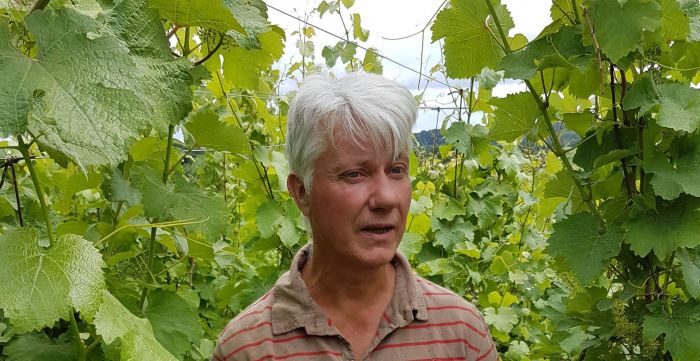
<p>The vignes en foule (“crowded vines”) were planted in 2001 at a density of 40,000 vines of <glossary term="Chenin Blanc" title="281">Chenin</glossary> per <span class="zalup"><span><glossary term="Hectare" title="523">hectare</glossary><span>.</span></span></span> It was an experiment on a small area. At this density, with 50 cm x 50 cm between each plant, everything is done by hand and we cannot <span class="zalup"><span><glossary term="Mechanization" title="645">mechanize</glossary><span>.</span></span></span> The term “en foule” means without <span class="zalup"><span><glossary term="Training System" title="1039">vine training</glossary><span>.</span></span></span> <a href="https://louisdressner.com/producers/ferme%20de%20la%20sansonni%C3%A8re">Mark Angeli</a> had had an experiment like this and he ended up tearing the plants out to be able to <span class="zalup"><span><glossary term="Mechanization" title="645">mechanize</glossary><span>.</span></span></span></p>
<p>Since planting, we have never really been able to <glossary term="Harvest" title="521">harvest</glossary> because we couldn't manage it properly. Since Clément joined us, we have undertaken a lot of work on it, in particular the <glossary term="Training System" title="1039">training</glossary> of the <glossary term="Parcel" title="760">parcel</glossary> into a <span class="zalup"><span><glossary term="Pergola" title="774">pergola</glossary><span>.</span></span></span> We have also covered the ground with mulch to minimize grass regrowth.</p>
<p>So this year (2020), for the first time, we were able to <glossary term="Harvest" title="521">harvest</glossary> it properly. The pickers were delighted because they had the impression of entering a "forest" of vines and the picking was within reach without having to bend down.</p>
<p>The aim of this experiment is to see the impact of competition from the vines on the rooting and therefore the result on the wine.</p>
<p>The <glossary term="Barrel" title="142">barrel</glossary> is in <span class="zalup"><span><glossary term="Elevage" title="418">élevage</glossary><span>,</span></span></span> to be continued...</p>
<p><img src="https://louisdressner.com/uploads/images/article//879/e9/6a/e96a8bbddef6fb5171f5155a3ef440df.jpg" /><img src="https://louisdressner.com/uploads/images/article//879/d3/de/d3de250105610e252e0c8b6d8a2c5097.jpg" /><img src="https://louisdressner.com/uploads/images/article//879/a4/5e/a45e1e7a0ca4f5a8a359927e7c978533.jpg" /><img src="https://louisdressner.com/uploads/images/article//879/ea/5e/ea5e394ee7553f4441ab4eac94c15008.jpg" /></p>
Article
harvest report
30.12.2022
2022 Harvest Report from Clément Nicolas
<p>2022!!! Finally a <glossary term="Vintage" title="1109">vintage</glossary> that rewards our efforts! But also a year that re-assured us that we can continue making wine in this septentrional region we love so much. It's also a year that proves that higher <glossary term="Yield" title="1129">yields</glossary> (always balanced, <glossary term="Artisinal" title="122">artisinal</glossary> sense) can be synonymous with quality when you listen to Nature.</p>
<p>Yet again, the 2022 <glossary term="Vintage" title="1109">vintage</glossary> almost turned to catastrophe due to <glossary term="Frost" title="1135">frost</glossary> in Spring. It was certainly not as intense as the last few years but still very present! It was finally time to put our new style of “Malbrot” <glossary term="Pruning" title="834">pruning</glossary> to the test, a technique where you <glossary term="Pruning" title="834">prune</glossary> in two times, permitting a much later <glossary term="Pruning" title="834">pruning</glossary> of the <glossary term="Cane" title="232">canes</glossary> destined to bear fruit. This year, it was a resounding success! It will of course take many years of experimentation and follow-through to really conclude its worth, but this go-round gives us a lot of hope.</p>
<p>Now past the point where <glossary term="Frost" title="1135">frost</glossary> could hurt us, the vines grew at a leisurely pace, with favorable weather for <span class="zalup"><span><glossary term="Flowering" title="1179">flowering</glossary><span>.</span></span></span> Some rains kept us on our toes, and we maintained a very precise <glossary term="Contact Treatment" title="328">treatment</glossary> regiment in order to spray the least amount of <glossary term="Copper" title="333">copper</glossary> possible while maintaining optimal foliage. In June, we did have a little episode of <glossary term="Oidium" title="737">odium</glossary> in a small sector in the heart of <span class="zalup"><span><glossary term="Jasnières" title="556">Jasnières</glossary><span>,</span></span></span> but again we nipped this in the bud with a well calculated <span class="zalup"><span><glossary term="Contact Treatment" title="328">treatment</glossary><span>.</span></span></span></p>
<p>We were also meticulous and vigilant with the amount of grass in the vines and made sure to properly aerate the soils from fall 2021 to Spring 2022, permitting us to apprehend <glossary term="Drought" title="1167">drought</glossary> issues in a very serene manner. The grapes were beginning to look good, and we were able to follow them through all the way to <span class="zalup"><span><glossary term="Harvest" title="521">harvest</glossary><span>.</span></span></span></p>
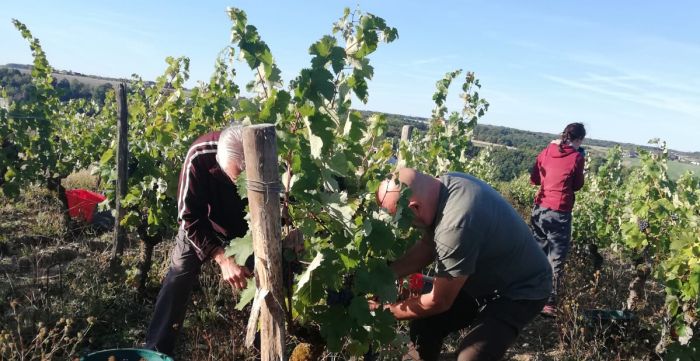
<p>We began picking on the earliest date in the <glossary term="Estate" title="427">estate</glossary>’s history, September 6th. As the <glossary term="Harvest" title="521">harvest</glossary> went on, some intermittent rain helped plump up the grapes and promoted optimal <glossary term="Maturation" title="639">maturation</glossary> throughout the vineyard. The quality of the grapes, both in red and white, is magnificent. A slow and precise <glossary term="Pressing" title="827">pressing</glossary> for the whites and a meticulous <glossary term="Maceration" title="610">maceration</glossary> for the reds gave us nice juices that are <glossary term="Fermentation" title="441">fermenting</glossary> tranquilly in wood.</p>
<p>This was also the most intense <glossary term="Harvest" title="521">harvest</glossary> of the <glossary term="Estate" title="427">estate</glossary>’s history, spanning four entire weeks with a team of 30 formidable pickers. We really have to show them respect because everyone was a rookie (though highly motivated) and together they <glossary term="Harvest" title="521">harvested</glossary> the most grapes we’ve ever taken in.</p>
<p>In the <span class="zalup"><span><glossary term="Cellar" title="254">cellar</glossary><span>,</span></span></span> my wife Laure-Anne was there to reception the team and to manage the juices, assisted by Jérôme who’s just getting started in the world of wine and has replaced our past employee, as well as Héloïse who came to intern and learn about <span class="zalup"><span><glossary term="Vinification" title="1104">vinification</glossary><span>.</span></span></span> Of course, my father and Michel (our two favorite retirees) were never too far to give some advice or lend a helping hand.</p>
<p>This generous <glossary term="Harvest" title="521">harvest</glossary> also permitted us to do pick some <glossary term="Late harvest wine" title="1392">late-harvest</glossary> <glossary term="Chenin Blanc" title="281">Chenin</glossary> and <glossary term="Pineau d'Aunis" title="799">Pineau d’Aunis</glossary> to make our <glossary term="Liquoreux" title="598">liquoreux</glossary> <glossary term="Cuvée" title="363">cuvées</glossary> "Elixir de Tuf" and "Aurore d’Automne". Now we let the wines <glossary term="Fermentation" title="441">ferment</glossary> at their own rhythm, paying close attention to make sure they are in the best conditions.</p>
<p>We are very excited to share all of these with you!</p>
<p>Clément & Laure-Anne, Eric & Christine Nicolas</p>
<p><img src="https://louisdressner.com/uploads/images/article//967/38/a2/38a286ac8e62691b77c81fe8c095ce0f.jpg" /><img src="https://louisdressner.com/uploads/images/article//967/41/3f/413f656defee4f26f6050ba7ad45e50e.jpg" /><img src="https://louisdressner.com/uploads/images/article//967/c7/00/c700c08c189caec9391a5c90d479160e.jpg" /><img src="https://louisdressner.com/uploads/images/article//967/9b/19/9b19e65cd747bbf019e2cfb08e5802c0.jpg" /><img src="https://louisdressner.com/uploads/images/article//967/5e/60/5e6023b016e8ddb6f7980b7b84625d08.jpg" /><img src="https://louisdressner.com/uploads/images/article//967/3b/5c/3b5cc8e6d0ee6c56345d7fd661065467.jpg" /><img src="https://louisdressner.com/uploads/images/article//967/09/7e/097ed7c251ed4b6358594b801f471af3.jpg" /><img src="https://louisdressner.com/uploads/images/article//967/96/98/969817b6f77deda7a790a4206936b341.jpg" /><img src="https://louisdressner.com/uploads/images/article//967/27/78/2778cc071d39443e019a76aa973c4169.jpg" /><img src="https://louisdressner.com/uploads/images/article//967/d3/9c/d39c53343e06164ae0341c822686aea7.jpg" /><img src="https://louisdressner.com/uploads/images/article//967/cb/2d/cb2d5bd5289e513bb477e8b67e046ccd.jpg" /></p>
Article
harvest report
21.12.2021
2021 Harvest Report from Eric Nicolas
<p>It was a very rocky year!</p>
<p>We were not spared and came out of 2021 with a half-crop, which compared to other regions seems like we were relatively ok. My heart goes out to all our <glossary term="Vigneron/Vignaiolo" title="1089">vignerons</glossary> friends who had no grapes: I want them to know that our long exchanges/reflections for dealing with nature's current imbalances are not in vain. While each year it's true it can feel more and more aleatory if we are going to <glossary term="Harvest" title="521">harvest</glossary> the majestic fruit that is a grape <span class="zalup"><span><glossary term="Cluster/Bunch" title="1138">bunch</glossary><span>,</span></span></span> we need to make sure we are taking care of the vines for them to be there in the first place...</p>
<p>Thanks to a <glossary term="Pruning" title="834">pruning</glossary> we organized in two times, one as late as possible, we feel that this helped keep a half<span class="zalup"><span><span>-</span> <span class="zalup"><span><glossary term="Harvest" title="521">harvest</glossary><span>.</span></span></span></span></span> But we then had to face the rest of the growing season's challenges, with the difficulty of the <glossary term="Vintage" title="1109">vintage</glossary> once again showing its face... In the end the vegetative cycle was slower than it's been in past years and we did not expect a precocious <span class="zalup"><span><glossary term="Vintage" title="1109">vintage</glossary><span>.</span></span></span> This was confirmed month after month, and very early on we assessed that if we could keep what was on the vines intact, we were going to have a very qualitative year. It was a constant battle against <glossary term="Mildew" title="1137">mildew</glossary> that was particularly virulent, and we had to be patient in waiting out constant periods of rain. It created a lot of tension but we slowly got to the point of visualizing ripe grapes worthy of our expectations and patience. A return to a later <span class="zalup"><span><glossary term="Harvest" title="521">harvest</glossary><span>!</span></span></span></p>
<p>It's been a long time since we've had such circumstances. It reminds me of when we first arrived to the region, our first <glossary term="Harvest" title="521">harvests</glossary> taking place in the firmly fall weather of October. It was difficult work and we had to pay particular attention to delicate and fragile matter, but it really felt like a return to our roots! With a team that felt loyal and convivial (many have <glossary term="Harvest" title="521">harvested</glossary> with us for many years now), we picked grapes over two weeks.</p>
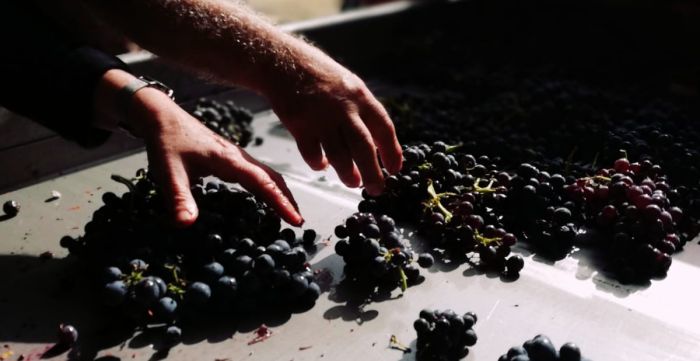
<p>After patiently waiting, we'd finally hit optimal <glossary term="Maturation" title="639">maturity</glossary> with the grapes. With a judicious <glossary term="Pressing" title="827">pressing</glossary> for the whites and a severe <glossary term="Sorting" title="1380">sorting</glossary> for the reds that needed it, we acquired juices that have both high <glossary term="Acidity" title="71">acidity</glossary> and ripe fruit. October's weather helped us do the <glossary term="Débourbage" title="379">débourbages</glossary> in finesse and was ideal to <glossary term="Maceration" title="610">macerate</glossary> the reds. Thanks to Clément's remarkable precision and serenity over the <span class="zalup"><span><glossary term="Harvest" title="521">harvest</glossary><span>,</span></span></span> the juices share those qualities and are now <glossary term="Aging" title="74">aging</glossary> calmly. The wines' structure, ripe and precise with high <span class="zalup"><span><glossary term="Acidity" title="71">acidity</glossary><span>,</span></span></span> will no doubt produce the great wines we love so much, fresh and distinctly northern. A little paradise in the middle of the harassing spectacle of our climate. It's a <glossary term="Vintage" title="1109">vintage</glossary> that makes us believe there is a counter-current to the trends we've seen in nature, a little order in what feels like a big mess. </p>
<p>I'd like to thank some new elements in our team: Laure-Anne who is now working side by side with Christine and Kevin, who in the vines and the <glossary term="Cellar" title="254">cellar</glossary> with Dominique and Clément, has forged a like mindedness and assumed that the 2021 <glossary term="Vintage" title="1109">vintage</glossary> saw the light of day in the best of conditions. </p>
<p><img src="https://louisdressner.com/uploads/images/article//930/f0/81/f08196d661c1c2d6912b1bf4f978c372.jpg" /><img src="https://louisdressner.com/uploads/images/article//930/65/e3/65e3db80f42784c185d0fc1fde40e532.jpg" /><img src="https://louisdressner.com/uploads/images/article//930/66/29/6629de5624c995f4731294feeefd5894.jpg" /><img src="https://louisdressner.com/uploads/images/article//930/be/35/be352b793028b2112801b28a708bde03.jpg" /><img src="https://louisdressner.com/uploads/images/article//930/ea/14/ea14c2d5feb926043336f57ba053e3c2.jpg" /><img src="https://louisdressner.com/uploads/images/article//930/93/b8/93b807ef13b06bcd614e09bbb7a45a0c.jpg" /></p>
Article
harvest report
20.01.2020
2020 Harvest Report from Eric Nicolas
<p><u><strong>November 9th, 2020:</strong></u></p>
<p>I'd sum up 2020 as the year when we stop complaining about the capricious nature of our climate and instead act, react, adapt and get used to it. As humans, we are much slower to adapt than plants and animals; or at least we do not have the same biological rhythm. It's difficult to be in harmony with nature, which we know so little about, when we continue to prioritize productivity and pseudo-modernism. In our case, we need to discern, focus, reflect, analyse and refine our methods in what we feel is the best direction. It's the esteemed common sense of a good <span class="zalup"><span><glossary term="Peasant" title="769">peasant</glossary><span>!</span></span></span> </p>
<p>After four years of "vaches maigres" (<strong>ed note:</strong> a French expression translating to "skinny cows", or lean crops), 2020 was a blessed year for us. It's certainly a tad premonitory at the time of this writing, especially for you all in the USA... All this to say 2020 was the biggest crop we've ever harvested in our history as <span class="zalup"><span><glossary term="Vigneron/Vignaiolo" title="1089">vignerons</glossary><span>.</span></span></span> This had led to a new term for us: doing our best to be "moderately prolix" in our work. </p>
<p>Other than a very dry summer (this is increasingly becoming the norm), the vegetative cycle was magnificent. We feel this result could not have been possible without our past efforts in the vineyards, the soil and the vines. The life of the soil and the deep roots of the vines into the <glossary term="Mother Rock" title="690">mother rock</glossary> are essential in navigating the hydric deficit we increasingly face. And the plant needs to feed its fruit for it to stay healthy.</p>
<p>The grapes followed a development cycle of ideal <span class="zalup"><span><glossary term="Maturation" title="639">maturation</glossary><span>,</span></span></span> the result of intentionally <glossary term="Pruning" title="834">pruning</glossary> late to avoid spring <span class="zalup"><span><glossary term="Frost" title="1135">frosts</glossary><span>.</span></span></span> This has proved efficient: our entire crop was up throughout the <glossary term="Estate" title="427">estate</glossary> and of excellent quality. Our <glossary term="Contact Treatment" title="328">treatment</glossary> regimen, perfected over the years, guaranteed that the vines stayed healthy for the crucial steps in its vegetative cycle. </p>
<p>Even as <glossary term="Harvest" title="521">harvest</glossary> approached, we never stopped our work in the vines. By the time we'd set up the <glossary term="Cellar" title="254">cellar</glossary> to receive its first grapes, we were sure there was no more risk. <glossary term="Oidium" title="737">Oidium</glossary> is increasingly rearing its head in our vineyards and requires extreme vigilance. </p>
<p>We were lucky to have a formidable team for the <span class="zalup"><span><glossary term="Harvest" title="521">harvest</glossary><span>,</span></span></span> with a great ambience that felt alive and sincere. We had many loyal regulars and many new faces, all of whom got along swimmingly. After a very hot first week of picking essentially all the reds, temperatures became more manageable. These conditions allowed ripeness to slow down and gave us the opportunity to <glossary term="Harvest" title="521">harvest</glossary> everything at <span class="zalup"><span><glossary term="Maturation" title="639">optimal maturity</glossary><span>.</span></span></span> The results are very encouraging, with whites that will produce mostly <glossary term="Dry/Sec" title="405">dry</glossary> wine but also a <glossary term="Pétillant Naturel" title="778">petillant naturel</glossary> (as well as an <glossary term="Pétillant Naturel" title="778">ancestrale</glossary> <glossary term="Rosé/Rosato" title="871">rosé</glossary>). The reds will be ideal and we can already sense density and finesse akin to "Hommage à Louis Derré" on a global level.</p>
<p>The pace of evolution of the new wines is slow but steady, we are following with precision the successful <glossary term="Fermentation" title="441">fermentations</glossary> on the whites and the beginning of the <glossary term="Elevage" title="418">élevage</glossary> on the reds. We have a last <glossary term="Vat/Tank" title="1140">vat</glossary> of <glossary term="Pineau d'Aunis" title="799">Pineau d'Aunis</glossary> still <glossary term="Maceration" title="610">macerating</glossary>; we are following it day to day and it will go into a <span class="zalup"><span><glossary term="Concrete Egg" title="1284">concrete egg</glossary><span>,</span></span></span> a new <glossary term="Vessel" title="1160">vessel</glossary> for us this year.</p>
<p>We'll have also have a bit of <glossary term="Moelleux" title="694">moelleux</glossary> in <glossary term="Jasnières" title="556">Jasnières</glossary> this year. Other than that, we continue our experiments by <glossary term="Vinification" title="1104">vinifying</glossary> a part of the "Vieilles Vignes Éparses" <glossary term="Cuvée" title="363">cuvée</glossary> without <glossary term="Sulfites" title="993">S02</glossary> and well as a new <glossary term="Cuvée" title="363">cuvée</glossary> this way.</p>
<p>We are now back in the vines, with the wines progressively evolving. The moment of fruit will soon fade for <glossary term="Terroir" title="1026">terroir</glossary> to affirm itself. It looks like we'll be able to offer our full gamut and with good quantities on "Prémices", "Les Rosiers" and "L'Effraie". The reds and <glossary term="Old Vines" title="740">old vine</glossary> <glossary term="Cuvée" title="363">cuvées</glossary> will also be available in larger quantity and we believe they will be truly excellent: dry, elegant and precise. </p>
<p>As an aside, as I write these lines (just to give you an idea how much we have been fixated on your election and everything going on on the other side of the ocean), we got the news. I hope that this victory and a new president will enact the changes we all hope to see for a better future. </p>
<p>Best, </p>
<p>Eric and the whole Bellivière team. </p>
<p><img src="https://louisdressner.com/uploads/images/article//872/7f/a6/7fa6fdf2468c4db8c4cea0f2881e95f8.jpg" /><img src="https://louisdressner.com/uploads/images/article//872/53/a7/53a790096f53db298175ba91e00efe66.jpg" /><img src="https://louisdressner.com/uploads/images/article//872/ed/1f/ed1f3bebbf4be7e172749db3e555bcea.jpg" /><img src="https://louisdressner.com/uploads/images/article//872/83/7b/837bd0843290ad2a5633388fc9dd525d.jpg" /><img src="https://louisdressner.com/uploads/images/article//872/2a/54/2a54556305486c4f90d26bf10d16f8da.jpg" /></p>
Article
harvest report
08.09.2015
2015 Harvest Report by Eric Nicolas
<p>Now that the wines are safely in the <span class="zalup"><span><glossary title="254">cellar</glossary><span>,</span></span></span> it is finally time to recap our 2015. And it's a good recap, at least for those who love our wines and/or like to hear about successful transitions, since our son Clément will be joining the <glossary title="427">estate</glossary> this December!<br />
<br />
2015 is first and foremost a calculated reaction to three consecutive <glossary term="Vintage" title="1109">vintages</glossary> that were extremely low in quantity for us, resulting in serious setbacks for many of our long term-projects. Small <glossary title="521">harvests</glossary> force you to put yourself into question, especially when the desire to progress and push things ever-further is still so strong. But we will always stay positive, because a peasant economy is that of patience and prudence; always anticipating the moment to bounce back. 2015 will have been that year in spite of meteorological conditions that had us worried. Here are a few preliminary, general observations:<br />
<br />
The last few extremely low <glossary title="521">harvests</glossary> led to deep reflection of our <glossary title="1103">viticultural</glossary> practices, and more importantly forced us to react. As you know, in <glossary title="1103">viticulture</glossary> you need to react fast because your entire crop can so quickly be compromised. We therefore revised our <glossary title="834">pruning</glossary> choices in the 2014-2015 winter to induct a better <glossary title="1179">flowering</glossary> by keeping our <glossary title="232">woods</glossary> longer. I can confidently say the results are already there, because we were able for the first time in a many years to harvest a reasonable 3<span class="zalup"><span>0<glossary title="528">hl/ha</glossary><span>.</span></span></span> Considering the usual density of our juices, this gives me a better perspective for the prosperity and evolution of the <span class="zalup"><span><glossary title="427">estate</glossary><span>.</span></span></span> We will continue reflecting on this work in 2016 to bring regularity and stability to our vines.<br />
<br />
The arrival of our son Clément will permit us to push our philosophies further. His solid education in Dijon, focusing primarily in <glossary title="1103">viticulture</glossary> and <span class="zalup"><span><glossary title="80">soil culture</glossary><span>,</span></span></span> will provide a seriously needed second opinion. Now let's talk about the <span class="zalup"><span><glossary title="1109">vintage</glossary><span>:</span></span></span><br />
<br />
With our changes in <span class="zalup"><span><glossary title="834">pruning</glossary><span>,</span></span></span> it was essential that the rest of the year follow suit for the grapes to develop properly. We were lucky enough to benefit from a smooth period of <glossary title="1179">flowering</glossary> despite weather conditions that were less than favorable. Even the <glossary title="1138">bunches</glossary> picked from the vines which <glossary title="1179">flowered</glossary> last were quite good in quality. Not only is this quite rare, but it will also create complexity in the wines due to the larger diversity of <glossary title="1138">bunches</glossary> picked. Even the <glossary title="1130">young vines</glossary> showed two separate generations of <span class="zalup"><span><glossary title="1179">flowering</glossary><span>,</span></span></span> which again will lead to more interesting wines.<br />
<br />
As far as cryptogamic maladies <span class="zalup"><span>(<glossary term="Mildew" title="1137">mildew</glossary><span>,</span></span></span> etc...), all worries ended in late June due to persistently dry weather. Our tireless dedication to working our soils meant that the vines did not suffer from the lack of water during the <span class="zalup"><span><glossary title="1167">drought</glossary><span>,</span></span></span> yet were more than ready to absorb September's cooling rains.<br />
<br />
The grapes' <glossary title="639">maturities</glossary> came along regularly with no major hiccups. With a relatively abundant crop, we waited patiently for both whites and reds, young vines and old. The <glossary title="639">maturities</glossary> hover around 13.5% for the reds and between 12.5% and 14.5% for the whites.<br />
<br />
2015's grapes had very thick skins. This meant less juice (at least we thought it did), but also solid grapes that were extremely resistant to <span class="zalup"><span><glossary title="182">rot</glossary><span>,</span></span></span> so they did not buckle under the rains of September and the few showers during <span class="zalup"><span><glossary term="Harvest" title="521">harvest</glossary><span>.</span></span></span> I've never seen anything like this here: the grapes kept their excellent sanitary state, <glossary title="120">aromatic</glossary> quality and <glossary term="Concentration" title="324">concentration</glossary> until the very end. In fact, the rains that had us so worried actually ended up relaxing the vines, liberating <glossary title="639">maturities</glossary> and guaranteeing larger amounts of juice.<br />
<br />
Another reaction to our low <glossary title="521">harvests</glossary> was to pick earlier and certainly with less finesse. Fortunately, <glossary title="71">acidities</glossary> were strong and our less accelerated rhythm this year meant we could wait for optimal ripeness to obtain the most balanced grapes imaginable. In the end, we are extremely satisfied with our choices this year, and even more so that there were actually grapes in the vines! We'd almost forgotten what it was like...<br />
<br />
So yes, there will be wine to sell in 2015! This has gotten us back on track to pursue our other projects, something we'd always kept our sights on. The biggest, of course, was building our new cellar, fortunately ready for action on our 21st <span class="zalup"><span><glossary title="521">harvest</glossary><span>.</span></span></span><br />
<br />
Entirely designed to <span class="zalup"><span><glossary term="Gravity" title="1165">work by gravity</glossary><span>,</span></span></span> we have created a <glossary title="254">cellar</glossary> that frees us of the extreme physical limitations of our old one while also permitting more quality control in the many separate <glossary title="1104">vinifications</glossary> we do. It's almost done, as we are still working out a few final details. Photos are attached.</p>
<p><img src="http://louisdressner.com/uploads/images/article/2019_Sep_18//62/3e/623ed743739dd61af1f3fe91cbd25c14.jpg" /></p>
<p><img src="http://louisdressner.com/uploads/images/article/2019_Sep_18//d8/47/d847c712af075f1fe2d25132954d5f46.jpg" /></p>
<p><img src="http://louisdressner.com/uploads/images/article/2019_Sep_18//76/ab/76ab5390bb0b5fad37bedfae2b48a1c8.jpg" /></p>
<p><img src="http://louisdressner.com/uploads/images/article/2019_Sep_18//90/fe/90fea2712dc79e9b57d85eb1a61f2b63.jpg" /></p>
<p><img src="http://louisdressner.com/uploads/images/article/2019_Sep_18//bf/96/bf96909d7b5be0585ed186ab3969bd4d.jpg" /></p>
Article
harvest report
13.09.2013
2013 Harvest Report by Eric Nicolas
<p>First of all, we are globally happy with this <span class="zalup"><span><glossary term="Vintage" title="1109">vintage</glossary><span>,</span></span></span> even though it was full of challenges. 2013 will result in new and rarely produced <glossary term="Cuvée" title="363">cuvées</glossary> which will eventually make it your way, most notably a sparkling and a <glossary term="Demi-Sec" title="386">demi-sec</glossary> <span class="zalup"><span><glossary term="Rosé/Rosato" title="871">rosé</glossary><span>.</span></span></span> But let's get back to the important facts about the year.<br />
<br />
After a very precise <glossary term="Pruning" title="834">pruning</glossary> season to ensure that the grapes' <glossary term="Yield" title="1129">yields</glossary> would be reasonable after 2012, we had a long, long winter with a timid spring. Combined with a fair amount of rain, we coul feel that the vegetative cycle was already late and that this phenomenon wold likely amplify.<br />
<br />
Spring transitioned into a summer defined by a constant struggle with <span class="zalup"><span><glossary term="Mildew" title="1137">mildew</glossary><span>.</span></span></span> As the <glossary term="Flowering" title="1179">flowering</glossary> season approached, we began to worry because temperatures rise fast here and humidity tends to stagnate everything. The <glossary term="Flowering" title="1179">flowering</glossary> finally took place well into July, with a brutal increase in temperature advancing the process. This was a relief, but we could already tell that this very late year would mean an extremely stressful <span class="zalup"><span> <glossary term="Harvest" title="521">harvest</glossary><span>,</span></span></span> where we would need to wait to the very last minute for optimal <span class="zalup"><span><glossary term="Maturation" title="639">maturities</glossary><span>.</span></span></span><br />
<br />
And we were right. Today, we are reassured because we avoided all of the worst possible scenarios, with none of the <glossary term="Frost" title="1135">frost</glossary> and <glossary term="Hail" title="1136">hail</glossary> that so many of our fellow <glossary term="Vigneron/Vignaiolo" title="1089">vignerons</glossary> fell victim to. There were grapes in the vineyard and we will bring them to fruition. Still, none of us even considered picking before October 10th.<br />
<br />
Even in August, <glossary term="Mildew" title="1137">mildew</glossary> forced us to stay extremely vigilant. All risks were avoided by a precise program followed exactly as I'd planned, calling upon many herbal preparations of dandelion and other herbs never before introduced in the vineyard. Our restructuring of the <glossary term="Trellising" title="1044">treillissage</glossary> would also end up being crucial in our fight.<br />
<br />
Finally, the <glossary term="Harvest" title="521">harvest</glossary> came! Coveted and anticipated after our horrific 2012. The lack of warmth actually works well with <glossary term="Chenin Blanc" title="281">Chenin</glossary> and <glossary term="Pineau d'Aunis" title="799">Pineau d'Aunis</glossary> as long as the <glossary term="Harvest" title="521">harvest</glossary> goes well, and our fingers were crossed. As anticipated, the <glossary term="Harvest" title="521">harvest</glossary> was on a razor's edge! I've never felt such anticipated hope that, with each day passing, this would be the one to bring the <glossary term="Maturation" title="639">maturities</glossary> where they needed to be.<br />
<br />
In the first days of the <span class="zalup"><span> <glossary term="Harvest" title="521">harvest</glossary><span>,</span></span></span> the reds were arriving in optimal condition, and the first <glossary term="Barrique" title="144">barrique</glossary> of white was so good we expected to bring everything in good condition. Unfortunately, with about a third of the <glossary term="Harvest" title="521">harvest</glossary> in, we were hit with 25mm of rain that made getting optimal <glossary term="Maturation" title="639">maturity</glossary> on the whites a real challenge. This forced us to limit the amount of grapes destined to the still wines, and using the <glossary term="alcoholic potential" title="1381">lower potential</glossary> grapes for sparkling. And that was that! We intend to progress in this direction and the juices comfort us in this idea; they are tasting good and seem apt for bubbles.<br />
<br />
The <glossary term="Harvest" title="521">harvest</glossary> continued as such, with constant <glossary term="Sorting" title="1380">sorting</glossary> permitting us to decide which grapes would produce our traditional <span class="zalup"><span><glossary term="Cuvée" title="363">cuvées</glossary><span>,</span></span></span> which would produce bubbles. This <glossary term="Sorting" title="1380">sorting</glossary> even led us to making the "Giroflées" <glossary term="Demi-Sec" title="386">demi-sec</glossary> <glossary term="Rosé/Rosato" title="871">rosé</glossary> from <span class="zalup"><span><glossary term="Pineau d'Aunis" title="799">Pineau d'Aunis</glossary><span>,</span></span></span> a grape that has consistently proven itself to be fully adapted to the region, always coming out of any situation the least scathed.</p>
Article
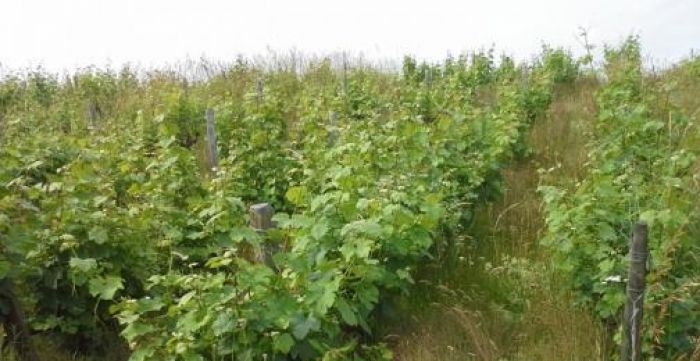
harvest report
17.10.2011
2011 Harvest Report by Eric Nicolas
<p>To summarize this year, it was very bizarre!<br />
<br />
At first it seemed like it would be the most precocious in our history.<br />
<br />
Spring felt like summer and summer felt like spring, and the plant's vegetation reacted accordingly: the vines started <glossary title="1166">budding</glossary> very early and growing quite rapidly, an ideal scenario to avoid illness.<br />
<br />
This lasted until June when the weather started faltering.<br />
<br />
<glossary title="1179">Flowering</glossary> went pretty well, with the exception of a few problems -even on the <span class="zalup"><span><glossary title="1130">younger vines</glossary><span>-</span></span></span> that are certainly linked to the heat and dryness of the <span class="zalup"><span> <glossary term="Vintage" title="1109">vintage</glossary><span>.</span></span></span><br />
<br />
Spring's heat was replaced by a cloudy and rainy summer.<br />
<br />
It was almost providential in constituting the grape's <span class="zalup"><span><glossary title="71">acidity</glossary><span>,</span></span></span> which never suffer too heavily from heavy heat.<br />
<br />
It was therefore not a 2003 scenario.<br />
<br />
The grape's slow progression was beneficial to their quality, but the climate made it quite difficult in struggling with <span class="zalup"><span><glossary title="737">oidium</glossary><span>.</span></span></span> We were ready though, and we didn't lose much of our <span class="zalup"><span><glossary term="Harvest" title="521">harvest</glossary><span>.</span></span></span><br />
<br />
When the plants started <glossary title="1166">budding</glossary> we stopped worrying about illness and focused on a strategy for the <span class="zalup"><span><glossary title="521">harvest</glossary><span>.</span></span></span><br />
<br />
I predicted we'd witness a very fast<span class="zalup"><span> <glossary title="521">harvest</glossary><span>,</span></span></span> and that we'd have to be ready and on the starting block in order to sprint to the finish.<br />
<br />
We started September 12th with <glossary title="639">maturities</glossary> higher than 14% <span class="zalup"><span> <glossary term="alcoholic potential" title="1381">potential alcohol</glossary><span>.</span></span></span> The grapes picked over the next two and a half weeks showed <glossary title="639">maturities</glossary> of great interest due to the sheer variation of their <glossary title="120">aromatic</glossary> potential. The wines should average out to 13% <span class="zalup"><span><glossary term="alcoholic potential" title="1381">potential alcohol</glossary><span>.</span></span></span><br />
<br />
Our <glossary title="520">hand harvest</glossary> lead us to rigorously discard all deviations linked to <glossary title="182">rot</glossary> in the first three days. This was less intensive in the <span class="zalup"><span><glossary title="1130">young vines</glossary><span>.</span></span></span> Some <span class="zalup"><span><glossary title="740">old vines</glossary><span>,</span></span></span> particularly the <glossary title="799">Pineau d'Aunis</glossary> which we <glossary title="521">harvested</glossary> on September 20th, stayed very healthy and <glossary term="Sorting" title="1380">sorting</glossary> was unnecessary. Certain <glossary title="1138">clusters</glossary> of very ripe grapes won't be <glossary title="378">destemmed</glossary> this year, which will add a complexity to the rest of the juice.<br />
<br />
The <glossary title="740">old vine</glossary> whites, which we harvested last this year, will display a lot of richness and will be <glossary title="441">fermented</glossary> and aged in larger containers for a slower maturation.<br />
<br />
The weather conditions for the <glossary title="521">harvest</glossary> were exceptional. It was unbelievable to benefit from such conditions after such a long period of incertitude. There was no need to rush, and we had a great team of pickers focused on sorting the grapes from the get go; by doing so they picked an abundant amount of perfect grapes.<br />
<br />
The 2011 <glossary term="Harvest" title="521">harvest</glossary> was finished on September 28th, even earlier than 2003!<br />
<br />
The first wines we've tasted are very fresh, with very ripe fruit. The reds will be fresh, fruity, complex and with ripe <span class="zalup"><span><glossary title="1010">tannins</glossary><span>.</span></span></span><br />
<br />
Now that we're done in the <span class="zalup"><span><glossary title="254">cellar</glossary><span>,</span></span></span> it's time to put our boots back on and do it all over again!</p>
Article
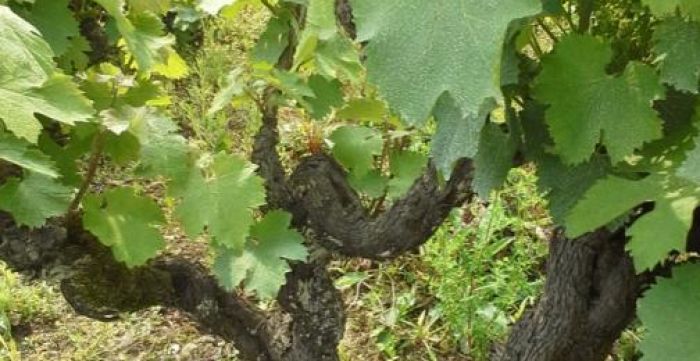
harvest report
10.09.2010
2010 Harvest Report from Eric Nicolas
<p>For several years now, the department of the Sarthe (NT: <glossary term="Jasnières" title="556">Jasnières</glossary> and <glossary term="Coteaux du Loir" title="348">Coteaux-du-Loir</glossary> area) has been among the driest in France. Given this climactic change, we had to react promptly and adapt our <glossary term="Viticulture" title="1103">viticultural</glossary> methods. We were already convinced that <glossary term="Contact Treatment" title="328">treatments</glossary> had to be done very sparingly, and now they are down to almost nothing, which we love.<br />
<br />
This year, we did zero <glossary term="Contact Treatment" title="328">treatments</glossary> on our <span class="zalup"><span><glossary term="Old Vines" title="740">old vines</glossary><span>,</span></span></span> nor on all vineyards on the left bank of the Loir, and that represents more than one third of our vines. All the other vines saw one <span class="zalup"><span><glossary term="Contact Treatment" title="328">treatment</glossary><span>.</span></span></span> This is totally novel in the history of Bellivière and is the most important factor in this growing season.</p>
<p>We got very little rain, the <glossary term="Flowering" title="1179">flowering</glossary> went fast and fructification happened under good conditions, even for the late blossoming vines which often have more troubles.<br />
<br />
Our vines did not suffer from lack of water, there was no noticeable stress: our use of <glossary term="Biodynamic" title="160">biodynamic</glossary> methods and working the soil help the vines to surmount the vagaries of the weather. The summer temperatures weren’t too high, so our grapes should be complete and complex. We are impatient to taste the juice of untreated grapes in the <span class="zalup"><span><glossary term="Cellar" title="254">cellar</glossary><span>,</span></span></span> and to gauge the impact of this new regimen.<br />
<br />
We also hope that this change gave the plants another opportunity to reinforce their natural defense mechanisms. We’ll watch all these points very closely in the years to come.</p>
<p>Right now, <glossary term="Maturation" title="639">ripeness</glossary> is coming well, slightly ahead of its regular schedule, so we may start the <glossary term="Harvest" title="521">harvest</glossary> at the very end of September. The date will be decided after testing the grapes <glossary term="Maturation" title="639">ripeness</glossary> regularly.</p>
<p><br />
The grapes already taste well, with fruit that persists in the mouth. To conclude, let’s say that, this year, each vine carries a balanced load of grapes.<br />
<br />
Next chapter: the <span class="zalup"><span><glossary term="Harvest" title="521">harvest</glossary><span>,</span></span></span> we’ll let you know how it goes.</p>
Article
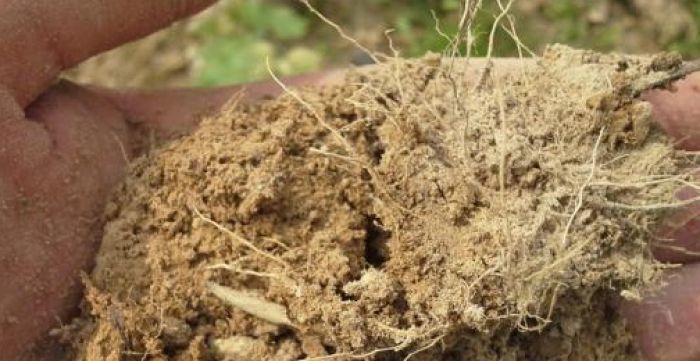
harvest report
20.11.2009
2009 Harvest Report from Eric Nicolas
<p><u><strong>November 20th, 2009:</strong></u></p>
<p>We are very happy with our 2009 <span class="zalup"><span><glossary term="Harvest" title="521">harvest</glossary><span>.</span></span></span> Quality and, at last, quantity are both here!<br />
<br />
We picked under excellent conditions, be it the weather or the human factor, our team was great.<br />
<br />
Summer went quietly, without problems, especially without the threat of <span class="zalup"><span><glossary title="1137">mildew</glossary><span>.</span></span></span> We started picking on Oct. 1st with our red grapes and finished with a white <glossary title="694">moëlleux</glossary> on Oct. 29th. It’s been a while since the <glossary term="Harvest" title="521">harvest</glossary> took so long!<br />
<br />
Our red wines are now out of the <glossary term="Vat/Tank" title="1140">vats</glossary> and into <span class="zalup"><span><glossary title="142">barrels</glossary><span>.</span></span></span> This year for the first time we only partially <span class="zalup"><span><glossary title="378">destemmed</glossary><span>,</span></span></span> and for now the results are good, the wines are richer. But <glossary title="74">aging</glossary> is only just beginning.<br />
<br />
In white, we picked everything between 13 and 14.5%, and the wines are <span class="zalup"><span><glossary title="405">dry</glossary><span>,</span></span></span> except for a <glossary title="694">moëlleux</glossary> of <glossary title="348">Coteaux-du-Loire</glossary> for which we harvested <glossary title="181">botrytised</glossary> grapes in several <span class="zalup"><span><glossary title="1144">passes</glossary><span>.</span></span></span> There is already a lot of <span class="zalup"><span><glossary title="662">minerality</glossary><span>,</span></span></span> with good <glossary title="71">acidity</glossary> and superb freshness.<br />
<br />
That’s it, the <glossary term="Harvest" title="521">harvest</glossary> done it is time to go and pick mushrooms, there is a record crop of porcini in our forests this fall.</p>
Article
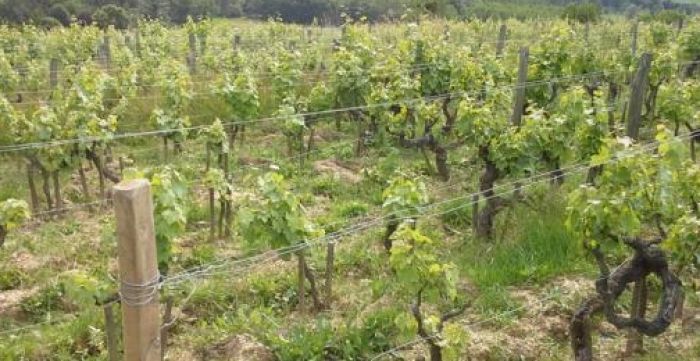
harvest report
27.09.2007
2007 Harvest Report from Eric Nicolas
<p><u><strong>Waiting for the Harvest<span class="zalup"><span><span>:</span></span></span></strong></u></p>
<p>We are preparing for the <span class="zalup"><span><glossary title="521">harvest</glossary><span>,</span></span></span> and have finished the big fall cleaning of the <span class="zalup"><span><glossary title="254">cellars</glossary><span>.</span></span></span> Early this week (Sept.24th, etc…) we were still in the vineyards to complete the task of <glossary title="416">removing leaves</glossary> for optimal aeration of the grapes.<br />
<br />
Throughout spring and summer, we had to wage an incessant battle to keep our vines healthy. To supplement the use of <glossary term="Bouillie Bordelaise" title="179">bouillie bordelaise</glossary> against <span class="zalup"><span><glossary title="1137">mildew</glossary><span>,</span></span></span> we started experimenting with <span class="zalup"><span><glossary title="384">plant infusions</glossary><span>,</span></span></span> and the results are very encouraging. We noted that not only didn’t we lose any grapes, but also that the amount of leaves is more than sufficient to ensure good <glossary title="639">ripening</glossary> of the grapes.<br />
<br />
The vines are really in great health. The grapes’ skins are thick, even in our <span class="zalup"><span><glossary title="1130">young vines</glossary><span>,</span></span></span> and I believe the <glossary title="384">plant infusions</glossary> played a role there. This ensures good protection against <glossary term="Grey Rot" title="182">rot</glossary> as well as strong aromas.<br />
<br />
September has been dry, although 10mm of rain fell in small showers, which prevented any stress for the vines and let them make sugar. The warm daytime temperatures contrast with cool nights, the <glossary title="639">maturation</glossary> is going slowly and <glossary title="71">acidity</glossary> levels remain high. These are perfect conditions leading to the<span class="zalup"><span> <glossary term="Harvest" title="521">harvest</glossary><span>.</span></span></span><br />
<br />
We are planning to start picking on Monday Oct. 1st, with <glossary term="alcoholic potential" title="1381">potential alcohol</glossary> levels above 13% for the whites and reds. I have tested the <glossary title="639">ripeness</glossary> level in 44 different spots.</p>
Article

harvest report
23.10.2006
2006 Harvest Report from Eric Nicolas
<p>At last, we have recovered a measure of calm after the<span class="zalup"><span> <glossary title="521">harvest</glossary><span>.</span></span></span><br />
<br />
During the year, the weather was chaotic, alternating very dry, hot stretches (July) and cold, humid periods (part of June, August), in a see-saw pattern. On the whole, the amount of rain was quite low, and we had good weather at key moments, like the <span class="zalup"><span><glossary title="1179">flowering</glossary><span>.</span></span></span> This made the growth cycle about 10 days earlier than in a normal year, despite all the stops and starts.<br />
<br />
We had rain in September when the grapes were already ripe, and that stormy weather started <glossary term="Grey Rot" title="182">gray rot</glossary> in some plots. Luckily, with all the work we did before in the vines, with severe <glossary title="834">pruning</glossary> controlling the <glossary title="1129">yields</glossary> and a small <glossary term="Bud" title="206">bud</glossary> burst on all our vines, it was enough to sort on the <glossary title="1130">young vines</glossary> to make very good <glossary title="405">dry</glossary> wines. The grapes in the <glossary title="740">old vines</glossary> resisted <glossary title="182">rot</glossary> better and were healthier.<br />
<br />
Our white grapes were picked between 12.6% and 14.5% of <span class="zalup"><span><glossary term="alcoholic potential" title="1381">potential alcohol</glossary><span>,</span></span></span> the red and rosé grapes were at 13%, very ripe at the end of the <span class="zalup"><span><glossary title="521">harvest</glossary><span>.</span></span></span> There is good balance and profile, thanks to the <glossary title="71">acidity</glossary> level.<br />
<br />
We picked between September 30th and October 17th, there was good <glossary title="639">ripeness</glossary> but much smaller <glossary title="1129">yields</glossary> than in the previous two years. Since we did fewer <glossary title="328">treatments</glossary> than in the past, we were all the more curious to vinify these grapes. The <glossary title="441">fermentations</glossary> are going slowly, the wines seem strong and <span class="zalup"><span><glossary title="990">structured</glossary><span>.</span></span></span> We cannot wait to see if all our work will result in the <glossary title="662">mineral</glossary> expression we hope for our wines.</p>
Article
harvest report
01.11.2005
2005 Harvest Report from Eric Nicolas
<p><u><strong>November 1st, 2005:</strong></u></p>
<p>Now that our <glossary title="521">harvesting</glossary> season is over, we can draw a few first conclusions:<br />
<br />
This is an excellent <glossary title="1109">vintage</glossary> where healthy white grapes kept high <glossary title="71">acidity</glossary> levels while reaching an unequaled degree of <span class="zalup"><span><glossary title="639">ripeness</glossary><span>.</span></span></span> It looks like we are going to have well <glossary title="990">structured</glossary> <glossary term="Cuvée" title="363">cuvées</glossary> of <glossary title="736">off-dry</glossary> wines meant for the long haul.<br />
<br />
The <glossary term="Chenin Blanc" title="281">Chenin</glossary> grapes were slow to <span class="zalup"><span><glossary title="181">botrysize</glossary><span>,</span></span></span> but in a week and a half of picking we were able to do two <glossary title="1144">passes</glossary> in the <glossary title="348">Coteaux-du-Loir</glossary> and <span class="zalup"><span><glossary title="556">Jasnières</glossary><span>,</span></span></span> the one in Rasné reaching 19% of <span class="zalup"><span><glossary term="alcoholic potential" title="1381">potential alcohol</glossary><span>,</span></span></span> the one in <glossary title="593">Lhomme</glossary> 22% (for "Elixir de Tuf") These are the purest <glossary term="Must" title="700">musts</glossary> we have ever obtained after picking in <span class="zalup"><span><glossary title="1144">passes</glossary><span>.</span></span></span><br />
<br />
The red grapes were very ripe and the wines compare with 2003’s, maybe even better thanks to their very fine <span class="zalup"><span><glossary title="1010">tannins</glossary><span>.</span></span></span><br />
<br />
And, finally and as it has become the norm, we picked our <glossary title="799">Pineau d’Aunis</glossary> for the "Les Giroflées" <glossary term="Rosé/Rosato" title="871">rosé</glossary> in perfect health at 15% <span class="zalup"><span><glossary term="alcoholic potential" title="1381">potential alcohol</glossary><span>.</span></span></span> The style and balance is comparable to 2004, and, as it <span class="zalup"><span><glossary term="Fermentation" title="441">ferments</glossary><span>,</span></span></span> the <glossary term="Must" title="700">must</glossary> gives off delicate aromas of cherries and raspberries.</p>
Article
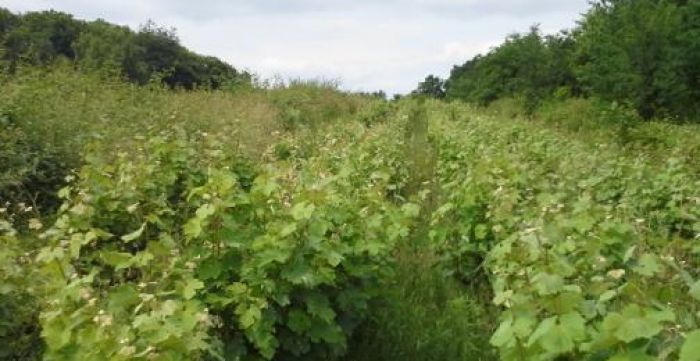
harvest report
03.10.2004
2004 Harvest Report from Eric Nicolas
<p>At long last, here is the news from our <span class="zalup"><span><glossary title="521">harvest</glossary><span>.</span></span></span></p>
<p>We started on October 6th with the red grapes and finished on November 3rd, after many interruptions. 99% of our grapes are now in the <span class="zalup"><span><glossary title="254">cellar</glossary><span>,</span></span></span> most of it is <span class="zalup"><span><glossary title="441">fermenting</glossary><span>,</span></span></span> although there are still some grapes left on the vines for a late, <glossary term="Late harvest wine" title="1392">late harvest</glossary><span class="zalup"><span><span>.</span></span></span><br />
<br />
The red grapes were <glossary title="521">harvested</glossary> under excellent conditions, with regular ripeness of 13 to 13.5% <span class="zalup"><span><glossary term="alcoholic potential" title="1381">potential alcohol</glossary><span>,</span></span></span> they were very fruity and in perfect health. We are about to remove from the <glossary title="441">fermenting</glossary> <glossary title="1140">vats</glossary> and put them in <glossary title="142">barrels</glossary> in our completely renovated<span class="zalup"><span> <glossary title="254">cellar</glossary><span>.</span></span></span><br />
<br />
For the white wines, we had difficult beginnings, it was raining when we were ready to start. We had to go through the vines and get rid of rotten grapes, and we were able to pick some very ripe grapes for a few <span class="zalup"><span><glossary title="142">barrels</glossary><span>.</span></span></span> Then we waited for the grapes to <glossary term="Concentration" title="324">concentrate</glossary> in the <glossary term="Plot" title="1133">plots</glossary> where we removed the rot. We got a comfortable degree of 12.5% on average, the grapes were perfectly healthy on the left bank of the river. The grapes for the <glossary term="Cuvée" title="363">cuvées</glossary> "Vieilles Vignes Eparses" and "L’Effraie" slowly went from 12.5 to 13%.<br />
<br />
We continued with healthy grapes and some <glossary title="181">botrytis</glossary> for <glossary title="363">cuvée</glossary> "Calligramme", above 13% on average. At the end of the <span class="zalup"><span> <glossary title="521">harvest</glossary><span>,</span></span></span> degrees went above 14%, which gave the <glossary title="363">cuvées</glossary> "Les Rosiers" and "L’Effraie" more complexity and richness. The only drawback was that we lost a lot of crop from our <span class="zalup"><span><glossary title="1130">younger vines</glossary><span>,</span></span></span> it was difficult to sort the <glossary title="182">rot</glossary> on the right bank.<br />
<br />
The crop is good in volume, which was saved at the last moment by weather conditions which were iffy but did not create problems. Also, we have bought a Willmès <glossary title="811">pneumatic press</glossary> and a peristaltic pump (a pump without valves or seals that is very gentle), which allowed us to <glossary title="827">press</glossary> finely and treat our crop in a better way.<br />
<br />
We’ll be able to improve our work in coming years, based on what was done this <span class="zalup"><span><glossary title="1109">vintage</glossary><span>. </span></span></span>For the time being, the wines <glossary title="441">fermenting</glossary> are frank and clean, and we hope for purity and finesse.</p>
Article
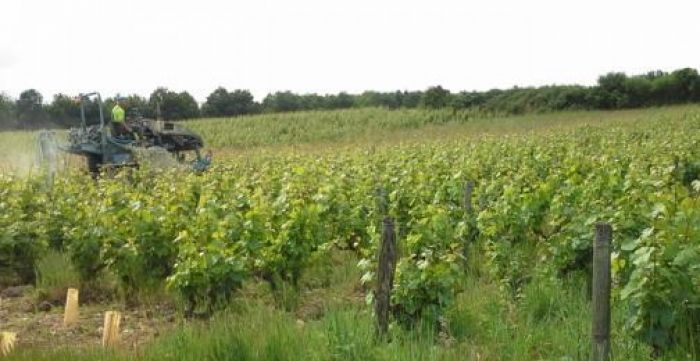
harvest report
02.09.2003
2003 Harvest Report from Eric Nicolas
<p><u><strong>September 2nd, 2003:</strong></u></p>
<p>After a difficult beginning of the year from the point of view of temperatures and the fact that some <glossary title="760">parcels</glossary> were partially affected by <glossary title="1135">frost</glossary> in April (soon after our return from New York) – just when an early <glossary term="Budding" title="1166">bud burst</glossary> had left the <glossary title="1130">young vines</glossary> particularly vulnerable, the regular rainfall that we got in the winter and spring set the stage for a more serene opening of the summer season and allowed us to work the soil in a consistent manner. Without question, this working of the soil, which we did at every possible opportunity, greatly helped to keep the soil cool thus avoiding the stress from dehydration seen in so many other regions. These efforts to assist Nature’s charity resulted in what we are seeing at this juncture: ripening that is two to four weeks ahead of schedule (depending on the <glossary term="Parcel" title="760">parcels</glossary> and the <glossary term="Varietal" title="1071">varietals</glossary>).<br />
<br />
So like every year, the results of my first investigations into the progress of the ripening process are an average level of <glossary term="alcoholic potential" title="1381">potential alcohol</glossary> of 11% for the young <glossary title="">Chenin Blanc</glossary> grapes and for the reds, between 12% and 13% for the <glossary title="478">Gamay</glossary> and the most mature <span class="zalup"><span><glossary title="799">Pineau d’Aunis</glossary><span>.</span></span></span> As far as <glossary title="71">acidity</glossary> levels go, without doubt, they will be weaker than in a normal year because, apparently, the extreme heat of this summer has broken down the <glossary term="Malic Acid" title="1247">malic acid</glossary> a bit. We will only know for sure whether this indeed holds true a little later in the season.<br />
<br />
Anyway, we will <glossary term="Harvest" title="521">harvest</glossary> our grapes two to three weeks earlier than usual – an extremely rare occurrence in our region. So we will start up the harvest around September 20th instead of the usual October 10th. We are still hoping for ripe <glossary title="1010">tannins</glossary> in the <glossary title="799">Pineau d’Aunis</glossary> grapes and super ripeness in the whites. If this turns out to be the case, 2003 will be the crowning completion of the two previous years. In the end, as all shrewd winemakers know, it is what lies in the future and the grapes that are actually brought into the <glossary title="">cellar</glossary> which will have the final word. It will be important to vinify this material with great care; it will certainly challenge our greatest skills. We will be in touch soon to let you know how it goes.</p>
Article