producer profile
10.07.2019
Domaine Marcel Richaud Producer Profile
<p>If you've heard of <glossary title="220">Cairanne</glossary><strong>, </strong>one of the best <glossary title="1026">terroirs</glossary> in the vast <glossary title="372">Côtes-du-Rhône-Villages</glossary> <span class="zalup"><span><glossary title="113">appellation</glossary><span>,</span></span></span> it's probably because of Marcel Richaud. </p>
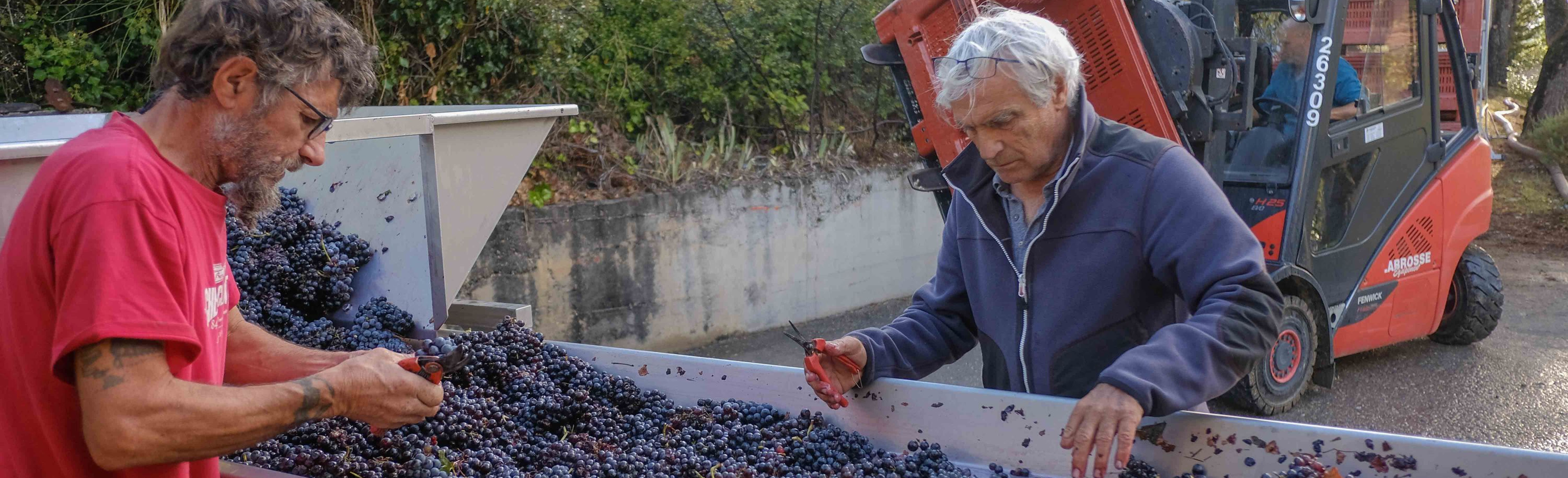
<p>Richaud comes from a vine growing family who'd historically and prosperously sold grapes to the local <span class="zalup"><span><glossary title="252">cave cooperative</glossary><span>.</span></span></span> So it came as a shock when Marcel, only 17 at the time, told his father he wanted to become a "<glossary title="1089">vigneron indépendant</glossary>". To his senior, this was incomprehensible and felt very risky: nothing to gain, more work and less pay. Undeterred, Marcel started with 14 <glossary title="523">hectares</glossary> of his aunt's vines, producing his first <glossary term="Vintage" title="1109">vintage</glossary> at 19 years old in a dilapidated <glossary title="254">cellar</glossary> with no roof. He quickly made a name for himself in the nascent Parisian <glossary title="708">natural wine</glossary> scene of the early 1990's and eventually began incorporating his father's <glossary title="252">cooperative</glossary> vines into his eponymous production. </p>
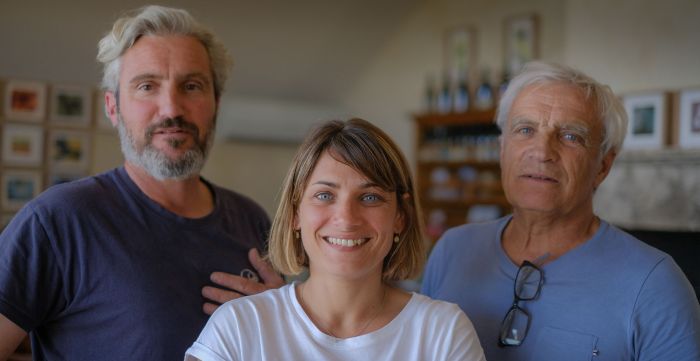
<p>Today, Marcel is retired and the <glossary title="427">estate</glossary> is run by his children Thomas, Claire and Edith. The <glossary title="427">estate</glossary> has grown to a sizeable 80 <glossary title="523">hectares</glossary> over the years, a combination of Marcel progressively recouping family vineyards from the <glossary title="252">cooperative </glossary>and purchasing land; about 40 <glossary title="523">hectares</glossary> come from the family and the other 40 have been purchased or planted since the 1980's. </p>
<p>Less <glossary title="508">Grenache</glossary> vines are planted than most <glossary title="427">estates</glossary> in the area, just 25% of what is grown and the same amount of <glossary title="1001">Syrah</glossary> and <span class="zalup"><span><glossary title="692">Mourvèdre</glossary><span>.</span></span></span> The remainder of the <glossary title="427">estate</glossary> consists of 10% <glossary title="1188">Cinsault</glossary> and 15% various local <span class="zalup"><span><glossary title="1071">varietals</glossary><span>.</span></span></span> This mix is one of the reasons why Richaud’s wines, despite being high in alcohol, have such great balance and finesse. <glossary title="692">Mourvèdre</glossary> especially plays an important role in toning down the alcohol degree that <glossary title="508">Grenache</glossary> easily reaches in a warm year: it requires more sun and later picking, and in <glossary title="220">Cairanne</glossary> it is at the northern edge of its growing region. As is often the case, a <glossary title="1071">varietal</glossary> gives its best and most nuanced in such “border” territory: witness red <glossary title="212">Burgundies</glossary> and red <glossary title="1036">Touraines</glossary> from <span class="zalup"><span><glossary title="216">Cabernet Franc</glossary><span>.</span></span></span></p>
<p>The focus is on <glossary title="521">harvesting</glossary> a healthy and ripe crop, with the wines made in large <span class="zalup"><span><glossary title="325">cement vats</glossary><span>,</span></span></span> each <glossary title="1071">varietal</glossary> vinified apart until a <glossary title="168">blend</glossary> is done about eight months later. In 2000, a <glossary title="254">cellar</glossary> was built of yellow <glossary title="910">sandstone</glossary> blocks (from the Pont du Gard quarry), permitting for <glossary title="242">casks</glossary> and <glossary title="144">barriques</glossary> to be incorporated into the winemaking. <glossary title="1104">Vinifications</glossary> occur with <glossary title="538">native yeasts</glossary> and without any additions of <span class="zalup"><span><glossary title="993">S02</glossary><span>.</span></span></span> The wines are never <glossary title="449">fined</glossary> or <span class="zalup"><span><glossary title="447">filtered</glossary><span>,</span></span></span> and only a small amount of <glossary title="993">sulfur</glossary> is added at <span class="zalup"><span><glossary title="185">bottling</glossary><span>.</span></span></span> For some <span class="zalup"><span><glossary title="363">cuvées</glossary><span>,</span></span></span> the Richaud offer a <glossary title="993">un-sulfured</glossary> <glossary title="185">bottling</glossary> to be shipped once a year in the winter. As of the 2016 <span class="zalup"><span><glossary title="1109">vintage</glossary><span>,</span></span></span> we have opted to work with this <glossary title="185">bottling</glossary> on the <span class="zalup"><span><glossary title="220">Cairanne</glossary><span>.</span></span></span> </p>
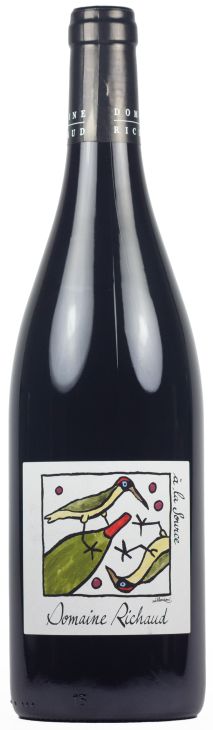
<p>The first <glossary title="363">cuvée</glossary> is a simple <glossary title="1092">Vin de France</glossary><em> </em>called "À la Source"<em> </em>produced from the <glossary title="427">estate</glossary>'s <span class="zalup"><span><glossary title="1130">youngest vines</glossary><span>.</span></span></span> </p>
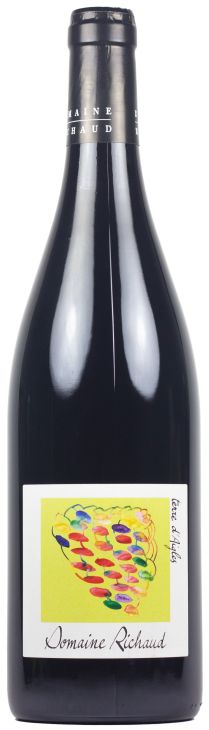
<p>Next is "Terre d'Aigles", from younger <glossary title="508">Grenache</glossary> and <glossary title="237">Carignan</glossary> vines growing on <glossary title="93">alluvial</glossary> soil along the river <span class="zalup"><span><glossary title="82">Aigues</glossary><span>.</span></span></span> The <glossary title="1026">terroir</glossary> here makes for the fruitiest of the bunch.</p>
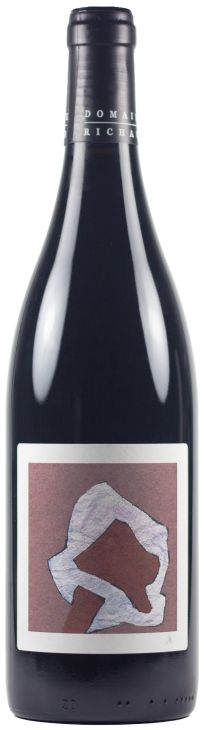
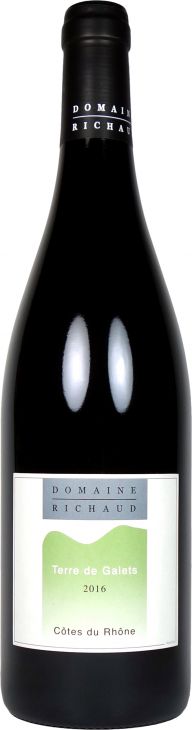
<p>"Terre de Galets"<em> </em>comes from a mix of <glossary title="1133">plots</glossary> and vines of <glossary title="1001">Syrah</glossary> and <glossary title="508">Grenache</glossary> 10 to 40 years of age growing on red <glossary title="301">clay</glossary> and round stones. It is spicy, ripe and peppery, with more structure. </p>
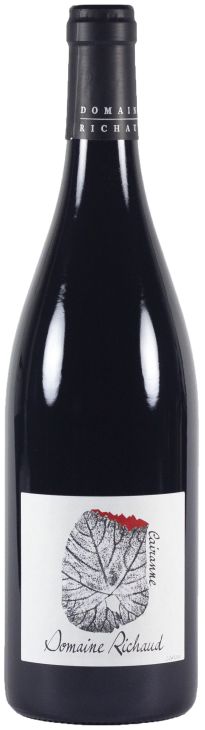
<p>The village of <glossary title="220">Cairanne</glossary> is situated atop a range of low hills with perfect <span class="zalup"><span><glossary term="Exposition" title="430">exposure</glossary><span>,</span></span></span> looking east over the plain between the <glossary title="82">Aigues</glossary> and <glossary title="753">Ouvèze</glossary> rivers, the <glossary title="419">elevation</glossary> ensures slightly cooler temperatures than on the Plan de Dieu where the summer heat is usually extreme. The <glossary title="">Cairanne</glossary> cuvée aims to express the village’s <span class="zalup"><span><glossary title="1026">terroir</glossary><span>,</span></span></span> and is made from <span class="zalup"><span><glossary title="508">Grenache</glossary><span>,</span></span></span> <glossary title="1001">Syrah</glossary> and <glossary term="Mourvèdre" title="692">Mourvèdre</glossary> from poor, stony <span class="zalup"><span> <glossary title="301">clay</glossary><span>-</span></span></span><glossary title="596">limestone</glossary> mid-slope <span class="zalup"><span><glossary title="1133">plots</glossary><span>.</span></span></span> It is rich, very peppery, with complex fruit and spices, licorice and cherries.</p>
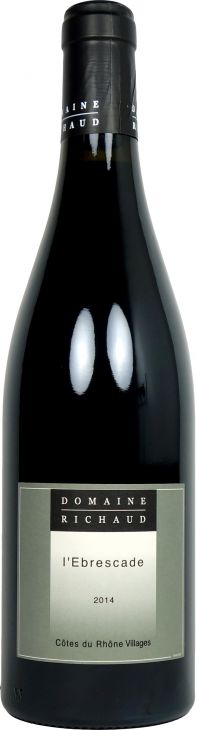
<p>Finally, "L'Ebrescade" is the <glossary title="427">estate's</glossary> top wine, a powerful expression of the area's <glossary title="740">oldest vines</glossary> on <glossary title="301">clay</glossary> and white <glossary title="477">galets roulées</glossary> very similar to <span class="zalup"><span><glossary title="277">Châteauneuf-du-Pape</glossary><span>.</span></span></span> This wine is <glossary title="1104">vinified</glossary> entirely in old <span class="zalup"><span><glossary title="242">casks</glossary><span>.</span></span></span></p>
Article
interview
10.07.2019
An Interview with Marcel Richaud from 2011
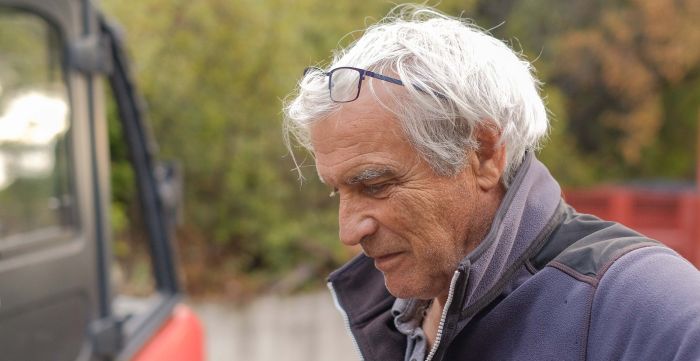
<p><em>This interview with Marcel Richaud took place in Bordeaux in June 2011.</em></p>
<p><strong>Tell us about your estate.</strong><br />
<br />
From a very young age I was passionate about <glossary title="1103">viticulture</glossary> and winemaking, and dropped out of high school at 17 to study <span class="zalup"><span><glossary title="1103">viticulture</glossary><span>.</span></span></span> I've always felt a very special energy in the vineyard, that my life was here in <span class="zalup"><span><glossary title="220">Cairanne</glossary><span>,</span></span></span> that wine from the region could be something special, and that I was destined to make it.<br />
<br />
The <glossary title="427">estate</glossary> was already in the family when I took over. When I first started I was working 14 <glossary title="523">hectares</glossary> of my aunt's vines and I eventually inherited my father's land when he retired, an additional 15 <span class="zalup"><span><glossary title="523">hectares</glossary><span>.</span></span></span> This gave me a chance to save up a little money, and my first investment was to build a proper <span class="zalup"><span><glossary title="254">cellar</glossary><span>.</span></span></span> Once the <glossary title="254">cellar</glossary> was finished, I then purchased some <glossary title="760">parcels</glossary> with different <glossary title="1026">terroirs</glossary> than the <glossary title="760">parcels</glossary> I already owned. One example would be L' Ebrescade, a <glossary title="301">clay</glossary> <glossary title="1026">terroir</glossary> at the border of <span class="zalup"><span><glossary title="845">Rasteau</glossary><span>.</span></span></span> Over the years I've purchased about 20 <glossary title="523">hectares</glossary> of vines, so I now find myself with around 55 <span class="zalup"><span><glossary title="523">hectares</glossary><span>.</span></span></span> <br />
<br />
I own most of these but choose only to farm others. The vines I've inherited from my father, for example, were also inherited by my three siblings, so I refuse to buy these because they are as much a part of them as they are a part of me. The same goes with my aunt's land that I started with. I prefer buying nice <glossary title="220">Cairanne</glossary> <glossary title="1026">terroirs</glossary> that have no family tie so that I can carve out my own independence. <br />
<br />
<strong>When you were first started, did you follow in your father's footsteps or use your own approach?</strong><br />
<br />
My father sold all of his grapes to a <span class="zalup"><span><glossary title="252">cave cooperative</glossary><span>.</span></span></span> The rules and politics of production meant high <span class="zalup"><span><glossary title="1129">yields</glossary><span>,</span></span></span> <glossary title="645">mechanization</glossary> and none of the work I do today: choosing to work with specific <glossary title="760">parcels</glossary> and <span class="zalup"><span><glossary title="1071">varietals</glossary><span>,</span></span></span> working <glossary title="746">organically</glossary> and <span class="zalup"><span><glossary title="160">biodynamically</glossary><span>,</span></span></span> etc… So you could say that I fundamentally changed everything about the <span class="zalup"><span><glossary title="427">estate</glossary><span>.</span></span></span> <br />
<br />
After deciding to break off from the <span class="zalup"><span><glossary title="252">cooperative</glossary><span>,</span></span></span> I was able to make my own wine that I could sell because of its high quality and production value. I also became heavily involved in what is now referred to as <glossary title="708">natural wine</glossary> in France and abroad. As an advocate and member of the <glossary title="123">A.V.N</glossary> (<em>Association des Vins Naturels</em>), I've believed for a long time that real wine is wine that sees no <glossary title="279">chemical</glossary> treatment, no <span class="zalup"><span><glossary title="447">filtering</glossary><span>,</span></span></span> no <glossary title="321">commercial yeasts</glossary> and no other technique that would specifically alter a wine. <br />
<br />
I took over from my father at 20 and I've worked <glossary title="746">organically</glossary> since day one. That was 37 years ago. At the time, I wasn't thinking about marketing or selling wine. What I was doing was accomplishing a childhood dream: to make a wine the way I wanted to make it with my name on the bottle. <br />
<br />
In my early years, my father would often tell me: "You'll come back to selling to the <glossary title="252">cooperative</glossary> when you're done having your fun." It took him a very long time to understand what I was doing and why I was doing it; for the first ten years, my family was very worried that I wasn't making wine like everyone else, that it was too much of a risk and that it could never work economically. <br />
<br />
<strong>What's the work in the vines like?</strong><br />
<br />
We work <glossary title="746">organically</glossary> so no <span class="zalup"><span><glossary title="279">chemicals</glossary><span>,</span></span></span> <glossary title="526">herbicides</glossary> or <span class="zalup"><span><glossary title="1142">pesticides</glossary><span>.</span></span></span> We work the soils. For me the vines are an entity that you cultivate, that you guide like you would a friend or fellow human being. Some people treat and heal others. My job is to treat and heal the earth and the vines. You need to take care of both because healthy soils lead to healthy vines.<br />
<br />
<strong>And in the cellar? </strong><br />
<br />
The <glossary title="254">cellar</glossary> is the accumulation and the payoff of what we've been doing all year in the vines. My grandfather used to say something that I find very simple and beautiful: "The Earth only gives you what you make." He was right. You can't treat the earth like an entrepreneur. You have to work with it, to learn to love it. <br />
<br />
In the 37 years of winemaking, I've tried everything. <span class="zalup"><span><glossary title="795">Pigeage</glossary><span>,</span></span></span> <span class="zalup"><span><glossary title="850">remontage</glossary><span>,</span></span></span> <span class="zalup"><span><glossary title="236">carbonic maceration</glossary><span>,</span></span></span> <span class="zalup"><span><glossary title="731">oak</glossary><span>,</span></span></span> <span class="zalup"><span><glossary title="325">cement</glossary><span>,</span></span></span> <glossary title="986">stainless steel</glossary>… you name it. And through years of constant experimentation, putting myself in question and trying new things, I've come to the conclusion that what really matters are the <span class="zalup"><span><glossary title="1129">yields</glossary><span>,</span></span></span> the age of the vines and the <span class="zalup"><span><glossary title="1026">terroir</glossary><span>.</span></span></span> If you want to make wines that express their <span class="zalup"><span><glossary title="1026">terroir</glossary><span>,</span></span></span> wines that offer the customer a taste of a region, then you need to have excellent quality grapes, but you also need to make sure that the expression of those grapes that won't get altered with sophisticated <glossary title="1104">vinification</glossary> techniques.<br />
<br />
<strong>How do you feel about the AOC system?</strong> <br />
<br />
I am personally convinced that the <glossary title="108">AOC</glossary> system is a very beautiful thing. The original idea of the <glossary title="108">AOC</glossary> was a system that would highlight the culture and history of a region's <span class="zalup"><span><glossary title="78">agriculture</glossary><span>,</span></span></span> and I believe in its virtues. The problem is the way that most <glossary title="108">AOC's</glossary> are run. The heads of the the <glossary title="108">AOCs</glossary> are technicians that confuse the <glossary title="1089">vigneron's</glossary> work as a fitting within a category. In cases like mine, when you work with <span class="zalup"><span><glossary title="538">native yeasts</glossary><span>,</span></span></span> low <glossary title="993">sulfur</glossary> and higher <glossary title="71">acidities</glossary> you will often be penalized for deviating from a certain path, when in fact they should be encouraging us for making something you couldn't find anywhere else!<br />
<br />
<strong>You mentioned earlier how you are part of the natural wine movement. As a vigneron who's been making wines in this style decades before there was even a term to describe it, how do you feel about the current climate of "natural wine"?</strong><br />
<br />
It's a movement I defend, but in no way am I a radical or an extremist. I acknowledge that nature does not always give us all the elements to respect the criteria of <span class="zalup"><span><glossary title="708">natural wine</glossary><span>.</span></span></span> On the other hand, the philosophy of working this way is a virtuous one worth defending. What we have with <glossary title="708">natural winemaking</glossary> is <glossary title="122">artisanal</glossary> winemaking as opposed to <span class="zalup"><span><glossary title="540">industrial winemaking</glossary><span>.</span></span></span> I think that customers are really starting to notice that compared to standard <span class="zalup"><span><glossary title="540">industrial wine</glossary><span>,</span></span></span> <glossary title="708">natural wines</glossary> are original, rich and full of character. <br />
<br />
I believe that in the future, we should be forced to put <glossary title="993">sulfur</glossary> amounts on bottles. The customer has the right to know! And not just <span class="zalup"><span><glossary title="993">sulfur</glossary><span>,</span></span></span> but everything that goes into a bottle of wine. After all, we are obliged to list ingredients for every single nutritional product in the world. Wine is the only exception. This is no coincidence: a lot of people don't want you to know what goes into their bottles. <br />
<br />
If you use the legal limit of <glossary title="993">sulfur</glossary> in my <span class="zalup"><span><glossary title="113">appellation</glossary><span>,</span></span></span> 190 mg per liter, you can make wine with rotten grapes. And why are we allowed to do this? Because this ensures that <glossary title="1089">vignerons</glossary> can continue to <span class="zalup"><span><glossary title="611">machine harvest</glossary><span>,</span></span></span> not worry about the quality of their grapes and keep big businesses running. So that's why I defend <span class="zalup"><span><glossary title="708">natural wine</glossary><span>.</span></span></span></p>
Article
harvest report
04.01.2023
2023 Harvest Report from Claire Richaud
<p><strong>November 13th, 2023:</strong></p>
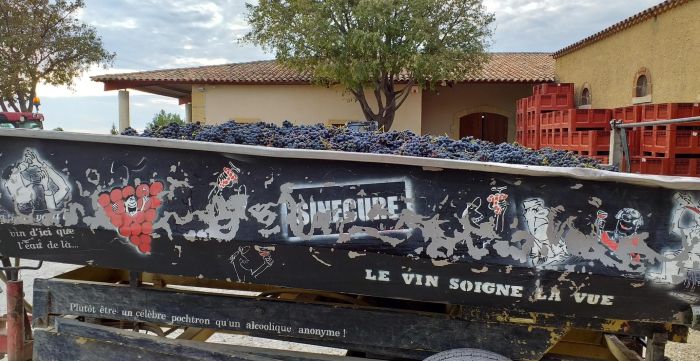
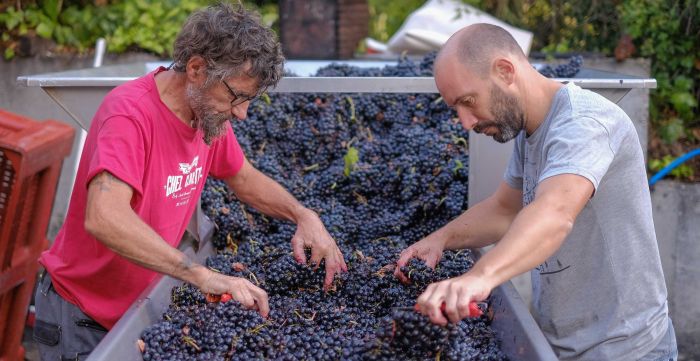
<p>The 2023 <glossary term="Vintage" title="1109">vintage</glossary> proved to be a plentiful crop. We got the rain we needed in the Spring, were able to effectively combat<font color="#7b143e"><b> <glossary term="Mildew" title="1137">mildew</glossary></b></font> pressure and the ferocious August heat didn't last too long. Our regular work of the soils and <font color="#7b143e"><b><glossary term="Organic" title="746">organics</glossary></b></font><span class="zalup"><span><span>,</span></span></span> combined with a focus of the <font color="#7b143e"><b><glossary term="Gobelet" title="497">gobelet training</glossary></b></font> historic to <span class="zalup"><span><glossary term="Cairanne" title="220">Cairanne</glossary><span>,</span></span></span> permitted our vines to resist to <span class="zalup"><span><glossary term="Drought" title="1167">drought</glossary><span>,</span></span></span> something we've happily observed for a decade now. It proves to us that an anti-industrial approach to <glossary term="Viticulture" title="1103">viticulture</glossary> is what is best suited.</p>
<p>In the end, the grapes we brought into the <glossary term="Cellar" title="254">cellar</glossary> were quasiperfect, with balanced <glossary term="alcoholic potential" title="1381">alcoholic potentials</glossary> and good <span class="zalup"><span><glossary term="Acidity" title="71">acidity</glossary><span>.</span></span></span> </p>
<p><br />
<img src="https://louisdressner.com/uploads/images/article//1004/47/74/47743cae6c7d060d03ae1651a0c98215.jpg" /><img src="https://louisdressner.com/uploads/images/article//1004/d8/9c/d89c95f5860673629a21b98e77be5953.jpg" /><img src="https://louisdressner.com/uploads/images/article//1004/55/61/5561331235bc33213a89892730af7cee.jpg" /><img src="https://louisdressner.com/uploads/images/article//1004/31/df/31df87a55e1125cf21bafb352da70db3.jpg" /><img src="https://louisdressner.com/uploads/images/article//1004/bd/0f/bd0f6f1a4b0d30212bb5e0ee344de7ab.jpg" /><img src="https://louisdressner.com/uploads/images/article//1004/8d/55/8d55c6212de94368da8d18767a45bc11.jpg" /><img src="https://louisdressner.com/uploads/images/article//1004/5a/e1/5ae1ebcca421d5c6de1ce86c4c4a253a.jpg" /><img src="https://louisdressner.com/uploads/images/article//1004/ad/2f/ad2f7c2f5af106617ea98fabfdc0b2c6.jpg" /><img src="https://louisdressner.com/uploads/images/article//1004/15/83/1583c65412dcf8b4a4ad193446293c38.jpg" /><img src="https://louisdressner.com/uploads/images/article//1004/93/4b/934b7f1302ea4df1a0cff5fdbd555ced.jpg" /><img src="https://louisdressner.com/uploads/images/article//1004/7b/39/7b395666a57080ee5cda66d2007255af.jpg" /><img src="https://louisdressner.com/uploads/images/article//1004/11/da/11da3eb1883af21a748bad29748e1bce.jpg" /><img src="https://louisdressner.com/uploads/images/article//1004/2f/ff/2fff11b6578ebf1c29e8f47a5e081e4b.jpg" /></p>
Article
harvest report
22.12.2022
2022 Harvest Report from Claire Richaud
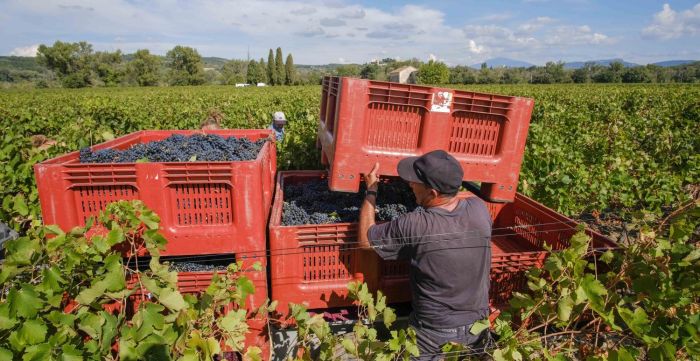
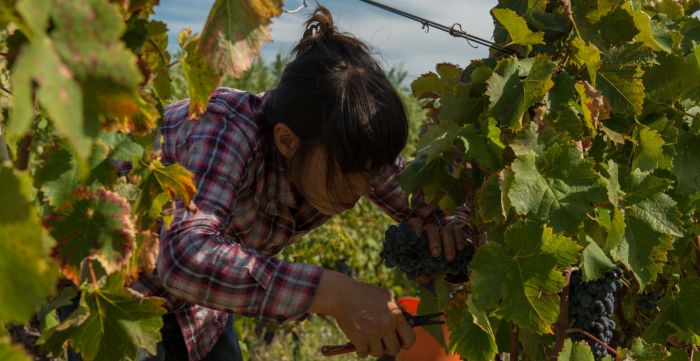
<p>We had a mild winter with very little rain. Summer 2022 was a total heatwave with only 30mm of rain between February and April. The hydric stress could be felt right before <span class="zalup"><span><glossary term="Harvest" title="521">harvest</glossary><span>.</span></span></span> Fortunately, we had two nice rain-falls at the end of August that plumped up the grapes and helped refine the juices. </p>
<p><glossary term="Flowering" title="1179">Flowering</glossary> was beautiful and the sanitary state of the grapes was perfect at <span class="zalup"><span><glossary term="Harvest" title="521">harvest</glossary><span>.</span></span></span> We ended up having a great crop, notably from all the younger plantations; overall we averages 26<glossary term="hl/ha" title="528">hl/ha</glossary> on the <span class="zalup"><span><glossary term="Estate" title="427">estate</glossary><span>,</span></span></span> which is good and sufficient for us. We also had nice <glossary term="PH" title="783">PH</glossary> and <span class="zalup"><span><glossary term="Acidity" title="71">acidity</glossary><span>,</span></span></span> offering a nice balance in the juices. The alcohol is lower than past years, but balanced and controlled. The result are solid and really enjoyable to drink. We also believe we can add an particularly low level of <glossary term="Sulfites" title="993">sulfites</glossary> this year, and even none to an significant part of the production. In any case, the wines will stand the test of time.</p>
<p><img src="https://louisdressner.com/uploads/images/article//943/17/1a/171a30bfecf877062471f0db2ae9e955.jpg" /><img src="https://louisdressner.com/uploads/images/article//943/48/74/4874010fa5cefa3818acb6ced53587e8.jpg" /><img src="https://louisdressner.com/uploads/images/article//943/01/a6/01a65814f6604309febfb0b97a952947.jpg" /><img src="https://louisdressner.com/uploads/images/article//943/6a/4a/6a4a19dfacdbd383e0cd595f3a717d1a.jpg" /><img src="https://louisdressner.com/uploads/images/article//943/1c/1a/1c1aef72809e706416097fcec475e5fc.jpg" /><img src="https://louisdressner.com/uploads/images/article//943/d3/33/d333a2cd8801d9964ce2b3c2b61f35be.jpg" /><img src="https://louisdressner.com/uploads/images/article//943/c1/37/c1372ecdf9e8bcf7e4e2f78601fa486c.jpg" /><img src="https://louisdressner.com/uploads/images/article//943/72/fc/72fc5e253798a8c2d97d523a921f8b81.jpg" /><img src="https://louisdressner.com/uploads/images/article//943/9d/a9/9da9694e6d674e190f2142d912394d65.jpg" /><img src="https://louisdressner.com/uploads/images/article//943/14/2c/142c4c5143a4a79014b8c424a9be3ade.jpg" /><img src="https://louisdressner.com/uploads/images/article//943/4a/9e/4a9ec9c000368b57198edcfca5005ed2.jpg" /><img src="https://louisdressner.com/uploads/images/article//943/c0/a9/c0a97e0a60d54ff347ae79810c0b1ab9.jpg" /><img src="https://louisdressner.com/uploads/images/article//943/89/b6/89b6c71947265e4cdf597834b73f8273.jpg" /><img src="https://louisdressner.com/uploads/images/article//943/11/79/117928d5d0cf304d58f2258e10075fe3.jpg" /><img src="https://louisdressner.com/uploads/images/article//943/86/68/866849bcb0795f17d6ab5ed5bb07c1f1.jpg" /><img src="https://louisdressner.com/uploads/images/article//943/a8/d0/a8d0475190ed9e9c4a0f5b3e4d40ddb0.jpg" /><img src="https://louisdressner.com/uploads/images/article//943/14/88/1488fd61a84cce6edd5f4363902609a6.jpg" /><img src="https://louisdressner.com/uploads/images/article//943/37/b4/37b478c3aff35cd735baf8cdec8351a3.jpg" /><img src="https://louisdressner.com/uploads/images/article//943/60/77/6077947700c419af1b53a20ef14e191f.jpg" /><img src="https://louisdressner.com/uploads/images/article//943/64/c9/64c9757209dce1c19e118835275e9a18.jpg" /><img src="https://louisdressner.com/uploads/images/article//943/5e/72/5e720ad84ac62b1110586acd8a9c284b.jpg" /></p>
Article
harvest report
15.12.2021
2021 Harvest Report from Claire Richaud
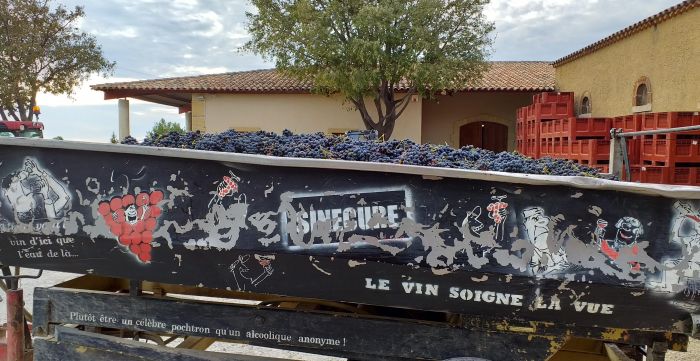
<p>It was a small crop due to the <span class="zalup"><span><glossary term="Frost" title="1135">frost</glossary><span>,</span></span></span> very little wine for the entry level <glossary term="Cuvée" title="363">cuvées</glossary> but normal quantity on the <span class="zalup"><span><glossary term="Cairanne" title="220">Cairanne</glossary><span>.</span></span></span> We also had good volume on the whites. </p>
<p>The quality was a mixed bag, and for some reason all the <glossary term="Mourvèdre" title="692">Mourvèdre</glossary> was beautiful. It really came down to if the <glossary term="Parcel" title="760">parcel</glossary> had been hit with <glossary term="Frost" title="1135">frost</glossary> or not. Those that were spared were magnificent. </p>
<p>The other thing is that is rained during the entire <font color="#7b143e"><b><glossary term="Harvest" title="521">harvest</glossary></b></font><span class="zalup"><span><span>,</span></span></span> which damaged the grapes. It meant having to do a lot of <glossary term="Sorting" title="1380">sorting</glossary> and losing even more grapes. </p>
<p>One positive point: the vines did not suffer from drought this year and that means there won't be too much alcohol! <img src="https://louisdressner.com/uploads/images/article//921/cf/eb/cfebffec9db84315445ac628b96c2a7a.jpg" /><img src="https://louisdressner.com/uploads/images/article//921/48/8d/488d9743f8980b1a81f58c5fd194ba66.jpg" /><img src="https://louisdressner.com/uploads/images/article//921/ab/4d/ab4d319b18d48fb443ec2d8ca169cdab.jpg" /><img src="https://louisdressner.com/uploads/images/article//921/ee/78/ee7844aa9c537e7b7bb293617d6c9b1c.jpg" /><img src="https://louisdressner.com/uploads/images/article//921/91/48/9148d8c9fbcc2daee8a9d78b557f371c.jpg" /><img src="https://louisdressner.com/uploads/images/article//921/1e/9b/1e9b121bb606e99a65fa7286d770d2b6.jpg" /><img src="https://louisdressner.com/uploads/images/article//921/e8/93/e8933666afeaa89c13663bac2c773fa3.jpg" /><img src="https://louisdressner.com/uploads/images/article//921/b6/b5/b6b5f4ddd0a0b50be349b3d2999d2453.jpg" /><img src="https://louisdressner.com/uploads/images/article//921/e5/a4/e5a47705bee04a2beaefcb4c05d9f0ab.jpg" /><img src="https://louisdressner.com/uploads/images/article//921/e5/f0/e5f0295d42c1886c05a62b6dabd03d33.jpg" /><img src="https://louisdressner.com/uploads/images/article//921/63/b8/63b8105b92b0247ff228c552c0f206e0.jpg" /><img src="https://louisdressner.com/uploads/images/article//921/24/12/2412ecdbf7cf353e7892e6b52917c055.jpg" /><img src="https://louisdressner.com/uploads/images/article//921/8f/e5/8fe584a5e280eea2403e6c70adcaa60f.jpg" /><img src="https://louisdressner.com/uploads/images/article//921/f3/3a/f33a0c3d4be7467d393b5a4dbc63e01e.jpg" /><img src="https://louisdressner.com/uploads/images/article//921/0a/a1/0aa1ba95a1977df57d2e78a8201ae7e7.jpg" /></p>
Article
harvest report
05.01.2020
2020 Harvest Report from Claire Richaud
<p><u><strong>November 5th, 2020:</strong></u></p>
<p>We had a very mild winter and a mellow, rainy spring, just what we needed to avoid a <glossary term="Drought" title="1167">drought</glossary> in the summer. <glossary term="Flowering" title="1179">Flowering</glossary> went smoothly with no <glossary term="Coulure" title="1252">coulure</glossary> on the <span class="zalup"><span><glossary term="Grenache" title="508">Grenache</glossary><span>.</span></span></span> The grapes were in perfect sanitary state. We also had a lot of quantity this year because our young plantations are starting to produce (there will be a lot of À la Source this year!) Overall <glossary term="Yield" title="1129">yields</glossary> averaged 3<span class="zalup"><span>0<glossary term="hl/ha" title="528">hl/h</glossary><span>,</span></span></span> which is largely sufficient for us. </p>
<p>It was an excellent year to <glossary term="Vinification" title="1104">vinify</glossary> without <glossary term="Sulfites" title="993">sulfites</glossary> or <span class="zalup"><span><glossary term="Intervention" title="545">intervention</glossary><span>:</span></span></span> the perfect state of the grapes was complemented by a great balance between <glossary term="Acidity" title="71">acidity</glossary> and alcohol. The <glossary term="alcoholic potential" title="1381">potentials</glossary> are a bit high but still in the range we are used to, so we were able to make balanced wine. We will add a very small amount of <glossary term="Sulfites" title="993">S02</glossary> this year and permit ourselves to bottle an important amount without it. </p>
<p>Since we had a lot of <glossary term="Grenache" title="508">Grenache</glossary> in 2020, the wines will be great for <glossary term="Aging" title="74">aging</glossary> and <span class="zalup"><span><glossary term="Cellaring" title="255">cellaring</glossary><span>.</span></span></span> </p>
<p><img src="https://louisdressner.com/uploads/images/article//849/8f/96/8f96c22c866b2c7977427746a0fc17ce.jpg" /><img src="https://louisdressner.com/uploads/images/article//849/3e/0d/3e0d7cc9c053ce8d045dc9cc001088ff.jpg" /><img src="https://louisdressner.com/uploads/images/article//849/4e/5b/4e5b68eb0a02b01c4e62892ca2f668b4.jpg" /><img src="https://louisdressner.com/uploads/images/article//849/36/4e/364e60cbfcba170f49b7caf8a8ba6852.jpg" /><img src="https://louisdressner.com/uploads/images/article//849/c3/19/c319f64d171537363a5d06c689159215.jpg" /><img src="https://louisdressner.com/uploads/images/article//849/1e/e7/1ee708d4088b9c924d9f316de20a5e27.jpg" /><img src="https://louisdressner.com/uploads/images/article//849/19/77/1977e7198e302af9229ddfd3c2c3f5ea.jpg" /><img src="https://louisdressner.com/uploads/images/article//849/66/f8/66f8d3b5a29817d434ffde9507092e46.jpg" /><img src="https://louisdressner.com/uploads/images/article//849/db/99/db997e3a9dd3cdb7313f7ac18da773c0.jpg" /><img src="https://louisdressner.com/uploads/images/article//849/25/cd/25cdd764be77e1210b6130346fda5374.jpg" /><img src="https://louisdressner.com/uploads/images/article//849/9c/0e/9c0eb3ee61aef059c16d6997aaa413ec.jpg" /><img src="https://louisdressner.com/uploads/images/article//849/4d/ab/4dabd6e7988cdc537855c5bd37a14190.jpg" /></p>
Article
harvest report
06.10.2019
2019 Harvest Report from Margaux
<p><u><strong>October 10th, 2019:</strong></u></p>
<p>The 2019 <glossary term="Vintage" title="1109">vintage</glossary> is exceptional at the <span class="zalup"><span><glossary term="-Select term-" title="">estate</glossary><span>!</span></span></span> Despite the high heats of the summer, the sanitary state of the grapes was impeccable.</p>
<p>The <glossary term="Vat/Tank" title="1140">vats</glossary> are full with juices magnificent in volume and quality. All of our <glossary term="Cuvée" title="363">cuvées</glossary> will be released this year. </p>
<p>Here are some photos.</p>
<p><img src="http://louisdressner.com/uploads/images/article//827/0f/01/0f0102af4c6a29758979b9252c611cf9.jpg" /><img src="http://louisdressner.com/uploads/images/article//827/fe/78/fe78493b9d0f1332a3ad9ad67dc9e325.jpg" /><img src="http://louisdressner.com/uploads/images/article//827/71/c7/71c7d7ae0bb1ce9db1893dd003d09f42.jpg" /><img src="http://louisdressner.com/uploads/images/article//827/c5/33/c533561887c297129a83007cf2a335c0.jpg" /><img src="http://louisdressner.com/uploads/images/article//827/f6/9d/f69d33c0a218a80ed9aaa3b151cdd355.jpg" /><img src="http://louisdressner.com/uploads/images/article/2020_Oct_06//d7/22/d722a2a9b53114077016f9e2cc079a7d.jpg" /><img src="http://louisdressner.com/uploads/images/article/2020_Oct_06//9a/24/9a24c76c967e936d3ae87f3152d3b355.jpg" /><img src="http://louisdressner.com/uploads/images/article/2020_Oct_06//1d/c2/1dc26ff5c0b412aa1128ea1cfda6b455.jpg" /><img src="http://louisdressner.com/uploads/images/article/2020_Oct_06//37/cd/37cd81f0c25b4ddfeb286666de436586.jpg" /><img src="http://louisdressner.com/uploads/images/article/2020_Oct_06//46/70/46707ef21dddb9da5281c152c44b0c02.jpg" /></p>
Article