Please wait ...

Barbaresco and Barolo from Alfredo & Luca Roagna
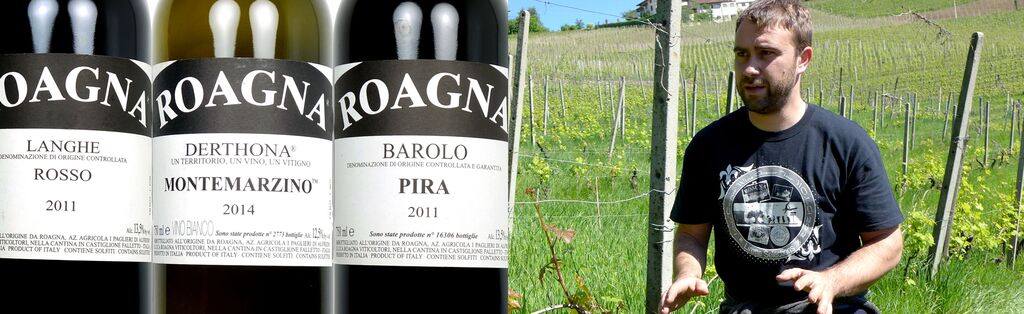
Roagna Producer Profile
Quick Facts
| Name of Estate | Roagna |
|---|---|
| Region | Piemonte |
| Country | Italy |
| Proprietor | Alfredo and Luca Roagna |
| Size | 16 hectares |
| Farming | Organic (Certified) |
| Soils | Limestone, marl, sand |
| Grapes grown | Nebbiolo, Dolcetto, Barbera, Chardonnay |
| Fun facts | It's easy to spot a Roagna vineyard: look for high grass! |
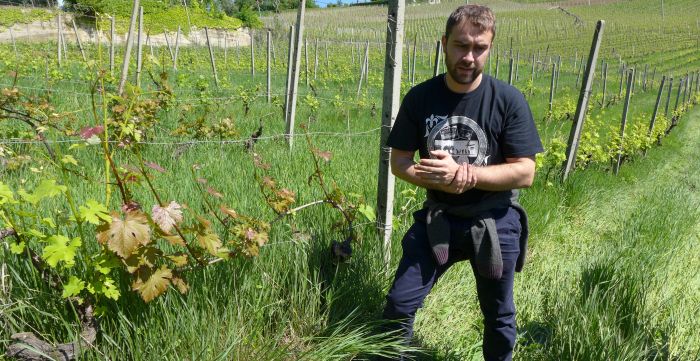
It's easy to spot a Roagna vineyard: look for high grass!
Read more
Quick Facts
| Name of Estate | Roagna |
|---|---|
| Region | Piemonte |
| Country | Italy |
| Proprietor | Alfredo and Luca Roagna |
| Size | 16 hectares |
| Farming | Organic (Certified) |
| Soils | Limestone, marl, sand |
| Grapes grown | Nebbiolo, Dolcetto, Barbera, Chardonnay |
| Fun facts | It's easy to spot a Roagna vineyard: look for high grass! |
Get to know
Roagna
producer profile
<p>The Roagnas have been winemakers in the village of <glossary title="137">Barbaresco</glossary> since the mid 1800’s. It was Giovanni and his wife Maria who moved their house and winery to its present location in the Paglieri hamlet, home to the famous Pajè vineyard. This <glossary title="1133">plot</glossary> is the foundation of the <span class="zalup"><span><glossary title="427">estate</glossary><span>,</span></span></span> which in all covers 6 ½ <span class="zalup"><span><glossary title="523">hectares</glossary><span>,</span></span></span> 1.83 of which are were purchased by the Roagna family in 1953.</p>
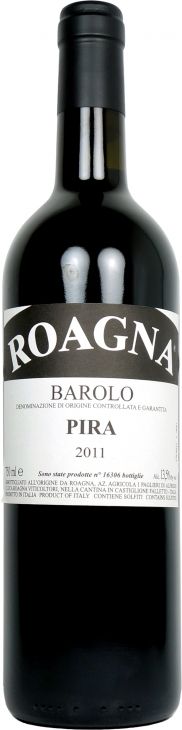
<p>Alfredo and Luca, father and son, now take care of the property. In 1990, they were able to purchase two slices of renowned vineyard sites of <glossary title="246">Castiglione Falletto</glossary> in <span class="zalup"><span><glossary title="141">Barolo</glossary><span>,</span></span></span> la Pira and le Rocche. These came with a 15th century farm house directly above the vineyard which they renovated to become Casa Roagna, a bed and breakfast overlooking the vines. And over the years, Luca has been able to purchase all of the neighboring land on the Pira hill, effectively giving the family a <glossary title="672">monopole</glossary> of the site. These acquisitons culminated in a new <glossary title="254">cellar</glossary> to <glossary title="1104">vinify</glossary> and <glossary title="74">age</glossary> the <glossary title="141">Barolo</glossary> built above the vineyard and finished in 2012.</p>
<p>Most of the soil in the <glossary title="578">Langhe</glossary> part of <glossary title="793">Piemonte</glossary> is made of ancient seabed <span class="zalup"><span><glossary title="1164">concretions</glossary><span>.</span></span></span> These are poor soils, where <span class="zalup"><span><glossary title="596">limestone</glossary><span>,</span></span></span> <glossary title="632">marl</glossary> and <glossary title="909">sands</glossary> dominate. The shape of the hills determine particular <span class="zalup"><span><glossary title="656">microclimates</glossary><span>,</span></span></span> and each <glossary title="1026">terroir</glossary> has its own characteristics. That’s why the <glossary title="141">Barolo</glossary> and <glossary title="137">Barbaresco</glossary> areas are unique in the Italian vine world: like in <span class="zalup"><span><glossary title="212">Burgundy</glossary><span>,</span></span></span> each vineyard has been defined, named, and is expected to have a particular character. Although all this was known by the Benedictine monks of the 13th century, it is only after the 1970’s that the practice of bottling by “ <glossary title="1152">cru</glossary> ” became the norm.</p>
<p>The Roagnas like to describe their style as traditional and innovative. Luca, born in 1980, pursued a high degree in <span class="zalup"><span><glossary title="422">oenology</glossary><span>.</span></span></span> But he sees his academic studies as a way to understand intellectually all the practices he has observed on the terrain and in the <span class="zalup"><span><glossary title="254">cellar</glossary><span>,</span></span></span> as implemented by his grandfather Giovanni Roagna, father Alfredo and mother, Luigina.<br />
<br />
All of the the vines in <glossary title="137">Barbaresco</glossary> and <glossary title="141">Barolo</glossary> are worked <span class="zalup"><span><glossary title="746">organically</glossary><span>:</span></span></span> no <glossary title="526">herbicide</glossary> has ever been used, grass grows between the rows and only <glossary title="333">copper</glossary> and <glossary title="993">sulfur</glossary> solutions are used for <span class="zalup"><span><glossary title="328">treatment</glossary><span>.</span></span></span> The soils are never worked at any point and the vines are never trimmed back, giving them a tree-like appearance. In the spring and summer, it can truly look like a jungle.</p>
<p>Despite these practices, the Roagna do not seek any form of <span class="zalup"><span><glossary title="260">certification</glossary><span>,</span></span></span> as the approach is deeply personal and draws inspiration from a variety of sources including <glossary title="882">Rudolph Steiner</glossary> and <span class="zalup"><span><glossary title="1212">Masanobu Fukuoka</glossary><span>.</span></span></span></p>
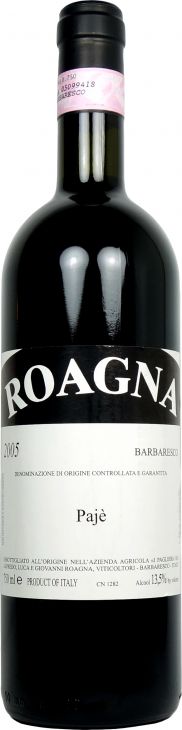
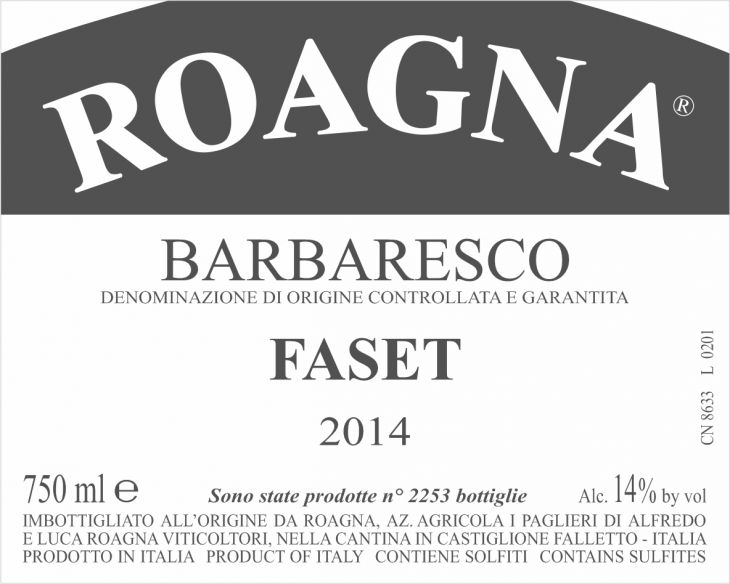
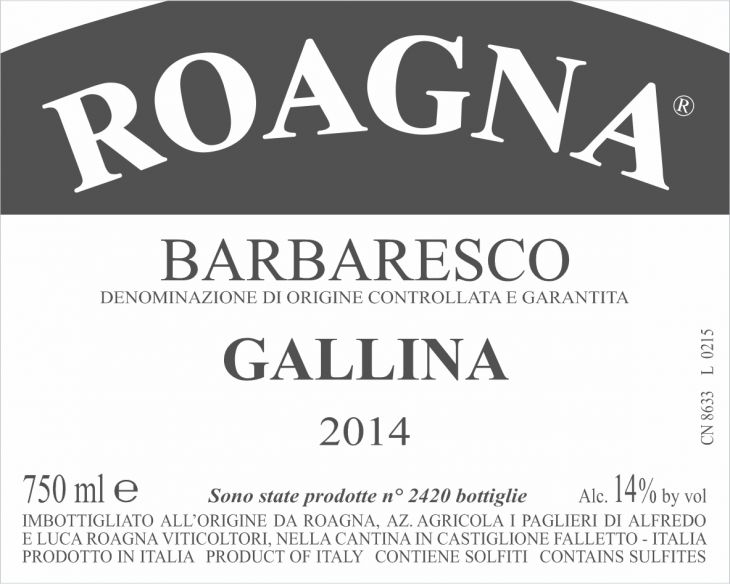
<p>Pajè is the main site for <glossary title="137">Barbaresco</glossary> and La Pira for <glossary title="141">Barolo</glossary>; both produce <glossary title="959">single vineyard expressions</glossary> from vines between 25 and 50 years old as well as a <em>Vecchie Vite</em> ("<glossary title="740">Old Vines</glossary>") <glossary title="185">bottling</glossary> from vines 50 years and older. Their top <glossary title="137">Barbaresco</glossary> is called "Crichët Pajè" and is only made in the best <glossary title="1109">vintages</glossary> from the vines at the top crest (<em>crichët</em>, in <glossary title="">piemontese</glossary> dialect) of the Pajè vineyard where by experience the grapes <span class="zalup"><span><glossary title="639">optimally mature</glossary><span>.</span></span></span> A number of other "<glossary title="1152">crus</glossary>" are produced in <span class="zalup"><span><glossary title="137">Barbaresco</glossary><span>:</span></span></span> Faset, Gallina and two <em>Vecchie Vite </em>labels: Montefico from a 0.29 <glossary title="523">hectare </glossary><glossary title="1133">plot</glossary> and Asili from a 0.22 <glossary title="523">hectare</glossary> <span class="zalup"><span><glossary title="1133">plot</glossary><span>.</span></span></span> <br />
<br />
The <glossary title="709">Nebbiolo</glossary> grapes <glossary title="610">macerate</glossary> for 30 to 100 days, according to their <glossary title="760">plot</glossary> origin and the age of the vines, then are <glossary title="74">aged</glossary> for up to 10 years in large or medium capacity <glossary title="184">botti</glossary> of <span class="zalup"><span><glossary title="469">French oak</glossary><span>.</span></span></span> Because the Roagnas make so many different <span class="zalup"><span><glossary title="185">bottlings</glossary><span>,</span></span></span> there are many variations in the techniques they use in the <span class="zalup"><span><glossary title="254">cellar</glossary><span>.</span></span></span> For example, the Vigna Rionda grapes, from vines 40 to 60 years of age, are <glossary title="610">macerated</glossary> for 40 to 50 days, then aged in <glossary title="731">oak</glossary> <glossary title="184">botti</glossary> for four years. The grapes that become "Pira <glossary title="852">Riserva</glossary>" <glossary title="610">macerate</glossary> for 80 to 100 days, then are <glossary title="74">aged</glossary> for a minimum of five years and up to 10 years or more.</p>
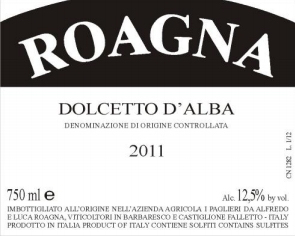
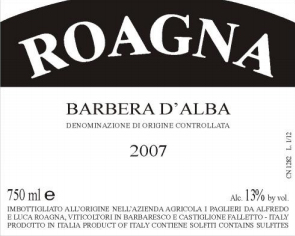
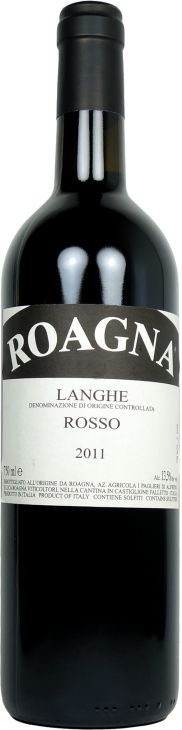
<p>The Roagnas also produce a <glossary title="578">Langhe Rosso</glossary> from the <glossary title="1152">cru's</glossary> younger vines (anything under 25 years old), <span class="zalup"><span><glossary title="398">Dolcetto d’Alba</glossary><span>,</span></span></span> <glossary title="1213">Barbera d'Alba</glossary> from grapes sourced from la Pira, <em>Opera Prima</em> (a <glossary title="168">blend</glossary> of <glossary title="1109">vintages</glossary> of <glossary title="137">Barbaresco</glossary> to make a drinkable, harmonious wine), a white called "Solea" from <glossary title="271">Chardonnay</glossary><glossary title="271"></glossary> and <glossary title="709">Nebbiolo</glossary> (juice without <glossary title="610">skin contact</glossary>). </p>
<p><iframe allowfullscreen="" frameborder="0" height="315" src="https://www.youtube.com/embed/EF3R_K1Q8R8" width="560"></iframe></p>
<p> </p>
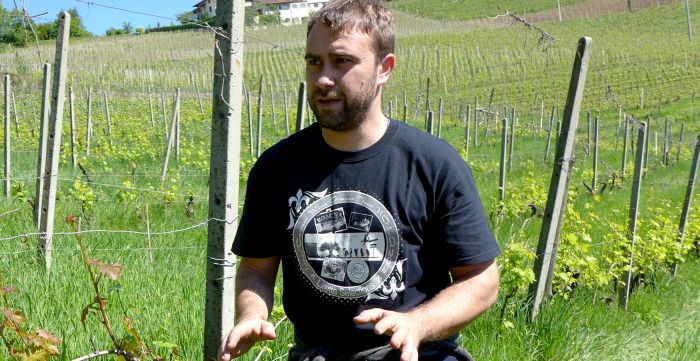
interview
10.07.2019
An Interview with Luca Roagna
An Interview with Luca Roagna from 2011
Read more…interview
<p><em>This interview with Luca Roagna took place in Los Angeles in March 2011.</em></p>
<p><strong>Tell us about the Roagna estate.</strong><br />
<br />
The Roagna <glossary title="427">estate</glossary> consists of 15 <span class="zalup"><span><glossary title="523">hectares</glossary><span>.</span></span></span> I am the fifth generation to work with these vines, a tradition that began over 130 years ago. My great-great grandfather started the <glossary title="427">estate</glossary> with a group of friends, and in the beginning all they made was traditional <span class="zalup"><span><glossary title="137">Barbaresco</glossary><span>.</span></span></span> <glossary title="137">Barbaresco</glossary> used to differ stylistically back then and was a wine with a good amount of <span class="zalup"><span><glossary title="853">residual sugar</glossary><span>.</span></span></span> A lot has changed since then.<br />
<br />
We are a small family from the village of <glossary title="137">Barbaresco</glossary> and we make every <glossary title="1152">cru</glossary> right from our village: the <glossary title="">Barbaresco</glossary> <glossary title="1156">DOC</glossary> includes four villages total but everything we make comes from within our village. The region itself represents a little over 600 <glossary title="523">hectares</glossary>; half of our vines are in <span class="zalup"><span><glossary title="137">Barbaresco</glossary><span>.</span></span></span> The other half are in <span class="zalup"><span><glossary title="141">Barolo</glossary><span>,</span></span></span> which is roughly twice as large as <glossary title="137">Barbaresco</glossary> in surface. <br />
<br />
Our style is very traditional, and we only work with historic <span class="zalup"><span><glossary title="760">parcels</glossary><span>.</span></span></span> For <glossary title="137">Barbaresco</glossary> we have the Pajè: it's a little more than two <span class="zalup"><span><glossary title="523">hectares</glossary><span>.</span></span></span> We've worked with this <glossary title="760">parcel</glossary> since the beginning and have owned it since the 1950's. This is also where our <glossary title="254">cellar</glossary> is located. We select from different parts of the <glossary title="760">parcel</glossary> every year depending on the age of the vines and <span class="zalup"><span><glossary title="430">exposure</glossary><span>.</span></span></span> In the best <glossary title="1109">vintages</glossary> we'll make three denominations: the base Pajè from 40-45 year old vines, "Pajè Riserva" with 60+ year old vines and the "Crichet Pajè", our most celebrated <glossary title="363">cuvée</glossary>; the youngest vines from this half <glossary title="523">hectare</glossary> are 65 years old.<br />
<br />
We then have the Asili, a <glossary title="1152">cru</glossary> of 0.2 <glossary title="523">hectares</glossary> which we produce 1200 bottles a year from. Finally we have one last <glossary title="1152">cru</glossary> in the village called Montefico. Of course these are all <glossary title="709">Nebbiolos</glossary> and the point of these multiple <glossary title="363">cuvées</glossary> is to express our various <span class="zalup"><span><glossary title="1026">terroirs</glossary><span>.</span></span></span> For example Pajè and Asili are two hills that are side by side and the soils are primarily <glossary title="266">chalky</glossary> <glossary title="596">limestone</glossary> but Montefico is more <span class="zalup"><span><glossary title="632">marl</glossary><span>.</span></span></span> <glossary title="430">Exposure</glossary> is also key: Montefico is southeast so the sun rises onto it and we get a more delicate wine from this, while Pajè and Asili are southwest, resulting in a more rustic style. <br />
<br />
Our history in <glossary title="141">Barolo</glossary> dates back to the late 1940's but we've only owned land there since 1990. We are located in the village of <glossary title="246">Castiglione Falletto</glossary> and the <glossary title="760">parcel</glossary> is called La Rocca e la Pira. We are the only ones to work in this area and in the future the denomination will simply be La Pira. This represents a little less than eight <glossary title="523">hectares</glossary> and is of great value to us because of the 11 villages that produce <span class="zalup"><span><glossary title="141">Barolo</glossary><span>,</span></span></span> <glossary title="246">Castiglione Falletto</glossary> is right in the center; we are happy to be the only ones working on this <glossary title="760">parcel</glossary> because we have no neighbors and it's complimented by three <glossary title="523">hectares</glossary> of woods at the bottom and mountains on the top. This makes it so much easier to work naturally and not have to worry about the <glossary title="279">chemical</glossary> overlap of neighbors who work <span class="zalup"><span><glossary title="331">conventionally</glossary><span>.</span></span></span> We are currently building an additional, smaller cellar so we can make our <glossary title="141">Barolos</glossary> on site. <br />
<br />
We also produce a <glossary title="141">Barolo</glossary> from a <glossary title="760">parcel</glossary> named Rionda. <br />
<br />
<strong>How did you personally get involved with the estate?</strong><br />
<br />
We always joke that I was born in the vines! I was born in September at the exact time of the <glossary title="521">harvest</glossary> so it's not too far off! I studied <glossary title="422">oenology</glossary> and started officially working with Roagna in 2001, but my whole life I hung out and played with friends and family in the vines. They've always been a part of me. And to be honest for me this isn't work. I can't call this work. This is my everyday life, so let's just say that I got involved 30 years ago! <br />
<br />
<strong>What's the work like in the vines?</strong><br />
<br />
<glossary title="709">Nebbiolo</glossary> vines are plants that grow very high -up to two meters- and we choose to manually tie them to the lines in the rows. We do our best to work with <span class="zalup"><span><glossary title="740">old vines</glossary><span>,</span></span></span> a tradition that has mostly come to a stand-still since the 1970's in the region.<br />
<br />
In modern winemaking, every new winemaker has to do something different, has to bring something new to the table. Of course I am different than my grandfather and my father, but all I want to do is express our <span class="zalup"><span><glossary title="1026">terroir</glossary><span>,</span></span></span> so I follow our family philosophy. We let grass grow free and never use <glossary title="526">herbicide</glossary> or <span class="zalup"><span><glossary title="1142">pesticides</glossary><span>.</span></span></span> We cut the grass manually and as little as possible, maximum once or twice a year, and even then it's only on the sides of the vines. For example, last August we had to cut it because the risk you take when you have so much grass is an undesirable amount of humidity. I truly despise <glossary title="526">herbicide</glossary> because grass is an essential part of nature; I'm not a <glossary title="969">sommelier</glossary> so I can't tell you if you can truly taste the 300+ types of grass that grow in our soils, but I guarantee they bring depth, complexity and <glossary title="662">minerality</glossary> to our wines. <br />
<br />
We also have a lot of free roaming animals in the vines. We only use natural <glossary title="328">sulfur</glossary> and <glossary title="328">copper</glossary> on the plants; there isn't ever an exact dose as every <glossary title="1109">vintage</glossary> varies, but it's always less that a kilogram per <span class="zalup"><span><glossary title="523">hectare</glossary><span>.</span></span></span> I get angry when I see vineyards where the leaves are blue. In those cases the quantity is simply too high.<br />
<br />
<strong>Are you certified organic?</strong><br />
<br />
We've never requested the <span class="zalup"><span><glossary title="260">certification</glossary><span>.</span></span></span> Some are <span class="zalup"><span><glossary title="260">certified</glossary><span>,</span></span></span> others aren't. This doesn't apply to everybody, but these days I feel that being <glossary title="260">certified</glossary> doesn't always mean that much. A lot of my friends got <glossary title="260">certified</glossary> 10 or 20 years ago. I respect their decision because they chose to do this before it became fashionable.<br />
<br />
I think you can feel the difference in the wine. If I choose to work <span class="zalup"><span><glossary title="331">chemically</glossary><span>,</span></span></span> I'm going to kill the wine's identity and I don't want to sell that to anybody. <br />
<br />
I understand that for certain people, this is going to cause some confusion. But I refuse to use the term "<glossary title="746">organic</glossary>" as a way to sell bottles. Anyone who knows us knows our style and our philosophy. <br />
<br />
<strong>What about in the cellar? </strong><br />
<br />
The <glossary title="254">cellar</glossary> is where we transform grapes into wine, and while I know many people feel that good work in the <glossary title="254">cellar</glossary> is secondary to good work in the vines, I also think it should never be forgotten just how important this process is. <br />
<br />
Our focus is to respect the expression of our <span class="zalup"><span><glossary title="1026">terroirs</glossary><span>.</span></span></span> For our <glossary title="709">Nebbiolo</glossary> we try to work as traditionally as possible, and let me tell you that I've opened bottles that are 40, 50, 60 years old that are still expressive and beautiful. We're not trying to change history here; we'd rather contribute to it. </p>
<p><glossary title="538">Native yeasts</glossary> of course. We use a <glossary title="792">pied de cuve</glossary> as a starter, and just to play it safe we do a mini <glossary title="521">harvest</glossary> of five kilograms about a week before the actual <span class="zalup"><span><glossary title="521">harvest</glossary><span>.</span></span></span> We then do a pre<span class="zalup"><span><span>-</span> <span class="zalup"><span><glossary title="795">pigeage</glossary><span>,</span></span></span></span></span> and this starts the <span class="zalup"><span><glossary title="441">fermentation</glossary><span>.</span></span></span> After a week we'll <glossary title="168">blend</glossary> this with the harvested grapes. We made a specific <glossary title="792">pied de cuve</glossary> from each <span class="zalup"><span><glossary title="1152">cru</glossary><span>,</span></span></span> because using a starter from another <glossary title="760">parcel</glossary> strikes us as un-natural. We then transfer the juice to large <glossary title="1126">wood</glossary> <span class="zalup"><span><glossary title="242">casks</glossary><span>.</span></span></span> <br />
<br />
We submerge the <glossary title="234">hat</glossary> before the <glossary title="441">fermentation</glossary> has completed (you can pretty much call it wine at this point), then we'll <glossary title="843">rack</glossary> some of the liquid into another <span class="zalup"><span><glossary title="242">cask</glossary><span>.</span></span></span> This helps us avoid <glossary title="754">oxidation</glossary> problems with <span class="zalup"><span><glossary title="310">CO2</glossary><span>.</span></span></span> <br />
<br />
The wines stay on the <glossary title="590">lees</glossary> for 60 to 90 days, and are then <glossary title="74">aged</glossary> a minimum of four to five years but we don't have any rules about this. We try to understand each <glossary title="1152">cru</glossary> based on the <span class="zalup"><span><glossary title="1109">vintage</glossary><span>:</span></span></span> a delicate <glossary title="1109">vintage</glossary> won't need as much <glossary title="74">aging</glossary> but a more rustic one will. The longest we've ever let something <glossary title="74">age</glossary> is 15 years. After that, we let the wine <glossary title="74">age</glossary> in bottle; the amount of time it's spent in the <glossary title="242">cask</glossary> determines how long we <glossary title="74">age</glossary> it in bottle before release, between six months and three years. We basically decide to release the wine when we think it's worth drinking. <br />
<br />
<strong>How do you place your wines in regards to your DOC's, and specifically to the idea of "typicity" within a a DOC?</strong><br />
<br />
We are making wine that is as authentic as it gets. We don't put <glossary title="709">Nebbiolo</glossary> on the label, we put the name of the village or the <span class="zalup"><span><glossary title="760">parcel</glossary><span>.</span></span></span> And if you compare a <span class="zalup"><span><glossary title="137">Barbaresco</glossary><span>,</span></span></span> a <glossary title="141">Barolo</glossary> and a <span class="zalup"><span><glossary title="710">Nebbiolo d'Alba</glossary><span>,</span></span></span> they are all very different. And if you taste the Pajè, the Asili and the Montefico, you're tasting three very different wines as well. Yes it's all <span class="zalup"><span><glossary title="709">Nebbiolo</glossary><span>,</span></span></span> but the different expressions are what make these different <glossary title="1152">crus</glossary> worthwhile. Again, we are trying to express each <glossary title="1026">terroir</glossary> as much as possible. <br />
<br />
<strong>How do you feel about the whole "natural wine" debate? </strong><br />
<br />
<glossary title="708">Natural wine</glossary> is fundamental. Wine is not something you just drink, it's something you ingest, made with ingredients that too often are being <glossary title="279">chemically</glossary> tampered with. <br />
<br />
We want to bring pleasure with our wines. We want them to taste good but we also don't want to cause problems by forcing people to ingest <span class="zalup"><span><glossary title="279">chemicals</glossary><span>.</span></span></span> Everyone knows wine is an alcoholic beverage, and everyone knows that if you drink too much alcohol, you're not going to feel great. Not everyone knows that there are other things than <glossary title="441">fermented</glossary> grape juice in wine. <glossary title="526">Herbicides</glossary> and <glossary title="1142">pesticides</glossary> are not mentioned on labels, so why would they?<br />
<br />
I also feel that making <glossary title="708">natural wine</glossary> is the only way to truly express <glossary title="1026">terroir</glossary> because if your soil is dead, it's not going to have anything to express. It's also an honest product that is not harmful to our bodies, and I place great importance in this. <br />
<br />
<strong>What do you recommend eating with your wines? </strong><br />
<br />
The <glossary title="398">Dolcettos</glossary> and <glossary title="138">Barbera</glossary> are a lot of fun and can be paired with a lot of foods because they are lighter and fruitier. With our<strong> <glossary title="709">Nebbiolos</glossary></strong>, which tend to be very <glossary title="1010">tannic</glossary> in their younger years, you're going to want to pair that with fatty meats. But if you're drinking an older <span class="zalup"><span><glossary title="1109">vintage</glossary><span>,</span></span></span> say something 30 or 40 years old, then you need to rethink things a little and use a leaner cut of meat. <br />
<br />
For my wines and wine in general, I highly encourage experimenting with food pairings. As long as it's not boring or completely illogical, it's worth trying!<br />
<br />
<strong>What wines do you like to drink?</strong><br />
<br />
I like wines from all over the world: as long as they are interesting and express an identity, I'll drink it.</p>
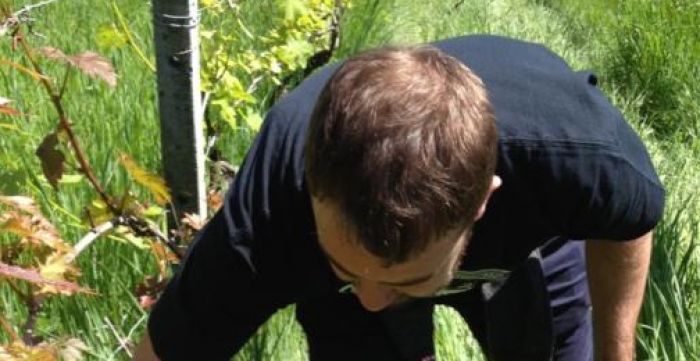
producer visit
25.09.2020
Roagna Visit
This Visit to the Roagnas took place in Spring 2014
Read more…producers visit
<p><em><strong>This visit to the Roagnas took place in Spring 2014.</strong></em></p>
<p><em><strong>Words and photos by Jules Dressner.</strong></em></p>
<p><img alt="" src="http://louisdressner.com/lib/images/IMG_5617.jpg" test="test2" /><br />
<br />
Right next to the Roagna family house is the historic and majestic Pajé vineyard.<br />
<br />
<img alt="" src="http://louisdressner.com/lib/images/P1000480.JPG" test="test2" /><br />
<br />
<img alt="" src="http://louisdressner.com/lib/images/IMG_5620.jpg" test="test2" /><br />
<br />
The Roagna family has been working this land for over 130 years, and have owned the majority of this <glossary term="Cru" title="1152">Cru</glossary> since the 1950's; they currently work two of the <glossary term="Lieu-Dit" title="594">lieu-dit</glossary>'s four <span class="zalup"><span><glossary term="Hectare" title="523">hectares</glossary><span>,</span></span></span> which is shared two other growers. The site is shaped like an amphitheater and <glossary term="Exposition" title="430">exposed</glossary> South-Southwest.<br />
<br />
Many <glossary term="Cuvée" title="363">cuvées</glossary> are <glossary term="Bottling" title="185">bottled</glossary> from the Pajé, all depending on the age of the vines and the conditions of the vintage: the base Pajé comes from 45-50 year old vines, Pajé Riserva is from vines that are 60+ and the Crichet Pajé is produced only in the best <span class="zalup"><span><glossary term="Vintage" title="1109">vintages</glossary><span>,</span></span></span> and from the oldest vines (70-100).<br />
<br />
The soils are composed of <glossary term="Marl" title="632">marly</glossary> <span class="zalup"><span><glossary term="Limestone" title="596">limestone</glossary><span>.</span></span></span> The Roagnas never cut the grass at any time in any of their land:<br />
<br />
<img alt="" src="http://louisdressner.com/lib/images/P1000484.jpg" test="test2" /><br />
<br />
<img alt="" src="http://louisdressner.com/lib/images/P1000490.jpg" test="test2" /><br />
<br />
<img alt="" src="http://louisdressner.com/lib/images/P1000459.JPG" test="test2" /><br />
<br />
Luca explained that this creates an incredible <glossary term="Biodiversity" title="1162">biodiversity</glossary> in the vineyards and soil, which -amongst innumerable herbs and flowers- includes more than 10 varieties of mint.<br />
<br />
<em>"If we ever fail at wine, we can become premium Mojito producers!"</em><br />
<br />
The young <glossary term="Nebbiolo" title="709">Nebbiolo</glossary> vines from Pajé (which are 20 to 50) partially produce the Roagna's <span class="zalup"><span><glossary term="Langhe" title="578">Langhe Rosso</glossary><span>,</span></span></span> and the <glossary term="Estate" title="427">estate</glossary>'s <glossary term="Dolcetto" title="398">Dolcetto</glossary> is also planted here.<br />
<br />
A short drive from Pajé, we visited the Asili <span class="zalup"><span><glossary term="Cru" title="1152">Cru</glossary><span>,</span></span></span> the second of three <glossary term="Lieu-Dit" title="594">lieu-dits</glossary> within the village of <glossary term="Barbaresco" title="137">Barbaresco</glossary> that the Roagnas farm.<br />
<br />
<img alt="" src="http://louisdressner.com/lib/images/IMG_5640.jpg" test="test2" /><br />
<br />
<img alt="" src="http://louisdressner.com/lib/images/IMG_5646.jpg" test="test2" /><br />
<br />
The soils here are <span class="zalup"><span><glossary term="Clay" title="301">clay</glossary><span>,</span></span></span> <glossary term="Limestone" title="596">limestone</glossary> and <span class="zalup"><span><glossary term="Sand" title="909">sand</glossary><span>.</span></span></span> The youngest vines are 55.<br />
<br />
A little further down, you can spot their tiny <glossary term="Parcel" title="760">parcel</glossary> of the Montefico <span class="zalup"><span><glossary term="Cru" title="1152">Cru</glossary><span>.</span></span></span> Can you guess which it is?<br />
<br />
<img alt="" src="http://louisdressner.com/lib/images/IMG_5652.jpg" test="test2" /><br />
<br />
Hint: grass grows wild...<br />
<br />
If you guessed this:<br />
<br />
<img alt="" src="http://louisdressner.com/lib/images/IMG_5652-1.jpg" test="test2" /><br />
<br />
You are wrong and chose a <glossary term="Parcel" title="760">parcel</glossary> with evident, heavy-handed <glossary term="Herbicide" title="526">herbicide</glossary> use!<br />
<br />
If you chose this:<br />
<br />
<img alt="" src="http://louisdressner.com/lib/images/IMG_5652-2.jpg" test="test2" /><br />
<br />
Then you are correct!!!!!!!!<br />
<br />
All joking aside, the picture above is a very interesting contrast of the varying degrees of <glossary term="Herbicide" title="526">herbicide</glossary> use in vineyards. From no grass to "just in between the rows" and "let it grow free!", you get to see it all. Which <glossary term="Plot" title="1133">plot</glossary> looks the healthiest and most full of life?<br />
<br />
From <span class="zalup"><span><glossary term="Barbaresco" title="137">Barbaresco</glossary><span>,</span></span></span> we hopped into our Dressner mobiles and drove the half hour to <span class="zalup"><span><glossary term="Barolo" title="141">Barolo</glossary><span>.</span></span></span> It was looking like rain the whole way over, but we still felt that it was necessary to visit La Pira, the eight <glossary term="Hectare" title="523">hectare</glossary> <glossary term="Cru" title="1152">Cru</glossary> and <glossary term="Monopole" title="672">monopole</glossary> Alfredo purchased in 1990.<br />
<br />
<img alt="" src="http://louisdressner.com/lib/images/IMG_5664.jpg" test="test2" /><br />
<br />
<img alt="" src="http://louisdressner.com/lib/images/IMG_5654.jpg" test="test2" /><br />
<br />
<img alt="" src="http://louisdressner.com/lib/images/P1000524.jpg" test="test2" /><br />
<br />
<img alt="" src="http://louisdressner.com/lib/images/P1000539.jpg" test="test2" /><br />
<br />
<img alt="" src="http://louisdressner.com/lib/images/IMG_5662.jpg" test="test2" /><br />
<br />
The total Pira property is 11 <span class="zalup"><span><glossary term="Hectare" title="523">hectares</glossary><span>,</span></span></span> with 8 <glossary term="Hectare" title="523">hectares</glossary> of vines planted. The oldest vines here were planted in 1937, but there have historically been plantings here for at least 500 years.<br />
<br />
In addition to the obviously planted <span class="zalup"><span><glossary term="Nebbiolo" title="709">Nebbiolo</glossary><span>,</span></span></span> La Pira is where the <glossary term="Langhe" title="578">Langhe Bianco</glossary> and <glossary term="Barbera" title="138">Barbera</glossary> grapes are grown. As you can see from the pictures, the grass stays just as tall here as in <span class="zalup"><span><glossary term="Barbaresco" title="137">Barbaresco</glossary><span>.</span></span></span> This is particularly useful for harvesting herbs and making their <span class="zalup"><span><glossary term="Chinato" title="287">Chinato</glossary><span>,</span></span></span> is one of the best in the game.</p>
<p>It also bears mentioning that La Pira is an isolated <glossary term="Clos" title="305">clos</glossary> with no neighbors.<br />
<br />
At the bottom of the hill, Luca is conducting a <glossary term="Franc de Pied" title="464">franc de pied</glossary> experiment with the best <glossary term="Clones" title="304">clones</glossary> from his various <span class="zalup"><span><glossary term="Parcel" title="760">parcels</glossary><span>.</span></span></span><br />
<br />
<img alt="" src="http://louisdressner.com/lib/images/P1000536.jpg" test="test2" /><br />
<br />
<img alt="" src="http://louisdressner.com/lib/images/P1000530.JPG" test="test2" /><br />
<br />
The goal is to see which react the best to this situation in order to propagate them in the future.<br />
<br />
Our visit ended in a visit in the brand new <glossary term="Cellar" title="254">cellar</glossary> installation Luca has constructed above La Pira. It is fucking huge and kind of looks like the Legion of Doom headquarters.<br />
<br />
<img alt="" src="http://louisdressner.com/lib/images/IMG_5701.jpg" test="test2" /><br />
<br />
<img alt="" src="http://louisdressner.com/lib/images/IMG_1309.jpg" test="test2" /><br />
<br />
<img alt="" src="http://louisdressner.com/lib/images/IMG_1308.jpg" test="test2" /><br />
<br />
It isn't clear if all the <glossary term="Vinification" title="1104">vinifications</glossary> will take place here, but the idea is to do all of the <glossary term="Aging" title="74">aging</glossary> here. Because space is no longer an issue, this will permit Luca to <glossary term="Aging" title="74">age</glossary> wines much longer than he has been able to in the past. Even though everything looks really new, the space already has that cold, moldy cellar feel.<br />
<br />
<img alt="" src="http://louisdressner.com/lib/images/IMG_5677.jpg" test="test2" /><br />
<br />
Cages will eventually hold <glossary term="Reserve" title="852">reserve</glossary> bottles of wine.<br />
<br />
<img alt="" src="http://louisdressner.com/lib/images/IMG_5679.jpg" test="test2" /><br />
<br />
Or maybe lock up pesky importers if they misbehave.<br />
<br />
<img alt="" src="http://louisdressner.com/lib/images/IMG_5680.jpg" test="test2" /><br />
<br />
Luca has also started custom building his own <glossary term="Concrete" title="325">concrete</glossary> <glossary term="Vat/Tank" title="1140">tanks</glossary> because he doesn't trust the manufacturers.<br />
<br />
<em>"I want it to not have lining and the </em><glossary term="Concrete" title="325"><em>concrete</em></glossary><em> to have very specific dimensions. I want it to to be the most neutral </em><glossary term="Vat/Tank" title="1140"><em>tank</em></glossary><em> possible, and I cannot find what I am looking for on the current market."</em><br />
<br />
<br />
Here are some pics:<br />
<br />
<img alt="" src="http://louisdressner.com/lib/images/IMG_5683.jpg" test="test2" /><br />
<br />
<img alt="" src="http://louisdressner.com/lib/images/IMG_5685.jpg" test="test2" /><br />
<br />
<img alt="" src="http://louisdressner.com/lib/images/IMG_5687.JPG" test="test2" /><br />
<br />
This attention to detail shouldn't come as much of a surprise; to this day Alfredo and Luca are the only ones allowed to <glossary term="Pruning" title="834">prune</glossary> the entirety of their land. That's two guys for 15 <span class="zalup"><span><glossary term="Hectare" title="523">hectares</glossary><span>!</span></span></span><br />
<br />
We then tasted wine. It was fantasic.</p>
<p>As we drove off, a nice rainbow led the way to <span class="zalup"><span><glossary term="Torino" title="1033">Torino</glossary><span>.</span></span></span><br />
<br />
<img alt="" src="http://louisdressner.com/lib/images/IMG_1310.jpg" test="test2" /></p>
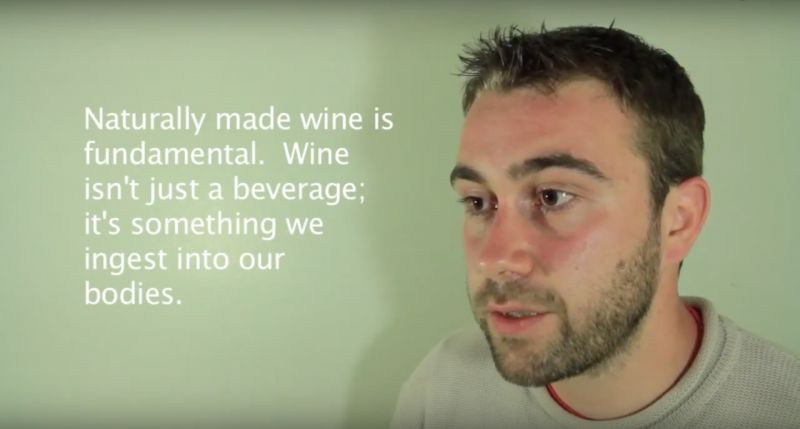
interview
10.07.2019
A Video Interview with Luca Roagna
A Video Interview with Luca Roagna
Read more…interview
<p><iframe allowfullscreen="" frameborder="0" height="360" src="//www.youtube.com/embed/unwyWwS-mp4" width="640"></iframe></p>
producer profile
10.07.2019
Famiglia Roagna Producer Profile
<p>The Roagnas have been winemakers in the village of <glossary title="137">Barbaresco</glossary> since the mid 1800’s. It was Giovanni and his wife Maria who moved their house and winery to its present location in the Paglieri hamlet, home to the famous Pajè vineyard. This <glossary title="1133">plot</glossary> is the foundation of the <span class="zalup"><span><glossary title="427">estate</glossary><span>,</span></span></span> which in all covers 6 ½ <span class="zalup"><span><glossary title="523">hectares</glossary><span>,</span></span></span> 1.83 of which are were purchased by the Roagna family in 1953.</p>
<p>Alfredo and Luca, father and son, now take care of the property. In 1990, they were able to purchase two slices of renowned vineyard sites of <glossary title="246">Castiglione Falletto</glossary> in <span class="zalup"><span><glossary title="141">Barolo</glossary><span>,</span></span></span> la Pira and le Rocche. These came with a 15th century farm house directly above the vineyard which they renovated to become Casa Roagna, a bed and breakfast overlooking the vines. And over the years, Luca has been able to purchase all of the neighboring land on the Pira hill, effectively giving the family a <glossary title="672">monopole</glossary> of the site. These acquisitons culminated in a new <glossary title="254">cellar</glossary> to <glossary title="1104">vinify</glossary> and <glossary title="74">age</glossary> the <glossary title="141">Barolo</glossary> built above the vineyard and finished in 2012.</p>
<p>Most of the soil in the <glossary title="578">Langhe</glossary> part of <glossary title="793">Piemonte</glossary> is made of ancient seabed <span class="zalup"><span><glossary title="1164">concretions</glossary><span>.</span></span></span> These are poor soils, where <span class="zalup"><span><glossary title="596">limestone</glossary><span>,</span></span></span> <glossary title="632">marl</glossary> and <glossary title="909">sands</glossary> dominate. The shape of the hills determine particular <span class="zalup"><span><glossary title="656">microclimates</glossary><span>,</span></span></span> and each <glossary title="1026">terroir</glossary> has its own characteristics. That’s why the <glossary title="141">Barolo</glossary> and <glossary title="137">Barbaresco</glossary> areas are unique in the Italian vine world: like in <span class="zalup"><span><glossary title="212">Burgundy</glossary><span>,</span></span></span> each vineyard has been defined, named, and is expected to have a particular character. Although all this was known by the Benedictine monks of the 13th century, it is only after the 1970’s that the practice of bottling by “ <glossary title="1152">cru</glossary> ” became the norm.</p>
<p>The Roagnas like to describe their style as traditional and innovative. Luca, born in 1980, pursued a high degree in <span class="zalup"><span><glossary title="422">oenology</glossary><span>.</span></span></span> But he sees his academic studies as a way to understand intellectually all the practices he has observed on the terrain and in the <span class="zalup"><span><glossary title="254">cellar</glossary><span>,</span></span></span> as implemented by his grandfather Giovanni Roagna, father Alfredo and mother, Luigina.<br />
<br />
All of the the vines in <glossary title="137">Barbaresco</glossary> and <glossary title="141">Barolo</glossary> are worked <span class="zalup"><span><glossary title="746">organically</glossary><span>:</span></span></span> no <glossary title="526">herbicide</glossary> has ever been used, grass grows between the rows and only <glossary title="333">copper</glossary> and <glossary title="993">sulfur</glossary> solutions are used for <span class="zalup"><span><glossary title="328">treatment</glossary><span>.</span></span></span> The soils are never worked at any point and the vines are never trimmed back, giving them a tree-like appearance. In the spring and summer, it can truly look like a jungle.</p>
<p>Despite these practices, the Roagna do not seek any form of <span class="zalup"><span><glossary title="260">certification</glossary><span>,</span></span></span> as the approach is deeply personal and draws inspiration from a variety of sources including <glossary title="882">Rudolph Steiner</glossary> and <span class="zalup"><span><glossary title="1212">Masanobu Fukuoka</glossary><span>.</span></span></span></p>
<p>Pajè is the main site for <glossary title="137">Barbaresco</glossary> and La Pira for <glossary title="141">Barolo</glossary>; both produce <glossary title="959">single vineyard expressions</glossary> from vines between 25 and 50 years old as well as a <em>Vecchie Vite</em> ("<glossary title="740">Old Vines</glossary>") <glossary title="185">bottling</glossary> from vines 50 years and older. Their top <glossary title="137">Barbaresco</glossary> is called "Crichët Pajè" and is only made in the best <glossary title="1109">vintages</glossary> from the vines at the top crest (<em>crichët</em>, in <glossary title="">piemontese</glossary> dialect) of the Pajè vineyard where by experience the grapes <span class="zalup"><span><glossary title="639">optimally mature</glossary><span>.</span></span></span> A number of other "<glossary title="1152">crus</glossary>" are produced in <span class="zalup"><span><glossary title="137">Barbaresco</glossary><span>:</span></span></span> Faset, Gallina and two <em>Vecchie Vite </em>labels: Montefico from a 0.29 <glossary title="523">hectare </glossary><glossary title="1133">plot</glossary> and Asili from a 0.22 <glossary title="523">hectare</glossary> <span class="zalup"><span><glossary title="1133">plot</glossary><span>.</span></span></span> <br />
<br />
The <glossary title="709">Nebbiolo</glossary> grapes <glossary title="610">macerate</glossary> for 30 to 100 days, according to their <glossary title="760">plot</glossary> origin and the age of the vines, then are <glossary title="74">aged</glossary> for up to 10 years in large or medium capacity <glossary title="184">botti</glossary> of <span class="zalup"><span><glossary title="469">French oak</glossary><span>.</span></span></span> Because the Roagnas make so many different <span class="zalup"><span><glossary title="185">bottlings</glossary><span>,</span></span></span> there are many variations in the techniques they use in the <span class="zalup"><span><glossary title="254">cellar</glossary><span>.</span></span></span> For example, the Vigna Rionda grapes, from vines 40 to 60 years of age, are <glossary title="610">macerated</glossary> for 40 to 50 days, then aged in <glossary title="731">oak</glossary> <glossary title="184">botti</glossary> for four years. The grapes that become "Pira <glossary title="852">Riserva</glossary>" <glossary title="610">macerate</glossary> for 80 to 100 days, then are <glossary title="74">aged</glossary> for a minimum of five years and up to 10 years or more.</p>
<p>The Roagnas also produce a <glossary title="578">Langhe Rosso</glossary> from the <glossary title="1152">cru's</glossary> younger vines (anything under 25 years old), <span class="zalup"><span><glossary title="398">Dolcetto d’Alba</glossary><span>,</span></span></span> <glossary title="1213">Barbera d'Alba</glossary> from grapes sourced from la Pira, <em>Opera Prima</em> (a <glossary title="168">blend</glossary> of <glossary title="1109">vintages</glossary> of <glossary title="137">Barbaresco</glossary> to make a drinkable, harmonious wine), a white called "Solea" from <glossary title="271">Chardonnay</glossary><glossary title="271"></glossary> and <glossary title="709">Nebbiolo</glossary> (juice without <glossary title="610">skin contact</glossary>). </p>
<p><iframe allowfullscreen="" frameborder="0" height="315" src="https://www.youtube.com/embed/EF3R_K1Q8R8" width="560"></iframe></p>
<p> </p>
Article
interview
10.07.2019
An Interview with Luca Roagna from 2011
<p><em>This interview with Luca Roagna took place in Los Angeles in March 2011.</em></p>
<p><strong>Tell us about the Roagna estate.</strong><br />
<br />
The Roagna <glossary title="427">estate</glossary> consists of 15 <span class="zalup"><span><glossary title="523">hectares</glossary><span>.</span></span></span> I am the fifth generation to work with these vines, a tradition that began over 130 years ago. My great-great grandfather started the <glossary title="427">estate</glossary> with a group of friends, and in the beginning all they made was traditional <span class="zalup"><span><glossary title="137">Barbaresco</glossary><span>.</span></span></span> <glossary title="137">Barbaresco</glossary> used to differ stylistically back then and was a wine with a good amount of <span class="zalup"><span><glossary title="853">residual sugar</glossary><span>.</span></span></span> A lot has changed since then.<br />
<br />
We are a small family from the village of <glossary title="137">Barbaresco</glossary> and we make every <glossary title="1152">cru</glossary> right from our village: the <glossary title="">Barbaresco</glossary> <glossary title="1156">DOC</glossary> includes four villages total but everything we make comes from within our village. The region itself represents a little over 600 <glossary title="523">hectares</glossary>; half of our vines are in <span class="zalup"><span><glossary title="137">Barbaresco</glossary><span>.</span></span></span> The other half are in <span class="zalup"><span><glossary title="141">Barolo</glossary><span>,</span></span></span> which is roughly twice as large as <glossary title="137">Barbaresco</glossary> in surface. <br />
<br />
Our style is very traditional, and we only work with historic <span class="zalup"><span><glossary title="760">parcels</glossary><span>.</span></span></span> For <glossary title="137">Barbaresco</glossary> we have the Pajè: it's a little more than two <span class="zalup"><span><glossary title="523">hectares</glossary><span>.</span></span></span> We've worked with this <glossary title="760">parcel</glossary> since the beginning and have owned it since the 1950's. This is also where our <glossary title="254">cellar</glossary> is located. We select from different parts of the <glossary title="760">parcel</glossary> every year depending on the age of the vines and <span class="zalup"><span><glossary title="430">exposure</glossary><span>.</span></span></span> In the best <glossary title="1109">vintages</glossary> we'll make three denominations: the base Pajè from 40-45 year old vines, "Pajè Riserva" with 60+ year old vines and the "Crichet Pajè", our most celebrated <glossary title="363">cuvée</glossary>; the youngest vines from this half <glossary title="523">hectare</glossary> are 65 years old.<br />
<br />
We then have the Asili, a <glossary title="1152">cru</glossary> of 0.2 <glossary title="523">hectares</glossary> which we produce 1200 bottles a year from. Finally we have one last <glossary title="1152">cru</glossary> in the village called Montefico. Of course these are all <glossary title="709">Nebbiolos</glossary> and the point of these multiple <glossary title="363">cuvées</glossary> is to express our various <span class="zalup"><span><glossary title="1026">terroirs</glossary><span>.</span></span></span> For example Pajè and Asili are two hills that are side by side and the soils are primarily <glossary title="266">chalky</glossary> <glossary title="596">limestone</glossary> but Montefico is more <span class="zalup"><span><glossary title="632">marl</glossary><span>.</span></span></span> <glossary title="430">Exposure</glossary> is also key: Montefico is southeast so the sun rises onto it and we get a more delicate wine from this, while Pajè and Asili are southwest, resulting in a more rustic style. <br />
<br />
Our history in <glossary title="141">Barolo</glossary> dates back to the late 1940's but we've only owned land there since 1990. We are located in the village of <glossary title="246">Castiglione Falletto</glossary> and the <glossary title="760">parcel</glossary> is called La Rocca e la Pira. We are the only ones to work in this area and in the future the denomination will simply be La Pira. This represents a little less than eight <glossary title="523">hectares</glossary> and is of great value to us because of the 11 villages that produce <span class="zalup"><span><glossary title="141">Barolo</glossary><span>,</span></span></span> <glossary title="246">Castiglione Falletto</glossary> is right in the center; we are happy to be the only ones working on this <glossary title="760">parcel</glossary> because we have no neighbors and it's complimented by three <glossary title="523">hectares</glossary> of woods at the bottom and mountains on the top. This makes it so much easier to work naturally and not have to worry about the <glossary title="279">chemical</glossary> overlap of neighbors who work <span class="zalup"><span><glossary title="331">conventionally</glossary><span>.</span></span></span> We are currently building an additional, smaller cellar so we can make our <glossary title="141">Barolos</glossary> on site. <br />
<br />
We also produce a <glossary title="141">Barolo</glossary> from a <glossary title="760">parcel</glossary> named Rionda. <br />
<br />
<strong>How did you personally get involved with the estate?</strong><br />
<br />
We always joke that I was born in the vines! I was born in September at the exact time of the <glossary title="521">harvest</glossary> so it's not too far off! I studied <glossary title="422">oenology</glossary> and started officially working with Roagna in 2001, but my whole life I hung out and played with friends and family in the vines. They've always been a part of me. And to be honest for me this isn't work. I can't call this work. This is my everyday life, so let's just say that I got involved 30 years ago! <br />
<br />
<strong>What's the work like in the vines?</strong><br />
<br />
<glossary title="709">Nebbiolo</glossary> vines are plants that grow very high -up to two meters- and we choose to manually tie them to the lines in the rows. We do our best to work with <span class="zalup"><span><glossary title="740">old vines</glossary><span>,</span></span></span> a tradition that has mostly come to a stand-still since the 1970's in the region.<br />
<br />
In modern winemaking, every new winemaker has to do something different, has to bring something new to the table. Of course I am different than my grandfather and my father, but all I want to do is express our <span class="zalup"><span><glossary title="1026">terroir</glossary><span>,</span></span></span> so I follow our family philosophy. We let grass grow free and never use <glossary title="526">herbicide</glossary> or <span class="zalup"><span><glossary title="1142">pesticides</glossary><span>.</span></span></span> We cut the grass manually and as little as possible, maximum once or twice a year, and even then it's only on the sides of the vines. For example, last August we had to cut it because the risk you take when you have so much grass is an undesirable amount of humidity. I truly despise <glossary title="526">herbicide</glossary> because grass is an essential part of nature; I'm not a <glossary title="969">sommelier</glossary> so I can't tell you if you can truly taste the 300+ types of grass that grow in our soils, but I guarantee they bring depth, complexity and <glossary title="662">minerality</glossary> to our wines. <br />
<br />
We also have a lot of free roaming animals in the vines. We only use natural <glossary title="328">sulfur</glossary> and <glossary title="328">copper</glossary> on the plants; there isn't ever an exact dose as every <glossary title="1109">vintage</glossary> varies, but it's always less that a kilogram per <span class="zalup"><span><glossary title="523">hectare</glossary><span>.</span></span></span> I get angry when I see vineyards where the leaves are blue. In those cases the quantity is simply too high.<br />
<br />
<strong>Are you certified organic?</strong><br />
<br />
We've never requested the <span class="zalup"><span><glossary title="260">certification</glossary><span>.</span></span></span> Some are <span class="zalup"><span><glossary title="260">certified</glossary><span>,</span></span></span> others aren't. This doesn't apply to everybody, but these days I feel that being <glossary title="260">certified</glossary> doesn't always mean that much. A lot of my friends got <glossary title="260">certified</glossary> 10 or 20 years ago. I respect their decision because they chose to do this before it became fashionable.<br />
<br />
I think you can feel the difference in the wine. If I choose to work <span class="zalup"><span><glossary title="331">chemically</glossary><span>,</span></span></span> I'm going to kill the wine's identity and I don't want to sell that to anybody. <br />
<br />
I understand that for certain people, this is going to cause some confusion. But I refuse to use the term "<glossary title="746">organic</glossary>" as a way to sell bottles. Anyone who knows us knows our style and our philosophy. <br />
<br />
<strong>What about in the cellar? </strong><br />
<br />
The <glossary title="254">cellar</glossary> is where we transform grapes into wine, and while I know many people feel that good work in the <glossary title="254">cellar</glossary> is secondary to good work in the vines, I also think it should never be forgotten just how important this process is. <br />
<br />
Our focus is to respect the expression of our <span class="zalup"><span><glossary title="1026">terroirs</glossary><span>.</span></span></span> For our <glossary title="709">Nebbiolo</glossary> we try to work as traditionally as possible, and let me tell you that I've opened bottles that are 40, 50, 60 years old that are still expressive and beautiful. We're not trying to change history here; we'd rather contribute to it. </p>
<p><glossary title="538">Native yeasts</glossary> of course. We use a <glossary title="792">pied de cuve</glossary> as a starter, and just to play it safe we do a mini <glossary title="521">harvest</glossary> of five kilograms about a week before the actual <span class="zalup"><span><glossary title="521">harvest</glossary><span>.</span></span></span> We then do a pre<span class="zalup"><span><span>-</span> <span class="zalup"><span><glossary title="795">pigeage</glossary><span>,</span></span></span></span></span> and this starts the <span class="zalup"><span><glossary title="441">fermentation</glossary><span>.</span></span></span> After a week we'll <glossary title="168">blend</glossary> this with the harvested grapes. We made a specific <glossary title="792">pied de cuve</glossary> from each <span class="zalup"><span><glossary title="1152">cru</glossary><span>,</span></span></span> because using a starter from another <glossary title="760">parcel</glossary> strikes us as un-natural. We then transfer the juice to large <glossary title="1126">wood</glossary> <span class="zalup"><span><glossary title="242">casks</glossary><span>.</span></span></span> <br />
<br />
We submerge the <glossary title="234">hat</glossary> before the <glossary title="441">fermentation</glossary> has completed (you can pretty much call it wine at this point), then we'll <glossary title="843">rack</glossary> some of the liquid into another <span class="zalup"><span><glossary title="242">cask</glossary><span>.</span></span></span> This helps us avoid <glossary title="754">oxidation</glossary> problems with <span class="zalup"><span><glossary title="310">CO2</glossary><span>.</span></span></span> <br />
<br />
The wines stay on the <glossary title="590">lees</glossary> for 60 to 90 days, and are then <glossary title="74">aged</glossary> a minimum of four to five years but we don't have any rules about this. We try to understand each <glossary title="1152">cru</glossary> based on the <span class="zalup"><span><glossary title="1109">vintage</glossary><span>:</span></span></span> a delicate <glossary title="1109">vintage</glossary> won't need as much <glossary title="74">aging</glossary> but a more rustic one will. The longest we've ever let something <glossary title="74">age</glossary> is 15 years. After that, we let the wine <glossary title="74">age</glossary> in bottle; the amount of time it's spent in the <glossary title="242">cask</glossary> determines how long we <glossary title="74">age</glossary> it in bottle before release, between six months and three years. We basically decide to release the wine when we think it's worth drinking. <br />
<br />
<strong>How do you place your wines in regards to your DOC's, and specifically to the idea of "typicity" within a a DOC?</strong><br />
<br />
We are making wine that is as authentic as it gets. We don't put <glossary title="709">Nebbiolo</glossary> on the label, we put the name of the village or the <span class="zalup"><span><glossary title="760">parcel</glossary><span>.</span></span></span> And if you compare a <span class="zalup"><span><glossary title="137">Barbaresco</glossary><span>,</span></span></span> a <glossary title="141">Barolo</glossary> and a <span class="zalup"><span><glossary title="710">Nebbiolo d'Alba</glossary><span>,</span></span></span> they are all very different. And if you taste the Pajè, the Asili and the Montefico, you're tasting three very different wines as well. Yes it's all <span class="zalup"><span><glossary title="709">Nebbiolo</glossary><span>,</span></span></span> but the different expressions are what make these different <glossary title="1152">crus</glossary> worthwhile. Again, we are trying to express each <glossary title="1026">terroir</glossary> as much as possible. <br />
<br />
<strong>How do you feel about the whole "natural wine" debate? </strong><br />
<br />
<glossary title="708">Natural wine</glossary> is fundamental. Wine is not something you just drink, it's something you ingest, made with ingredients that too often are being <glossary title="279">chemically</glossary> tampered with. <br />
<br />
We want to bring pleasure with our wines. We want them to taste good but we also don't want to cause problems by forcing people to ingest <span class="zalup"><span><glossary title="279">chemicals</glossary><span>.</span></span></span> Everyone knows wine is an alcoholic beverage, and everyone knows that if you drink too much alcohol, you're not going to feel great. Not everyone knows that there are other things than <glossary title="441">fermented</glossary> grape juice in wine. <glossary title="526">Herbicides</glossary> and <glossary title="1142">pesticides</glossary> are not mentioned on labels, so why would they?<br />
<br />
I also feel that making <glossary title="708">natural wine</glossary> is the only way to truly express <glossary title="1026">terroir</glossary> because if your soil is dead, it's not going to have anything to express. It's also an honest product that is not harmful to our bodies, and I place great importance in this. <br />
<br />
<strong>What do you recommend eating with your wines? </strong><br />
<br />
The <glossary title="398">Dolcettos</glossary> and <glossary title="138">Barbera</glossary> are a lot of fun and can be paired with a lot of foods because they are lighter and fruitier. With our<strong> <glossary title="709">Nebbiolos</glossary></strong>, which tend to be very <glossary title="1010">tannic</glossary> in their younger years, you're going to want to pair that with fatty meats. But if you're drinking an older <span class="zalup"><span><glossary title="1109">vintage</glossary><span>,</span></span></span> say something 30 or 40 years old, then you need to rethink things a little and use a leaner cut of meat. <br />
<br />
For my wines and wine in general, I highly encourage experimenting with food pairings. As long as it's not boring or completely illogical, it's worth trying!<br />
<br />
<strong>What wines do you like to drink?</strong><br />
<br />
I like wines from all over the world: as long as they are interesting and express an identity, I'll drink it.</p>
Article
producer visit
25.09.2020
This Visit to the Roagnas took place in Spring 2014
<p><em><strong>This visit to the Roagnas took place in Spring 2014.</strong></em></p>
<p><em><strong>Words and photos by Jules Dressner.</strong></em></p>
<p><img alt="" src="http://louisdressner.com/lib/images/IMG_5617.jpg" test="test2" /><br />
<br />
Right next to the Roagna family house is the historic and majestic Pajé vineyard.<br />
<br />
<img alt="" src="http://louisdressner.com/lib/images/P1000480.JPG" test="test2" /><br />
<br />
<img alt="" src="http://louisdressner.com/lib/images/IMG_5620.jpg" test="test2" /><br />
<br />
The Roagna family has been working this land for over 130 years, and have owned the majority of this <glossary term="Cru" title="1152">Cru</glossary> since the 1950's; they currently work two of the <glossary term="Lieu-Dit" title="594">lieu-dit</glossary>'s four <span class="zalup"><span><glossary term="Hectare" title="523">hectares</glossary><span>,</span></span></span> which is shared two other growers. The site is shaped like an amphitheater and <glossary term="Exposition" title="430">exposed</glossary> South-Southwest.<br />
<br />
Many <glossary term="Cuvée" title="363">cuvées</glossary> are <glossary term="Bottling" title="185">bottled</glossary> from the Pajé, all depending on the age of the vines and the conditions of the vintage: the base Pajé comes from 45-50 year old vines, Pajé Riserva is from vines that are 60+ and the Crichet Pajé is produced only in the best <span class="zalup"><span><glossary term="Vintage" title="1109">vintages</glossary><span>,</span></span></span> and from the oldest vines (70-100).<br />
<br />
The soils are composed of <glossary term="Marl" title="632">marly</glossary> <span class="zalup"><span><glossary term="Limestone" title="596">limestone</glossary><span>.</span></span></span> The Roagnas never cut the grass at any time in any of their land:<br />
<br />
<img alt="" src="http://louisdressner.com/lib/images/P1000484.jpg" test="test2" /><br />
<br />
<img alt="" src="http://louisdressner.com/lib/images/P1000490.jpg" test="test2" /><br />
<br />
<img alt="" src="http://louisdressner.com/lib/images/P1000459.JPG" test="test2" /><br />
<br />
Luca explained that this creates an incredible <glossary term="Biodiversity" title="1162">biodiversity</glossary> in the vineyards and soil, which -amongst innumerable herbs and flowers- includes more than 10 varieties of mint.<br />
<br />
<em>"If we ever fail at wine, we can become premium Mojito producers!"</em><br />
<br />
The young <glossary term="Nebbiolo" title="709">Nebbiolo</glossary> vines from Pajé (which are 20 to 50) partially produce the Roagna's <span class="zalup"><span><glossary term="Langhe" title="578">Langhe Rosso</glossary><span>,</span></span></span> and the <glossary term="Estate" title="427">estate</glossary>'s <glossary term="Dolcetto" title="398">Dolcetto</glossary> is also planted here.<br />
<br />
A short drive from Pajé, we visited the Asili <span class="zalup"><span><glossary term="Cru" title="1152">Cru</glossary><span>,</span></span></span> the second of three <glossary term="Lieu-Dit" title="594">lieu-dits</glossary> within the village of <glossary term="Barbaresco" title="137">Barbaresco</glossary> that the Roagnas farm.<br />
<br />
<img alt="" src="http://louisdressner.com/lib/images/IMG_5640.jpg" test="test2" /><br />
<br />
<img alt="" src="http://louisdressner.com/lib/images/IMG_5646.jpg" test="test2" /><br />
<br />
The soils here are <span class="zalup"><span><glossary term="Clay" title="301">clay</glossary><span>,</span></span></span> <glossary term="Limestone" title="596">limestone</glossary> and <span class="zalup"><span><glossary term="Sand" title="909">sand</glossary><span>.</span></span></span> The youngest vines are 55.<br />
<br />
A little further down, you can spot their tiny <glossary term="Parcel" title="760">parcel</glossary> of the Montefico <span class="zalup"><span><glossary term="Cru" title="1152">Cru</glossary><span>.</span></span></span> Can you guess which it is?<br />
<br />
<img alt="" src="http://louisdressner.com/lib/images/IMG_5652.jpg" test="test2" /><br />
<br />
Hint: grass grows wild...<br />
<br />
If you guessed this:<br />
<br />
<img alt="" src="http://louisdressner.com/lib/images/IMG_5652-1.jpg" test="test2" /><br />
<br />
You are wrong and chose a <glossary term="Parcel" title="760">parcel</glossary> with evident, heavy-handed <glossary term="Herbicide" title="526">herbicide</glossary> use!<br />
<br />
If you chose this:<br />
<br />
<img alt="" src="http://louisdressner.com/lib/images/IMG_5652-2.jpg" test="test2" /><br />
<br />
Then you are correct!!!!!!!!<br />
<br />
All joking aside, the picture above is a very interesting contrast of the varying degrees of <glossary term="Herbicide" title="526">herbicide</glossary> use in vineyards. From no grass to "just in between the rows" and "let it grow free!", you get to see it all. Which <glossary term="Plot" title="1133">plot</glossary> looks the healthiest and most full of life?<br />
<br />
From <span class="zalup"><span><glossary term="Barbaresco" title="137">Barbaresco</glossary><span>,</span></span></span> we hopped into our Dressner mobiles and drove the half hour to <span class="zalup"><span><glossary term="Barolo" title="141">Barolo</glossary><span>.</span></span></span> It was looking like rain the whole way over, but we still felt that it was necessary to visit La Pira, the eight <glossary term="Hectare" title="523">hectare</glossary> <glossary term="Cru" title="1152">Cru</glossary> and <glossary term="Monopole" title="672">monopole</glossary> Alfredo purchased in 1990.<br />
<br />
<img alt="" src="http://louisdressner.com/lib/images/IMG_5664.jpg" test="test2" /><br />
<br />
<img alt="" src="http://louisdressner.com/lib/images/IMG_5654.jpg" test="test2" /><br />
<br />
<img alt="" src="http://louisdressner.com/lib/images/P1000524.jpg" test="test2" /><br />
<br />
<img alt="" src="http://louisdressner.com/lib/images/P1000539.jpg" test="test2" /><br />
<br />
<img alt="" src="http://louisdressner.com/lib/images/IMG_5662.jpg" test="test2" /><br />
<br />
The total Pira property is 11 <span class="zalup"><span><glossary term="Hectare" title="523">hectares</glossary><span>,</span></span></span> with 8 <glossary term="Hectare" title="523">hectares</glossary> of vines planted. The oldest vines here were planted in 1937, but there have historically been plantings here for at least 500 years.<br />
<br />
In addition to the obviously planted <span class="zalup"><span><glossary term="Nebbiolo" title="709">Nebbiolo</glossary><span>,</span></span></span> La Pira is where the <glossary term="Langhe" title="578">Langhe Bianco</glossary> and <glossary term="Barbera" title="138">Barbera</glossary> grapes are grown. As you can see from the pictures, the grass stays just as tall here as in <span class="zalup"><span><glossary term="Barbaresco" title="137">Barbaresco</glossary><span>.</span></span></span> This is particularly useful for harvesting herbs and making their <span class="zalup"><span><glossary term="Chinato" title="287">Chinato</glossary><span>,</span></span></span> is one of the best in the game.</p>
<p>It also bears mentioning that La Pira is an isolated <glossary term="Clos" title="305">clos</glossary> with no neighbors.<br />
<br />
At the bottom of the hill, Luca is conducting a <glossary term="Franc de Pied" title="464">franc de pied</glossary> experiment with the best <glossary term="Clones" title="304">clones</glossary> from his various <span class="zalup"><span><glossary term="Parcel" title="760">parcels</glossary><span>.</span></span></span><br />
<br />
<img alt="" src="http://louisdressner.com/lib/images/P1000536.jpg" test="test2" /><br />
<br />
<img alt="" src="http://louisdressner.com/lib/images/P1000530.JPG" test="test2" /><br />
<br />
The goal is to see which react the best to this situation in order to propagate them in the future.<br />
<br />
Our visit ended in a visit in the brand new <glossary term="Cellar" title="254">cellar</glossary> installation Luca has constructed above La Pira. It is fucking huge and kind of looks like the Legion of Doom headquarters.<br />
<br />
<img alt="" src="http://louisdressner.com/lib/images/IMG_5701.jpg" test="test2" /><br />
<br />
<img alt="" src="http://louisdressner.com/lib/images/IMG_1309.jpg" test="test2" /><br />
<br />
<img alt="" src="http://louisdressner.com/lib/images/IMG_1308.jpg" test="test2" /><br />
<br />
It isn't clear if all the <glossary term="Vinification" title="1104">vinifications</glossary> will take place here, but the idea is to do all of the <glossary term="Aging" title="74">aging</glossary> here. Because space is no longer an issue, this will permit Luca to <glossary term="Aging" title="74">age</glossary> wines much longer than he has been able to in the past. Even though everything looks really new, the space already has that cold, moldy cellar feel.<br />
<br />
<img alt="" src="http://louisdressner.com/lib/images/IMG_5677.jpg" test="test2" /><br />
<br />
Cages will eventually hold <glossary term="Reserve" title="852">reserve</glossary> bottles of wine.<br />
<br />
<img alt="" src="http://louisdressner.com/lib/images/IMG_5679.jpg" test="test2" /><br />
<br />
Or maybe lock up pesky importers if they misbehave.<br />
<br />
<img alt="" src="http://louisdressner.com/lib/images/IMG_5680.jpg" test="test2" /><br />
<br />
Luca has also started custom building his own <glossary term="Concrete" title="325">concrete</glossary> <glossary term="Vat/Tank" title="1140">tanks</glossary> because he doesn't trust the manufacturers.<br />
<br />
<em>"I want it to not have lining and the </em><glossary term="Concrete" title="325"><em>concrete</em></glossary><em> to have very specific dimensions. I want it to to be the most neutral </em><glossary term="Vat/Tank" title="1140"><em>tank</em></glossary><em> possible, and I cannot find what I am looking for on the current market."</em><br />
<br />
<br />
Here are some pics:<br />
<br />
<img alt="" src="http://louisdressner.com/lib/images/IMG_5683.jpg" test="test2" /><br />
<br />
<img alt="" src="http://louisdressner.com/lib/images/IMG_5685.jpg" test="test2" /><br />
<br />
<img alt="" src="http://louisdressner.com/lib/images/IMG_5687.JPG" test="test2" /><br />
<br />
This attention to detail shouldn't come as much of a surprise; to this day Alfredo and Luca are the only ones allowed to <glossary term="Pruning" title="834">prune</glossary> the entirety of their land. That's two guys for 15 <span class="zalup"><span><glossary term="Hectare" title="523">hectares</glossary><span>!</span></span></span><br />
<br />
We then tasted wine. It was fantasic.</p>
<p>As we drove off, a nice rainbow led the way to <span class="zalup"><span><glossary term="Torino" title="1033">Torino</glossary><span>.</span></span></span><br />
<br />
<img alt="" src="http://louisdressner.com/lib/images/IMG_1310.jpg" test="test2" /></p>
Article
interview
10.07.2019
A Video Interview with Luca Roagna
<p><iframe allowfullscreen="" frameborder="0" height="360" src="//www.youtube.com/embed/unwyWwS-mp4" width="640"></iframe></p>
Article