producer profile
23.06.2020
Clos Roche Blanche Producer Profile
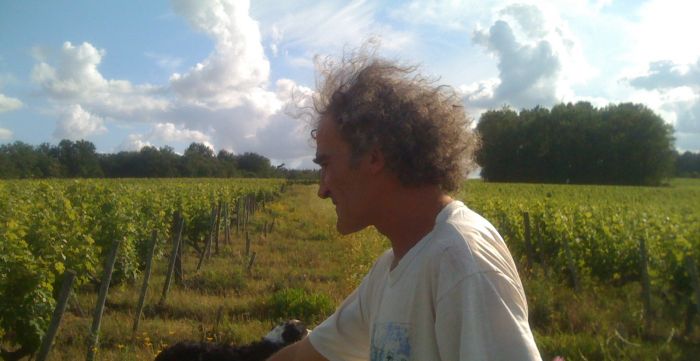
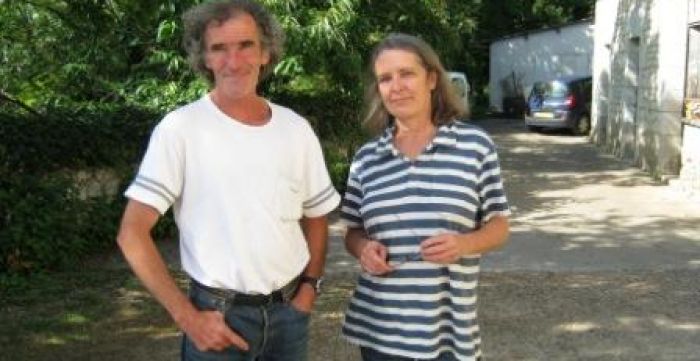
<p><span class="zalup"><span><glossary title="1036">Touraine</glossary><span>,</span></span></span> a <font color="#7b143e"><b><glossary term="Loire Valley" title="602">Loire Valley</glossary> <glossary term="Appellation" title="113">appellation</glossary></b></font> designates a large <glossary title="1103">viticultural</glossary> area around the city of <span class="zalup"><span><glossary title="1038">Tours</glossary><span>.</span></span></span> The vineyards of Clos Roche Blanche were planted on the <glossary title="1036">Touraine</glossary> hills bordering the <glossary title="282">Cher river</glossary> by the Roussel family at the end of the 19th century and have remained in the family since. Catherine Roussel took over this 28 <glossary title="523">hectare</glossary> <glossary title="427">estate</glossary> (which has progressively and intentionally been downsized to nine hectares) in 1975 from her father, and was later joined by Didier Barrouillet, who tends the vineyards and makes the wine. Both are enthusiastic proponents of non-interventionist winemaking.<br />
<br />
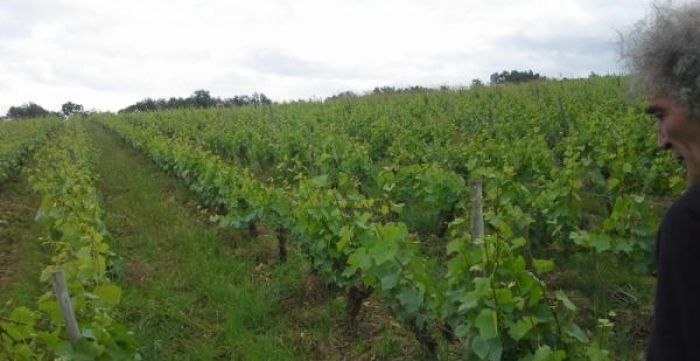
Their soil is poor, mainly <glossary title="301">clay</glossary> with <glossary title="455">flint</glossary> over a <glossary title="596">limestone</glossary> <span class="zalup"><span><glossary title="991">subsoil</glossary><span>.</span></span></span> The <glossary title="1071">varietals</glossary> grown are Cabernet (<glossary title="217">Sauvignon</glossary> and <glossary title="216">Franc</glossary>), <span class="zalup"><span> <glossary title="478">Gamay</glossary><span>,</span></span></span> <glossary title="366">Côt</glossary> (or Auxerrois, the grape of <glossary title="219">Cahors</glossary>) and <span class="zalup"><span><glossary title="927">Sauvignon Blanc</glossary><span>.</span></span></span> Roussel and Barrouillet keep <glossary title="1129">yields</glossary> low by maintaining <span class="zalup"><span> <glossary title="740">old vines</glossary><span>,</span></span></span> using <glossary title="746">organic</glossary> <glossary title="442">fertilizers</glossary> in moderation and growing grass between and <glossary title="810">plowing</glossary> under the rows.<br />
<br />
They <glossary title="332">converted</glossary> the vineyards to <glossary title="746">organic</glossary> farming and, with the 1995 <span class="zalup"><span><glossary title="1109">vintage</glossary><span>,</span></span></span> received the official “<glossary title="746">organic</glossary> <glossary title="78">agriculture</glossary>” accreditation. The vines are treated with <glossary title="333">copper</glossary> and <glossary title="993">sulfur</glossary> solutions, and plant "decoctions" (a mixture of nettles and other herbs) used in <glossary title="160">biodynamic</glossary> <span class="zalup"><span><glossary title="1103">viticulture</glossary><span>.</span></span></span><br />
<br />
The grapes are <glossary title="520">hand-harvested</glossary> and the <glossary title="927">Sauvignon Blanc</glossary> is <glossary title="610">macerated</glossary> for 48 hours. The <glossary title="700">must</glossary> is handled by <glossary title="1165">gravity</glossary> at all stages. The wine then <glossary title="74">ages</glossary> on its <span class="zalup"><span><glossary title="590">lees</glossary><span>,</span></span></span> is <glossary title="185">bottled</glossary> by <glossary title="1165">gravity</glossary> by hand without <glossary title="447">filtration</glossary> to avoid <glossary title="645">mechanical</glossary> manipulation that would unsettle it. Instead of using <glossary title="993">sulfur</glossary> at <span class="zalup"><span><glossary title="185">bottling</glossary><span>,</span></span></span> the bottles are blanketed with <span class="zalup"><span><glossary title="310">CO2</glossary><span>.</span></span></span> Their <span class="zalup"><span><glossary title="927">Sauvignon Blanc</glossary><span>,</span></span></span> of incredible purity and fruit, is available at amazingly low prices. All the red wines have true <glossary title="1071">varietal</glossary> character, and the depth associated with low <glossary title="1129">yields</glossary> and optimum ripeness.<br />
<br />
Neither Catherine or Didier has studied <glossary title="422">oenology</glossary> or <span class="zalup"><span><glossary title="1103">viticulture</glossary><span>.</span></span></span> They both learned their trade in the vineyards and the <span class="zalup"><span><glossary title="254">cellar</glossary><span>,</span></span></span> searching for methods and techniques to make wines of exceptional character in an <glossary title="113">appellation</glossary> of modest reputation.</p>
Article
interview
24.06.2020
An Interview with Didier Barouillet from 2011
<p><em>This interview with Didier Barouillet took place in the Clos Roche Blanche living room in June, 2011.</em></p>
<p><strong>Tell us about the history of Clos Roche Blanche.</strong><br />
<br />
The history of the <glossary title="427">estate</glossary> is rather interesting. Good question! Thanks for asking!<br />
<br />
It turns out that the great-great-grandfather of my partner Catherine Roussel was a local politician. He was the deputy and mayor of <span class="zalup"><span> <glossary title="890">Saint-Aignan</glossary><span>.</span></span></span> At the end of the 19th century, the <glossary title="788">phylloxera</glossary> crisis had demoralized a lot of <glossary title="1089">vignerons </glossary>and he wanted to set a good example and bring back morale by replanting 15 <glossary title="523">hectares</glossary> in an area that had never been used before for any type of <span class="zalup"><span> <glossary title="78">agriculture</glossary><span>.</span></span></span> Those are the 15 <glossary title="523">hectares</glossary> right up the hill.<br />
<br />
He found the most competent people available to work on the vines but also to build a <span class="zalup"><span> <glossary title="254">cellar</glossary><span>.</span></span></span> He was insistent on doing this not just anywhere; it had to be in optimal conditions. This took about five years, with two people working full time on the <span class="zalup"><span> <glossary title="254">cellar</glossary><span>.</span></span></span> You have to remember there weren't any jackhammers at the time, so it was a little more time consuming... And with the stone they extracted, they built the house we are in right now.<br />
<br />
They were pretty crafty about everything, particularly having an outside <span class="zalup"><span> <glossary title="1200">press</glossary><span>.</span></span></span> Working with <glossary title="1165">gravity</glossary> was not common at the time.<br />
<br />
This great-great-grandfather didn't live in this house; he lived in <glossary title="890">Saint-Aignan</glossary> and his workers lived here. He did however reserve this very room we are sitting in as his private space.<br />
<br />
As far as how Catherine and I became part of the <span class="zalup"><span> <glossary title="427">estate</glossary><span>,</span></span></span> it's a bit more complicated. Catherine inherited the <glossary title="427">estate</glossary> because her father was adopted by her grandfather. Her father worked here and helped pick up the pace at a time when the <glossary title="427">estate</glossary> was struggling economically.<br />
<br />
<strong>What was Catherine's work like before you showed up?</strong><br />
<br />
Her father died in 1975. Catherine and her mother took over the <span class="zalup"><span> <glossary title="427">estate</glossary><span>,</span></span></span> because her brother wasn't interested and her sister even less! So it was two <span class="zalup"><span> <glossary title="1089">vigneronnes</glossary><span>,</span></span></span> another infrequent occurrence! To be honest, everyone was convinced they wouldn't be up to the task.<br />
<br />
Her father was one of the first <glossary title="1089">vignerons</glossary> -dare I say pioneer- to <glossary title="185">bottle</glossary> his own wine and sell it directly in this region. He'd hop on his <glossary title="1390">mobylette</glossary> to show samples left and right, creating a loyal customer base for himself. He sold a lot of wine to Les Halles in Paris and in Lyon. When he died Catherine took over.<br />
<br />
This is when I first met Catherine; right around the death of her father. There were two employees at the time. I used to come <glossary title="521">harvest</glossary> here and help out wherever I could. In 1981, I didn't know what I wanted to do with my life anymore. This coincided with Catherine's decision to buy a <glossary title="611">harvesting machine</glossary> because she was sick of having to take care of the pickers.<br />
<br />
She thought it was real progress! Her main employee drove it, and to pay off the machine she started <glossary title="521">harvesting</glossary> with it for other <span class="zalup"><span> <glossary title="1089">vignerons</glossary><span>.</span></span></span> This became a full time job for her employee, who didn't have any more time to do his old job of making wine in the <span class="zalup"><span> <glossary title="254">cellar</glossary><span>.</span></span></span> So Catherine asked me if I wanted to give it a shot and I said yes. I decided to try it for a year to see if I liked it. 30 years later I'm still here, so yes, I enjoy this line of work!<br />
<br />
<strong>So before you took over, were the vines treated chemically?</strong><br />
<br />
It was <glossary title="611">machine harvested</glossary> and treated <span class="zalup"><span> <glossary title="279">chemically</glossary><span>.</span></span></span> This was the early 1980's, when <glossary title="526">herbicides</glossary> had truly begun to change the French <glossary title="1103">viticultural</glossary> landscape. Bit by bit, the entire <glossary title="427">estate</glossary> was treated with <glossary title="526">herbicide</glossary> and whatever new <glossary title="279">chemicals</glossary> were introduced at the time to combat <glossary title="1002">systemic</glossary> molecule illnesses, which are diseases transmitted through the sap. This meant that when the vines grew, they were already protected. It was incredible!<br />
<br />
<glossary title="279">Chemicals</glossary> caused a complete revolution in French <span class="zalup"><span> <glossary title="1103">viticulture</glossary><span>,</span></span></span> a revolution we gladly went along with. <glossary title="611">Machine harvesting</glossary> is half the price of a <glossary title="521">harvest</glossary> team, you know!<br />
<br />
<strong>And was your cellar work also influenced by this wave of technological advances?</strong><br />
<br />
It was, because the whole process is a vicious cycle. If you start using <glossary title="279">chemical</glossary> products in the vines, to combat <glossary title="1137">mildew</glossary> for example, it also significantly decreases your grapes' <span class="zalup"><span> <glossary title="538">native yeasts</glossary><span>.</span></span></span> After a while you start realizing the wine isn't <glossary title="441">fermenting</glossary> properly, and you think: "Shit! I need to use a <span class="zalup"><span> <glossary title="321">commercial starter yeast</glossary><span>!</span></span></span>".<br />
<br />
<glossary title="321">Commercial yeasts</glossary> were introduced to the market at the same time as all these <glossary title="279">chemicals</glossary> we've been talking about. Most of the time they were manufactured by the same companies! You end up not having a choice: if you don't <span class="zalup"><span> <glossary title="542">inoculate</glossary><span>,</span></span></span> things aren't going to work out.<br />
<br />
I remember working with all types of crazy <span class="zalup"><span> <glossary title="1128">yeasts</glossary><span>,</span></span></span> particularly 71-B, which is what exacerbates banana flavor in <em>nouveau</em> wines. People loved it, and would go as far as using it twice: once to get the <glossary title="441">fermentation</glossary> started and then again to make sure it was working hard on the wine!<br />
<br />
I've always been curious by nature, and one day I tried using 71-B in the <span class="zalup"><span> <glossary title="927">Sauvignon Blanc</glossary><span>.</span></span></span> It tasted like bananas! This proves to me that a <glossary title="321">yeast</glossary> like 71-B doesn't aromatize a wine, but rather it exacerbates an aroma that exists somewhere, somehow in grape juice.<br />
<br />
It was still fun to have a <glossary title="927">Sauvignon Blanc</glossary> that tasted like bananas!<br />
<br />
<strong>So how did things begin to change?</strong><br />
<br />
Well, by becoming conscious of what I have just told you. It didn't seem normal to me that by adding a <span class="zalup"><span> <glossary title="1128">yeast</glossary><span>,</span></span></span> you could have one flavor instead of a palate of them. This frustrated me because I felt that the wine I was making was one dimensional, and that I couldn't get it past a certain quality level. It was pretty good, but I wanted to take it to the next level and every year was pretty much exactly the same thing.<br />
<br />
So I decided I wanted to change everything. I wanted to start from the ground up, literally: to focus on where everything begins, which is the soil. My initial intentions were simply to make a more authentic beverage. I don't mean a better one; a wine that uses conventional <glossary title="279">chemicals</glossary> and is well made has its public: a public that likes to consume "flawless" wine. But these wines don't express the soil and the earth they came from, and they weren't the wines I wanted to make. So what were my options to start over? <glossary title="746">Organic</glossary> <span class="zalup"><span><glossary title="78">agriculture</glossary><span>?</span></span></span><br />
<br />
<glossary title="746">Organics</glossary> are far from perfect, as the vines are still treated with products that incorporate themselves into the soil. I'm talking of course of <glossary title="333">copper</glossary> and <span class="zalup"><span> <glossary title="993">sulfur</glossary><span>,</span></span></span> which are legally allowed in <glossary title="746">organic</glossary> <span class="zalup"><span> <glossary title="78">agriculture</glossary><span>.</span></span></span> Let's not forget that <glossary title="333">copper</glossary> is the product most at fault for the lack of microbial activity in the soil, especially when people were making their <glossary title="179">Boullie Bordelaise</glossary> themselves. They were using ten times too much: If the vines weren't completely blue then you hadn't done a good job! This completely killed all microbial activity in a lot of soils for the better part of 50 years (from 1900 to 1950, before the introduction of synthetic products).<br />
<br />
And <span class="zalup"><span> <glossary title="993">sulfur</glossary><span>,</span></span></span> which is also allowed, isn't too good either because it acidifies the soil. When it hits the ground, and let's not kid ourselves by saying it only goes on the vines, with a little bit of water it turns into sulfuric acid. There are many examples in Algeria of soils that have become STERILE because of <span class="zalup"><span> <glossary title="993">sulfur</glossary><span>.</span></span></span><br />
<br />
So <glossary title="746">organic</glossary> <glossary title="78">agriculture</glossary> is far from perfect, but for me it's the least harmful option at my disposition to make a product that interests me. People need to stop treating <glossary title="746">organic</glossary> <glossary title="78">agriculture</glossary> like an ideal but as a means to produce the least harmful <glossary title="78">agricultural</glossary> products possible. So then the goal becomes working <span class="zalup"><span> <glossary title="746">organically</glossary><span>,</span></span></span> but making it the least harmful possible and using the lowest possible amounts of <glossary title="333">copper</glossary> and <glossary title="993">sulfur</glossary> in the vines.<br />
<br />
20 years later, I've succeeded. But this takes time. It's a long process.<br />
<br />
<strong>What were you doing before you started working at Clos Roche Blanche?</strong><br />
<br />
I specialized in mathematics and worked as a chemical engineer.<br />
<br />
<strong>How did this influence your approach to being a vigneron?</strong><br />
<br />
A scientific approach to winemaking is beneficial because it forces you to take a Cartesian stance. It makes you understand things very quickly. I didn't know anything about <glossary title="1103">viticulture</glossary> or winemaking 30 years ago. Not a thing. All I did was read books. When I took my agriculture BAC, I showed up as independent candidate; I'd never taken a single class.<br />
<br />
A scientific approach makes maintaining the vines easier, because you actually understand what's going on with nature. And it's tremendously beneficial to the wine, because wine is nothing more than chemistry. Wine is full of molecules: microorganisms, bacteria and fungus. Wine is a transposition of composites in the soil through chemistry. Science made me realize this, and that made me realize that we had to stop using <glossary title="279">chemicals</glossary> in the vineyard.<br />
<br />
<strong>Can you elaborate?</strong><br />
<br />
Using <glossary title="526">herbicide</glossary> forces the vines' roots to the surface, in which they can effectively grow in the 8 to 10 centimeters of fertile soil that you find anywhere in the world. This isn't <span class="zalup"><span> <glossary title="1026">terroir</glossary><span>.</span></span></span> To get to the <glossary title="1026">terroir</glossary> you need to go deeper. It's what under those 8 to 10 centimeters that differentiates one soil type from another.<br />
<br />
My scientific definition of <glossary title="1026">terroir</glossary> (in fact it isn't just mine) is: <em>the degradation of earth's </em><glossary title="690"><em>mother rock</em></glossary><em> from bacteria, which is is transmitted to the vine through its roots</em>.<br />
<br />
When you realize this, you can't go back to <glossary title="279">chemicals</glossary> because there is always the possibility of pushing things forward without them. At first I was only interested in winemaking, but today I consider it the least interesting part of my work. The wine I make is the consequence of my work in the vines. I almost never taste in the <span class="zalup"><span> <glossary title="254">cellar</glossary><span>,</span></span></span> because I know what the end result will be. When I first started, I took no interest in the vineyard. But my natural evolution has led me to spend less and less time in the <span class="zalup"><span> <glossary title="254">cellar</glossary><span>.</span></span></span><br />
<br />
And this evolution continues in that today, I almost don't pay any attention to the vines and focus principally on what's happening in the soil. The vines are a direct consequence of what is happening in the soil.<br />
<br />
None of this came as an overnight epiphany. It's been a slow and steady 30 years of evolution.<br />
<br />
<strong>Can you tell me about the progression of your work with the soil?</strong><br />
<br />
Again, there has been a serious evolution in my work. When we started <glossary title="332">converting</glossary> everything away from <span class="zalup"><span> <glossary title="331">chemical viticulture</glossary><span>,</span></span></span> we did things the traditional way, by working the soils through various methods of <span class="zalup"><span> <glossary title="810">plowing</glossary><span>.</span></span></span> From the beginning I didn't like it: it's a pain in the ass and it takes too long.<br />
<br />
I was trying to find and alternative, and fortunately I learned a very important lesson from an agronomist named Claude Bourgignon (who has come here many times), and that was the working the soil is not a good thing.<br />
<br />
As I've mentioned before, <glossary title="1103">viticultural</glossary> land is very poor in microorganisms because of the 50 years of constant exposure to <glossary title="333">copper</glossary> and other harmful products. So what's left in the soil? Bacteria and fungus. Some of these are aerobic organisms, which mean they like oxygen, and others are anaerobic, which means the opposite. When you start <glossary title="810">plowing</glossary> and shifting these organisms around, the aerobic ones (which are logically on the top), die because they now lack oxygen and the anaerobic ones aren't too happy being exposed to air.<br />
<br />
So to let these organisms thrive, you need to only work the soil superficially, with blades to cut down unwanted grass, or to <glossary title="810">plow</glossary> very lightly, and only to oxygenate the soil for the organisms that need them. I haven't <glossary title="810">plowed</glossary> the vineyard in 15 years, and this has enormously benefited the soil's structure. Even at its driest, the soil has enough <glossary title="531">humic</glossary> structure for me to cultivate it. This was initially a tremendous challenge because, on the surface, we have a lot of (not necessarily great) <glossary title="301">clay</glossary> which is very compact.<br />
<br />
This was the first big breakthrough, and the second involved a shift away from intensive <span class="zalup"><span> <glossary title="671">monoculture</glossary><span>.</span></span></span> If you had told me this 20 years ago that I was practicing "intensive <glossary title="671">monoculture</glossary>", I would have no idea what you were talking about. What do you mean intensive <span class="zalup"><span> <glossary title="671">monoculture</glossary><span>?</span></span></span> I've got <span class="zalup"><span> <glossary title="927">Sauvignon</glossary><span>,</span></span></span> <span class="zalup"><span> <glossary title="366">Côt</glossary><span>,</span></span></span> <span class="zalup"><span> <glossary title="799">Pineau d'Aunis</glossary><span>.</span></span></span>..<br />
<br />
The guy who's been making corn on the same <glossary title="760">parcel</glossary> for 25 years in the Southwest knows that he's working in intensive <span class="zalup"><span> <glossary title="671">monoculture</glossary><span>.</span></span></span> He knows the corn is eventually going to stop growing the way it used to, and will be tempted to use GMO's.<br />
<br />
For some reason this evades most <span class="zalup"><span> <glossary title="1089">vignerons</glossary><span>.</span></span></span> Time and time again, it's been proven that when one works in intensive <span class="zalup"><span> <glossary title="671">monoculture</glossary><span>,</span></span></span> you begin to have problems with insects and fungal illness because nature's ecosystem is unbalanced and prone to vulnerability.<br />
<br />
I haven't used <glossary title="543">insecticides</glossary> for 15 years. All you have to do is plant something other than vines and let grass grow to create a more balanced ecosystem. I have a reservoir full of insects, and I've created corridors so that they can move freely throughout the vineyard and feed off the flowers that grow there. They grab some pollen and then they get to work. They also leave the vines alone.<br />
<br />
<strong>So why do we hear time and time again that working the soil is of utmost importance?</strong><br />
<br />
Because it is! You need to work the soil without <span class="zalup"><span> <glossary title="810">plowing</glossary><span>,</span></span></span> first to get rid of the superficial roots of the vines. This way you don't fall into the same trap as using <span class="zalup"><span> <glossary title="526">herbicides</glossary><span>.</span></span></span><br />
<br />
You also need to work the soil to aerate it. If you're using <glossary title="746">organic</glossary> <span class="zalup"><span><glossary title="442">fertilizers</glossary><span>,</span></span></span> these cannot be directly assimilated by the vines. They need to be transformed into mineral elements that can be assimilated by the plant, by the soil's microorganisms. This process occurs because of oxygen.<br />
<br />
<strong>You've expressed that the work in the cellar is minimal compared to that in the vines, but can you give us some insight on what goes on in there?</strong><br />
<br />
In the <glossary title="254">cellar</glossary> I work as naturally as possible. I almost always <glossary title="1104">vinify</glossary> without <span class="zalup"><span> <glossary title="993">sulfur</glossary><span>.</span></span></span> If the <glossary title="783">PH</glossary> levels were too high and acidity levels were too low, I wouldn't take the risk of <glossary title="1104">vinifying</glossary> without <span class="zalup"><span> <glossary title="993">sulfur</glossary><span>.</span></span></span> This isn't really something I have to worry about in our region though, and if you're well equipped I don't see why you'd need to use any.<br />
<br />
Evidently I don't use any <glossary title="321">commercial yeasts</glossary> or <span class="zalup"><span> <glossary title="423">enzymes</glossary><span>.</span></span></span> I'm very conscious of <span class="zalup"><span> <glossary title="1018">temperature control</glossary><span>,</span></span></span> which are very important to control <span class="zalup"><span> <glossary title="441">fermentation</glossary><span>.</span></span></span><br />
<br />
I'm a lot less stressed than I used to be in the <span class="zalup"><span> <glossary title="254">cellar</glossary><span>.</span></span></span> I analyze the wines myself because I can, and because I have a little laboratory set up. This saves me a lot of time.<br />
<br />
<strong>You analyze your wines a lot right?</strong><br />
<br />
Much more than most.<br />
<br />
When you don't use <span class="zalup"><span> <glossary title="993">sulfur</glossary><span>,</span></span></span> there is always a possibility for all types of deviations. Like I said earlier, wine is like the earth. At its core you're working with microbiology, where microorganisms, <glossary title="1128">yeasts</glossary> and bacteria are always interacting with each other. <glossary title="1128">Yeasts</glossary> are the catalyst for <glossary title="87">alcoholic fermentation</glossary>; they transform sugar into alcohol. The bacteria is there to turn <glossary title="1247">malic acid</glossary> into <span class="zalup"><span> <glossary title="622">lactic acid</glossary><span>.</span></span></span><br />
<br />
The secret is to not let the bacteria take over when you need the <glossary title="1128">yeasts</glossary> to work, and vice-versa. This balance can be attained with <span class="zalup"><span> <glossary title="1018">temperature control</glossary><span>.</span></span></span> <glossary title="1128">Yeasts</glossary>, for example, work very well at 25º, and while bacteria can work at that temperature, they won't be able to maximize their effort, because they have to compete with the optimally performing <span class="zalup"><span> <glossary title="1128">yeasts</glossary><span>.</span></span></span><br />
<br />
Our goal is to provoke an <glossary title="87">alcoholic fermentation</glossary> that isn't affected by lactic bacteria, because bacteria hates being bored: their "job" is to turn <span class="zalup"><span> <glossary title="622">malic acid into lactic acid</glossary><span>,</span></span></span> but once they're done, if there's still some sugar left in the wine, they will start working on the sugar and transform the wine into vinegar.<br />
<br />
And that's not all. They're also often responsible for sourness in wine. Greece has had a lot of problems with this. Lactic bacteria always has to stay busy, and they love to fuck things up! So we make sure the <glossary title="87">alcoholic fermentation</glossary> is completely finished and their isn't a trace of sugar, then we let them get to work. For lactic bacteria, the optimal temperature for them is between 18 and 20º.<br />
<br />
<strong>As someone who uses science to work with nature, how do you feel about modern oenology's approach of using science to correct nature?</strong><br />
<br />
Modern <glossary title="422">oenology</glossary> is a science. We know how a <glossary title="441">fermentation</glossary> works, and there are rules to follow in order to have one occur. When you work with <span class="zalup"><span> <glossary title="976">spontaneous natural fermentation</glossary><span>,</span></span></span> you are taking a huge risk. Not everyone can do it and you'd go out of business if you made vinegar every year.<br />
<br />
I don't use science to make wine, I use science to shape it. I'm very serious about <span class="zalup"><span> <glossary title="1018">temperature control</glossary><span>,</span></span></span> and you can read about <glossary title="1018">temperature control</glossary> in <glossary title="422">oenological</glossary> books that date back to the early 1900's! This is an <glossary title="422">oenological</glossary> practice!<br />
<br />
After the war, we discovered how <glossary title="622">malolactic fermentation</glossary> occurs. Of course it was also the beginning of manufactured products entering the vineyard. And everyone turned a blind eye to it. Everything is allowed in the vineyard: ascorbic acid, citric acid, every preservative in the book, you name it!<br />
<br />
And what's more, which I find scandalous, none of this is listed on a wine's <span class="zalup"><span> <glossary title="133">back label</glossary><span>.</span></span></span> The obligation to mark "Contains <glossary title="993">Sulfites</glossary>" on <glossary title="133">back labels</glossary> is a recent thing, because some people are allergic to it. But if all it did was give you a headache, you bet it wouldn't be written back there!<br />
<br />
Wine is the only product in the entire world where you don't have to list the preservatives you use on the <span class="zalup"><span> <glossary title="133">back label</glossary><span>.</span></span></span> This is not normal.<br />
<br />
<strong>Let's talk about your favorite subject, "natural wine". I know you have strong opinions about this. What were your intentions when you started working this way in 92, and how have things evolved for you and for all wine made this way in 2011?</strong><br />
<br />
The current notion and pseudo-definition of "<glossary title="708">natural wine</glossary>" is bullshit. All wine is natural: when you add <span class="zalup"><span> <glossary title="321">commercial yeasts</glossary><span>,</span></span></span> they are natural <span class="zalup"><span> <glossary title="1128">yeasts</glossary><span>.</span></span></span> They're preselected, but they're natural!<br />
<br />
<glossary title="993">Sulfur</glossary> is also natural. If you don't add any, you can still find tremendous quantities from the <glossary title="538">indigenous yeasts</glossary> alone, up to 150 mg! So sometimes you analyze your wine and it turns out you have as much <glossary title="993">S02</glossary> as your neighbor who added it in!<br />
<br />
I'm not talking about all the <glossary title="279">chemical</glossary> products in the vineyard here, because yes, some of them are 100% artificial. But they affect <glossary title="1103">viticulture</glossary> and not winemaking. Anyone who can can grasp this concept should understand why we shouldn't use the term <span class="zalup"><span><glossary title="708">natural wine</glossary><span>.</span></span></span> "Wines of nature" fine, but <glossary title="708">natural wine</glossary> no.<br />
<br />
Because what does "<glossary title="708">natural wine</glossary>" imply? It implies that all other wines are artificial. And in doing so you're insulting your neighbor's work, as well as the general public who drink it. These guys don't make artificial wine, they make wine that was produced with grapes that were grown with <glossary title="279">chemicals</glossary> that are, most of the time, natural.<br />
<br />
You can't reason in this dogmatic way. And if you do, you're forgetting your past. Was I an idiot when I worked <glossary title="331">conventionally</glossary> in the 1980's? I don't think so. I evolved into the man I am today, who works the way I do now. I can't insult guys who work <span class="zalup"><span> <glossary title="331">conventionally</glossary><span>,</span></span></span> because I also worked that way. For many years! Everyone's allowed to do as they please.<br />
<br />
You can't be dogmatic about things like this, and this is what I don't like of all these little "chapels" and associations that sprout out everywhere in regards to <span class="zalup"><span><glossary title="708">natural wine</glossary><span>.</span></span></span> A lot of my buddies are in these associations, but frankly I find them ridiculous. We weren't put on this earth to fragment and isolate ourselves into mini-cults.<br />
<br />
<strong>So as someone who does follow, more or less, the principles of "natural" winemaking, how would you ideally present it to someone who knew nothing about it?</strong><br />
<br />
When you don't come from an <glossary title="78">agricultural</glossary> background like myself, you are free. You're free to experiment, and there is no pressure to perform in any one way. You can be autodidactic, and personally I'm an iconoclast, so I don't like the concept that there is only one way to do something.<br />
<br />
Everyone works the way they see fit. Along the way, people will influence and shape your work. This is normal, this is life. You find something you deem interesting in somebody, you reject what you don't. You shape yourself from your personal experience, which is inevitably affected by those around you. You live, you learn, you work. You get praised, you get criticized. And with this you progress.<br />
<br />
You can't be pretentious. You should be humble.<br />
<br />
You should also be observant: every day something new is going on. Plenty of <glossary title="1089">vignerons</glossary> work <span class="zalup"><span> <glossary title="746">organically</glossary><span>,</span></span></span> but for me the ones doing real work are the ones in the vineyard every day, observing their surroundings. Even in May, June and July. They aren't walking through their vineyards to work, but to observe. To see eye to eye with the plant.<br />
<br />
You can talk to a human and never really know what's going on, but plants are transparent: you know when they're doing well or if they're not feeling good. You sense joy and pain without words. Ok, I'm getting a little poetic here, I'll stop!<br />
<br />
<strong>Can you tell us about your attempt to convert the estate to biodynamics?</strong><br />
<br />
I learned a lot from <span class="zalup"><span> <glossary title="160">biodynamics</glossary><span>.</span></span></span> I worked Clos Roche Blanche this way for three years, and the biggest lesson I learned was humility. I learned that we're not alone on this world, that innumerable forces constantly interact with everything we do.<br />
<br />
After that it's up to you if you believe in magical preparations. I don't, which is why I stopped. And if you ask the most serious <glossary title="160">biodynamic</glossary> farmers, they'll tell you: "<em>The preparations don't work. But at my </em><glossary title="427"><em>estate</em></glossary><em> they do!</em>"<br />
<br />
If I hadn't done three years of <glossary title="160">biodynamic</glossary> work, I don't think I would be where I am today.<br />
<br />
<strong>Is that because you thought you could control everything just with science?</strong><br />
<br />
Exactly. But I was wrong. Now that I know what is going on in the soil, little things that don't mean anything on their own -the 1 in 0.0000001- every day for 400 million years these little nothings have been creating the world's antibiotics. Man has only been doing this for a century. I thank Pasteur and penicillin, but this has been going on every single day in the soil. It's incredible. The Ice Age, insane heat, they've survived it all. The oldest insects we know of (350 million years) are insects that live in the ground. They've survived it all. With courage and humility! And humans don't see a problem with fucking around with this.<br />
<br />
Destroying nature is easy. Reconstructing it will take a very long time.</p>
Article
producer visit
25.09.2020
Clos Roche Blanche is a Magical Place (2013)
<p><img alt="" src="http://louisdressner.com/lib/images/20130622_165208.jpg" /><br />
<br />
Clos Roche Blanche is a very special place.<br />
<br />
<img alt="" src="http://louisdressner.com/lib/images/20130622_154007.jpg" /><br />
<br />
<img alt="" src="http://louisdressner.com/lib/images/WP_20130622_007.jpg" test="test2" /><br />
<br />
<img alt="" src="http://louisdressner.com/lib/images/WP_20130622_009.jpg" test="test2" /><br />
<br />
<img alt="" src="http://louisdressner.com/lib/images/20130622_154153.jpg" /><br />
<br />
<img alt="" src="http://louisdressner.com/lib/images/20130622_154055.jpg" test="test2" /><br />
<br />
<img alt="" src="http://louisdressner.com/lib/images/20130622_154404.jpg" test="test2" /><br />
<br />
<img alt="" src="http://louisdressner.com/lib/images/20130622_154421.jpg" test="test2" /><br />
<br />
<img alt="" src="http://louisdressner.com/lib/images/20130622_154553.jpg" test="test2" /><br />
<br />
<img alt="" src="http://louisdressner.com/lib/images/WP_20130623_003.jpg" test="test2" /><br />
<br />
<img alt="" src="http://louisdressner.com/lib/images/photo%20flateuse.jpg" test="test2" /><br />
<br />
<img alt="" src="http://louisdressner.com/lib/images/20130622_154059.jpg" test="test2" /><br />
<br />
<img alt="" src="http://louisdressner.com/lib/images/20130622_164408.jpg" test="test2" /><br />
<br />
<img alt="" src="http://louisdressner.com/lib/images/20130622_164851.jpg" test="test2" /><br />
<br />
<img alt="" src="http://louisdressner.com/lib/images/WP_20130622_033.jpg" test="test2" /><br />
<br />
<img alt="" src="http://louisdressner.com/lib/images/WP_20130622_075.jpg" test="test2" /><br />
<br />
<img alt="" src="http://louisdressner.com/lib/images/20130622_165146.jpg" test="test2" /><br />
<br />
<img alt="" src="http://louisdressner.com/lib/images/20130622_165920.jpg" test="test2" /><br />
<br />
<img alt="" src="http://louisdressner.com/lib/images/WP_20130622_035.jpg" test="test2" /><br />
<br />
<img alt="" src="http://louisdressner.com/lib/images/WP_20130622_050.jpg" test="test2" /><br />
<br />
<img alt="" src="http://louisdressner.com/lib/images/WP_20130622_064.jpg" test="test2" /><br />
<br />
<img alt="" src="http://louisdressner.com/lib/images/20130622_170315.jpg" test="test2" /><br />
<br />
<img alt="" src="http://louisdressner.com/lib/images/20130622_170430.jpg" test="test2" /><br />
<br />
<img alt="" src="http://louisdressner.com/lib/images/20130622_170647.jpg" test="test2" /><br />
<br />
<img alt="" src="http://louisdressner.com/lib/images/WP_20130622_041.jpg" test="test2" /><br />
<br />
<img alt="" src="http://louisdressner.com/lib/images/WP_20130622_042.jpg" test="test2" /><br />
<br />
<img alt="" src="http://louisdressner.com/lib/images/WP_20130622_044.jpg" test="test2" /><br />
<br />
<img alt="" src="http://louisdressner.com/lib/images/20130622_170852.jpg" test="test2" /><br />
<br />
<img alt="" src="http://louisdressner.com/lib/images/20130622_171050.jpg" test="test2" /><br />
<br />
<img alt="" src="http://louisdressner.com/lib/images/20130622_171104.jpg" test="test2" /><br />
<br />
<img alt="" src="http://louisdressner.com/lib/images/20130622_171119.jpg" test="test2" /><br />
<br />
<img alt="" src="http://louisdressner.com/lib/images/WP_20130622_068.jpg" test="test2" /><br />
<br />
<img alt="" src="http://louisdressner.com/lib/images/WP_20130622_072.jpg" test="test2" /><br />
<br />
<img alt="" src="http://louisdressner.com/lib/images/20130622_171610.jpg" test="test2" /><br />
<br />
<img alt="" src="http://louisdressner.com/lib/images/20130622_172109.jpg" test="test2" /><br />
<br />
<img alt="" src="http://louisdressner.com/lib/images/WP_20130622_066.jpg" test="test2" /><br />
<br />
<img alt="" src="http://louisdressner.com/lib/images/WP_20130622_074.jpg" test="test2" /><br />
<br />
<img alt="" src="http://louisdressner.com/lib/images/WP_20130623_005.jpg" test="test2" /><br />
<br />
<img alt="" src="http://louisdressner.com/lib/images/20130622_172216.jpg" test="test2" /><br />
<br />
<img alt="" src="http://louisdressner.com/lib/images/20130622_172230.jpg" test="test2" /><br />
<br />
<img alt="" src="http://louisdressner.com/lib/images/20130622_172302.jpg" test="test2" /><br />
<br />
<img alt="" src="http://louisdressner.com/lib/images/WP_20130622_004.jpg" test="test2" /><br />
<br />
<img alt="" src="http://louisdressner.com/lib/images/WP_20130622_022.jpg" test="test2" /><br />
<br />
<img alt="" src="http://louisdressner.com/lib/images/WP_20130622_021.jpg" test="test2" /><br />
<br />
<br />
_______________________<br />
<br />
<img alt="" src="http://louisdressner.com/lib/images/WP_20130622_085.jpg" test="test2" /><br />
<br />
<img alt="" src="http://louisdressner.com/lib/images/WP_20130622_086.jpg" test="test2" /><br />
<br />
<img alt="" src="http://louisdressner.com/lib/images/WP_20130622_087.jpg" test="test2" /><br />
<br />
<img alt="" src="http://louisdressner.com/lib/images/WP_20130622_088.jpg" test="test2" /></p>
<p><iframe allowfullscreen="" frameborder="0" height="360" src="//www.youtube.com/embed/c_BcivBprM0" width="640"></iframe></p>
Article
article
21.09.2020
"Catherine Roussel and Didier Barrouillet" by Joe Dressner and Denyse Louis
<p>I met Catherine Roussel and Didier Barrouillet in 1993 at the <glossary term="Angers" title="104">Angers</glossary> <span class="zalup"><span><glossary term="Salon des Vins de la Loire" title="904">Loire Valley Fair</glossary><span>.</span></span></span> David Lillie (who was then the <glossary term="Loire Valley" title="602">Loire Valley</glossary> buyer at Garnet Wines and is now co-owner of Chambers Street) and I were looking for a <glossary term="Touraine" title="1036">Touraine</glossary> and drudging from booth to booth tasting one industrial <glossary term="Touraine" title="1036">Touraine</glossary> after another. God only knows how many we tasted and between the high level of <glossary term="Sulfites" title="993">sulphur</glossary> and the uniform sameness of all these wines, I was getting tired. So, I approached one of our last <glossary term="Touraine" title="1036">Touraine</glossary> tables and asked the smiling and charming owner if they <glossary term="Machine Harvesting" title="611">harvested by machine</glossary> and used <span class="zalup"><span><glossary term="Commercial Yeast" title="321">innoculated yeasts</glossary><span>.</span></span></span> When she said yes, I thanked her and told her we would not be interested. Dozens of wines later we were still empty handed.</p>
<p>The next morning, David and I were eating breakfast at our hotel and the same woman who I had arrogantly dismissed came up to our table, once again all smiles. She told us that she had a close friend who was making exactly the type of wine we were looking for and she had talked to her about us and that we should rush to the exposition hall because they would be there first thing at 9 am ready to have us taste their wines at Booth B432.</p>
<p>David and I got there early, anxious to taste their wines. Catherine and Didier arrived 30 minutes late, but finally had us taste through their range of <span class="zalup"><span><glossary term="Cuvée" title="363">cuvées</glossary><span>.</span></span></span></p>
<p>Yes, this was what we were looking for! Naturally made wines with consistency, honesty and precise flavors and two crazy proprietors who seemed plenty serious but also very funny, witty and engaged. David ordered an insane amount of wine and a collaboration was born.</p>
<p>It has been a privilege for me to know Catherine and Didier. They have worked <span class="zalup"><span><glossary term="Biodynamic" title="160">biodynamically</glossary><span>,</span></span></span> <glossary term="Organic" title="746">organically</glossary> and naturally but still keep a distance from every dogma and sect that is now splitting apart the French wine world. They have their own road, their own style and count as friends assorted idiosynchratic winemakers from all over France and various schools of <glossary term="Viticulture" title="1103">viticulture</glossary> and winemaking. For Catherine and Didier, the important thing is to work hard to express a <glossary term="Terroir" title="1026">terroir</glossary> and in the Clos Roche Blanche they have been blessed with one of the great sites of the <span class="zalup"><span><glossary term="Loire Valley" title="602">Loire</glossary><span>.</span></span></span></p>
<p>Even more importantly, they have become close and dear friends.</p>
<p>What is remarkable about the Clos Roche Blanche is that both Catherine and Didier had no training and no technical preparation for taking over such an <span class="zalup"><span><glossary term="Estate" title="427">estate</glossary><span>.</span></span></span> They learned everything on-the-job and have turned this <glossary term="Estate" title="427">estate</glossary> into one of the most respected wine producers of the <span class="zalup"><span><glossary term="Loire Valley" title="602">Loire Valley</glossary><span>.</span></span></span></p>
<p>Congratulations to Catherine and Didier -- The 2005 Wine Personalities of the Year!</p>
<p><br />
<u><strong>Denyse Louis from Louis/Dressner Selections interviewed Catherine Roussel for the following article:</strong></u></p>
<p>The story of how Catherine's father became a winemaker is a little complicated. Everything came from second marriages, and Catherine's father, Jean, was adopted by his stepfather when he was nearly 30 and officially took over the <glossary term="Estate" title="427">estate</glossary> in 1963. Jean Roussel started working at the <glossary term="Estate" title="427">estate</glossary> during WWII, until his death at 51 in September 1975.</p>
<p>Catherine's mother, Solange, and Catherine, the older sister of the famous physicist Pierre Roussel and the younger sister of Françoise Roussel (who directs a major insurance company), decided to carry on with the <span class="zalup"><span><glossary term="Estate" title="427">estate</glossary><span>,</span></span></span> with the help of long-time employee René Vrillon. Catherine says it's thanks to him that the <glossary term="Estate" title="427">estate</glossary> survived, because neither she nor her mother had ever <glossary term="Vinification" title="1104">vinified</glossary> or really led the vineyard work, although they both had long helped out when they were needed. Most of the wine was then sold to <span class="zalup"><span><glossary term="Négociant" title="729">négoce</glossary><span>,</span></span></span> although Catherine's father had been among the very first to <glossary term="Bottling" title="185">bottle</glossary> and sell his wine himself in the 60's.</p>
<p>In 1981, sick of feeding and taking care of 20 people for a month every <span class="zalup"><span><glossary term="Harvest" title="521">harvest</glossary><span>,</span></span></span> Catherine bought a <span class="zalup"><span><glossary term="Machine Harvesting" title="611">harvesting machine</glossary><span>.</span></span></span> Since René was driving the machine and couldn't be in the <span class="zalup"><span><glossary term="Cellar" title="254">cellar</glossary><span>,</span></span></span> Didier Barrouillet, who was working for the first time at Clos Roche Blanche, took on the winemaking duties. Catherine already casually knew Didier, a Parisian, who was interested in both working the <glossary term="Harvest" title="521">harvest</glossary> and enthused about making the wine -- something he had never done before in his life.</p>
<p>Catherine says she has never liked making wine: it requires a lot of patience (she has none) and a meticulous nature (not her style). The 1981 <glossary term="Vintage" title="1109">vintage</glossary> was not one to remember for its excellence, but Catherine offered to create a partnership with Didier. He stayed on to work for the <span class="zalup"><span><glossary term="Estate" title="427">estate</glossary><span>,</span></span></span> receiving a small stipend, food and a small house in the vineyards.</p>
<p>In France, it is difficult to work in any field without the proper diploma, so Didier went back to school in the fall of 1982, at the age of 30, to get a baccalauréat diploma as a "jeune <glossary term="Vigneron/Vignaiolo" title="1089">vigneron</glossary>". The quickest way to get a diploma was to pass a second baccalauréat, with agricultural specialization. So, while working full time, Didier studied on his own and passed the exam in 1983, and the GAEC Clos Roche Blanche was created as a formal partnership.</p>
<p>In his previous life, Didier was a Parisian who had passed his baccalauréat of science at 16, and gone on to special high flying math classes for two years. When time came to start engineering school, he left everything and took odd jobs, notably as a worker in a factory for three years. He also travelled quite extensively. His parents, an engineer and a nurse, had dreamed of being farmers themselves, but nothing predisposed Didier to becoming a winemaker (his two brothers now also live in the country, one of them working part-time at Clos Roche Blanche).</p>
<p>As an aside, Catherine was 30 when she discovered that wine was a pleasurable beverage. Her main goal in life was not to be a <span class="zalup"><span><glossary term="Vigneron/Vignaiolo" title="1089">vigneron</glossary><span>,</span></span></span> but to live at Clos Roche Blanche. Didier says she has roots instead of feet. Didier drank only water in 1981, and thought that wine was making people stupid. Now he barely ever drinks water.</p>
<p>For ten years, things went on as in the past, but Didier was dissatisfied with the wines he was making, the wines were correct, even good, but not great. When he tasted around the <span class="zalup"><span><glossary term="Appellation" title="113">appellation</glossary><span>,</span></span></span> he was more and more tired of the uniformity of the wines from the area, he could never tell which was from what <glossary term="Terroir" title="1026">terroir</glossary> or even who had made a particular wine, they were all the same to him.</p>
<p>In early 1992, after the terrible <glossary term="Frost" title="1135">frost</glossary> of winter 1991, their neighbor Yves Bucher offered to sell them his vineyards. Clos Roche Blanche more than doubled its surface, from 15.5 <glossary term="Hectare" title="523">hectares</glossary> to 32 <span class="zalup"><span><glossary term="Hectare" title="523">hectares</glossary><span>.</span></span></span> That same year, Catherine and Didier decided to completely change their methods in the vines: they stop using <glossary term="Herbicide" title="526">herbicide</glossary> and <glossary term="Pesticide" title="1142">pesticides</glossary> and started the <glossary term="Conversion" title="332">conversion</glossary> of all the vines to<font color="#7b143e"><b> </b></font><span class="zalup"><span><glossary term="Organic" title="746">organic agriculture</glossary><span>.</span></span></span></p>
<p>They had already abandonned the use of <glossary term="Chemicals" title="279">chemical</glossary> <glossary term="Fertilizer" title="442">fertilizers</glossary> a few years earlier, in favor of organic compost. That was a radical and brutal decision, and the vines did not like it much. <glossary term="Yield" title="1129">Yields</glossary> dropped dramatically, the vines looked sick, shrunken, as if trying to protect themselves against this sudden aggression. <glossary term="Plowing" title="810">Plowing</glossary> a soil that has been treated for years with <glossary term="Herbicide" title="526">herbicide</glossary> kills all the superficial root system that the vines use to get most of their nutrients; it takes a while for the deep root system to take over and feed the plant, and the grapes. Catherine and Didier were so convinced that there was no turning back that in 1993 they registered their estate with <span class="zalup"><span><glossary term="Ecocert" title="413">Ecocert</glossary><span>,</span></span></span> a certifying organisation that oversees <span class="zalup"><span><glossary term="Organic" title="746">organic agriculture</glossary><span>.</span></span></span></p>
<p>The first <glossary term="Vinification" title="1104">vinification</glossary> gave a happy surprise and comforted them in their new way: the <span class="zalup"><span><glossary term="Native Yeast" title="538">indigenous yeasts</glossary><span>,</span></span></span> unimpeded by any <glossary term="Pesticide" title="1142">pesticide</glossary> and <span class="zalup"><span><glossary term="Fungicide" title="1207">fungicide</glossary><span>,</span></span></span> started the <glossary term="Alcoholic Fermentation" title="87">alcoholic fermentation</glossary> on their own strength.</p>
<p>After two very difficult and nerve-wracking years, they <glossary term="Conversion" title="332">converted</glossary> a portion of the vines to the stricter practices of <span class="zalup"><span><glossary term="Biodynamic" title="160">biodynamie</glossary><span>.</span></span></span> The wines were getting better and better, and by 1995, they were able to <glossary term="Bottling" title="185">bottle</glossary> and sell the entire crop. By the late 90's, the <glossary term="Estate" title="427">estate</glossary> was down to 27 <span class="zalup"><span><glossary term="Hectare" title="523">hectares</glossary><span>,</span></span></span> some vines had been sold to their friend and neighbor Michel Augé. In 2000, Catherine and Didier realized that they had too much work with 27 <glossary term="Hectare" title="523">hectares</glossary> and that they would make better wines if they concentrated more on their top <span class="zalup"><span> <glossary term="Parcel" title="760">parcels</glossary><span>.</span></span></span> They also didn't want to hire someone new. They decided to sell 8.5 <glossary term="Hectare" title="523">hectares</glossary> to their Japanese importer, Junko Arai.</p>
<p>Didier has since started a study of useful auxilliary insect with an entomological institute in <span class="zalup"><span><glossary term="Tours" title="1038">Tours</glossary><span>,</span></span></span> and planted all sorts of flowers and herbs among the vines. Unfortunately, the crazy hot summer 2003 killed most of the plantations (there is no <glossary term="Irrigation" title="549">irrigation</glossary> in French vineyards) and what survived did not make it in 2004 and 2005, two years with a big deficit in rainfall.</p>
Article
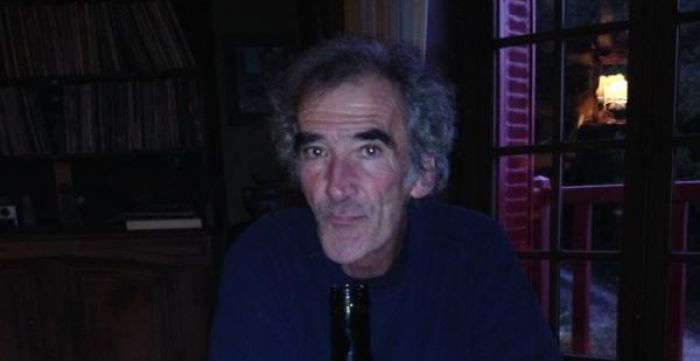
article
24.06.2020
The Didier Diaries, Part 1: An In Depth Look at Clos Roche Blanche's Last Vintage (And So Much More)
<p><em><strong>Originally published on October 6th, 2014. Words and photos by Jules Dressner. </strong></em></p>
<p><img src="http://louisdressner.com/uploads/images/article/2020_Jun_24//c0/99/c099828253718e93e854a0a9a06722b5.jpg" /></p>
<p> </p>
<p><u><strong>Part 1: Settling In:</strong></u></p>
<p><strong>(NOTE: There will be a lack of pics in the first two posts, but I will more than make up for this afterwards.)</strong><br />
<br />
I arrived to the <glossary term="Saint-Aignan" title="890">Saint-Aignan</glossary> train station on October 2nd around 5:10pm. As per usual, I hadn't slept on my red-eye flight (where I watched 22 Jump Street and X-Men: Days of Future Past), and was pretty loopy. Catherine Roussel picked me up, and told me that we hadn't exactly calculated my arrival correctly: the <glossary term="Sauvignon Blanc" title="927">Sauvignons</glossary> had been picked the week before, the <glossary term="Pineau d'Aunis" title="799">Pineau d'Aunis</glossary> was done but a mess because of some new asian bug that came out of nowhere a few weeks ago (more on that in future posts), and that I had missed the <glossary term="Gamay" title="478">Gamay</glossary> by a day. All that was left was the <span class="zalup"><span> <glossary term="Malbec" title="366">Côt</glossary><span>,</span></span></span> which would be <glossary term="Harvest" title="521">harvested</glossary> the next day, and the<font color="#7b143e"><strong> <glossary term="Cabernet Franc" title="216">Cabernet Franc</glossary> and <glossary term="Cabernet Sauvignon" title="217">Cabernet Sauvignon</glossary></strong></font>, which would be done sometime next week. Slightly disappointed but undeterred, I thought to myself: <em>"Shit, this may actually be a vacation!"</em><br />
<br />
Yeah right.<br />
<br />
A few minutes after settling in to the beautiful Clos Roche Blanche house, I hear Didier chatting away with his colleague Valérie Forgues. For the last four years, Didier has been guiding Valérie in the <span class="zalup"><span> <glossary term="Cellar" title="254">cellar</glossary><span>.</span></span></span> She founded her <glossary term="Estate" title="427">estate</glossary> in 1999, has always worked <glossary term="Sustainable Viticulture" title="1257">sustainably</glossary> and is in her second year of <glossary term="Conversion" title="332">converting</glossary> to <span class="zalup"><span> <glossary term="Organic" title="746">organics</glossary><span>.</span></span></span><br />
<br />
They are outside doing an analysis for sugar density, acidity and <glossary term="PH" title="783">PH</glossary> levels, crucial info for when to <span class="zalup"><span> <glossary term="Harvest" title="521">harvest</glossary><span>.</span></span></span> This process, which I always imagined to be extremely elaborate, with everyone putting on white lab coats on and breaking out microscopes, turns out to be almost crude in its simplicity. First, the sugars are weighed by an instrument that looks a lot like a thermometer: it's dunked in the juice, and floats back up with an indication of the sugar density. Acidity is measured by adding liquid that changes the juice's color, and somehow you know what it is based on the color. Finally, <glossary term="PH" title="783">PH</glossary> is done with an instrument that looks like a lot like a taser, which again is placed in the juice, and a reading is done.<br />
<br />
The juice Valérie has brought is called a <em>prélèvement</em>: she has taken a few <glossary term="Cluster/Bunch" title="1138">bunches</glossary> of grapes, crushed and analyzed them to decide if the time is right to pick or not. Didier tells her the <glossary term="Chenin Blanc" title="281">Chenins</glossary> are in good shape, but when it comes to the <span class="zalup"><span> <glossary term="Pineau d'Aunis" title="799">Pineau d'Aunis</glossary><span>,</span></span></span> there is a dangerous amount of <glossary term="Volatile Acidity" title="1116">volatile acidity</glossary> due to the <glossary term="Suzukii" title="1000">suzukii</glossary> fly. These bugs are from Asia, and came out of nowhere two weeks ago. They sting grapes to feed themselves from the sugars, which then dry out and start reeking of vinegar (<glossary term="Acetate" title="69">acetate acid</glossary>). Dider tells her we'll go visit in a few days to check the damage.<br />
<br />
After Valérie says her goodbyes, Didier asks me if I want to taste some juices. Duh!</p>
<p>We start with a <glossary term="Stainless Steel" title="986">stainless steel</glossary> tank of <span class="zalup"><span> <glossary term="Sauvignon Blanc" title="927">Sauvignon Blanc</glossary><span>.</span></span></span> I missed the last day of <glossary term="Sauvignon Blanc" title="927">Sauvignon</glossary> picking by two days: it was <glossary term="Harvest" title="521">harvested</glossary> on September 30th. It has 13.3 degrees of alcohol. We both laugh that it tastes like canned pineapple juice or pineapple gummy bears. But way better.<br />
<br />
Didier tells me that <glossary term="Stainless Steel" title="986">stainless</glossary> has the best exchange between the inside and the outside environment. Therefore the thermic exchange adapts to the <span class="zalup"><span> <glossary term="Cellar" title="254">cellar</glossary><span>,</span></span></span> which in CRB's case is ideal.<br />
<br />
Next, we try <glossary term="Sauvignon Blanc" title="927">Sauvignon</glossary> from <span class="zalup"><span> <glossary term="Foudre" title="462">foudre</glossary><span>,</span></span></span> which Didier thinks will produce a N#5. It tastes more <glossary term="Concentration" title="324">concentrated</glossary> to me, but he assures me it's the exact same, although with higher acidity and <span class="zalup"><span> <glossary term="PH" title="783">PH</glossary><span>.</span></span></span><br />
<br />
We end with <glossary term="Pineau d'Aunis" title="799">Pineau d'Aunis</glossary> <span class="zalup"><span><glossary term="Rosé/Rosato" title="871">rosé</glossary><span>,</span></span></span> which has a beautiful color. It has a sweet candied taste, and we both laugh that it tastes like Strawberry Haribos. Except way better.<br />
<br />
-<em>"Does the peppery thing come with the fermentation?"</em><br />
<br />
-<em>"Usually."</em></p>
Article
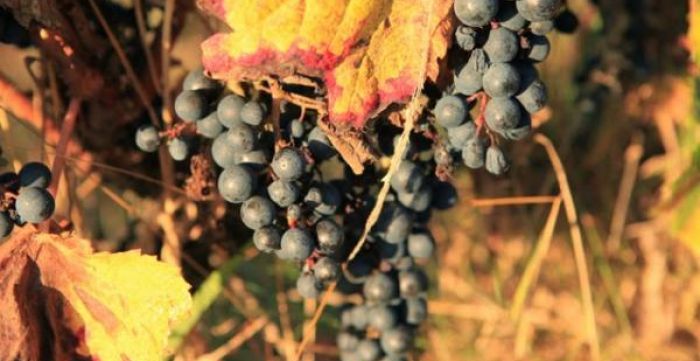
article
24.06.2020
The Didier Diaries, Part 2: Harvesting the Côt!
<p><em><strong>Originally published on October 10th, 2014. Words by Jules Dressner. Photos by Jim Budd. </strong></em></p>
<p><img src="http://louisdressner.com/uploads/images/article/2020_Jun_24//aa/2c/aa2c6c62e52eff6d391e55325ec0494f.jpg" /></p>
<p><strong>NOTE: ALL PHOTOS COPYRIGHT JIM BUDD. JIM HAS GRACIOUSLY GIVEN ME PERMISSION TO USE THESE PHOTOS FROM HIS EXCELLENT BLOG <a href="http://jimsloire.blogspot.fr/">JIM'S LOIRE</a>. THESE PHOTOS, ALONG WITH MANY OTHERS, ORIGINALLY APPEARED IN <a href="http://jimsloire.blogspot.fr/2014/10/clos-roche-blanche-touraine-picking-120.html">THIS BLOG POST</a>.</strong><br />
<br />
When I wake up at 7:am, it's still dark outside. The meet-up is set for 8 to <glossary title="521">harvest</glossary> the <glossary title="366">Côt</glossary> at <em>La Boudinerie</em>, the farm where Didier, Noëlla Morantin and Laurant Saillard live (the first picture <a href="http://louisdressner.com/mpdf/Morantin/visits/">here</a> is the parcel we <glossary title="521">harvested</glossary>). Catherine drives me over and we are the last ones to get to the <span class="zalup"><span> <glossary title="760">parcel</glossary><span>.</span></span></span> The team of harvesters is a hodge-podge of younger people and some middle aged women who, as I would later find out, love gossiping about the goings-on in the village like some weird rural <a href="https://www.youtube.com/watch?v=s0HfRsHAqxo">Days of Our Lives recap</a>. They are not particularly friendly to me, but not mean either. Then again, I'm showing up two weeks in, working at a slow and confused pace.<br />
<br />
Like with most things, my first attempt at <glossary title="521">harvesting</glossary> grapes comes with a hefty amount of over-analysis. It this <glossary title="1138">bunch</glossary> with a few shrunken grapes good? What about that one with only four grapes? When I ask Catherine, she just says: <em>"Sure, take it."</em> and keeps moving. In a year like 2014, there weren't any issues with rot, so <glossary title="521">harvesting</glossary> is really as simple as finding <glossary title="1138">bunches</glossary> and putting them in your bucket.<br />
<br />
Everyone works at a steady pace and my bucket always seems half full compared to the rest of the group. The organization is semi-informal: two people per row, but Catherine and a few others jump around rows to help out where they see fit. If someone finishes a row before the other, then they help finish their neighbors' before moving on to the next. Two harvesters man the "hotte", big open container backpacks which the pickers dump their grapes in for them to unload back to the truck.<br />
<br />
Didier is knee-deep in arriving grapes, sorting through <glossary title="1138">bunches</glossary> as they arrive, making sure to get rid of leaves, grass and undesirable grapes. When we are almost done with the first <span class="zalup"><span> <glossary title="760">parcel</glossary><span>,</span></span></span> he tells me to come with him to do a "prélevement" of the <glossary title="216">Cabernet Franc</glossary> and <glossary title="217">Cabernet Sauvignon</glossary> which are just a short walk away. Walking through the unpicked <span class="zalup"><span> <glossary title="760">parcel</glossary><span>,</span></span></span> Didier randomly picks grape <glossary title="1138">bunches</glossary> here and there from various rows. We return to <em>La Boudinerie</em>, where he crushes them with his hands to extract the juice. This is poured into a beaker, and the sugar/acidity/<glossary title="783">PH</glossary> tests are done.<br />
<br />
<em>"Not Ripe. Friday at the earliest, but most probably Sunday or Monday."</em><br />
<br />
It's Friday the 3rd and Didier is talking about the 10th.<br />
<br />
By the time we get back, the <glossary title="760">parcel</glossary> is finished and it's off to Clos Roche Blanche to <glossary title="521">harvest</glossary> the 120 year old <span class="zalup"><span> <glossary title="366">Côt</glossary><span>.</span></span></span> In my jet-lagged state, I forgot to charge my phone and was super bummed that I wouldn't get any pictures of the proceedings. Fortunately, Jim Budd (from the fantastic blog <a href="http://jimsloire.blogspot.fr/">Jim's Loire</a>, which you should go read immediately) was there to capture the moment.</p>
<p> </p>
<p><img src="http://louisdressner.com/uploads/images/article/2020_Jun_24//02/40/0240f8e0ababa08ddfce1d8ab7cf5634.jpg" /></p>
<p><img src="http://louisdressner.com/uploads/images/article/2020_Jun_24//46/c2/46c22edbcb8a291efd1e3dd5dbd2d55f.jpg" /></p>
<p><img src="http://louisdressner.com/uploads/images/article/2020_Jun_24//01/8a/018a7d73fdcdcea62468688674bb9709.jpg" /></p>
<p> </p>
<p><img src="http://louisdressner.com/uploads/images/article/2020_Jun_24//aa/39/aa3938a7e7084492c72d376eddfb2df1.jpg" /></p>
<p><img src="http://louisdressner.com/uploads/images/article/2020_Jun_24//e6/3a/e63a68d92d2fbed286d17768ec0f4dc3.jpg" /></p>
<p>Here's a picture of me to prove I was actually doing something...</p>
<p><img src="http://louisdressner.com/uploads/images/article/2020_Jun_24//a9/4f/a94f3e5b634a11b89f38da8e9146fa87.jpg" /></p>
<p>After another 17 row <glossary title="760">parcel</glossary> of younger vines, <glossary title="521">harvesting</glossary> is done for the day, just shy of 12:30pm. Catherine sends the team home, and we head over to the <glossary title="827">press</glossary> to <glossary title="1380">sort</glossary> grapes for them to start their <span class="zalup"><span> <glossary title="441">fermentation</glossary><span>.</span></span></span> First, we collect the juice from the crushed grapes at the bottom of truck, dumping it bucket by bucket into the <span class="zalup"><span> <glossary title="1140">vat</glossary><span>.</span></span></span> When this is done, the grapes get unloaded on a conveyor belt tray table, where they endlessly flow from right to left as six of us <glossary title="378">destem</glossary> the <glossary title="1138">bunches</glossary> and throw out as many stems as we can before they get end up in one of Didier's custom <glossary title="986">stainless steel</glossary> <glossary title="365">cuves</glossary> to <glossary title="610">macerate</glossary> and <span class="zalup"><span> <glossary title="441">ferment</glossary><span>.</span></span></span> It's a messy procedure which leaves my grey tee full of splashes, stains and pulp, and my hands sticky and red from the juice.<br />
<br />
<em>"If your hands stick, it means the alcohol will be there!"</em><br />
<br />
If anyone is interested in a super limited stained XL grey tee full of 120 year old <glossary title="366">Côt</glossary> from Clos Roche Blanche's last <span class="zalup"><span> <glossary title="1109">vintage</glossary><span>,</span></span></span> I'm putting it up on Ebay. Bids start at 500$.</p>
Article
article
24.06.2020
The Didier Diaries Part 3: Introducing Julien Pineau and Doing a Remontage!
<p><em><strong>Originally published on October 20th, 2014. Words and photos by Jules Dressner. </strong></em></p>
<p><img src="http://louisdressner.com/uploads/images/article/2020_Jun_24//8c/59/8c592fb6a31a836546c20a039ea4887d.jpg" /></p>
<p>When I wake up on my third day at CRB, the sun has already risen. Today Didier, Julien Pineau and I are going to do a <span class="zalup"><span> <glossary title="850">remontage</glossary><span>!</span></span></span><br />
<br />
Just as I step out to catch some fresh morning air, Julien pulls up ready to work.</p>
<p><img src="http://louisdressner.com/uploads/images/article/2020_Jun_24//15/9b/159b57c39c57293093a03d7f1eba8f6c.jpg" /></p>
<p>Who is Julien Pineau?</p>
<p><img src="http://louisdressner.com/uploads/images/article/2020_Jun_24//68/0e/680e22a8adc84f9502b5d461410da2f3.jpg" /></p>
<p>Julien is originally from <span class="zalup"><span> <glossary title="1038">Tours</glossary><span>,</span></span></span> where for many years he worked as a geological analyst for a real estate contractor. His job mainly involved analyzing the geological compositions of pre-built or build-able land in order to advise on how to proceed with construction on the most sound foundations possible.<br />
<br />
<em>"You'd be surprised how much stuff was built anywhere in the 1970's. So much has to be done to make sure these don't crumble to the ground."</em><br />
<br />
Though he found the geological aspect of his job fascinating, the corporate environment was not really his thing, so he decided to quit and try something new. Along with a few friends, he had gotten increasingly into <glossary title="708">natural wine</glossary> and wondered if there was a place for him working in the vines. After some research, he landed at an estate in <glossary title="831">Provence</glossary> for two years, followed by a year stint as Noëlla Morantin's employee.<br />
<br />
During that time he met Didier, and the two hit it off during Julien's benevolent help in the CRB <span class="zalup"><span> <glossary title="254">cellar</glossary><span>.</span></span></span> He is currently interning with Didier for a year, and will be one of the partners taking over the CRB land in coming <glossary title="1109">vintages</glossary> (more on that in a future post).<br />
<br />
Anyhow, back to wine stuff. For Didier, the two first days after <glossary title="521">harvest</glossary> are the most important when making red wine.</p>
<p><img src="http://louisdressner.com/uploads/images/article/2020_Jun_24//cd/47/cd47c1821d2ed6eddc295effa54e626a.jpeg" /></p>
<p><em>"The first two days, you </em><glossary title="433"><em>extract</em></glossary><em> the best colors and </em><glossary title="1010"><em>tannins</em></glossary><em>. After this initial period, it gets much less interesting."</em><br />
<br />
In order to <glossary title="433">extract</glossary> said color and <span class="zalup"><span> <glossary title="1010">tannin</glossary><span>,</span></span></span> it was time for me to do my first of many <span class="zalup"><span><glossary title="850">remontages</glossary><span>!</span></span></span> A <span class="zalup"><span> <glossary title="850">remontage</glossary><span>,</span></span></span> which translates to "bringing back up", consists of pumping the juice trapped at the bottom of the <glossary title="1140">tank</glossary> back onto the grape <glossary title="1138">bunches</glossary> so they can interact with each other. It is important to remember that at this point the grapes are <glossary title="610">macerating</glossary> and haven't been <glossary title="827">pressed</glossary> yet. The pumped juice will precipitate the berries that haven't "popped" yet to do so, and the contact with the skins and stems help with <glossary title="433">extraction</glossary> of color and <span class="zalup"><span> <glossary title="1010">tannin</glossary><span>.</span></span></span><br />
<br />
<em>"What do you have in the </em><glossary title="1140"><em>tank</em></glossary><em>? Juice at the bottom and grapes at the top. If we don't do a </em><glossary title="850"><em>remontage</em></glossary><em>, there is no exchange between the two."</em><br />
<br />
The <glossary title="850">remontage</glossary> is done with the help of this pump:</p>
<p><img src="http://louisdressner.com/uploads/images/article/2020_Jun_24//48/2f/482f80a03464e315896291a63183d46e.jpg" /></p>
<p>In the photo below, you can see how a tube from the bottom gets pumped through and pumped back onto the grapes:</p>
<p><img src="http://louisdressner.com/uploads/images/article/2020_Jun_24//38/44/3844a036993775a9fdc17a0104c88ef3.jpeg" /></p>
<p>Before pumps like the one used existed, this process was done bucket by bucket, and would take twice and much manpower and time!<br />
<br />
Speaking of buckets, there's always a little juice left in the pumps so we made sure to catch it and not let it go to waste.</p>
<p><img src="http://louisdressner.com/uploads/images/article/2020_Jun_24//6e/ff/6eff4d61841cc17fc6b1424f3dd47d07.jpeg" /></p>
<p><img src="http://louisdressner.com/uploads/images/article/2020_Jun_24//62/30/62300699fd78ed01474d1529726aaae3.jpg" /></p>
<p><em>"The white foam shows the beginnings of </em><glossary title="1128"><em>yeasts</em></glossary><em> </em><glossary title="441"><em>fermenting</em></glossary><em> and eating away at the sugars."</em></p>
<p>After Julien took care of the <span class="zalup"><span> <glossary title="478">Gamay</glossary><span>,</span></span></span> Didier asked me to do a "special, one time above oxygen level" <span class="zalup"><span> <glossary title="850">remontage</glossary><span>.</span></span></span> You see, in the very early stages of <span class="zalup"><span> <glossary title="441">fermentation</glossary><span>,</span></span></span> <glossary title="1128">yeasts</glossary> need oxygen to multiply. Yet the very act of <glossary title="441">fermentation</glossary> emits carbonic gas, which smothers oxygen. Didier proved this with the "lighter trick":</p>
<p><iframe width="560" height="315" src="https://www.youtube.com/embed/DoDbvOtZ05Y" frameborder="0" allow="accelerometer; autoplay; encrypted-media; gyroscope; picture-in-picture" allowfullscreen></iframe></p>
<p>The point when the lighter goes out is when their is no more oxygen in the tank.<br />
<br />
<em>"You have to be very careful with this. It's the number one cause of fatal accidents in this line of work. The body reacts extremely poorly to a lack of oxygen."</em><br />
<br />
The idea of the "special one time only above air" <glossary title="850">remontage</glossary> is to pump the juice where it is exposed to oxygen (where the flame stays lit), which will kickstart and invigorate the active, <glossary title="538">native yeasts</glossary> that will then continue to work on the sugars. I was a little freaked out at the prospect of instant death, but got up there and did it anyway. It's hard to see, but this is what the grape bunches look like:</p>
<p><img src="http://louisdressner.com/uploads/images/article/2020_Jun_24//e3/6c/e36c28f65e39f94ffa790a06539bdf74.jpeg" /></p>
<p>Up until <span class="zalup"><span> <glossary title="827">press</glossary><span>,</span></span></span> a <glossary title="850">remontage</glossary> is done each day. After it is done, Didier measures the density of liquid in the tank.</p>
<p><img src="http://louisdressner.com/uploads/images/article/2020_Jun_24//56/9e/569ea68113a3d35e650bd84edd813aaf.jpg" /></p>
<p>When it gets to 1000, this means there is very little sugar left and it is time to <span class="zalup"><span> <glossary title="827">press</glossary><span>.</span></span></span> Today it was the Gamay was at 1074.</p>
<p><img src="http://louisdressner.com/uploads/images/article/2020_Jun_24//4e/f0/4ef0146e1c9792fd39491fc2c6bf50f9.jpg" /></p>
<p>I have no idea how this is read.<br />
<br />
On the way back to the <span class="zalup"><span> <glossary title="254">cellar</glossary><span>,</span></span></span> my bud Jack the Rooster was just hanging out.</p>
<p><img src="http://louisdressner.com/uploads/images/article/2020_Jun_24//62/d1/62d106ba01dd47db3ca7b9c460440093.jpeg" /></p>
<p>Back in the <span class="zalup"><span> <glossary title="254">cellar</glossary><span>,</span></span></span> we tasted the juices again. The <glossary title="927">Sauvignon</glossary> had just started <span class="zalup"><span> <glossary title="441">fermenting</glossary><span>.</span></span></span><br />
<br />
<em>"You can feel that bite on the edge of your tongue."</em><br />
<br />
The wine was also more cloudy.<br />
<br />
<em>"That's totally normal. It means the </em><glossary title="1128"><em>yeasts</em></glossary><em> are getting to work."</em><br />
<br />
The <glossary title="927">Sauvignon</glossary> in <span class="zalup"><span> <glossary title="1126">wood</glossary><span>,</span></span></span> however, had not started <span class="zalup"><span> <glossary title="441">fermenting</glossary><span>.</span></span></span><br />
<br />
<em>"That's because of the </em><glossary title="1126"><em>wood</em></glossary><em>. Unlike </em><glossary title="986"><em>stainless steel</em></glossary><em>, which adapts to its environment, </em><glossary title="1126"><em>wood</em></glossary><em> stays colder in the initial stages of </em><glossary title="441"><em>fermentations</em></glossary><em>. However, because </em><glossary title="441"><em>fermentation</em></glossary><em> emits heat, the </em><glossary title="1126"><em>wood</em></glossary><em> will stay hotter than </em><glossary title="986"><em>stainless steel</em></glossary><em> at that point. This is ok with small volumes but becomes much more challenging otherwise."</em><br />
<br />
The <glossary title="799">Pineau d'Aunis</glossary> <glossary title="871">rosé</glossary> was <glossary title="441">fermenting</glossary> a little bit as well, but will really kick start the next day according to Didier. The color this year is surprising, and will be darker than usual.</p>
Article
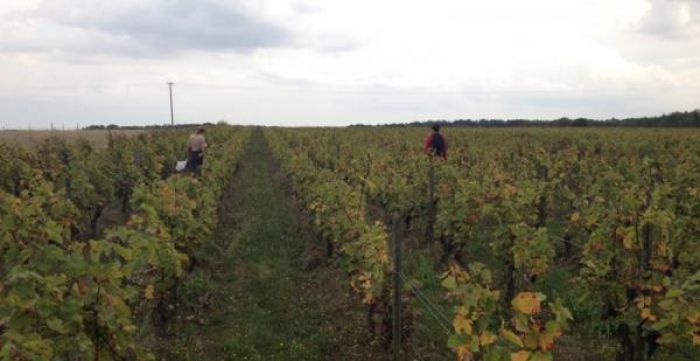
article
24.06.2020
The Didier Diaries, Part 4: Visiting a Colleague!
<p><em><strong>Originally published on November 4th, 2014. Words and photos by Jules Dressner. </strong></em></p>
<p><img src="http://louisdressner.com/uploads/images/article/2020_Jun_24//44/7f/447f1f6b94c2b4f0e89061e054b52c20.jpeg" /></p>
<p>On a lovely afternoon, Julien Pineau and I accompany Didier to Domaine de la Méchinière, an <glossary term="Estate" title="427">estate</glossary> run by Valérie Forgues. Didier chose to wear this sweet T-Shirt, purchased in NYC during a trip in 1998.</p>
<p><img src="http://louisdressner.com/uploads/images/article/2020_Jun_24//c1/81/c181e4390edc33d1f201b4d9355025ed.jpg" /></p>
<p>Founded in 1999, Méchinière spans 14 <glossary term="Hectare" title="523">hectares</glossary> in Mareuil-sur-Cher, is planted in the six grapes of the <glossary term="Touraine" title="1036">Touraine</glossary> <glossary term="AOC" title="108">AOC</glossary> and is in its second year of <glossary term="Conversion" title="332">converting</glossary> the vines to <glossary term="Organic" title="746">organic</glossary> <span class="zalup"><span><glossary term="Viticulture" title="1103">viticulture</glossary><span>.</span></span></span> Didier met Valérie because she is dating his brother, and for the last few years has been helping her out in the <span class="zalup"><span> <glossary term="Cellar" title="254">cellar</glossary><span>.</span></span></span><br />
<br />
<em>"She's gone through a lot of setbacks and I think she deserves the help. She's a fast learner and I think that she will be able to do everything on her own very soon."</em><br />
<br />
Here is her awesome dog Drago, Crusher of Souls.</p>
<p><img src="http://louisdressner.com/uploads/images/article/2020_Jun_24//2f/dc/2fdcc8a7c227a42997188475d513fb11.jpg" /></p>
<p>The reason for our visit was to scope out the damage from the what would turn out to be the hot topic on everyone's mind: <a href="http://en.wikipedia.org/wiki/Drosophila_suzukii">the drosophila suzukii</a>. Originally from Japan, these flies have been fucking shit up in the US since 2008, and were first spotted in France sometime in 2010. They look like fruit flies (which are a common occurrence around fruits, so no one really worried at first), and feed themselves by stinging soft summer fruits and sucking out the sugars. They also lay their eggs between the skin and the pulp, and in both cases the berries start turning to vinegar. Normally these bugs die after summer, but the strange climactic conditions of 2014 kept them around too long. As far as anyone knows, this is the first time they've actively targeted grapes in France.<br />
<br />
Here's what the damage looks like:</p>
<p><img src="http://louisdressner.com/uploads/images/article/2020_Jun_24//cc/a6/cca6cc3a6ff06360174c2a86abadca64.jpg" /></p>
<p><img src="http://louisdressner.com/uploads/images/article/2020_Jun_24//0e/77/0e7719dfbad50855af03f59e9a1a29c1.jpg" /></p>
<p><img src="http://louisdressner.com/uploads/images/article/2020_Jun_24//0a/02/0a02ca0ea6ceffe4d68456e775a96388.jpg" /></p>
<p><em>"It's crazy. Here we are a few days after our </em><glossary term="Pineau d'Aunis" title="799"><em>Pineau d'Aunis</em></glossary><em> </em><glossary term="Harvest" title="521"><em>harvest</em></glossary><em>, and you can easily spot the damaged grapes. When we were picking ours, you could barely see the stings and the only way to know was smelling the </em><glossary term="Cluster/Bunch" title="1138"><em>bunches</em></glossary><em> to see if they stunk of vinegar. Good luck explaining that to the harvesters!"</em><br />
<br />
Valérie was one of the last people in the area to harvest her <span class="zalup"><span> <glossary term="Pineau d'Aunis" title="799">Pineau d' Aunis</glossary><span>,</span></span></span> so this was a rare opportunity to see what the grapes look like after about a week after being stung. The worst is reports of <glossary term="Suzukii" title="1000">suzukii</glossary> bites began only TWO WEEKS before <span class="zalup"><span> <glossary term="Harvest" title="521">harvest</glossary><span>,</span></span></span> which many believed was going to be an abundant year after the very challenging 2012 and 2013 (I've heard some growers have lost up to 50% of their <glossary term="Harvest" title="521">harvest</glossary> because of the bug).<br />
<br />
Still, not all hope was lost:<br />
<br />
<em>"The grapes that haven't been stung are ripe and in good shape. This is salvageable, but only if you hit the </em><glossary term="Vat/Tank" title="1140"><em>tank</em></glossary><em> with </em><glossary term="Sulfites" title="993"><em>sulfur</em></glossary><em> immediately after </em><glossary term="Cuvaison" title="362"><em>cuvaison</em></glossary><em>. Otherwise the vinegar </em><glossary term="Yeast" title="1128"><em>yeasts</em></glossary><em>, which are in full force, will take over."</em><br />
<br />
Stories like this are stark reminders that the work of a <glossary term="Vigneron/Vignaiolo" title="1089">vigneron</glossary> is one of constant adaptation, and that dogmatic extremism -I'm specifically referring to <glossary term="Sulfites" title="993">sulfur</glossary> use here- can only work in ideal conditions or states of complete mastery (Overnoy, Dard & Ribo and Massa Vecchia immediately come to mind). Many <glossary term="Vigneron/Vignaiolo" title="1089">vignerons</glossary> who traditionally do not <glossary term="Sulfites" title="993">sulfur</glossary> during <glossary term="Vinification" title="1104">vinification</glossary> felt obliged to do so this year, and I do not fault them for it. If they hadn't, I can't imagine what the juices would have ended up as. For Valérie, whose <glossary term="Pineau d'Aunis" title="799">Pineau d'Aunis</glossary> <glossary term="Rosé/Rosato" title="871">rosé</glossary> is a big seller, you can understand why she'd be losing sleep over this.<br />
<br />
On a brighter note, we then visited Valérie's 80+ year old <span class="zalup"><span> <glossary term="Chenin Blanc" title="281">Chenins</glossary><span>,</span></span></span> which were in tip-top shape and ready to make some bubbles.</p>
<p><img src="http://louisdressner.com/uploads/images/article/2020_Jun_24//49/b0/49b0ed219d4a99723b7b7867f7f54ed8.jpg" /></p>
<p><img src="http://louisdressner.com/uploads/images/article/2020_Jun_24//44/1a/441a946640c071db69e72fc4cd9723c4.jpeg" /></p>
<p><img src="http://louisdressner.com/uploads/images/article/2020_Jun_24//2b/6e/2b6e9eae4c721c34b152e8f69540c513.jpg" /></p>
<p>After a walk through the vines, we went to taste the juices in the <span class="zalup"><span> <glossary term="Cellar" title="254">cellar</glossary><span>,</span></span></span> which had a shockingly overpowering odor of <span class="zalup"><span> <glossary term="Reduction" title="847">reduction</glossary><span>.</span></span></span><br />
<br />
<em>"It's intense right?"</em><br />
<br />
These crazy <glossary term="Concrete" title="325">concrete</glossary> <glossary term="Vat/Tank" title="1140">tanks</glossary> that looked like submarines captured my imagination.</p>
<p><img src="http://louisdressner.com/uploads/images/article/2020_Jun_24//f0/0e/f00e7caab8c6d31fb5f543d5dbcdd92a.jpeg" /></p>
<p>We tasted <glossary term="Sauvignon Blanc" title="927">Sauvignon</glossary> from an <glossary term="Organic" title="746">organic</glossary> <span class="zalup"><span><glossary term="Parcel" title="760">parcel</glossary><span>,</span></span></span> and <glossary term="Sauvignon Rose" title="1201">Sauvignon Rose</glossary> from one in <span class="zalup"><span> <glossary term="Conversion" title="332">conversion</glossary><span>.</span></span></span> We also tried some <span class="zalup"><span> <glossary term="Gamay" title="478">Gamay</glossary><span>.</span></span></span></p>
<p><img src="http://louisdressner.com/uploads/images/article/2020_Jun_24//f4/b9/f4b901904a6c1f0828473440a54bb8b0.jpg" /></p>
<p><img src="http://louisdressner.com/uploads/images/article/2020_Jun_24//b2/e9/b2e957ac46f03c2901100b3b5d5af5db.jpg" /></p>
<p>Outside, I admitted to Julien that tasting <glossary term="Fermentation" title="441">fermenting</glossary> juice is really hard, and that I found it almost impossible to tell what was going on.<br />
<br />
<em>"Me too. But it's still fun to do!"</em></p>
Article

article
22.09.2020
The Didier Diaries, Part 5: Party Time!
<p><img src="http://louisdressner.com/uploads/images/article/2020_Sep_22//89/14/8914211e180078d9bf399086b7a8efb0.jpg" /></p>
<p>A <em>farçie</em> is local <glossary term="Loire Valley" title="602">Loire</glossary> slang for the end of <glossary term="Harvest" title="521">harvest</glossary> celebration. These vary in size, but are usually an intimate affair between the harvesters and the <glossary term="Vigneron/Vignaiolo" title="1089">vignerons</glossary> who hired them. Since Clos Roche Blanche was one of the last <glossary term="Estate" title="427">estates</glossary> to finish their <span class="zalup"><span><glossary term="Harvest" title="521">harvest</glossary><span>,</span></span></span> I was lucky to partake in many farçies while in France. The first I got to check out was at Maisons Brûlées (<strong>ed note:</strong> we no longer import the wines from this <glossary term="Estate" title="427">estate</glossary>).</p>
<p><img src="http://louisdressner.com/uploads/images/article/2020_Sep_22//30/5a/305ab846d25a4165aa3a0c97a25d82e0.jpeg" /></p>
<p>To the left, new owner Paul Gillet celebrates the first <glossary term="Harvest" title="521">harvest</glossary> he's seen all the way through since taking over from Michel Augé in 2013. It was kind of cold, but we still hung out for <glossary term="Aperitif" title="112">apéro</glossary> outside. Even in the heart of <glossary term="Natural WIne" title="708">natural wine</glossary> country, you gotta satisfy the children with artificially colored and flavored candy:</p>
<p><img src="http://louisdressner.com/uploads/images/article/2020_Sep_22//57/e2/57e2464fa5ee4d6470bc422d435b251e.jpg" /></p>
<p>Can't lie: I kind of mess with those Coca Colas...</p>
<p>Paul's team was mostly composed of natty boys and gals who chain smoked joints (this can describe 95% of <glossary term="Harvest" title="521">harvest</glossary> teams in France), but there was a handful of interesting characters, including some older locals, an elderly couple from Brittany and a very nice Spanish guy.</p>
<p>After drinking a couple of bottles, it was time to eat an Alsatian specialty, the Baeckeoffe:</p>
<p><img src="http://louisdressner.com/uploads/images/article/2020_Sep_22//54/bd/54bd638e374a06529dc4920affb64b4c.jpg" /></p>
<p><img src="http://louisdressner.com/uploads/images/article/2020_Sep_22//25/3b/253b6a284dfe4cbecec67d815de15ac8.jpg" /><img src="http://louisdressner.com/uploads/images/article/2020_Sep_22//6a/dd/6addfbc924dbe4c695b677a088ecc3fa.jpg" /></p>
<p>If you're wondering why we we were eating a mix of sliced potatoes, sliced onions, cubed mutton, beef and pork which have been marinated overnight in <glossary term="Alsace" title="95">Alsatian</glossary> white wine and juniper berries, then slow cooked in a sealed ceramic casserole dish, it's because Paul and Corinne Gillet are originally <span class="zalup"><span><glossary term="Alsace" title="95">Alsatian</glossary><span>.</span></span></span> To wash it down, the gracious Laurent Saillard brought some of his<em> "</em>Lucky You!" <glossary term="Sauvignon Blanc" title="927">Sauvignon</glossary> and "La Pause" <span class="zalup"><span><glossary term="Gamay" title="478">Gamay</glossary><span>:</span></span></span><br />
<img src="http://louisdressner.com/uploads/images/article/2020_Sep_22//9d/a6/9da66b868da0e0dfd13bc05292b39ac9.jpeg" /></p>
<p><img src="http://louisdressner.com/uploads/images/article/2020_Sep_22//f5/ac/f5acd17273e1ad7c2725645ed7949721.jpg" /><img src="http://louisdressner.com/uploads/images/article/2020_Sep_22//f1/28/f128389fdc096391b0b93f3377088059.jpg" /></p>
<p>That gentleman to the right of Laurent (who is in the foreground if you don't know what he looks like) is Bruno Allion, a beloved <glossary term="Biodynamic" title="160">biodynamic</glossary> <glossary term="Vigneron/Vignaiolo" title="1089">vigneron</glossary> who for years has sold his grapes to Thierry Puzelat and Pierre-O Bonhomme's <span class="zalup"><span><glossary term="Négociant" title="729">négoce</glossary><span>.</span></span></span> I also got to try some of his own wines for the first time, which were delicious.</p>
<p>After lunch, the sun decided to pay us a visit so we had no choice to sit back outside.</p>
<p><img src="http://louisdressner.com/uploads/images/article/2020_Sep_22//c9/ad/c9adbefec13d5d7689894c7a889a85c5.jpeg" /></p>
<p>We also had no choice but to drink some Maisons Brûlées "Dernier Né", which due to the label is illegal for us to import to the United States.</p>
<p><img src="http://louisdressner.com/uploads/images/article/2020_Sep_22//12/1e/121e864f8578d9901fcc242600428ba7.jpg" /></p>
<p>You see, the barred out "drinking pregnant woman" is the equivalent of the US Government Warning saying you shouldn't drink and drive or drink while pregnant (or both). It is obligatory to have on each <glossary term="Wine Label" title="573">label</glossary> of wine in France, so as a joke Paul has made it the focal point of this cuvée; it's actually the exact logo you see in tiny on most <span class="zalup"><span><glossary term="Wine Label" title="573">labels</glossary><span>,</span></span></span> except huge. But hey, it's legal. Except in the US, where it isn't...</p>
<p>All in all, the Maisons Brûlées farçie was a lovely afternoon, and just a pre-game for what would happen a few nights later: The Villemade farçie!</p>
<p>It can pretty much be summed up in this four second video:</p>
<p><iframe allowfullscreen="" frameborder="0" height="360" src="//www.youtube.com/embed/WdRUevnGtqY" width="640"></iframe></p>
<p>First off, this happened at maybe 9pm so you can imagine how the rest of the night went. The context here is that the harvesters, 90% of whom were from <span class="zalup"><span><glossary term="Brittany" title="197">Brittany</glossary><span>,</span></span></span> were about to sing Isabelle and Hervé Villemade a song to thank them. This courageous young lady decided to stand on a chair and play ring leader. Then that happened...</p>
<p>Anyhow, due to the size of the Villemade's <span class="zalup"><span><glossary term="Estate" title="427">estate</glossary><span>,</span></span></span> there were many more people at this event, including cameos from Loire all-stars Thierry Puzelat, Christian Venier and Pascal Potaire. Pretty early in the evening, I vaguely remember smoking a cigar while make-believe surfing because Surfin' USA by the Beach Boys came on.</p>
<p>After dinner, everyone started dancing to basically the worst music ever, but it didn't matter and was still super fun. I don't think you can quite grasp this type of scene without having experienced an improvised musical mish-mash in rural France for yourself (I'm a hardened veteran), but the flow of music is jarring and all over the place stylistically. To make matters worst, the internet connection kept crashing and cutting off songs half-way through. I tried jumping on to flex my DJ skills and almost immediately this guy wanted to fight me so he could hear some Miles Davis (right after, mind you, a horrible French Ska song picked by someone else). The flow of the two songs was horrendous, but everyone still danced and it didn't matter.</p>
<p>Around 3 in the morning, Thierry Puzelat busted out a secret stash Overnoy that we carefully hid from the harvesters, who were guzzling everything in sight.</p>
<p><img src="http://louisdressner.com/uploads/images/article/2020_Sep_22//e4/4a/e44aed168d22712aea90548dea866ea0.jpg" /></p>
<p>Also, this happened:</p>
<p><img src="http://louisdressner.com/uploads/images/article/2020_Sep_22//83/bd/83bd17dda5e6d3d0f14e038038dbe28b.jpg" /></p>
<p>Strangely, both those images captured a 100% accurate representation of what my blurred vision looked like at that point of the night.</p>
<p>After waking up in Hervé Villemade's guest room, I took a shower and headed to the Clos du Tue-Boeuf farçie for lunch. Knowing Thierry, I was expecting the worst. And of course, before serving me any food, guess what lands in front of me:</p>
<p><img src="http://louisdressner.com/uploads/images/article/2020_Sep_22//63/ef/63effbca17068f3aea71ebb74177f990.jpg" /></p>
<p><glossary term="Jeroboam" title="557">Jero</glossary> bomb of Lemasson!<br />
<br />
Lunch was delicious, but I was exhausted and desperately in need of a nap despite having been awake not much more than three hours. When I woke up, I was pleasantly surprised that Thierry and most of the <glossary term="Harvest" title="521">harvest</glossary> team were in a pétanque tournament, with the others jamming on their guitars. It was shockingly mellow for a Puzelat party.<br />
<br />
And I couldn't be happier for that.</p>
Article
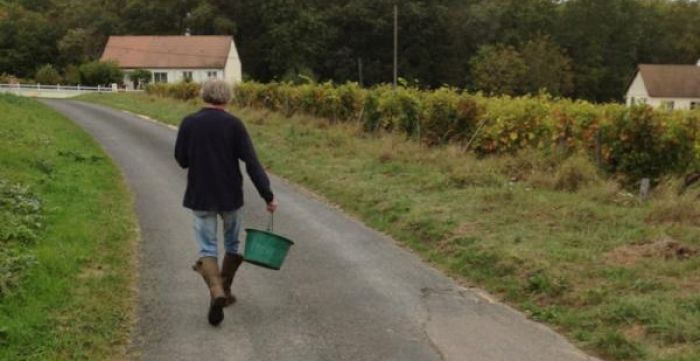
article
22.09.2020
The Didier Diaries Part 6: Le Prélèvement and Testing for Volatile Acidity!
<p><img src="http://louisdressner.com/uploads/images/article/2020_Sep_22//ea/57/ea578eb01bf497783be9a64a25693996.jpg" /></p>
<p>I've already mentioned the process of the <em>prélèvement</em> in the first part of this series, but to reiterate, it consists of grabbing a bucket's worth of grape bunches, crushing and analyzing them to decide if the time is right to <span class="zalup"><span><glossary term="Harvest" title="521">harvest</glossary><span>.</span></span></span> In Part 2, Didier and I had done an initial <em>prélèvement</em> of the <span class="zalup"><span><glossary term="Cabernet Franc" title="216">Cabernet Franc</glossary><span>.</span></span></span> Five days later, it was time to do another one.</p>
<p>The <glossary term="Cabernet Franc" title="216">Cabernet Franc</glossary> is not in the <glossary term="Lieu-Dit" title="594">lieu-dit</glossary> Clos Roche Blanche, but in a <glossary term="Plot" title="1133">plot</glossary> just outside of La Boudinerie (an old farm where Didier, Laurent Saillard and Noëlla Morantin live).</p>
<p><em>"I consider this our best </em><glossary term="Terroir" title="1026"><em>terroir</em></glossary><em>."</em></p>
<p><img src="http://louisdressner.com/uploads/images/article/2020_Sep_22//42/64/4264cd51dd69e7f345377d888cb2ef9a.jpg" /></p>
<p>Didier's instructions were simple: pick a random row to pick random bunches from, repeat until your bucket is full. You also need to constantly snack on grapes to see how they taste. By utilizing this randomized process, you get a global idea of entire <glossary term="Plot" title="1133">plot</glossary>'s overall ripeness. Picking lasted about 20 minutes.</p>
<p><img src="http://louisdressner.com/uploads/images/article/2020_Sep_22//03/91/03913f746ee9955987217e1d27de7c5d.jpg" /><img src="http://louisdressner.com/uploads/images/article/2020_Sep_22//79/e9/79e9fb7429b02bc06c50c758c2532bef.jpg" /></p>
<p>From there, we headed back to "the lab" to test the juice out!</p>
<p><img src="http://louisdressner.com/uploads/images/article/2020_Sep_22//25/00/2500c91f3a325a67e983604952eac21f.jpg" /></p>
<p><img src="http://louisdressner.com/uploads/images/article/2020_Sep_22//06/03/060340f426d9ec76531b96e1731331f0.jpg" /></p>
<p>Catherine noticed that the pigs with arrows were pointing at Julien as if to indicate he was one, prompting us all to laugh.</p>
<p><img src="http://louisdressner.com/uploads/images/article/2020_Sep_22//2f/70/2f702bb1b6e4ff51504256aafcc65548.jpg" /></p>
<p>The first device you can see in the pictures above is similar to an old school thermometer, and this is to measure sugar levels. This next device, which looks like a taser, is to measure <glossary term="PH" title="783">PH</glossary> levels.</p>
<p><img src="http://louisdressner.com/uploads/images/article/2020_Sep_22//b9/db/b9dbee99cc5de3cf985ff02c67e14763.jpg" /></p>
<p>The final test is <span class="zalup"><span><glossary term="Acidity" title="71">acidity</glossary><span>,</span></span></span> where you keep adding this liquid until the juice becomes blue.</p>
<p><img src="http://louisdressner.com/uploads/images/article/2020_Sep_22//53/17/5317535d4417839eaec65e1ce4573ee3.jpg" /></p>
<p><img src="http://louisdressner.com/uploads/images/article/2020_Sep_22//fc/26/fc26e590bc553add961fa8a49f0761ec.jpg" /></p>
<p>I still don't understand how it works, but it's essentially a chemical reaction that happens once there is the right amount.</p>
<p>After manually smushing the grapes I'd picked, it was my turn to analyse my bucket's worth of fruit.</p>
<p><img src="http://louisdressner.com/uploads/images/article/2020_Sep_22//c2/ef/c2efd800c249418e4466bcdf1d2db87a.jpg" /></p>
<p><img src="http://louisdressner.com/uploads/images/article/2020_Sep_22//5e/46/5e4626b689607945180c96664b52d61e.jpg" /></p>
<p><img src="http://louisdressner.com/uploads/images/article/2020_Sep_22//a2/26/a226450e9cd4b32861d1c8de9f482e48.jpg" /></p>
<p>Our results were identical. After testing and tasting the juices, we agreed it tasted good but was not ready. In such, Dider decided to <glossary term="Harvest" title="521">harvest</glossary> the following Tuesday (October 10th).</p>
<p><em>-There is a big difference between today and five days ago, but it's not there yet."</em></p>
<p><em>-You knew just from tasting the grapes in the vines that they weren't ready, didn't you?"</em></p>
<p><em>-Yes. Well, I mean I'm not surprised they aren't ready.</em></p>
<p>On another day, Didier took me to the lab in his room to test the <glossary term="Gamay" title="478">Gamay</glossary> for <span class="zalup"><span><glossary term="Volatile Acidity" title="1116">volatile acidity</glossary><span>.</span></span></span></p>
<p><img src="http://louisdressner.com/uploads/images/article/2020_Sep_22//e5/c9/e5c9917f94ee555aefe82b8afe686fee.jpeg" /></p>
<p>Here is the setup:</p>
<p><img src="http://louisdressner.com/uploads/images/article/2020_Sep_22//c7/14/c71405ac889ce85a745bd7033741dd4a.jpeg" /></p>
<p>Here is the setup:</p>
<p><img src="http://louisdressner.com/uploads/images/article/2020_Sep_22//c7/14/c71405ac889ce85a745bd7033741dd4a.jpeg" /></p>
<p>And the main piece of equipment is this cool ass thing:</p>
<p><img src="http://louisdressner.com/uploads/images/article/2020_Sep_22//3a/78/3a7840a5376276ce5c086d6605f69f08.jpg" /></p>
<p>This is how it works: you add two drops of oxygenated water (which blocks away any <span class="zalup"><span><glossary term="Sulfites" title="993">sulfur</glossary><span>,</span></span></span> which could alter results) and add 10ml of wine. The bottom heats the water, creating rising vapors that boil down the wine. Here is the whole process in action:</p>
<p><iframe allowfullscreen="" frameborder="0" height="360" src="//www.youtube.com/embed/hcf2uteMvok" width="640"></iframe></p>
<p><em>"It's very similar to a distillation".</em></p>
<p>The result of this operation is that all of the wine's <glossary term="Volatile Acidity" title="1116">volatile acid</glossary> is diluted into vapor and water, both completely clear.</p>
<p><em>"Volatile means "it can fly", which is why it can easily get extracted out of the wine. All the other molecules are too heavy and will fall back down."</em></p>
<p>On a completely unrelated note, Didier has this sweet out-of-order pinball machine in his room:</p>
<p><img src="http://louisdressner.com/uploads/images/article/2020_Sep_22//51/50/5150ce9ce188c34b2643d08e9d0b1532.jpg" /></p>
Article
article
22.09.2020
The Didier Diaries Part 7: Le Décuvage!
<p><img src="http://louisdressner.com/uploads/images/article/2020_Sep_22//96/3d/963df1ab1c4e54b8efa7a8d6d5d232ef.jpg" /></p>
<p>The <span class="zalup"><span><glossary term="Décuvage" title="410">décuvage</glossary><span>,</span></span></span> or "devatting", is the critical moment when you <glossary term="Pressing" title="827">press</glossary> the red grapes that have been <glossary term="Maceration" title="610">macerating</glossary> on their skins, stems and seeds to <glossary term="Extraction" title="433">extract</glossary> their juice. To do so, you have to manually take them out of the <glossary term="Vat/Tank" title="1140">vat</glossary> where they have been <span class="zalup"><span><glossary term="Maceration" title="610">macerating</glossary><span>.</span></span></span></p>
<p><iframe allowfullscreen="" frameborder="0" height="360" src="//www.youtube.com/embed/lHYYZADXKHY" width="640"></iframe></p>
<p>That juice you see dripping from the <glossary term="Vat/Tank" title="1140">vat</glossary> is called the <glossary term="Free-Run Juice" title="468">jus de goutte</glossary>; this comes from the grapes at the bottom of the <glossary term="Vat/Tank" title="1140">vat</glossary> crushed by the weight of the bunches on top of them. The <glossary term="Free-Run Juice" title="468">jus de goutte</glossary> has usually finished its <glossary term="Alcoholic Fermentation" title="87">alcoholic fermentation</glossary> by the time of the <span class="zalup"><span> <glossary term="Décuvage" title="410">décuvage</glossary><span>,</span></span></span> but the berries that haven't completely burst still have a ways to go.</p>
<p>The <glossary term="Free-Run Juice" title="468">jus de goutte</glossary> drips down into the <span class="zalup"><span><glossary term="Pneumatic Press" title="811">press</glossary><span>,</span></span></span> which is directly below the <span class="zalup"><span><glossary term="Vat/Tank" title="1140">vats</glossary><span>.</span></span></span></p>
<p><img src="http://louisdressner.com/uploads/images/article/2020_Sep_22//96/76/96767588b90beaa1e8c7ffbb4a6ad8ad.jpeg" /></p>
<p>From there, the first step involves shoveling out the grapes from the <glossary term="Vat/Tank" title="1140">vat</glossary> into the <span class="zalup"><span><glossary term="Pneumatic Press" title="811">press</glossary><span>.</span></span></span></p>
<p><img src="http://louisdressner.com/uploads/images/article/2020_Sep_22//f6/d1/f6d190d5de2c08b40938cf7bcc7f7d2e.jpg" /></p>
<p><img src="http://louisdressner.com/uploads/images/article/2020_Sep_22//af/b1/afb1e2df6a8d8c5f502f21c99ab5e327.jpg" /></p>
<p><img src="http://louisdressner.com/uploads/images/article/2020_Sep_22//21/9d/219d56f29ba663fb7ea6db96dfcb036d.jpg" /></p>
<p><img src="http://louisdressner.com/uploads/images/article/2020_Sep_22//84/d8/84d84693e27a57a23a78f7952c42a1d5.jpg" /></p>
<p><img src="http://louisdressner.com/uploads/images/article/2020_Sep_22//9f/cc/9fccb4f5cd25884c50bd634ae1785327.jpeg" /></p>
<p>You eventually get to a point when you can't reach any more grapes from the outside and must physically enter the <glossary term="Vat/Tank" title="1140">vat</glossary> to keep pushing them out.</p>
<p><img src="http://louisdressner.com/uploads/images/article/2020_Sep_22//87/7f/877f9922c31f9701b14d6481acbfbf63.jpg" /></p>
<p>A few days after we <glossary term="Décuvage" title="410">devatted</glossary> the <span class="zalup"><span><glossary term="Gamay" title="478">Gamay</glossary><span>,</span></span></span> I went into the <glossary term="Vat/Tank" title="1140">vat</glossary> of <glossary term="Malbec" title="366">Côt</glossary> to repeat this operation. IT IS SO HOT IN THERE! As Eben Lillie once described it:</p>
<p><em>"It's like being in a NYC subway with broken air conditioning In August!"</em></p>
<p>Not only that, but because of all the trapped <span class="zalup"><span><glossary term="Co2" title="310">CO2</glossary><span>,</span></span></span> you get very light-headed. It's kind of fun but also a little freaky, since fainting is never a good look.</p>
<p>Anyway, once the grapes are in the <span class="zalup"><span><glossary term="Pressing" title="827">press</glossary><span>,</span></span></span> it's time for the juice to flow!</p>
<p><iframe allowfullscreen="" frameborder="0" height="360" src="//www.youtube.com/embed/C0zhwU84I-k" width="640"></iframe></p>
<p><img src="http://louisdressner.com/uploads/images/article/2020_Sep_22//2e/2d/2e2da091af0deba86bd5af53bf823259.jpeg" /></p>
<p><img src="http://louisdressner.com/uploads/images/article/2020_Sep_22//ff/9e/ff9e847ad3f9e83d8c4484bfafe49600.jpeg" /></p>
<p><img src="http://louisdressner.com/uploads/images/article/2020_Sep_22//17/c0/17c0a44b5c857391792a10610433aa65.jpeg" /></p>
<p>As you can see, the <glossary term="Vat/Tank" title="1140">vats</glossary> and <glossary term="Pneumatic Press" title="811">press</glossary> are outside (a unique particularity at Clos Roche Blanche), and the wine is <glossary term="Racking/Soutirage" title="843">racked</glossary> by <glossary term="Gravity" title="1165">gravity</glossary> into the underground <span class="zalup"><span><glossary term="Cellar" title="254">cellar</glossary><span>.</span></span></span></p>
<p>A few hours later, it was time to clean the <span class="zalup"><span><glossary term="Pneumatic Press" title="811">press</glossary><span>.</span></span></span> The first step of this required removing the marc (or <glossary term="Pomace" title="1404">pomace</glossary>), aka the solid remains of grapes after <glossary term="Pressing" title="827">pressing</glossary> for juice. Didier tractored this bin over so we could throw it in there.</p>
<p><img src="http://louisdressner.com/uploads/images/article/2020_Sep_22//27/64/2764c8e6d4007785c4b4e52ffa1729a3.jpeg" /></p>
<p>By observing the marc, you can see that the grapes are evenly flattened but the stems aren't.</p>
<p><img src="http://louisdressner.com/uploads/images/article/2020_Sep_22//f6/86/f6869d0122282ca46d4410d07b419d9d.jpeg" /></p>
<p><img src="http://louisdressner.com/uploads/images/article/2020_Sep_22//d7/8b/d78bb4abb78c67453fed0958ff032322.jpg" /></p>
<p><img src="http://louisdressner.com/uploads/images/article/2020_Sep_22//16/e6/16e6e322dff9b88f62f150fb04aa5627.jpg" /></p>
<p><em>"This is great because it means the marc isn't imparting its flavor into the wine. 15 years ago, equipment was much less efficient. You would always see flattened stems."</em></p>
<p>As far as the <glossary term="Pneumatic Press" title="811">press</glossary> itself, the way it works is as follows: a bladder full of air pushes in a vertical line. Grapes are <glossary term="Pressing" title="827">pressed</glossary> and go through this grid, which does not let solids through.</p>
<p><img src="http://louisdressner.com/uploads/images/article/2020_Sep_22//5b/1d/5b1dfb987798da7dc1ca6a07bfcc769e.jpeg" /></p>
<p>The marc is aged for three years, then used as a natural <glossary term="Compost" title="323">compost</glossary> for the vines.</p>
<p>After the marc had been cleared, it was time to vigorously hose everything down.</p>
<p><em>"Being a </em><glossary term="Vigneron/Vignaiolo" title="1089"><em>vigneron</em></glossary><em> is 90% manual labor and 10% internal reflection. On the other hand, vinifying is 10% reflection and 90% cleaning stuff. It's not as noble as everyone thinks!"</em></p>
<p>For every liter of wine produced, you need 1.5 liters of water to clean up the equipment.</p>
<p><em>"It used to be two liters. We have better technology now."</em></p>
Article
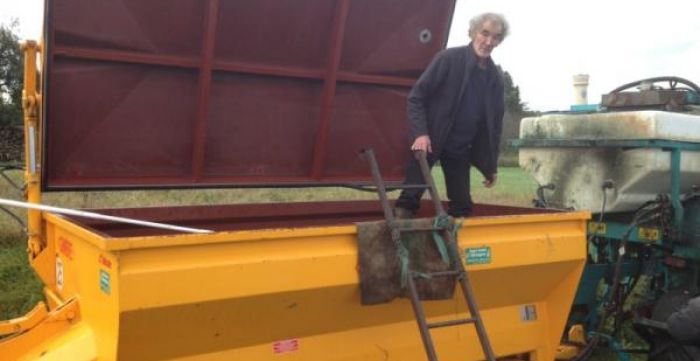
article
22.09.2020
The Didier Diaries Part 8: The Grand Finale!
<p><strong>This final post is dedicated to Joe Dressner and Joe Dougherty. Your spirits live in the Clos forever.</strong></p>
<p><img src="http://louisdressner.com/uploads/images/article/2020_Sep_22//f9/8c/f98c3368bacc7f19cccf4c0331acf39e.jpeg" /></p>
<p>I can't remember what time I woke up, but it was early. As if by divine intervention, it just so happened that the last <glossary term="Harvest" title="521">harvest</glossary> day of Clos Roche Blanche's last <glossary term="Vintage" title="1109">vintage</glossary> landed on my last day in France. Sometimes, when you know you are going to be part of something significant before it's actually happened, you'd expect emotions to be running high from the get-go. To my surprise, everyone remained cool and collected throughout the work day. Later on would be another story...</p>
<p>Just like with the <span class="zalup"><span><glossary term="Malbec" title="366">Côt</glossary><span>,</span></span></span> Catherine and I were the last ones to arrive to the vines. Once again, Catherine immediately got into boss-mode and started leading us into the rows. Friends and family came to help, including Laurent Saillard:</p>
<p><img src="http://louisdressner.com/uploads/images/article/2020_Sep_22//86/c6/86c6bb417b0891ad551418eb5bffdd54.jpeg" /></p>
<p>Béatrice Augé and Balou:</p>
<p><img src="http://louisdressner.com/uploads/images/article/2020_Sep_22//cc/f3/ccf33dfb7812f16cb7c754b6d2bf07a0.jpg" /></p>
<p>Catherine's daughter Claire:</p>
<p><img src="http://louisdressner.com/uploads/images/article/2020_Sep_22//b7/dd/b7dd74a38016cb4aeee1c82441074359.jpeg" /></p>
<p>The morning went by smoothly, with everyone working at a brisk, professional pace. Except me. I was super slow.</p>
<p><img src="http://louisdressner.com/uploads/images/article/2020_Sep_22//d8/3e/d83e8db1ed94a4d6e4a0f066cc479d1d.jpeg" /></p>
<p><img src="http://louisdressner.com/uploads/images/article/2020_Sep_22//a2/b1/a2b1e29ae7592fbf200e600cfe2e712c.jpeg" /></p>
<p>The <glossary term="Malbec" title="366">Côt</glossary> was nothing to scoff at and the <glossary term="Romorantin" title="867">Romorantins</glossary> at Tue-Boeuf were gorgeous, but this <glossary term="Cabernet Franc" title="216">Cabernet Franc</glossary> gave' em a run for their money.</p>
<p><img src="http://louisdressner.com/uploads/images/article/2020_Sep_22//e5/01/e501463e5ae409ac2d54b2eac0a3dedb.jpg" /><img src="http://louisdressner.com/uploads/images/article/2020_Sep_22//3f/d2/3fd290aa6dce59dd4ec3e2f037fb72d3.jpg" /></p>
<p><img src="http://louisdressner.com/uploads/images/article/2020_Sep_22//c5/33/c533cca6ed93b279a90e26f40325786e.jpg" /></p>
<p>While we harvested, Didier vigilantly observed every bunch being dumped into the wagon to inspect quality and get rid of dirty extras such as leaves or branches.</p>
<p><img src="http://louisdressner.com/uploads/images/article/2020_Sep_22//44/76/447676de0fb9b55f39ad7ff3765b3bca.jpeg" /></p>
<p><img src="http://louisdressner.com/uploads/images/article/2020_Sep_22//d2/30/d2304019112aa06af4846d721ed8f7cc.jpeg" /></p>
<p><img src="http://louisdressner.com/uploads/images/article/2020_Sep_22//36/40/3640f08cb89263804ef5e97999063d7c.jpeg" /></p>
<p>Around noon, the wagon was full so Catherine sent the harvesting team home for lunch while we got ready to load what had been been picked into a <span class="zalup"><span><glossary term="Vat/Tank" title="1140">vat</glossary><span>.</span></span></span> Before we could do this, six of us had to MANUALLY LIFT an old car that was in the way of the <glossary term="Vat/Tank" title="1140">vat</glossary> (we thought we could push it but the front breaks were stuck, resulting in an improvised Worlds Strongest Man event). Then Catherine had to do some serious tractor maneuvering to get the wagon in position.</p>
<p><img src="http://louisdressner.com/uploads/images/article/2020_Sep_22//56/3b/563b6eaae0cd5c8b6d3d19dd367c2f8e.jpeg" /></p>
<p><img src="http://louisdressner.com/uploads/images/article/2020_Sep_22//a9/35/a93540e94e232325e95a7b9d4a2fd56c.jpeg" /></p>
<p>Unlike with the <span class="zalup"><span><glossary term="Malbec" title="366">Côt</glossary><span>,</span></span></span> here we did not manually <glossary term="De-stemming" title="378">destem</glossary> a portion of the grapes on a moving tray table. Instead, we loaded the grapes into an égrapeuse, a mechanical device that <glossary term="De-stemming" title="378">destems</glossary> the grapes. But first, we had to drain the juice from the grapes crushed at the bottom of the wagon:</p>
<p><iframe allowfullscreen="" frameborder="0" height="360" src="//www.youtube.com/embed/72E77Onrolc" width="640"></iframe></p>
<p>Once the grapes were ready to come out, we got to work!</p>
<p><iframe allowfullscreen="" frameborder="0" height="360" src="//www.youtube.com/embed/5VgdjNHpWcM" width="640"></iframe></p>
<p>You can't tell from the video, but you actually need five people involved at all times for this entire process: the first is Didier pushing grapes out from the top of the wagon. The wagon is equipped with this mechanism to make things go smoother:</p>
<p><iframe allowfullscreen="" frameborder="0" height="360" src="//www.youtube.com/embed/srwJh3Vwqrw" width="640"></iframe></p>
<p>The whole time, Claire was making sure the grapes fell correctly into the égrapeuse. You also need a person clearing the bins of discarded stems and two people getting their hands dirty at the bottom and pushing grapes through to make sure the machine doesn't get clogged. The last job is quite strange, since your hand is emerged in juice that is much colder than you'd imagine, effectively making your hand feel like an icicle.</p>
<p>Once this was done, we sat down for a long, beautiful lunch prepared by Catherine's mother Solange.</p>
<p><img src="http://louisdressner.com/uploads/images/article/2020_Sep_22//c4/73/c473e032207870f673179bb98ce7cb5d.jpeg" /></p>
<p>There was still some work to do, so got right back to it around 2:00pm.</p>
<p><img src="http://louisdressner.com/uploads/images/article/2020_Sep_22//03/8b/038bc78be357228abede6958fbb8580d.jpg" /></p>
<p>And then, in a little over an hour's work, it was over. I was trailing in the back, but it was confirmed by Laurent's:</p>
<p><em>"That's it for Clos Roche Blanche's 2014!"</em></p>
<p>There were of course grapes to load into the <span class="zalup"><span><glossary term="Vat/Tank" title="1140">vat</glossary><span>,</span></span></span> but not nearly as much as the morning's <span class="zalup"><span><glossary term="Harvest" title="521">harvest</glossary><span>.</span></span></span> When we got back down to the house, Catherine was paying her pickers one by one. Some hung out, others left as soon as they got their check. There was some wine open, but I was desperately craving beer so Laurent, Claire and I went on a mission to grab a bunch.</p>
<p>Sipping beers, the late afternoon conversation was jovial. As it began getting darker, those still hanging agreed it was time to eat something. Along with the leftovers from lunch, Catherine cooked a huge bowl of pasta. Though every meal at Clos Roche Blanche is always complemented with wine from the <span class="zalup"><span><glossary term="Estate" title="427">estate</glossary><span>,</span></span></span> Didier chose to serve us, in honor of it being my favorite wine EVER, his very last bottle of "L'Arpent Rouge" 2010.</p>
<p><img src="http://louisdressner.com/uploads/images/article/2020_Sep_22//9a/1d/9a1d71a4ba552aa11483474ae9821013.jpg" /></p>
<p>As the night went on, things predictably got emotional, especially as I had to tell many of the people I'd spent the last two weeks with goodbye. I also individually thanked Didier and Catherine for letting me be a part of this experience, one that for so many reasons will remain a hallmark in my life.</p>
<p>It got a little weepy...</p>
<p>Being there for the end of something that truly mattered is certainly bittersweet. Clos Roche Blanche is a magical place and Catherine and Didier are magical people; whether they realize it or not, they have touched and inspired countless lives through their work.</p>
<p>As I stood outside at the end of the night, alone and watching the stars in the crystal clear sky, I didn't feel sad. If anything, I was excited to see what the future holds: for the Clos Roche Blanche vines, for Catherine, for Didier, for Laurent and Julien.</p>
<p>And shit, even for me. </p>
<p><img src="http://louisdressner.com/uploads/images/article/2020_Sep_22//31/96/3196195ab10d07f917887cee862be82f.jpg" /></p>
Article
article
08.07.2020
A Walk in the Woods with Catherine by Joe Dougherty
<p><em><strong>Written by Joe Dougherty on February 4th, 2001 and posted to winedisorder.com </strong></em></p>
<p>Author Topic<br />
SFJoe<br />
<br />
USA<br />
830 Posts Posted - 02/04/2001 : 11:45:35</p>
<p><br />
Apologies in advance--it has been a packed few weeks since these events, and my memory isn't much at the best of times. I wouldn't take my impressions of the wines too seriously if I were you. Maybe I'll just give them numbers<br />
As I said, it was just a few weeks ago. I had the excellent fortune to attend the storied jeebus at the global HQ of wine impresario Joe Dressner and his consort Denyse. They plied a group of mostly East Coast wine geeks with a vast assortment of the best terroir-driven wines from France and Portugal. They did this not as you might think out of kindness, generosity, or a spirit of good fellowship, but, as I have learned since, out of a crass commercial desire to have the wines hyped by the various Internet scribes in attendance. This goal was reasonably well accomplished, as we have seen. Me, I knew better than to hype those wines. It's hard enough to get ahold of those gems without having to elbow aside every lurker on the Web. I'll keep any kind thoughts about the Louis/Dressner portfolio to myself, thank you very much, until I've managed to score my fill of Luneau-Papin Muscadet and maybe sent some to my sister.<br />
<br />
In any case, the talk of the tasting was France: regions, weather, the inhabitants, their amusing folk customs, their colorful native garb, their quaint political arrangements, the works. I found this more than usually compelling, since I was headed there myself a week later. I mentioned this plan to Impresario Dressner when I managed to have a quiet moment with the great man. I also mentioned that I was refusing to work the American holiday that happened during my trip (they have better working conditions in France), and that I'd have an uncommitted day or two in Paris and environs during the "weekend" (as I believe they say) I would be there. At this, the great man leapt into action (an impressive sight, if you haven't seen it for yourself--not bad for a cardiac patient). "But you must visit some of my growers," he said. I allowed as how it had been a lifelong dream of mine, but that I knew his terroir-machers were busy, busy, busy, making the terroir and jamming it into bottles, making the terroir... "Pshaw," he said, surprising me with the pronunciation of that little-used word. "Denyse and I will call them. They will see you. But it is very far from Paris to Touraine and Bourgueil and so on" "I will rent a fast car," I assured them, "a very fast car."<br />
<br />
As the week sped by, various cryptic communications reached me by electronic means. Some of them were sensible--Sunday was propitious, some growers might see me. Others were puzzling--one that reached me after I'd left home insisted, "bring your boots!" What could this mean? In any case, it was far too late for boots. I was off to be tortured in London by sell-side pharmaceutical analysts from around the world.<br />
<br />
The worldwide conspirators were merciless, but they released me late on Friday, and I went drinking with the amusing Irishmen. We drank many things in many picturesque places in London, but I won't bore you. Well, OK, if you have occasion to drink after hours, the bar at Claridge's has a splendid Armagnac selection, particularly if you can get the Irish to pick up the tab.<br />
<br />
The next morning I left London with a light heart and a throbbing head and hopped the train to Paris. I arrived at my hotel and immediately began badgering the staff--a room change, faxes, packages to send, how soon could they return laundry?, and so on. They were used to such antics. A fistful of quatloos to the concierge and all was well. That night, the car rental place dropped off my very fast car, which looked most stylish curbside near the hotel when I returned from a dinner memorable only for a Clos Rougeard Saumur-Champigny.<br />
<br />
Somewhat behind schedule, I awoke the next morning, filled the trunk (a 2 bouquet capacity) of the VFC with flowers (purchased the day before at the local market and refrigerated in the bathroom of my hotel with the window open to the winter chill), and raced off to my first appointment at Clos Roche Blanche. Fortunately, the Peripherique was uncrowded, and once through the Porte du Orleans the roads were almost empty that Sunday morning. The VFC was good for a steady 210 down the highway, but I was wary of the left lane as I drove south. It was shaded by the central divider from the weak rays of the rising winter sun in the east, and seemed still to be decorated by frost. Dressner's myrmidons had used their devilishly clever technology to provide me with computer-generated directions that frequently led me to the correct road.<br />
<br />
At last, I arrived at the appointed spot, the "strange white limestone house perched on a hillside on your left," in the most accurate words of the directions. And quite a magical spot it is. I was still putting away my Dave Grissman CD ("Dawganova" is great company for the Loire countryside) and reaching for my coat when Catherine appeared. I delivered half the flowers in the trunk to her, and we set off on a walk through her vineyards and woods. This was the walk for which I was to have brought boots, as it appeared. Fortunately, the frost that had me concerned on the road had seized the mud in the fields and woods, and my new Gore-Tex shoes were well up to the task.<br />
<br />
We walked only the hill just behind the house and winery. This included the 107-year-old Cot vines and an assortment of others. The Cot vines were as gnarly as my previous standard, old California Zinfandel, but they were set much lower to the ground. Catherine explained that they were at the northern limit of viticulture in France, and that the grapes required reflected heat from the ground to reach full ripeness. Even at 1130 AM, the frost was still white on the fields. Catherine was delighted by the cold, saying that she had missed winter. It had been very warm all fall, and she was worried about the vines getting a proper chill for their vegetative cycle.<br />
<br />
As we walked, we talked mushrooms. No one will be surprised, I suppose. Denyse had told Catherine some wild tale about my mycophagy, and she had taken it to heart. We spoke of "chanterelles," which was a category that locally included, but was not limited to, "girolles." I mentioned San Francisco chanterelles that were as big as a soccer ball and she politely pretended to credit my traveller's tale. She showed me the spot where the day before she had picked chanterelles for the lunch we were to have. A few frozen Cantharellus infundibuloformis and cut stems still marked the place. I said that I had picked the same mushrooms two weeks before on the Mendocino coast in California, but that I preferred black chanterelles, which grew at the same time.<br />
<br />
It gradually became clear to me what a difference there was between my notion of mushrooms and hers. My fungal world is one of sudden, arbitrary abundance and long hoarding. I only get a few opportunities to pick each year, and I must stretch the result through a series of opulent dinner parties for discriminating and outspoken New York wine geeks. Catherine, OTOH, eats mushrooms only in season (she doesn't preserve one season's bounty for later use). When I want black chanterelles, I fly to San Francisco, rent a car, drive 2 1/2 hours north, pick as many as I can in a day, dry them, and carry them home for future use. When Catherine wants them, she walks 5 minutes up the hill behind her house and picks what she needs for that meal.<br />
<br />
We walked back and toured the rather fancy gravity-fed winery that leads down from the vineyard at the top of the hill. As you would expect, it is all the most gentle and organic of joints.<br />
<br />
Back into the house we went, to meet up with Didier and an assortment of relatives. Some of these were fluent in English and able to converse with me, and others were shy. These delightful people brought me into their family Sunday dinner, and were as open and hospitable as they could possibly have been. Catherine showed me a bowl of wild greens that she had picked from her organic vineyard. "We call these "mache," she said. "Funny, so do we," I reported. I described how, in New York, mache was grown hydroponically (try to translate *that*), and was extremely expensive. The guests were very amused. Didier opened a bottle of CRB Sauvignon Blanc 1999. As with many wines from CRB, it tasted more of the neighborhood than the grapes. A fine effort from a sub-thrilling vintage (if one were prone to generalization), it had guts, grip, and fruit, and was a dandy start to an afternoon's drinking. It also had the typical CRB minerality in spades, or perhaps crystals. The wine spent 1-2 days on the skins, and then a day after pressing at 4*, rising to 18* for the fermentation.<br />
<br />
The pork pot roast with C. infundibuloformis and potatoes was deelish, and was well complemented by two older wines that Didier opened. (When he saw me taking a brief note, he thought that I might be taking notes on his English. I replied that there were no notes worth taking on my French). The 1988 Assemblage (Cot, Cab, Gamay) was still a young wine, with little bricking and no brown at all. Surprisingly, Gamay fruit was still evident on the nose. The wine was firm, with significant acids and some tannin.<br />
<br />
Later, Didier opened the 1993 Assemblage. He ferments all the grapes together, leading sometimes to very ripe gamay, for instance. He believes that the different grapes bring different indigenous yeasts, adding complexity to the wine. The 1993 was even younger, although less acidic and fuller than the 1988. Both were delicious and obviously had room to run.<br />
<br />
Other differences between their traditional notions of mushrooms and mine became apparent when I told them that black chanterelles were great with fish. They smiled politely, but their exchanged glances made it obvious that the thought balloons over their heads had circling fingers pointed at their temples.<br />
<br />
The sun was getting lower in the sky, and I wanted to reach Chez Breton before dark, so I hopped in the VFC and headed out. Catherine reported to me that her college-age daughter described the VFC as "pure," a hipster French expression of approval.<br />
<br />
<br />
Edited by - sfjoe on 02/04/2001 11:51:56<br />
<br />
Edited by - sfjoe on 02/11/2001 19:13:19</p>
Article
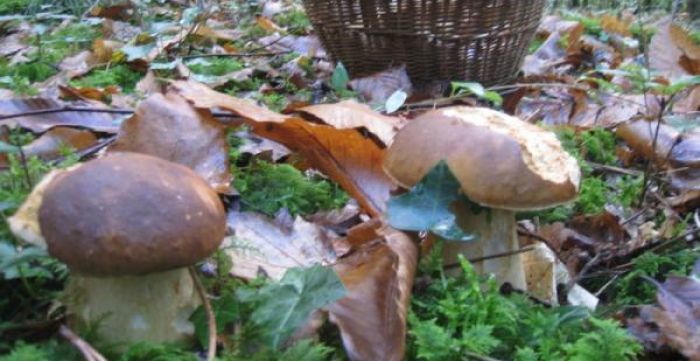
harvest report
10.10.2013
2013 Harvest Report from Catherine Roussel
<p><u><strong>October 14th, 2013:</strong></u></p>
<p>It's not the <glossary term="Vintage" title="1109">vintage</glossary> of the century, but at least there's juice.<br />
<br />
Three things to get through this harvest's sulky weather:<br />
<br />
1. You have to be in a good mood every morning when you wake up.<br />
2. You need a good team that can work faster than rot.<br />
3. A tray table.<br />
<br />
We started on October 8th with the <span class="zalup"><span><glossary term="Sauvignon Blanc" title="927">Sauvignons</glossary><span>,</span></span></span> with an <glossary term="alcoholic potential" title="1381">alcoholic potential</glossary> of 12°/12.5°, <glossary term="Acidity" title="71">acidities</glossary> reaching 5.5g and a <glossary term="PH" title="783">PH</glossary> between 3.12 and 3.15. The grapes we harvested were nice and ripe, (except in one <glossary term="Parcel" title="760">parcel</glossary>), but lack <span class="zalup"><span><glossary term="Concentration" title="324">concentration</glossary><span>.</span></span></span><br />
<br />
The <glossary term="Gamay" title="478">Gamay</glossary> was harvested last Friday: 11°, 6g of <glossary term="Acidity" title="71">acidity</glossary> and a <glossary term="PH" title="783">PH</glossary> of 3.16, The juice is clear and clean thanks to very strict <span class="zalup"><span><glossary term="Sorting" title="1380">sorting</glossary><span>.</span></span></span><br />
<br />
We picked the <glossary term="Pineau d'Aunis" title="799">Pineau d'Aunis </glossary>this morning, and will only make <glossary term="Rosé/Rosato" title="871">rosé</glossary> this year. 11°5, 5.5g <span class="zalup"><span><glossary term="Acidity" title="71">acidity</glossary><span>,</span></span></span> <glossary term="PH" title="783">PH</glossary> 3.25. The juices coming from the <glossary term="Pneumatic Press" title="811">press</glossary> are vividly colored. Surprising!<br />
<br />
In the end we are satisfied, because nothing tasted like rot and the balance of the sugars/<glossary term="Acidity" title="71">acidity</glossary> is ok. We're predicting harvesting the <glossary term="Malbec" title="366">Côt</glossary> on Thursday and the <glossary term="Cabernet Franc" title="216">Cabernet</glossary> next week.</p>
Article
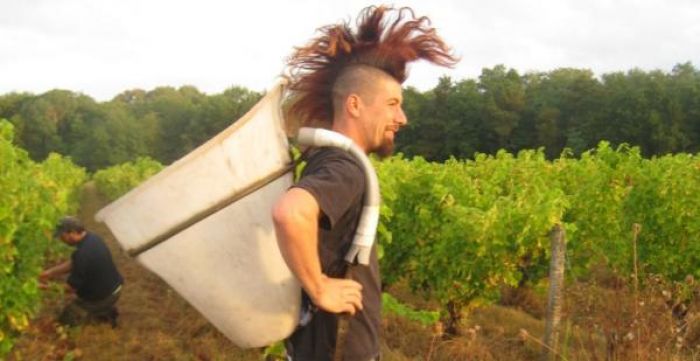
harvest report
16.09.2012
By Catherine Roussel
<p><strong>SEPTEMBER 16th, 2012:</strong><br />
<br />
Here's my first recap of the microscopic harvest of 2012: the smallest vintage I've ever seen... And ok, I'll admit I'm not 60 yet, but I've got over 40 harvests under my belt!!!<br />
<br />
...All that to say that there will be no Sauvignon n°2 in 2012. We were only able to gather 25 measly hectoliters, which Dider will vinify as n°5. We're waiting a week to harvest the gamays, I'll let you know what happens...<br />
<br />
The constant rain that did so much damage in the vines this June and July is now what we're desperately missing! The few grapes that resisted against mildew have very little juice. It's depressingly beautiful out (us peasants are never happy!), which is great to dry the laundry but terrible for me since I can't go picking mushrooms. It's really a year of nothing!<br />
<br />
<strong>OCTOBER 1st,2012:</strong><br />
<br />
...15 days after harvesting the sauvignons, we started with the gamay (Thursday, the 27th). The 33mm that fell between the 21st and 26th helped plump up the skinny berries. Yields are mediocre, but better than the Sauvignon (more juice), we'll know exact quantities when everything is in barrel.<br />
<br />
The next day, we harvested the Pineau D'Aunis, and finally we had some fun! Our harvesters were happy to actually be picking big, plentiful berries full of juice… Alleluia! Because the grapes are very ripe and clean, Didier has decided to only make Arpent Rouge this year, so no rosé in 2012... Yields were too low to make both.<br />
<br />
We're back to constant warm days and cold nights. We worry, because if the vines get hit with frost again, the very little bit of Côt and Cabernet left will have a really hard time ripening correctly.<br />
<br />
I hope our team of harvesters doesn't decide to drop us. Working 2 days every 15 days isn't very motivating…<br />
<br />
See you next time for part 3!</p>
Article
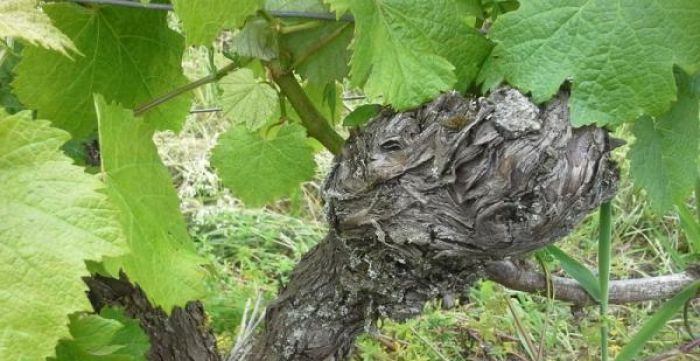
harvest report
14.09.2011
2011 Harvest Report from Catherine Roussel
<p><strong>September 5th, 2011:</strong></p>
<p>After some procrastination Didier finally set the start date of August 26th... thanks to him we have to start on Friday and work through the weekend but I guess our work is never done!<br />
<br />
In any case we finished harvesting the <glossary term="Sauvignon Blanc" title="927">Sauvignon</glossary> on the 31st. The maturity ranges from 12.2 to 13.5% and the <glossary term="Acidity" title="71">acidity</glossary> varies from 5.6G to 4G. It was a very healthy <glossary term="-Select term-" title="">harvest</glossary> with very little <glossary term="Sorting" title="1380">sorting</glossary> so the harvesters are very happy.<br />
<br />
<glossary term="Gamay" title="478">Gamay</glossary> was picked Friday (the hottest day of the week! The pickers were dropping like flies ....): 11,6% alcohol with 5.9 acidity. There was some <glossary term="Sorting" title="1380">sorting</glossary>; not too much rot, but a few pink clusters. It will be a light and fruity <span class="zalup"><span><glossary term="Gamay" title="478">Gamay</glossary><span>.</span></span></span><br />
<br />
Tomorrow morning we'll start harvesting the <span class="zalup"><span><glossary term="Pineau d'Aunis" title="799">Pineau d'Aunis</glossary><span>.</span></span></span> We plan on making <glossary term="Rosé/Rosato" title="871">rosé</glossary> with it and "Arpent Rouge" if the <glossary term="Yield" title="1129">yields</glossary> are high enough!</p>
<p><u><strong>September 14th, 2011:</strong></u></p>
<p>Big news! Didier has decided to make "Arpent Rouge" in 2011! We harvested the <glossary term="Pineau d'Aunis" title="799">Pineau d'Aunis</glossary> for the <glossary term="Rosé/Rosato" title="871">rosé</glossary> on September 6th and for the "A.R" on the 12th. We started the <glossary term="Malbec" title="366">Côt</glossary> as well, but it rained a lot on the 11th so the grapes are a little diluted with 12% and 5g of <span class="zalup"><span><glossary term="Acidity" title="71">acidity</glossary><span>.</span></span></span><br />
<br />
We're letting the <glossary term="Cabernet Franc" title="216">Cabernet</glossary> mature a bit longer for better <span class="zalup"><span><glossary term="Concentration" title="324">concentration</glossary><span>.</span></span></span> If the weather permits Didier hopes to finish by the end of the week. Things have been taking longer than usual and our team in getting progressively smaller and smaller so…</p>
Article
article
24.09.2020
Catherine Roussel's 2011 Mushroom Picking Report
<p><img src="http://louisdressner.com/uploads/images/article/2020_Sep_24//79/c4/79c41bca303c18bfac7708ba9daecc84.jpg" /></p>
<p>Many of you may not know that Catherine Roussel loves picking mushrooms. She is fiercely competitive and keeps many of her prized picking locations secret. Because enquiring minds want to know, Catherine was nice enough to write us a 2011 mushroom picking report:</p>
<p>Crappy weather for the vines is a godsend for mushroom pickers like me! As early as August I was already finding Oronges- Orongue is a rare mushroom from the south that you barely see in our area, but we're finding more and more of them due to global warming. Another name for it is "Amanite des Césars" because Roman emperors were quite fond of it...</p>
<p>These days I'm picking a lot of "Trompettes de la Mort". I have to climb down deep into the rouères (a local word for ravines, for example the one that separates Clos Roche Blanche and la Boudinerie), because they only appear in the most humid areas. This also works to my advantage because lazier pickers won't go that far out of their way for mushrooms.</p>
<p>I try not to bring Pif with me because he has a lot of trouble coming back up the hills (some are very steep). I've also picked some "Girolles" and "Pieds de Mouton" but I won't tell you where!</p>
<p>Catherine's home cooking recommendations with mushrooms:</p>
<p>I don't really have any secret recipes. We eat them as is, or "brouillade" (with scrambled eggs) or omelets or ZE BEST: with a guinea hen from Pascal Cazin in Cheverny (editor's note: François Cazin's brother!) in a pressure cooker with chestnuts picked in the same woods. Miam!</p>
Article
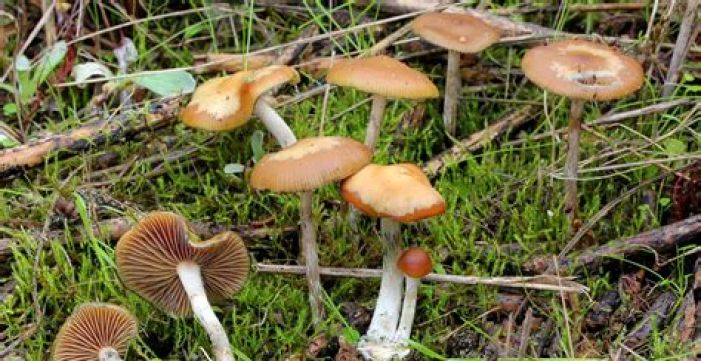
harvest report
09.09.2010
2010 Harvest Report from Catherine Roussel
<p><u><strong>On Sept. 9th:</strong></u></p>
<p>Here is the latest. On Tuesday night (Sept. 7th) it started to rain and Didier said: “It’s raining <span class="zalup"><span><glossary term="Hectoliter" title="524">hectoliters</glossary><span>.</span></span></span>”<br />
Me: “Mmm”<br />
Silence.<br />
Didier: “Maybe on the ground…”<br />
Me: [no comment]</p>
<p>In fact, we had 21mm of rain, the berries are going to swell and now we are waiting for more sun (ah, those <span class="zalup"><span><glossary term="Peasant" title="769">peasants</glossary><span>,</span></span></span> they are never happy!!!)</p>
<p><br />
Didier should know on Sunday when we start the <span class="zalup"><span><glossary term="Harvest" title="521">harvest</glossary><span>.</span></span></span><br />
<br />
<u><strong>On Sept. 13th:</strong></u></p>
<p>We are going to start the <glossary term="Harvest" title="521">harvest</glossary> next Thursday, Sept. 16th. The <glossary term="Cluster/Bunch" title="1138">bunches</glossary> are big, there are lots of them, at long last a mega big crop to look forward to, and the grapes taste good.<br />
Story to be followed.<br />
<br />
<u><strong>On Sept. 27th:</strong></u></p>
<p>Last week we picked our <glossary term="Gamay" title="478">Gamay</glossary> (not much of it, but really beautiful <glossary term="Cluster/Bunch" title="1138">bunches</glossary>), then our young <glossary term="Pineau d'Aunis" title="799">Pineau d’Aunis</glossary> meant for "l’Arpent Rouge" (enormous <glossary term="Cluster/Bunch" title="1138">bunches</glossary>) and finished our <glossary term="Sauvignon Blanc" title="927">Sauvignon Blanc</glossary> (the "No.5" <glossary term="Cuvée" title="363">cuvée</glossary> is superb).<br />
<br />
All these grapes were between 12 and 13 degrees of <glossary term="alcoholic potential" title="1381">potential alcohol</glossary> with 5.5 g of <span class="zalup"><span><glossary term="Acidity" title="71">acidity</glossary><span>,</span></span></span> so Didier is very relieved.<br />
It rained a ton the night of Thursday to Friday (23rd-24th), I did not sleep well, but this hard rain on a dry ground just rolled away, and on Friday even <glossary term="Machine Harvesting" title="611">harvesting machines</glossary> could safely go into the vines, so of course there was no problem for our pickers.</p>
<p><br />
We still have to pick our <glossary term="Pineau d'Aunis" title="799">Pineau d’Aunis</glossary> for <span class="zalup"><span><glossary term="Rosé/Rosato" title="871">rosé</glossary><span>,</span></span></span> our <glossary term="Malbec" title="366">Côt</glossary> and <span class="zalup"><span><glossary term="Cabernet Franc" title="216">Cabernet</glossary><span>,</span></span></span> and if this week is not too humid, they should all be in good shape.<br />
<br />
Yesterday I foraged a whole basket of black trumpets and about 10 Caesar’s Aminitas. Yeah! Do not tell Joe Dougherty please.<br />
Talk to you next week.</p>
Article
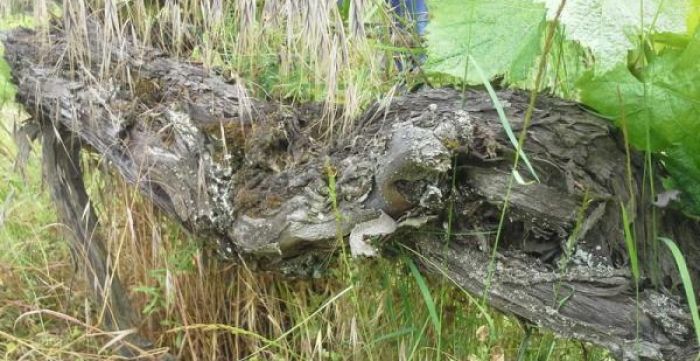
harvest report
09.09.2009
2009 Harvest Report from Catherine Roussel
<p><u><strong>On Sept. 9th: </strong></u></p>
<p>We will start our <glossary term="Harvest" title="521">harvest</glossary> tomorrow, Sept. 10th. The spring was “rotten” (i.e. too rainy), and the grapes that survived <span class="zalup"><span><glossary term="Mildew" title="1137">mildew</glossary><span>,</span></span></span> <glossary term="Oidium" title="737">black rot</glossary> and other fungi enjoyed a dry, hot, sunny August. That good weather is still with us and we’ll start under the sun.<br />
<br />
PS: not one mushroom in sight, but I have made delicious blackberry jams (I cannot help it, I have to pick something wild!)<br />
<br />
<u><strong>On Sept. 17th: </strong></u></p>
<p>We started on the 10th, as planned, with the sun. I wore flip-flops until the 15th, but yesterday I had to use my boots, there was morning dew, and today we had to stop, it rained all day.<br />
<br />
We have picked the <span class="zalup"><span><glossary term="Sauvignon Blanc" title="927">Sauvignon Blanc</glossary><span>,</span></span></span> <glossary term="Gamay" title="478">Gamay</glossary> and <glossary term="Pineau d'Aunis" title="799">Pineau d’Aunis</glossary> (no red from <span class="zalup"><span><glossary term="Pineau d'Aunis" title="799">Pineau</glossary><span>,</span></span></span> we had too few grapes).<br />
<br />
<glossary term="Yield" title="1129">Yields</glossary> are not what we were hoping for, but it’s not dismal either.<br />
<br />
<span class="zalup"><span><glossary term="Sauvignon Blanc" title="927">Sauvignon</glossary><span>:</span></span></span> 2<span class="zalup"><span>5<glossary term="hl/ha" title="528">HL/HA</glossary><span>,</span></span></span> between 13% and 14% <span class="zalup"><span><glossary term="alcoholic potential" title="1381">potential</glossary><span>,</span></span></span> 5g <glossary term="Acidity" title="71">acidity</glossary><br />
<br />
<span class="zalup"><span><glossary term="Gamay" title="478">Gamay</glossary><span>:</span></span></span> 2<span class="zalup"><span>4<glossary term="hl/ha" title="528">Hl/HA</glossary><span>,</span></span></span> 13.5, 5.5g <glossary term="Acidity" title="71">acidity</glossary><br />
<br />
<span class="zalup"><span><glossary term="Pineau d'Aunis" title="799">Pineau d’Aunis</glossary><span>:</span></span></span> 1<span class="zalup"><span>9<glossary term="-Select term-" title="">HL/HA</glossary><span>,</span></span></span> 12.6, 4.8g <glossary term="Acidity" title="71">acidity</glossary><br />
<br />
It’s a beautiful crop, there was no <glossary term="Sorting" title="1380">sorting</glossary> necessary.<br />
<br />
<u><strong>On Sept. 28th: </strong></u></p>
<p>We picked our <glossary term="Malbec" title="366">Côt</glossary> vines on Sept. 24th, under sunny skies but wearing boots in the morning because of the dew. The <glossary term="Malbec" title="366">Côt</glossary> is at 12.6 <span class="zalup"><span><glossary term="alcoholic potential" title="1381">potential alcohol</glossary><span>,</span></span></span> 6g of <glossary term="Acidity" title="71">acidity</glossary> and a <glossary term="PH" title="783">PH</glossary> of 3.38. Since the weather is holding, we have decided to wait before picking the <span class="zalup"><span><glossary term="Cabernet Franc" title="216">Cabernets</glossary><span>.</span></span></span><br />
<br />
PS: still no mushrooms, alas!</p>
<p><br />
<u><strong>On Oct. 2nd: </strong></u></p>
<p>We finished picking on Thursday Sept. 30th with our <glossary term="Cabernet Franc" title="216">Cabernets</glossary> (12.6 <span class="zalup"><span><glossary term="alcoholic potential" title="1381">potential</glossary><span>,</span></span></span> 5g <span class="zalup"><span><glossary term="Acidity" title="71">acidity</glossary><span>.</span></span></span>) We were wearing shorts and flip-flops, the grapes were superb, with a <glossary term="Yield" title="1129">yield</glossary> of about 3<span class="zalup"><span>0<glossary term="hl/ha" title="528">HL/HA</glossary><span>.</span></span></span><br />
<br />
PS: now I’m on vacation, and still there are no mushrooms, whaaaaa!</p>
Article
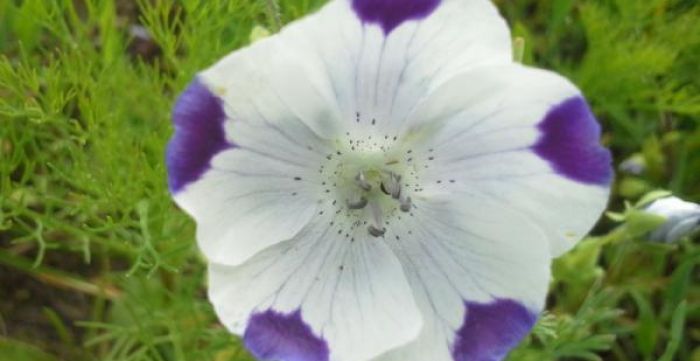
harvest report
06.10.2008
2008 Harvest Report from Catherine Roussel
<p><u><strong>October 6th, 2008:</strong></u></p>
<p>The <glossary term="Harvest" title="521">harvest</glossary> is getting longer and longer. Is Didier trying to make the pleasure last to make up for the lack of grapes?<br />
<br />
We finished gathering the <glossary term="Gamay" title="478">Gamay</glossary> on September 29, it was 28 F in the morning (according to the weatherman on the radio)….our hands were cold in the morning but the sun warmed us up quickly. The average result for the <span class="zalup"><span><glossary term="Gamay" title="478">Gamay</glossary><span>:</span></span></span> between 12 and 13 degrees of <span class="zalup"><span><glossary term="alcoholic potential" title="1381">potential alcohol</glossary><span>,</span></span></span> 6 grams of <span class="zalup"><span><glossary term="Acidity" title="71">acidity</glossary><span>,</span></span></span> <span class="zalup"><span><glossary term="Yield" title="1129">yield</glossary><span>:</span></span></span> 30 <span class="zalup"><span><glossary term="hl/ha" title="528">hl/ha</glossary><span>.</span></span></span></p>
<p><u><strong>Tuesday September 30th: </strong></u><glossary term="Pineau d'Aunis" title="799"></glossary></p>
<p><glossary term="Pineau d'Aunis" title="799">Pineau d’Aunis</glossary> is perfect : 13.5 <span class="zalup"><span><glossary term="alcoholic potential" title="1381">degrees potential</glossary><span>,</span></span></span> 5.2 grams <span class="zalup"><span><glossary term="Acidity" title="71">acidity</glossary><span>,</span></span></span> 30 <span class="zalup"><span><glossary term="hl/ha" title="528">hl/ha</glossary><span>,</span></span></span> we will only be making <span class="zalup"><span><glossary term="Rosé/Rosato" title="871">rosé</glossary><span>.</span></span></span><br />
<br />
Same thing today: <span class="zalup"><span><glossary term="Malbec" title="366">Côt</glossary><span>,</span></span></span> 12 degrees, Didier hasn’t tested the <glossary term="Acidity" title="71">acidity</glossary> yet, <glossary term="Yield" title="1129">yield</glossary> : nuttin!<br />
<br />
Only the <glossary term="Cabernet Franc" title="216">Cabernet</glossary> is left…don’t know yet if we will pick on Thursday or next Monday. The rain we got this morning may speed up the ripening!<br />
<br />
<u><strong>October 14th, 2008:</strong></u></p>
<p>We finished yesterday (Oct. 13th) under hot weather and in a cheerful atmosphere, with a tough customer, our <span class="zalup"><span><glossary term="Cabernet Franc" title="216">Cabernet</glossary><span>:</span></span></span> we had to wait an extra week to <glossary term="Harvest" title="521">harvest</glossary> it, but fortunately, most our pickers showed up.<br />
<br />
At first sight, the <glossary term="Yield" title="1129">yields</glossary> are around 2 <span class="zalup"><span>5<glossary term="hl/ha" title="528">HL/HA</glossary><span>,</span></span></span> degree: 12.5% <span class="zalup"><span><glossary term="alcoholic potential" title="1381">potential</glossary><span>,</span></span></span> <span class="zalup"><span><glossary term="Acidity" title="71">acidity</glossary><span>:</span></span></span> 6.4g.<br />
<br />
Didier is relieved, and relatively relaxed, given this difficult <span class="zalup"><span><glossary term="Vintage" title="1109">vintage</glossary><span>.</span></span></span><br />
<br />
PS: weather too dry for mushrooms (waaah!)</p>
<p><br />
PPS: Buster has to be warned, we have two new tenants: Sécotine (striped) and Pélagie (black), two adorable kittens. Sécotine follows us everywhere (hence her name, i.e. a brand of glue) and Pélagie loves to sleep in cardboard boxes.</p>
Article
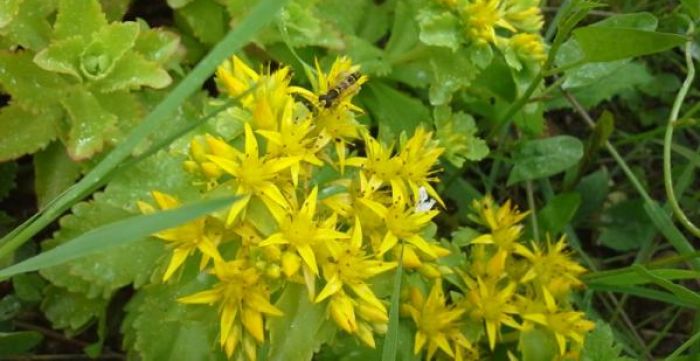
harvest report
27.09.2007
2007 Harvest Report from Catherine Roussel
<p><u><strong>September 27th, 2007:</strong></u></p>
<p>Really, this year has been a pain from beginning to end. We thought we would be done with the <glossary term="Harvest" title="521">harvest</glossary> quickly, and it is taking for ever… at this rate we’ll be at it for Christmas!<br />
<br />
We picked the <glossary term="Sauvignon Blanc" title="927">Sauvignon Blanc</glossary> from Sept. 11th to Sept. 20th, under sunny weather. The grapes were healthy, with <glossary term="alcoholic potential" title="1381">potential alcohol</glossary> from 12.7 to 14% and <glossary term="Acidity" title="71">acidity</glossary> levels 5.5 to 5.8 grams/liter, but a <glossary term="Yield" title="1129">yield</glossary> of 20<glossary term="hl/ha" title="528">HL/HA</glossary> on average….</p>
<p>Picking the <glossary term="Gamay" title="478">Gamay</glossary> was more complicated. We did it from Sept. 21st to Sept. 25th, and I had to spend half of my time inside the picking container: some pickers had trouble <span class="zalup"><span><glossary term="Sorting" title="1380">sorting</glossary><span>,</span></span></span> there was rot and unripe <span class="zalup"><span><glossary term="Cluster/Bunch" title="1138">bunches</glossary><span>.</span></span></span> Didier was in there when I wasn’t. But the resulting juices are clean, we were really concerned about a geosmin contamination. The <glossary term="Yield" title="1129">yields</glossary> vary from 30 to 3 <span class="zalup"><span>5<glossary term="hl/ha" title="528">HL/HA</glossary><span>,</span></span></span> <glossary term="alcoholic potential" title="1381">potential alcohol</glossary> is between 11.5 and 11.9, <glossary term="Acidity" title="71">acidity</glossary> 5.5 g/l. This <glossary term="Gamay" title="478">Gamay</glossary> is going to be light and easy to drink.<br />
<br />
For now we are waiting for the <span class="zalup"><span><glossary term="Pineau d'Aunis" title="799">Pineau d’Aunis</glossary><span>,</span></span></span> the <glossary term="Cabernet Franc" title="216">Cabernet</glossary> and <glossary term="Malbec" title="366">Côt</glossary> to ripen. If the good weather persists (one can dream?) we hope to finish by the end of next week.<br />
<br />
So, since Tuesday and until next Monday, I have been knitting (just kidding!) Didier’s foot is better, he walks without a cane, but as slowly as a turtle.</p>
<p><u><strong>October 9th, 2007:</strong></u></p>
<p>We finished our <glossary term="-Select term-" title="">harvest</glossary> last Friday, Oct. 5th, with the <glossary term="Malbec" title="366">Côt</glossary> grapes, and under the sun.<br />
<br />
The results are a mixed bag: our red wines are going to be light, the <glossary term="Cabernet Franc" title="216">Cabernet</glossary> is at 11.5 degrees, the <glossary term="Malbec" title="366">Côt</glossary> at 12%, the <glossary term="Pineau d'Aunis" title="799">Pineau d’Aunis</glossary> at 12.8, with <glossary term="Acidity" title="71">acidity</glossary> levels between 5 and 6 grams per liter and weak <span class="zalup"><span><glossary term="Yield" title="1129">yields</glossary><span>.</span></span></span> We have to wait for all the <glossary term="Vat/Tank" title="1140">vats</glossary> to be emptied (after <glossary term="Maceration" title="610">maceration</glossary> and <span class="zalup"><span><glossary term="Fermentation" title="441">fermentation</glossary><span>,</span></span></span> NT), but I think it will not be above 2<span class="zalup"><span>5<glossary term="hl/ha" title="528">HL/HA</glossary><span>.</span></span></span> There won’t be any "Pif" this year, no "Closerie" and no "No. 5" since the <glossary term="Sauvignon Blanc" title="927">Sauvignon</glossary> <glossary term="Yield" title="1129">yield</glossary> was so low. There will be <glossary term="Pineau d'Aunis" title="799">Pineau d’Aunis</glossary> red and <span class="zalup"><span><glossary term="Rosé/Rosato" title="871">rosé</glossary><span>,</span></span></span> but not much of either.<br />
<br />
In the end, this <glossary term="Harvest" title="521">harvest</glossary> was quite sluggish, maybe the grapes had a secret agreement to adopt Didier’s pace (lol)</p>
<p>I didn’t mind it, for the first time ever that my thighs didn’t kill me, my muscles had time to adapt progressively to the work: one day picking, two days of rest, etc…<br />
<br />
Didier is delighted with his “Rolls Royce”, i.e. his <span class="zalup"><span><glossary term="Pneumatic Press" title="811">pneumatic press</glossary><span>.</span></span></span><br />
<br />
Contrary to last year, there are no mushrooms, and I am beginning to feel a little bored….</p>
Article
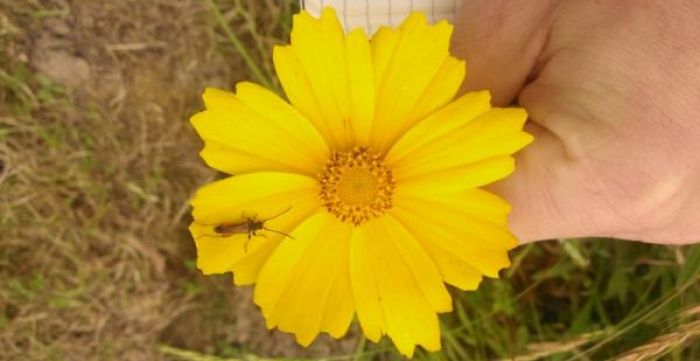
harvest report
16.09.2006
2006 Harvest Report from Catherine Roussel
<p><u><strong>September 16th, 2006:</strong></u></p>
<p>Before writing about the <span class="zalup"><span><glossary term="Harvest" title="521">harvest</glossary><span>,</span></span></span> it is important to remember how chaotic the summer was. July was very, very hot and dry, so when the rain came at the beginning of August, we were happy. The problem is that it lasted all month! At last, the sun came back at the start of September, and having absorbed so much rain, the grapes were able to ripen.<br />
<br />
We started our <glossary term="-Select term-" title="">harvest</glossary> on Monday Sept. 11th, under a hot sun, which lasted until Tuesday (we had to stop at the end of each row to drink and fight the heat). On Wednesday, it was a little less hot and it became overcast, on Thursday the temperature was perfect but it rained at night, and on Friday we picked almost all day under a fine drizzle. Today the sun has returned.</p>
<p><u><strong>September 22nd, 2006:</strong></u></p>
<p>Our <glossary term="Harvest" title="521">harvest</glossary> is continuing, we think we’ll be done with the <glossary term="Malbec" title="366">Côt</glossary> and <glossary term="Cabernet Franc" title="216">Cabernet</glossary> next Tuesday or Wednesday.<br />
<br />
On Friday Sept. 15th, we had about 20mm of rain, which slightly diluted the juice, but given the high <span class="zalup"><span><glossary term="alcoholic potential" title="1381">potential alcohol degrees</glossary><span>,</span></span></span> it did no harm. We were mainly worried about rot, and quickly picked what was left of <glossary term="Sauvignon Blanc" title="927">Sauvignon</glossary> and <glossary term="Gamay" title="478">Gamay</glossary> on Monday, Tuesday and Wednesday, with mild and dry weather. On the whole, the grapes were beautiful, we had to <glossary term="Sorting" title="1380">sort</glossary> some of the <glossary term="Gamay" title="478">Gamay</glossary> grapes, but I have a fabulous team of pickers, and all the <glossary term="Sorting" title="1380">sorting</glossary> was done in the vines. Didier (in the <glossary term="Cellar" title="254">cellar</glossary>) was satisfied with the grapes coming to the <glossary term="Cellar" title="254">cellar</glossary> and did not even take out the <glossary term="Sorting" title="1380">sorting</glossary> table.<br />
<br />
On Thursday, it was sunny, we picked the <span class="zalup"><span><glossary term="Pineau d'Aunis" title="799">Pineau d’Aunis</glossary><span>,</span></span></span> and this year Didier is making "L’Arpent Rouge" (a red wine). On Friday, it rained in the morning and was sunny p.m., we picked <span class="zalup"><span><glossary term="Malbec" title="366">Côt</glossary><span>.</span></span></span><br />
It looks like it is a custom for rain on Fridays, which makes sense since it’s the day of fish.<br />
<br />
<span class="zalup"><span><glossary term="Gamay" title="478">Gamay</glossary><span>:</span></span></span> 13% <glossary term="alcoholic potential" title="1381">potential degree</glossary> and 5 grams <glossary term="Acidity" title="71">acidity</glossary><br />
<span class="zalup"><span><glossary term="Sauvignon Blanc" title="927">Sauvignon</glossary><span>:</span></span></span> 13.5% <glossary term="alcoholic potential" title="1381">potential</glossary> and 5 grams <glossary term="Acidity" title="71">acidity</glossary><br />
<span class="zalup"><span><glossary term="Pineau d'Aunis" title="799">Pineau d’Aunis</glossary><span>:</span></span></span> 12.9% <glossary term="alcoholic potential" title="1381">potential</glossary> and 3.9 grams <glossary term="Acidity" title="71">acidity</glossary> (for rosé and red)<br />
La Closerie <span class="zalup"><span>(<glossary term="Malbec" title="366">Côt</glossary><span>,</span></span></span> <span class="zalup"><span><glossary term="Cabernet Franc" title="216">Cabernet</glossary><span>,</span></span></span> <glossary term="Gamay" title="478">Gamay</glossary>): 12.5%<br />
<span class="zalup"><span><glossary term="Malbec" title="366">Côt</glossary><span>:</span></span></span> 12.3% and 4 grams <glossary term="Acidity" title="71">acidity</glossary><br />
<br />
Our <glossary term="Yield" title="1129">yields</glossary> are around 4<span class="zalup"><span>0<glossary term="hl/ha" title="528">HL/HA</glossary><span>,</span></span></span> we are happy for our customers, that is, if they still want to buy our wines.<br />
<br />
On Monday, we picked <span class="zalup"><span><glossary term="Chardonnay" title="271">Chardonnay</glossary><span>,</span></span></span> at 13.5 degrees of alcohol and 5.4 grams of <span class="zalup"><span><glossary term="Acidity" title="71">acidity</glossary><span>.</span></span></span></p>
<p>On Monday, Tuesday and Wednesday: <glossary term="Sauvignon Blanc" title="927">Sauvignon Blanc</glossary> between 13.5 and 14% <glossary term="alcoholic potential" title="1381">potential</glossary> and 5 grams <glossary term="Acidity" title="71">acidity</glossary></p>
<p>On Friday: <glossary term="Gamay" title="478">Gamay</glossary> at 12.3% <glossary term="alcoholic potential" title="1381">potential</glossary> and 5.4 grams <glossary term="Acidity" title="71">acidity</glossary><br />
<br />
Our current estimate of <glossary term="Yield" title="1129">yields</glossary> is around 4<span class="zalup"><span>0<glossary term="hl/ha" title="528">HL/HA</glossary><span>.</span></span></span> We’ll have a better notion when all <glossary term="Plot" title="1133">plots</glossary> are harvested. We already know that we’ll have more <glossary term="Sauvignon Blanc" title="927">Sauvignon</glossary> than in 2005 (Joe will be happy about the quantity, but given the alcohol degrees, I can picture him making a face….)</p>
<p><u><strong>September 28th, 2006:</strong></u></p>
<p>Well, we finished yesterday and I have some good news: this morning I went out on a mushroom walk and I found some cèpes, what organization! They decided to grow right on time, just as the <glossary term="Harvest" title="521">harvest</glossary> finished….Okay, okay, I know this is not what you are interested in.<br />
<br />
So..<br />
<br />
Monday morning: <glossary term="Cabernet Franc" title="216">Cabernet</glossary><br />
<br />
Wednesday: the end of the <glossary term="Cabernet Franc" title="216">Cabernet</glossary> and the old vines of <glossary term="Malbec" title="366">Côt</glossary><br />
<br />
I don’t remember exactly what the degrees were but they must have been between12.3 and 13%. The <glossary term="Acidity" title="71">acidity</glossary> level was around 4 grams. The rain last week diluted the grapes a bit.<br />
<br />
We were visited by two photographers from the New York Times, one for Alice Feiring and the other for Melissa Clark. The first one came on a day we weren’t harvesting (we had to pick some grapes just for the photo) and the second one came on the last day. He was supposed to come and take pictures of the harvesters during their morning break (eating snacks etc…) but he arrived at noon so that all that was left was the afternoon break with cookies. I wonder what kind of an impression that will give (?). <em><strong>[note: On Wednesday , Oct 4th, The New York Times published Melissa Clark's fantastic report (with pictures and recipes) about working the harvest at Clos Roche Blanche and Clos du Tue-Boeuf].</strong></em><br />
<br />
On a positive note: with this parade of Americans throughout the <span class="zalup"><span><glossary term="-Select term-" title="">harvest</glossary><span>,</span></span></span> my English has improved.</p>
Article
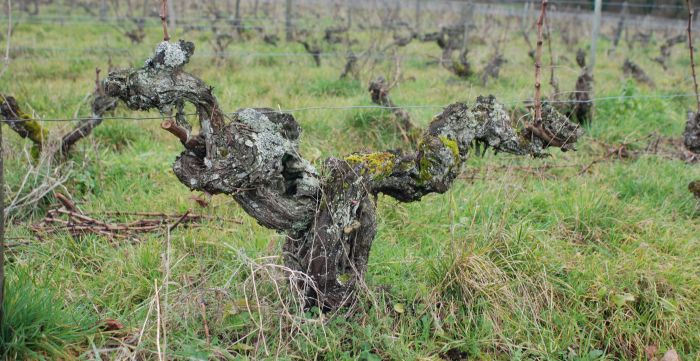
harvest report
19.09.2005
2005 Harvest Report from Didier and Catherine
<p><u><strong>From Didier Barrouillet on September 19th:</strong></u></p>
<p>“Tout va très bien, Madame la Marquise”….(1936 song by Ray Ventura et les Collègiens”)<br />
<br />
Everything is wonderful, well, except for one little thing….<br />
<br />
The grapes that were hit by <glossary term="Hail" title="1136">hail</glossary> have had a hard time ripening – they haven’t gotten enough water or <span class="zalup"><span><glossary term="Photosynthesis" title="787">photosynthesis</glossary><span>.</span></span></span> But then again, isn’t that what’s great about Northern vineyards: the fact that ripening is slow and arduous? An endless debate!<br />
<br />
I stupidly (partially) broke my Achille’s tendon and have one leg in a cast for one to three months…..<br />
<br />
But apparently, once it heals, it will be stronger than before. So, why complain?<br />
<br />
That said, the <glossary term="Pressing" title="827">pressing</glossary> of <glossary term="Sauvignon Blanc" title="927">Sauvignon</glossary> they did on Saturday was of great quality (13.3 degrees of <glossary term="alcoholic potential" title="1381">potential alcohol</glossary> and 4.8 grams of <glossary term="Acidity" title="71">acidity</glossary>). There was not one speck of rot on the grapes and a high pressure front bringing good weather has moved in for at least a week.<br />
<br />
The <glossary term="Harvest" title="521">harvest</glossary> will probably start in earnest next Thursday.</p>
<p><u><strong>Catherine Roussel at Clos Roche Blanche, October 4th:</strong></u></p>
<p>We are finishing the harvest tomorrow with the <span class="zalup"><span><glossary term="Cabernet Franc" title="216">Cabernet Franc</glossary><span>.</span></span></span> The harvest this year was shorter than in 2004, partly because the <glossary term="Yield" title="1129">yields</glossary> are smaller, roughly between 20 and 25 <glossary term="hl/ha" title="528">hl/ha</glossary> and partly because most of the grapes ripened at the same time. On the whole, it went quite well:<br />
<br />
Beautiful weather + a nice harvesting team + no rot (therefore no <glossary term="Sorting" title="1380">sorting</glossary>) + Didier’s cast coming off (thus 80% effective) + great quality= a Catherine feeling good.<br />
<br />
Here are the results:<br />
<br />
<span class="zalup"><span><glossary term="Sauvignon Blanc" title="927">Sauvignon</glossary><span>:</span></span></span> on average 12.5% <glossary term="alcoholic potential" title="1381">potential alcohol</glossary> and 4.8-5 grams of <glossary term="Acidity" title="71">acidity</glossary><br />
<br />
<span class="zalup"><span><glossary term="Gamay" title="478">Gamay</glossary><span>:</span></span></span> 13% <glossary term="alcoholic potential" title="1381">alcohol</glossary> and 5.6 grams <glossary term="Acidity" title="71">acidity</glossary><br />
<br />
<span class="zalup"><span><glossary term="Pineau d'Aunis" title="799">Pineau d’Aunis</glossary><span>:</span></span></span> 11.6% <glossary term="alcoholic potential" title="1381">potential</glossary> and 4 grams <glossary term="Acidity" title="71">acidity</glossary><br />
<br />
<span class="zalup"><span><glossary term="Malbec" title="366">Côt</glossary><span>:</span></span></span> 12.5% <glossary term="alcoholic potential" title="1381">potential</glossary> and 5 grams <glossary term="Acidity" title="71">acidity</glossary><br />
<br />
It finally rained this weekend. I immediately imagined that mushrooms were falling from the sky.<br />
<br />
Grrreat! What perfect timing, now I can scour the woods without feeling guilty.</p>
Article
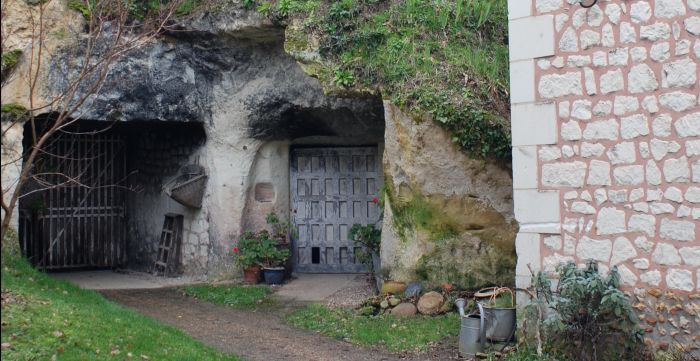
harvest report
21.09.2004
2004 Harvest Report from Catherine Roussel
<p><u><strong>September 21, 2004:</strong></u></p>
<p>I couldn’t wait until the end of the week to tell you what a great time I had picking the <glossary term="Chardonnay" title="271">Chardonnay</glossary> grapes yesterday: not too hot, not too cold, the sky became overcast in the afternoon but the rain waited until nightfall (only 1mm – just to moisten the leaves). Today is gorgeous, blue skies etc….<br />
<br />
Above all though, there were lots and lots of grapes!<br />
<br />
4<span class="zalup"><span>5<glossary term="-Select term-" title="">hl/ha</glossary><span>:</span></span></span> a record!– never before seen from this <span class="zalup"><span><glossary term="Plot" title="1133">plot</glossary><span>!</span></span></span><br />
<br />
The results are satisfactory: 12.9 degrees of <glossary term="alcoholic potential" title="1381">potential alcohol</glossary> and 5 grams of <span class="zalup"><span><glossary term="Acidity" title="71">acidity</glossary><span>.</span></span></span> No rot, in other words, pure joy.<br />
<br />
<br />
The only downside was that I had to set my alarm for 6:30 AM yesterday morning and that’s not an easy thing for a sleepy marmot like me (Webmaster translation....a marmot is a mountain groundhog).<br />
<br />
We had the time to pick one bin of <glossary term="Sauvignon Blanc" title="927">Sauvignon</glossary> (12.7 degrees) but the ripeness levels are so varied that we are going to have to spread out the harvesting according to <glossary term="Plot" title="1133">plot</glossary> and the quantity of grapes. I can’t give a real <glossary term="Yield" title="1129">yield</glossary> figure because we picked the grapes all over the place, here and there.<br />
<br />
I don’t yet know if we will start up again this Thursday or next Monday. For the time being, the weather looks like it will be good for the whole week.</p>
<p><u><strong>October 8th, 2004:</strong></u></p>
<p>We harvested the <glossary term="Gamay" title="478">Gamay</glossary> grapes last week: overall results: 50 <span class="zalup"><span><glossary term="hl/ha" title="528">hl/ha</glossary><span>!</span></span></span>, between 12.5 and 13 degrees of <glossary term="alcoholic potential" title="1381">potential alcohol</glossary> and 5 grams/liter of <span class="zalup"><span><glossary term="Acidity" title="71">acidity</glossary><span>.</span></span></span> We had to <glossary term="Sorting" title="1380">sort</glossary> in two <glossary term="Plot" title="1133">plots</glossary> (as usual), the rest was spick and span.<br />
<br />
The <glossary term="Malbec" title="366">Côt</glossary> grapes were picked this week. We finished yesterday with the 100 year old vines. Didier was right to be worried because it rained today. The crop was very healthy, not a speck of rot. The 100 year old vines <glossary term="Yield" title="1129">yielded</glossary> an abundant crop with 12.2 degrees of <glossary term="alcoholic potential" title="1381">potential alcohol</glossary> and 5 grams/liter of <span class="zalup"><span><glossary term="Acidity" title="71">acidity</glossary><span>.</span></span></span> The younger <glossary term="Old Vines" title="740">old vines</glossary> gave us 40 <span class="zalup"><span><glossary term="hl/ha" title="528">hl/ha</glossary><span>,</span></span></span> 13.3 degrees of <glossary term="alcoholic potential" title="1381">potential alcohol</glossary> and 5 grams/liter <span class="zalup"><span><glossary term="Acidity" title="71">acidity</glossary><span>.</span></span></span> The overall average <glossary term="Yield" title="1129">yield</glossary> was 50 <span class="zalup"><span><glossary term="hl/ha" title="528">hl/ha</glossary><span>.</span></span></span><br />
<br />
We haven’t finished the <glossary term="Sauvignon Blanc" title="927">Sauvignon Blanc</glossary> grapes yet. A first <glossary term="Pass" title="1144">pass</glossary> through all the <glossary term="Plot" title="1133">plots</glossary> gave us an average of between 12 and 12.5 degrees of <glossary term="alcoholic potential" title="1381">potential alcohol</glossary> and 5 grams/liter of <span class="zalup"><span><glossary term="Acidity" title="71">acidity</glossary><span>.</span></span></span> We’ll have to wait for the second <glossary term="Pass" title="1144">pass</glossary> to calculate the <span class="zalup"><span><glossary term="Yield" title="1129">yields</glossary><span>.</span></span></span><br />
<br />
Between the rot and the unripe grapes, there was a lot of <glossary term="Sorting" title="1380">sorting</glossary> to be done. My harvesting team had a little trouble getting this, but it's working out. Didier is very satisfied with the grapes coming into the <span class="zalup"><span><glossary term="Cellar" title="254">cellar</glossary><span>.</span></span></span><br />
<br />
If it continues to rain, I don’t know if the unripe grapes will reach maturity. Our goal is not to add a single gram of sugar into any <span class="zalup"><span><glossary term="Cuvée" title="363">cuvée</glossary><span>.</span></span></span><br />
<br />
As for the <glossary term="Pineau d'Aunis" title="799">Pineau d’Aunis</glossary> and the <glossary term="Cabernet Franc" title="216">Cabernet Franc</glossary> grapes, I’ll let you know in the next installment. Up until now we have been very lucky with the weather but today things are going seriously downhill.<br />
<br />
The mushrooms are going to grow!</p>
<p><u><strong>October 21st, 2004:</strong></u></p>
<p>We finished our <glossary term="Harvest" title="521">harvest</glossary> on October 15th under menacing skies, but no rain. This last week was difficult: changeable, humid ,and cold weather, no gain in ripeness. The last <glossary term="Sauvignon Blanc" title="927">Sauvignon</glossary> grapes we picked were diluted, we even left some vines alone where the grapes were really unripe (a far cry from the beginning of <glossary term="Harvest" title="521">harvest</glossary>).<br />
<br />
Our <glossary term="Pineau d'Aunis" title="799">Pineau d’Aunis</glossary> reached 11.5 degrees, with 5 g of <glossary term="Acidity" title="71">acidity</glossary> and 5<span class="zalup"><span>0<glossary term="hl/ha" title="528">HL/HA</glossary><span>.</span></span></span> Didier decided not to make any red with this…. Joe is going to be disappointed.<br />
<br />
<span class="zalup"><span><glossary term="Cabernet Franc" title="216">Cabernet</glossary><span>:</span></span></span> barely 12 degrees, 5g of <span class="zalup"><span><glossary term="Acidity" title="71">acidity</glossary><span>,</span></span></span> 5 <span class="zalup"><span>0<glossary term="hl/ha" title="528">HL/HA</glossary><span>:</span></span></span> our <glossary term="Cellar" title="254">cellar</glossary> is full. We could not wait any longer, the grapes were swollen with juice and would not have lasted another week on the vines.<br />
<br />
We got 50<glossary term="hl/ha" title="528">HL/HA</glossary> of <span class="zalup"><span><glossary term="Sauvignon Blanc" title="927">Sauvignon Blanc</glossary><span>,</span></span></span> it would have been higher but we had to leave many unripe or rotten <span class="zalup"><span><glossary term="Cluster/Bunch" title="1138">bunches</glossary><span>.</span></span></span> In conclusion: we had a euphoric beginning and a disappointing finish, and we’ll have to pick and choose between the different <span class="zalup"><span><glossary term="Vat/Tank" title="1140">vats</glossary><span>.</span></span></span><br />
<br />
<glossary term="Fermentation" title="441">Fermentations</glossary> are going well, the <glossary term="Malolactic Fermentation" title="622">malolactic</glossary> has started already. Didier has a lot of work in the <glossary term="Cellar" title="254">cellar</glossary> but remains serene.<br />
<br />
Despite last week’s rain, no mushrooms are growing, and that’s not fair!</p>
Article
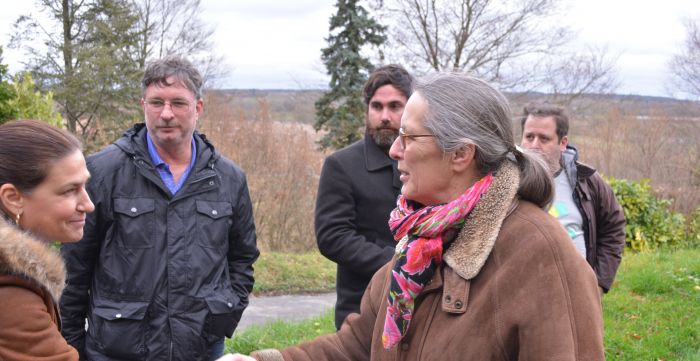
harvest report
31.08.2003
2003 Harvest Report from Catherine Roussel
<p><u><strong>August 31st, 2003:</strong></u></p>
<p>I’m afraid that there won’t be a lot of harvest reports this year because the crop has been so reduced that the <glossary term="Harvest" title="521">harvest</glossary> will not last very long.<br />
<br />
We started the <glossary term="Harvest" title="521">harvest</glossary> on August 27th - an extraordinary date for the region (we’re used to starting around September 20th…even later in some years). But this is an exceptional year for all of France’s wine regions.<br />
<br />
In the <span class="zalup"><span><glossary term="Touraine" title="1036">Touraine</glossary><span>,</span></span></span> there were freezing temperatures on April 10th which caused serious damage to parts of the region (ours was very badly hit) followed by a promising spring and early summer: just the perfect amount of sun and rain. But, as it turns out, Mother Nature is capricious and in August (at the same time that the weather in New York was not so great) we had a heat wave with temperatures over 40 C that lasted for 11 straight days. Certain grape varieties burned, in particular the <span class="zalup"><span><glossary term="Gamay" title="478">Gamays</glossary><span>,</span></span></span> the <glossary term="Malbec" title="366">Côts</glossary> (enormous losses) and the <glossary term="Sauvignon Blanc" title="927">Sauvignon Blancs</glossary> (a little less damage). The later <glossary term="Varietal" title="1071">varietals</glossary> like <span class="zalup"><span><glossary term="Cabernet Franc" title="216">Cabernet Franc</glossary><span>,</span></span></span> <glossary term="Chenin Blanc" title="281">Chenin Blanc</glossary> (which we don’t have any more) and <glossary term="Pineau d'Aunis" title="799">Pineau d’Aunis</glossary> were spared or rather they resisted the sun’s rays better.<br />
<br />
So, we started the <glossary term="-Select term-" title="">harvest</glossary> on August 27th under a blazing sun (it was hard for the pickers…Didier was in the <glossary term="Cellar" title="254">cellar</glossary> : he didn’t suffer too much!)<br />
<br />
The morning: <glossary term="Chardonnay" title="271">Chardonnay</glossary> 13.5% <span class="zalup"><span> <glossary term="alcoholic potential" title="1381">potential alcohol</glossary><span>,</span></span></span> 4 grams/liter <span class="zalup"><span><glossary term="Acidity" title="71">acidity</glossary><span>,</span></span></span> <glossary term="Yield" title="1129">yield</glossary> – 20<glossary term="hl/ha" title="528">hl/ha</glossary></p>
<p>The afternoon: <glossary term="Gamay" title="478">Gamay</glossary> 13.5% <span class="zalup"><span><glossary term="alcoholic potential" title="1381">potential alcohol</glossary><span>,</span></span></span> 4 grams/liter <span class="zalup"><span><glossary term="Acidity" title="71">acidity</glossary><span>,</span></span></span> <glossary term="Yield" title="1129">yield</glossary> – 20<glossary term="hl/ha" title="528">hl/ha</glossary><br />
<br />
August 28th, the rain came…actually a few showers which were rather refreshing for the harvesters.<br />
<br />
The morning: <glossary term="-Select term-" title="">Gamay</glossary> – 13.5% <span class="zalup"><span><glossary term="alcoholic potential" title="1381">potential alcohol</glossary><span>,</span></span></span> 5 grams/liter <span class="zalup"><span><glossary term="Acidity" title="71">acidity</glossary><span>,</span></span></span> <glossary term="Yield" title="1129">yield</glossary> 20<glossary term="hl/ha" title="528">hl/ha</glossary></p>
<p>The afternoon: <glossary term="Sauvignon Blanc" title="927">Sauvignon Blanc</glossary> – 13.5% <span class="zalup"><span><glossary term="alcoholic potential" title="1381">potential alcohol</glossary><span>,</span></span></span> 4 grams/liter <span class="zalup"><span><glossary term="Acidity" title="71">acidity</glossary><span>,</span></span></span> <glossary term="Yield" title="1129">yield</glossary> 2<span class="zalup"><span>3<glossary term="hl/ha" title="528">hl/ha</glossary><span>.</span></span></span><br />
<br />
August 29 : the rain of the previous night seriously cooled things down. I had to switch from shorts and sandals to long pants and boots. By the afternoon, I was able to put my shorts and sandals on again (whew!)<br />
<br />
All day: <glossary term="-Select term-" title="">Sauvignon Blanc</glossary> – 13% <span class="zalup"><span><glossary term="alcoholic potential" title="1381">potential alcohol</glossary><span>,</span></span></span> 4 grams/liter <glossary term="Acidity" title="71">acidity</glossary> and the same appalling <span class="zalup"><span><glossary term="Yield" title="1129">yields</glossary><span>.</span></span></span><br />
<br />
We had the pleasure of admiring a deer – another reason our <glossary term="Yield" title="1129">yields</glossary> are so feeble (after having eaten the <glossary term="Bud" title="206">buds</glossary> in the spring, they are now eating the fully ripened grapes!)<br />
<br />
Today, Sunday, the weather has stabilised. It rained 8 mm last night…not quite enough to swell the grapes! More to come in our next installment.</p>
<p><u><strong>September 8th, 2003:</strong></u></p>
<p>This week we only harvested on Monday and Friday, so I had plenty of time to search for rocks for my collection. (<strong>Translator’s note: </strong>According to an article that appeared on a French Wine Webzine, rock collecting is Catherine’s sole function at Clos Roche Blanche).<br />
<br />
The beautiful weather continues.<br />
<br />
Friday night, a storm unloaded 19mm of water and then on Saturday, a few showers came maintaining the previous night’s watering.<br />
<br />
Sunday afternoon, the sun came out. In short, ideal conditions for porcini mushrooms….I’m going crazy with impatience!<br />
<br />
As Didier says, I am stuck in the hunter/gatherer stage of evolution (without the hunting part), indeed a particular subspecies known as “homo ça pionce, ça pionce” (<strong>Translator’s note:</strong> pronounced homo sa-pi-onse – meaning “man that sleeps and sleeps”)<br />
<br />
Getting back to the sheep…or rather the grapes….<br />
<br />
Monday: <glossary term="Gamay" title="478">Gamay</glossary> (bought from some neighboring winemakers)<br />
Between 12% and 13% <glossary term="alcoholic potential" title="1381">potential alcohol</glossary><br />
5 – 5.5 grams/liter <glossary term="Acidity" title="71">acidity</glossary><br />
<span class="zalup"><span><glossary term="Yield" title="1129">yields</glossary><span>:</span></span></span> between 20 and 40 <glossary term="hl/ha" title="528">hl/ha</glossary><br />
<br />
Friday: <glossary term="Pineau d'Aunis" title="799">Pineau d’Aunis</glossary> (at our place)<br />
12.5 % <glossary term="alcoholic potential" title="1381">potential alcohol</glossary><br />
3.5 grams/liter <glossary term="Acidity" title="71">acidity</glossary><br />
<span class="zalup"><span><glossary term="Yield" title="1129">yields</glossary><span>:</span></span></span> 23 <glossary term="hl/ha" title="528">hl/ha</glossary><br />
<br />
(we won’t be able to make any red <glossary term="Pineau d'Aunis" title="799">Pineau d’Aunis</glossary> this year)<br />
<br />
We are waiting until Thursday to <glossary term="Harvest" title="521">harvest</glossary> the last <glossary term="Plot" title="1133">plot</glossary> of <glossary term="Sauvignon Blanc" title="927">Sauvignon Blanc</glossary> (the latest ripening, the one which we were able to save from the <glossary term="Frost" title="1135">frost</glossary> in April when the homo ça pionce, ça pionce had to get up very early two days in a row!)<br />
<br />
Finally, on September 15 (Tax Day), we will finish up with the <span class="zalup"><span><glossary term="Malbec" title="366">Côt</glossary><span>.</span></span></span></p>
<p><u><strong>October 1st, 2003:</strong></u></p>
<p>Late again.<br />
<br />
We harvested the <glossary term="Cabernet Franc" title="216">Cabernet Franc</glossary> on September 22nd and 23rd (we had to stop on the 22nd because of the rain) : 12.2% <span class="zalup"><span><glossary term="alcoholic potential" title="1381">potential alcohol</glossary><span>,</span></span></span> 4 grams/liter <span class="zalup"><span><glossary term="Acidity" title="71">acidity</glossary><span>.</span></span></span><br />
<br />
On September 27th we harvested the <glossary term="Cabernet Sauvignon" title="217">Cabernet Sauvignon</glossary> with some friends:<br />
<br />
- 11.5% <glossary term="alcoholic potential" title="1381">potential alcohol</glossary> (the lowest of the season)<br />
- 4 grams/liter <glossary term="Acidity" title="71">acidity</glossary><br />
- <glossary term="Yield" title="1129">yields</glossary> at around 40<glossary term="hl/ha" title="528">hl/ha </glossary>(what a dream!)<br />
<br />
Didier is losing sleep worrying about the <span class="zalup"><span><glossary term="Fermentation" title="441">fermentations</glossary><span>.</span></span></span><br />
<br />
We tasted the 2003 <glossary term="Gamay" title="478">Gamay</glossary> (one of the <glossary term="Vat/Tank" title="1140">vats</glossary> has finished <glossary term="Fermentation" title="441">fermenting</glossary>): superb!<br />
<br />
Last week, I took a couple of days off to go pick cèpes (porcini mushrooms), shhh, I shouldn’t say anything because even in <glossary term="Sologne" title="968">Sologne</glossary> there aren’t any.<br />
<br />
I have found so many that I’m giving them away to friends…too bad you’re not here in France.</p>
<p><u><strong>October 27th, 2003:</strong></u></p>
<p>I’ve lost track of where I am with these harvest reports. Did I tell you that we picked the <glossary term="Gamay" title="478">Gamay</glossary> “verdillons” on October 11th with some friends?(*) We harvested 7.5 <glossary term="Hectoliter" title="524">hectoliters</glossary> at 12% <glossary term="alcoholic potential" title="1381">potential alcohol</glossary> and 5.5 grams <span class="zalup"><span><glossary term="Acidity" title="71">acidity</glossary><span>.</span></span></span> It was the first (and maybe the last) time that we have “alboté”, a local term which means to glean in the vines. (**)<br />
<br />
Most of the <glossary term="Fermentation" title="441">fermentations</glossary> are finished. The test results are reassuring: weak <glossary term="Volatile Acidity" title="1116">volatiles</glossary> and decent <span class="zalup"><span><glossary term="Acidity" title="71">acidity</glossary><span>.</span></span></span> In short, Didier is relieved and clearly more relaxed: he’s sleeping better now.<br />
<br />
As far as mushrooms go, there aren’t any more cèpes (or very few) but the pieds de mouton have taken over. It’s really been a beautiful autumn in spite of an early cold snap. We’ve had <glossary term="Frost" title="1135">frost</glossary> in the morning for the past three days.<br />
<br />
(*Translator’s Note: “verdillons” are the small <glossary term="Cluster/Bunch" title="1138">bunches</glossary> that grow later in the season - high up on the fruit-bearing cane. Since they blossom way after the lower “real” grapes, they usually do not attain ripeness and are left on the vines or they are picked unripe to make “verjus” or green juice, an ingredient used by serious cooks.)<br />
<br />
(**”alboter”, in the local dialect of the <glossary term="Touraine" title="1036">Touraine</glossary> region, describes the picking, or gleaning, of the grapes that had been left on the vines during the <glossary term="Harvest" title="521">harvest</glossary> proper.)</p>
Article
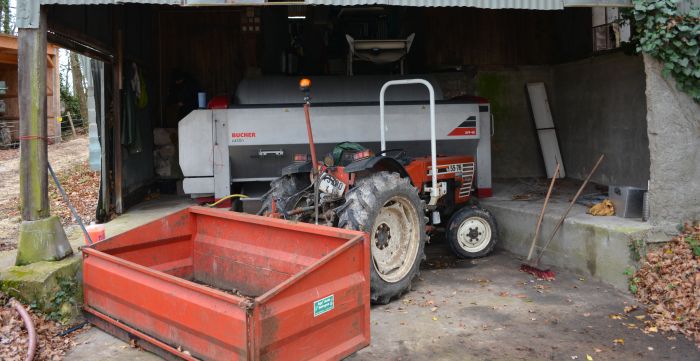
harvest report
03.10.2002
2002 Harvest Report by Catherine Roussel
<p>The weather is lousy here: wind and rain (almost stormy). The grapes are not ripe. Didier tested some samples of <glossary term="Chardonnay" title="271">Chardonnay</glossary> and <glossary term="Sauvignon Blanc" title="927">Sauvignon</glossary> yesterday: he found 10% alcohol and 7% <span class="zalup"><span><glossary term="Acidity" title="71">acidity</glossary><span>,</span></span></span> we are waiting. There are spots here and there affected by rot, but it’s not a catastrophe (yet). Porcinis and black trumpets are growing like mushrooms (that’s a pleonasm). We are very much enjoying eating them but it’s a bad sign, they don’t usually appear until later in the year. My tomato plants are rotten with <glossary term="Mildew" title="1137">mildew</glossary> and half of our zucchinis are rotting also. Okay, I know, you’re not interested in the vegetable garden.</p>
Article