producer profile
31.05.2019
Laurent Barth Producer Profile
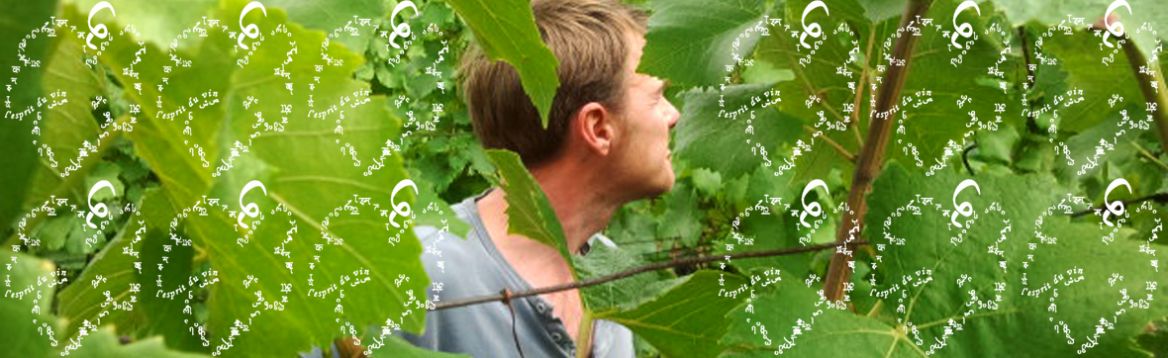
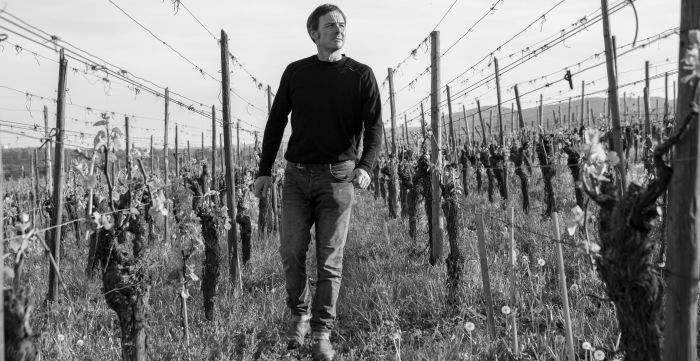
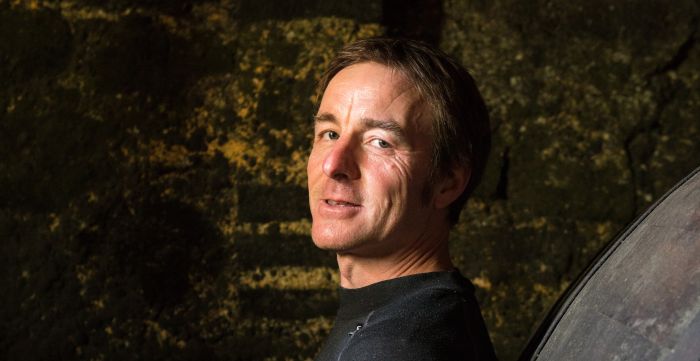
<p><em><u><strong>Photo by Benoit Cortet for the <a href="https://backinalsace.com/">Back in Alsace Project</a></strong></u></em></p>
<p>We first met Laurent Barth through Vincent Carême, an excellent <glossary term="Vouvray" title="1121">Vouvray</glossary> winemaker we do not work with but have known for a long time. </p>
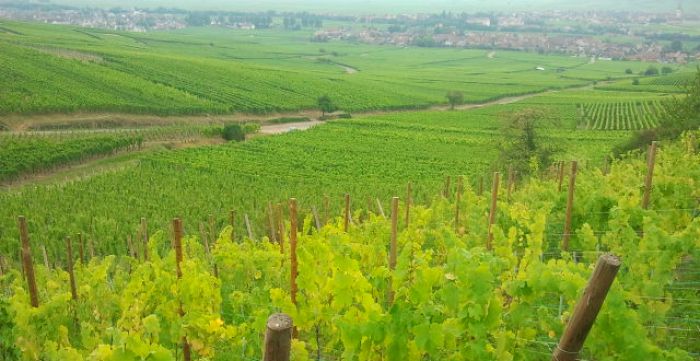
<p>Laurent’s vines are located in the village of <span class="zalup"><span> <glossary term="-Select term-" title="">Bennwihr</glossary><span>,</span></span></span> a village north of Colmar with a particularly felicitous <span class="zalup"><span><glossary term="Microclimate" title="656">micro-climate </glossary></span></span>and home to the most famous wine villages in <span class="zalup"><span><glossary term="Alsace" title="95">Alsace</glossary><span>.</span></span></span> The village itself is hardly picturesque, having been almost entirely destroyed during the battles for the liberation of Colmar at the end of WWII.<br />
<br />
Laurent took over his father’s <glossary term="Estate" title="427">estate</glossary> in 1999 and for five years brought his grapes to the local <span class="zalup"><span><glossary term="Cave Cooperative" title="252">cooperative</glossary><span>,</span></span></span> as his contract required. 2004 was the first <glossary term="Vintage" title="1109">vintage</glossary> he made and sold his own wines. Before coming home, Laurent had spent several years as a travelling winemaker around the world: in Lebanon at Château Kefraya in the Bekaa Valley, in South Africa at Bergkelder in the Stellenbosch vineyard area, in California at Porter Creek in <span class="zalup"><span><glossary term="Sonoma" title="970">Sonoma</glossary><span>,</span></span></span> in India at Champagne India in Maharashtra, and finally in Australia at Delatite Winery in Central Victoria. <br />
<br />
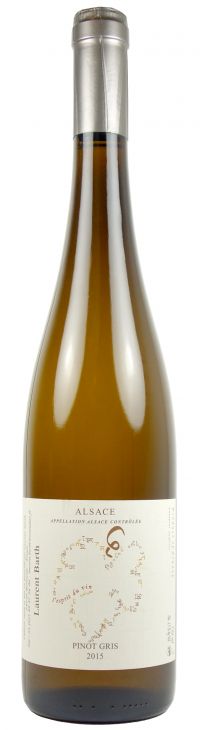
He now he tends four <glossary term="Hectare" title="523">hectares</glossary> planted with the seven traditional <glossary term="Alsace" title="95">Alsatian</glossary> <glossary term="Varietal" title="1071">varietals</glossary> spread over 28 different <span class="zalup"><span><glossary term="Plot" title="1133">plots</glossary><span>.</span></span></span> The soils go from very heavy <glossary term="Clay" title="301">clay</glossary> and <glossary term="Marl" title="632">marl</glossary> to super light <glossary term="Alluvial" title="93">alluvial</glossary> soil of <glossary term="Sand" title="909">sand</glossary> and pebbles; "Grand Cru Marckrain" is <glossary term="Marl" title="632">marl</glossary> and <span class="zalup"><span><glossary term="Limestone" title="596">limestone</glossary><span>,</span></span></span> "Rebgarten" is <glossary term="Limestone" title="596">limestone</glossary> to <glossary term="Clay" title="301">clay</glossary> as well as <glossary term="Limestone" title="596">limestone</glossary> with lots of rocks <span class="zalup"><span>(<glossary term="Limestone" title="596">limestone</glossary><span>,</span></span></span> <glossary term="Sandstone" title="910">sandstone</glossary> and <glossary term="Quartz" title="842">quartz</glossary>), <glossary term="Pinot Gris/Pinot Grigio" title="803">Pinot Gris</glossary> and <glossary term="Pinot Blanc" title="801">Pinot Blanc</glossary> thrive on <span class="zalup"><span><glossary term="Sand" title="909">sandy</glossary><span>-</span></span></span><glossary term="Limestone" title="596">limestone</glossary> soils with some <span class="zalup"><span><glossary term="Clay" title="301">clay</glossary><span>.</span></span></span> It is fairly common that Laurent produces 10 or more <glossary term="Cuvée" title="363">cuvées</glossary> in his <glossary term="Cellar" title="254">cellar</glossary> each <span class="zalup"><span><glossary term="Vintage" title="1109">vintage</glossary><span>.</span></span></span></p>
<p>In the vines, every other row is <glossary term="Plowing" title="810">plowed</glossary> annually and natural grass left to grow in the other rows, with the practice alternating each year. <glossary term="Contact Treatment" title="328">Treatments </glossary>are <span class="zalup"><span><glossary term="Sulfites" title="993">sulfur</glossary><span>,</span></span></span> <span class="zalup"><span><glossary term="Copper" title="333">copper</glossary><span>,</span></span></span> <span class="zalup"><span><glossary term="Magnesium" title="1203">magnesium</glossary><span>,</span></span></span> <glossary term="Calcium" title="224">calcium</glossary> and <span class="zalup"><span><glossary term="Algae" title="89">algae</glossary><span>,</span></span></span> rich in oligo-elements, used in solutions to spray the <span class="zalup"><span><glossary term="Foliage" title="1184">foliage</glossary><span>.</span></span></span> <glossary term="Organic" title="746">Organic</glossary> <glossary term="Compost" title="323">compost</glossary> is used in the fall according to the soils’ needs. One of the main jobs of the growing season, after <span class="zalup"><span><glossary term="Pruning" title="834">pruning</glossary><span>,</span></span></span> is a severe <glossary term="Ébourgeonnage/Debudding" title="412">ébourgeonnage</glossary> in the spring, to leave 8 to 10 grapes by vine (“<glossary term="Debudding/Green Harvest" title="380">debudding</glossary>” is the removing, at an early stage, of the fruit bearing <glossary term="Bud" title="206">buds</glossary> that are superfluous, in order to restrict <glossary term="Yield" title="1129">yields</glossary>). </p>
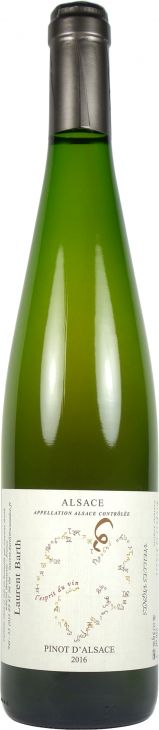
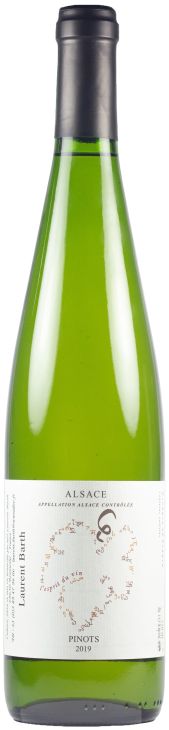
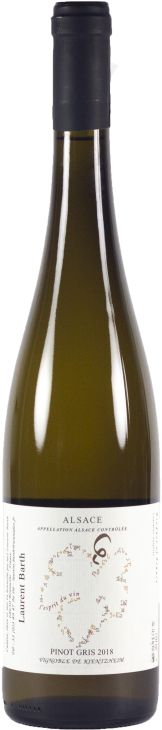
<p>In 2018, Laurent began a <glossary term="Négociant" title="729">négociant</glossary> "partnership" with a <glossary term="Vigneron/Vignaiolo" title="1089">vigneron</glossary> in the <glossary term="Commune" title="322">commune</glossary> of Kientzheim, purchasing grapes from the equivalent of 1.4 <glossary term="Hectare" title="523">hectares</glossary> of vines, specifically from the <glossary term="Lieu-Dit" title="594">lieu-dit</glossary> Altenbourg and the <glossary term="Grand Cru" title="501">Grand Cru</glossary> Schlossberg. More than by necessity, the principle motivation for launching this initiative was<em> "the remarkable quality of the parcels, most of them planted in old vines."</em> The vines are <glossary term="Organic Certification" title="260">certified</glossary> <glossary term="Organic" title="746">organic</glossary> and everything is done manually as tractors cannot operate on the hilly terrain (the soils are <glossary term="Tilling" title="1028">tilled</glossary> by horse). The <glossary term="Harvest" title="521">harvest</glossary> is done by Laurent's team and the vigneron is paid the same amount regardless of the crop. Some of the grapes from Kientzheim get their own <glossary term="Cuvée" title="363">cuvées</glossary> while others are <glossary term="Blending" title="1146">blended</glossary> with Laurent's <glossary term="Estate" title="427">estate</glossary> fruit, notably the "Pinot d'Alsace" and "Racines Métisses"</p>
<p><br />
Laurent aims for an average 40<glossary term="hl/ha" title="528">HL/HA</glossary> overall, while the legal limit in Alsace is 80<glossary term="hl/ha" title="528">HL/HA</glossary> (55<glossary term="hl/ha" title="528">HL/HA</glossary> in the <glossary term="Grand Cru" title="501">Grands Crus</glossary>). Another way of limiting <glossary term="Yield" title="1129">yields</glossary> is by planting at a higher density: for example, a <glossary term="Plot" title="1133">plot</glossary> of <glossary term="Pinot Gris/Pinot Grigio" title="803">Pinot Gris</glossary> planted in 2001 with vines from <span class="zalup"><span><glossary term="Selection Massale" title="941">sélection massale</glossary><span>,</span></span></span> has 8600 vines<span class="zalup"><span>/<glossary term="Hectare" title="523">HA</glossary><span>.</span></span></span> The norm in Alsace is 4500 to 5000 vines<span class="zalup"><span>/<glossary term="Hectare" title="523">HA</glossary><span>.</span></span></span><br />
<br />
In order to achieve maximum ripeness, Laurent uses a double <glossary term="Guyot" title="518">Guyot</glossary> (two major shoots for each vine) that increases the proportion of <glossary term="Foliage" title="1184">foliage</glossary> per vine. He also keeps as much <glossary term="Foliage" title="1184">foliage</glossary> as possible by training the boughs up between the <glossary term="Trellising" title="1044">treillissage</glossary> wires and letting them shoot as high as they can, without any trimming. <br />
<br />
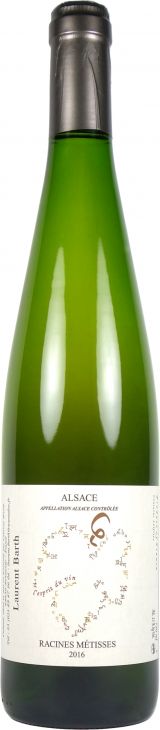
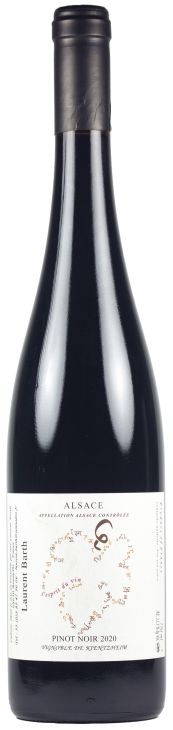
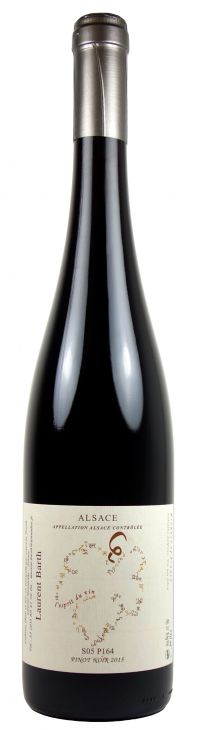
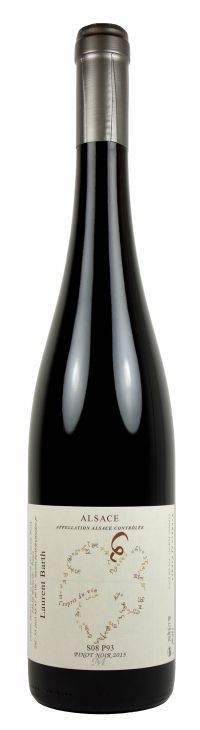
His wines are bright, pure, very satisfying. The <glossary term="Cuvée" title="363">cuvée</glossary> he calls "Racines Métisses" is a <glossary term="Blend" title="168">blend</glossary> of the <glossary term="Press Juice" title="1309">pressed juices</glossary> from all his <glossary term="Varietal" title="1071">varietals</glossary> except <span class="zalup"><span><glossary term="Gewürztraminer" title="490">Gewürztraminer</glossary><span>,</span></span></span> a delicious type of <glossary term="Edelzwicker" title="415">Edelzwicker</glossary> that deserves not to be called by that often pejorative name. The <glossary term="Free-Run Juice" title="468">free run juice</glossary> goes into the single<span class="zalup"><span><span>-</span><glossary term="Varietal" title="1071">varietal</glossary> </span></span><glossary term="Cuvée" title="363">cuvées</glossary> with intensified grape and soil character, more aromas and more <span class="zalup"><span><glossary term="Minerality" title="662">minerality</glossary><span>.</span></span></span> The slow process of <glossary term="Spontaneous Fermentation" title="976">natural fermentation</glossary> adds depth to the wines, but involves some risk of higher <glossary term="Volatile Acidity" title="1116">volatile acidity</glossary> and of <span class="zalup"><span><glossary term="Malolactic Fermentation" title="622">malolactic fermentation</glossary><span>.</span></span></span> When the <glossary term="Malolactic Fermentation" title="622">malo</glossary> occurs, although he does not desire it, Laurent does not <glossary term="Sulfites" title="993">sulfur</glossary> his wines to stop it. His idea is that natural winemaking may result in some imperfections, but those are part of the wine’s identity, and are always better than technical and analytical perfection.</p>
Article
interview
22.05.2019
An Interview with Laurent Barth from 2012
<p><em><u><strong>Photo by Benoit Cortet for the <a href="https://backinalsace.com/">Back in Alsace Project</a></strong></u></em></p>
<p><em>This interview with Laurent Barth took place at </em><glossary term="L'Herbe Rouge" title="568"><em>L'Herbe Rouge</em></glossary><em> in February, 2012.</em></p>
<p><strong>Tell us about the estate.</strong><br />
<br />
I started in 2004, with vines recuperated from my father. I took over in 1999; my father had only sold to the <span class="zalup"><span><glossary term="Cave Cooperative" title="252">cave cooperative</glossary><span>,</span></span></span> so I took an obligatory five year contract with them before becoming independent. I'm now working with four <glossary term="Hectare" title="523">hectares</glossary> of vines, which have been worked <glossary term="Organic" title="746">organically</glossary> since 2004. <br />
<br />
We're located in the village of <span class="zalup"><span><glossary term="Bennwihr" title="156">Bennwihr</glossary><span>,</span></span></span> 10 km north of Colmar. The vines are spread through 28 <span class="zalup"><span><glossary term="Parcel" title="760">parcels</glossary><span>.</span></span></span> The oldest are 65, the youngest are only two. On average they're 30 years old. I have a lot of different soils: the lightest are <glossary term="Alluvial" title="93">alluvial</glossary> <span class="zalup"><span><glossary term="Sand" title="909">sands</glossary><span>,</span></span></span> then we have <glossary term="Silt" title="956">silt</glossary> with <glossary term="Granite" title="502">granite</glossary> <span class="zalup"><span><glossary term="Subsoil" title="991">subsoils</glossary><span>,</span></span></span> some are <glossary term="Clay" title="301">clay</glossary> and <glossary term="Limestone" title="596">limestone</glossary> and finally one parcel is pure <span class="zalup"><span><glossary term="Granite" title="502">granite</glossary><span>.</span></span></span> <br />
<br />
<strong>You bounced around all over the world for a while. Can you tell us about that?</strong><br />
<br />
After studying <glossary term="Enology" title="422">oenology</glossary> and <glossary term="Viticulture" title="1103">viticulture</glossary> for four years in <span class="zalup"><span><glossary term="Burgundy" title="212">Burgundy</glossary><span>,</span></span></span> I wanted to see what was going on in the rest of the world. I started my journey in Libya. Then I worked in South Africa, where I met a Californian winemaker from Russian River (Porter Creek) who invited me to come help him out for a few months. My last stop was in India.<br />
<br />
<strong>In India?</strong><br />
<br />
Yes! It was an <glossary term="Estate" title="427">estate</glossary> that was just starting (one of the first actually), something that has really been developing rapidly over there. After India, I worked in Australia. That was over a period of two years. I settled back in France, because my goal was always to express my own terroir. It's always interesting working for someone else, but… <br />
<br />
<strong>With all that travel, were you ever interested in starting up in another region or country? </strong><br />
<br />
It's always tempting, especially when it meets your specifications. And the advantage of working for someone else is you don't have to deal with all the administrative and commercial stuff! It's not always the funnest thing in the world you know… But I have a link to my family's land, and I'm proud it finally has the Barth name on it. The idea was always to make wine from my village. <br />
<br />
<strong>How did you come to discover organic agriculture and natives yeast/minimal intervention winemaking?</strong><br />
<br />
A work philosophy always grows in time. It was my goal to work the vines <span class="zalup"><span><glossary term="Organic" title="746">organically</glossary><span>,</span></span></span> but over the last few <glossary term="Vintage" title="1109">vintages</glossary> I've decided to incorporate <span class="zalup"><span><glossary term="Biodynamic" title="160">biodynamics</glossary><span>.</span></span></span> This element of evolution and adaptation is the key to being a <span class="zalup"><span><glossary term="Vigneron/Vignaiolo" title="1089">vigneron</glossary><span>,</span></span></span> and it's also what makes it such a charming career. <br />
<br />
As far as<span class="zalup"><span> <glossary term="Native Yeast" title="538">indigenous yeasts</glossary><span>,</span></span></span> it was obvious. I'd seen it function all over the world and knew it wasn't a risk as long as the juice was pure. If the grapes are clean, if they are well selected at<span class="zalup"><span> <glossary term="Harvest" title="521">harvest</glossary><span>,</span></span></span> you get much more substance. <glossary term="Fermentation" title="441">Fermentations</glossary> are longer and harder to execute, but that's the price to pay for complexity. <br />
<br />
<strong>What do you think about "natural wine"? </strong><br />
<br />
My approach to <glossary term="Vinification" title="1104">vinification</glossary> is as natural and as humanely as possible. But I do use <glossary term="Sulfites" title="993">sulfur</glossary> because I feel that when you work with reasonable doses, you don't harm or alter the product. I feel that working without any <glossary term="Sulfites" title="993">sulfur</glossary> creates a lack of control I can't permit myself. <br />
<br />
But I understand this recent rejection of <span class="zalup"><span><glossary term="Sulfites" title="993">sulfur</glossary><span>.</span></span></span> Just like everywhere else, <glossary term="Alsace" title="95">Alsace</glossary> definitely went through a phase of excess where we wanted to overprotect our wine at all costs. People became obsessed with making "clean" wines, "flawless" wines: they were never <glossary term="Oxidation" title="754">oxidized</glossary> and always the right color, but yes there tons of <glossary term="Sulfites" title="993">sulfur</glossary> in them. To me, this<span class="zalup"><span> <glossary term="Sans Souffre" title="913">sulfur free</glossary><span>,</span></span></span> "natural" style is an ideal you fully grasp when you work <glossary term="Organic" title="746">organically</glossary> and <glossary term="Biodynamic" title="160">biodynamically</glossary> in the<span class="zalup"><span> <glossary term="Cellar" title="254">cellar</glossary><span>:</span></span></span> to make a wine as naturally as possible. I respect the final product, and don't believe there is just one way to achieve serious results. <br />
<br />
<strong>What do you like to drink?</strong><br />
<br />
My tastes are always evolving, but right now I am taking great pleasure in wines made with<span class="zalup"><span> <glossary term="Pinot Noir" title="805">Pinot Noir</glossary><span>,</span></span></span> most notably from <span class="zalup"><span><glossary term="Burgundy" title="212">Burgundy</glossary><span>.</span></span></span> The other thing I'm really into these days are wines from Northern Italy.</p>
Article
producer visit
07.08.2019
This visit with Laurent Barth took place in August, 2012
<p><strong><em>This visit with Laurent Barth took place in August, 2012.</em></strong></p>
<p><strong><em>Words and photos by Jules Dressner.</em></strong></p>
<p>Laurent Barth lives in the small village of <span class="zalup"><span><glossary term="Bennwihr" title="156">Bennwihr</glossary><span>,</span></span></span> about 10 kilometers North of Colmar. Though it has been around for centuries, the village was completely destroyed during the struggle for the <a href="http://en.wikipedia.org/wiki/Colmar_Pocket">Colmar Pocket</a> in World War 2. Subsequently, it was rebuilt from the ground up (explaining why many houses look far more polished than most old villages in France). This included housing but also local economies. <br />
<br />
The region has always been rich in vineyards, and a group of local <glossary term="Vigneron/Vignaiolo" title="1089">vignerons</glossary> -including Laurent's grandfather- formed a <glossary term="Cave Cooperative" title="252">cave cooperative</glossary> together in the late 1940's in an effort to get things going again. The team effort proved a success: <glossary term="Bennwihr" title="156">Bennwihr</glossary>'s <glossary term="Cave Cooperative" title="252">cave</glossary> developed a reputation for its high quality wines, and did very well in sales. Unfortunately, the growth of the <glossary term="Cave Cooperative" title="252">cave</glossary> coincided with the introduction and standardization of <glossary term="Conventional Farming" title="331">chemical viticulture</glossary> and <span class="zalup"><span><glossary term="Mechanization" title="645">mechanization</glossary><span>.</span></span></span> Today, the wines being produced there are the same you'd find from any <glossary term="Cave Cooperative" title="252">cave coop</glossary> (aka <glossary term="Industrial Wine" title="540">industrial</glossary>), something Laurent wanted to break out of by starting his own<span class="zalup"><span> <glossary term="Estate" title="427">estate</glossary><span>.</span></span></span> <br />
<br />
Laurent has 28 <glossary term="Parcel" title="760">parcels</glossary> spread over four <span class="zalup"><span><glossary term="Commune" title="322">communes</glossary><span>,</span></span></span> though 80% of his vines are in <span class="zalup"><span> <glossary term="Bennwihr" title="156">Bennwhir</glossary><span>.</span></span></span> The first one we visited was some <glossary term="Pinot Gris/Pinot Grigio" title="803">Pinot Gris</glossary> planted in 2001. </p>
<p><img src="http://louisdressner.com/uploads/images/article/2019_Aug_07//4f/ae/4faec62aed73fe3a92c914d432661cff.jpg" /></p>
<p><img src="http://louisdressner.com/uploads/images/article/2019_Aug_07//ce/e4/cee47099fc42a991b52bac5cf593e59c.jpg" /></p>
<p>This was all planted in <glossary term="Selection Massale" title="941">selection massale</glossary> and in high density. This used to be the norm in the area, but was lost with<span class="zalup"><span> <glossary term="Mechanization" title="645">mechanization</glossary><span>.</span></span></span> <br />
<br />
<em>"It creates more competition between the vines, so the roots have to go deeper to feed themselves."</em></p>
<p><img src="http://louisdressner.com/uploads/images/article/2019_Aug_07//ee/11/ee1194b3f47309574462868451bb4f80.jpg" /><br />
<br />
You've probably noticed that the vineyards are very green with grass. Laurent started <glossary term="Conversion" title="332">converting</glossary> the <glossary term="Estate" title="427">estate</glossary> to <glossary term="Organic" title="746">organics</glossary> in 2004 (the first <glossary term="Vintage" title="1109">vintage</glossary> <glossary term="Bottling" title="185">bottled</glossary> under his name), and for the last six years has been using <glossary term="Biodynamic" title="160">biodynamic</glossary> <span class="zalup"><span><glossary term="Compost" title="323">composts</glossary><span>.</span></span></span> He plans on incorporating <glossary term="BD500" title="148">500</glossary> and <glossary term="BD 501" title="149">501</glossary> preparations over the next year.<br />
<br />
We continued to visit by checking out <glossary term="Grand Cru" title="501">Grand Cru</glossary> <glossary term="Gewürztraminer" title="490">Gewürztraminer</glossary> planted in 1967 and 1968. </p>
<p><img src="http://louisdressner.com/uploads/images/article/2019_Aug_07//66/8b/668b686ebd4ef6d56fda81bdf0cd6168.jpg" /></p>
<p><img src="http://louisdressner.com/uploads/images/article/2019_Aug_07//a3/b3/a3b35b09611dbff1faecefd92ea42c43.jpg" /></p>
<p><img src="http://louisdressner.com/uploads/images/article/2019_Aug_07//75/cf/75cf526532c99cede6ec6c2b106de8a7.jpg" /></p>
<p>Unfortunately, the vines are suffering a lot of mortality problems from <glossary term="Esca" title="425">esca</glossary> here. On that same hill, Laurent showed us some of his <glossary term="Pinot Noir" title="805">Pinot Noir</glossary> (planted roughly around the same time).</p>
<p><img src="http://louisdressner.com/uploads/images/article/2019_Aug_07//4c/ef/4cef5d04db28ca1be653a6905ca21ec1.jpg" /></p>
<p><img src="http://louisdressner.com/uploads/images/article/2019_Aug_07//03/70/0370aeaebcc45b8eddfee1b1c4d55856.jpg" /></p>
<p>We then drove back down to the village to visit some <glossary term="Riesling" title="858">Riesling</glossary> planted in 1945.</p>
<p><img src="http://louisdressner.com/uploads/images/article/2019_Aug_07//8a/1c/8a1cf2bf1d04c6aca67373bf8a48ae8a.jpg" /></p>
<p><img src="http://louisdressner.com/uploads/images/article/2019_Aug_07//28/25/282524a637b38f67a23657ef43606e9d.jpg" /></p>
<p><img src="http://louisdressner.com/uploads/images/article/2019_Aug_07//35/0e/350eec4804e239410224a2450bb46e6d.jpg" /></p>
<p>These are the oldest <glossary term="Riesling" title="858">Riesling</glossary> vines Laurent owns. Here on the plains, the soils are thinner and have more <span class="zalup"><span><glossary term="Clay" title="301">clay</glossary><span>.</span></span></span> Up in the hills, <glossary term="Riesling" title="858">Riesling</glossary> grows in soils with more <span class="zalup"><span><glossary term="Limestone" title="596">limestone</glossary><span>.</span></span></span> <br />
<br />
I spotted a vine that had recently died of <span class="zalup"><span><glossary term="Esca" title="425">esca</glossary><span>,</span></span></span> and for educational reasons decided to share it with you.</p>
<p><img src="http://louisdressner.com/uploads/images/article/2019_Aug_07//de/e3/dee3ce65e0f651d232ae0a40f995afee.jpg" /></p>
<p><img src="http://louisdressner.com/uploads/images/article/2019_Aug_07//25/b6/25b640d661b1564b17a3ceeddcf79ef0.jpg" /></p>
<p><img src="http://louisdressner.com/uploads/images/article/2019_Aug_07//16/b2/16b267987f0abc71c956ba827fbd896c.jpg" /></p>
<p>The last <glossary term="Parcel" title="760">parcel</glossary> we visited was a recently acquired 27 <glossary term="Are" title="1208">ares</glossary> of <glossary term="Riesling" title="858">Riesling</glossary> from the <em>Grand Cru Schlossberg</em>, all replanted in 2009. </p>
<p><img src="http://louisdressner.com/uploads/images/article/2019_Aug_07//e7/b0/e7b0742d6c04a08701b5d7a5c7d08c80.jpg" /></p>
<p><img src="http://louisdressner.com/uploads/images/article/2019_Aug_07//43/59/4359d7c0fcd7d5dd0fed9ab283ed6493.jpg" /></p>
<p><img src="http://louisdressner.com/uploads/images/article/2019_Aug_07//99/42/994287253e854c2573e5d4f1239dcf7a.jpg" /></p>
<p><img src="http://louisdressner.com/uploads/images/article/2019_Aug_07//fc/36/fc36b488674eb40b037da0a1444a0493.jpg" /></p>
<p>It's steep up there!<br />
<br />
The visit ended with... TASTING! Laurent has a teeny-tiny <span class="zalup"><span><glossary term="Cellar" title="254">cellar</glossary><span>.</span></span></span><br />
<br />
<img src="http://louisdressner.com/uploads/images/article/2019_Aug_07//47/74/47745e8d2e49c13e0b829fc79208bd18.jpg" /></p>
<p>Highlights of the tasting were the 2011 <glossary term="Riesling" title="858">Rieslings</glossary> and the "Pinot Noir M" from <glossary term="Barrel" title="142">barrel</glossary> (20% <span class="zalup"><span><glossary term="Whole-Cluster" title="1124">whole-cluster</glossary><span>,</span></span></span> darker, more <glossary term="Structure" title="990">structured</glossary>). The <glossary term="Riesling" title="858">Riesling</glossary> <glossary term="Old Vines" title="740">VV</glossary> was off to a very promising start, but still needed some time to <glossary term="Aging" title="74">age</glossary> and develop before <span class="zalup"><span><glossary term="Bottling" title="185">bottling</glossary><span>.</span></span></span> The <span class="zalup"><span><glossary term="Gewürztraminer" title="490">Gewürztraminers</glossary><span>,</span></span></span> while obviously on the sweeter side of things, were still balanced by very bright <glossary term="Acidity" title="71">acidity</glossary> and <span class="zalup"><span><glossary term="Minerality" title="662">minerality</glossary><span>,</span></span></span> making them thoroughly enjoyable.</p>
Article
harvest report
12.09.2009
2009 Harvest Report from Laurent Barth
<p><u><strong>September 11th, 2008:</strong></u></p>
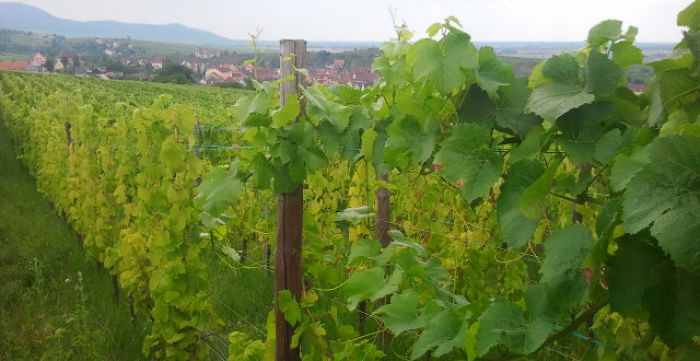
<p>We are going to start tomorrow, Sept. 12th. This is two weeks earlier than in 2008: usually, when it is time to <span class="zalup"><span><glossary term="Harvest" title="521">harvest</glossary><span>,</span></span></span> the vines leaves are yellow/green, as fits the beginning of fall; the <glossary term="Harvest" title="521">harvest</glossary> skies are blue, so blue that one would think it’s been painted blue, so hard to describe. But this year, leaves are still really green, except on shallow soils, where the vines suffered from the <span class="zalup"><span><glossary term="Drought" title="1167">drought</glossary><span>.</span></span></span> And the sky? Just like temperatures, the sky is summery.<br />
<br />
So, how am I to deal with an early <span class="zalup"><span><glossary term="Vintage" title="1109">vintage</glossary><span>?</span></span></span> How to manage low <span class="zalup"><span><glossary term="Acidity" title="71">acidity</glossary><span>?</span></span></span> I am fated to be super vigilant, given my ignorance of these factors. Emile Peynaud once wrote: “No precautions are ever useless; the better one knows, the better one must do, but there is no way to ever know everything.” So, 2009, a <glossary term="Vintage" title="1109">vintage</glossary> of intuition?<br />
<br />
I will start with my<span class="zalup"><span> <glossary term="Pinot Noir" title="805">Pinot Noir</glossary><span>,</span></span></span> the <glossary term="Varietal" title="1071">variety</glossary> has enjoyed the prolonged summer.<br />
<br />
Three people will be in charge of manual <glossary term="De-stemming" title="378">destemming</glossary> tomorrow. First clics of shears around 8:00 am.</p>
Article
harvest report
30.09.2008
2008 Harvest Report from Laurent Barth
<p>A few impressions as the <glossary term="Harvest" title="521">harvest</glossary> continues and little by little the <glossary term="Vat/Tank" title="1140">vats</glossary> fill up.<br />
<br />
September 30th: <glossary term="-Select term-" title="">Harvest</glossary> of the <span class="zalup"><span><glossary term="Pinot Noir" title="805">Pinot Noir</glossary><span>:</span></span></span> an intense and laborious <glossary term="Sorting" title="1380">sorting</glossary> which allowed us to <glossary term="Vinification" title="1104">vinify</glossary> two <glossary term="Terroir" title="1026">terroirs</glossary> separately. The <glossary term="Décuvage" title="410">devatting</glossary> is planned for this Wednesday (Oct. 15th). The grapes were able to attain ripeness (13.1%), but as far as the <glossary term="Tannin" title="1010">tannins</glossary> go, I’m not so sure. I decided to keep about 10% of the stems for the Cuvée “M” (only after <glossary term="Aging" title="74">aging</glossary> will we be able to know if this <glossary term="Cuvée" title="363">cuvée</glossary> will ever see the light of day). I reread some pages from a book by Peynaud le Bordelais (in which philosophical and technical reflections confirm each other) to reassure myself about the choices I was making about vatting and <span class="zalup"><span><glossary term="Pigeage/Punchdown" title="795">pigeages</glossary></span></span><em><span class="zalup"><span><span>.</span></span></span></em><br />
<br />
The week of September 29th – October 4th was marked by one rainfall after another; light in intensity, but nerve wracking nevertheless.<br />
<br />
The <glossary term="Riesling" title="858">Riesling</glossary> from the flatland, the <glossary term="Muscat" title="698">Muscat</glossary> and <glossary term="Gewürztraminer" title="490">Gewurtztraminer</glossary> are all <span class="zalup"><span><glossary term="Harvest" title="521">harvested</glossary><span>.</span></span></span> One consistent feature of this year has been the discrepancy between the visual appearance of the grapes and their texture (thick skins) and the actual ripeness which has been relatively high. The <glossary term="Acidity" title="71">acidity</glossary> levels have also been generous.<br />
<br />
Last Wednesday (Oct 8), for the first time, we harvested <glossary term="Muscat" title="698">Muscat</glossary> from the <glossary term="Grand Cru" title="501">Grand Cru</glossary> Schlossberg, a plot of pure<span class="zalup"><span> <glossary term="Granite" title="502">granite</glossary><span>.</span></span></span> It’s a small <glossary term="Terrace" title="1022">terraced</glossary> <glossary term="Parcel" title="760">parcel</glossary> where <glossary term="Muscat" title="698">Muscat</glossary> and <glossary term="Riesling" title="858">Riesling</glossary> grow together. The deer, wild boars and other predators of the neighboring forest have confirmed their clear preference for the <glossary term="Aromatic" title="120">aromatic</glossary> variety and are in part responsible for the ridiculously small<span class="zalup"><span> <glossary term="Yield" title="1129">yield</glossary><span>.</span></span></span><br />
<br />
In the end, hardly 360 liters of concentrated juice (13.55% <glossary term="alcoholic potential" title="1381">potential alcohol</glossary>). I have no idea how this juice will end up. If its identity reveals itself, I will age it separately.<br />
<br />
More to come later…</p>
Article
harvest report
16.10.2007
2007 Harvest Report from Laurent Barth
<p><u><strong>Bennwihr, October 16th:</strong></u></p>
<p>(Reminder: Laurent Barth’s vines are part of the 150 or so <glossary term="Hectare" title="523">hectares</glossary> that were devastated by a <glossary term="Hail" title="1136">hail</glossary> storm on June 15th, 2007 in the villages of Ammerschwihr, Sigolsheim, Kientzheim, Bennwihr and Kaysersberg.)<br />
<br />
My <glossary term="Harvest" title="521">harvest</glossary> went from Sept. 12th to Oct. 6th. For me, it is a bittersweet time. In my vines, the average <glossary term="Yield" title="1129">yield</glossary> was 3<glossary term="hl/ha" title="528">HL/HA </glossary>and only one <glossary term="Cuvée" title="363">cuvée</glossary> survived, the <glossary term="Gewürztraminer" title="490">Gewürz</glossary> "Marckrain". All the other juices were <glossary term="Blending" title="1146">blended</glossary> together, given the ridiculously low amounts.<br />
<br />
So I had to buy grapes, and the picking time was truly sunny and brought grapes to good ripeness. Not a given after the so-so summer we endured! The Indian Summer continues and there are lots of <glossary term="Late harvest wine" title="1392">vendanges tardives</glossary> and <glossary term="Botrytis/Noble Rot" title="181">selections de grains nobles</glossary> in the making this year.<br />
<br />
Could this turn out to become an outstanding<span class="zalup"><span> <glossary term="Vintage" title="1109">vintage</glossary><span>?</span></span></span> Maybe, given the extraordinary later season we are enjoying and the beautiful balance the wines are achieving. Maybe not, given the bad weather conditions through the summer: some <glossary term="Yield" title="1129">yields</glossary> were really high and wines from early harvesting are going to handicap the <glossary term="Vintage" title="1109">vintage</glossary> as a whole.<br />
<br />
My first impressions from the <glossary term="Cellar" title="254">cellar</glossary> are of balanced wines with high<span class="zalup"><span> <glossary term="Acidity" title="71">acidity</glossary><span>.</span></span></span> It really paid to be patient before picking. The <glossary term="Riesling" title="858">Rieslings</glossary> are dense and fruity, maybe the most successful <glossary term="Varietal" title="1071">variety</glossary> this <span class="zalup"><span><glossary term="Vintage" title="1109">vintage</glossary><span>,</span></span></span> the <glossary term="Pinot Gris/Pinot Grigio" title="803">Pinots Gris</glossary> and <glossary term="Gewürztraminer" title="490">Gewürz</glossary> are rich and <span class="zalup"><span><glossary term="Concentration" title="324">concentrated</glossary><span>.</span></span></span> These wines require constant monitoring, because the <glossary term="Fermentation" title="441">fermentations</glossary> are going quicker than usual. I have two totally different batches of <span class="zalup"><span><glossary term="Pinot Noir" title="805">Pinot Noir</glossary><span>,</span></span></span> and a <glossary term="Sylvaner" title="1408">Sylvaner</glossary> that is ripe and lively.<br />
<br />
To that one must add the grapes that were generously donated by <glossary term="Organic" title="746">organic</glossary> winemakers to their unlucky colleagues. Some good surprises there, but it is very complicated to know how to deal with these lots, and probably I will not <glossary term="Bottling" title="185">bottle</glossary> most under my name.<br />
<br />
This was a peculiar year, with enormous frustration and ensuing doubts. Regardless, my concern stays the same: to make real wines.</p>
Article