producer profile
24.07.2026
Champagne Flancourt from Quentin Richard
Champagne Flancourt from Quentin Richard
Read more…
producer profile
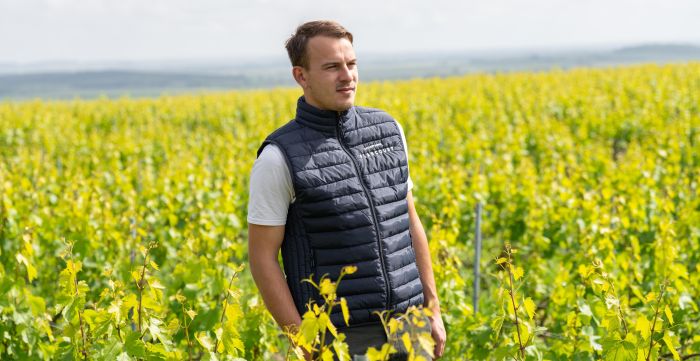
<p>Flancourt is a micro Champagne “maison” founded by Quentin Richard in 2025. Quentin, alongside his father Matthieu and mother Delphine Boulard, dutifully tend to Champagne Francis Boulard et Fille's 3.5 hectares of biodynamically farmed vineyards, from which they produce some of the Marne's finest grower Champagne. Firmly committed to his family's legacy and planning on inheriting Boulard et Fille, Quentin's youthful ambition and connection to the champagne house world through his fiancé, whom he lives with full-time in Reims, nonetheless led him to form an alternative, parallel project.</p>
<p>We've worked with Quentin’s grandfather Francis and mother Delphine for over 15 years and adore them. Quentin is a much newer addition, but in our times together we’ve come to discover a smart, enthusiastic young man excited to tackle the world, fortunately with humility and open-mindedness. So when he reached out to us about this new project, we were intrigued but a little intimidated. Not by Quentin, mind you, but the idea of working with a “maison de Champagne” versus a “vigneron independent”. How exactly does this whole thing work? </p>
<p>We naturally had a lot of questions about scale, sourcing, motivation for starting the project, etc… Rather than paraphrase, here are Quentin’s verbatim answers:</p>
<p><i>"The project was born out of a deeply personal desire: to create a brand complementary to that of the family estate—one with a distinct identity, yet consistent with my own background and vision of wine.</i></p>
<p><i>My parents remain actively involved at Francis Boulard et Fille today, and I felt a desire to develop my own distinct creative expression alongside them. The wines from my family estate are highly precise and distinctly gastronomic—a result of our commitment to organic and biodynamic farming practices. With this project, however, I sought to explore something slightly different: wines that are more immediate and approachable in style, while still maintaining the utmost rigor in our selection of terroirs and the quality of our winemaking. Thus, this venture represents a natural continuation of my work with Boulard—an estate I also look forward to taking the helm of in the future.</i></p>
<p><i>I currently work with three different partner winegrowers, from whom I purchase grapes exclusively. I chose them, above all, for the quality and consistency of their work in the vineyards. The terroirs hail primarily from the Massif de Saint-Thierry and the Marne Valley, as well as from the Château-Thierry sector for a portion of the blends. This diversity allows me to craft wines that possess a balance of tension, fruit, and equilibrium. The vineyards have an average age of 30 years.</i></p>
<p><i>Regarding viticulture, even if the vineyards are not certified organic, it is of utmost importance to me to work exclusively with partners who adopt a responsible approach that respects the soil. No herbicides or systemic products are used in the vineyard plots with which I work. The soils are either mechanically tilled or kept under grass cover, depending on specific needs.<br />
<br />
My partner winegrowers do not produce Champagne themselves; instead, they sell their grapes to various Champagne houses or cooperatives within the region. While this practice is quite common in Champagne, the specific plots selected for my wines are subject to dedicated monitoring and precise quality criteria.</i></p>
<p><i>In the cellar, fermentations are carried out using indigenous yeasts. I strive for winemaking methods that are as natural and non-interventionist as possible, while maintaining precision and stability. Generally, the wines are neither fined nor heavily filtered. Depending on the specific cuvée and vintage, a light filtration may be performed prior to bottling to ensure the wines' stability during transport and export.</i></p>
<p><i>We average around 30 g/L of sulfites, but this can vary depending on the cuvée, the sector, the vintage, and the grape varieties. It is never an exact figure. We add sulfites at press and a second time at racking.”</i></p>
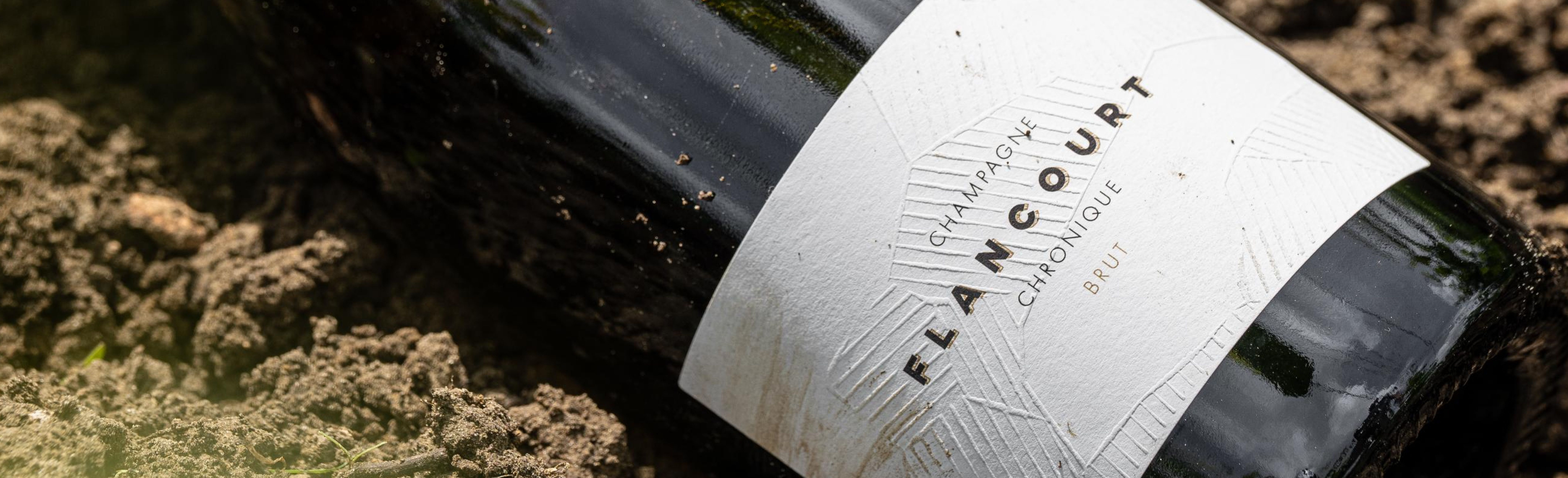
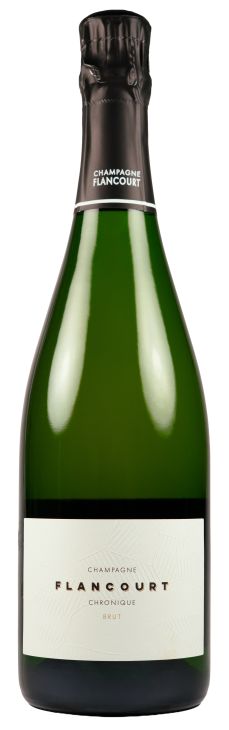
<p>For Flancourt’s initial offerings, Quentin has released three Champagnes, all 2022’s disgorged and released in late 2025. The “Chronique Brut” is the house calling card, a classic Marne blend of 90% Pinot Meunier and 10% Pinot Noir. A “Chronique Blanc de Blancs” 2022 and “Chronique Blanc de Noirs” 2022 from Pinot Noir round out the line-up, all with a three gram dosage. To get his feet off the ground, Quentin did buy some finished wine for Chronique 2022 that he blended, aged, dosed and disgorged. Beginning with the 2023 vintage, which is aging sur-lattes and to be released in 2027 at the very earliest, the wines will all be vinified, aged and disgorged by Quentin in his cellar.</p>
<p>We'll admit that starting with a Champagne house is a bit outside of our comfort zone. While we certainly work with many négociant wines, most of these result from ever-shifting environmental factors forced upon our producers, namely decades of short crops throughout the 2010's and 2020's. In rare cases like Pierre-Olivier Bonhomme and the late Olivier Lemasson, these producers started solely as négociant projects before acquiring their own land and shifting into the full-fledged vignerons they'd eventually become. That said, Champagne is not the Touraine: what Quentin is doing here is not only well within the traditions of his region, it's thoughtfully and qualitatively executed in a way we can get behind.</p>
<p>Ultimately, what cemented this for us is Quentin’s connection to and work with his family at Boulard. The pedigree and quality is already there, and in our ongoing efforts to support talented, trusted winemakers, we've found ourselves in a previously unexplored avenue. Given this is only the very beginning, we have no doubt the wines will only continue to evolve in complexity and quality.</p>