harvest report
03.01.2022
2022 Harvest Report from Olivier De Moor
<p>After an incredibly challenging 2021 <span class="zalup"><span><glossary term="Vintage" title="1109">vintage</glossary><span>,</span></span></span> 2022 brought a smile back to our faces.</p>
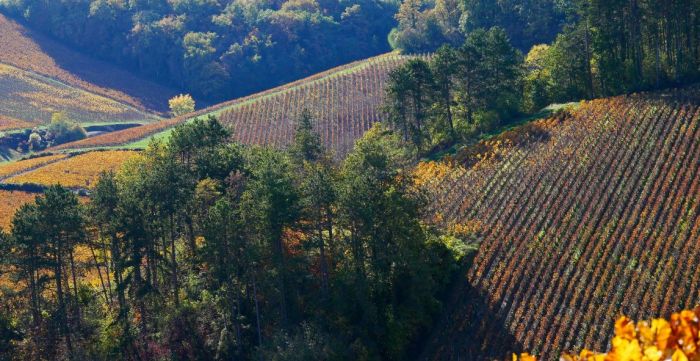
<p>After a mild and dry winter, the vines began <glossary term="Budding" title="1166">budding</glossary> in early April when the weather was finally beginning to get cold. We did go through an episode of <span class="zalup"><span><glossary term="Frost" title="1135">frost</glossary><span>,</span></span></span> but it barely did any damage. We then had a hot and dry spring, with the vines developing rapidly. <glossary term="Flowering" title="1179">Flowering</glossary> took place very early and very quickly.</p>
<p>A few rains at the right time helped the grapes plump up. The heatwaves in the summer meant we did not have to worry about <span class="zalup"><span><glossary term="Mildew" title="1137">mildew</glossary><span>.</span></span></span> And while there was a bit of <glossary term="Oidium" title="737">odium</glossary> pressure at one point, in the end it was without consequence. We <glossary term="Harvest" title="521">harvested</glossary> from September 5th to the 21st. This nice crop, with normal <span class="zalup"><span><glossary term="alcoholic potential" title="1381">alcoholic potentials</glossary><span>,</span></span></span> is fermenting rather well.</p>
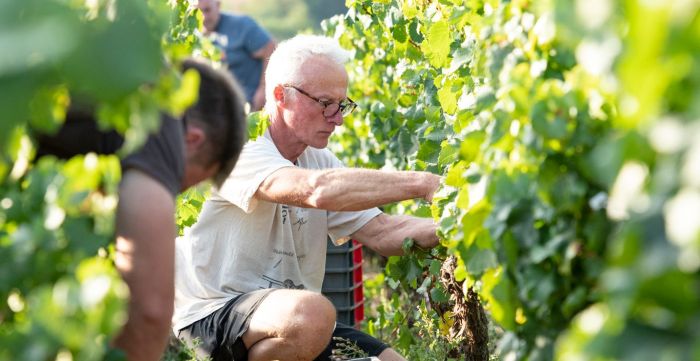
<p>But with the proliferation of extreme meteorological conditions, we have not stopped worrying. In such, we continue to evolve our <glossary term="Viticulture" title="1103">viticultural</glossary> practices on the short, medium and long term. We have began an experiment by creating a <glossary term="Pergola" title="774">pergola</glossary> in Vau de Vey to see if this can properly protect grapes from the sun. And in a week, we will plant many different species of trees, about 100 in total, in the vines of Bel-Air.</p>
<p><img src="https://louisdressner.com/uploads/images/article//972/73/b7/73b7477d9729936ed777d790fbf6f930.jpg" /><img src="https://louisdressner.com/uploads/images/article//972/bd/c3/bdc3661ba271c461a2d4f41780531784.jpg" /><img src="https://louisdressner.com/uploads/images/article//972/56/64/5664a062e2ea7c41fbe545b4f4e0907b.jpg" /><img src="https://louisdressner.com/uploads/images/article//972/00/1a/001a7b7ccf502be9ae34df3b486712ee.jpg" /><img src="https://louisdressner.com/uploads/images/article//972/8b/f7/8bf721cd78ae04e0b6e8615a2e00abfa.jpg" /></p>
Article
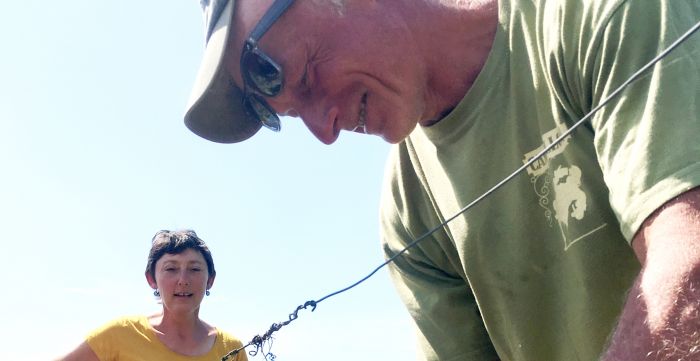
producer profile
03.06.2019
Alice and Olivier De Moor Producer Profile
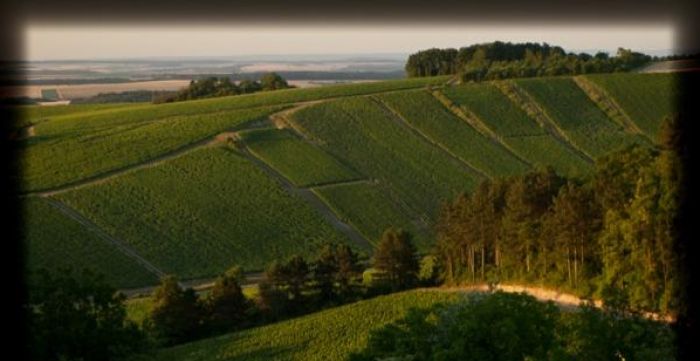
<p>Alice and Olivier De Moor live and work in <span class="zalup"><span><glossary title="354">Courgis</glossary><span>,</span></span></span> a small village 7km southwest of <span class="zalup"><span><glossary title="262">Chablis</glossary><span>.</span></span></span> It is where Olivier grew up, and his “old” <span class="zalup"><span><glossary title="254">cellar</glossary><span>,</span></span></span> the part where he ages his <glossary title="262">Chablis</glossary> in <glossary title="731">oak</glossary> <span class="zalup"><span><glossary title="142">barrels</glossary><span>,</span></span></span> is underneath his grandparents’ house. From the hill where <glossary title="354">Courgis</glossary> sits, the view is of vineyards over hills all the way to the <glossary title="262">Chablis </glossary> <span class="zalup"><span><glossary title="501">Grands Crus</glossary><span>.</span></span></span></p>
<p>Olivier says the landscape has changed a lot in his lifetime, that all the woods, bushes and fallow land that dotted the hills have disappeared in favor of vines. <br />
<br />
Alice is from the <span class="zalup"><span><glossary title="560">Jura</glossary><span>,</span></span></span> and the two met at a large <glossary title="262">Chablis</glossary> <glossary title="427">estate</glossary> where Olivier was in charge of the vineyards. Both are <span class="zalup"><span><glossary title="422">enologists</glossary><span>,</span></span></span> graduates of the <glossary title="391">Dijon</glossary> <glossary title="422">enological</glossary> school, with enough knowledge to take a radically different direction for their vines and wines than their neighbors. While the division of labor principally consists of Olivier in the vines and Alice in the <glossary title="254">cellar</glossary> and office, both are equally omnipresent in every role and all decisions are made together. <br />
<br />
They began their <glossary title="427">estate</glossary> by planting three <glossary title="1133">plots</glossary> of <glossary title="262">Chablis</glossary><em>-</em>Bel-Air, Clardy and Rosette-in 1989. Of their first <glossary title="521">harvest </glossary>in 1994, they kept only 15<glossary title="524">HL </glossary>and sold off the rest. They were still employed elsewhere, but quit that fall after leasing their <glossary title="979">Saint-Bris</glossary> vines: 0.55<glossary title="523">HA</glossary> of <glossary title="">Aligoté</glossary> planted in 1902 and 0.40<glossary title="523">HA</glossary> of <glossary title="927">Sauvignon Blanc</glossary> planted in 1950. For the next three years, they worked their four <glossary title="523">hectares</glossary> of vines while tending the vines of other winemakers to make a living. In 1996, they planted a large plot in <glossary title="189">Chitry</glossary> (the <glossary title="760">parcel</glossary> is called<strong> "Champagne"</strong>) with <glossary title="91">Aligoté</glossary> and <span class="zalup"><span><glossary title="271">Chardonnay</glossary><span>.</span></span></span><br />
<br />
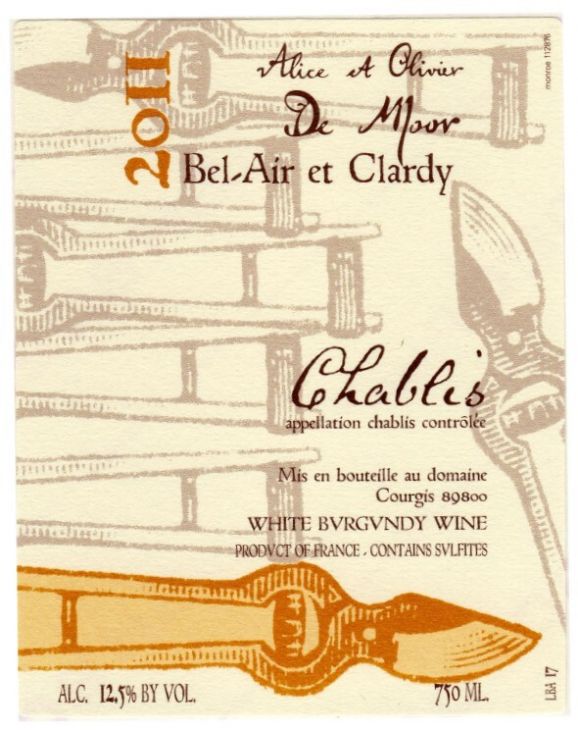
The whole <glossary title="262">Chablis</glossary> area is highly <span class="zalup"><span><glossary title="222">calcareous</glossary><span>,</span></span></span> with soils formed millions of years ago in a warm, shallow sea. The <glossary title="596">limestone</glossary> here is rich in shellfish fossils, including oysters (<em>exogyra virgula</em>), urchins, bivalves and ammonites. There are three <glossary title="427">estate</glossary> bottlings of <span class="zalup"><span><glossary title="262">Chablis</glossary><span>:</span></span></span> "L'Humeur du Temps", "Rosette" and "Bel-Air & Clardy", the last a blend of the two <span class="zalup"><span><glossary title="1133">plots</glossary><span>.</span></span></span></p>
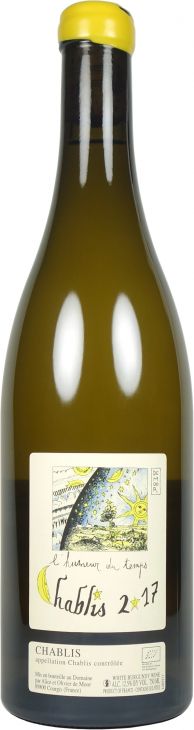
<p>"L'Humeur du Temps" roughly translates to "The Mood of the Times" but is a double entrendre that also could mean "The Mood of the Weather". The idea with this <glossary title="">cuvée</glossary> is to capture a global snapshot of the <glossary title="1109">vintage</glossary> versus the nuance of <span class="zalup"><span><glossary title="959">single vineyard bottlings</glossary><span>.</span></span></span> In such, the wine comes from four <glossary title="760">parcels</glossary> that are <glossary title="1104">vinified</glossary> separately then <span class="zalup"><span><glossary title="168">blended</glossary><span>:</span></span></span> Côte de l' Etang, Les Envers de Côte Chétif, Les Goulots de Jouan.</p>
<p>The Bel-Air and Clardy <glossary title="760">parcels</glossary> both have a shallow <glossary title="1032">topsoil</glossary> over layers of harder <glossary title="596">limestone</glossary> with fossils, a mix of <glossary title="301">clay</glossary> and <glossary title="596">limestone</glossary> that is highly draining, even more so in Clardy, which has whiter <span class="zalup"><span><glossary title="301">clay</glossary><span>.</span></span></span> <br />
<br />
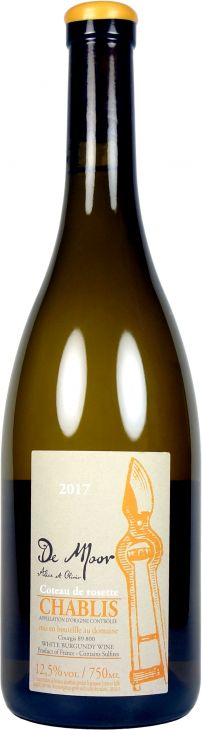
"Rosette" has a more complex soil, and is much harder to work. The <glossary title="1133">plot</glossary> slopes up to a 40% incline, and the vineyard can roughly be separated in three distinct parts: the very top is eroded materials over hard <glossary title="1398">Portlandian</glossary> rock; the mid-slope is directly over <glossary title="565">Kimmeridgian</glossary> <span class="zalup"><span><glossary title="632">marl</glossary><span>,</span></span></span> which can quickly suffer from <span class="zalup"><span><glossary title="1167">drought</glossary><span>.</span></span></span> Finally, the bottom part is rich in dense <glossary title="301">clay</glossary> with some <span class="zalup"><span><glossary title="596">limestone</glossary><span>,</span></span></span> resulting in later ripening. They usually do two <glossary title="521">harvests</glossary> there, sometimes two weeks apart. They consider it their best <span class="zalup"><span><glossary title="1133">plot</glossary><span>.</span></span></span> </p>
<p>These have none of the “normal” under ripeness of <span class="zalup"><span><glossary title="262">Chablis</glossary><span>,</span></span></span> nor are they marked by the gunpowder aromas created by an excess of <span class="zalup"><span> <glossary title="993">sulfur</glossary><span>.</span></span></span> Olivier believes that in another era, <glossary title="262">Chablis</glossary> had a buttery and nutty character similar to any <glossary title="271">Chardonnay</glossary> from <glossary title="1129">low yields </glossary>and reasonable ripeness. He follows the same reasoning for his <glossary title="927">Sauvignon</glossary> from <span class="zalup"><span><glossary title="979">St-Bris</glossary><span>,</span></span></span> which is ripe and rich, so much so that they eventually had to <glossary title="383">declassify</glossary> it to <span class="zalup"><span><glossary title="1092">Vin de France</glossary><span>.</span></span></span></p>
<p>The <glossary title="979">St-Bris</glossary> <glossary title="1026">terroir</glossary> is eroded debris over <glossary title="1398">Portlandian</glossary> rock. The <glossary title="301">clay</glossary> is brown, the soil draining. The <glossary title="927">Sauvignon Blanc</glossary> <glossary title="1133">plot</glossary> has a north-west <span class="zalup"><span> <glossary title="430">exposure</glossary><span>,</span></span></span> which lets it ripen slowly and get to optimal <glossary title="120">aromatic</glossary> expression. This vineyard originally had 30% of its vines missing, and replacements were planted over eight years with local <glossary title="941">massale selections</glossary> and cuttings of <glossary title="928">Sauvignon Gris</glossary> from the <span class="zalup"><span><glossary title="602">Loire valley</glossary><span>.</span></span></span></p>
<p>The other cuvées an <glossary title="740">old vine</glossary> <glossary title="188">Bourgogne Aligoté</glossary> called "1902" (not produced each <glossary title="1109">vintage</glossary> and only in small quantities), a regular <glossary title="188">Bourgogne Aligoté</glossary> and a <span class="zalup"><span><glossary title="290">Bourgogne Chitry</glossary><span>.</span></span></span> A <glossary title="1392">late harvested</glossary> <glossary title="91">Aligoté</glossary> called "D'Autres Vallées" has also been produced a handful of <span class="zalup"><span><glossary title="1109">vintages</glossary><span>.</span></span></span> The the <glossary title="290">Bourgogne Chitry</glossary> and <glossary title="188">Bougogne Aligoté </glossary>both come from the Champagne <span class="zalup"><span><glossary title="760">parcel</glossary><span>,</span></span></span> where <glossary title="301">clay</glossary> sits atop <glossary title="565">Kimmeridgian</glossary> <glossary title="632">marls</glossary> and some <glossary title="954">silex</glossary> stones are present.</p>
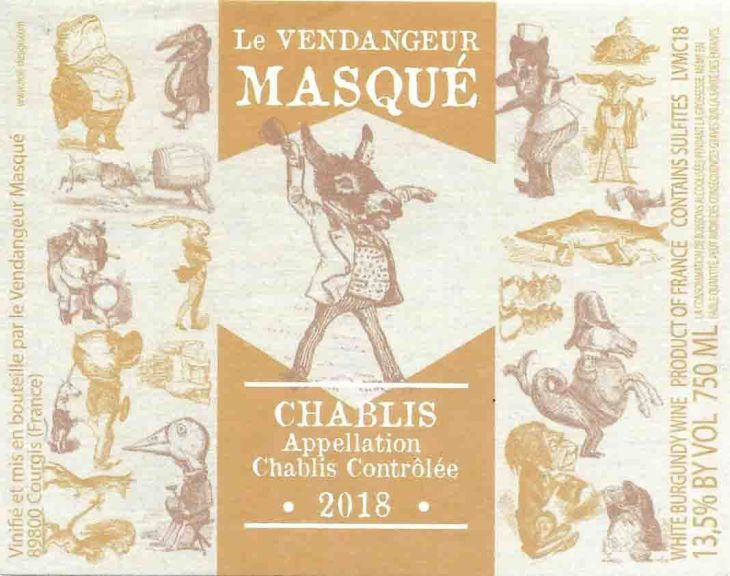
<p>Some other wines also join the fold through the De Moor's <glossary title="729">négociant</glossary> project Les Vendangeurs Masqués ("The Masked Harvester"). A <glossary title="1183">Bourgogne Blanc</glossary> is produced from sourced <glossary title="746">organic</glossary> fruit that varies every <glossary title="1109">vintage</glossary> and is not produced each year. A <glossary title="262">Chablis</glossary> from <glossary title="262">organic</glossary> fruit is produced annually. A suprisingly charming <glossary title="1111">Viogner</glossary> called "Caravan" has made numerous appearances, this time sourced from Gérald Oustric in the the <span class="zalup"><span><glossary title="117">Ardèche</glossary><span>.</span></span></span> And in very bad years (the reason they began buying fruit in the first place), they have sourced grapes from friends all over the South of France; a truly all-star list including Eric Pfifferling, Domaine Gramenon, Eric Texier and Émile Hérédia. </p>
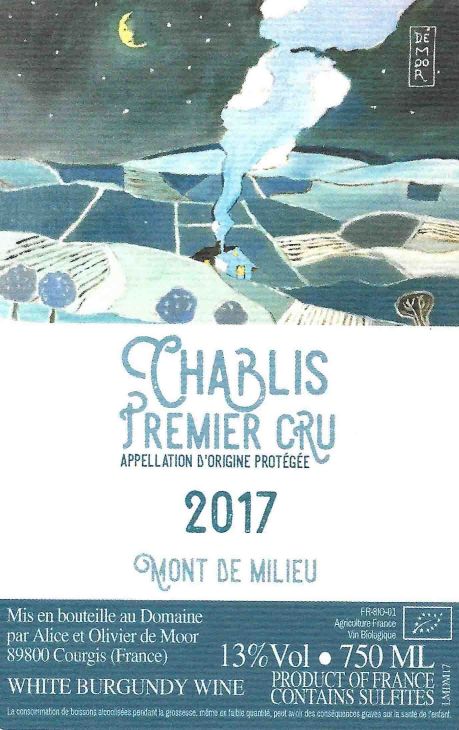
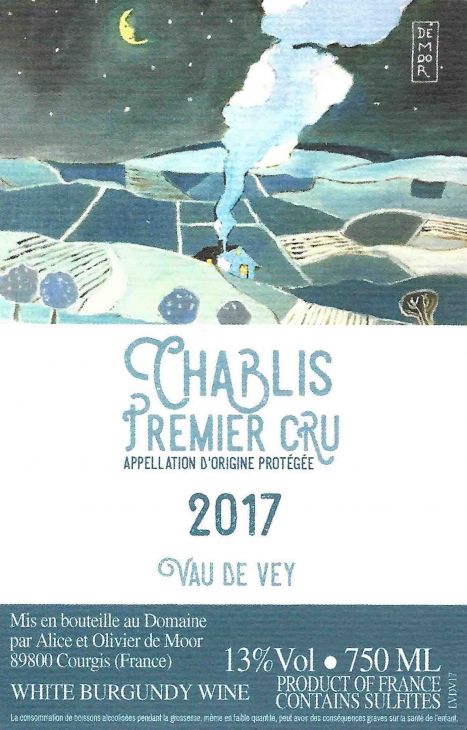
<p>The final and most recent additions come from the 2017 purchase of two <glossary title="1133">plots</glossary> of <glossary title="824">1er Cru</glossary> vineyards. <em>Vau de Vey</em> represents 0.92 <glossary title="523">hectares</glossary> of vines planted in 1953 on heavy <glossary title="632">marl</glossary> that remind Olivier of the Rosette vineyard. The name is local dialect for "little valley". Their other <glossary title="1133">plot</glossary> of <em>Mont de Milieu</em> is 0.82 <glossary title="523">hectares</glossary>; it is extremely steep and has to be worked by horse as it is too dangerous to use a tractor (hence why everyone else uses <glossary title="526">herbicide</glossary>). The site gets its name ("Mount of Middle") because it's on the border of <span class="zalup"><span><glossary title="267">Champagne</glossary><span>.</span></span></span> The vines at the bottom of the hill were planted in the 1980's and the middle and the top in the 1930's. <glossary title="1129">Yields</glossary> in the old vines are very low and concentrated due to <span class="zalup"><span><glossary title="1250">Court Noué</glossary><span>.</span></span></span></p>
<p>The De Moors have worked their vines <glossary title="746">organically</glossary> since 2005, a rarity in their area. In 2002, they stopped using large <glossary title="521">harvest</glossary> bins and replaced them with small boxes where the grapes are not crushed by their own weight. In 2007, they built a large and high-ceilinged winery, allowing them to do all their <glossary title="254">cellar</glossary> work by <span class="zalup"><span><glossary title="1165">gravity</glossary><span>.</span></span></span> In 2008, they purchased a second-hand <glossary title="811">pneumatic press</glossary> to treat the grapes in the gentlest way possible. There is no <glossary title="993">SO2</glossary> used at <glossary title="521">harvest</glossary> or during the <span class="zalup"><span><glossary title="1104">vinification</glossary><span>.</span></span></span> <glossary title="74">Aging</glossary> has traditionally been in <glossary title="210">Burgundian</glossary> <glossary title="142">barrels</glossary> of different ages for the <glossary title="262">Chablis</glossary> wines, the <glossary title="290">Bourgogne Chitry</glossary><glossary title="290"> </glossary>and the <glossary title="740">old vine </glossary><span class="zalup"><span><glossary title="91">Aligoté</glossary><span>,</span></span></span> with<glossary title="1130"> young vine</glossary><glossary title="1130"></glossary> wines and <glossary title="927">Sauvignon</glossary> <glossary title="74">aged</glossary> in <glossary title="325">cement</glossary> and <glossary title="986">stainless steel</glossary> <span class="zalup"><span><glossary title="1140">tanks</glossary><span>.</span></span></span> Over the years this has evolved: 228 liter <glossary title="142">Burgundian barrels</glossary> are still the most common <span class="zalup"><span><glossary title="1160">vessel</glossary><span>,</span></span></span> though <glossary title="388">demi-muids</glossary> and <glossary title="462">foudres</glossary> of various sizes have joined the fray along with <glossary title="1286">enamel-lined</glossary> <glossary title="986">stainless steel</glossary> <glossary title="1140">tanks</glossary> and even a few <span class="zalup"><span><glossary title="103">anforas</glossary><span>.</span></span></span> </p>
Article
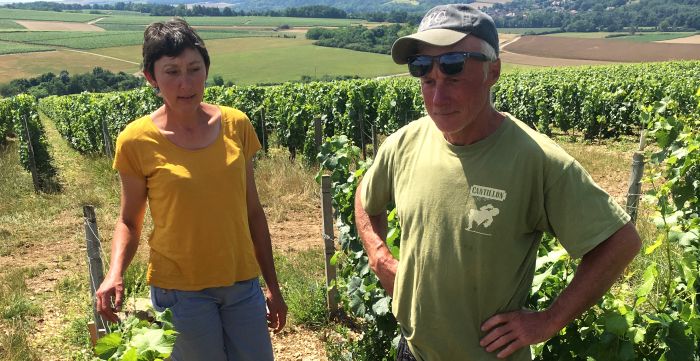
interview
03.06.2019
An Interview with Alice and Olivier De Moor from 2010
<p><em>This interview took place through a series of emails in September 2010.</em></p>
<p><strong>OVERVIEW OF THE<font color="#7b143e"> ESTATE</font></strong>:<br />
16 <glossary title="521">harvests</glossary><br />
10 <glossary title="760">parcels</glossary><br />
7.1 <glossary title="523">ha</glossary><br />
3 <glossary title="1071">varietals</glossary><br />
2 kids<br />
1 cat<br />
<br />
<strong>How'd you end up vignerons in Chablis?</strong><br />
<br />
<strong>Olivier</strong>: The randomness of life: a complicated childhood, an unemployed mother and some vines around where I grew up… My only goal as a teenager was get out of there, so I'd spend the weekends in the vines to make some extra pocket money. I studied biology, and hoped my thesis in biochemistry would find me work. Through my studies I found interest in the wine making process, so I guess I got caught up in the game trying to get out of it!<br />
<br />
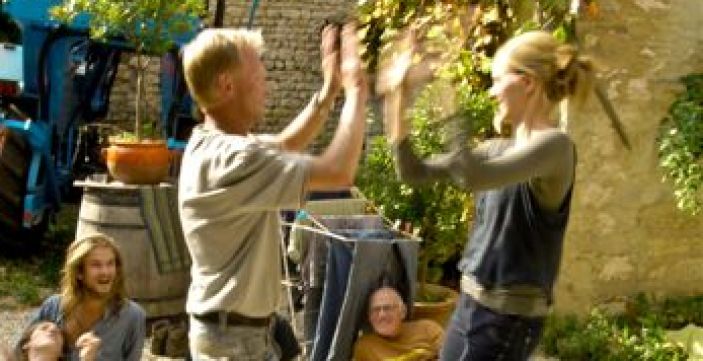
<strong>Alice</strong>: My grandparents were farmers in the <span class="zalup"><span><glossary title="560">Jura</glossary><span>.</span></span></span> They had cows and a small amount of vines and the <glossary title="521">harvest</glossary> was always a great time of celebration for our family and friends. Those memories really marked my childhood. I decided I wanted to be an <glossary title="422">oenologist</glossary> when I was about 15. During my studies, I started to notice that the first thing you needed to make good wine was good grapes and this inspired me to see things from beginning to end, from the vine to the bottle. <br />
<br />
<strong>What's the work like in the vines? </strong><br />
<br />
<strong>O</strong>: At first you do with what you have. In fact, we still do with what we have. As years go by though you gain more: more tools, more experience, work habits (which aren't necessarily a good thing!) But there's always that need to evolve, the desire and curiosity to see what can be done next. <br />
<br />
<strong>A</strong>: A lot of rigor, high expectations, a serious philosophy in how to work the vines and a lot of risk taking. We try to be clean and pollute the least amount possible. <br />
<br />
<strong>What do you think of your terroirs?</strong><br />
<br />
<strong>O</strong>: The press has always said we don't have very impressive <span class="zalup"><span><glossary title="1026">terroirs</glossary><span>.</span></span></span> Maybe… In this old vineyard, you'd be going out of your way to try and prove them wrong, and I let them live with their vane, hasty conclusions. As Flaubert says: "To make a mistake is to conclude."<br />
<br />
<strong>A</strong>: I guess some would say you could have better <span class="zalup"><span><glossary title="1026">terroirs</glossary><span>,</span></span></span> that we could have vines that conform to our expectations. But it's all part of being located where we are. <br />
<br />
<strong>What's the winemaking process like? </strong><br />
<br />
<strong>O</strong>: It's as simple as possible. We work rigorously at all times and analyze what we really need to focus on.<br />
<br />
<strong>A</strong>: As simple as possible, as respectful to the grapes as possible and with the least intervention possible. By <glossary title="664">intervening less</glossary> in the wine making process, you give the wine more freedom. That freedom makes for unique, expressive wines.<br />
<br />
<strong>What do you think of the Chablis AOC and your<font color="#7b143e"> AOC</font> wines?</strong><br />
<br />
<strong>O</strong>: I feel like I am profaning a sanctuary. A sanctuary is a place where you praise those who have lived before you. Our <glossary title="427">estate</glossary> and <glossary title="113">appellation</glossary> are sanctuaries. The party is over! The past efforts of our grand <glossary title="108">AOC's</glossary> lets me analyze what we need to be making from its conception to its finality. As far as the "<glossary term="Typicity" title="1056">typicity</glossary> " of our wines, <glossary term="Typicity" title="1056">typicity</glossary> is a semantic exercise started in the 1980's which found its way into the dictionary around 1994, so I don't really think in such terms, but I guess we might not quite fit the mold. <br />
<br />
<strong>A</strong>: We built the <glossary title="427">estate</glossary> from the get-go by working in a very specific way because: 1) we were too small to to play with the big boys and 2) we wanted to "master" everything, to be responsible for everything, especially our errors and problems. When we realized it was possible to make a living within this margin, we continued and kept pushing things further and further. <br />
<br />
We are definitely worried about getting denied by the <span class="zalup"><span><glossary title="108">AOC</glossary><span>,</span></span></span> but we are too small to represent a true danger to the whole of the <span class="zalup"><span><glossary title="113">appellation</glossary><span>.</span></span></span> Furthermore, the gestation of the <glossary title="108">AOC</glossary> is such a mess that we can always squeak by and have our little place in it. The gamble was to see if we could make a living doing what we were doing which essentially involved doing the exact opposite work of our colleagues. It worked. <br />
<br />
We are also extremely honest which is far from the norm in the area. Olivier was recently voted in the syndicate and our contemporaries listen to his ideas. We have established a reputation as serious <glossary title="1089">vignerons</glossary> in the area, and have made our neighbors rethink what they are doing: these are great victories. <br />
<br />
"La marge tient la page" as Jean-Luc Godard would say.<br />
<br />
<strong>Did you always work organically in the vineyards with <font color="#7b143e">minimal intervention</font> in the<font color="#7b143e"> cellar</font>?</strong><br />
<br />
<strong>O</strong>: No! At first I dreamed about it, but lacked sufficient funds and personal experience. But, as I've stated earlier, my main motivators are the desire to evolve and to respect history.<br />
<br />
<strong>A</strong>: I come from both a scientific and catholic background, and science always trumped the larger than life "stories" of religion for me. I find <glossary title="160">biodynamic</glossary> work to be a bit of a stretch. What matters is working cleanly. In our case we progressed into <glossary title="746">organic</glossary> <span class="zalup"><span><glossary title="78">agriculture</glossary><span>.</span></span></span> What we soon realized was that it was necessary to get <glossary title="260">certified</glossary> to validate what we were doing. Being <glossary title="260">certified</glossary> serves as a safeguard: we can't keep a <glossary title="142">barrel</glossary> of non-authorized <glossary title="279">chemicals</glossary> in the back of the <glossary title="254">cellar</glossary> "just in case".<br />
<br />
<strong>Your wines might be labeled as "natural" wine. How do you feel about that?</strong><br />
<br />
<strong>O</strong>: I still don't know what <glossary term="Natural WIne" title="708">natural wine</glossary> is. As long as there are no rules or regulations, it cannot be controlled. I do however feel that people who make what is being called "<glossary term="Natural WIne" title="708">natural wine</glossary>" are necessary in facing the ever growing industrialization of wine. And because everything has an opposite, excess <glossary title="539">industrialization</glossary> has led to excess in the opposite direction. <glossary title="708">Natural wines</glossary> are almost Baroque-esque in that they use ancient instruments to make music that might be analyzed as "imperfect"; these ancient instruments bring us closer to its original source but forces us to accept "off" notes. The constraint of choice, accepting one's limits, but in no way filtering to hide something. Baroque was meant to mean an imperfect pearl. And when a pearl is beautiful then it's like the "Girl with a Pearl Earring" by Vermeer. <br />
<br />
<strong>A</strong>: It's been about eight years since we've been included as part of this movement. There is definitely a "rock and roll" and "rebellious" aspect of our style of winemaking spreading in the press. And it's started to help sales so we see more and more people doing it for purely commercial reasons. In such I think the term "natural" is at a crossroad. I think it's complicated when talking about these wines because people tend to become too demanding of the wines and the people who make them. But the people who make these wines are generally intelligent, generous… They are great people that are a pleasure to meet.<br />
<br />
On a theoretical level: is tasting a wine the only trustworthy criteria to distinguish how a wine was produced? Is a wine we find "good" good regardless of how it came to be? Do we drink liquid from a bottle just for pleasure? Or are we drinking a story, a person, a memory of a night well spent? Do we drink something because it's fashionable to do so or because we like it? Do we leave room for unbridled creativity with its obligatory imperfections? Do we create charts and labels that make creativity impossible and lead to misleading the consumer? Can you trust and like all the people that buy and drink our wines? <br />
<br />
Ideally, I hope to produce a wine that tells its' own story in function of the year, of how I felt at the time, what I had at my disposition, etc… Every wine has its own story. I tell these stories and the people who drink our wines know these stories. It's an "intellectual" way of drinking wine, but it's also fine to drink it for the simple pleasure it brings. <br />
<br />
<strong>What's it like working together?</strong><br />
<br />
<strong>O</strong>: We've been working together as long as we've been a couple. Working together is a dynamic I enjoy and I've never thought of another way of doing things. Alice does most of the <glossary title="254">cellar</glossary> work and I tend to the vines. <br />
<br />
<strong>A</strong>: We had a few work experiences before we were a couple, but since we are together we've worked as a team. Working together brings enthusiasm at first and helps you work faster, but can get rather exhausting. <br />
<br />
Olivier has great intellectual capabilities, handles day to day maintenance and likes projecting himself into the future: I let him do all this and try to play devil's advocate by finding counter arguments in order to see things through from both sides. </p>
<p>I mostly take care of the <span class="zalup"><span><glossary title="254">cellar</glossary><span>,</span></span></span> of expeditions and most of the administrative responsibilities. Olivier takes care of the vineyards and knows what direction he wants the wine to take. All commercial relations are done as a couple. <br />
<br />
After 15 years of hard labor, we are in a period of questioning our lives and our work, and there will be change in the future...</p>
Article
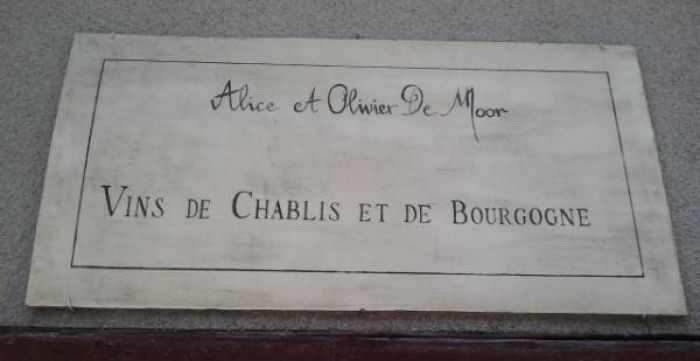
producer visit
12.07.2019
This visit with Alice and Olivier De Moor took place in June, 2012
<p><strong><em>This visit with Alice and Olivier De Moor took place in June, 2012.</em></strong></p>
<p><strong><em>Words and photos by Jules Dressner.</em></strong></p>
<p>After our relaxing weekend in <span class="zalup"><span><glossary title="676">Montpinçon</glossary><span>,</span></span></span> it was a five hour drive to <span class="zalup"><span><glossary term="Courgis" title="354">Courgis</glossary><span>,</span></span></span> the small village where Alice and Olivier De Moor reside. Our visit started in the <span class="zalup"><span><glossary title="254">cellar</glossary><span>,</span></span></span> which is split two ways between an older, traditional underground room that only holds <span class="zalup"><span><glossary title="142">barrels</glossary><span>,</span></span></span> and a larger, more modern space with <glossary title="325">concrete</glossary> <span class="zalup"><span><glossary term="Vat/Tank" title="1140">tanks</glossary><span>,</span></span></span> some <glossary title="445">fiberglass</glossary> <span class="zalup"><span><glossary title="1140">tanks</glossary><span>,</span></span></span> a lot more <glossary title="142">barrels</glossary> and a recently renovated tasting room. We tasted through the 2011's, which were universally great. Stuff of note: <br />
<br />
<strong>"À Ligoter"</strong>: A little <font color="#7b143e"><strong><glossary term="Residual Sugar" title="853">residual sugar</glossary></strong></font> remained this year so they <glossary title="447">filtered</glossary> it for the first time ever, just to try and see the results. Also a first, this year the bottle will feature a screw cap; the idea is that the cap will indicate that this early release is a <glossary title="1094">vin de soif</glossary> and meant to be drank fresh and young. It is indeed all those things, and the first shipment will be arriving stateside sometime this month. <br />
<br />
<strong>"L'Humeur du Temps" </strong>comes from three <glossary title="760">parcels</glossary> that are <glossary title="1104">vinified</glossary> separately then <span class="zalup"><span><glossary term="Blending" title="1146">blended</glossary><span>:</span></span></span> <em>Côte de l' Etang</em>, <em>Les Envers de Côte Chétif</em>, <em>Les Goulots de Jouan</em>.<br />
<br />
<strong>"Bel-Air et Clardy"</strong>: As obvious as this may seem to some, the Bel-Air Et Clardy <glossary title="363">cuvée</glossary> is a blend of two separate <span class="zalup"><span> <glossary title="760">parcels</glossary><span>.</span></span></span> From <span class="zalup"><span><glossary title="142">barrel</glossary><span>,</span></span></span> the Bel-Air was crisp and precise with a rich finish, while Clardy was on the more <glossary title="662">mineral</glossary> side, with pronounced <span class="zalup"><span><glossary title="71">acidity</glossary><span>.</span></span></span> When I asked Olivier why they'd chosen this specific <span class="zalup"><span><glossary term="Blend" title="168">blend</glossary><span>,</span></span></span> he explained that the <glossary title="760">parcels</glossary> are the same age and have complimentary soil types; ideally, he would use this technique make every <glossary title="363">cuvée</glossary> (<glossary term="Blending" title="1146">blending</glossary> a bit of Rosette with the <glossary title="189">Chitry</glossary> for example, so on and so forth…), and that single <glossary title="760">parcel</glossary> wines (which <glossary title="108">A.O.C</glossary>'s like <glossary title="262">Chablis</glossary> encourage) don't always make the best ones. <br />
<br />
<strong>Les Vendangeurs Masqués</strong>: this <glossary title="729">négoce</glossary> wine is a blend of three sources the De Moor's purchase from, including the local up and comer Thomas Pico. They all work <span class="zalup"><span><glossary title="746">organically</glossary><span>.</span></span></span><br />
<br />
As we tasted through, Olivier joked that he must be boring us with all (four) of his <glossary title="91">Aligoté</glossary> <span class="zalup"><span><glossary title="363">cuvées</glossary><span>.</span></span></span> I personally love good <span class="zalup"><span><glossary title="91">Aligoté</glossary><span>,</span></span></span> and am always surprised when I hear of French disdain for grapes or regions that tend to be loved in the US; I couldn't believe how many people told Denyse that Jean-Paul Brun's 2010 "L'Ancien" showed them that good <glossary title="151">Beaujolais</glossary> actually existed at the party in <span class="zalup"><span><glossary title="722">Normandy</glossary><span>.</span></span></span> Duh! This topic got Olivier talking about <glossary title="262">Chablis</glossary> and the myth that <glossary title="271">Chardonnay</glossary> has always been the only grape grown here. <br />
<br />
"<em>There used to be </em><glossary title="281"><em>Chenin Blanc</em></glossary><em>, Dammery (local name for </em><glossary title="867"><em>Romorantin</em></glossary><em>), </em><glossary title="803"><em>Pinot Gris</em></glossary><em> and there are still some </em><glossary title="886"><em>Sacy</em></glossary><em> vines hanging around (Tressalier</em><em> in </em><glossary title="896"><em>Saint-Pourçain</em></glossary><em>). Gascon (aka <glossary term="Mondeuse" title="484">Mondeuse</glossary>) was also planted for red. This was only 200 years ago.</em> <em>I try bringing this up at council meetings and people don't believe me, but if you do your homework you can read about this stuff." </em><br />
<br />
The De Moor's also made a red this year! It's called "Le Rouge D'Etienne" and is named after their first full time employee; at the time he was hired, Etienne had never made whites and the De Moor had never made reds, so they helped each other out and therefore the <glossary title="363">cuvée</glossary> is named in his honor. The grapes were sourced from Vincent Thomas, and only 800 bottles were produced. <br />
<br />
After the tasting, we got to check some vines out. The first stop was the aforementioned <em>Côte de l' Etang</em>.<br />
<br />
<img src="http://louisdressner.com/uploads/images/article/2019_Jul_12//f8/d9/f8d929581b51703af2ea1aba8458fb9c.jpg" /><br />
<br />
It was very grassy.<br />
<br />
<img src="http://louisdressner.com/uploads/images/article/2019_Jul_12//2d/aa/2daafb27bb232b101f20fd49b62a3cf9.jpg" /><br />
<br />
This is one of the <glossary title="760">parcels</glossary> that they've started using a horse on over the last two years. <br />
<br />
<img src="http://louisdressner.com/uploads/images/article/2019_Jul_12//cd/fc/cdfc0a56909eb736ad98c280d847cf44.jpeg" /><br />
<br />
Notice how much better of a photographer Olivier is than I am. He is very happy with the results, and can't believe how much stuff the horse has been pulling out of the ground.<br />
<br />
"<em>I've been working this soil for 15 years, and when I saw all the stuff I was missing, I told myself I was really doing a terrible job!</em>" <br />
<br />
Next we checked out the Clardy <span class="zalup"><span><glossary title="760">parcel</glossary><span>.</span></span></span> It was a good time to compare and contrast Olivier's work with that of his neighbors, which he sadly he considers a "<em>abandonment of work</em>" on their part. Here's one of Olivier's vines:<br />
<br />
<img src="http://louisdressner.com/uploads/images/article/2019_Jul_12//4c/16/4c161af11a50f5a0d5daf08016029ffa.jpg" /><br />
<br />
And here's one of his neighbors just a few rows down:<br />
<br />
<img src="http://louisdressner.com/uploads/images/article/2019_Jul_12//9e/03/9e0376db8d512f42ac1cc04971a26ac9.jpg" /></p>
<p>As you can see, they use tons of <span class="zalup"><span><glossary title="526">herbicide</glossary><span>,</span></span></span> and tightly tie the vines together to ensure as little human interaction as possible. They also trim the shit out of the vines.<br />
<br />
"<em>They look like bonsai trees.</em>" <br />
<br />
Olivier then explained how 20-30 cm of extra <glossary title="1184">foliage</glossary> changes everything, because they help the grapes ripen. 8 to 10 leaves above the highest <glossary title="1138">bunches</glossary> used to be the traditional way of knowing you had the right vine size. <br />
<br />
"<em>Slow </em><glossary title="639"><em>maturation</em></glossary><em> is what makes good wine here, and you need to do all you can to help this, not impede it.</em>"<br />
<br />
After the vineyard visit, we hung out for a great dinner Alice cooked up for us, drank some Ganevat bubbles, Heredia <span class="zalup"><span><glossary title="799">Pineau d'Aunis</glossary><span>,</span></span></span> "À Ligoter" and Heredia sparkling <span class="zalup"><span><glossary title="478">Gamay</glossary><span>.</span></span></span> It naturally led to some fun conversation, hearty laughs and, at least in my case, a good buzz.</p>
Article
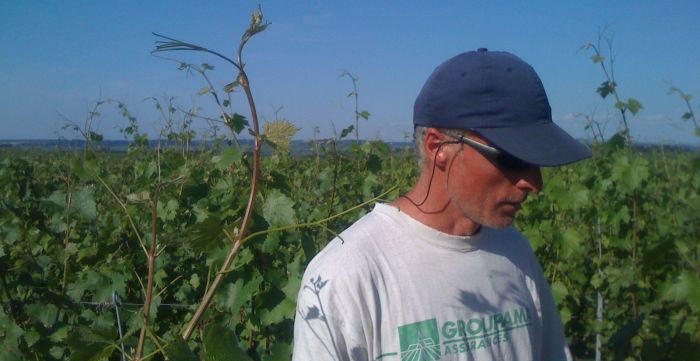
article
21.09.2020
"2011: A Year to Reflect On" by Olivier De Moor
<p>At first winter seemed pretty normal. However, there are details we must take into consideration: December 2010 was cold and rigorous, with temperatures dropping to minus 15 °C and snow covering our soils for 15 days. December 2010 will have been the coldest in 40 years. January and February were a little warmer, leading to a hydric deficit of 20%.</p>
<p>Spring was extraordinary. It was the hottest since the beginning of the 20th century. And just like winter, a lack of water persisted. The weather report for the region was as such:</p>
<p>March: +1,2°C hotter than the norm. -30% of water.<br />
April: +4°C hotter than the norm. -70% of water.<br />
May: +2,4°C hotter than the norm. I only collected 20mm of water this month, which for our region is very, very little.</p>
<p>April was the second hottest it's ever been in France, just behind 2007.</p>
<p>Summer, on the other hand was quite mediocre, alternating between very fresh and rainy days. This ended up "correcting" the lack of water from the last two seasons.</p>
<p>As <span class="zalup"><span><glossary term="Vigneron/Vignaiolo" title="1089">vignerons</glossary><span>,</span></span></span> this brought up many questions, particularly on our work habits.</p>
<p>Easter is often, maybe too often, a reference point for a <span class="zalup"><span><glossary term="Vigneron/Vignaiolo" title="1089">vigneron</glossary><span>.</span></span></span> It indicates the beginning of the vines' vegetation period. The weather during this week is also supposed to give you an idea of what to expect for the rest of the year. This year, the vegetation started well before Easter, and the previous weeks did not show any signs of what was to happen next. I will point out that it was a late Easter though, April 25th.</p>
<p>Their were many incidents with our dry and hot soils during the Spring. I found that the vines' growth seemed difficult; they even looked a little sickly at times. The microbial activity of the soil that nourishes the plant must have suffered from the lack of water (at least this is my interpretation). Finally, these very dry soils were tough to <span class="zalup"><span><glossary term="Plowing" title="810">plow</glossary><span>.</span></span></span> Weather reports indicated the soils were the driest they've ever been in 50 years.</p>
<p>If the work of a good <glossary term="Vigneron/Vignaiolo" title="1089">vigneron</glossary> is to do everything he can to work with the influences of climate, then 2011 proved to be a real challenge. Our <glossary term="Burgundian" title="210">Burgundian</glossary> vineyard is structured to resist excess water. We are always looking for aeration, light and heat. Unlike our Mediterranean neighbors, we don't try to protect our grapes from excessive heat and sunlight. In the last few years there have been certain points were we were forced to work like <glossary term="Vigneron/Vignaiolo" title="1089">vignerons</glossary> from the South, even though our <glossary term="Palissage" title="757">palissage</glossary> system is not designed to do so: the vines aren't in high enough altitude and the rows are too close to each other...</p>
<p>Something else to consider: are the varieties we work with still adaptable to these type of climate changes? I doubt it more and more every day, especially when I take note the proportion of vines that are dying every year. Generations before us have adapted by modifying the varieties they used if necessary. I feel our generation must start asking ourselves this same question, because 3 to 5% of our vines are dying every year. This is not normal <span class="zalup"><span><span>!</span><glossary term="Flowering" title="1179"></glossary><</span></span>/p></p>
<p><glossary term="Flowering" title="1179">Flowering</glossary> is also an important reference point in this line of work. Full <glossary term="Flowering" title="1179">flowering</glossary> plus 100 days is supposed to give you the theoretical date when to begin <span class="zalup"><span><glossary term="Harvest" title="521">harvesting</glossary><span>.</span></span></span> This year it was May 25, meaning we'd start <glossary term="Harvest" title="521">harvesting</glossary> late August or early September. It was looking to be yet another extremely precocious <span class="zalup"><span><glossary term="Vintage" title="1109">vintage</glossary><span>,</span></span></span> along with the mythical 1893, 1977, 2003 and 2007. I remember as a child <glossary term="Harvest" title="521">harvests</glossary> typically began in early October.</p>
<p>The freshness of July and early August seemed to have slowed everything down. I still have a hard time apprehending this. Today (August 10th), I don't think I've ever observed vines this precocious: I mean grapes that are all entirely ripening and thus accumulating sugar.</p>
<p>The <glossary term="Veraison" title="1396">veraison</glossary> was also early, even in the surly weather. The <glossary term="Harvest" title="521">harvest</glossary> seems like it will be generous and clean (no parasites). The plant actually benefits from the longer days, and the water that was lacking at the beginning of the cycle came back by June to accelerate the synthesis of the sugars. There are therefore certain forces of nature that are accelerating and others that are slowing down. I don't know which way the scale will tip; this is part of the bets we place in this line of work. We're gambling with nature.</p>
<p>As far as I was concerned, I told myself I would not <glossary term="Harvest" title="521">harvest</glossary> in late August like most of my neighbors. Firstly, I believe that every plant has a very natural and permanent reference point: the length of the day. It's an internal clock. People who work <glossary term="Biodynamic" title="160">biodynamically</glossary> also believe that the plant is also completely affected by lunar cycles and other cosmic influences. This is all very hard to interpret. A certain sense of demagogy makes me consider this calendar's validity. However, I like to remind myself that studies on the moon's influence on <glossary term="Agriculture" title="78">agriculture</glossary> have existed since the days of Louis XIV, and nothing has yet to be scientifically proven. I am not saying one is right and the other is wrong. I don't have the resources to confirm either. I do feel that, as with many other problems, our current ability to study this subject in insufficient for us to truly advance.</p>
<p>Secondly, I like to <glossary term="Harvest" title="521">harvest</glossary> grapes exposed to the freshness of the fall. I feel this is beneficial to their <glossary term="Aromatic" title="120">aromatic</glossary> expression.</p>
<p>In conclusion, I am simply observing what is happening around me. This year my gardens make me think of September. As if the entire cycle was premature. Even the trees have the color of September.</p>
<p>Yesterday I saw a praying mantis in my vines. That isn't exactly a typical sight around here. All of the pines are covered in armyworms. And I ate some wild strawberries in one of my parcels, even though you'd never usually find them this time of year.</p>
<p>What follows? We can only wait and see.</p>
Article
harvest report
16.12.2021
2021 Harvest Report from Olivier De Moor
<p>2021 was a very complicated year. Just one very hot week in March led to <glossary term="Budding" title="1166">bud-break</glossary> and they <glossary term="Frost" title="1135">froze</glossary> on April 6th! We were lucky that <glossary term="Aligoté" title="91">Aligoté</glossary> has a delayed vegetative cycle and we'd <glossary term="Pruning" title="834">pruned</glossary> late for some of the <glossary term="Chardonnay" title="271">Chardonnay</glossary> vines, neither of these had <glossary term="Bud" title="206">buds</glossary> yet and this helped preserve a half-crop. </p>
<p>This was followed by non-stop rain and colder temperatures, so we were not spared from <span class="zalup"><span><glossary term="Mildew" title="1137">mildew</glossary><span>,</span></span></span> <glossary term="Oidium" title="737">odium</glossary> and rot! In late September, our <glossary term="Harvest" title="521">harvest</glossary> team did a lot of <glossary term="Sorting" title="1380">sorting</glossary> within the vines. The juices have a classic balance and are finishing to <glossary term="Fermentation" title="441">ferment</glossary> in the new <glossary term="Cuverie" title="364">cuverie</glossary> we built last spring.<br />
</p>
Article

harvest report
16.12.2020
2020 Harvest Report from Olivier De Moor
<p>In 2020, after a very mild winter, a precocious <glossary term="Budding" title="1166">bud-break</glossary> worried us but ultimately there was no <glossary term="Frost" title="1135">frost</glossary> in April or May. But spring and summer were very dry and we had two heatwaves in July and August, resulting in some of the grapes getting burnt. Fortunately we had more clement weather in late August right before the <glossary term="Harvest" title="521">harvest</glossary>; this permitted the wines to keep tension in their <span class="zalup"><span><glossary term="Structure" title="990">structure</glossary><span>.</span></span></span> For the first time in our careers we <glossary term="Harvest" title="521">harvested</glossary> in August: the 28th!</p>
<p>With normal <glossary term="alcoholic potential" title="1381">alcoholic potentials</glossary> and rather fast <span class="zalup"><span><glossary term="Fermentation" title="441">fermentations</glossary><span>,</span></span></span> we have wines that have the same profile as the 2019's. </p>
Article
harvest report
06.10.2019
2019 Harvest Report from Olivier De Moor
<p><u><strong>October 7th, 2019:</strong></u></p>
<p>"It's a terrific <glossary term="Vintage" title="1109">vintage</glossary>" as my friend Frederic says and how those those in our profession will all come to say.</p>
<p>We had an easy year, a few scares and negligible damage from <span class="zalup"><span><glossary term="Frost" title="1135">frost</glossary><span>.</span></span></span> It was easy because we had very little struggle with our usual nemeses <glossary term="Mildew" title="1137">mildew</glossary> and <span class="zalup"><span><glossary term="Oidium" title="737">odium</glossary><span>.</span></span></span> It was easy because there was so little water. This was the case through the summer and followed an already dry 2018. This lasted all the way to the <span class="zalup"><span><glossary term="Harvest" title="521">harvest</glossary><span>.</span></span></span> And we have to mention two episodes that broke all heat records: around 43 °C on July 25th and 46°C in some <glossary term="Parcel" title="760">parcels</glossary> of the <span class="zalup"><span><glossary term="Auxerrois" title="129">Auxerrois</glossary><span>.</span></span></span> </p>
<p>Up until the <span class="zalup"><span><glossary term="Harvest" title="521">harvest</glossary><span>,</span></span></span> which took place from the 14th to the 25th of September, we alternated between more tolerable bouts of heat and a few rains that help refresh the atmosphere. Quantities are normal, which was a surprise, and the the analysis revealed balanced juices. Thanks to our team of Italian pickers from <glossary term="Abruzzo" title="1426">Abruzzo</glossary> and <span class="zalup"><span><glossary term="Sicily" title="951">Sicily</glossary><span>,</span></span></span> a Spaniard, an Ecuadorian woman, a Mongolian woman, a Japanese named Yuki who was with us all year and our usual crew, we had a beautiful <span class="zalup"><span><glossary term="Harvest" title="521">harvest</glossary><span>.</span></span></span> It was almost always beautiful weather. The juices seem to be <glossary term="Fermentation" title="441">fermenting</glossary> well. Let’s hope it stays that way. </p>
<p><img src="http://louisdressner.com/uploads/images/article/2020_Oct_06//a5/a2/a5a23e28eb65de41b3c9e99007acaded.jpg" /><img src="http://louisdressner.com/uploads/images/article/2020_Oct_06//a0/1c/a01c213f33d6f6db4a5eede0b4c95340.jpg" /><img src="http://louisdressner.com/uploads/images/article/2020_Oct_06//69/eb/69eb54c1b4ebdc629482f887423804f1.jpg" /><img src="http://louisdressner.com/uploads/images/article/2020_Oct_06//b1/24/b1246aee1d5e08e578e21c111ef9f2f4.jpg" /><img src="http://louisdressner.com/uploads/images/article/2020_Oct_06//bd/68/bd6803d178484166e096347152c110dc.jpg" /><img src="http://louisdressner.com/uploads/images/article/2020_Oct_06//fe/97/fe979fe4d242ddaec3832787a51fae89.jpg" /><img src="http://louisdressner.com/uploads/images/article/2020_Oct_06//25/a5/25a5e4c87f17633a6542251f4b3283c6.jpg" /><img src="http://louisdressner.com/uploads/images/article/2020_Oct_06//ba/c0/bac0262cb50df3aca50e55aac4128417.jpg" /><img src="http://louisdressner.com/uploads/images/article/2020_Oct_06//60/3d/603d6e01cd3888aa55778e277f1a0665.jpg" /><img src="http://louisdressner.com/uploads/images/article/2020_Oct_06//b8/bf/b8bf98b9d49e256285a9fde844bdd399.jpg" /><img src="http://louisdressner.com/uploads/images/article/2020_Oct_06//01/84/018414bc80506adc52b5a3d9b66a573b.jpg" /><img src="http://louisdressner.com/uploads/images/article/2020_Oct_06//40/76/40765a9f985a774a19af3219fe267ce7.jpg" /><img src="http://louisdressner.com/uploads/images/article/2020_Oct_06//17/00/17001b98f8f026be3f97191280b83355.jpg" /></p>
Article
harvest report
15.10.2015
2015 Harvest Report from Alice et Olivier De Moor
<p>2015, like in the rest of France, was promising to be an abundant <span class="zalup"><span><glossary title="1109">vintage</glossary><span>.</span></span></span> We had a hot and overly dry summer before finally getting some rain in August. Everything was going very fast, and we set our <glossary title="521">harvest</glossary> to begin on September 7th.<br />
<br />
Then, on September 1st, around 1:30 am, 2 to 3 centimer <glossary title="1136">hail</glossary> stones rained from the sky along with 80mm of accompanying rain. This forced us to start picking on the 4th, quite urgently for fear of <span class="zalup"><span><glossary title="181">botrytis</glossary><span>.</span></span></span> Fortunately, the <glossary title="1136">hail</glossary> was followed by dry weather so this wasn't as big of an issue as it could have been. We started with the <glossary title="760">parcels</glossary> the most touched by <span class="zalup"><span><glossary title="1136">hail</glossary><span>,</span></span></span> then those only slightly touched and ended with the ones in good shape up until the 15th.<br />
<br />
Surprisingly, there is actually wine in spite of the <glossary title="1136">hail</glossary> storm! And on top of that, the grapes were ripe, with natural degrees varying from 11,9 to 13,7.</p>
<p><img src="http://louisdressner.com/uploads/images/article/2019_Sep_20//7f/2d/7f2d6eb0ce299309287f61f4eb8edc3b.jpg" /></p>
<p><img src="http://louisdressner.com/uploads/images/article/2019_Sep_20//ae/51/ae514372bdbe384014f2a1a3eb375414.jpg" /></p>
<p><img src="http://louisdressner.com/uploads/images/article/2019_Sep_20//0d/7e/0d7ebffefc19fc03f5cfc5aef14c72f0.jpg" /></p>
<p><img src="http://louisdressner.com/uploads/images/article/2019_Sep_20//07/ed/07ed4add901209f258b2bcd5a3899216.jpg" /></p>
<p><img src="http://louisdressner.com/uploads/images/article/2019_Sep_20//3e/ad/3ead36a62115875d031745a7095454da.jpg" /></p>
<p><img src="http://louisdressner.com/uploads/images/article/2019_Sep_20//56/4f/564f102c1c8dbb3d40f80784c3556486.jpg" /></p>
<p><img src="http://louisdressner.com/uploads/images/article/2019_Sep_20//25/95/2595bdefe2a6fb5f019fa4751ae29cc3.jpg" /></p>
<p><img src="http://louisdressner.com/uploads/images/article/2019_Sep_20//d6/0e/d60e08628b0277382e371a1cfdfed28f.jpg" /></p>
Article
harvest report
15.08.2014
2014 Harvest Report from Olivier de Moor
<p><u><strong>by Olivier de Moor, November 10th, 2014</strong></u></p>
<p>In my mind, 2014 was supposed to be a year of appeasement, canceling out our very bad 2013 <span class="zalup"><span><glossary title="521">harvest</glossary><span>.</span></span></span> This was the end game, and it wasn't obvious because of a major problem weakening our vines: <span class="zalup"><span><glossary title="425">esca</glossary><span>.</span></span></span> For me, this is the most symbolic parameter of the <glossary title="74">aging</glossary> of the <span class="zalup"><span><glossary term="Chablis" title="262">Chablisien</glossary><span>,</span></span></span> resulting first and foremost from a lack of rigor in a global comprehension of vegetal life. We are finding ourselves in heap of trouble due to the "maintenance" of the vines (like a dentist taking care of teeth) and <span class="zalup"><span> <glossary term="Grafting" title="500">re-grafting</glossary><span>.</span></span></span><br />
<br />
2013's weak <glossary title="1129">yields</glossary> were due to both a large amount of <glossary term="Coulure" title="1252">coulure</glossary> and rot. We therefore had to cross our fingers in 2014 and hope for the best. And that's what happened.<br />
<br />
Winter 2013-2014 was incredibly mild. Only on very rare nights did temperatures dip into the minuses. I don't have the exact records to confirm it, but I believe this winter was record setting. The consequence was a very precocious <glossary term="Budding" title="1166">budding</glossary> that made us fear Spring <span class="zalup"><span><glossary title="1135">frost</glossary><span>,</span></span></span> since the vines now had so much extra time to be exposed to it. To make the risk even more real, March 2014 was amongst the hottest ever registered, with four times less water than usual. Temperatures were extremely variable throughout the day: cold in the morning, hot in the afternoon. April was also very dry and rather warm.<br />
<br />
May was fairly normal, with two periods of rain that gave us 60mm. June was marked with periods of intense heat, and the vines started <glossary title="1179">flowering</glossary> during one of them, around the 6th and the 7th. <glossary title="1179">Flowering</glossary> was fast and homogenous for all our grapes. June was also very dry, with only 22mm of rain. This first half of the year seemed easy and made us anticipate an early <span class="zalup"><span><glossary title="521">harvest</glossary><span>.</span></span></span><br />
<br />
But of course the following months would push us to our limits. July is drenched, twice as much rain as usual. And the similarities in temperature between day and night made for sad, cold weather. August is a caricature of July: 140 to 170 mm of water in these same, gloomy conditions. August 13th is the most rainy day of the year: 60 to 80mm of water in one day, like winter in the middle of summer.<br />
<br />
Good weather came back starting August 26th (on the new moon) and continued right through <span class="zalup"><span><glossary title="521">harvest</glossary><span>.</span></span></span> And we are happy that it did! September is three times LESS rainy than usual: 16 to 19 mm. Another record for one of the least rainy Septembers in history. And temperatures were warm and maximal for the period.<br />
<br />
<glossary title="521">Harvest</glossary> took place from September 22nd to October 3rd. The weather was magnificent and void of rain. The grapes were in perfect sanitary conditions with a little bit of <span class="zalup"><span><glossary term="Millerandage" title="1393">millerandage</glossary><span>.</span></span></span> <glossary title="1129">Yields</glossary> were abundant, reaching quantities similar to 2011 at about 4<span class="zalup"><span>0<glossary title="528">hl/h</glossary><span>.</span></span></span> The juices seem balanced between sugar and acidity, and the <glossary title="441">fermentations</glossary> were quick and without any difficulties.</p>
<p><img src="http://louisdressner.com/uploads/images/article/2019_Sep_20//00/44/0044b9d719818a70681c7f791af6daf6.jpg" /></p>
<p><img src="http://louisdressner.com/uploads/images/article/2019_Sep_20//c4/a7/c4a71c2c47b24e42303bccd893dc550d.jpg" /></p>
Article
harvest report
14.11.2013
2013 Harvest Report from Olivier De Moor
<p><u><strong>by Olivier De Moor, October 27th, 2013:</strong></u></p>
<p><em>"The season has passed, trying its best not to fight with the sky."</em><br />
<br />
The year's sky always gives us the scenario it likes. This year, it was very capricious.<br />
<br />
Winter's snow, then more snow. The winter that never ended, to the point of making us forget that spring exists. And already, we're having a hard time working the vines. No <glossary title="1135">frost</glossary> but rain and cold follow up the snow. <em>"Pale winter, what have you done to spring?"</em><br />
<br />
Finally, we rejoice at the soft, subtle perfume of the vines <glossary title="1179">flowering</glossary> around the fires of Saint John's, at summer solstice: June 18th for the <span class="zalup"><span><glossary title="271">Chardonnays</glossary><span>,</span></span></span> and early July for the <span class="zalup"><span><glossary title="91">Aligotés</glossary><span>.</span></span></span> All that is left to do is wait out the "100 days" before <span class="zalup"><span><glossary title="521">harvest</glossary><span>.</span></span></span> An old-fashioned <glossary title="521">harvest</glossary> in mid-October? We'll see...<br />
<br />
Finally summer. From memory, a beautiful, real summer. No excess. What we need in contained rain. Are we catching up on lost time? Maybe one of the three weeks.<br />
<br />
<em>"September does everything"</em>, as my old <glossary title="1089">vignernon</glossary> neighbor would say. He's retired.<br />
<br />
<em>"Come soft sun, so that your beams agitate the world of bees around me"</em>. He comes, punctuated by a few rains. These wake my fears. Having already suffered from such important <span class="zalup"><span><glossary term="Millerandage" title="1393">millerandange</glossary><span>,</span></span></span> the <glossary title="1138">bunches</glossary> are tiny, especially on the <span class="zalup"><span><glossary title="91">Aligotés</glossary><span>:</span></span></span> the consequence of a poor <glossary title="1179">flowering</glossary> during 2012's vegetation.<br />
<br />
However, the small <glossary title="521">harvest</glossary> will surely permit a very rapid <span class="zalup"><span><glossary title="639">maturation</glossary><span>.</span></span></span> And to catch up even more time that I'd anticipated.<br />
<br />
But the skins are thin, and in the end the <glossary title="521">harvest</glossary> is fragile. We need to hurry, which we do from October 1st to 9th, with one break on Saturday because of 30mm of rain.<br />
<br />
So the <glossary title="521">harvest</glossary> is very small. Especially for the region. About 24 <span class="zalup"><span> <glossary title="528">hl/h</glossary><span>,</span></span></span> to be confirmed after <glossary title="441">fermentation</glossary> is done and everything is in <span class="zalup"><span><glossary title="142">barrel</glossary><span>.</span></span></span><br />
<br />
The juices are balanced...</p>
<p><img src="http://louisdressner.com/uploads/images/article/2019_Sep_20//60/be/60be35437f48a2d41f6842cc2dc82153.jpg" /></p>
<p><img src="http://louisdressner.com/uploads/images/article/2019_Sep_20//37/8a/378ae31d3f86fbb228999fee10e74ec4.jpg" /></p>
<p><img src="http://louisdressner.com/uploads/images/article/2019_Sep_20//11/e8/11e85c69d6b182f6ae164288e9f866ee.jpg" /></p>
<p><img src="http://louisdressner.com/uploads/images/article/2019_Sep_20//ce/13/ce13fd8e12eb6fe5269b4dffa03e53c8.jpg" /></p>
<p><img src="http://louisdressner.com/uploads/images/article/2019_Sep_20//f4/fd/f4fdf31629866ab6120074b468e65916.jpg" /></p>
Article
harvest report
16.09.2011
2011 Harvest Photos from Alice and Olivier De Moor
<p><u><strong>September 16th, 2011:</strong></u></p>
<p><img src="http://louisdressner.com/uploads/images/article/2019_Sep_25//f0/84/f08403a9bce82e9b4a277f5b453f25d4.jpg" /></p>
<p><img src="http://louisdressner.com/uploads/images/article/2019_Sep_25//69/79/69797a7e09b993ebd725ed901e80667e.jpg" /></p>
<p><img src="http://louisdressner.com/uploads/images/article/2019_Sep_25//50/1c/501cf23f296431964793bc7afef69dbe.jpg" /></p>
<p><img src="http://louisdressner.com/uploads/images/article/2019_Sep_25//10/b6/10b62058f6fee9619dc6a94412bba6bc.jpg" /></p>
Article
harvest report
01.09.2011
2011 Pre-Harvest Report from Olivier De Moor
<p><u><strong>September 1th, 2011:</strong></u></p>
<p>August was quite gloomy and rainy. In total 100 mm! However the temperatures rose from 20 to over 35 °C on 20 August.<br />
<br />
Since then the good weather has continued with high temperatures during the day and cool nights.<br />
<br />
Overall, the vines look good, but unfortunately, about an <glossary title="523">hectare</glossary> of vines has suffered from rot. We expect to begin <glossary title="521">harvesting</glossary> on September 8. The estimates are as of two days ago were 11.5%.</p>
<p><img src="http://louisdressner.com/uploads/images/article/2019_Sep_25//92/98/9298800f9be42d2d66c9e801386dc659.jpg" /></p>
<p>Another big innovation at the <span class="zalup"><span><glossary title="427">estate</glossary><span>:</span></span></span> </p>
<p><img src="http://louisdressner.com/uploads/images/article/2020_Jul_13//48/23/48238c392af98280acb7b1488b94e9ba.jpg" /></p>
<p>You heard it here first!</p>
Article
harvest report
20.10.2009
2009 Harvest Report from Alice et Olivier De Moor
<p><u><strong>Alice et Olivier de Moor, Courgis, Chablisien, on Oct. 20th:</strong></u></p>
<p>In 2009, the <span class="zalup"><span><glossary title="206">bud</glossary><span>-</span></span></span>burst came early, and <glossary title="1179">flowering</glossary> started early also: however, rain and cold made it drag over two weeks. July was warm and humid, and we got <glossary title="1136">hail</glossary> on our <glossary title="189">Chitry</glossary> and <glossary title="979">Saint-Bris</glossary> vineyards.<br />
<br />
<span class="zalup"><span><glossary title="311">Vers de la grappe</glossary><span>,</span></span></span> <glossary title="1137">mildew</glossary> and <glossary title="737">oïdium</glossary> were a major threat this summer, but all diseases were conquered by Olivier and his caterpillar tractor.<br />
<br />
August and September were really summery, warm and dry, and the grapes ripened fully. The wines should be balanced, a cross between 2005 and 2006. And, just like in 2005 and 2006, this is a small crop.<br />
<br />
We <glossary title="521">harvested</glossary> from Sept. 19th to 30th, and not once did we need our rain clothes, a rare occurrence at our latitude. We even were able to wait until Oct. 15th to pick the last <span class="zalup"><span><glossary title="91">Aligoté</glossary><span>,</span></span></span> and, at long last, we’ll know what overripe <glossary title="91">Aligoté</glossary> tastes like.<br />
<br />
This year, we started a small <glossary title="729">négoce</glossary> business we had in the works for a long time, and <glossary title="521">harvested</glossary> grapes from well-tended vines with <glossary title="260">organic certification</glossary> in <glossary title="262">Chablis</glossary> and <glossary title="262">Chablis</glossary> <span class="zalup"><span><glossary title="824">Premier Cru</glossary><span>.</span></span></span><br />
<br />
The 2008 <span class="zalup"><span><glossary title="1109">vintage</glossary><span>,</span></span></span> which will be ready in December, held great, positive surprises.<br />
<br />
With a late <span class="zalup"><span><glossary title="206">bud</glossary><span>-</span></span></span>burst, a rainy spring, but a quick <glossary title="1179">flowering</glossary> under good weather, a cool summer until mid-September, we expected a <glossary title="1109">vintage</glossary> very similar to 2007. Sun and north wind in late September created the conditions for a generous crop (47<glossary title="528">HL/HA</glossary>), healthy and ripe, which we picked Oct. 2nd to 10th. We finished Rosette on Oct. 18th and 19th.<br />
<br />
We got scared at the high <glossary title="71">acidity</glossary> levels of the juice, much higher than in 2007, fortunately it was mainly malic acid (NT: which almost disappears during <span class="zalup"><span><glossary title="622">malolactic fermentation</glossary><span>.</span></span></span>) Potential degrees were ½ point higher than in 2007.<br />
<br />
<glossary title="87">Alcoholic</glossary> and <glossary title="622">malolactic fermentations</glossary> went extremely slowly, in part because the juice was very cold at the beginning, and in part because the vines had reached the limit of their vegetative cycle, so there was very little <glossary title="719">nitrogen</glossary> left for the <glossary title="1128">yeast</glossary> to eat up. We had to watch the <glossary title="441">fermentations</glossary> very closely, especially since the <glossary title="622">malolactic</glossary> started in wines with <glossary title="853">residual sugar</glossary> (NT: risk of lactic acid turning into acetic acid, i.e. vinegar).<br />
<br />
Finally, the wines are rich and balanced, round and fruity, and their stony character is going to emerge soon. They should be reminiscent of our beautiful 1995, a classic <glossary title="1109">vintage</glossary> of what <glossary title="262">Chablis</glossary> originally is supposed to be like.</p>
<p>Our <glossary title="927">Sauvignon Blanc</glossary> (<glossary title="979">Saint Bris</glossary>), given its high ripeness, could not finish its sugar, and will be labeled as a <span class="zalup"><span><glossary title="1006">Vin de Table</glossary><span>.</span></span></span> Such is the abysmal logic of the <span class="zalup"><span><glossary title="108">AOC</glossary><span>,</span></span></span> in our eyes (NT: <glossary title="979">Saint Bris</glossary> has to be a dry wine to get its <glossary title="108">AOC</glossary> label). Olivier is designing a new <glossary title="573">label</glossary> for this wine.<br />
<br />
In spite of our oft complicated relationship with the press, we are happy to see that our work satisfied Eric Asimov of the New York Times, Edward Behr of the Art of Eating, and Jacques Dupont of l’Express (he awarded our wine the highest mark in his selection of <glossary title="262">Chablis</glossary> 2008, published in his magazine September issue). Internet sites and blogs also posted positive reviews of our work, and created word of mouth. We are really touched by all this, it is another incentive to do better and “truer” work.</p>
Article