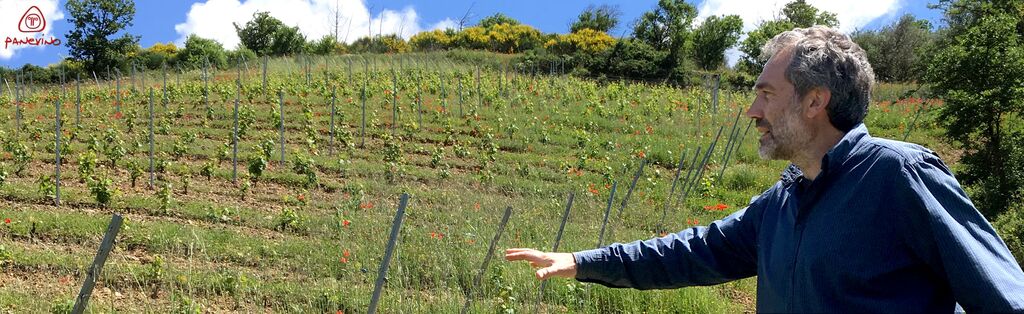
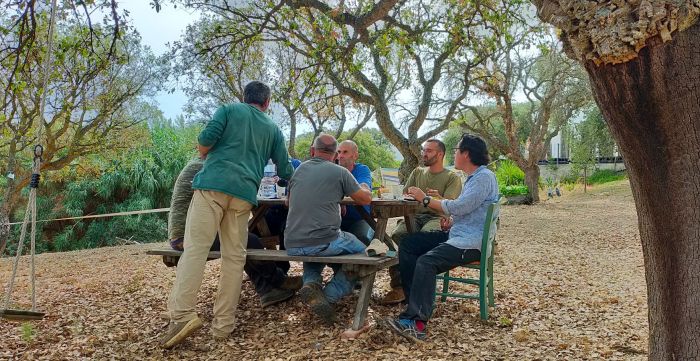
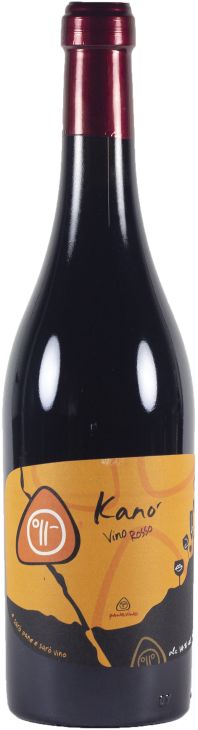
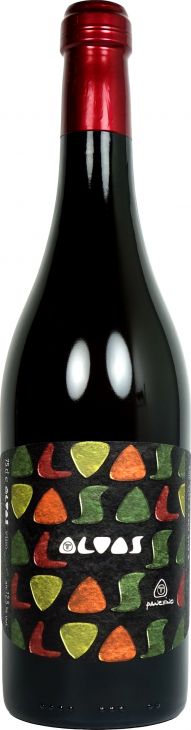
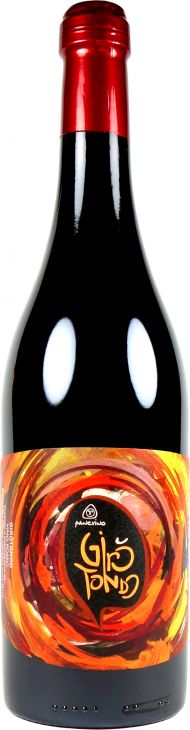
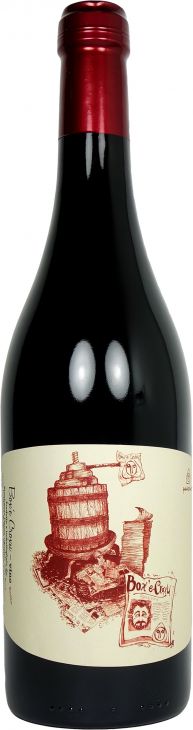
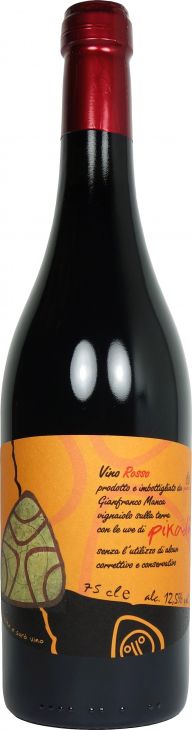
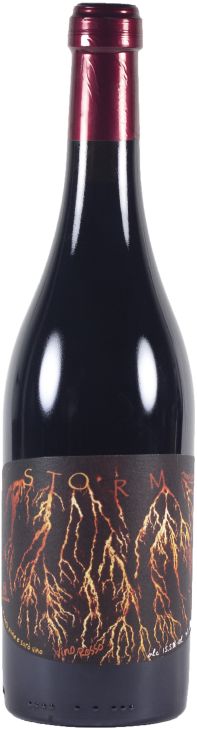
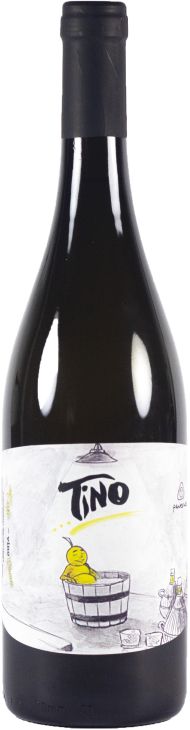
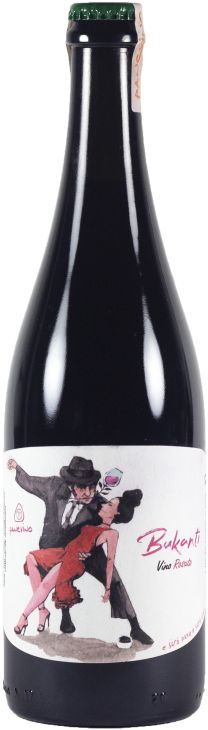
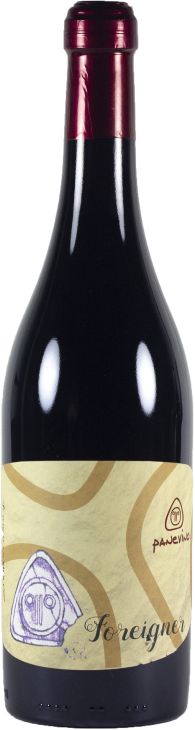
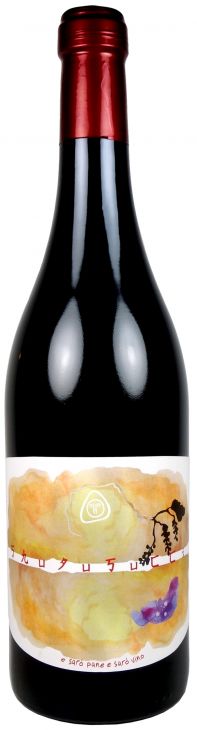
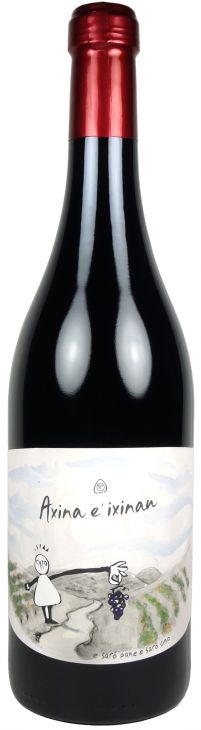
Gianmarco Manca's self-professed greatest influences are Bob Dylan and Jesus. He believes his mind is as much part of the terroir as the soil and the climate. He is a very, very interesting man.
Gianmarco Manca's self-professed greatest influences are Bob Dylan and Jesus. He believes his mind is as much part of the terroir as the soil and the climate. He is a very, very interesting man.
Read more
Quick Facts
Name of Estate
Panevino
Region
Sardinia
Country
Italy
Proprietor
Gianfranco Manca
Size
4 hectares
Farming
Organic (Not Certified)
Soils
Schist, decomposed schist, iron rich clay, sand
Grapes grown
Cannonau, Monica, Carignan, lots of others...
Fun facts
Gianmarco Manca's self-professed greatest influences are Bob Dylan and Jesus. He believes his mind is as much part of the terroir as the soil and the climate. He is a very, very interesting man.
<p>In Italian, “Pane e vino” means “bread and wine.” Gianfranco Manca was raised a baker. At an early age he took over his uncle’s bakery, baking the classic <glossary title="917">Sardinian</glossary> breads that he learned to make from his mother and aunts. Their bread is still prized in his town and the bakery was a success. Along with the bakery, <glossary title="1133">plots</glossary> of land with very <glossary title="740">old vines</glossary> had somehow remained in the family despite being neglected for years. They were trained in <span class="zalup"><span><glossary title="497">alberello</glossary><span>,</span></span></span> the traditional back-braking, low-growing system used on the islands of Italy. While majoritarily <span class="zalup"><span><glossary title="508">Cannonau</glossary><span>,</span></span></span> over 30 different grapes were planted.</p>
<p>Since he was already an expert at <glossary title="441">fermentation</glossary> with bread, Gianfranco believed the natural progression would be to understand wine <glossary title="">fermentation</glossary> with the help of these <span class="zalup"><span><glossary title="740">old vines</glossary><span>.</span></span></span> He set about rehabilitating them and planted a <glossary title="760">parcel</glossary> of new vines in <glossary title="670">Monica</glossary> and <glossary title="237">Carignano</glossary> del Sulcis, a local <glossary title="1169">strain</glossary> of the famous grape. And though Gianfranco started making wine in the mid 1980’s, it wasn’t until 2005 that he was ready to put a <glossary title="573">label</glossary> on it and offer his interpretation to the rest of the world.<br />
<br />
What do you say about a winemaker whose self-professed greatest influences are Bob Dylan and Jesus? Gianfranco is a rare soul in the wine business. He is an empath/winemaker. First, his love for the vines is so strong that he says he feels a particular relationship with each one. Furthermore, he thinks the vines tell him what to do with the grapes. He has been working these vines for a long time now, so I can imagine some deeper understanding of one’s vineyards comes through with that much time. <br />
<br />
As proof, Gianfranco's wines stylistically change from year to year. This also means a new <glossary title="573">label</glossary> and name for each wine, each <span class="zalup"><span><glossary title="1109">vintage</glossary><span>.</span></span></span> With each new wine Gianfranco expresses his personal point of view on what he experienced that year. In 2005 the wine was called <em>Perdacoddura</em> and it was above 15.5%, a big, brawny wine. In 2006, the expression of the same wine was called Mariposa, the results of a search for the more elegant and seductive side to the grape. In 2007, a very good <span class="zalup"><span><glossary title="521">harvest</glossary><span>,</span></span></span> it is called ‘Ogu – which simultaneously means "fire", "eye" and "bud". It is wine born of fire (there was a raging wildfire that year that stopped literally at the next hill over from his vineyards and house) and it is through this wine which Gianfranco presents his vision and through which the world sees him. <br />
<br />
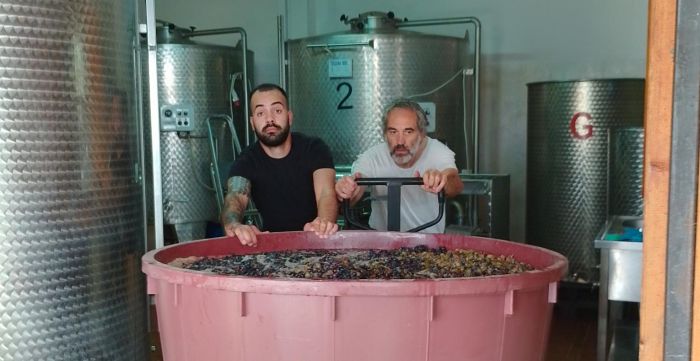
Of course, minimal <glossary title="328">treatments</glossary> (2g of Bordeaux mix) and <span class="zalup"><span><glossary title="810">plowing</glossary><span>,</span></span></span> no use of <glossary title="1002">systemic treatment</glossary><strong>s</strong>, <glossary title="526">herbicides</glossary> or <glossary title="1142">pesticides</glossary> are tolerated at Panevino (we visited an <glossary title="427">estate</glossary> in Bossa that was doing a <span class="zalup"><span><glossary title="328">treatment</glossary><span>.</span></span></span> After artfully haranguing the owner for using these <glossary title="1002">systemic treatments</glossary> and offering to show him how to get along without them, sensitive Gianfranco became violently ill from the bad air). The <glossary title="1104">vinifications</glossary> are carried out on the <glossary title="538">natural yeasts</glossary> of the vines and <glossary title="254">cellar</glossary> culture. All the wines <glossary title="441">ferment</glossary> in <span class="zalup"><span><glossary title="1218">open-top wood vats</glossary><span>,</span></span></span> then are <glossary title="74">aged</glossary> 12 months in <glossary title="144">barrique</glossary> of at least three years. The wines are <glossary title="185">bottled</glossary> without <span class="zalup"><span><glossary title="449">fining</glossary><span>,</span></span></span> <glossary title="447">filtration</glossary> or added <span class="zalup"><span><glossary title="993">sulfites</glossary><span>.</span></span></span> The wines are all <glossary title="260">certified organic</glossary> by the <span class="zalup"><span><glossary title="81">AIAB</glossary><span>,</span></span></span> an Italian <glossary title="260">organic certification</glossary> board. <br />
<br />
In 2008 Gianfranco planted another 1.5 <glossary title="523">ha</glossary> of <glossary title="508">Cannonau</glossary> from <span class="zalup"><span><glossary title="941">massale selection</glossary><span>.</span></span></span> In 2009, he had hoped to plant two more, but the weather was not being cooperative last we heard. I am pretty sure they finally were planted. <br />
<br />
Gianfranco only rarely makes bread these days (mostly classes and demonstrations for children and young adults) but when he does, he must be very careful with clothing and hygiene to keep the two cultures of <glossary title="1128">yeast</glossary> from intermingling.</p>
<p><em>This visit to Panevino took place in May, 2013</em></p>
<p><em>Words by Jules Dressner, photos by Maya Pedersen.</em></p>
<p>From the <glossary title="218">Cagliari</glossary> airport, we drove over to the town of <glossary title="952">Siddi</glossary> for lunch with Gianfranco and his family. We were a little early, so we walked around a while before drinking the first of many big bottles of <a href="http://en.wikipedia.org/wiki/Birra_Ichnusa" target="_blank">Ichnusa</a>. </p>
<p><img src="http://louisdressner.com/uploads/images/article/2019_Aug_14//e8/68/e868fb3b7cebcaf413422d353ddbdf4b.jpg" /></p>
<p><img src="http://louisdressner.com/uploads/images/article/2019_Aug_14//31/c1/31c112c7be2f9836663090083dcc53ab.jpg" /></p>
<p>It was a national holiday -the Italian equivalent of labor day- and Kevin had told us that people celebrate by getting together for a big worker's lunch. All of us were expecting a family style meal with communal tables, big pots everywhere and a never-ending supply of beer. Instead instead we ended up having a seven course wine pairing lunch at the Michelin rated restaurant, <a href="http://www.sapposentu.it/" target="_blank">S'Apposentu</a>.<br />
<br />
Not exactly what we were expecting, but the food was really good and we got to taste all types of wine pairings from local growers, all of which were in attendance. Gianfranco's wine was the recently <glossary term="Bottling" title="185">bottled</glossary> "C.C.P"<em>.</em></p>
<p><img src="http://louisdressner.com/uploads/images/article/2019_Aug_14//7f/c6/7fc6eacf3c5d9e5c3a290264efb3e711.jpg" /></p>
<p>From there, we drove to our hotel, where we met Anya! </p>
<p><img src="http://louisdressner.com/uploads/images/article/2019_Aug_14//0a/da/0ada564c1d45ba68433f9a6df41a893e.jpg" /></p>
<p><img src="http://louisdressner.com/uploads/images/article/2019_Aug_14//93/77/9377d94e5bbcdf9b2911eddd68819b41.jpg" /></p>
<p><img src="http://louisdressner.com/uploads/images/article/2019_Aug_14//67/0a/670ae0ad9c8c18b1aaaed5611a743c91.jpg" /></p>
<p><img src="http://louisdressner.com/uploads/images/article/2019_Aug_14//f2/ee/f2eecf4c25a200ae0703b06895102467.jpg" /></p>
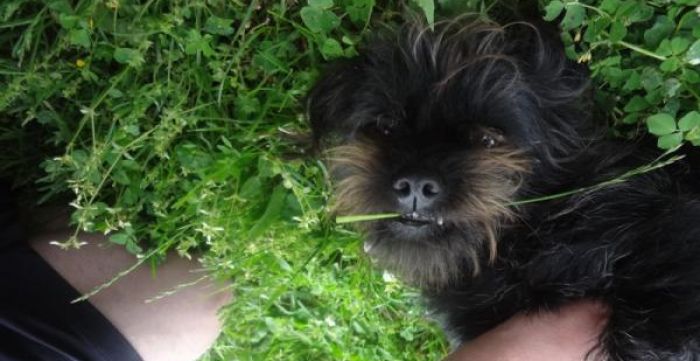
<p>As you can see from the photos, she REALLY loves belly rubs.<br />
<br />
The next morning, we met up with Gianfranco in his hometown of <span class="zalup"><span><glossary title="727">Nurri</glossary><span>,</span></span></span> then set off for a long day in the vines. </p>
<p><img src="http://louisdressner.com/uploads/images/article/2019_Aug_14//9d/05/9d05180cdbe2739ac659d69c0d6f9407.jpg" /><br />
<br />
We started the visit by checking out a 0.6 <glossary title="523">hectare</glossary> <glossary title="">parcel</glossary> Gianfranco has been renting for four years. </p>
<p><img src="http://louisdressner.com/uploads/images/article/2019_Aug_14//d6/9d/d69d11046c65c040796ba95d3fc9d40d.jpg" /></p>
<p><img src="http://louisdressner.com/uploads/images/article/2019_Aug_14//70/02/700277f75ca66376d1075ef231b308f1.jpg" /></p>
<p><img src="http://louisdressner.com/uploads/images/article/2019_Aug_14//f1/06/f10657668438dfa93052487145f95f7a.jpg" /></p>
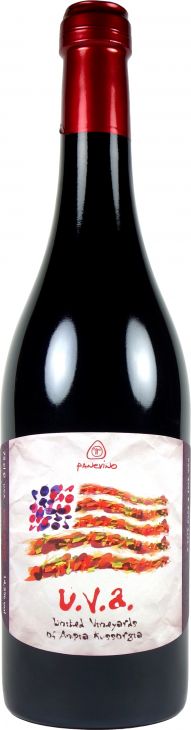
<p>This is one of three <glossary title="760">parcels</glossary> that goes into the "U.V.A" bottling. "U.V.A"<em>,</em> besides the obvious spelling out of "grape" in Italian, stands for 'United Vineyards of Angiona'. An Angiona is a local word for a widespread <glossary title="78">agricultural</glossary> region. <br />
<br />
<em>"It's a project to bring different </em><glossary title="760"><em>parcels</em></glossary><em> together, to give expression to a larger area."</em><br />
<br />
Just like America or the European Union! At least in theory...<br />
<br />
At the moment, three <glossary title="760">parcels</glossary> with vines ranging from 30 to 70 years old are <glossary title="1104">vinified</glossary> separately, then <glossary title="168">blended</glossary> according to instinct. <br />
<br />
Gianfranco found this <glossary title="760">parcel</glossary> through a <em>"sort of"</em> relative. The guy never had the right feeling for it, and in hopes of striking gold, ended up planting <span class="zalup"><span><glossary title="1043">Trebbiano</glossary><span>,</span></span></span> <span class="zalup"><span><glossary title="138">Barbera</glossary><span>,</span></span></span> weird local grapes and <span class="zalup"><span><glossary title="1081">Vermentino</glossary><span>.</span></span></span> <br />
<br />
<em>"At first it seemed illogical to work with these non-local grapes, but then I realized I had the potential of being a great experiment. I could use this to understand the vineyard's expression of the </em><glossary title="1026"><em>territory</em></glossary><em> through different grapes." </em><br />
<br />
The soils here are <glossary title="909">sand</glossary> and red <glossary title="301">clay</glossary> rich in <span class="zalup"><span><glossary title="547">iron</glossary><span>.</span></span></span></p>
<p><img src="http://louisdressner.com/uploads/images/article/2019_Aug_14//b2/84/b2847dce638c9e05ed3373e417bf61b7.jpg" /></p>
<p><img src="http://louisdressner.com/uploads/images/article/2019_Aug_14//d2/55/d255a313692c24e1039e400cf6d1df27.jpg" /></p>
<p>To get to the second <span class="zalup"><span><glossary title="760">parcel</glossary><span>,</span></span></span> the group had to walk up this steep, grassy hill. </p>
<p><img src="http://louisdressner.com/uploads/images/article/2019_Aug_14//77/19/77192952e1319471e908d0626919285d.jpg" /></p>
<p><img src="http://louisdressner.com/uploads/images/article/2019_Aug_14//63/c3/63c35d1f24103c3188b78d1e17e42a1b.jpg" /></p>
<p><img src="http://louisdressner.com/uploads/images/article/2019_Aug_14//0d/8a/0d8ac31b70ac28e73911fee312556989.jpg" /></p>
<p>It was an unexpected treck, but the reward was getting to walk through the Montassio vineyard! </p>
<p><img src="http://louisdressner.com/uploads/images/article/2019_Aug_14//95/fe/95fe0314995e098845e3beee1a046246.jpg" /></p>
<p><img src="http://louisdressner.com/uploads/images/article/2019_Aug_14//30/7a/307a09afa5d81a615fda52a23aff7afa.jpg" /></p>
<p><img src="http://louisdressner.com/uploads/images/article/2019_Aug_14//08/3f/083fdd938affe2ab1e739dd5383f79f4.jpg" /></p>
<p><img src="http://louisdressner.com/uploads/images/article/2019_Aug_14//8e/69/8e69cbca93547a30dc9330e53dc2910b.jpg" /></p>
<p>At 600m altitude, this <glossary title="">parcel</glossary> has less rocky, richer soils. You can visually spot big chunks of <span class="zalup"><span><glossary title="933">schist</glossary><span>,</span></span></span> which extends deep into the <span class="zalup"><span><glossary title="991">subsoils</glossary><span>.</span></span></span> Though he's not exactly sure, Gianfranco estimates that there are about 40 different red and white <glossary title="1071">varietials</glossary> <glossary title="309">co-planted</glossary> here (over 200 grape varieties are grown in <glossary title="917">Sardinia</glossary>). The red grapes go into the "U.V.A" and whites go into the "Billuke" <span class="zalup"><span><glossary title="778">pétillant naturel</glossary><span>.</span></span></span> <br />
<br />
I got to sit shotgun with Gianfranco all day, and through a mix of Italian, French and English, we managed to have some great conversations. We'd never met, and he certainly lives up to his reputation of having fascinating and deeply personal insights on <span class="zalup"><span><glossary title="1103">viticulture</glossary><span>,</span></span></span> wine and life. My own interpretation is that Gianfranco considers himself an integral part of his <span class="zalup"><span><glossary title="1026">terroir</glossary><span>,</span></span></span> that his state of mind is just as important as any soil or <span class="zalup"><span><glossary title="656">microclimate</glossary><span>.</span></span></span> It reminded me of <a href="http://louisdressner.com/date/2012/03/07/102/?as=places+we+like" target="notSet">Chris Debarr's quote on New Orleans being the "psychic terroir" of his life:</a> an undeniable cause and effect between environment and behavior.<br />
<br />
In a particularly quotable moment (out of so many), here is one statement I managed to jot down:<br />
<br />
<em>"Your thoughts are a tree that go into the soil of a territory. Mine is a cloud, it moves from place to place, rains into the sea and evaporates back up." </em><br />
<br />
This will hopefully make more sense later. <br />
<br />
We drove to a third <span class="zalup"><span><glossary title="760">parcel</glossary><span>,</span></span></span> 60 year old vines planted on heavy <glossary title="933">schist</glossary> rich in <glossary title="955">silica</glossary> and <span class="zalup"><span><glossary title="301">clay</glossary><span>.</span></span></span></p>
<p><img src="http://louisdressner.com/uploads/images/article/2019_Aug_14//bf/3f/bf3f7ef2831eebccac4bf5562686b225.jpg" /></p>
<p><img src="http://louisdressner.com/uploads/images/article/2019_Aug_14//2b/ba/2bba1ed41cf18519b65315efa7308ef4.jpg" /></p>
<p>Before eating lunch, we did a quick tour of the <span class="zalup"><span><glossary title="254">cellar</glossary><span>.</span></span></span> </p>
<p><img src="http://louisdressner.com/uploads/images/article/2019_Aug_14//46/b8/46b8001caf4fcbf7053df8a6afdbbcbd.jpg" /></p>
<p><img src="http://louisdressner.com/uploads/images/article/2019_Aug_14//3f/f6/3ff69a8efd868cb47cfc40df990b3d1b.jpg" /></p>
<p><img src="http://louisdressner.com/uploads/images/article/2019_Aug_14//52/53/5253dac63ef72fab128a640fe3a865d6.jpg" /></p>
<p>Gianfranco is seriously considering phasing out <glossary title="986">stainless steel</glossary> from his wine production.<br />
<br />
<em>"It's like putting a baby to sleep in a metal bed instead of a wool one. "</em><br />
<br />
The previous <glossary title="254">cellar</glossary> was in his mom's basement in <span class="zalup"><span><glossary title="727">Nurri</glossary><span>.</span></span></span> When he built this new one by the side of his house (which is in the middle of nowhere), Gianfranco scraped off the walls of the old <span class="zalup"><span><glossary title="233">cantina</glossary><span>,</span></span></span> mixed them with a mud paste and spread it all over the walls of the new one in hopes of keeping the <glossary title="538">native yeasts</glossary> that had formed over the years.<br />
<br />
<em>"I have no idea if it worked!"</em><br />
<br />
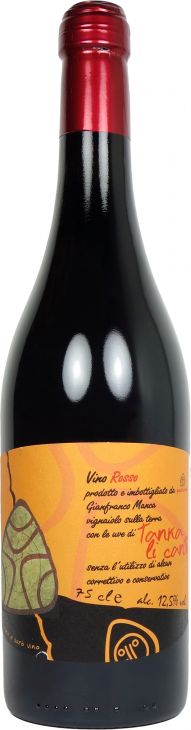
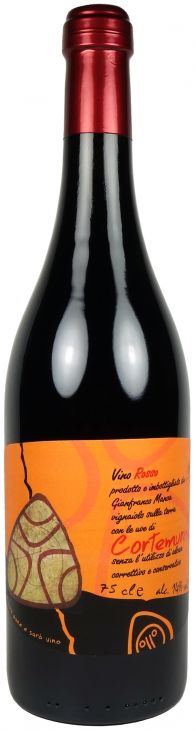
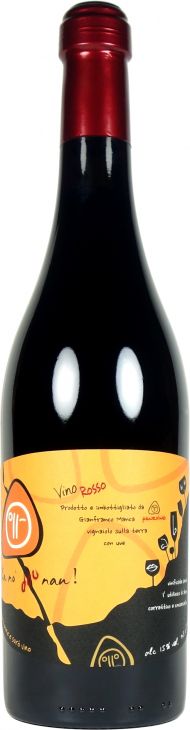
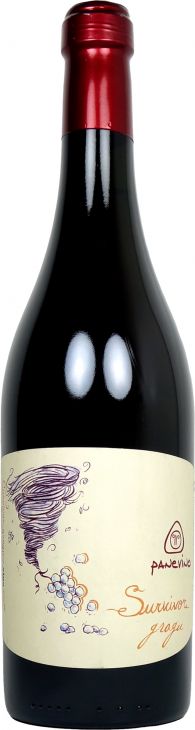
Our <glossary title="254">cellar</glossary> visit was followed by lunch, a great opportunity to hear Gianfranco out on a wide range of issues. For example, if you're familiar with the Panevino wines, you know that the <glossary title="168">blends</glossary> change every year, and that each <glossary title="1109">vintage</glossary> spawns one-off <glossary title="185">bottlings</glossary> with their own names and <span class="zalup"><span><glossary title="573">labels</glossary><span>.</span></span></span> Every <glossary title="363">cuvée</glossary>'s name has a meaning, because Gianfranco wants each bottle to tell a story. So while the wines clearly reflect specific <span class="zalup"><span><glossary title="1026">terroirs</glossary><span>,</span></span></span> grapes and <span class="zalup"><span><glossary title="1109">vintage</glossary><span>,</span></span></span> Gianfranco is more interested in <glossary title="185">bottling</glossary> his emotions from that given year. Everything is done by intuition. <br />
<br />
<em>"The wines tell me what to do. Intuition is the alphabet of God: to think you can decide anything is an illusion."</em><br />
<br />
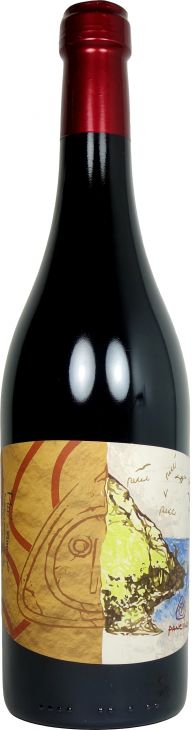
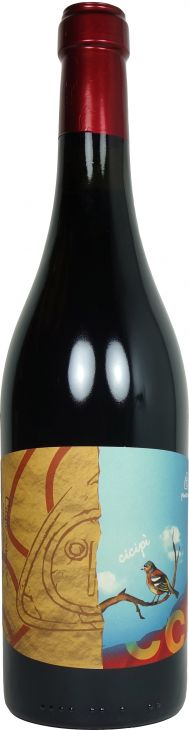
Many of the <glossary title="363">cuvée</glossary> names are rich in symbolism. "C.C.P", for example, is an answer to contrast the "U.V.A"<em>.</em> While the latter "unites" vineyards from different territories to make a whole, "C.C.P" is a reference to the ex-Soviet Union. In such, "C.C.P" is a metaphor for winemaking dogma: the USSR's iron curtain meant nothing could be revealed to outsiders, and this dogma hid the truth of Russia's beauty. Gianfranco feels that a lot of the politics in winemaking have a similar effect. On a much cuter level, pronouncing "C.C.P" sounds like <em>chi-chi-pii</em>, or the sound of a bird chirping. That's why there's a bird on the <span class="zalup"><span><glossary title="573">label</glossary><span>.</span></span></span> <br />
<br />
And why not talk about <em>Ogu</em>, which translates to "the eye"? </p>
<p><img src="http://louisdressner.com/uploads/images/article/2019_Aug_14//20/0c/200c5ca40c4028d0c49a6f14e3ae904c.jpg" /></p>
<p>This <glossary title="185">bottling</glossary> was a metaphor for the huge forest fire that wiped out a huge amount of land in 2003. "The eye" represents the life that that saw the fire take place, survived and continued growing to bring nature back from ravage, as indicated by the imagery on the <span class="zalup"><span><glossary title="573">label</glossary><span>.</span></span></span><br />
<br />
<em>"Maybe I've gotten used to it, but I like that taste of smoke in the wine." </em><br />
<br />
As far as beautiful <span class="zalup"><span><glossary title="573">labels</glossary><span>,</span></span></span> Gianfranco and his wife come up with the designs, then work closely with a local typographer to get the desired results. </p>
<p><img src="http://louisdressner.com/uploads/images/article/2019_Aug_14//cb/f1/cbf1b750bedbc20462fbb1490287c1a0.jpg" /><br />
<br />
After lunch, we headed out to see more vineyards. The first <glossary title="760">parcel</glossary> we visited is named <em>Pikade</em>. </p>
<p><img src="http://louisdressner.com/uploads/images/article/2019_Aug_14//bb/6c/bb6ccf2328a175adcdb0bfafcd9da9d4.jpg" /></p>
<p><img src="http://louisdressner.com/uploads/images/article/2019_Aug_14//b4/c5/b4c532573b4fc48164964a751bf97670.jpg" /><br />
<br />
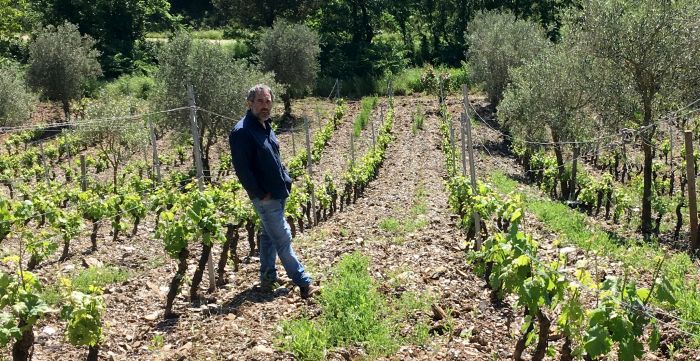
A wine is named after this <glossary title="594">lieu-dit</glossary> using the <glossary title="760">parcel's</glossary> red grapes. The vines are over 100 years old; for many years they were half abandoned, but another farmer renovated them 16 years ago. <span class="zalup"><span><glossary title="670">Monica</glossary><span>,</span></span></span> <span class="zalup"><span><glossary title="237">Carignan</glossary><span>,</span></span></span> <glossary title="1349">Girò</glossary> and <glossary title="688">Moscato</glossary> are planted here on decomposed <glossary title="933">schist</glossary> soils. <br />
<br />
All of the vineyard work is done with minimal <span class="zalup"><span><glossary title="545">intervention</glossary><span>.</span></span></span> Gianfranco has only used <glossary title="333">copper</glossary> <glossary title="328">treatments</glossary> twice in his whole career (!!!), only as a last resort. In both cases, he used about 400g. The legal European limit is 6kg. Gianfranco has never used <glossary title="993">sulfur</glossary> in the vines or wines. <br />
<br />
<em>"I only use it to clean the floor." </em><br />
<br />
<em>Pikade</em> had some of the most visually striking vines of the whole trip. </p>
<p><img src="http://louisdressner.com/uploads/images/article/2019_Aug_14//24/ea/24ea586107a399c6a6311680393f9fe3.jpg" /></p>
<p><img src="http://louisdressner.com/uploads/images/article/2019_Aug_14//58/b4/58b406885261d546bb2070ee8a42fc8d.jpg" /></p>
<p><img src="http://louisdressner.com/uploads/images/article/2019_Aug_14//6d/7d/6d7dfbc565fde83a7a4a1eae230c9810.jpg" /></p>
<p>Here's a particularly artsy shot of Jermemy "Uber <glossary title="969">somm</glossary>" Quinn caught <em>between the vines</em>. </p>
<p><img src="http://louisdressner.com/uploads/images/article/2019_Aug_14//10/a2/10a217b309c7ac3b7e53a8bf1b350266.jpg" /></p>
<p>From Pikade, we drove to up a very steep, narrow road to the Cugussi vineyards, Gianfranco's highest at 680 meters! </p>
<p><img src="http://louisdressner.com/uploads/images/article/2019_Aug_14//63/d2/63d20e9f2e1d1d4d0689d54380288654.jpg" /><br />
<img src="http://louisdressner.com/uploads/images/article/2019_Aug_14//03/a2/03a2c56fce64a7aa023ce52a8a054db9.jpg" /></p>
<p><img src="http://louisdressner.com/uploads/images/article/2019_Aug_14//dc/75/dc755ed501e4dbee01ae0f52bfb30d9f.jpg" /></p>
<p><img src="http://louisdressner.com/uploads/images/article/2019_Aug_14//f2/8a/f28adca5212aa5caef0c58b21ab871b1.jpg" /></p>
<p><img src="http://louisdressner.com/uploads/images/article/2019_Aug_14//6c/80/6c80204539fa005e2ef9fad2308d355a.jpg" /></p>
<p><img src="http://louisdressner.com/uploads/images/article/2019_Aug_14//60/85/60859bc7f8917ef6f1a8d88308e6e000.jpg" /></p>
<p><img src="http://louisdressner.com/uploads/images/article/2019_Aug_14//aa/cf/aacf8c7170951d8473a901f31b6b5049.jpg" /></p>
<p><img src="http://louisdressner.com/uploads/images/article/2019_Aug_14//1a/ea/1aea7baec928ac8b3488cb6107ac7129.jpg" /><br />
<br />
These vines were planted in 1996, 1997 and 1998. <span class="zalup"><span><glossary title="1349">Girò</glossary><span>,</span></span></span> <glossary title="688">Moscato</glossary> and <glossary title="508">Cannonau</glossary> are grown here on <span class="zalup"><span><glossary title="933">schist</glossary><span>,</span></span></span> <glossary title="301">clay</glossary> and <glossary title="909">sandy</glossary> soils. The reds go into the "C.C.P"<em>.</em><br />
<br />
The last <glossary title="1133">plot</glossary> of land we visited was a steep, unplanted <glossary title="1133">plot</glossary> that Gianfranco will use to increase his production of "Alvas<em>"</em>, the white <glossary title="610">skin contact</glossary> wine and only <glossary title="363">cuvée</glossary> <glossary title="185">bottled</glossary> under the same name every year. </p>
<p><img src="http://louisdressner.com/uploads/images/article/2019_Aug_14//20/44/204430a7155388c83f1c1f9e233f16d9.jpg" /></p>
<p><img src="http://louisdressner.com/uploads/images/article/2019_Aug_14//5b/46/5b46e782f8f5210a61bad6a6285c8bbb.jpg" /></p>
<p><img src="http://louisdressner.com/uploads/images/article/2019_Aug_14//9f/41/9f417a062fc648d8108bb0a7bfe5ab46.jpg" /></p>
<p><img src="http://louisdressner.com/uploads/images/article/2019_Aug_14//28/29/2829f16920c6dde63282aadb718bd0fb.jpg" /><br />
<br />
The day was done, so we decided to go drink some beers by the water. Before, we could make it, we got stuck in a LAMB traffic jam!</p>
<p><img src="http://louisdressner.com/uploads/images/article/2019_Aug_14//be/92/be92c2ec16688a2ece3d50e8ef3f6a94.jpg" /></p>
<p><img src="http://louisdressner.com/uploads/images/article/2019_Aug_14//74/df/74dfbd1aa0f7bb4f1ae4f5c6175c1453.jpg" /></p>
<p><img src="http://louisdressner.com/uploads/images/article/2019_Aug_14//25/cd/25cd0477291ebc3d2e6c322349559498.jpg" /></p>
<p><a href="https://www.youtube.com/watch?v=yJxCdh1Ps48">Or should I say traffic lam?</a> </p>
<p>This happened three times while we were in <span class="zalup"><span><glossary title="917">Sardinia</glossary><span>.</span></span></span> The dogs are so used to cars that they confidently stand in front them, controlling the pace of the vehicle to not injure the livestock. Here's another, separate instance of this happening. </p>
<p><img src="http://louisdressner.com/uploads/images/article/2019_Aug_14//81/53/8153c30b02e3e06634267efe5aaed4e2.jpg" /><br />
<br />
We ended our day at the lake, which was very nice.</p>
<p><img src="http://louisdressner.com/uploads/images/article/2019_Aug_14//21/6d/216d235206644c024e7c3be6385ad8ff.jpg" /></p>
<p><img src="http://louisdressner.com/uploads/images/article/2019_Aug_14//b1/de/b1de6422f4e78e3e55560c52245ed054.jpg" /></p>
<p><img src="http://louisdressner.com/uploads/images/article/2019_Aug_14//67/db/67db5161ffb0d45338a7822002462822.jpg" /><br />
</p>
<p>Unfortunately we did only 15% of a normal <glossary term="Harvest" title="521">harvest</glossary> as a result of <glossary term="Mildew" title="1137">downy mildew</glossary> and a following torrid heat. I hope that this is at least cause for reflection on why some natural producers don't have grapes, other "natural" ones do, under the same climatic conditions... it would be time to distinguish natural from "natural-ish”. Among other things, we started some work to enlarge the cantina to be able to do a bit more <glossary term="Aging" title="74">aging</glossary> and also to release some wines a bit earlier. </p>
<p>Hello, I am sending you a report of the magical 2021 <span class="zalup"><span><glossary term="Harvest" title="521">harvest</glossary><span>.</span></span></span></p>
<p>Five months without rain, a week in August with 45 degree weather, super-suffering <glossary term="Cluster/Bunch" title="1138">bunches</glossary> 10 days after <glossary term="Harvest" title="521">harvest</glossary> on plants about to defoliate...Then I don't know how, if not by magic...</p>
<p>Party for bees too!</p>
<p>Hug, bread, wine and peace! </p>
<p><img src="https://louisdressner.com/uploads/images/article//916/47/56/47569ca2d9f2eb75710dfe6645031374.jpg" /><img src="https://louisdressner.com/uploads/images/article//916/2b/bb/2bbb8f40d89b1aae8e1a23012e003f1c.jpg" /><img src="https://louisdressner.com/uploads/images/article//916/2c/4d/2c4dfdcb3544cae6e33e85029c6ef5aa.jpg" /><img src="https://louisdressner.com/uploads/images/article//916/39/2c/392cf715040ef6d4f08a494d10843c4b.jpg" /><img src="https://louisdressner.com/uploads/images/article//916/f2/b1/f2b119457d9e5a00b750834fd0f9e478.jpg" /><img src="https://louisdressner.com/uploads/images/article//916/21/67/216793556f2db599a63bfc602f08efc2.jpg" /></p>
<p>In Italian, “Pane e vino” means “bread and wine.” Gianfranco Manca was raised a baker. At an early age he took over his uncle’s bakery, baking the classic <glossary title="917">Sardinian</glossary> breads that he learned to make from his mother and aunts. Their bread is still prized in his town and the bakery was a success. Along with the bakery, <glossary title="1133">plots</glossary> of land with very <glossary title="740">old vines</glossary> had somehow remained in the family despite being neglected for years. They were trained in <span class="zalup"><span><glossary title="497">alberello</glossary><span>,</span></span></span> the traditional back-braking, low-growing system used on the islands of Italy. While majoritarily <span class="zalup"><span><glossary title="508">Cannonau</glossary><span>,</span></span></span> over 30 different grapes were planted.</p>
<p>Since he was already an expert at <glossary title="441">fermentation</glossary> with bread, Gianfranco believed the natural progression would be to understand wine <glossary title="">fermentation</glossary> with the help of these <span class="zalup"><span><glossary title="740">old vines</glossary><span>.</span></span></span> He set about rehabilitating them and planted a <glossary title="760">parcel</glossary> of new vines in <glossary title="670">Monica</glossary> and <glossary title="237">Carignano</glossary> del Sulcis, a local <glossary title="1169">strain</glossary> of the famous grape. And though Gianfranco started making wine in the mid 1980’s, it wasn’t until 2005 that he was ready to put a <glossary title="573">label</glossary> on it and offer his interpretation to the rest of the world.<br />
<br />
What do you say about a winemaker whose self-professed greatest influences are Bob Dylan and Jesus? Gianfranco is a rare soul in the wine business. He is an empath/winemaker. First, his love for the vines is so strong that he says he feels a particular relationship with each one. Furthermore, he thinks the vines tell him what to do with the grapes. He has been working these vines for a long time now, so I can imagine some deeper understanding of one’s vineyards comes through with that much time. <br />
<br />
As proof, Gianfranco's wines stylistically change from year to year. This also means a new <glossary title="573">label</glossary> and name for each wine, each <span class="zalup"><span><glossary title="1109">vintage</glossary><span>.</span></span></span> With each new wine Gianfranco expresses his personal point of view on what he experienced that year. In 2005 the wine was called <em>Perdacoddura</em> and it was above 15.5%, a big, brawny wine. In 2006, the expression of the same wine was called Mariposa, the results of a search for the more elegant and seductive side to the grape. In 2007, a very good <span class="zalup"><span><glossary title="521">harvest</glossary><span>,</span></span></span> it is called ‘Ogu – which simultaneously means "fire", "eye" and "bud". It is wine born of fire (there was a raging wildfire that year that stopped literally at the next hill over from his vineyards and house) and it is through this wine which Gianfranco presents his vision and through which the world sees him. <br />
<br />
Of course, minimal <glossary title="328">treatments</glossary> (2g of Bordeaux mix) and <span class="zalup"><span><glossary title="810">plowing</glossary><span>,</span></span></span> no use of <glossary title="1002">systemic treatment</glossary><strong>s</strong>, <glossary title="526">herbicides</glossary> or <glossary title="1142">pesticides</glossary> are tolerated at Panevino (we visited an <glossary title="427">estate</glossary> in Bossa that was doing a <span class="zalup"><span><glossary title="328">treatment</glossary><span>.</span></span></span> After artfully haranguing the owner for using these <glossary title="1002">systemic treatments</glossary> and offering to show him how to get along without them, sensitive Gianfranco became violently ill from the bad air). The <glossary title="1104">vinifications</glossary> are carried out on the <glossary title="538">natural yeasts</glossary> of the vines and <glossary title="254">cellar</glossary> culture. All the wines <glossary title="441">ferment</glossary> in <span class="zalup"><span><glossary title="1218">open-top wood vats</glossary><span>,</span></span></span> then are <glossary title="74">aged</glossary> 12 months in <glossary title="144">barrique</glossary> of at least three years. The wines are <glossary title="185">bottled</glossary> without <span class="zalup"><span><glossary title="449">fining</glossary><span>,</span></span></span> <glossary title="447">filtration</glossary> or added <span class="zalup"><span><glossary title="993">sulfites</glossary><span>.</span></span></span> The wines are all <glossary title="260">certified organic</glossary> by the <span class="zalup"><span><glossary title="81">AIAB</glossary><span>,</span></span></span> an Italian <glossary title="260">organic certification</glossary> board. <br />
<br />
In 2008 Gianfranco planted another 1.5 <glossary title="523">ha</glossary> of <glossary title="508">Cannonau</glossary> from <span class="zalup"><span><glossary title="941">massale selection</glossary><span>.</span></span></span> In 2009, he had hoped to plant two more, but the weather was not being cooperative last we heard. I am pretty sure they finally were planted. <br />
<br />
Gianfranco only rarely makes bread these days (mostly classes and demonstrations for children and young adults) but when he does, he must be very careful with clothing and hygiene to keep the two cultures of <glossary title="1128">yeast</glossary> from intermingling.</p>
<p><em>This visit to Panevino took place in May, 2013</em></p>
<p><em>Words by Jules Dressner, photos by Maya Pedersen.</em></p>
<p>From the <glossary title="218">Cagliari</glossary> airport, we drove over to the town of <glossary title="952">Siddi</glossary> for lunch with Gianfranco and his family. We were a little early, so we walked around a while before drinking the first of many big bottles of <a href="http://en.wikipedia.org/wiki/Birra_Ichnusa" target="_blank">Ichnusa</a>. </p>
<p><img src="http://louisdressner.com/uploads/images/article/2019_Aug_14//e8/68/e868fb3b7cebcaf413422d353ddbdf4b.jpg" /></p>
<p><img src="http://louisdressner.com/uploads/images/article/2019_Aug_14//31/c1/31c112c7be2f9836663090083dcc53ab.jpg" /></p>
<p>It was a national holiday -the Italian equivalent of labor day- and Kevin had told us that people celebrate by getting together for a big worker's lunch. All of us were expecting a family style meal with communal tables, big pots everywhere and a never-ending supply of beer. Instead instead we ended up having a seven course wine pairing lunch at the Michelin rated restaurant, <a href="http://www.sapposentu.it/" target="_blank">S'Apposentu</a>.<br />
<br />
Not exactly what we were expecting, but the food was really good and we got to taste all types of wine pairings from local growers, all of which were in attendance. Gianfranco's wine was the recently <glossary term="Bottling" title="185">bottled</glossary> "C.C.P"<em>.</em></p>
<p><img src="http://louisdressner.com/uploads/images/article/2019_Aug_14//7f/c6/7fc6eacf3c5d9e5c3a290264efb3e711.jpg" /></p>
<p>From there, we drove to our hotel, where we met Anya! </p>
<p><img src="http://louisdressner.com/uploads/images/article/2019_Aug_14//0a/da/0ada564c1d45ba68433f9a6df41a893e.jpg" /></p>
<p><img src="http://louisdressner.com/uploads/images/article/2019_Aug_14//93/77/9377d94e5bbcdf9b2911eddd68819b41.jpg" /></p>
<p><img src="http://louisdressner.com/uploads/images/article/2019_Aug_14//67/0a/670ae0ad9c8c18b1aaaed5611a743c91.jpg" /></p>
<p><img src="http://louisdressner.com/uploads/images/article/2019_Aug_14//f2/ee/f2eecf4c25a200ae0703b06895102467.jpg" /></p>
<p>As you can see from the photos, she REALLY loves belly rubs.<br />
<br />
The next morning, we met up with Gianfranco in his hometown of <span class="zalup"><span><glossary title="727">Nurri</glossary><span>,</span></span></span> then set off for a long day in the vines. </p>
<p><img src="http://louisdressner.com/uploads/images/article/2019_Aug_14//9d/05/9d05180cdbe2739ac659d69c0d6f9407.jpg" /><br />
<br />
We started the visit by checking out a 0.6 <glossary title="523">hectare</glossary> <glossary title="">parcel</glossary> Gianfranco has been renting for four years. </p>
<p><img src="http://louisdressner.com/uploads/images/article/2019_Aug_14//d6/9d/d69d11046c65c040796ba95d3fc9d40d.jpg" /></p>
<p><img src="http://louisdressner.com/uploads/images/article/2019_Aug_14//70/02/700277f75ca66376d1075ef231b308f1.jpg" /></p>
<p><img src="http://louisdressner.com/uploads/images/article/2019_Aug_14//f1/06/f10657668438dfa93052487145f95f7a.jpg" /></p>
<p>This is one of three <glossary title="760">parcels</glossary> that goes into the "U.V.A" bottling. "U.V.A"<em>,</em> besides the obvious spelling out of "grape" in Italian, stands for 'United Vineyards of Angiona'. An Angiona is a local word for a widespread <glossary title="78">agricultural</glossary> region. <br />
<br />
<em>"It's a project to bring different </em><glossary title="760"><em>parcels</em></glossary><em> together, to give expression to a larger area."</em><br />
<br />
Just like America or the European Union! At least in theory...<br />
<br />
At the moment, three <glossary title="760">parcels</glossary> with vines ranging from 30 to 70 years old are <glossary title="1104">vinified</glossary> separately, then <glossary title="168">blended</glossary> according to instinct. <br />
<br />
Gianfranco found this <glossary title="760">parcel</glossary> through a <em>"sort of"</em> relative. The guy never had the right feeling for it, and in hopes of striking gold, ended up planting <span class="zalup"><span><glossary title="1043">Trebbiano</glossary><span>,</span></span></span> <span class="zalup"><span><glossary title="138">Barbera</glossary><span>,</span></span></span> weird local grapes and <span class="zalup"><span><glossary title="1081">Vermentino</glossary><span>.</span></span></span> <br />
<br />
<em>"At first it seemed illogical to work with these non-local grapes, but then I realized I had the potential of being a great experiment. I could use this to understand the vineyard's expression of the </em><glossary title="1026"><em>territory</em></glossary><em> through different grapes." </em><br />
<br />
The soils here are <glossary title="909">sand</glossary> and red <glossary title="301">clay</glossary> rich in <span class="zalup"><span><glossary title="547">iron</glossary><span>.</span></span></span></p>
<p><img src="http://louisdressner.com/uploads/images/article/2019_Aug_14//b2/84/b2847dce638c9e05ed3373e417bf61b7.jpg" /></p>
<p><img src="http://louisdressner.com/uploads/images/article/2019_Aug_14//d2/55/d255a313692c24e1039e400cf6d1df27.jpg" /></p>
<p>To get to the second <span class="zalup"><span><glossary title="760">parcel</glossary><span>,</span></span></span> the group had to walk up this steep, grassy hill. </p>
<p><img src="http://louisdressner.com/uploads/images/article/2019_Aug_14//77/19/77192952e1319471e908d0626919285d.jpg" /></p>
<p><img src="http://louisdressner.com/uploads/images/article/2019_Aug_14//63/c3/63c35d1f24103c3188b78d1e17e42a1b.jpg" /></p>
<p><img src="http://louisdressner.com/uploads/images/article/2019_Aug_14//0d/8a/0d8ac31b70ac28e73911fee312556989.jpg" /></p>
<p>It was an unexpected treck, but the reward was getting to walk through the Montassio vineyard! </p>
<p><img src="http://louisdressner.com/uploads/images/article/2019_Aug_14//95/fe/95fe0314995e098845e3beee1a046246.jpg" /></p>
<p><img src="http://louisdressner.com/uploads/images/article/2019_Aug_14//30/7a/307a09afa5d81a615fda52a23aff7afa.jpg" /></p>
<p><img src="http://louisdressner.com/uploads/images/article/2019_Aug_14//08/3f/083fdd938affe2ab1e739dd5383f79f4.jpg" /></p>
<p><img src="http://louisdressner.com/uploads/images/article/2019_Aug_14//8e/69/8e69cbca93547a30dc9330e53dc2910b.jpg" /></p>
<p>At 600m altitude, this <glossary title="">parcel</glossary> has less rocky, richer soils. You can visually spot big chunks of <span class="zalup"><span><glossary title="933">schist</glossary><span>,</span></span></span> which extends deep into the <span class="zalup"><span><glossary title="991">subsoils</glossary><span>.</span></span></span> Though he's not exactly sure, Gianfranco estimates that there are about 40 different red and white <glossary title="1071">varietials</glossary> <glossary title="309">co-planted</glossary> here (over 200 grape varieties are grown in <glossary title="917">Sardinia</glossary>). The red grapes go into the "U.V.A" and whites go into the "Billuke" <span class="zalup"><span><glossary title="778">pétillant naturel</glossary><span>.</span></span></span> <br />
<br />
I got to sit shotgun with Gianfranco all day, and through a mix of Italian, French and English, we managed to have some great conversations. We'd never met, and he certainly lives up to his reputation of having fascinating and deeply personal insights on <span class="zalup"><span><glossary title="1103">viticulture</glossary><span>,</span></span></span> wine and life. My own interpretation is that Gianfranco considers himself an integral part of his <span class="zalup"><span><glossary title="1026">terroir</glossary><span>,</span></span></span> that his state of mind is just as important as any soil or <span class="zalup"><span><glossary title="656">microclimate</glossary><span>.</span></span></span> It reminded me of <a href="http://louisdressner.com/date/2012/03/07/102/?as=places+we+like" target="notSet">Chris Debarr's quote on New Orleans being the "psychic terroir" of his life:</a> an undeniable cause and effect between environment and behavior.<br />
<br />
In a particularly quotable moment (out of so many), here is one statement I managed to jot down:<br />
<br />
<em>"Your thoughts are a tree that go into the soil of a territory. Mine is a cloud, it moves from place to place, rains into the sea and evaporates back up." </em><br />
<br />
This will hopefully make more sense later. <br />
<br />
We drove to a third <span class="zalup"><span><glossary title="760">parcel</glossary><span>,</span></span></span> 60 year old vines planted on heavy <glossary title="933">schist</glossary> rich in <glossary title="955">silica</glossary> and <span class="zalup"><span><glossary title="301">clay</glossary><span>.</span></span></span></p>
<p><img src="http://louisdressner.com/uploads/images/article/2019_Aug_14//bf/3f/bf3f7ef2831eebccac4bf5562686b225.jpg" /></p>
<p><img src="http://louisdressner.com/uploads/images/article/2019_Aug_14//2b/ba/2bba1ed41cf18519b65315efa7308ef4.jpg" /></p>
<p>Before eating lunch, we did a quick tour of the <span class="zalup"><span><glossary title="254">cellar</glossary><span>.</span></span></span> </p>
<p><img src="http://louisdressner.com/uploads/images/article/2019_Aug_14//46/b8/46b8001caf4fcbf7053df8a6afdbbcbd.jpg" /></p>
<p><img src="http://louisdressner.com/uploads/images/article/2019_Aug_14//3f/f6/3ff69a8efd868cb47cfc40df990b3d1b.jpg" /></p>
<p><img src="http://louisdressner.com/uploads/images/article/2019_Aug_14//52/53/5253dac63ef72fab128a640fe3a865d6.jpg" /></p>
<p>Gianfranco is seriously considering phasing out <glossary title="986">stainless steel</glossary> from his wine production.<br />
<br />
<em>"It's like putting a baby to sleep in a metal bed instead of a wool one. "</em><br />
<br />
The previous <glossary title="254">cellar</glossary> was in his mom's basement in <span class="zalup"><span><glossary title="727">Nurri</glossary><span>.</span></span></span> When he built this new one by the side of his house (which is in the middle of nowhere), Gianfranco scraped off the walls of the old <span class="zalup"><span><glossary title="233">cantina</glossary><span>,</span></span></span> mixed them with a mud paste and spread it all over the walls of the new one in hopes of keeping the <glossary title="538">native yeasts</glossary> that had formed over the years.<br />
<br />
<em>"I have no idea if it worked!"</em><br />
<br />
Our <glossary title="254">cellar</glossary> visit was followed by lunch, a great opportunity to hear Gianfranco out on a wide range of issues. For example, if you're familiar with the Panevino wines, you know that the <glossary title="168">blends</glossary> change every year, and that each <glossary title="1109">vintage</glossary> spawns one-off <glossary title="185">bottlings</glossary> with their own names and <span class="zalup"><span><glossary title="573">labels</glossary><span>.</span></span></span> Every <glossary title="363">cuvée</glossary>'s name has a meaning, because Gianfranco wants each bottle to tell a story. So while the wines clearly reflect specific <span class="zalup"><span><glossary title="1026">terroirs</glossary><span>,</span></span></span> grapes and <span class="zalup"><span><glossary title="1109">vintage</glossary><span>,</span></span></span> Gianfranco is more interested in <glossary title="185">bottling</glossary> his emotions from that given year. Everything is done by intuition. <br />
<br />
<em>"The wines tell me what to do. Intuition is the alphabet of God: to think you can decide anything is an illusion."</em><br />
<br />
Many of the <glossary title="363">cuvée</glossary> names are rich in symbolism. "C.C.P", for example, is an answer to contrast the "U.V.A"<em>.</em> While the latter "unites" vineyards from different territories to make a whole, "C.C.P" is a reference to the ex-Soviet Union. In such, "C.C.P" is a metaphor for winemaking dogma: the USSR's iron curtain meant nothing could be revealed to outsiders, and this dogma hid the truth of Russia's beauty. Gianfranco feels that a lot of the politics in winemaking have a similar effect. On a much cuter level, pronouncing "C.C.P" sounds like <em>chi-chi-pii</em>, or the sound of a bird chirping. That's why there's a bird on the <span class="zalup"><span><glossary title="573">label</glossary><span>.</span></span></span> <br />
<br />
And why not talk about <em>Ogu</em>, which translates to "the eye"? </p>
<p><img src="http://louisdressner.com/uploads/images/article/2019_Aug_14//20/0c/200c5ca40c4028d0c49a6f14e3ae904c.jpg" /></p>
<p>This <glossary title="185">bottling</glossary> was a metaphor for the huge forest fire that wiped out a huge amount of land in 2003. "The eye" represents the life that that saw the fire take place, survived and continued growing to bring nature back from ravage, as indicated by the imagery on the <span class="zalup"><span><glossary title="573">label</glossary><span>.</span></span></span><br />
<br />
<em>"Maybe I've gotten used to it, but I like that taste of smoke in the wine." </em><br />
<br />
As far as beautiful <span class="zalup"><span><glossary title="573">labels</glossary><span>,</span></span></span> Gianfranco and his wife come up with the designs, then work closely with a local typographer to get the desired results. </p>
<p><img src="http://louisdressner.com/uploads/images/article/2019_Aug_14//cb/f1/cbf1b750bedbc20462fbb1490287c1a0.jpg" /><br />
<br />
After lunch, we headed out to see more vineyards. The first <glossary title="760">parcel</glossary> we visited is named <em>Pikade</em>. </p>
<p><img src="http://louisdressner.com/uploads/images/article/2019_Aug_14//bb/6c/bb6ccf2328a175adcdb0bfafcd9da9d4.jpg" /></p>
<p><img src="http://louisdressner.com/uploads/images/article/2019_Aug_14//b4/c5/b4c532573b4fc48164964a751bf97670.jpg" /><br />
<br />
A wine is named after this <glossary title="594">lieu-dit</glossary> using the <glossary title="760">parcel's</glossary> red grapes. The vines are over 100 years old; for many years they were half abandoned, but another farmer renovated them 16 years ago. <span class="zalup"><span><glossary title="670">Monica</glossary><span>,</span></span></span> <span class="zalup"><span><glossary title="237">Carignan</glossary><span>,</span></span></span> <glossary title="1349">Girò</glossary> and <glossary title="688">Moscato</glossary> are planted here on decomposed <glossary title="933">schist</glossary> soils. <br />
<br />
All of the vineyard work is done with minimal <span class="zalup"><span><glossary title="545">intervention</glossary><span>.</span></span></span> Gianfranco has only used <glossary title="333">copper</glossary> <glossary title="328">treatments</glossary> twice in his whole career (!!!), only as a last resort. In both cases, he used about 400g. The legal European limit is 6kg. Gianfranco has never used <glossary title="993">sulfur</glossary> in the vines or wines. <br />
<br />
<em>"I only use it to clean the floor." </em><br />
<br />
<em>Pikade</em> had some of the most visually striking vines of the whole trip. </p>
<p><img src="http://louisdressner.com/uploads/images/article/2019_Aug_14//24/ea/24ea586107a399c6a6311680393f9fe3.jpg" /></p>
<p><img src="http://louisdressner.com/uploads/images/article/2019_Aug_14//58/b4/58b406885261d546bb2070ee8a42fc8d.jpg" /></p>
<p><img src="http://louisdressner.com/uploads/images/article/2019_Aug_14//6d/7d/6d7dfbc565fde83a7a4a1eae230c9810.jpg" /></p>
<p>Here's a particularly artsy shot of Jermemy "Uber <glossary title="969">somm</glossary>" Quinn caught <em>between the vines</em>. </p>
<p><img src="http://louisdressner.com/uploads/images/article/2019_Aug_14//10/a2/10a217b309c7ac3b7e53a8bf1b350266.jpg" /></p>
<p>From Pikade, we drove to up a very steep, narrow road to the Cugussi vineyards, Gianfranco's highest at 680 meters! </p>
<p><img src="http://louisdressner.com/uploads/images/article/2019_Aug_14//63/d2/63d20e9f2e1d1d4d0689d54380288654.jpg" /><br />
<img src="http://louisdressner.com/uploads/images/article/2019_Aug_14//03/a2/03a2c56fce64a7aa023ce52a8a054db9.jpg" /></p>
<p><img src="http://louisdressner.com/uploads/images/article/2019_Aug_14//dc/75/dc755ed501e4dbee01ae0f52bfb30d9f.jpg" /></p>
<p><img src="http://louisdressner.com/uploads/images/article/2019_Aug_14//f2/8a/f28adca5212aa5caef0c58b21ab871b1.jpg" /></p>
<p><img src="http://louisdressner.com/uploads/images/article/2019_Aug_14//6c/80/6c80204539fa005e2ef9fad2308d355a.jpg" /></p>
<p><img src="http://louisdressner.com/uploads/images/article/2019_Aug_14//60/85/60859bc7f8917ef6f1a8d88308e6e000.jpg" /></p>
<p><img src="http://louisdressner.com/uploads/images/article/2019_Aug_14//aa/cf/aacf8c7170951d8473a901f31b6b5049.jpg" /></p>
<p><img src="http://louisdressner.com/uploads/images/article/2019_Aug_14//1a/ea/1aea7baec928ac8b3488cb6107ac7129.jpg" /><br />
<br />
These vines were planted in 1996, 1997 and 1998. <span class="zalup"><span><glossary title="1349">Girò</glossary><span>,</span></span></span> <glossary title="688">Moscato</glossary> and <glossary title="508">Cannonau</glossary> are grown here on <span class="zalup"><span><glossary title="933">schist</glossary><span>,</span></span></span> <glossary title="301">clay</glossary> and <glossary title="909">sandy</glossary> soils. The reds go into the "C.C.P"<em>.</em><br />
<br />
The last <glossary title="1133">plot</glossary> of land we visited was a steep, unplanted <glossary title="1133">plot</glossary> that Gianfranco will use to increase his production of "Alvas<em>"</em>, the white <glossary title="610">skin contact</glossary> wine and only <glossary title="363">cuvée</glossary> <glossary title="185">bottled</glossary> under the same name every year. </p>
<p><img src="http://louisdressner.com/uploads/images/article/2019_Aug_14//20/44/204430a7155388c83f1c1f9e233f16d9.jpg" /></p>
<p><img src="http://louisdressner.com/uploads/images/article/2019_Aug_14//5b/46/5b46e782f8f5210a61bad6a6285c8bbb.jpg" /></p>
<p><img src="http://louisdressner.com/uploads/images/article/2019_Aug_14//9f/41/9f417a062fc648d8108bb0a7bfe5ab46.jpg" /></p>
<p><img src="http://louisdressner.com/uploads/images/article/2019_Aug_14//28/29/2829f16920c6dde63282aadb718bd0fb.jpg" /><br />
<br />
The day was done, so we decided to go drink some beers by the water. Before, we could make it, we got stuck in a LAMB traffic jam!</p>
<p><img src="http://louisdressner.com/uploads/images/article/2019_Aug_14//be/92/be92c2ec16688a2ece3d50e8ef3f6a94.jpg" /></p>
<p><img src="http://louisdressner.com/uploads/images/article/2019_Aug_14//74/df/74dfbd1aa0f7bb4f1ae4f5c6175c1453.jpg" /></p>
<p><img src="http://louisdressner.com/uploads/images/article/2019_Aug_14//25/cd/25cd0477291ebc3d2e6c322349559498.jpg" /></p>
<p><a href="https://www.youtube.com/watch?v=yJxCdh1Ps48">Or should I say traffic lam?</a> </p>
<p>This happened three times while we were in <span class="zalup"><span><glossary title="917">Sardinia</glossary><span>.</span></span></span> The dogs are so used to cars that they confidently stand in front them, controlling the pace of the vehicle to not injure the livestock. Here's another, separate instance of this happening. </p>
<p><img src="http://louisdressner.com/uploads/images/article/2019_Aug_14//81/53/8153c30b02e3e06634267efe5aaed4e2.jpg" /><br />
<br />
We ended our day at the lake, which was very nice.</p>
<p><img src="http://louisdressner.com/uploads/images/article/2019_Aug_14//21/6d/216d235206644c024e7c3be6385ad8ff.jpg" /></p>
<p><img src="http://louisdressner.com/uploads/images/article/2019_Aug_14//b1/de/b1de6422f4e78e3e55560c52245ed054.jpg" /></p>
<p><img src="http://louisdressner.com/uploads/images/article/2019_Aug_14//67/db/67db5161ffb0d45338a7822002462822.jpg" /><br />
</p>
<p>Unfortunately we did only 15% of a normal <glossary term="Harvest" title="521">harvest</glossary> as a result of <glossary term="Mildew" title="1137">downy mildew</glossary> and a following torrid heat. I hope that this is at least cause for reflection on why some natural producers don't have grapes, other "natural" ones do, under the same climatic conditions... it would be time to distinguish natural from "natural-ish”. Among other things, we started some work to enlarge the cantina to be able to do a bit more <glossary term="Aging" title="74">aging</glossary> and also to release some wines a bit earlier. </p>
<p>Hello, I am sending you a report of the magical 2021 <span class="zalup"><span><glossary term="Harvest" title="521">harvest</glossary><span>.</span></span></span></p>
<p>Five months without rain, a week in August with 45 degree weather, super-suffering <glossary term="Cluster/Bunch" title="1138">bunches</glossary> 10 days after <glossary term="Harvest" title="521">harvest</glossary> on plants about to defoliate...Then I don't know how, if not by magic...</p>
<p>Party for bees too!</p>
<p>Hug, bread, wine and peace! </p>
<p><img src="https://louisdressner.com/uploads/images/article//916/47/56/47569ca2d9f2eb75710dfe6645031374.jpg" /><img src="https://louisdressner.com/uploads/images/article//916/2b/bb/2bbb8f40d89b1aae8e1a23012e003f1c.jpg" /><img src="https://louisdressner.com/uploads/images/article//916/2c/4d/2c4dfdcb3544cae6e33e85029c6ef5aa.jpg" /><img src="https://louisdressner.com/uploads/images/article//916/39/2c/392cf715040ef6d4f08a494d10843c4b.jpg" /><img src="https://louisdressner.com/uploads/images/article//916/f2/b1/f2b119457d9e5a00b750834fd0f9e478.jpg" /><img src="https://louisdressner.com/uploads/images/article//916/21/67/216793556f2db599a63bfc602f08efc2.jpg" /></p>