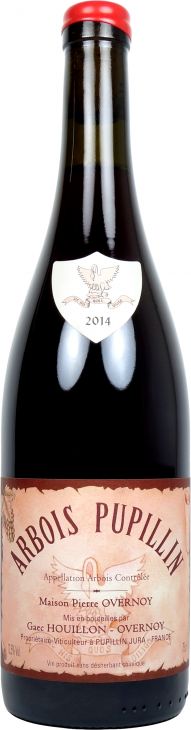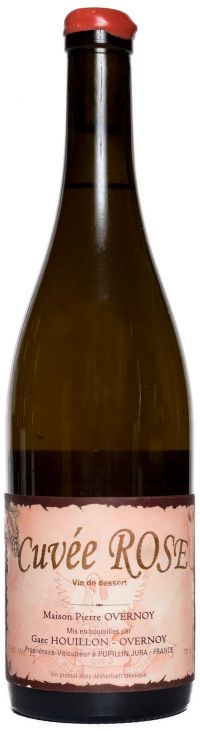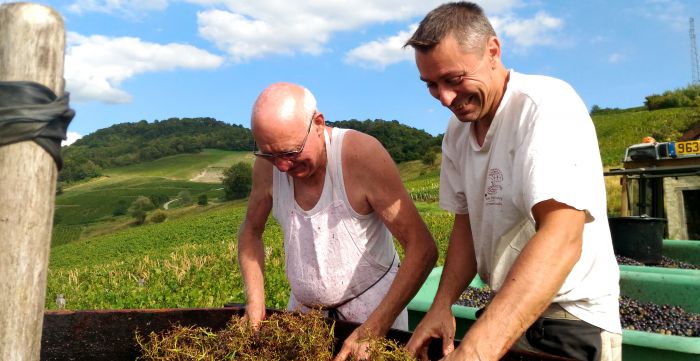
producer profile
11.07.2019
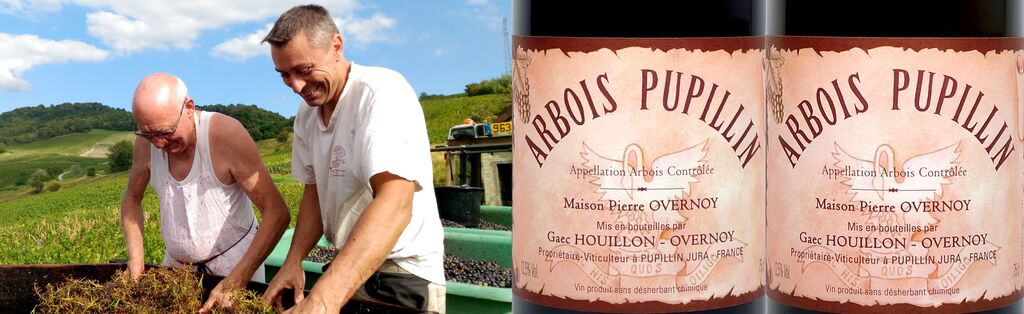
Emmanuel Houillon and Pierre Overnoy Producer Profile
<p><glossary title="1103">Viticultural</glossary> <glossary title="560">Jura</glossary> is one of the smallest of all wine regions in France. Over 80 kilometers stretching North to South, on a ridge never more than five kilometers wide, the <glossary title="560">Jura</glossary> has 1850 <glossary title="523">hectares</glossary> of planted vines. This is down from 20,000 pre<span class="zalup"><span><span>-</span><span class="zalup"><span><glossary title="788">phylloxera</glossary><span>,</span></span></span></span></span> when about 40 varieties were widely used. Now only five grapes are grown since the creation of the <span class="zalup"><span><glossary title="108">AOCs</glossary><span>:</span></span></span> the local grapes <glossary title="1052">Trousseau</glossary> and <glossary title="822">Poulsard</glossary> for red wines and <glossary title="922">Savagnin</glossary> for white, along with <glossary title="210">Burgundian</glossary> grapes <glossary title="805">Pinot Noir</glossary> and <span class="zalup"><span><glossary title="271">Chardonnay</glossary><span>.</span></span></span> <glossary title="271">Chardonnay</glossary> dominates the plantations, although there are many types of plants and <span class="zalup"><span> <glossary title="304">clones</glossary><span>.</span></span></span> The most interesting is called Melon à Queue Rouge, a <glossary title="1169">strain</glossary> developed locally which has reddish stems.</p>
<p>Pierre Overnoy’s father ran a 15<strong> <glossary title="523">hectare</glossary></strong> farm of mixed <glossary title="78">agriculture</glossary> in <span class="zalup"><span><glossary title="837">Pupillin</glossary><span>,</span></span></span> a village near <span class="zalup"><span><glossary title="116">Arbois</glossary><span>.</span></span></span> 2.65 <glossary title="523">ha</glossary> of the land was vineyards, which Overnoy took over in 1968; he left the rest of the farming to his brother. From his beginnings, he tended his vines <span class="zalup"><span><glossary title="746">organically</glossary><span>,</span></span></span> known at the time as "traditional", i.e. without <span class="zalup"><span><glossary title="526">herbicides</glossary><span>,</span></span></span> <span class="zalup"><span><glossary title="1142">pesticides</glossary><span>,</span></span></span> <span class="zalup"><span><glossary title="1207">fungicides</glossary><span>,</span></span></span> nothing but <glossary title="333">copper</glossary> and <span class="zalup"><span><glossary title="993">sulfur</glossary><span>.</span></span></span> <br />
<br />
In his winemaking, he was a pioneer of what has come to be called <span class="zalup"><span><glossary title="708">natural wine</glossary><span>,</span></span></span> especially in his avoidance of the use of <span class="zalup"><span><glossary title="993">sulfur</glossary><span>.</span></span></span> The <span class="zalup"><span><glossary title="560">Jura</glossary><span>,</span></span></span> with its tradition of <span class="zalup"><span><glossary title="1096">Vin Jaune</glossary><span>,</span></span></span> made in a slowly <glossary title="754">oxidative</glossary> fashion, was probably ideally suited for these explorations. <span class="zalup"><span><glossary title="558">Jules Chauvet</glossary><span>,</span></span></span> the <glossary title="151">Beaujolais</glossary> <glossary title="729">négociant</glossary> and wine researcher, was a mentor and a friend to Pierre Overnoy since those early years. Overnoy’s goal was to make wines of <span class="zalup"><span><glossary title="1026">terroir</glossary><span>,</span></span></span> which would reveal the <glossary title="662">minerality</glossary> of their soils and the ripeness of their <span class="zalup"><span><glossary title="1109">vintage</glossary><span>.</span></span></span> Stylistically, it was also a return to what his grandfather's wines tasted like. <br />
<br />
Emmanuel Houillon, a kid from the nearby, vineless area of <glossary title="465">Franche-Comté</glossary> (the region that comprises <glossary title="560">Jura</glossary>), came to Pierre as an apprentice in the fall of 1990. A self admitted lost soul, Manu found his path working with Pierre. He'd alternate between school and working at the <glossary title="427">estate</glossary> every two weeks. That lasted seven years, until he left school with a professional baccalauréat in <glossary title="1103">viticulture</glossary> and<strong> <glossary title="422">oenology</glossary></strong>. Overnoy then hired him as an employee, though by then the two had already formed an unbreakable relationship akin to father and son. <br />
<br />
In 1995, while still a student, Houillon found 1/3 <glossary title="523">ha</glossary> of <glossary title="271">Chardonnay</glossary> vines which he tended himself. He also planted 1/2 <glossary title="523">ha</glossary> of <glossary title="271">Chardonnay</glossary> in 1998. That same year, the Overnoy <glossary title="427">estate</glossary> grew by 2.5 <glossary title="523">ha</glossary> of <glossary title="822">Poulsard</glossary> and <glossary title="922">Savagnin </glossary>when Pierre took over vines owned by his sister. The <glossary title="427">estate</glossary> now consists of 2 <glossary title="523">ha</glossary> of <glossary title="822">Ploussard</glossary> (or <glossary title="822">Poulsard</glossary>), 2 <glossary title="523">ha</glossary> of <glossary title="271">Chardonnay</glossary> and 2 <glossary title="523">ha</glossary> of <span class="zalup"><span> <glossary title="922">Savagnin</glossary><span>.</span></span></span> 30 <glossary title="1208">ares</glossary> of <glossary title="1052">Trousseau</glossary> were planted in in 2013. <br />
<br />
In 2001, at the age of 63, Pierre Overnoy retired. Emmanuel Houillon and his wife Anne have been fully at the helm since, with Pierre devoting much of his time to baking bread and enjoying the finer things in life. Still, he remains an everyday presence for the family and the <span class="zalup"><span><glossary title="427">estate</glossary><span>.</span></span></span> </p>
<p>Over the years Overnoy's reputation has skyrocketed to the point where the wines have become some of the rarest and sought after in the world. It's been strange to adapt: for a long time the wines were only popular amongst a small subset of restaurants and wine shops in France (and probably Japan). There were early die-hard fans in the USA, but if you wanted to drink a bottle, chances are you could. Now the wines are fiercely guarded and "asking for Overnoy" is a daily faux pas made by inexperienced buyers and <glossary title="708">natural wine</glossary> tourists on their first visit to Verre Volé or Cave Septime. When we started importing the <glossary title="427">estate</glossary> in the early 2000's, the wines were considered wildly esoteric for the USA market and only a dedicated few would purchase them (shout out to Arnaud Erhart and David Lillie). We even had some restaurants pouring it by the glass!</p>
<p>But times have changed and the cat is definitely out of the bag. So with prices going up and the extreme scarcity (bad crops, less quantity, the wines frankly being underpriced for way too long), are these really worth all the hype? In our humble opinion: absolutely. Beyond the obvious <glossary title="560">Jura</glossary> quirkiness, the <glossary title="427">estate</glossary> is as singular as they come. Here are some of the reasons why. </p>
<p>The first and most impressive is the unwavering dedication to only releasing wine Manu and Pierre have deemed ready to drink. In the vast majority of cases, even the most iconic wineries in the world release <glossary title="1109">vintages</glossary> in a chronological, scheduled manner. At Overnoy you never know: multiple <glossary title="1109">vintages</glossary> of the same wine are often released years apart from different <glossary term="Bottling" title="185">bottling</glossary> dates, and we never know which <glossary term="Cuvée" title="363">cuvées</glossary> or <glossary term="Vintage" title="1109">vintages</glossary> we'll be offered. Furthermore, there are no set rules for how long the wine will <glossary title="74">age</glossary> in <glossary title="1126">wood</glossary> or in bottle. Through regular tastings, Manu decides when the time is right to <glossary title="185">bottle</glossary> and release each <span class="zalup"><span><glossary title="363">cuvée</glossary><span>.</span></span></span> And depending on the quantity and the quality of the grapes, often only a part of the <glossary title="1109">vintage</glossary> is <span class="zalup"><span><glossary title="185">bottled</glossary><span>,</span></span></span> letting the remainder evolve. </p>
<p>That means that the same <glossary title="1109">vintage</glossary> will often be <glossary title="185">bottled</glossary> and released multiple times from different <glossary title="462">foudres</glossary> that have each taken their own distinct paths. Realizing that this detail was getting lost in the mix, since 2018 the Houillon have begun adding the <glossary title="185">bottling</glossary> date of each wine on their <span class="zalup"><span><glossary title="573">front labels</glossary><span>.</span></span></span> You can spot these on the lower right side to help identify the various <glossary title="185">bottlings</glossary> of the same <span class="zalup"><span><glossary title="1109">vintage</glossary><span>.</span></span></span> This fact is not made obvious in any way, you just need to know. It's part of the larger lore in the wines' cryptic nature: one must have all the clues to decipher their true identity. </p>
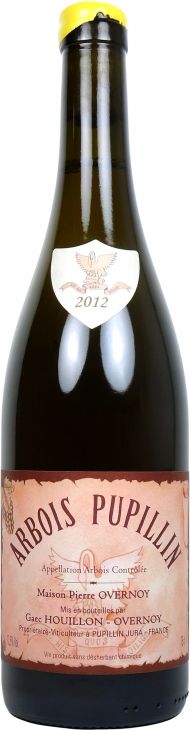
<p>With the exception of the <glossary title="1096">Vin Jaune</glossary> and Vin de Liqueur, all of the <glossary title="363">cuvées</glossary> feature the exact same <span class="zalup"><span><glossary title="573">label</glossary><span>.</span></span></span> The only way to tell the difference is the color of the wax on the top of each bottle: white for <span class="zalup"><span><glossary title="271">Chardonnay</glossary><span>,</span></span></span> yellow for <span class="zalup"><span><glossary title="922">Savagnin</glossary><span>,</span></span></span> red for <span class="zalup"><span><glossary title="822">Ploussard</glossary><span>.</span></span></span> There exists a mythical green wax for the <glossary title="271">Chardonnay</glossary>/<glossary title="922">Savagnin</glossary> <glossary title="168">blend</glossary> that has not been released in a very, very long time. Again, this has never been clearly explained or communicated other than word of mouth. Oh, and if it's a 50cl bottle, it's the <glossary title="922">Savagnin</glossary> <span class="zalup"><span><glossary title="751">Ouillé</glossary><span>.</span></span></span> </p>
<p>Finally, despite insatiable demand, Manu has refused to grow the <glossary title="427">estate</glossary> or buy grapes, all the while suffering through a decade of near inexistent crops due to climactic hardships. He feels that their current size is as much as he can handle to truly do everything top to bottom himself. He is not interested in becoming a <glossary title="729">négociant</glossary> and will only produce what nature gives him. It's a noble philosophy that we admire and respect tremendously.</p>
<p>Unfortunately, with the increased global demand for <span class="zalup"><span> <glossary title="708">natural wine</glossary><span>,</span></span></span> bad crops and the very rare crossover between die-hard naturalistas and classic <glossary title="969">sommeliers</glossary> clamoring for all they can get, a perfect storm ensued: we never have enough to satisfy even our best customers. It's also brought out some of the more unsavory sides of the world we work in: wine as a status symbol, grey marketing, price gouging...</p>
<p>It's too bad because these wines come from some of the hardest working, humble and generous people we have the pleasure to work with. They have no desire to be in the limelight, for the glitz and the glamour. In fact, they live a very private lifestyle. And despite the sharp increases in price in the last few <glossary title="1109">vintages</glossary> (which to be transparent we actually encouraged them to do), the Houillons live a simple farmer's existence selling the scant bottles they produce. At this point, all we can hope for is that the very little wine we receive each year (less than 400 bottles a year for the entire country) is enjoyed beyond the artifice of the superficial; we hope that these wines end up in the glasses of people that actually care for and understand the work that goes into each bottle. </p>
Article
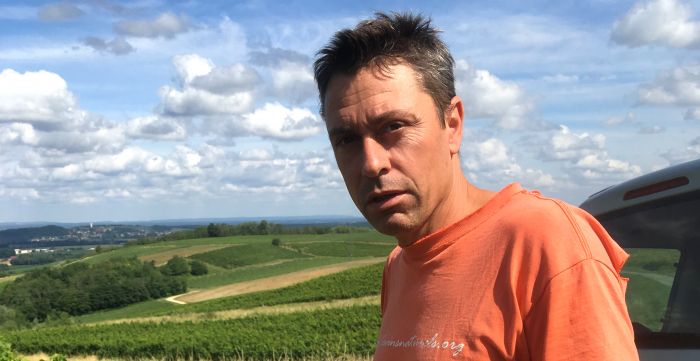
interview
11.07.2019
An Interview with Emmanuel Houillon from 2012
<p><em>This interview with Emmanuel Houillon took place in Pierre Overnoy's house in August, 2012.</em></p>
<p><strong>Tell us about the estate.</strong><br />
<br />
Today, we work six <glossary title="523">hectares</glossary> of vines. We grow three different grapes: about two <glossary title="523">hectares</glossary> of <span class="zalup"><span><glossary title="822">Ploussard</glossary><span>,</span></span></span> two <glossary title="523">hectares</glossary> of <glossary title="271">Chardonnay</glossary> and 2 <glossary title="523">hectares</glossary> of <span class="zalup"><span> <glossary title="922">Savagnin</glossary><span>.</span></span></span> We're also planting 30 <glossary title="1208">ares</glossary> of <glossary title="1052">Trousseau</glossary> next year, which will be a new experience for us. <br />
<br />
As far as our history, the <glossary title="427">estate</glossary> was founded by Pierre, and today I have taken over all major responsibilities. The vines have always been worked <span class="zalup"><span><glossary title="746">organically</glossary><span>,</span></span></span> and our goal is simply to make a pure, authentic wine. We want you to taste <glossary title="441">fermented</glossary> grape juice and that's it. Sometimes this is problematic, because people don't understand the wines or what we are trying to make. But overall, people are very open to the idea. <br />
<br />
<strong>Can you tell us about Pierre's beginnings? </strong><br />
<br />
Pierre took over his family's <span class="zalup"><span><glossary title="427">estate</glossary><span>.</span></span></span> His father and brother were both <span class="zalup"><span><glossary title="1089">vignerons</glossary><span>,</span></span></span> and he expanded the <glossary title="1103">viticultural</glossary> size of the <glossary title="427">estate</glossary> by shifting from <glossary title="815">polyculture</glossary> to <span class="zalup"><span><glossary title="671">monoculture</glossary><span>.</span></span></span> At some point early in his career, Pierre decided to study how to make wine in <span class="zalup"><span><glossary title="154">Beaune</glossary><span>,</span></span></span> where he was taught modern <span class="zalup"><span><glossary title="422">oenology</glossary><span>.</span></span></span> After applying these techniques to make wine, Pierre found it odd that his wines were so dull compared to his father or brother's; after all these were the same grapes! He had gone to <glossary title="422">oenology</glossary> school to make better wines than his family's, but it ended up being the opposite!<br />
<br />
Around this same period -mid-to-late 70's-, he met Jacques Neauport for the first time. Jacques told him that it was entirely possible to make wine without modern techniques and even without <span class="zalup"><span><glossary title="993">sulfur</glossary><span>.</span></span></span> In 1984, Pierre started <glossary title="1104">vinifying</glossary> without <span class="zalup"><span><glossary title="993">sulfur</glossary><span>,</span></span></span> only adding a touch at <span class="zalup"><span><glossary title="185">bottling</glossary><span>.</span></span></span> Starting in 1986, not one of Pierre's wines have seen any added <span class="zalup"><span><glossary title="993">sulfur</glossary><span>.</span></span></span> <br />
<br />
<strong>What is Pierre's current involvement?</strong><br />
<br />
Pierre is still completely integral in my family's day to day life. He's still here, he's still a <span class="zalup"><span><glossary title="1089">vigneron</glossary><span>,</span></span></span> but now his new passion is baking bread! He's always there to taste the wines with me, to give advice or lend a helping hand. <br />
<br />
<strong>What about your involvement? </strong><br />
<br />
The first time I came to <glossary title="837">Pupillin</glossary> was with my uncle, who had been buying wine from Pierre for a very long time. He knew the Overnoy family very well; over our many visits, my parents eventually befriended Pierre. I was in high school at the time, and by 1989 I would spend all my off time helping out in the vines. I was 14 at the time.<br />
<br />
In September 1990, I went to <glossary title="154">Beaune</glossary> to study <span class="zalup"><span><glossary title="1103">viticulture</glossary><span>,</span></span></span> and that was really the beginning of my career. <br />
<br />
<strong>Did you hope to start your own<font color="#7b143e"> estate</font> or to work elsewhere after your studies?</strong><br />
<br />
When you're 15, you don't really think about stuff like that! All I knew was that it was something I truly enjoyed -that I still enjoy- and that the vines felt like a wake up call. I was a bit of a lost soul in school, but learning to make wines with Pierre -especially with how different it was than what they were teaching me in <span class="zalup"><span><glossary title="154">Beaune</glossary><span>-</span></span></span> made me realize that even if you think you've found everything, there's still so much more to unearth. <br />
<br />
<strong>So seeing how Pierre worked, and how completely different it was from what you were being taught in school, that really affected you?</strong><br />
<br />
We are always told that the teacher knows everything. But if he teaches you the wrong thing, you might spend your entire life doing something wrong and thinking it's right. We were told that wines without added <glossary title="993">sulfur</glossary> were impossible to make, that it would invariably turn to vinegar. So to make people accept that it IS possible to do -and even today some people still don't believe it- that was something that marked me. This was 1990: people treated Pierre like an extraterrestrial!<br />
<br />
<strong>After your studies, did you come right back to<font color="#7b143e"> Pupillin</font>? </strong><br />
<br />
The program I took had me splitting my time between Pierre's vines and school: each month I would spend two weeks in <span class="zalup"><span><glossary title="837">Pupillin</glossary><span>,</span></span></span> then two weeks in class. In July and August, I was in the vines the whole time. So I've always been working the same land. It's where I learned everything. I studied for seven years, and in 1997 I came back to <glossary title="837">Pupillin</glossary> to work full time with Pierre. I was salaried until 2001, which is when I took over the <span class="zalup"><span><glossary title="427">estate</glossary><span>.</span></span></span> <br />
<br />
<strong>What's the work in the vines like? </strong><br />
<br />
Everything is important, everything counts. I think the most important thing everyone needs to start focusing on is taking your <glossary title="941">selections massales</glossary> very seriously. Go find the <glossary title="">old vines</glossary> wherever they may be, because otherwise you're going to lose them forever. <br />
<br />
This is really important for the future generation of <span class="zalup"><span><glossary title="1089">vignerons</glossary><span>.</span></span></span> Back in Pierre's day, people controlled the entire process of how their vines were planted. If they felt like they needed something that could withstand a colder climate, they would make selections from vines that were a little more precocious. Today, our climate is getting increasingly hotter, so it makes sense to find the vines that produce lesser maturities, that you can <glossary title="521">harvest</glossary> later. The <glossary title="773">pépiniériste</glossary> cannot do this job for you: he can only do the same, uniform plantings for everybody. People need to make personal judgement calls. <br />
<br />
<strong>Has anything evolved in the<font color="#7b143e"> cellar</font> over the years?</strong><br />
<br />
We have a saying here: "<em>You can always do better for tomorrow.</em>" I don't believe you can ever reach a point where you can say: "<em>Everything is perfect, we'll keep it exactly like this.</em>" Everything is always changing: the climate, the <glossary title="1128">yeasts</glossary> that will <glossary title="441">ferment</glossary> the wine each year... These are things that we know aren't static. So you have to follow the movement of where things are headed. <br />
<br />
Obviously, we are trying to make wines that we like to drink. Wine from 200 years ago might not be what we'd want to drink today. So yes, there are always little changes happening here and there, but never any drastic overhauls. <br />
<br />
<strong>What is your take on<font color="#7b143e"> sulfur</font>?</strong><br />
<br />
In my opinion, <glossary title="993">sulfur</glossary> can in some instances be beneficial to<strong> <glossary title="1103">viticulture</glossary></strong> and winemaking. Pierre always said it helps stabilize wines, and can carry them through time. The problem is that <glossary title="993">sulfur</glossary> use has become standardized, and in many cases takes the life out of the wine.<br />
<br />
<strong>The big argument is that it keeps the wine stable. </strong><br />
<br />
But this is a fool's tale! I would argue that alive wines often age better, because when a wine is <glossary title="447">unfiltered</glossary> and <span class="zalup"><span><glossary title="449">unfined</glossary><span>,</span></span></span> you've got all the elements you need for it to age. If you want to make a wine that will age for a long time, there are many ways to do it: you can leave it on its <glossary title="590">lees</glossary> for a long time, bottle them years before release... <br />
<br />
<strong><font color="#7b143e">Sans souffre</font> wine often gets a bad rap because many of them have very obvious<font color="#7b143e"> flaws</font>, specifically<font color="#7b143e"> brett</font>, oxidation and volatile acidity. Yet this never occurs with your wines. Why?</strong><br />
<br />
There are important guidelines to follow if you don't want your wine to suffer from these <span class="zalup"><span><glossary title="453">flaws</glossary><span>.</span></span></span> You can't just do whatever you want, however you want to do it. You can make <glossary title="993">sulfur</glossary> free wine every year, but that means that some <glossary title="1109">vintages</glossary> you'll need to be patient. Being meticulous with the grapes you are <glossary title="521">harvesting</glossary> is THE most important thing you can do. Especially with the reds, if you're not sorting through what you're picking, it's not even worth attempting. <br />
<br />
Another important detail: not letting the grapes reach over-maturity. The best fruit is the one picked and eaten exactly at the right time. If it's under-ripe, over-ripe or you let it sit for a few days, it's going to lose some of its purity.<br />
<br />
<strong>How do you feel about the term "natural wine"?</strong><br />
<br />
Our wines are what they are. As far as classifying them, I'd rather someone else do that: it's much more interesting for us, and gives us the opportunity to always put what we're doing into question. <br />
<br />
Here's the thing: for a long time, these wines were misunderstood. There were so many "<em>connoisseurs</em>" that believed our wines weren't good because they were <span class="zalup"><span><glossary title="447">unfiltered</glossary><span>,</span></span></span> <span class="zalup"><span><glossary title="449">unfined</glossary><span>,</span></span></span> un-everything... Today, people are more sincere when they drink. They taste a wine, and if they like it, they're happy. They are much more confident in their own <span class="zalup"><span><glossary title="756">palates</glossary><span>.</span></span></span> Better that than being told what you should and shouldn't like! So I think there is a future for these wines. I think that one day we won't talk about <glossary title="746">organic</glossary> <glossary title="">agriculture</glossary> anymore, because everyone will be doing it. <br />
<br />
<strong>You're convinced of this?</strong><br />
<br />
I'd like to see it happen! It's how we used to do things, right? Why couldn't it come back? In any case, I'm convinced that the next generation of great wines will come from this type of work. <br />
<br />
<strong>Do you think this shift will result from new laws being passed, or simply a more conscious generation of farmers?</strong><br />
<br />
There is already an ever increasing amount of consciousness. We needed it. And now I'm meeting more and more people who are proud of what they do. They have a healthy outlook on life, and even if they're not working <glossary title="746">organically</glossary> yet, tomorrow they will be. And the consumer is requesting it too: they are sick of always drinking the exact same wine every time, they want to taste the pleasure of something real. <br />
<br />
<strong>What do you like to drink?</strong><br />
<br />
Plenty of stuff! We have so many <glossary title="1089">vignerons</glossary> friends... I don't set any rules for myself, but I love wines from my friends. I won't name names, but from North to the South, I like it all!</p>
Article
producer visit
02.08.2019
This visit with Emmanuel Houillon took place in July 2017
<p><strong><em>This visit with Emmanuel Houillon took place in July 2017</em></strong></p>
<p><strong><em>Words and photos by Jules Dressner.</em></strong></p>
<p>Knowing how iconoclastic Overnoy has become, our annual visits with Manu, Anne and Pierre almost feels like a privilege. Getting an appointment is notoriously difficult, harder even than acquiring the wines. And it is true that in so many ways, the six <glossary title="523">hectare</glossary> <glossary title="427">estate</glossary> lives up to the hype: as pioneers of "<font color="#7b143e"><strong><glossary term="Sans Souffre" title="913">sans souffre</glossary></strong></font>", the unwavering attention to detail in the vines and the <span class="zalup"><span><glossary title="254">cellar</glossary><span>,</span></span></span> the insistence of only releasing wine they deem ready... <br />
<br />
This kind of adulation goes to a lot of people's heads, but I'm fairly convinced the Houillon are blissfully unaware of how obsessed the wine world has become with them. Manu just wants to make wine and take care of his family. He is one of the nicest, humblest and generous people we work with. He's also a very private person; posting his wines will get you hundreds of likes on social media, but I doubt many people would recognize a picture of him.</p>
<p><img src="http://louisdressner.com/uploads/images/article/2019_Aug_02//17/7f/177f24722afa48389cb0cecca9e33cbd.jpg" /><br />
On this summer day, we got to experience something Manu had wanted to do with us for a long time: tour the vineyards and taste the results "sur place". For all the Overnoy madness, surprisingly little has been written about the land. My big takeaway from this visit, as you shall soon see, is that the <span class="zalup"><span><glossary title="271">Chardonnay</glossary><span>,</span></span></span> <glossary title="822">Ploussard</glossary> and <glossary title="922">Savagnin</glossary> all grow in separate, distinct <glossary title="594">lieu-dits</glossary> and <span class="zalup"><span><glossary title="1026">terroirs</glossary><span>.</span></span></span> <br />
<br />
We started our visit in Les Viandris, the <glossary title="594">lieu-dit</glossary> where the <glossary title="427">estates</glossary>' 1.7 <glossary title="523">hectares</glossary> of 50 year old <glossary title="271">Chardonnay</glossary> are planted along with a tiny bit of <span class="zalup"><span><glossary title="822">Ploussard</glossary><span>.</span></span></span> </p>
<p><img src="http://louisdressner.com/uploads/images/article/2019_Aug_02//84/85/84858ab93cead9d79bcbce1290946393.jpg" /></p>
<p><img src="http://louisdressner.com/uploads/images/article/2019_Aug_02//2f/a0/2fa01823c8d88b378aa52f80b7f0bd0a.jpg" /></p>
<p><img src="http://louisdressner.com/uploads/images/article/2019_Aug_02//46/10/4610b098d0413748d3c9c6279b3dd960.jpg" /><br />
Manu had only slept a few hours, as he'd partied with friends the night before, then woken up at 5:30 to go on a hot air balloon with his wife Anne in the morning. <br />
<br />
<em>"I'm tired, but when you're spending time with friends, it's worth it." </em><br />
<br />
While soaking in the beautiful landscape, Manu opened a bottle of 2012 <span class="zalup"><span><glossary title="271">Chardonnay</glossary><span>.</span></span></span></p>
<p><img src="http://louisdressner.com/uploads/images/article/2019_Aug_02//76/9b/769b70ef4a0fc5d711c1d959d7ecba7d.jpg" /></p>
<p><img src="http://louisdressner.com/uploads/images/article/2019_Aug_02//51/fb/51fb40c2d0b14e40a722aa559a176989.jpg" /></p>
<p><em>"Everyone surrounding us here is working </em><glossary title="746"><em>organically</em></glossary><em> now. So much has changed in the last 10 years. It's very encouraging."</em><br />
<br />
The <glossary title="271">Chardonnay</glossary> had a beautiful <glossary title="723">nose</glossary>; it’s the rare type of wine you spend so much time smelling, you forget you're supposed to drink! Unsurprisingly, it is rich, complex, herbaceous and has a very long finish. The wine was <glossary title="441">fermented</glossary> and <glossary title="74">aged</glossary> in <glossary title="462">foudre</glossary> for four years and <glossary title="185">bottled</glossary> August 16th, 2016. As mentioned earlier, the Houillon release wines when they feel they are ready, which is why <glossary title="1109">vintages</glossary> are constantly jumping around.<br />
<br />
Zaggy was very much enjoying Les Viandris. </p>
<p><img src="http://louisdressner.com/uploads/images/article/2019_Aug_02//d4/73/d473a43c9d003343aa6fa3cda45ecfe6.jpg" /><br />
<br />
Unfortunately for her, we eventually had to drive over to a nearby cluster of <span class="zalup"><span><glossary title="594">lieu-dits</glossary><span>:</span></span></span> Le Grappiot, la Ronde, Huguenette and Aspis. </p>
<p><img src="http://louisdressner.com/uploads/images/article/2019_Aug_02//87/8c/878c17a1a6280d9c6f745a637fdd1cf6.jpg" /></p>
<p><img src="http://louisdressner.com/uploads/images/article/2019_Aug_02//3c/fa/3cfaceebccaa1334083e8ab859f26ec7.jpg" /></p>
<p><img src="http://louisdressner.com/uploads/images/article/2019_Aug_02//40/78/40782832dd9d6eb8efc7d9565811169b.jpg" /></p>
<p><img src="http://louisdressner.com/uploads/images/article/2019_Aug_02//c5/fa/c5fa5b30fdf0e94e02e78d2cc0ec5a4b.jpg" /></p>
<p>These four sites are all within a few steps of each other. At 70 <span class="zalup"><span> <glossary title="1208">ares</glossary><span>,</span></span></span> La Ronde is a combo of young and old <span class="zalup"><span><glossary title="822">Ploussard</glossary><span>,</span></span></span> with the oldest vines planted in 1959. It’s a north-east <glossary title="430">exposition</glossary> planted on red <span class="zalup"><span><glossary title="632">marl</glossary><span>.</span></span></span> The oldest <glossary title="822">Ploussard</glossary> vines are in the <glossary title="523">hectare</glossary> of Huguenette, planted in 1949. With all these <glossary title="822">Ploussard</glossary> vines around us, it was time to open a 2015!</p>
<p><img src="http://louisdressner.com/uploads/images/article/2019_Aug_02//22/c8/22c82c5c0e7d21ddc215edf32424e4df.jpg" /><br />
<br />
The wine was almost amber in color. The <glossary title="723">nose</glossary> was very aromatic, rich but still 100% <glossary title="822">Ploussard</glossary> (think onion peel). The <glossary title="1010">tannins</glossary> were a little more pronounced than usual, but very subtle and well incorporated. With a little air, flavors of blood orange became more prominent. In the solar 2015, the wine clocked in at 13%.<br />
<br />
<em>“With the weather we had, I was surprised the alcohol wasn't higher.”</em><br />
<br />
They’ve also recently planted 50 <glossary term="Are" title="1208">ares</glossary> of <glossary title="922">Savagnin</glossary> here that have taken very well. </p>
<p><img src="http://louisdressner.com/uploads/images/article/2019_Aug_02//a0/c7/a0c765cd0d1cdacbd71527f22a2a67ca.jpg" /><br />
<br />
Our final stop was in the <glossary title="594">lieu-dit</glossary> of Parc, where 50 ares of <glossary title="922">Savagnin</glossary> grow on grey and red <span class="zalup"><span><glossary title="632">marl</glossary><span>.</span></span></span> </p>
<p><img src="http://louisdressner.com/uploads/images/article/2019_Aug_02//9b/73/9b73f714110007cc90d0aebea7d4e346.jpg" /></p>
<p><img src="http://louisdressner.com/uploads/images/article/2019_Aug_02//2e/4b/2e4b475b63240db3fa4c3feb53723a9d.jpg" /></p>
<p><img src="http://louisdressner.com/uploads/images/article/2019_Aug_02//f8/ea/f8eae77b1c82a26f54b9da1cbf48a664.jpg" /></p>
<p><img src="http://louisdressner.com/uploads/images/article/2019_Aug_02//6e/5a/6e5a07e33f12f79b5df98c81868270e2.jpg" /></p>
<p>Half a <glossary title="523">hectare</glossary> is not a lot...<br />
<br />
Here, we opened a <glossary title="">Savagnin</glossary> Ouillé 2006. It spent eight years in <glossary title="142">barrel </glossary>and was <glossary title="185">bottled</glossary> in 2014. With a never-ending finish and beautiful, precise <span class="zalup"><span><glossary title="754">oxidation</glossary><span>,</span></span></span> it was fantastic. With a little air, the <glossary title="662">minerality</glossary> really started coming out.<br />
<br />
That was our visit. It was fun. It was educational. It was special. It was a reminder that one of the most revered, sought-after <glossary title="427">estates</glossary> in the world is still the work of a humble farmer. And it won't even get us a thousand likes.</p>
<p><img src="http://louisdressner.com/uploads/images/article/2019_Aug_02//69/67/6967acce17f4fdfd972bc388e35f535b.jpg" /></p>
<p> </p>
<p> </p>
Article
article
23.09.2020
What Pierre Overnoy Thinks About the Grapes he Grows
<p>Did you ever wonder what Pierre Overnoy thinks about the grapes grown at the <glossary term="Estate" title="427">estate</glossary> that carries his namesake and the wines made with them? Probably not, but now you can find out! </p>
<p><u><strong>CHARDONNAY:</strong></u></p>
<p>This white grape is the most widely spread in French <span class="zalup"><span><glossary term="Viticulture" title="1103">viticulture</glossary><span>.</span></span></span> Its berries are rather small and golden yellow. They are juicy, very sweet, with light but resistant skins and medium, tights <span class="zalup"><span> <glossary term="Cluster/Bunch" title="1138">clusters</glossary><span>.</span></span></span> Its leaves are quite large, bright green and form solid tendrils. It isn't too hard to grow in any particular soil, but it excels on <glossary term="Jura" title="560">jurassic</glossary> soils of light <glossary term="Limestone" title="596">limestone</glossary> or <glossary term="Silica" title="955">siliceous</glossary> <span class="zalup"><span><glossary term="Coteau" title="345">coteaux</glossary><span>.</span></span></span> However, <glossary term="Chardonnay" title="271">Chardonnay</glossary> is a marvelous alchemist and knows how to extract different colors, aromas and flavors from any unique <span class="zalup"><span><glossary term="Terroir" title="1026">terroir</glossary><span>.</span></span></span></p>
<p>Its precocious nature exposes it to spring <span class="zalup"><span><glossary term="Frost" title="1135">frosts</glossary><span>,</span></span></span> and its hasty blooming is favored by good weather. In rainy or colder <span class="zalup"><span><glossary term="Vintage" title="1109">vintages</glossary><span>,</span></span></span> it often falls victim to sagging and <span class="zalup"><span><glossary term="Millerandage" title="1393">millerandage</glossary><span>.</span></span></span> When this occurs, quantity and quality is often variable.</p>
<p>Its juice produces a wine that is pale yellow, becoming blonder as it ages. When young, its bouquet reminds me of blooming grapes. With some age, it acquires a prolonged taste of <glossary term="Flint/Silex" title="455">flint</glossary> specific to the <span class="zalup"><span><glossary term="Jura" title="560">Jura</glossary><span>.</span></span></span> It shows best after 8 to 12 years in bottle and can be <glossary term="Aging" title="74">aged</glossary> for over two decades.</p>
<p>One should drink these slightly chilled, between 10° et 12°, to discover all of its subtlety. It works great with hors-d'œuvre, fish, fondue and any dish containing Comté.</p>
<p><u><strong>PLOUSSARD:</strong></u></p>
<p>The name of this grape originates from the local word plousse or prunelle (sloe), which usually has the same color and shape. It is <glossary term="Indigenous" title="1139">indigenous</glossary> to the <span class="zalup"><span><glossary term="Jura" title="560">Jura</glossary><span>,</span></span></span> notably in <glossary term="Arbois" title="116">Arbois</glossary> and even more in <span class="zalup"><span><glossary term="Pupillin" title="837">Pupillin</glossary><span>.</span></span></span></p>
<p>Its oval berries are juicy, light and <glossary term="Aromatic" title="120">aromatic</glossary> with thin, purple skins. <glossary term="Cluster/Bunch" title="1138">Clusters</glossary> are often quite beautiful and never too compact. Its leaves are large and dark green, with long sloes. It grows best in Triassic and Liassic soils.</p>
<p><glossary term="Poulsard" title="822">Ploussard</glossary> does not fare well in the case of late <span class="zalup"><span><glossary term="Frost" title="1135">frosts</glossary><span>,</span></span></span> and high heat tends to shrivel up the plant, resulting in grapes falling off before <span class="zalup"><span><glossary term="Harvest" title="521">harvest</glossary><span>.</span></span></span> In such the consistency of the wine wine varies heavily <glossary term="Vintage" title="1109">vintage</glossary> to <span class="zalup"><span><glossary term="Vintage" title="1109">vintage</glossary><span>.</span></span></span></p>
<p>After its been <glossary term="Aging" title="74">aged</glossary> in <glossary term="Oak" title="731">oak</glossary> for a while, its juice produces a wine that varies in color but is always light red when young. It's always delicate on the nose, fruity or deep on the <glossary term="Palate" title="756">palate</glossary> depending on how old it is and the finish lingers. It peaks between four and eight years of age, but can be <glossary term="Aging" title="74">aged</glossary> longer.</p>
<p>This wine should be served rather cool, between 10° et 12°, to appreciate its finesse. It pairs well with all entrées, red meat, chicken and most cheeses.</p>
<p><glossary term="Poulsard" title="822">Ploussard</glossary> is the perfect adaptation of a <glossary term="Varietal" title="1071">varietal</glossary> to its' <span class="zalup"><span><glossary term="Terroir" title="1026">terroir</glossary><span>,</span></span></span> and owes its originality to the vineyards of the <span class="zalup"><span><glossary term="Jura" title="560">Jura</glossary><span>,</span></span></span> even if the area produces mostly whites. <glossary term="Pupillin" title="837">Pupillin</glossary> is its capitol.</p>
<p><u><strong>SAVAGNIN:</strong></u></p>
<p>Let us talk now of <span class="zalup"><span><glossary term="Savagnin" title="922">Savagnin</glossary><span>,</span></span></span> the grape that expresses <glossary term="Jura" title="560">Jurassian</glossary> <glossary term="Viticulture" title="1103">viticulture</glossary> with excellence and produces the extraordinary <span class="zalup"><span><glossary term="Vin Jaune" title="1096">Vin Jaune</glossary><span>.</span></span></span></p>
<p>Its berries are round, robust, fine and delicate, with heavy skins. They take on a golden bronze in the spring, on small and tight <span class="zalup"><span><glossary term="Cluster/Bunch" title="1138">clusters</glossary><span>.</span></span></span> Its leaves are medium sized, slightly lobed, dark green on top and pale on its back, which is coated with a light downy.</p>
<p>In the soil, it prefers the blue <glossary term="Marl" title="632">marl</glossary> or gray <glossary term="Slate" title="961">slate</glossary> of the Triassic and Liassic eras, with a lighter, warmer surface to "interpret" the sunlight it needs to reach perfect <span class="zalup"><span><glossary term="Maturation" title="639">maturity</glossary><span>.</span></span></span></p>
<p>Always late, the <glossary term="Harvest" title="521">harvest</glossary> sometimes occurs up until All Saints day. <glossary term="Yield" title="1129">Yields</glossary> barely exceed 3<span class="zalup"><span>5<glossary term="hl/ha" title="528">hl/ha</glossary><span>.</span></span></span></p>
<p>Its <glossary term="Vinification" title="1104">vinification</glossary> is absolutely particular. Once <glossary term="Fermentation" title="441">fermentation</glossary> has been achieved, the wine is <glossary term="Racking/Soutirage" title="843">racked</glossary> to old <glossary term="Oak" title="731">oak</glossary> <span class="zalup"><span><glossary term="Barrel" title="142">barrels</glossary><span>,</span></span></span> then <glossary term="Aging" title="74">aged</glossary> without <glossary term="Racking/Soutirage" title="843">soutirage</glossary> or <glossary term="Ouillage" title="751">ouillage</glossary> for at least six years and three months (to conform to use and regulation). In due time, the liquid evaporates to about a third of the <glossary term="Barrel" title="142">barrel</glossary> and a <glossary term="Sous-Voile" title="971">veil of yeast</glossary> preserves the wine from <span class="zalup"><span><glossary term="Oxidation" title="754">oxidation</glossary><span>,</span></span></span> which slowly transforms it into <span class="zalup"><span><glossary term="Vin Jaune" title="1096">Vin Jaune</glossary><span>.</span></span></span></p>
<p>Its color becomes bright yellow with an amber hue. The nose is surprisingly amplified and the <glossary term="Palate" title="756">palate</glossary> acquires a nutty quality followed by an exceptionally persistent <span class="zalup"><span><glossary term="Finish" title="450">finish</glossary><span>.</span></span></span> The wine can easily age 50 or even 100 years! With a unique wine comes a unique bottle: it is presented in the famous clavelin.</p>
<p>Unlike all other whites, <glossary term="Vin Jaune" title="1096">Vin Jaune</glossary> is best served at room temperature, between 14° and 16°. It would be wise to open it two hours before consumption. It pairs perfectly with foie gras and escargots but its best pairing is with Comté and dried fruit.<br />
It also makes incredible sauces.</p>
Article

harvest report
03.12.2024
2024 Harvest Report from Emmanuel Houillon/Maison Pierre Overnoy
<p>The harvest was exactly as we'd anticipated: tiny because of frost which affected 80% of the crop. What we did harvest was of excellent quality. </p>
<p>More than anything, we had an amazing team that brought us incredible energy and limitless joy!!!!! </p>
<p>So to recap: very little harvested but magnificent energy!</p>
<p>Anne,</p>
<p><img src="https://louisdressner.com/uploads/images/article//1029/6e/e1/6ee125b3e21bd2a4574b739fe8274120.jpg" /><img src="https://louisdressner.com/uploads/images/article//1029/1b/ad/1badd9a038b166492a10908006c2aa91.jpg" /><img src="https://louisdressner.com/uploads/images/article//1029/99/7e/997ed0d4ffc7a08f697730feceb3faf4.jpg" /><img src="https://louisdressner.com/uploads/images/article//1029/49/52/49524ef859ac509d9ad6803d84757c67.jpg" /><img src="https://louisdressner.com/uploads/images/article//1029/d6/c3/d6c321b4701ea98046096b6dc50b23ba.jpg" /><img src="https://louisdressner.com/uploads/images/article//1029/07/c7/07c74c2296e7f3ffa901c8f1c46a35b4.jpg" /><img src="https://louisdressner.com/uploads/images/article//1029/5b/e6/5be6e7220a1745aa46af86a183da60f5.jpg" /><img src="https://louisdressner.com/uploads/images/article//1029/d7/8f/d78f6ec2b51a8c259e8f8c77c43a9c8c.jpg" /></p>
Article
harvest report
23.12.2022
2022 Harvest Report from Anne Houillon
<p><strong>November 14th, 2022.</strong></p>
<p>We will qualify 2022 as VERY SURPRISING. And not at all restful...</p>
<p>After suffering a bit of <glossary term="Frost" title="1135">frost</glossary> in April, we then suffered through a terrible heat-wave and <span class="zalup"><span><glossary term="Drought" title="1167">drought</glossary><span>.</span></span></span> The <glossary term="Poulsard" title="822">Ploussard</glossary> suffered terribly, a lot of the <glossary term="Cluster/Bunch" title="1138">bunches</glossary> were burned. The <glossary term="Savagnin" title="922">Savagnin</glossary> and <glossary term="Chardonnay" title="271">Chardonnay</glossary> handled it better, though there was also some damage.</p>
<p>And low and behold, despite an EXTREMELY rigorous <glossary term="Sorting" title="1380">sorting</glossary> of the <span class="zalup"><span><glossary term="Poulsard" title="822">Ploussard</glossary><span>,</span></span></span> we were shocked at how much we were able to <span class="zalup"><span><glossary term="Harvest" title="521">harvest</glossary><span>.</span></span></span> Same for the <glossary term="Chardonnay" title="271">Chardonnay</glossary> and <span class="zalup"><span><glossary term="Savagnin" title="922">Savagnin</glossary><span>.</span></span></span> We really weren't expecting that...</p>
<p>Now it's time to focus and worry about the <span class="zalup"><span><glossary term="Fermentation" title="441">fermentations</glossary><span>,</span></span></span> which we are following very closely. </p>
<p><img src="https://louisdressner.com/uploads/images/article//952/1b/13/1b13220f9e94d4ac70136e2209e4a325.jpg" /><img src="https://louisdressner.com/uploads/images/article//952/03/2a/032a29b21852fb3ca17e4a42e013e2f9.jpg" /><img src="https://louisdressner.com/uploads/images/article//952/23/27/2327523001db091544a0e13d5a2de859.jpg" /><img src="https://louisdressner.com/uploads/images/article//952/3c/0d/3c0dc343b2510b7b5e222de0b4a0f8e2.jpg" /><img src="https://louisdressner.com/uploads/images/article//952/87/57/8757c9e9ae04345950afc2200df57441.jpg" /><img src="https://louisdressner.com/uploads/images/article//952/3a/01/3a01801770ebcfbcb5b848981bc395bc.jpg" /></p>
Article
harvest report
09.12.2021
2021 Harvest Report from Anne Houillon
<p>We were ready mentally prepared to barely <glossary term="Harvest" title="521">harvest</glossary> anything this year but reality was even harder than we expected... </p>
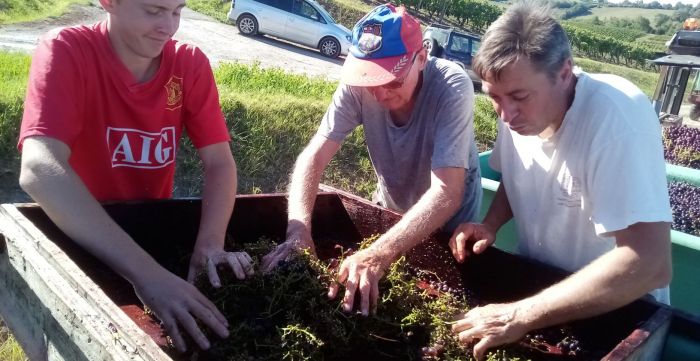
<p>We did our micro<span class="zalup"><span><span>-</span><glossary term="Harvest" title="521">harvest</glossary> </span></span>with a a reduced team of six to 10 people. No one broke too much of a sweat, we were averaging a single bucket per row...</p>
<p>Usually the <glossary term="Harvest" title="521">harvest</glossary> team boosts morale but this year, even with our neighbors, the energy was very low... It was a bit depressing...</p>
<p>What tiny amount of grapes we had to pick weren't at all homogenous but we still had to rush to <glossary term="Harvest" title="521">harvest</glossary> the <glossary term="Poulsard" title="822">Ploussard</glossary> because the <glossary term="Suzukii" title="1000">suzuki fly</glossary> was very present and ready to attack...</p>
<p>We started on September 22nd and were done in eight days!</p>
<p>My god, nature is really taking revenge on humans for abusing it...</p>
<p><img src="https://louisdressner.com/uploads/images/article//911/56/e8/56e89bf14f8225dfa4efc03848051599.jpg" /><img src="https://louisdressner.com/uploads/images/article//911/a2/55/a25532c72a03d35476151992752e0cc9.jpg" /><img src="https://louisdressner.com/uploads/images/article//911/96/bc/96bcdd082d38f532fa8b52d69519f080.jpg" /><img src="https://louisdressner.com/uploads/images/article//911/af/76/af768f7f9e097fb05673b69b88260a53.jpg" /><img src="https://louisdressner.com/uploads/images/article//911/95/38/9538a96786cded8b13ba5069e9e1f36c.jpg" /><img src="https://louisdressner.com/uploads/images/article//911/30/7e/307e66ab0d7225e02aa1f71be77284b5.jpg" /><img src="https://louisdressner.com/uploads/images/article//911/49/f1/49f16611081dad6cb231cd765e2db10e.jpg" /></p>
Article
harvest report
19.01.2020
2020 Harvest Report from Anne Houillon
<p><u><strong>November 4th, 2020:</strong></u></p>
<p>2020 was a beautiful year.</p>
<p>We had a very nice spring which permitted us to work well in the vines. You could even say our confinement due to COVID had a "positive" effect: without the ability to do anything else, we were able to dedicate ourselves fully to do remarkable work on the land. </p>
<p>It was a very dry summer, the prairies were all dried out from the sun. But the grapes held tough, did not suffer much illness and were picked in excellent condition. We had to <glossary term="Sorting" title="1380">sort</glossary> on the <glossary term="Poulsard" title="822">Ploussard</glossary> to take off the dried out berries due to the heat, but otherwise we had good <span class="zalup"><span><glossary term="Maturation" title="639">maturities</glossary><span>.</span></span></span> Quantities were great on the whites. </p>
<p>Overall, the <glossary term="Yield" title="1129">yields</glossary> are a little lower than they should have been due to the heat, but what we got was incredble <span class="zalup"><span><glossary term="Concentration" title="324">concentration</glossary><span>.</span></span></span> We are happy with this year!!!</p>
<p><img src="https://louisdressner.com/uploads/images/article//860/65/6e/656e3df89439262c95c0c883a1ffce87.jpg" /><img src="https://louisdressner.com/uploads/images/article//860/06/dc/06dc846e960fa509ca4829dc47cf78c0.jpg" /><img src="https://louisdressner.com/uploads/images/article//860/4c/a5/4ca5eac21a898d25d1e87321b8c677d6.jpg" /><img src="https://louisdressner.com/uploads/images/article//860/e4/dc/e4dc568abb9b1b88ea2dac37401d5dfe.jpg" /><img src="https://louisdressner.com/uploads/images/article//860/9a/8d/9a8de929b4da347e23699c079b19f21a.jpg" /></p>
Article
harvest report
07.10.2019
2019 Harvest Report from Anne Houillon
<p><u><strong>October 19th, 2019:</strong></u></p>
<p>The 2019 <glossary term="Harvest" title="521">harvest</glossary> was a quick one!!! A big <glossary term="Frost" title="1135">frost</glossary> on May 6th really wiped us out. The heatwave over the summer didn't help and reduced <glossary term="Yield" title="1129">yields</glossary> further. </p>
<p>So we had very little <glossary term="Chardonnay" title="271">Chardonnay</glossary> and <span class="zalup"><span> <glossary term="Poulsard" title="822">Ploussard</glossary><span>,</span></span></span> though the <glossary term="Chardonnay" title="271">Chardonnay</glossary> hung in there a bit more. The grapes left were beautiful and the juices are tasting good. <glossary term="Fermentation" title="441">Fermentations</glossary> are going well! </p>
<p><img src="http://louisdressner.com/uploads/images/article/2020_Oct_06//d8/ac/d8ac55338351cd58fb3086897903467d.jpg" /><img src="http://louisdressner.com/uploads/images/article/2020_Oct_06//98/35/9835b95543fc781cd2605cc9b49c62a9.jpg" /><img src="http://louisdressner.com/uploads/images/article/2020_Oct_06//5d/3b/5d3b85a0b45c366db29c3fc3cfc1ceef.jpg" /><img src="http://louisdressner.com/uploads/images/article/2020_Oct_06//22/ae/22ae75955048b0ef8f0efcf5ef9e21b9.jpg" /></p>
Article
harvest report
18.10.2018
2018 Harvest Report from Anne Houillon
<p>We are happy with this <span class="zalup"><span><glossary title="521">harvest</glossary><span>.</span></span></span> We can say "FINALLY"!!!<br />
<br />
There is real volume and of the utmost quality! We had to do a little sorting on the <glossary title="822">Ploussard</glossary> because we were on the extremities of a corridor of <span class="zalup"><span><glossary title="1136">hail</glossary><span>.</span></span></span> But our team, as always, was top-notch and knew how to do this work!!!<br />
<br />
This <glossary title="521">harvest</glossary> took place with joy, sun and an international team ready to share their common bond of sharing good times.</p>
<p><img src="http://louisdressner.com/uploads/images/article/2019_Sep_18//f0/70/f0705994848509d0d91a8c87e702f828.jpg" /></p>
<p><img src="http://louisdressner.com/uploads/images/article/2019_Sep_18//c4/49/c449f346ced8c2ed95de78a38afbc9ba.jpg" /></p>
<p><img src="http://louisdressner.com/uploads/images/article/2019_Sep_18//59/4c/594cf9965e002dd8abb5d6e76bfb1712.jpg" /></p>
<p><img src="http://louisdressner.com/uploads/images/article/2019_Sep_18//17/a9/17a924c60668edcd2787d0f62eb5f345.jpg" /></p>
Article
harvest report
06.09.2017
2017 Harvest Report from Anne Houillon
<p>We are done with our <span class="zalup"><span><glossary title="521">harvest</glossary><span>.</span></span></span></p>
<p>80% of our land <glossary term="Frost" title="1135">frosted</glossary> on April 19th, so we were mentally prepared for another tiny year. Well, it's even LESS than we'd imagined. We started picking <glossary title="822">Ploussard</glossary> on September 4th and were completely done by the 7th. A mere three days to pick 5.5 <glossary title="523">hectares</glossary>; we'd get to the end of each row with a single bucket filled...<br />
<br />
What we did pick was very good, and as always we were surrounded by a great team. The <glossary title="441">fermentations</glossary> are off to a nice start, and the juices are tasting good. Now we will guard these like a new born babe!</p>
<p><img src="http://louisdressner.com/uploads/images/article/2019_Sep_18//83/6f/836f4792ea816087339faa630a9203d8.jpg" /></p>
<p><img src="http://louisdressner.com/uploads/images/article/2019_Sep_18//10/82/108204cf6b61cad9db4c5642e6ea315c.jpg" /></p>
<p><img src="http://louisdressner.com/uploads/images/article/2019_Sep_18//a4/fb/a4fb6a674ac104065db76b71e9ed1938.jpg" /></p>
<p><img src="http://louisdressner.com/uploads/images/article/2019_Sep_18//69/34/6934f60cd6dcca19a3562ddfcd63b024.jpg" /></p>
<p><img src="http://louisdressner.com/uploads/images/article/2019_Sep_18//35/f8/35f8087fa0371015d4d8d18291b070e2.jpg" /></p>
<p><img src="http://louisdressner.com/uploads/images/article/2019_Sep_18//6f/e4/6fe439dc16ebe4be8d92c0cc4d7f8fd5.jpg" /></p>
<p><img src="http://louisdressner.com/uploads/images/article/2019_Sep_18//35/f8/35f8087fa0371015d4d8d18291b070e2.jpg" /></p>
<p><img src="http://louisdressner.com/uploads/images/article/2019_Sep_18//3c/a4/3ca4847789c1b4ef7cf571128c6362b7.jpg" /></p>
<p><img src="http://louisdressner.com/uploads/images/article/2019_Sep_18//90/02/9002fcee1d2ffec1c27865f37bfafbcf.jpg" /></p>
<p><img src="http://louisdressner.com/uploads/images/article/2019_Sep_18//2b/17/2b17b69644cfb5028e71d0367f1174d9.jpg" /></p>
<p><img src="http://louisdressner.com/uploads/images/article/2019_Sep_18//3e/ed/3eedf41c92fcbc2c99e94e7f64001b2b.jpg" /></p>
<p><img src="http://louisdressner.com/uploads/images/article/2019_Sep_18//74/93/7493ddd718374fdf1f9d3ff9c9679683.jpg" /></p>
<p><img src="http://louisdressner.com/uploads/images/article/2019_Sep_18//45/19/45190b9269e7384d495639d82b3e967c.jpg" /></p>
<p><img src="http://louisdressner.com/uploads/images/article/2019_Sep_18//44/a8/44a80293fd5c77407f6e78088de7e28d.jpg" /></p>
<p><img src="http://louisdressner.com/uploads/images/article/2019_Sep_18//74/50/745095020f66d1403424489f4d9fee6a.jpg" /></p>
<p> </p>
<p> </p>
Article
harvest report
16.09.2015
2015 Harvest Report from Anne Houillon
<p>On this beautiful year, we start picking on Monday, September 7th to avoid bad weather and the <glossary title="1000">suzukii</glossary> bug!!! Beautiful <glossary title="521">harvesting</glossary> conditions, everyone was in shorts and tank-tops.<br />
<br />
For the <span class="zalup"><span><glossary title="822">Ploussard</glossary><span>,</span></span></span> we had to <glossary title="1380">sort</glossary> on a few <glossary title="760">parcels</glossary> because of dried out grapes, but overall the rest was very high quality. And for volume, we're finally back to a normal <glossary title="521">harvest</glossary> of red with 35 <span class="zalup"><span><glossary title="528">hl/ha</glossary><span>.</span></span></span> Which makes us happy!<br />
<br />
We followed up with the <span class="zalup"><span><glossary title="271">Chardonnay</glossary><span>.</span></span></span> Same deal: good quantity, good quality, beautiful weather. However, and we already knew this was coming, there wasn't much <glossary title="922">Savagnin</glossary> to pick because most of it got completely burned from our very hot, dry summer.<br />
<br />
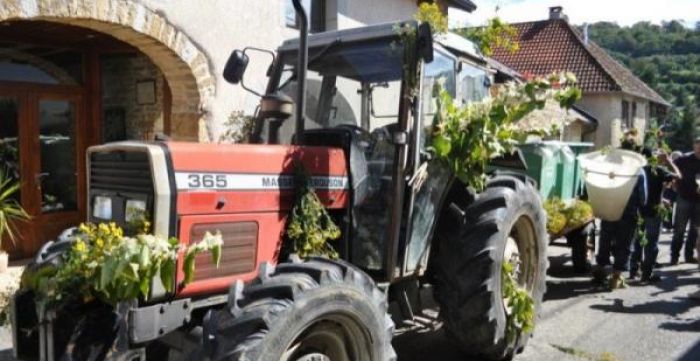
As always, our <glossary title="521">harvest</glossary> team was loyal in friendship and sympathy, providing us with countless hours of laughter and happiness! We finished on Wednesday, September 16th, going through the village making a ruckus, our tractor fully decorated (see first picture)!!! That night, we threw a big party, the <em>Tue Chat</em>, using Pierre's bread oven. Delicious savory tarts for everyone, and a few bottles to not get dehydrated!!!</p>
<p><img src="http://louisdressner.com/uploads/images/article/2019_Sep_20//15/22/15229836ec1990c235510b9736cc4f65.jpg" /></p>
<p><img src="http://louisdressner.com/uploads/images/article/2019_Sep_20//8e/fe/8efe32b3e2461a8fa2ce0adfe3fb6aea.jpg" /></p>
<p><img src="http://louisdressner.com/uploads/images/article/2019_Sep_20//ca/96/ca96f562fda6841acc73d57032c4dab4.jpg" /></p>
<p><img src="http://louisdressner.com/uploads/images/article/2019_Sep_20//0c/b5/0cb5aa40b4a7aa181f2a25a2e493e58e.jpg" /></p>
<p><img src="http://louisdressner.com/uploads/images/article/2019_Sep_20//6b/f2/6bf2d4dc2c69c5cbb4881ef10e2e939b.jpg" /></p>
<p><img src="http://louisdressner.com/uploads/images/article/2019_Sep_20//15/ef/15ef01984cb261cf8293952d4d59432e.jpg" /></p>
Article
harvest report
12.09.2013
2013 Harvest Report from Anne Houillon
<p>2013 was marked by six months of rain, forcing us to keep the heat on in the house until June. Even with a return to nice weather in July and August, we faced a lot of <glossary title="1137">mildew</glossary> pressure with a challenging <span class="zalup"><span><glossary title="1179">flowering</glossary><span>,</span></span></span> especially for the <glossary title="822">Ploussard</glossary> (the <glossary title="922">Savagnin</glossary> was fine). The <glossary title="271">Chardonnays</glossary> are very small, with little juice. A very hard year with tiny <span class="zalup"><span><glossary title="1129">yields</glossary><span>.</span></span></span><br />
<br />
We started <glossary title="521">harvesting</glossary> on October 7th with the <span class="zalup"><span><glossary title="822">Ploussard</glossary><span>,</span></span></span> followed by the <glossary title="271">Chardonnay</glossary> and finishing with the <span class="zalup"><span><glossary title="922">Savagnin</glossary><span>.</span></span></span> We finished on October 12th and 11:30 am. A very quick <glossary title="521">harvest</glossary> with very few grapes.<br />
<br />
However, I must highlight the importance of our harvest team, who were a pure joy. They were invested in their work, especially for the quality of the sorting. They actively participate in each <glossary title="1109">vintage</glossary> through their good mood and sympathy. I thank all of them!<br />
<br />
The wine is <glossary title="441">fermenting</glossary> and tasting good.</p>
<p><img src="http://louisdressner.com/uploads/images/article/2019_Sep_20//43/7d/437d189eed867cee9f5f07fd0a2974d6.jpg" /></p>
<p><img src="http://louisdressner.com/uploads/images/article/2019_Sep_20//4f/6c/4f6c39d8c06291d8c5b09f70ea603bb3.jpg" /></p>
<p><img src="http://louisdressner.com/uploads/images/article/2019_Sep_20//6a/a6/6aa6d24a75bfd4382ae7de6506035784.jpg" /></p>
<p><img src="http://louisdressner.com/uploads/images/article/2019_Sep_20//b0/f6/b0f6863f8c6a389b0af8951d9ac6dd3b.jpg" /></p>
<p><img src="http://louisdressner.com/uploads/images/article/2019_Sep_20//14/9c/149ca851cd167b1dbca56933cf83067f.jpg" /></p>
<p><img src="http://louisdressner.com/uploads/images/article/2019_Sep_20//2b/3b/2b3b6067df31c6d57d097652c05470d8.jpg" /></p>
<p><img src="http://louisdressner.com/uploads/images/article/2019_Sep_20//68/88/688829a1284ea52243eda829f9e66000.jpg" /></p>
<p><img src="http://louisdressner.com/uploads/images/article/2019_Sep_20//46/74/4674ec8e1be8175f0e49e0ec18a05fd8.jpg" /></p>
<p><img src="http://louisdressner.com/uploads/images/article/2019_Sep_20//90/73/9073b7cf80e1f38cbc1e444858bd4bb4.jpg" /></p>
<p><img src="http://louisdressner.com/uploads/images/article/2019_Sep_20//c6/c9/c6c9748802a2cd4464e0e715f189a7df.jpg" /></p>
<p><img src="http://louisdressner.com/uploads/images/article/2019_Sep_20//e5/98/e59899dd258e694a32947dfd1253eb1e.jpg" /></p>
<p><img src="http://louisdressner.com/uploads/images/article/2019_Sep_20//b7/33/b733b643a56385153b5a31f3008014a0.jpg" /></p>
<p><img src="http://louisdressner.com/uploads/images/article/2019_Sep_20//0a/9d/0a9db5928ca7d9466ac4af02b3c76792.jpg" /></p>
<p><img src="http://louisdressner.com/uploads/images/article/2019_Sep_20//9a/c8/9ac8e3b03f435dd522b4164198d15d2a.jpg" /></p>
<p><img src="http://louisdressner.com/uploads/images/article/2019_Sep_20//fb/2d/fb2db22911a703a0eb209bdc6f1d2bff.jpg" /></p>
<p><img src="http://louisdressner.com/uploads/images/article/2019_Sep_20//f0/fd/f0fd1c5b78e32c89fbb3549021255ca0.jpg" /></p>
<p><img src="http://louisdressner.com/uploads/images/article/2019_Sep_20//f6/78/f67802a46d66d706f98d40bb65051904.jpg" /></p>
<p><img src="http://louisdressner.com/uploads/images/article/2019_Sep_20//27/ee/27eeafb897494411f1c26276b5bc9372.jpg" /></p>
<p><img src="http://louisdressner.com/uploads/images/article/2019_Sep_20//01/f5/01f5cce03615df4916a810ff3fd76038.jpg" /></p>
<p><img src="http://louisdressner.com/uploads/images/article/2019_Sep_20//af/b5/afb545294d0607097d5604b081a8dae5.jpg" /></p>
<p><img src="http://louisdressner.com/uploads/images/article/2019_Sep_20//af/ac/afacc87fc23ee062415001ecdee8c1b9.jpg" /></p>
<p><img src="http://louisdressner.com/uploads/images/article/2019_Sep_20//45/52/4552f02359e3e25faf0852d77a19b40f.jpg" /></p>
<p> </p>
Article
harvest report
10.10.2012
2012 Harvest Report from Anne Houillon
<p><br />
We started our <glossary title="521">harvest</glossary> on October 1st and finished the 6th at noon. We were very lucky to <glossary title="521">harvest</glossary> in <glossary title="1140">tank</glossary> tops and shorts, since it was the only week of good weather in October. We had a great team that did a wonderful job. 2012 is a year of very low <span class="zalup"><span><glossary title="1129">yields</glossary><span>,</span></span></span> but the quality of the grapes is excellent. The <glossary title="441">fermentations</glossary> are going smoothly, and we are following them closely.<br />
<br />
Here are some pictures.<br />
<img src="http://louisdressner.com/uploads/images/article/2019_Sep_23//02/73/02733d75ee773dae170023298917f61b.jpg" /></p>
<p><img src="http://louisdressner.com/uploads/images/article/2019_Sep_23//76/f4/76f41a004967ba0f0f5fa46efca82136.jpg" /></p>
<p><img src="http://louisdressner.com/uploads/images/article/2019_Sep_23//ae/26/ae26d84b49c8c96c90476c7a1c3b6401.jpg" /></p>
<p><img src="http://louisdressner.com/uploads/images/article/2019_Sep_23//d8/3a/d83a69653492535f7b263340be4ceaf9.jpg" /></p>
<p><img src="http://louisdressner.com/uploads/images/article/2019_Sep_23//32/23/3223ec9ecf7bedd0e645e323cb6a1e63.jpg" /></p>
<p><img src="http://louisdressner.com/uploads/images/article/2019_Sep_23//74/fc/74fc50167802583d1c5a9c31d9fd19d5.jpg" /></p>
<p><img src="http://louisdressner.com/uploads/images/article/2019_Sep_23//7d/e3/7de3fee744ad0f0f8bbf16400ade196c.jpg" /></p>
<p><img src="http://louisdressner.com/uploads/images/article/2019_Sep_23//a7/eb/a7eb25d648207af1ecd620c673bd5a98.jpg" /></p>
<p><img src="http://louisdressner.com/uploads/images/article/2019_Sep_23//d5/45/d545d6555b5578ea837c753955a8172d.jpg" /></p>
<p><img src="http://louisdressner.com/uploads/images/article/2019_Sep_23//b8/3f/b83ff15c4e1c4e1dd771797f01c76b2a.jpg" /></p>
<p><img src="http://louisdressner.com/uploads/images/article/2019_Sep_23//2f/80/2f80d51e9afcc40eb4604fb4de1b06da.jpg" /></p>
<p><img src="http://louisdressner.com/uploads/images/article/2019_Sep_23//a2/b5/a2b569c91fc8d7ade87005be615b26c0.jpg" /></p>
<p><img src="http://louisdressner.com/uploads/images/article/2019_Sep_23//36/c0/36c0fb65f1454e9b365f24110eda1b65.jpg" /></p>
<p><img src="http://louisdressner.com/uploads/images/article/2019_Sep_23//b5/47/b5475f766ab7859a587588c277c324a6.jpg" /></p>
<p><img src="http://louisdressner.com/uploads/images/article/2019_Sep_23//8a/2f/8a2f135397c97dac6a3213a5ecc9ca1c.jpg" /></p>
<p><img src="http://louisdressner.com/uploads/images/article/2019_Sep_23//ca/2d/ca2d1dc489535fbcb4752c959d95e66a.jpg" /></p>
<p><img src="http://louisdressner.com/uploads/images/article/2019_Sep_23//76/5a/765ae3c484cf6529cf867b51a49e4eef.jpg" /></p>
<p><img src="http://louisdressner.com/uploads/images/article/2019_Sep_23//7d/2b/7d2b28b2bbcf1e45a4a768c8a061b257.jpg" /></p>
<p><img src="http://louisdressner.com/uploads/images/article/2019_Sep_23//6e/b3/6eb3f68c4fdef511fd9a991e667d809c.jpg" /></p>
<p><img src="http://louisdressner.com/uploads/images/article/2019_Sep_23//d1/65/d1657052c74a1e66cf8f4dcebd55dbf7.jpg" /></p>
<p><img src="http://louisdressner.com/uploads/images/article/2019_Sep_23//c3/5e/c35e6c6f29c52dc468bfc3088bf4e339.jpg" /></p>
<p><img src="http://louisdressner.com/uploads/images/article/2019_Sep_23//aa/6b/aa6bf640720288a53b9caa8fa2c8db9c.jpg" /></p>
<p><img src="http://louisdressner.com/uploads/images/article/2019_Sep_23//b4/21/b4219c022079b4bfec2c169bd1552731.jpg" /></p>
<p><img src="http://louisdressner.com/uploads/images/article/2019_Sep_23//e9/a8/e9a837419abbe1e6bc5c7a858a2474e7.jpg" /></p>
<p><img src="http://louisdressner.com/uploads/images/article/2019_Sep_23//e3/1a/e31ad7f57ba173561dbbdefee1131a8f.jpg" /></p>
<p><img src="http://louisdressner.com/uploads/images/article/2019_Sep_23//7f/57/7f57c8c4d9cc908aa506614577e38999.jpg" /></p>
<p><img src="http://louisdressner.com/uploads/images/article/2019_Sep_23//92/b7/92b7e5c14a5dfc94fc72802ed227a5b2.jpg" /></p>
<p><img src="http://louisdressner.com/uploads/images/article/2019_Sep_23//28/d9/28d97deee706da15f71689a6a8565ac1.jpg" /></p>
<p><img src="http://louisdressner.com/uploads/images/article/2019_Sep_23//78/3e/783e8e42b91fcd27c7aa5a4ba0ccbcc6.jpg" /></p>
<p><img src="http://louisdressner.com/uploads/images/article/2019_Sep_23//78/3e/783e8e42b91fcd27c7aa5a4ba0ccbcc6.jpg" /></p>
<p><img src="http://louisdressner.com/uploads/images/article/2019_Sep_23//24/a8/24a869db4a7d50959c576410e41623d7.jpg" /></p>
<p><img src="http://louisdressner.com/uploads/images/article/2019_Sep_23//ca/7c/ca7c637d09d36a6dac71f21db6c424e9.jpg" /><img src="http://louisdressner.com/uploads/images/article/2019_Sep_23//c8/2f/c82f6bb63722280220259ea2a138d02b.jpg" /><img src="http://louisdressner.com/uploads/images/article/2019_Sep_23//65/94/659458fea6a5088e7eec9446e06f63f6.jpg" /><img src="http://louisdressner.com/uploads/images/article/2019_Sep_23//ba/17/ba178f2cba7ec89088ecbeba805ac2c7.jpg" /><img src="http://louisdressner.com/uploads/images/article/2019_Sep_23//31/3f/313fa1b1aacffbd799df32d63f119465.jpg" /><img src="http://louisdressner.com/uploads/images/article/2019_Sep_23//b2/57/b257ea0ae04925184407182eae6912ab.jpg" /><img src="http://louisdressner.com/uploads/images/article/2019_Sep_23//d7/5c/d75ca51aab42d4fb0e90858b089e9417.jpg" /><img src="http://louisdressner.com/uploads/images/article/2019_Sep_23//04/c0/04c0586a9532893cb8a9606f45baa36c.jpg" /><img src="http://louisdressner.com/uploads/images/article/2019_Sep_23//83/68/8368b8b1b7ee58bb840fdb1999d272e9.jpg" /></p>
Article
harvest report
21.10.2010
2010 Harvest Report from Anne Houillon
<p>Our <glossary title="521">harvest</glossary> went very well, under the sun, except for one morning of rain when we did not pick.<br />
<br />
The results are good for our white varieties, alas not so great for <span class="zalup"><span><glossary title="822">Poulsard</glossary><span>.</span></span></span> The August rains did a lot of damage on these grapes, they were not fully ripe and there was <span class="zalup"><span><glossary title="182">rot</glossary><span>.</span></span></span> So we had to <glossary title="1380">sort</glossary> very severely and the <glossary title="1129">yields</glossary> are very low.</p>
Article
harvest report
16.10.2007
2007 Harvest Report from Anne Houillon
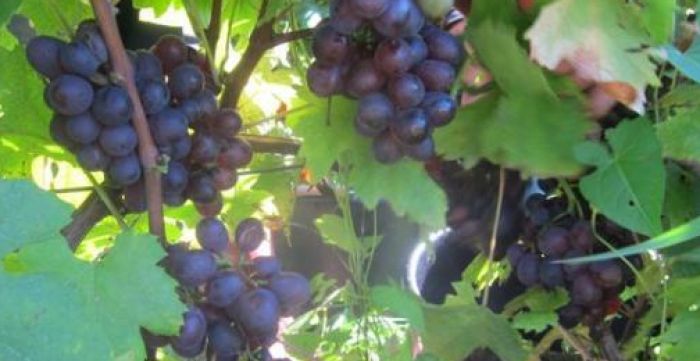
<p>Our <glossary title="521">harvest</glossary> went extremely well. September was dry and sunny, and it helped a lot to ripen the grapes. Everything is going well: the crop was high quality and the <glossary title="441">fermentations</glossary> are going without any trouble. There is a good <glossary title="1109">vintage</glossary> in the making.</p>
Article