producer profile
27.06.2019
Radikon Producer Profile
<p>Stanko Radikon was a maverick in a land of mavericks. The town of <span class="zalup"><span> <glossary title="749">Oslavia</glossary><span>,</span></span></span> on a relatively tiny stretch of hills north of the border town of <glossary title="498">Gorizia</glossary> in the <glossary title="551">Isonzo</glossary> zone of <span class="zalup"><span><glossary title="470">Friuli</glossary><span>,</span></span></span> is home to a number of talented and individualistic wine makers. From Radikon’s home, you can carry a plate of freshly cooked polenta to Edi Kante and Jasko Gravner, two other world-renowned winemakers, and still eat it piping hot.</p>
<p>Joe Dressner and I showed up on a bright, chilly morning in April at 7AM. It was hard to recognize Stanko in his <em><glossary title="1089">vignaiolo</glossary></em> duds. We had recently seen him wearing a natty suit and white button-down shirt at a counter<span class="zalup"><span><span>-</span><glossary title="1105">Vinitaly</glossary> </span></span>winetasting a few days before. Stanko was standing on the road watching for us because the sign for the winery had been removed years ago. Anonymity was the only way to get some work done and avoid waves of wine tourists. <br />
<br />
Joe and I had an 11 AM flight from the nearby <glossary title="">Trieste</glossary> airport and it had been a long week, so we were hurried and tired, but excited to be at the winery. We had had a few memorable encounters with Radikon’s wines stateside. They were interesting, complex examples of what had come to be known, in reference to the ancestral origins of the winemaker’s working in this style and their geographic proximity to the neighboring country, as the “Slovenian” style of <glossary title="470">Friuli</glossary> wines – namely <span class="zalup"><span><glossary title="520">hand-harvesting</glossary><span>,</span></span></span> extended skin <span class="zalup"><span><glossary title="610">maceration</glossary><span>,</span></span></span> large, <glossary title="739">older</glossary> <glossary title="142">barrel</glossary> <glossary title="441">fermentations</glossary> without <span class="zalup"><span><glossary title="1018">temperature control</glossary><span>,</span></span></span> no added <glossary title="1128">yeasts</glossary> or <span class="zalup"><span><glossary title="423">enzymes</glossary><span>,</span></span></span> and little or no use of <span class="zalup"><span><glossary title="993">sulfur</glossary><span>.</span></span></span></p>
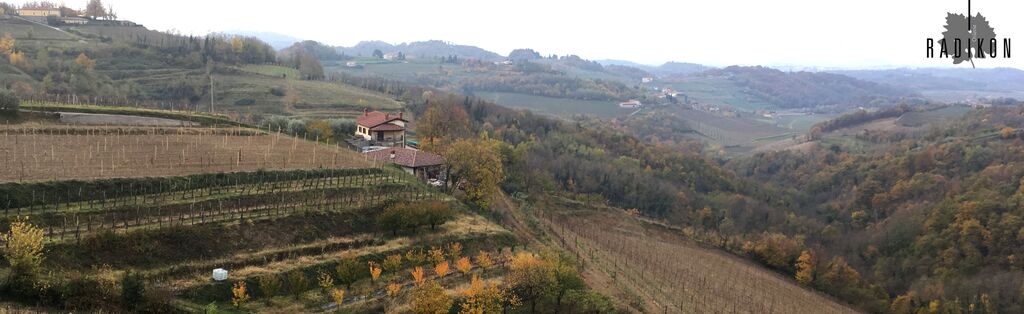
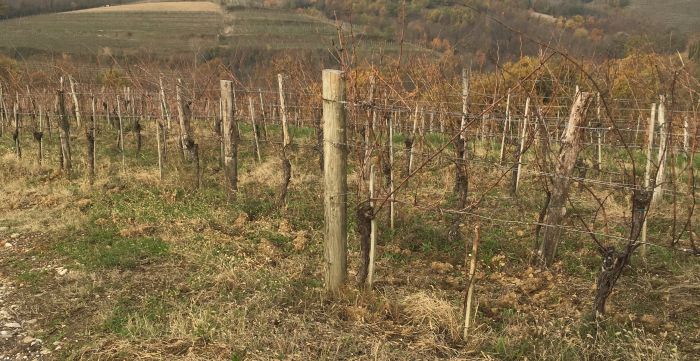
<p>The steep rolling hills surrounding the Radikon’s home/winery are testament to<strong> <glossary title="470">Friuli</glossary>'s</strong> <glossary title="1103">viticultural</glossary> legacy. It was a particularly beautiful day to see the contiguous, near 11 <glossary title="523">hectares</glossary> of Radikon’s narrowly planted vines, still without <span class="zalup"><span><glossary title="1184">foliage</glossary><span>,</span></span></span> laid out on the steep slope of marbled <glossary title="596">limestone</glossary> <glossary title="301">clay</glossary> in front of the <glossary title="1022">terrace</glossary> between his home and winery.<br />
<br />
The vineyards were originally planted by Stanko’s grandfather Franz Mikulus with a local favorite, the <glossary title="857">Ribolla Gialla </glossary>grape. In 1948, Stanko’s parents, who had inherited the property from his mother’s father, planted <span class="zalup"><span><glossary title="650">Merlot</glossary><span>,</span></span></span> <glossary title="929">(Tocai) Friulano</glossary> and <span class="zalup"><span><glossary title="803">Pinot Grigio</glossary><span>.</span></span></span> Today his wife Suzana and their children Saša and Ivana maintain their family’s land.<br />
<br />
We asked Stanko how he came to make the wines we had tasted earlier that week.-- these golden wines, rich with complex fruit aromas, notable for their length in <glossary title="756">palate</glossary> and ability to age. Stanko simply said, “It’s how my grandfather made wine in the 30’s”, and shrugged.<br />
<br />
That made sense to us. Radikon explains on their website: </p>
<p><em>“The winery’s philosophy is to always make a </em><glossary title="708"><em>natural</em></glossary><em>, </em><glossary title="746"><em>organic</em></glossary><em> wine with the least human </em><glossary title="545"><em>intervention</em></glossary><em> possible and with the maximum respect for the soils and nature. <br />
<br />
In the vineyard, the vines are planted extremely tight (between 6. 500 to 10,000 plants per </em><glossary title="523"><em>hectare</em></glossary><em>). We do not use any </em><glossary title="279"><em>chemicals</em></glossary><em> or synthetics and the </em><glossary title="328"><em>treatments</em></glossary><em> using absolutely innocuous, non-harmful products are minimized. Through careful </em><glossary title="834"><em>pruning</em></glossary><em> and selection at the time of </em><glossary title="521"><em>harvest</em></glossary><em>, the </em><glossary title="520"><em>hand harvested</em></glossary><em> </em><glossary title="1129"><em>yields</em></glossary><em> are kept well below 2.25 tons per acre.<br />
<br />
In the </em><glossary title="254"><em>cellar</em></glossary><em>, the grapes are </em><glossary title="378"><em>destemmed</em></glossary><em> and then </em><glossary title="610"><em>macerated</em></glossary><em> on the skins for 30 days more, with experimentation of 6/7 months for the whites, and 35 days for the reds. The </em><glossary title="827"><em>pressing</em></glossary><em> is done softly using a </em><glossary title="811"><em>pneumatic press</em></glossary><em>. All phases of the </em><glossary title="1104"><em>vinifications</em></glossary><em> are in </em><glossary title="962"><em>Slavonian oak</em></glossary><em> </em><glossary title="142"><em>barrels</em></glossary><em>, first in </em><glossary title="1126"><em>wood</em></glossary><em> </em><glossary title="1140"><em>vats</em></glossary><em> and then in large </em><glossary title="142"><em>barrels</em></glossary><em> in which the wines are aged for about three years before </em><glossary title="185"><em>bottling</em></glossary><em>. The </em><glossary title="1104"><em>vinifications</em></glossary><em> are done using only the </em><glossary title="538"><em>natural yeasts</em></glossary><em> present on the grapes. There is no </em><glossary title="993"><em>sulfur</em></glossary><em> added at </em><glossary title="1104"><em>vinification</em></glossary><em> or </em><glossary title="185"><em>bottling</em></glossary><em>.”</em></p>
<p>Radikon, while extreme, has never thought much of the use of <span class="zalup"><span><glossary title="103">anfora</glossary><span>,</span></span></span> or buried terra cotta jars, for <span class="zalup"><span><glossary title="1104">vinification</glossary><span>.</span></span></span> His idea of wine is an ideal taste of recent memory, not a renaissance of ancient winemaking arts. But not one to avoid controversy, Radikon, along with Kante, have initiated a new discourse on the ideal <glossary title="1160">vessel</glossary> for wine with the 2002 <glossary title="1109">vintage</glossary> releases. <br />
<br />
First, Stanko believes that the 750ml size does not really provide the right amount of wine for two people to share at dinner – an argument not easily rebutted. Therefore, he wanted to <glossary title="185">bottle</glossary> all of his wines in liters and half-liters so that two people could then have a half liter of white and a half liter of red. <br />
<br />
Following from this, in studies that he and Kante conducted with a <glossary title="336">cork</glossary> manufacturer, they have devised what they think is the proper size of <glossary title="336">cork</glossary> for these two bottle measures that gives the optimal surface-to-air permeability ratio for <glossary title="74">aging</glossary> their wines. It is a narrower, smaller <glossary title="">cork</glossary> than the classic model. In deference to this <span class="zalup"><span> <glossary title="336">cork</glossary><span>,</span></span></span> Stanko himself created a prototype bottle from silicon for the new liters and half-liters, and then had them manufactured at a local bottle factory. They are graceful, elegantly-necked bottles that were designed to fit in to most spaces where a 750ml bottle would.<br />
<br />
It took us another year and some debate to convince Stanko that he should appoint us his new importer for the United States, but we are very happy to include these very interesting and distinctive wines in our portfolio.</p>
<p><u><strong>2020 Update:</strong></u></p>
<p>Rather than completely rewrite Kevin's original text, we decided to leave it up and update you to the numerous evolutions that have occured at Radikon since it was written. </p>
<p>The most important is of course Stanko passing away in 2016. He was a force of nature, an influence and a great friend to countless people in our world. His legacy continues with the family helming the <glossary title="427">estate</glossary> and an annual celebration of his life called Zivijo occuring each December (now set to happen every other year). Kevin has made a point not to miss it.</p>
<p>Absolutely nothing has changed in the winery's philosophy, but this comes at no surprise since Saša has been helping out since he was a kid (he fondly remembers driving a tractor without a driver's license through the Slovenian border and being terribly nervous) and a partner since 2006. Suzana is of course still integral to the entire operation, and her daughter Ivana joined the family business in 2017. Saša's wife Luisa is also part of the team along with three full time employees. </p>
<p>Recently the family was able to acquire more land and now works 17 <glossary title="523">hectares</glossary> of vines. This will principally see an increase in the S line (more on those later) and the breakdown of land in <glossary title="470">Friuli</glossary> is the following:</p>
<p>- <span class="zalup"><span><glossary title="803">Pinot Grigio</glossary><span>:</span></span></span> 3 <glossary title="523">hectares</glossary> of 30 years old vines*</p>
<p>- <span class="zalup"><span><glossary title="271">Chardonnay</glossary><span>:</span></span></span> 2.5 <glossary title="523">hectares</glossary> of 30 years old vines.*</p>
<p>- <span class="zalup"><span><glossary title="927">Sauvignon Blanc</glossary><span>:</span></span></span> 2 <glossary title="523">hectares</glossary> of 30 years old vines.*</p>
<p>- <span class="zalup"><span><glossary title="857">Ribolla Gialla</glossary><span>:</span></span></span> 2 <glossary title="523">hectares</glossary> of 30 years old vines.*</p>
<p>- <span class="zalup"><span><glossary title="1030">Tocai Friulano</glossary><span>:</span></span></span> 1.5 <glossary title="523">hectares</glossary> of 30 years old vines.*</p>
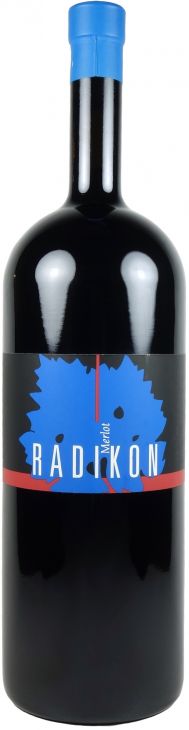
<p>- <span class="zalup"><span><glossary title="650">Merlot</glossary><span>:</span></span></span> 1.5 <glossary title="523">hectares</glossary> of 25 year old vines*</p>
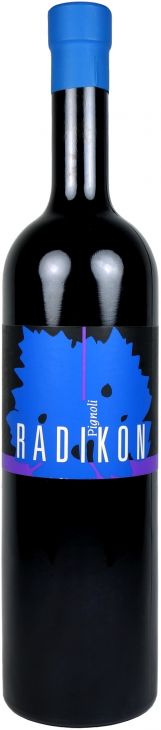
<p>- <span class="zalup"><span><glossary title="1244">Pignolo</glossary><span>:</span></span></span> about half an <glossary title="523">hectare</glossary> of 25 year old vines.*</p>
<p><strong>*The vine ages are an average, with many much older. </strong></p>
<p>The Radikon also farm four <glossary title="523">hectares</glossary> of land in Slovenia, which are planted with <span class="zalup"><span><glossary title="857">Ribolla</glossary><span>,</span></span></span> <span class="zalup"><span><glossary title="1244">Pignolo</glossary><span>,</span></span></span> <span class="zalup"><span><glossary title="1030">Tocai Friulano</glossary><span>,</span></span></span> <span class="zalup"><span><glossary title="650">Merlot</glossary><span>,</span></span></span> <glossary title="805">Pinot Nero</glossary> and <glossary title="803">Pinot Grigio</glossary> (about a half <glossary title="523">hectare</glossary> each, a little more of<strong> <glossary title="857">Ribolla</glossary></strong>).</p>
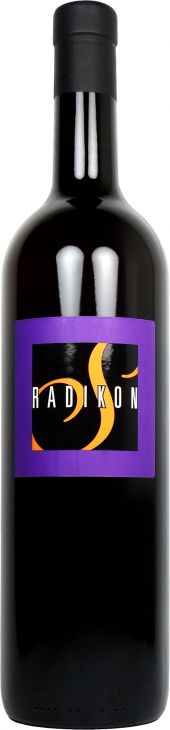
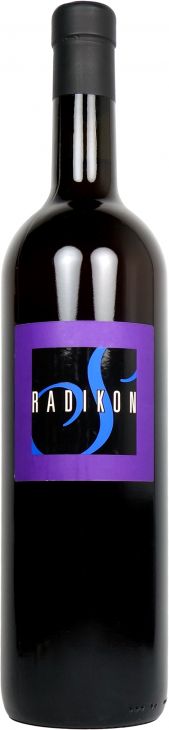
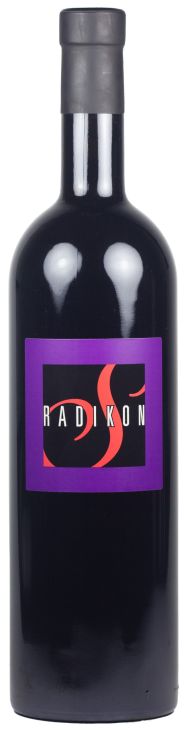
<p>Another major development at the <glossary title="427">estate</glossary> was the launch of the "S" or "Saša" wines. Launched in the early 2010's, the idea was for Saša to branch out a bit on his own. The wines see a noticeably shorter amount of <span class="zalup"><span><glossary title="610">maceration</glossary><span>,</span></span></span> 8 to 14 days versus three months. They <glossary title="441">ferment</glossary> in smaller vessels and <glossary title="74">age</glossary> only 18 months before <span class="zalup"><span><glossary title="185">bottling</glossary><span>.</span></span></span> Furthermore, they are <glossary title="185">bottled</glossary> in traditional 750ml bottles and see a small addition of <glossary title="993">sulfur</glossary> at <span class="zalup"><span><glossary title="185">bottling</glossary><span>.</span></span></span> Today these represent about 55% of the <glossary title="427">estate's</glossary> total production.</p>
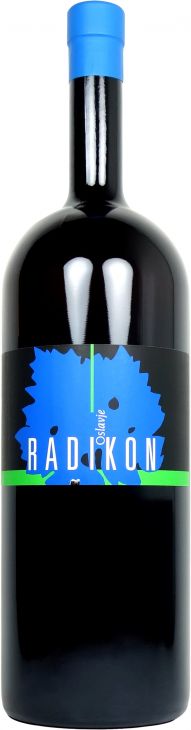
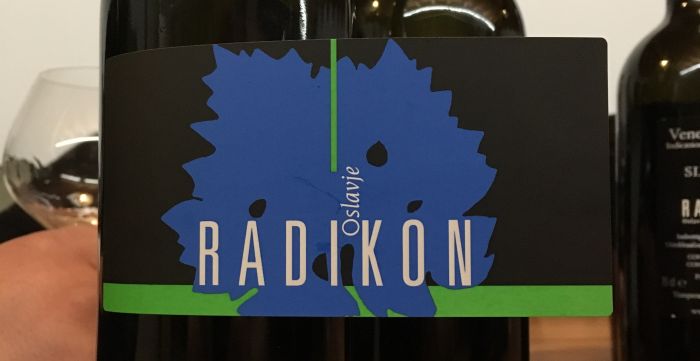
<p>Saša has also decided to omit the <glossary title="803">Pinot Grigio</glossary> from the traditional "Oslavje" <span class="zalup"><span><glossary title="168">blend</glossary><span>,</span></span></span> which is now 50/50 <glossary title="927">Sauvignon</glossary> and <span class="zalup"><span><glossary title="271">Chardonnay</glossary><span>.</span></span></span> The <glossary title="803">Pinot Grigio</glossary> now exclusively produces an" S" wine called "Sivi". This <glossary title="363">cuvée</glossary> started as of the 2016 <glossary title="1109">vintage</glossary>; it means "grey" in Slovenian, in reference to the grayish-pink color of the grape's skin. A red "S" wine called "RS" has also joined the lineup and is a<strong> <glossary title="168">blend</glossary></strong> of <glossary title="650">Merlot</glossary> and <span class="zalup"><span><glossary title="1244">Pignolo</glossary><span>.</span></span></span> </p>
Article
interview
27.06.2019
An Interview with Saša Radikon from 2011
<p><strong>This interview with Saša Radikon took place in Los Angeles in March 2011.</strong></p>
<p><strong>Tell us about Radikon as an estate.</strong><br />
<br />
We are in <span class="zalup"><span><glossary title="470">Friuli</glossary><span>,</span></span></span> which is in the northeast of Italy. Our village is called <span class="zalup"><span><glossary title="749">Oslavia</glossary><span>.</span></span></span> and we live 300m away from the Slovenian border. My grandfather planted our first vineyards after the World War 2 and my father started <glossary title="185">bottling</glossary> wine in 1979.<br />
<br />
<strong>How did you personally get involved working at the winery?</strong><br />
<br />
I studied <glossary title="1103">viticulture</glossary> in high school and <glossary title="422">oenology</glossary> in university. But I grew up around vines and in the <glossary title="254">cellar</glossary> and that's where I really learned how to work. When you study something you learn how things happen, and this inspired me to confirm if what I'd learned was true when applied to my vineyards. And I appreciate having that knowledge, but for me wine isn't just chemical compounds: it's experience, it's our hearts, our hands. <br />
<br />
<strong>Are you certified organic or biodynamic?</strong><br />
<br />
We don't have a <glossary title="260">certification</glossary> because we don't feel that it proves anything and that nowadays it's too easy to get one. I work this way because I want to, not because some people want to drink <glossary title="746">organic</glossary> or <glossary title="160">biodynamic</glossary> wine. <br />
<br />
We only applied for <glossary title="260">organic certification</glossary> once. My father showed the inspectors the vineyards and they told him they looked fine. He then asked them to follow him to the <glossary title="254">cellar</glossary> they told him that that wouldn't be necessary, that the <glossary title="254">cellar</glossary> had nothing to do with <span class="zalup"><span><glossary title="260">certification</glossary><span>.</span></span></span> Stanko insisted that the bulk of the production was in the <glossary title="254">cellar</glossary> and they should inspect his work there, but they still refused. He then asked them how often they'd pass by for controls and they replied that once you've gotten your <span class="zalup"><span><glossary title="260">certification</glossary><span>,</span></span></span> they didn't really need to check up on you anymore. <br />
<br />
We want to work this way. <glossary title="279">Chemicals</glossary> are not good for us. We know what we can and cannot do and a <glossary title="260">certification</glossary> isn't going to help us make these decisions. The only thing you're tasting in our wines is grapes; it's that simple.<br />
<br />
<strong>What's the work like in the vines?</strong><br />
<br />
Our biggest work is in the vines. If you want to make wines with no <glossary title="993">sulfur</glossary> and long <glossary title="610">skin contact</glossary> you need excellent grapes. We don't use <glossary title="526">herbicides</glossary> or <span class="zalup"><span><glossary title="1142">pesticides</glossary><span>.</span></span></span> Everything is done manually. We've cut the vines so that we only get four <glossary title="1138">bunches</glossary> per vine, and these produce less than a kilo of fruit each year, so the <glossary title="1129">yields</glossary> are very low.<br />
<br />
<strong>What about the cellar?</strong><br />
<br />
In 1995 we started making white wines with lengthy periods of <span class="zalup"><span><glossary title="610">skin contact</glossary><span>.</span></span></span> This was a technique that my grandfather used because he wanted to preserve his wine for a whole year. Before my father started selling our wines, my grandfather would make wine for the whole family from our vines, but this was for personal consumption only and it had to last an entire year until the next <span class="zalup"><span><glossary title="1109">vintage</glossary><span>.</span></span></span><br />
<br />
In 1995 it was a week of <span class="zalup"><span><glossary title="610">skin contact</glossary><span>,</span></span></span> and it was also around this time that we realized we could make wine without <span class="zalup"><span><glossary title="993">sulfur</glossary><span>.</span></span></span> Our first non <glossary title="993">sulfur</glossary> <glossary title="185">bottling</glossary> was in 1999. By 2002 we'd decided that all of our wines would be <glossary title="185">bottled</glossary> <span class="zalup"><span><glossary title="993">unsulfured</glossary><span>.</span></span></span> This is rarely the case with white wine, and the only reason we are able to successfully make these wines <glossary title="993">sulfur</glossary> free is because of the contact with the skins. <br />
<br />
Over the years we've experimented with the length of the <span class="zalup"><span><glossary title="610">skin contact</glossary><span>:</span></span></span> three months, six months, even a year. At this point we've settled at three months. In the first month the <glossary title="87">alcoholic fermentation</glossary> and <glossary title="622">malolactic fermentation</glossary> occurs in <glossary title="962">Slavonian oak</glossary> <span class="zalup"><span><glossary title="1140">vats</glossary><span>.</span></span></span> They have a lid that we can open at our disposal because during <glossary title="441">fermentation</glossary> and we crush the <glossary title="234">hat</glossary> four times a day. They are rather large and can hold up to 3000 liters. <br />
<br />
We then transfer the juice into 3000 liter <glossary title="142">barrels</glossary> and leave the skins in there for another two months. The wines then stay in <glossary title="142">barrel</glossary> for 3 1/2 years. We only <glossary title="843">rack</glossary> twice a year, and we don't <span class="zalup"><span><glossary title="447">filter</glossary><span>.</span></span></span> We then <glossary title="185">bottle</glossary> and hold the wine a year before releasing it. <br />
<br />
We don't use <glossary title="1126">wood</glossary> for <glossary title="1010">tannic</glossary> <span class="zalup"><span><glossary title="990">structure</glossary><span>:</span></span></span> we've already gotten that from the <span class="zalup"><span><glossary title="610">skin contact</glossary><span>.</span></span></span> Instead we use it for micro<span class="zalup"><span><span>-</span><glossary title="754">oxydization</glossary> </span></span>and <span class="zalup"><span><glossary title="74">aging</glossary><span>.</span></span></span> Wine is alive and in this type of <glossary title="1126">wood</glossary> it can breathe. For the red we use <glossary title="144">barriques</glossary> but they are very old: the youngest is 50 years old, and we <glossary title="74">age</glossary> the red for five years in these before release. <br />
<br />
<strong>What's your take on the whole natural wine debate?</strong><br />
<br />
<glossary title="708">Natural wines</glossary> are being made by good people. We've been making <glossary title="708">natural wine</glossary> for many years; I was very young when my father decided not to use any <glossary title="279">chemicals</glossary> in the vineyard or in the <span class="zalup"><span><glossary title="254">cellar</glossary><span>.</span></span></span> For me this is the normal way to make wine. Sometimes it makes life more difficult: you lose some of your production and you have to work manually because otherwise you're drinking <span class="zalup"><span><glossary title="526">herbicide</glossary><span>.</span></span></span> <br />
<br />
I think that in the last few years people have invented a model for how <glossary title="708">natural wine</glossary> should be made. But for me <glossary title="708">natural wine</glossary> is not a model, it's a philosophy. If you speak of <span class="zalup"><span><glossary title="708">natural wine</glossary><span>,</span></span></span> you also have to live a natural life. <br />
<br />
<strong>Can you explain the atypical size of your bottles?</strong><br />
<br />
We originally found a <glossary title="336">cork</glossary> with a smaller diameter that was being grown on our hills where there is less humidity. It's also more compact, so it interacts less with everything outside of the bottle. Because we started using these <glossary title="336">corks</glossary> we had to reduce the neck, which ultimately led to smaller bottles. The proportion of <glossary title="336">cork</glossary> to wine to bottle is the same as a <span class="zalup"><span><glossary title="617">magnum</glossary><span>.</span></span></span> <glossary title="617">Magnums</glossary> are the best bottle format for aging. Unfortunately, selling <glossary title="617">magnums</glossary> of white wine is easier said than done. A smaller size is easier to sell and easier to drink, but our bottles permit the wine to <glossary title="74">age</glossary> the way we want to. Those are our half liter bottles: it's not a half-bottle, and the proportions are the same as a 750ml.<br />
<br />
We then make liter bottles because again this is better for <glossary title="74">aging</glossary> but also because we feel those extra 250ml help carry you though a meal. <br />
<br />
<strong>Your wines are very unique in flavor and structure. What would you recommend eating with your wines?</strong><br />
<br />
I think everyone agrees these wines are meant to accompany food. A local pork ragu instantly comes to mind, but any type of meat or fish works well with our whites. Because of the <glossary title="1010">tannic</glossary> <glossary title="990">structure</glossary> you can drink them like a red wine but you also get the elegance of a white wine. Another example is raw fish: I think that with raw fish you need to be drinking <glossary title="267">Champagne</glossary> or wines like ours. <br />
<br />
<strong>What do like to drink?</strong><br />
<br />
I like wines from my region. It's home! I like <glossary title="745">orange wines</glossary> with extended <glossary title="610">skin contact</glossary> and most importantly I like wines with very low quantities of <span class="zalup"><span><glossary title="993">sulfur</glossary><span>!</span></span></span> I wouldn't be making these wines if I didn't like them, right?</p>
Article
article
29.06.2020
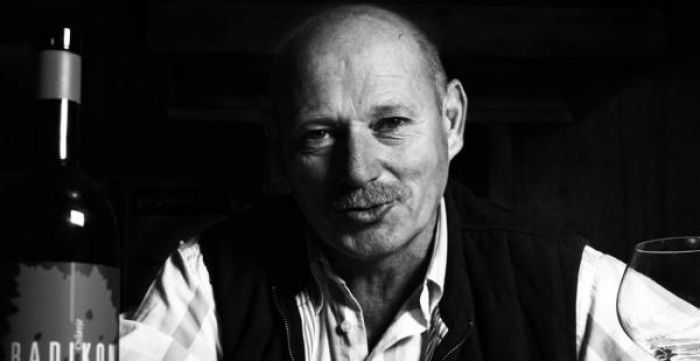
Remembering Stanko Radikon by Kevin McKenna
<p>As many of you know we received the news from Saša this weekend that his dear father and our very dear friend / collaborator Stanko passed away over the weekend. Joe and I first met Stanko and Suzana in the spring of 2003. It was at Villa Favorita, an "off" show of <glossary title="1105">Vinitaly</glossary> at that time organized by the group <glossary term="Vini Veri" title="1102">Viniveri</glossary> of which Radikon was a founding member and whose idea of <glossary title="1103">viticulture</glossary> and winemaking pre-dated and helped shaped the guiding principles of the group. I remember he seemed formidable and at the same time genial. I think Joe was even a little intimidated (a rare occurrence).<br />
<br />
It wasn't until a year later when the Viniveri show moved to Villa Boschi that we seriously talked with him. We tasted a few times over the course of the two days of the show. Naturally we loved the wines… It was 2001 <span class="zalup"><span><glossary title="1109">vintage</glossary><span>.</span></span></span> We had a full schedule, but wanted to see the winery and Stanko wanted us to come see the vineyards and <span class="zalup"><span><glossary title="254">cellar</glossary><span>.</span></span></span> We said we could only come at 7AM, a scary thought for Joe and I, before our flight from the nearby <glossary title="1048">Trieste</glossary> airport. Stanko said no problem; he'd be awake. It was a gorgeous day, we got lost, of course (pre-GPS days!), but he waited for us patiently on the side of the road so we would not miss the turn. We stumbled through the vineyards and a rushed, but revelatory, tasting in the <glossary title="254">cellar</glossary> and I think when we parted, we all understood then and there that we would be working together for years.<br />
<br />
The news this weekend saddened us and a lot of our winemakers who over the years of our collaboration and through Saša came to know one another and Stanko very well. They came to know and understand the very special way that Stanko looked at wine, a vision that was a wonderful sense of emotion and reasoning, sense memory and science, heart and brain.<br />
<br />
We are very proud to represent Stanko and the heart and brain in his wines. He stands for a generation of winemakers that made conscientious and brave choices to revitalize tradition, respectful farming practices, and counter-fashionable wine styles in an era of "modernization" and fast-paced standardization, igniting a movement that continues to resonate, provocate and enlighten a new generation of wine appreciators.<br />
<br />
Auguri, Stanko!<br />
<br />
And to the wonderful Radikon family -- Suzana, Saša and Luisa, Savina and Andrea and Ivana and the 3 boys of the newest generation -- our hearts and thoughts are with you all.<br />
<br />
Kevin<br />
e Denyse, Jules, Josefa, Maya, David and Sheila</p>
Article
producer visit
21.08.2019
This visit to Radikon took place in April, 2013
<p><strong><em>This visit at Radikon took place in April, 2013.</em></strong></p>
<p><strong><em>Words by Jules Dressner, photos by Maya Pedersen.</em></strong></p>
<p>After spending a day in <glossary title="1076">Venice</glossary> (where, according to Maya's step-calculator thingy, we walked 7.5 miles!!!), we drove to <glossary title="749">Oslavia</glossary> to hang with Stanko and Saša Radikon. <br />
<br />
The family's main <glossary title="760">parcel</glossary> is located right under Stanko and Suzanna's house. </p>
<p><img src="http://louisdressner.com/uploads/images/article/2019_Aug_21//0c/28/0c28c3f570524a8b7b7d2d87cd988278.jpg" /></p>
<p>Standing next to the <glossary title="650">Merlot</glossary> vines, Saša explained that finding large vineyards in this area is very hard, and that a <glossary title="760">parcel</glossary> of this size (three <glossary title="523">hectares</glossary>) is uncommon. Along with the <span class="zalup"><span><glossary title="650">Merlot</glossary><span>,</span></span></span> <glossary title="857">Ribolla Gialla</glossary> and <glossary title="803">Pinot Grigio</glossary> are planted on the lower slopes of this hill, which is 190m in altitude and <glossary title="430">exposed</glossary> full south. </p>
<p><img src="http://louisdressner.com/uploads/images/article/2019_Aug_21//88/7f/887ffb953b73b3d01bfddfd249b2de41.jpg" /></p>
<p>Everything had to be replanted in 1997 after a devastating mudslide in 1994. Besides horse manure, the only thing added to the vines are <glossary title="333">copper</glossary> and <span class="zalup"><span><glossary title="328">sulfur treatments</glossary><span>,</span></span></span> which Saša is trying to reduce by incorporating <a href="http://en.wikipedia.org/wiki/Propolis" target="_blank">propolis</a>, a bee based product effective against <span class="zalup"><span><glossary title="1137">mildew</glossary><span>.</span></span></span><br />
<br />
The <glossary title="1039">training</glossary> is similar to<strong> <glossary title="497">alberello</glossary></strong>. Three cuts, two <glossary title="206">buds</glossary> per <span class="zalup"><span><glossary title="232">cane</glossary><span>,</span></span></span> four to six <glossary title="1138">clusters</glossary> per vine. </p>
<p><img src="http://louisdressner.com/uploads/images/article/2019_Aug_21//03/74/0374ad15667e116f184c616218e444aa.jpg" /></p>
<p>Prior to the 1997 replanting, everything was trained in double <span class="zalup"><span><glossary title="518">guyot</glossary><span>.</span></span></span> Only a few rows at the bottom of the hill survived. </p>
<p><img src="http://louisdressner.com/uploads/images/article/2019_Aug_21//43/dd/43dd4265870866afb7134de68ed11c0d.jpg" /></p>
<p>As you can see in the photo below, they had recently <glossary title="810">plowed</glossary> every other row, effectively letting the other have "the year off".</p>
<p><img src="http://louisdressner.com/uploads/images/article/2019_Aug_21//57/a0/57a0b94c78deac9cb9a13f62fe0a3454.jpg" /><br />
<br />
The soils consist of heavy <glossary title="301">clay</glossary> with a strong presence of <span class="zalup"><span><glossary title="948">shale</glossary><span>.</span></span></span></p>
<p><img src="http://louisdressner.com/uploads/images/article/2019_Aug_21//80/09/80091a003da32ee1038bb9c8b363bd85.jpg" /><br />
<br />
The <glossary title="991">subsoils</glossary> here absorb the region's large amount of annual rainfall, and this natural water reserve is instrumental in conserving <glossary title="662">minerality</glossary> and <glossary title="71">acidity</glossary> in the grapes.<br />
<br />
<glossary title="749">Oslavia</glossary> is host to a handful of famous winemakers, and from the Radikons' vineyards, you can spot -amongt others- some of Gravner's vines. </p>
<p><img src="http://louisdressner.com/uploads/images/article/2019_Aug_21//3d/29/3d2907313d7a30da0191b24396f89cc6.jpg" /></p>
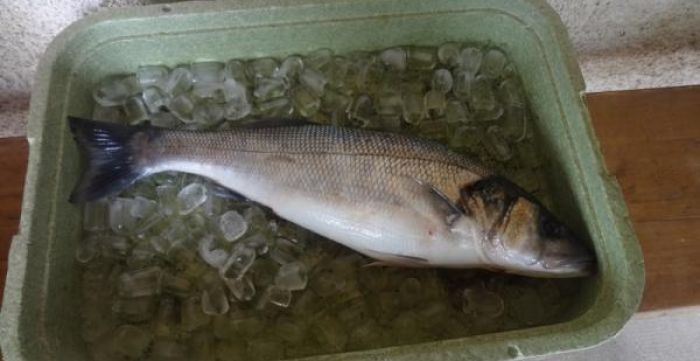
<p>After visiting the vines, we walked back to the house to taste in the <span class="zalup"><span><glossary title="254">cellar</glossary><span>.</span></span></span> Before we could make it, Stanko distracted us with this big fish.</p>
<p><img src="http://louisdressner.com/uploads/images/article/2019_Aug_21//20/af/20af4aaa7c378666e4c091a05a7b6aa8.jpg" /></p>
<p>It had been caught that morning, and would serve as our main course for lunch.<br />
<br />
Cooling off from the hot sun, we ventured into the <span class="zalup"><span><glossary title="254">cellar</glossary><span>.</span></span></span> </p>
<p><img src="http://louisdressner.com/uploads/images/article/2019_Aug_21//3a/58/3a5835df461c2f1a2d7e5100ad87e146.jpg" /></p>
<p><img src="http://louisdressner.com/uploads/images/article/2019_Aug_21//ac/79/ac7987443fcd997adaf6d46349a8b370.jpg" /></p>
<p>The winemaking at Radikon has been covered extensively in the past, but it never hurts to reiterate. There is no <glossary title="1018">temperature control</glossary> for <span class="zalup"><span><glossary title="441">fermentations</glossary><span>,</span></span></span> with <glossary title="795">punchdowns</glossary> in the first 48 hours to get <glossary title="441">fermentations</glossary> going. Along with their old school, hand-held "<glossary title="795">punchdown</glossary> stick", there is a one-of-a-kind mechanical one designed by Stanko himself!</p>
<p><img src="http://louisdressner.com/uploads/images/article/2019_Aug_21//4e/a1/4ea1d4087b4be6e02ce691720db27435.jpg" /></p>
<p>The grapes are <span class="zalup"><span><glossary title="378">destemmed</glossary><span>.</span></span></span> The juice then <glossary title="441">ferments</glossary> and <glossary title="610">macerates</glossary> on its skins -which amount to 20 to 30% of a full <span class="zalup"><span><glossary title="1140">tank</glossary><span>-</span></span></span> for 2.5 to 4 months. After a <glossary title="843">racking</glossary> of the skins and <span class="zalup"><span><glossary title="515">gross lees</glossary><span>,</span></span></span> the wine is <glossary title="74">aged</glossary> in large <glossary title="144">barriques</glossary> for up to 36 months. The first big attempts with <glossary title="610">skin contact</glossary> took place in 1995, with Stanko producing half of the <glossary title="857">Ribolla Gialla</glossary> this way. <br />
<br />
<em>"</em><glossary title="857"><em>Ribolla</em></glossary><em> has very thick skins. My father realized that the </em><glossary title="610"><em>skin contact</em></glossary><em> with </em><glossary title="650"><em>Merlot</em></glossary><em> made the wine better, so why not try it with </em><glossary title="857"><em>Ribolla</em></glossary><em>? It brought more </em><glossary title="990"><em>structure</em></glossary><em> and complexity."</em><br />
<br />
Prior to this decision, the wines were <glossary title="441">fermented</glossary> in <glossary title="986">stainless steel</glossary> and <glossary title="74">aged</glossary> in <span class="zalup"><span><glossary title="144">barrique</glossary><span>.</span></span></span> In the early years, <glossary title="610">maceration</glossary> times were much shorter.<br />
<br />
<em>"This was a big inspiration for the "S" line. It has permitted me to understand what my father was doing in the early days."</em><br />
<br />
For those unfamiliar with the "S" line, S stands for Saša; the wines see two to three weeks <glossary title="610">macerating</glossary> on the skins, are <glossary title="74">aged</glossary> in <glossary title="142">barrel</glossary> only one year and are immediately released.<br />
<br />
Fun <glossary title="254">cellar</glossary> factoid: the <glossary title="254">cellar's</glossary> walls are the <glossary title="991">subsoils</glossary> of the vines we'd just visited, and because of all the water they constantly hold, they sweat out this cold, wet, mineral slime.</p>
<p><img src="http://louisdressner.com/uploads/images/article/2019_Aug_21//dc/bd/dcbd4b6f55aa0b863847d13bfeff7931.jpg" /><br />
<br />
We tasted a bunch of 2009's. They were really good. <br />
<br />
To celebrate our successful tasting, Stanko popped open a bottle of 2010 <glossary title="857">Ribolla Gialla</glossary> <span class="zalup"><span><glossary title="778">PET NAT</glossary><span>!</span></span></span> </p>
<p><img src="http://louisdressner.com/uploads/images/article/2019_Aug_21//e9/0a/e90a28ed4119d11abd62916d5b86d5dd.jpg" /></p>
<p>That's right, both <a href="http://louisdressner.com/date/2013/4/10/202/" target="notSet">François Pinon</a> and the Radikons have produced <span class="zalup"><span><glossary title="778">pétillant naturel</glossary><span>:</span></span></span> get with the times people! This experiment started because Suzanna Radikon, who loves bubbles, complained there was never enough in the house. 2010 was a bit of a disaster; there was way too much sugar left, and over half of them exploded during the <span class="zalup"><span><glossary title="938">refermentation</glossary><span>.</span></span></span> But what's left of it is delicious!<br />
<br />
Lunch was as good an opportunity as any to taste the recently bottled 2007 Radikons and the 2010 "S" wines along with some back <span class="zalup"><span><glossary title="1109">vintages</glossary><span>.</span></span></span></p>
<p><img src="http://louisdressner.com/uploads/images/article/2019_Aug_21//b4/ed/b4ed9fb72b629471d85d3707c1fb32fa.jpg" /></p>
<p>One of those was a 1999 <span class="zalup"><span><glossary title="857">Ribolla Gialla</glossary><span>,</span></span></span> labeled as a <glossary title="1156">DOC</glossary> <span class="zalup"><span><glossary title="318">Collio</glossary><span>.</span></span></span> In 2000, Stanko asked that the <glossary title="1156">DOC</glossary> modify its rules for color so it could allow <glossary title="745">skin contact</glossary> wines in the <glossary title="318">Collio</glossary> <span class="zalup"><span><glossary title="1156">DOC</glossary><span>.</span></span></span> They declined, so he intentionally <glossary title="383">declassified</glossary> everything in 2001. <br />
<br />
Another unexpected treat was to taste a pre<span class="zalup"><span><span>-</span> <span class="zalup"><span><glossary title="745">skin contact</glossary><span>,</span></span></span></span></span> 1993 <span class="zalup"><span><glossary title="803">Pinot Grigio</glossary><span>!</span></span></span></p>
<p><img src="http://louisdressner.com/uploads/images/article/2019_Aug_21//ce/f1/cef17a90d6d00ac7c6da343da25cf3f3.jpg" /></p>
<p>It was bright and mineral, but not exactly memorable. Whatever <glossary title="993">sulfur</glossary> was used at the time had completely blown off. <br />
<br />
After finishing up lunch with Suzanna's <em>"Best Apple Strudel Ever Made"</em> (Denyse Louis quote), Stanko had to run to an <glossary title="745">orange wine</glossary> festival taking place in Croatia. After saying our goodbyes, Saša drove us to a newly acquired <glossary title="760">parcel</glossary> just across the Slovenian border. </p>
<p><img src="http://louisdressner.com/uploads/images/article/2019_Aug_21//15/0f/150fa2accd13344aa48fef365451fb91.jpg" /></p>
<p><img src="http://louisdressner.com/uploads/images/article/2019_Aug_21//a1/81/a18132e14952f70e483f800e4a83d795.jpg" /></p>
<p>This vineyard was planted in 2004 in <span class="zalup"><span><glossary title="941">selection massale</glossary><span>,</span></span></span> with <glossary title="857">Ribolla </glossary>on top, <glossary title="798">Pignollo</glossary> in the middle and <glossary title="1030">Tokaj</glossary> on bottom. <br />
<br />
<em>"We always get good wind here from the proximity to the sea."</em><br />
<br />
We ended our visit by climbing up this funky watch tower, getting a bird's eye view of the local surroundings.</p>
<p><img src="http://louisdressner.com/uploads/images/article/2019_Aug_21//f6/84/f68449ec04ae61777a6ff3ffe8664e54.jpg" /></p>
<p><img src="http://louisdressner.com/uploads/images/article/2019_Aug_21//a4/84/a484800f31af5f2b63099d2ed740f5a4.jpg" /></p>
<p>That night, we ate at <a href="https://www.lasubida.it/lasubida_eng/" target="_blank">La Subida</a>, which many consider one of the best restaurants in Italy. The all local/<glossary title="">organic</glossary> food and wine program follows seasonal menus, so we got to eat a lot of dishes based on spring herbs and wild asparagus, accompanied by an all-star cast of <glossary title="470">Friulian</glossary> and Slovenian wines.</p>
Article

interview
27.06.2019
A Video Interview with Saša Radikon
<p>Saša Radikon on working the vines, the evolution away from <span class="zalup"><span><glossary term="Sulfites" title="993">SO2</glossary><span>,</span></span></span> <glossary term="Enology" title="422">oenological</glossary> education, their unorthodox <glossary term="Cork" title="336">corks</glossary> and bottles, and what to eat with his wines.</p>
<p><iframe allowfullscreen="" frameborder="0" height="360" src="//www.youtube.com/embed/NFGs3ObVga0" width="640"></iframe></p>
<p><iframe allowfullscreen="" frameborder="0" height="360" src="//www.youtube.com/embed/Mf77S966KP8" width="640"></iframe></p>
<p><iframe allowfullscreen="" frameborder="0" height="360" src="//www.youtube.com/embed/kL8OVZdwEqQ" width="640"></iframe></p>
<p><iframe allowfullscreen="" frameborder="0" height="360" src="//www.youtube.com/embed/XKFbOl-Ygu8" width="640"></iframe></p>
<p><iframe allowfullscreen="" frameborder="0" height="360" src="//www.youtube.com/embed/CAfcfeHXbU8" width="640"></iframe></p>
Article
harvest report
05.01.2023
2023 Harvest Report form Luisa Radikon
<p>These were for the first two weeks of <span class="zalup"><span><glossary term="Harvest" title="521">harvest</glossary><span>.</span></span></span> </p>
<p>The 2023 season is not a perfect one: the weather constantly alternated between rain and sun, so we needed to <glossary term="Contact Treatment" title="328">treat</glossary> a lot this year. Moreover, a <glossary term="Hail" title="1136">hailstorm</glossary> in July didn’t help. The <span class="zalup"><span><glossary term="Pinot Gris/Pinot Grigio" title="803">Pinot Grigio</glossary><span>,</span></span></span> <span class="zalup"><span><glossary term="Chardonnay" title="271">Chardonnay</glossary><span>,</span></span></span> <glossary term="Sauvignon Blanc" title="927">Sauvignon</glossary> and <glossary term="Tocai Friulano/Sauvignon Vert" title="929">Tocai Friulano</glossary> (already <glossary term="Harvest" title="521">harvested</glossary>) were in some parts more dry (because of <glossary term="Hail" title="1136">hail</glossary>), but in the end the crop was better than we expected. But we still have to collect all the reds and the <span class="zalup"><span><glossary term="Ribolla Gialla" title="857">Ribolla</glossary><span>,</span></span></span> or rather what we can of the <span class="zalup"><span><glossary term="Ribolla Gialla" title="857">Ribolla</glossary><span>:</span></span></span> it was the most damaged by <glossary term="Hail" title="1136">hail</glossary> and we lost a good part of the crop.</p>
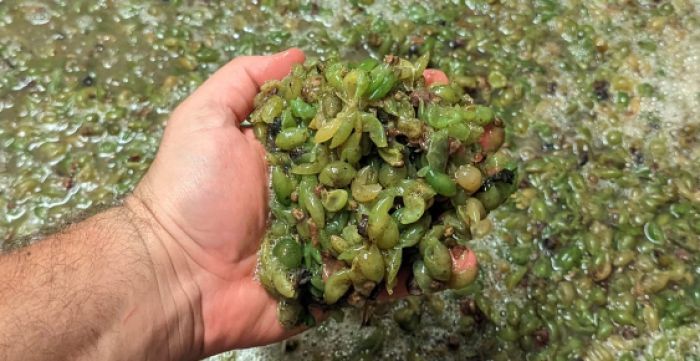
<p>The first pictures show the the "Sivi" process (100% <glossary term="Pinot Gris/Pinot Grigio" title="803">Pinot Grigio</glossary> – 7/10 days on the skins), then the Slatnik (80% <span class="zalup"><span><glossary term="Chardonnay" title="271">Chardonnay</glossary><span>,</span></span></span> 20% <glossary term="Tocai Friulano/Sauvignon Vert" title="929">Tocai Friulano</glossary> – 7/10 days on the skins) – note Ivana doing the <glossary term="Pigeage/Punchdown" title="795">punching down</glossary> and the skins after the <glossary term="Maceration" title="610">maceration</glossary> and the press. In the meantime we started to collect the grapes for the Oslavje (<glossary term="Chardonnay" title="271">Chardonnay</glossary> and <span class="zalup"><span> <glossary term="Sauvignon Blanc" title="927">Sauvignon</glossary><span>,</span></span></span> half and half). Some panoramas and at the end Ivana and Saša preparing the new <glossary term="Vat/Tank" title="1140">vats</glossary> for the season. </p>
<p><img src="https://louisdressner.com/uploads/images/article//1008/96/f8/96f8ccf48fd689552d37c01178970b5e.jpg" /><img src="https://louisdressner.com/uploads/images/article//1008/35/6e/356eeeb5fd183c35c3070d89a18c689b.jpg" /><img src="https://louisdressner.com/uploads/images/article//1008/09/2e/092eec85c9db0c0b57059f24a51e5ed2.jpg" /><img src="https://louisdressner.com/uploads/images/article//1008/f0/99/f0993233a91537870de6d6f0a6975342.jpg" /><img src="https://louisdressner.com/uploads/images/article//1008/bc/bc/bcbc34a20030efc4e7b44eb7c266835f.jpg" /><img src="https://louisdressner.com/uploads/images/article//1008/19/64/196423237a2804eef4118d381cc24b0e.jpg" /><img src="https://louisdressner.com/uploads/images/article//1008/f0/b7/f0b7b93d0a3af14f73acf09329d0a849.jpg" /><img src="https://louisdressner.com/uploads/images/article//1008/ee/6d/ee6d50fc5dd4c5387357153cfd425d7d.jpg" /><img src="https://louisdressner.com/uploads/images/article//1008/c4/4c/c44ce46dead32e462a78d2271e1e68ca.jpg" /><img src="https://louisdressner.com/uploads/images/article//1008/d5/d3/d5d35582c3e6f9de9590f81e08ebc8dd.jpg" /><img src="https://louisdressner.com/uploads/images/article//1008/de/87/de8789982387b57508454667c555afc8.jpg" /><img src="https://louisdressner.com/uploads/images/article//1008/1d/72/1d72a012534f4e1967f38733b0c0695c.jpg" /><img src="https://louisdressner.com/uploads/images/article//1008/16/ac/16ac1ebe68bdb31577203fb51af68d76.jpg" /><img src="https://louisdressner.com/uploads/images/article//1008/d2/a7/d2a7b46ba6bb1bcc8122b98c783bb108.jpg" /><img src="https://louisdressner.com/uploads/images/article//1008/fd/2e/fd2ea8b0225008c817e3d44bd3b1f9c8.jpg" /><img src="https://louisdressner.com/uploads/images/article//1008/18/98/1898b75de32ec1c510a2737f5462148e.jpg" /><img src="https://louisdressner.com/uploads/images/article//1008/62/68/62688ea469666d5695801655a2c6c1cf.jpg" /><img src="https://louisdressner.com/uploads/images/article//1008/16/f9/16f9e80e144d404f78f345621f8f208d.jpg" /><img src="https://louisdressner.com/uploads/images/article//1008/f5/d3/f5d34592c3cf7472b0f8a702e202c5d0.jpg" /><img src="https://louisdressner.com/uploads/images/article//1008/05/fa/05fa370a74111513fbb973b56a6e265a.jpg" /><img src="https://louisdressner.com/uploads/images/article//1008/7f/11/7f115ef8e006fff5229b89b6b5e875a5.jpg" /><img src="https://louisdressner.com/uploads/images/article//1008/92/8b/928bbbc2179ddd8d2dcb0fd2e2c7c348.jpg" /><img src="https://louisdressner.com/uploads/images/article//1008/21/13/2113364b8b3fd92900c0e87d3591c10b.jpg" /><img src="https://louisdressner.com/uploads/images/article//1008/30/70/3070625cfbd2db4ea843028af4774985.jpg" /><img src="https://louisdressner.com/uploads/images/article//1008/03/95/03959af9c1fc9b664e9a7a6635de1858.jpg" /><img src="https://louisdressner.com/uploads/images/article//1008/66/a4/66a4eaaa3ccfd11808863aea2d1e1928.jpg" /><img src="https://louisdressner.com/uploads/images/article//1008/84/94/849431f98f312e48454bfc7b757f15be.jpg" /><img src="https://louisdressner.com/uploads/images/article//1008/bb/f9/bbf9355747567df6a302a3f9331ac5e1.jpg" /><img src="https://louisdressner.com/uploads/images/article//1008/de/5d/de5d96e036517c17a06e47019b603c90.jpg" /><img src="https://louisdressner.com/uploads/images/article//1008/85/8e/858e245c71cf83d062aabad42274d77b.jpg" /><img src="https://louisdressner.com/uploads/images/article//1008/a3/23/a323dcfea731b05d9f2fc9e4a5b8cf52.jpg" /><img src="https://louisdressner.com/uploads/images/article//1008/9c/ce/9cce2526695433b23334bc2877b0c632.jpg" /><img src="https://louisdressner.com/uploads/images/article//1008/41/37/413759d759dba2f444903d1f4eaad40f.jpg" /><img src="https://louisdressner.com/uploads/images/article//1008/06/52/06520754f81c1fe13f3ea596e89bba4e.jpg" /><img src="https://louisdressner.com/uploads/images/article//1008/22/a6/22a680f740c99922804a0417385cc5e3.jpg" /></p>
Article
harvest report
20.01.2020
2020 Harvest Pictures from Radikon
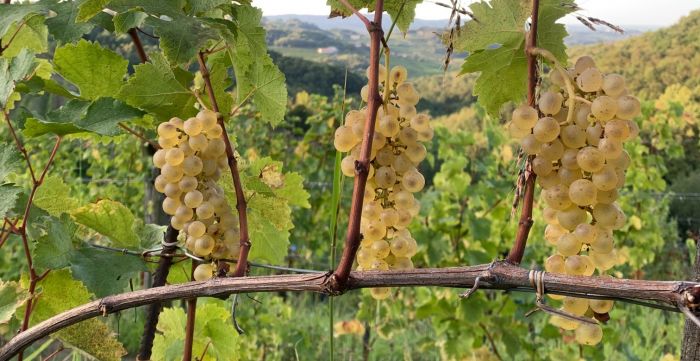
<p>Finally some pictures of the harvest: a lot of sunrises (we were working only in the morning because the weather was too hot for collecting grapes in the afternoon), the new machine for <glossary term="De-stemming" title="378">destemming</glossary> and <span class="zalup"><span><glossary term="Pressing" title="827">crushing</glossary><span>.</span></span></span> There are also some picture of the <glossary term="Racking/Soutirage" title="843">racking</glossary> of the "Sivi" (100% <glossary term="Pinot Gris/Pinot Grigio" title="803">Pinot Grigio</glossary>) after a <glossary term="Maceration" title="610">skin contac</glossary>t of about 10 days.</p>
<p>A big hug to everyone there from everyone here,</p>
<p><img src="https://louisdressner.com/uploads/images/article//876/53/7e/537e2789fdbeaa7d78ceb60b30b30b5c.jpg" /><img src="https://louisdressner.com/uploads/images/article//876/3a/21/3a21d4d39e25e2837d2fd08f14240188.jpg" /><img src="https://louisdressner.com/uploads/images/article//876/1b/66/1b66ee0162d7ba39e8780f4a9e0d2c7d.jpg" /><img src="https://louisdressner.com/uploads/images/article//876/a6/ba/a6ba1365b181846ccbf8b049b9683766.jpg" /><img src="https://louisdressner.com/uploads/images/article//876/6c/03/6c03277387ab4273da1c075cf4362fcc.jpg" /><img src="https://louisdressner.com/uploads/images/article//876/db/23/db238da49d1957a4d0e4573917ce9641.jpg" /><img src="https://louisdressner.com/uploads/images/article//876/9f/36/9f360f82aea235a336c95e91e6cde391.jpg" /><img src="https://louisdressner.com/uploads/images/article//876/f5/c7/f5c78bdd193d027305fec247525d7b6c.jpg" /><img src="https://louisdressner.com/uploads/images/article//876/f9/40/f94019fc548694d3b3273ac334eaf4be.jpg" /><img src="https://louisdressner.com/uploads/images/article//876/2b/ef/2bef94c7c11c97823eb31b6511417dd7.jpg" /><img src="https://louisdressner.com/uploads/images/article//876/5e/93/5e937ff6796411b584a0866dd599f1f8.jpg" /><img src="https://louisdressner.com/uploads/images/article//876/56/35/56351a9524226e70b6eb057333b40f86.jpg" /><img src="https://louisdressner.com/uploads/images/article//876/62/0e/620eb340f2f81d75421b38800c22d84a.jpg" /><img src="https://louisdressner.com/uploads/images/article//876/9c/e4/9ce4ac6552204f00bf26f3ce29ff0dd4.jpg" /><img src="https://louisdressner.com/uploads/images/article//876/cb/b5/cbb5bdaaf7333ff12948a68d1dcaa765.jpg" /><img src="https://louisdressner.com/uploads/images/article//876/0b/60/0b6019921aaec9cbb91d8d29c6bcfc4c.jpg" /><img src="https://louisdressner.com/uploads/images/article//876/bc/76/bc76cde1037aab58c9f3e740a7757579.jpg" /><img src="https://louisdressner.com/uploads/images/article//876/d5/17/d517b1741d5a75f1cab0986b4e910a6f.jpg" /></p>
Article
harvest report
02.10.2006
2006 Harvest Report from Suzana Radikon
<p><strong><u>October 2nd, 2006:</u></strong></p>
<p>We started to <glossary title="521">harvest</glossary> the 22nd of September, the weather was beautifully sunny all day, in truth hotter than August was. The grapes were healthy and golden in color.<br />
<br />
We started with the <glossary title="803">Pinot Grigio</glossary> that has the beautiful characteristic gray shade. Then we moved on to the <span class="zalup"><span><glossary title="271">Chardonnay</glossary><span>,</span></span></span> the <span class="zalup"><span><glossary title="927">Sauvignon</glossary><span>,</span></span></span> the <glossary title="929">Tocai</glossary> and today, October 2nd, we harvest the <glossary title="650">Merlot</glossary> – tomorrow, probably, the <span class="zalup"><span><glossary title="857">Ribolla</glossary><span>.</span></span></span><br />
<br />
We think that, like the 2003, this year will also be of high quality.</p>
Article